
The most dangerous residency red flags are the ones nobody says out loud.
You will not see “malignant culture,” “scut-heavy with no teaching,” or “we burn out our interns” written on any slide. But program directors leak the truth every time they open their mouths in Q&A sessions. The problem is, students are too anxious and too polite to hear it.
Let me show you what to listen for—the stuff attendings talk about after you all log off Zoom.
What PDs Really Use Q&A For
Here’s the first secret: most PDs don’t see Q&A as a truth session. They see it as brand management.
They walk in with three missions:
- Defuse known weaknesses.
- Reinforce their favorite talking points.
- Avoid saying anything that can be screenshotted, shared, or used against them.
So you’re not listening for polished answers. You’re listening for the cracks in the script. When a PD goes off autopilot, you learn what the program really is.
I’ve sat in these debriefs: “Did we address the call schedule enough?” “Don’t mention that accreditation citation unless asked directly.” “If they ask about hours, stick to the ‘we value wellness’ line and move on.”
Once you understand that mindset, you stop asking, “What did they say?” and start asking, “What didn’t they dare say?”
The Evasive Answer Playbook (And What It Tells You)
There are only so many ways a PD can dodge a painful topic. Once you learn the patterns, you can spot trouble in under 10 seconds.
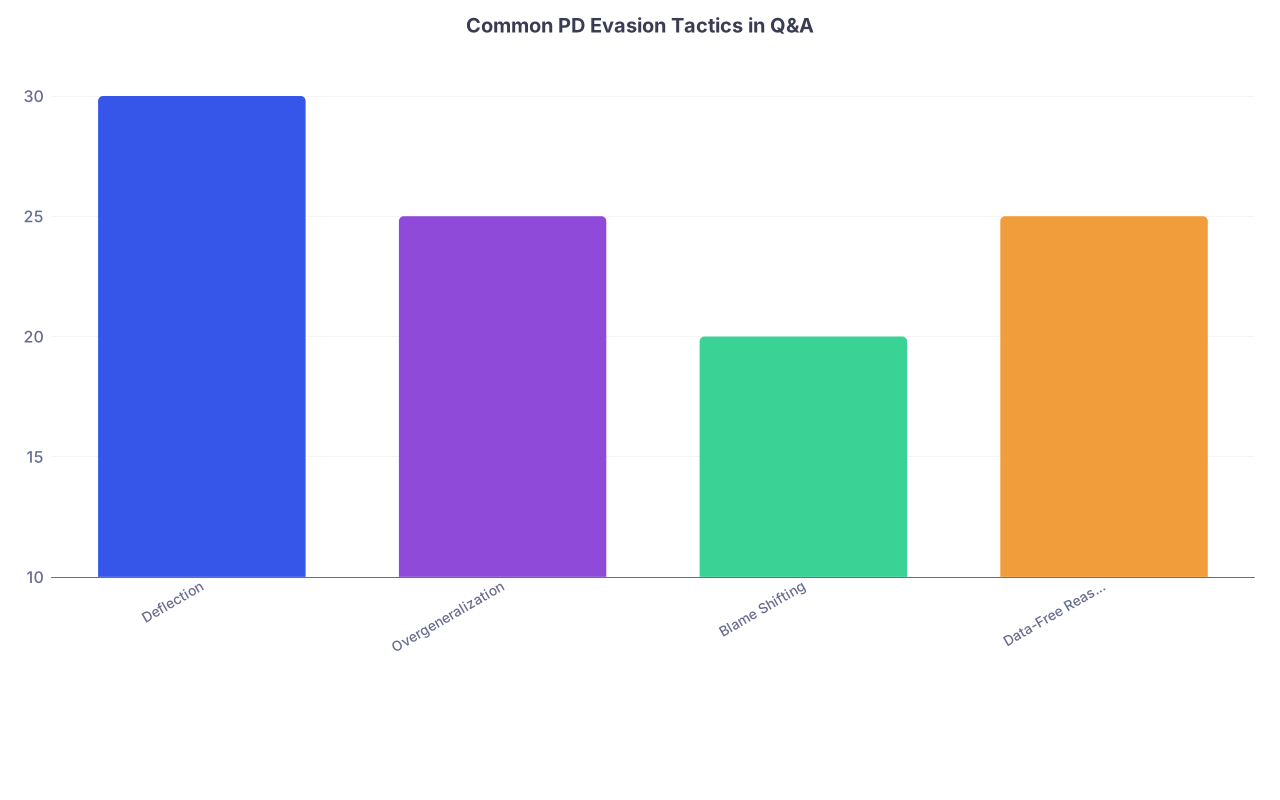
| Category | Value |
|---|---|
| Deflection | 30 |
| Overgeneralization | 25 |
| Blame Shifting | 20 |
| Data-Free Reassurance | 25 |
1. The “We Don’t Track That” Move
You ask:
“Can you share your board pass rates from the last few years?”
They answer:
“We really focus on education and supporting each resident as an individual. We don’t like to reduce people to numbers.”
Translation: The numbers are bad.
Every halfway-competent program knows their pass rates and trend lines. If a PD chooses not to track or share them, it’s almost always because they’re embarrassing. And no, “we’re a small program so the numbers jump around” doesn’t get them off the hook. Small programs know this and are usually overly proud to report, “We’ve only had one failure in five years.”
Red flag: vague educational feel-good talk instead of data.
2. The “Let Me Reframe Your Question” Trick
You ask:
“How often are duty hours violated and how is that handled?”
They answer:
“Well, our patients are very sick, and our residents are extremely dedicated. Sometimes they voluntarily stay late because they care so much about their patients.”
That’s not an answer. That’s a dodge wrapped in flattery.
The PD is reframing your question from “systemic problem” to “individual devotion.” That usually means:
- They don’t enforce boundaries.
- People are praised for staying late.
- “Voluntary” becomes the expectation.
If they never say the words:
“We monitor duty hours closely”
“We investigate patterns”
“We’ve changed X and Y in the last year because of violations”
…you should assume the culture is: work until you drop, log what’s convenient.
3. The “That Was Before My Time” Escape Hatch
You ask (or someone else does):
“I read there was a citation / probation / big leadership change a couple years ago. What changed since then?”
They answer:
“Oh yes, but that was before I became PD. We’ve really moved past that.”
If that’s all they give you? Huge problem.
A good PD uses that question as a flex:
“Yes. In 2021 we were cited for X and Y. Since then we’ve implemented A, B, and C. Here’s what our residents reported this year versus then.”
If they:
- Won’t specify what went wrong.
- Won’t name concrete changes.
- Won’t say how they monitor it now.
Then the “before my time” line is just a shield. The culture often did not magically reset with new leadership.
4. The “We’re Like a Family” Overuse
You will hear “we’re like a family” at almost every program. By itself, it’s neutral. Context matters.
Red flag version is paired with:
- No concrete examples of how they support residents.
- Minimizing structure: “We don’t like to make strict rules.”
- Dodging any question about conflict resolution with “we just work it out.”
What I hear when a PD leans too hard on “family” with nothing else:
“We use emotional closeness to cover for lack of boundaries, unclear expectations, and occasional toxicity.”
Healthy programs say: “We’re close-knit,” and then talk about:
- Formal mentorship.
- Clear grievance processes.
- Transparent feedback.
Reading Body Language and Group Dynamics on Panels
Online and in-person, how the PD and chiefs react to each other tells you more than the slides.
Watch Who Answers What
When the question is hot—duty hours, mistreatment, fellowship matches—pay attention to who grabs the mic.
Scenario I’ve watched multiple times:
Student: “Can you talk about wellness and burnout?”
PD: Quick, rehearsed line. “We take wellness very seriously.” Immediately turns to chief: “Why don’t you speak to that?”
Now watch the resident’s face. Do they:
- Answer quickly, with specific examples?
- Glance at the PD before speaking?
- Laugh nervously and stay general?
When chiefs need to “check” the PD with their eyes before answering, that’s not a safe culture. That’s surveillance.
Another tell: if the PD constantly jumps in to “clarify” or “add on” when a resident starts to be honest. Residents will say, “We’re busy, especially on X rotation…” and the PD cuts in with, “But of course that’s within duty hours and our residents always have support.”
You just watched free speech get muzzled in real time.
Micro-Reactions You Should Not Ignore
You’re not crazy for noticing that:
- Residents avoid eye contact when a topic comes up.
- Someone smiles tightly when a PD claims “We’ve never had issues with bullying.”
- The quietest resident suddenly becomes very quiet when asked about a specific rotation.
Those micro-reactions are discussed after you’re gone. I’ve been in those rooms:
“Did you see R2’s face when you mentioned nights?”
“Yeah, we need to talk to them about not airing dirty laundry.”
If that’s the culture, you won’t hear the truth in public. You have to read the tension.
The Specific Phrases That Should Make You Sit Up Straight
Let’s go line by line through the stuff PDs say all the time that actually mean something very different behind closed doors.
1. “We’re Very Busy, But Our Residents Learn a Lot”
This is almost always code for: “Service > education.”
If they’re proud of being “the busiest hospital in the region,” you better hear answers to these follow-up questions:
- “How much protected didactic time do you have and is it truly protected?”
- “What percentage of residents can attend noon conference consistently?”
Watch their response. If “protected” is qualified with phrases like:
- “We do our best…”
- “Usually…”
- “When census allows…”
That “busyness” translates into:
- Missed teaching.
- Burnout.
- High tolerance for unsafe workloads.
2. “We’re Working On That”
Sometimes this is honest. Often it’s a graveyard for problems programs don’t want to fix.
Listen for:
- “We’re working on restructuring call” – said every year, never changed.
- “We’re working on increasing elective time” – but they won’t say when or how.
- “We’re working on improving our wellness initiatives” – classic nothing-burger phrase.
The real tell is whether they add specifics:
- Named committees.
- Timelines.
- Changes already implemented this year.
If they don’t, assume “we’re working on it” means “we hope you stop asking.”
3. “Our Residents Match All Over the Country”
That line by itself is meaningless. It sounds impressive, but I’ve seen programs say this when:
- They had 1 person match somewhere brand-name.
- Half their seniors scrambled into prelim or lower-tier options they didn’t want.
Your move:
“Can you share the last 3 years of fellowship or job placement—number of residents, where they went, and in which fields?”
Red flag if you get:
- “We don’t have that compiled.”
- “We can send that later” (and they never do).
- A hand-wavy “People do well” with no detail.
| Question | Green-Flag Answer | Red-Flag Answer |
|---|---|---|
| “Last 3 years of fellowships?” | Specific programs and numbers | “All over, mostly regional” |
| “Do most get first-choice field?” | “Yes, about 80–90% into top 1–2 choices” | “Eventually people find their path” |
| “Any support for fellowship apps?” | Named faculty, structured mentorship | “Residents are very independent here” |
4. “We Have an Open-Door Policy”
That line means nothing without:
- An explanation of how complaints are handled.
- Anonymous mechanisms.
- Examples of actual changes that happened after feedback.
If you ask:
“Can you give an example of resident feedback that led to a real change in the last 1–2 years?”
And they freeze, then offer something tiny (“we added snacks in the workroom”) while dodging structural changes (call schedules, rotation redesign, abusive attendings)… that “open door” is decorative.
Programs that truly respond to feedback can rattle off at least two or three substantial changes without blinking.
How PDs Spin the Most Common Red-Flag Questions
Here’s the part students rarely see: after Q&A sessions, PDs and APDs will literally sit and evaluate which questions were “dangerous” and how they handled them. I’ve been in those rooms.
Let’s go through the big ones and how to read between the lines.

| Step | Description |
|---|---|
| Step 1 | Hear PD Answer |
| Step 2 | Look for Data and Examples |
| Step 3 | Assume Avoidance |
| Step 4 | Probably Honest |
| Step 5 | Mixed Signals - Dig Deeper |
| Step 6 | Red Flag |
| Step 7 | Email Residents Later |
| Step 8 | Specific or Vague |
| Step 9 | Consistent with Resident Vibes |
| Step 10 | Any Follow Up Offered |
Duty Hours & Workload
You ask:
“How often do residents violate 80-hour weeks? Are there repercussions for reporting?”
Green-flag answer:
“We track hours weekly. If someone goes over, we look at which rotation or attending is driving it and fix the system. Residents are never punished for reporting—if anything, we get on faculty if they create unsafe work.”
Red-flag answer patterns:
- “Our residents are very committed.”
- “We tell them not to worry if they go a little over occasionally.”
- “We haven’t had any major issues with that.”
Reality check: no busy program has no issues with duty hours. Claiming perfection usually means under-reporting, pressure to falsify, or both.
Resident Mistreatment & Culture
You ask:
“How are concerns about mistreatment or bullying handled, and can you give a recent example (without names)?”
You want to hear:
- Mechanisms: “GME, ombuds, anonymous portal.”
- Action: “We removed a toxic attending from teaching,” or “We changed evaluation structures.”
- Reassurance: “Residents don’t suffer retaliation for raising concerns.”
Red-flag answer:
- “We really don’t have issues with that here.”
- “We just talk openly, so things don’t become a problem.”
- “We’re like a family, so conflicts are rare.”
No residency is conflict-free. If they can’t describe a single time they had to intervene, it usually means they ignore problems or blame the victim.
Wellness & Mental Health
You ask:
“What does wellness actually look like here beyond pizza and lectures?”
Watch for:
- Protected mental health visits that don’t require you to lie.
- Real time off after nights, not just meeting ACGME minimums.
- Coverage for emergencies without shaming.
Red-flag content:
- Wellness framed as “resilience” and “mindset” with no acknowledgement of system changes.
- “We added a wellness lecture series” and… that’s it.
- Language like “we encourage residents to be proactive about their own wellness” as if burnout is a personal failing.
Zoom Q&A vs In-Person: Different Lies, Same Truth
Virtual sessions changed how PDs control the narrative—but the tells are still there.
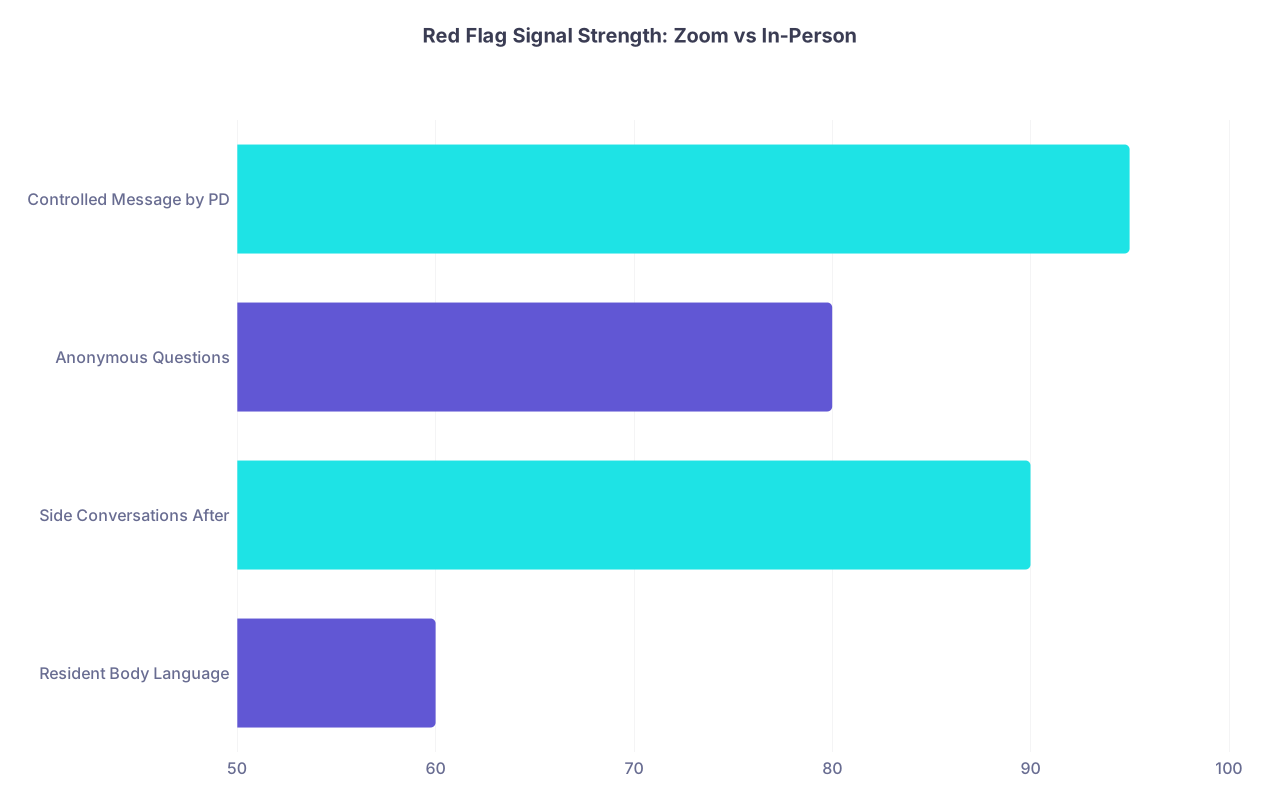
| Category | Value |
|---|---|
| Resident Body Language | 60 |
| Side Conversations After | 90 |
| Anonymous Questions | 80 |
| Controlled Message by PD | 95 |
On Zoom, PDs:
- See your questions in typed form, which makes it easier to sidestep or ignore patterns.
- Can cherry-pick which questions to answer “because of time.”
- Control who from the resident group is visible and who speaks.
Red flags online:
- Residents never alone with you. PD/associate PD is present for the whole “resident panel.”
- Chat questions getting skipped when they touch hours, culture, or mistreatment.
- Identical, almost rehearsed answers from different residents to uncomfortable topics.
You should actively look for:
- Separate resident-only sessions without faculty.
- Residents who volunteer to stay after the official time and talk.
- Consistency between what PD says and what residents say when unsupervised.
In-person, you get:
- Hallway whispers.
- Glances between team members.
- The vibe in workrooms and call rooms.
If a program avoids giving you any unsupervised time with current residents, that’s not an accident.
How to Ask Questions That Force Real Answers
Most students ask soft, easily deflected questions. You need questions that pin the program down without sounding hostile.
Here’s the trick: ask for examples and recent changes.
Instead of:
“How’s wellness?” → “What’s one thing you changed in the last 12 months based on resident feedback about burnout?”
Instead of:
“Is there any bullying?” → “When was the last time a concern about faculty behavior led to a change in schedule, teaching assignments, or faculty status?”
Instead of:
“Do residents go to conference?” → “What percentage of residents attend noon conference on a typical day, and what gets in the way when they can’t?”
Those questions make it hard to hide behind platitudes. If they still do, that’s your answer.
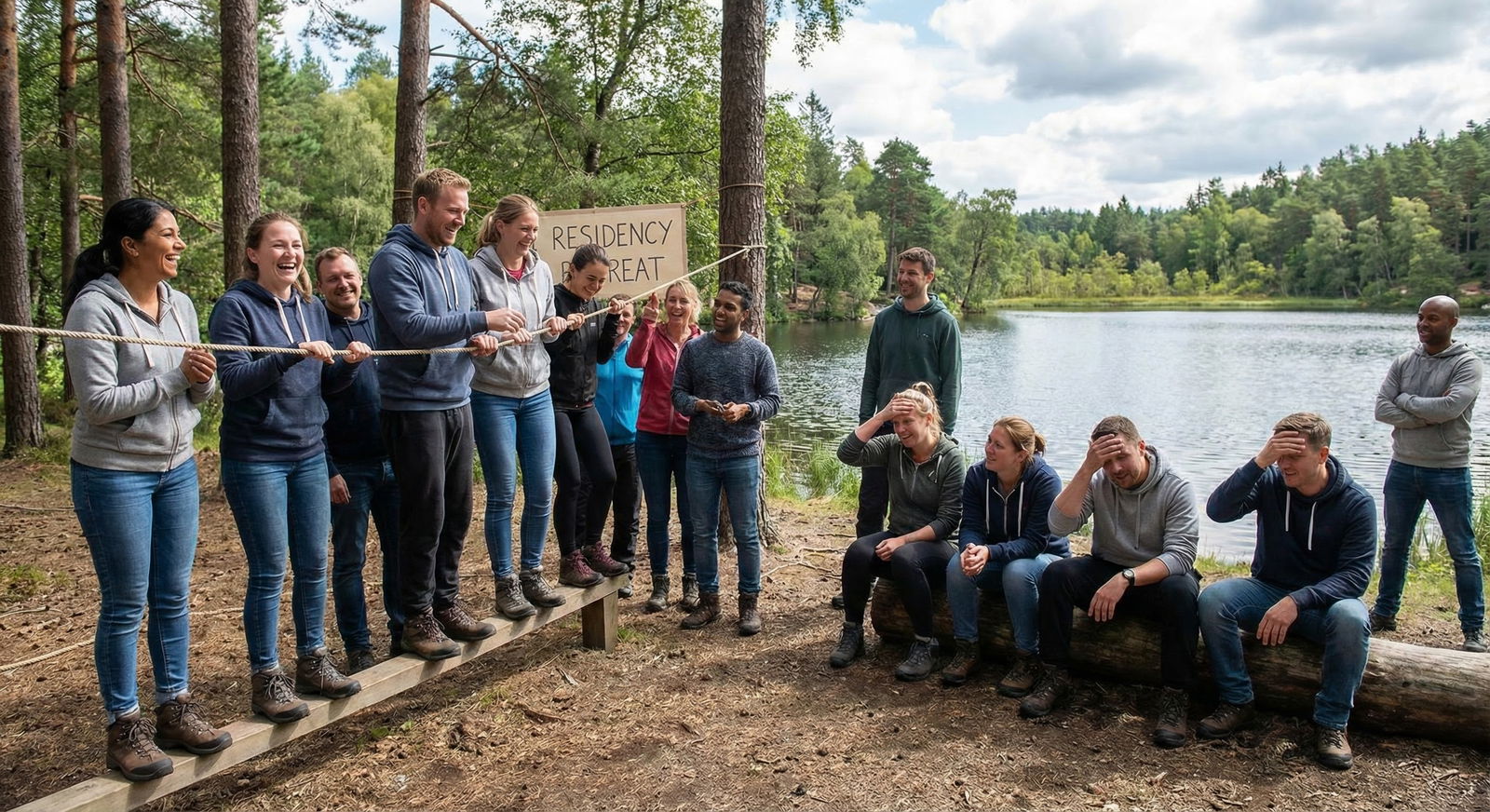
Cross-Checking PD Q&A With Resident Signals
Never judge a program by PD answers alone. You have to triangulate.
Here’s the internal algorithm most experienced faculty use when we advise students:
PD says: “Great culture, strong support, residents are happy.”
Residents alone say: “We’re tired, some rotations are rough but leadership is trying, here’s what changed recently.”
→ Busy program, but leadership probably engaged. Yellow, not red.PD says: “We’re very busy, but we take education seriously.”
Residents alone say: “Honestly, we staff the hospital, conference is optional, teaching depends on the attending.”
→ Service-heavy, borderline malignant if paired with bad support.PD says: “No problems with duty hours, we’re very compliant.”
Residents alone say: long pause, then “We log 80.” Nervous laughter.
→ They’re lying for your benefit and for ACGME’s.PD dodges multiple questions.
Residents are never allowed alone with applicants.
→ Do not ignore this. When a program knows they’ll look bad if residents talk freely, they tighten control.
When a Red Flag Should Actually Change Your Rank List
Not every awkward answer is a deal-breaker. Some are just signs of a busy, imperfect but functional place.
The serious red flags from PD Q&A that should move a program significantly down your list:
- Open, repeated evasiveness to direct, reasonable questions.
- No concrete data on board pass rates, fellowship/jobs, or duty hours.
- No examples of responding to resident feedback with real change.
- Overemphasis on “family” and “resilience” without structural support.
- Inability to talk about past problems with honesty and specifics.
The programs that quietly worry faculty like me are the ones that look shiny on paper, have big case numbers, “great reputation,” but can’t answer a simple question like:
“How do you know your residents aren’t burning out and failing silently?”
The best PDs have real answers to that. The worst PDs talk in circles.
FAQs
How much weight should I give PD Q&A compared to resident-only sessions?
Resident-only sessions carry more weight for raw truth, but PD Q&A tells you what leadership is willing to acknowledge and how they think. If PD answers and resident answers directly contradict each other, assume the residents are closer to the ground reality—but take seriously that leadership may be out of touch or in denial. That combination is dangerous.
Is it a red flag if the PD is just a bad public speaker?
No. Awkward delivery is not the problem. Some excellent PDs are terrible on Zoom but fantastic advocates behind the scenes. What matters is the content: whether they use specifics, own problems, show data, and describe concrete changes. A slick, charismatic PD with zero substance is far worse than an awkward one who gives you real numbers.
Can I email follow-up questions if I felt they dodged mine during Q&A?
Yes, and this is underused. A professional, specific email like, “During the Q&A I asked about board pass rates and didn’t want to take too much time—could you share your 3–5 year data range?” is perfectly appropriate. Their written response—or lack of one—becomes more data for you. Programs confident in their outcomes will usually answer; the ones that ghost you or stay vague are simply confirming the red flag.
Key points:
- Vague, deflective, or overly “feel-good” PD answers are not neutral—they almost always signal something they do not want to say out loud.
- Specifics, data, and honest discussion of past problems are green flags; denial, perfection claims, and “we’re like a family” with no examples are not.
- Always cross-check PD narratives with resident-only conversations; when leadership and residents live in different realities, assume you’ll be the one stuck in the worst of both.