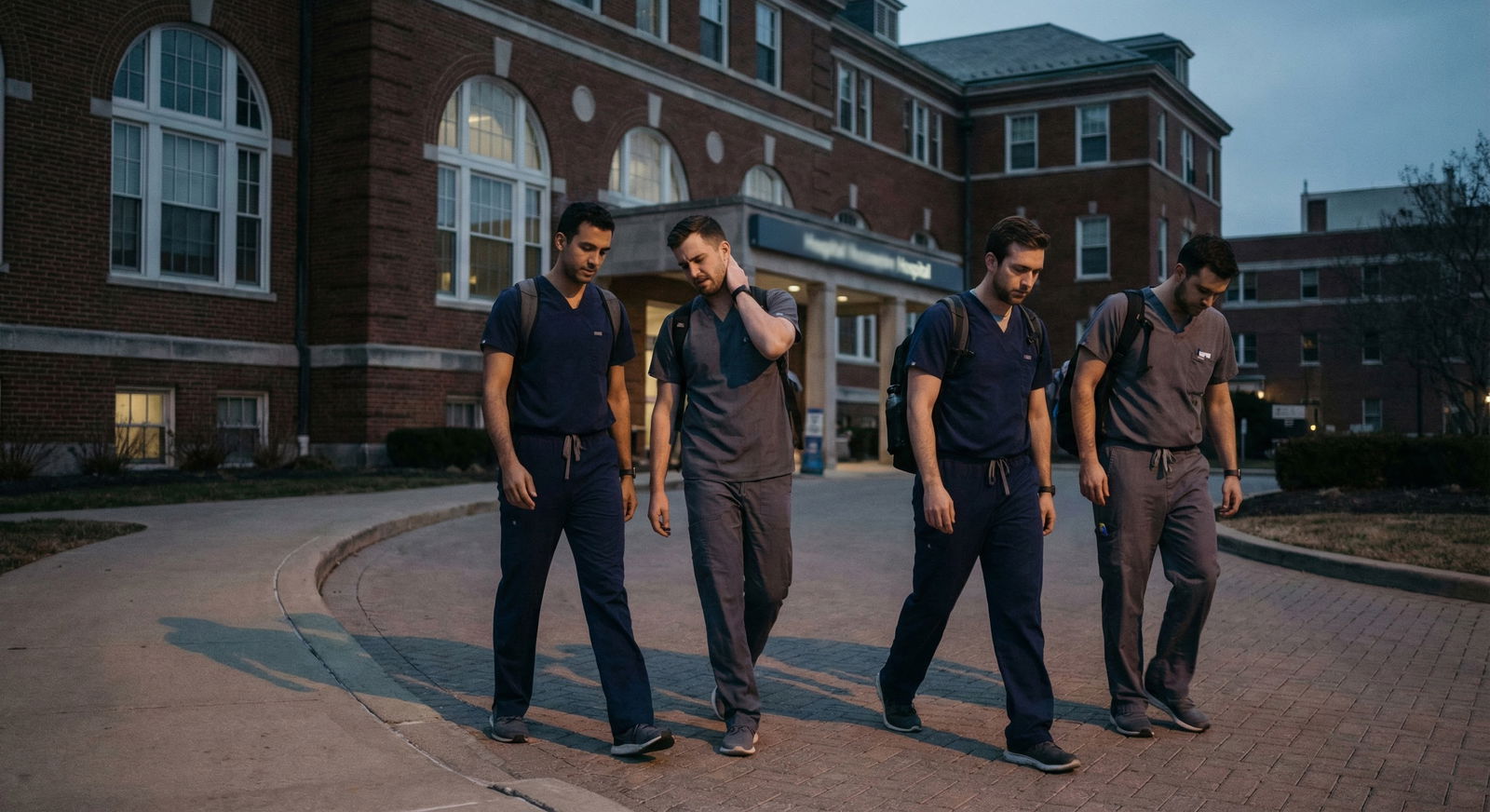
The residency retreat is where programs go to lie to you with a smile on their face.
Not about everything. Just about the things that matter.
You think you’re getting a weekend of “bonding,” “wellness,” and “we’re like family.” Program directors think they’re getting a perfectly staged marketing event for applicants and a controlled pressure-release for residents who are about to snap. Let me walk you through what actually happens behind that cheerful group photo.
What Retreats Really Are (From the PD Side)
Most residents believe retreats are planned around them.
Wrong. Retreats are planned around three things: accreditation optics, applicant optics, and damage control.
I’ve sat in the room where PDs, chiefs, and the program coordinator sketch out the agenda. The conversation sounds like this:
- “ACGME wants evidence of wellness and team-building. Put it in the annual report.”
- “We need photos for the website and for interview slide decks.”
- “Last year’s survey comments about ‘no support’ looked bad. We need a resilience workshop.”
Only after that do they ask, “What would residents enjoy?”
Here’s the uncomfortable truth: a “great retreat” can coexist with a toxic program. Sometimes the better the retreat feels, the more it’s compensating for what’s happening the other 51 weeks of the year.
Your job is not to decide whether the retreat is fun.
Your job is to read the tells. Because PDs and faculty leak the truth in ways they don’t realize, and residents will show you what they’re not allowed to say in formal settings.
Let’s go through the warning signs PDs hope you don’t know how to recognize.
1. Who’s Actually Here — And Who’s Conveniently Missing
The attendance pattern at a retreat is more honest than any mission statement.
Let me be specific.
If you’re a visiting student, applicant at a “second look,” or new intern sitting through an early-year retreat, this is one of the first things you should quietly track.
| Pattern | Likely Signal |
|---|---|
| Many residents absent, seniors missing | Burnout, disengagement, poor culture |
| Interns all present, seniors scattered | Seniors escaping, weak buy-in |
| Faculty/PD absent or in-and-out | Low priority, performative event |
| High resident presence, genuine mingling | Usually stronger culture |
| Residents present but clustered by PGY | Fragmented, siloed training |
Now, what you should be looking for.
A. Senior Residents Missing or Emotionally Checked Out
If PGY-3s/4s/5s are “on nights,” “post-call,” “on ICU” in mysteriously large numbers, that’s not a coincidence. Programs that value retreats protect coverage so at least some seniors can meaningfully attend.
Red flag pattern I’ve seen repeatedly: most seniors physically show up for the required first hour “all group” session, then vanish the moment they can. They drift off “to finish notes,” “to sleep,” or just disappear. Interns are left doing trust falls and “values exercises” with faculty while seniors are nowhere.
Translation: the people who’ve seen the full arc of the program want nothing to do with the pretend version being showcased.
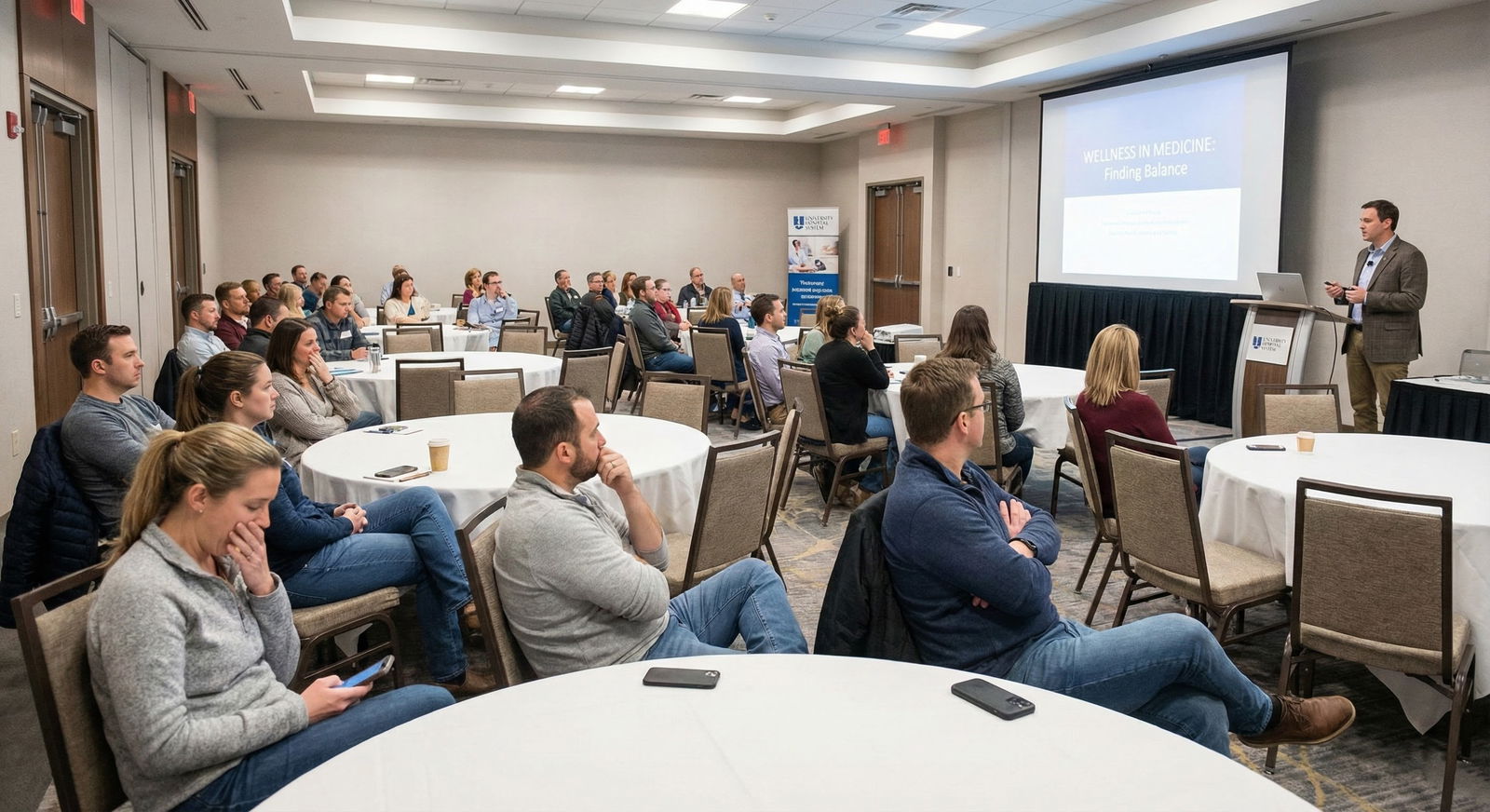
Watch their faces during the intro talk. Seniors sitting in the back of the room, arms crossed, half-smiling when wellness is mentioned? That’s real data.
B. PD and Key Faculty Drop In, Then Vanish
A PD who walks in for 15 minutes, gives a polished “thank you all, we care about you” speech, poses for photos, then “has to get back to clinic” is telling you something: resident well-being is a checkbox, not a priority.
I’ve watched associate PDs whisper, “We just need three pictures with everyone smiling,” then leave for the day. Meanwhile, the people doing the actual small-group work are junior faculty who have no real power to change schedules, staffing, or call structure.
If the leadership isn’t there for the hard parts — anonymous feedback, debriefs about workload, discussions about night float — they’re not serious about fixing anything.
C. Who Clusters With Whom
Take a step back and scan the room.
Do interns stick with interns, PGY-2s with PGY-2s, and seniors with seniors — and almost no cross-talk? Programs with toxic cultures tend to be stratified. Each class becomes its own survival unit.
In healthier programs, you’ll see mixed groups. Seniors talking with interns about non-work stuff. Faculty not just with other faculty, but actually sitting at resident tables without everyone stiffening up.
If the minute faculty sit down, conversation dies, that silence is telling you exactly how “safe” residents feel day to day.
2. The Schedule: What They Avoid Tells You More Than What They Include
Look at the retreat agenda like you’d look at an abnormal lab panel. The missing tests are half the story.
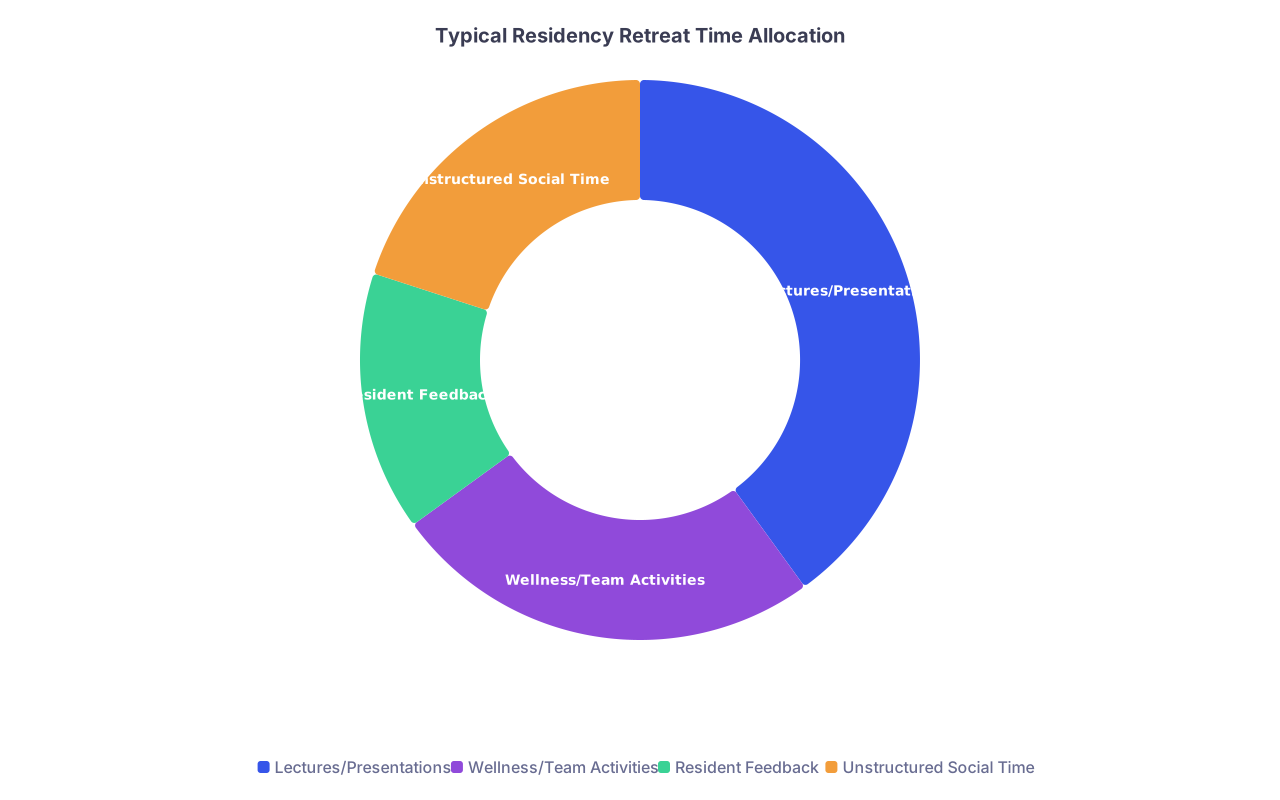
| Category | Value |
|---|---|
| Lectures/Presentations | 40 |
| Wellness/Team Activities | 25 |
| Resident Feedback | 15 |
| Unstructured Social Time | 20 |
Here’s how programs game the schedule.
A. All “Wellness,” No Guts
If the day is packed with yoga, mindfulness, escape rooms, “resilience talks,” but there is zero structured space for:
- Schedule feedback
- Rotation-level issues
- Safety and staffing concerns
that’s deliberate. The program is happy to tell you to breathe and meditate as long as you never say, “We need one more night float body or someone is going to die.”
The classic move: a 45-minute “anonymous feedback” session at the very end of the day, when half the room has mentally checked out and people are leaving early to get home or study.
If hard conversations are squeezed into the last tiny block or brushed off with “please fill out the survey later,” the leadership doesn’t want to deal with what they’re going to hear.
B. Zero Unstructured Time With Leadership
Strong programs use retreats for open, unscripted interaction. PDs hang around during breaks, sit at random tables for lunch, invite conversation: “How’s ICU been this year? What are we missing?”
In weaker programs, leadership only appears during scripted, controlled segments: slides, announcements, weathered jokes. Then they retreat to a corner to talk to each other.
If every interaction with leadership is mediated — microphones, PowerPoints, formal Q&A with pre-screened questions — residents quickly learn what cannot be said out loud.
You’ll see it in the body language: a question starts, the room goes still, eyes flick to the PD to see how annoyed they look. That tension is the real evaluation.
C. “We’ll Take That Back to the Committee”
Watch how concerns are handled in real time.
In healthy programs, when residents raise something concrete — “the cross-cover pager is unsafe,” “clinic templates are impossible” — leaders engage. Ask follow-ups. Maybe disagree, but at least wrestle with the problem.
In red-flag programs, you’ll hear the same deflections over and over:
- “We’ll bring that back to the CCC.”
- “That’s a system issue.”
- “We’ll look into that for next year’s interns.”
Translation: This is going to die in a committee inbox.
I’ve literally watched a resident bring up night float horror stories at a retreat, only to be cut off with, “Let’s not get into specific incidents here, stay high-level.” That’s not protecting privacy. That’s protecting the program.
3. Resident Behavior: What They’re Trying Not to Say
Residents will not trash their program in front of leadership at a retreat. They’re not stupid. But they will leak the truth in a hundred small ways if you pay attention.
A. The Forced Positivity Script
Listen to how residents answer generic questions like, “How’s the program?” or “What’s the culture like?”
In a healthier environment, you’ll hear variation. “Cards is intense but great teaching.” “Clinic days can be long.” “Night float’s rough but manageable.” Nuanced, specific, not copy-pasted.
In a troubled program, residents sound like they’re reading from a shared script:
- “We’re a really close-knit group.”
- “We get great autonomy.”
- “You work hard but you learn a lot.”
If you ask a follow-up — “What’s a typical ICU day like?” or “How often are you staying late?” — and they suddenly get vague, that’s your answer.
Watch their faces when faculty aren’t looking. The half-second eye-roll before the smile. The quick change of subject.
B. Who Jokes About What
Humor at retreats is never innocent. It’s anesthesia.
When burnout is high, retreat humor gets dark fast. I’ve heard toasts like, “Here’s to everyone surviving this year without a divorce.” Laughter that’s a little too loud, a little too long.
Pay attention to what the running jokes are. “We live here.” “Hope you like cross-cover.” “Don’t get sick on your day off.” You’re being given the real story wrapped in a punchline.
Also watch how leadership responds. Do they laugh uncomfortably and move on? Or do they say, “Yeah… we’ve got to fix that this year”?
The former is a warning sign. The latter suggests at least some alignment between what residents feel and what leadership is willing to fix.
C. The Shadow Conversations
The most honest part of any retreat happens in the margins: hallway walks, car rides, late-night hotel lobby conversations.
If you’re a student or new intern, your goal is not to cross-examine residents. Just be available. Stand next to someone at the snack table. Ask neutral questions like, “How did you decide to rank this place?” or “What rotations are hardest?”
In strong programs, residents will mention hard rotations but they’re not afraid of them. In toxic ones, they’ll warn you indirectly:
- “Third year… you just get through it.”
- “You’ll be fine if you don’t complain.”
- “We’re hoping some things change.”
When you hear “hoping things change” repeatedly, that means they haven’t.
4. The Budget and Venue: Where the Money Goes (and Doesn’t)
No, a fancy retreat does not automatically mean a good program. But how they spend tells you what they value.
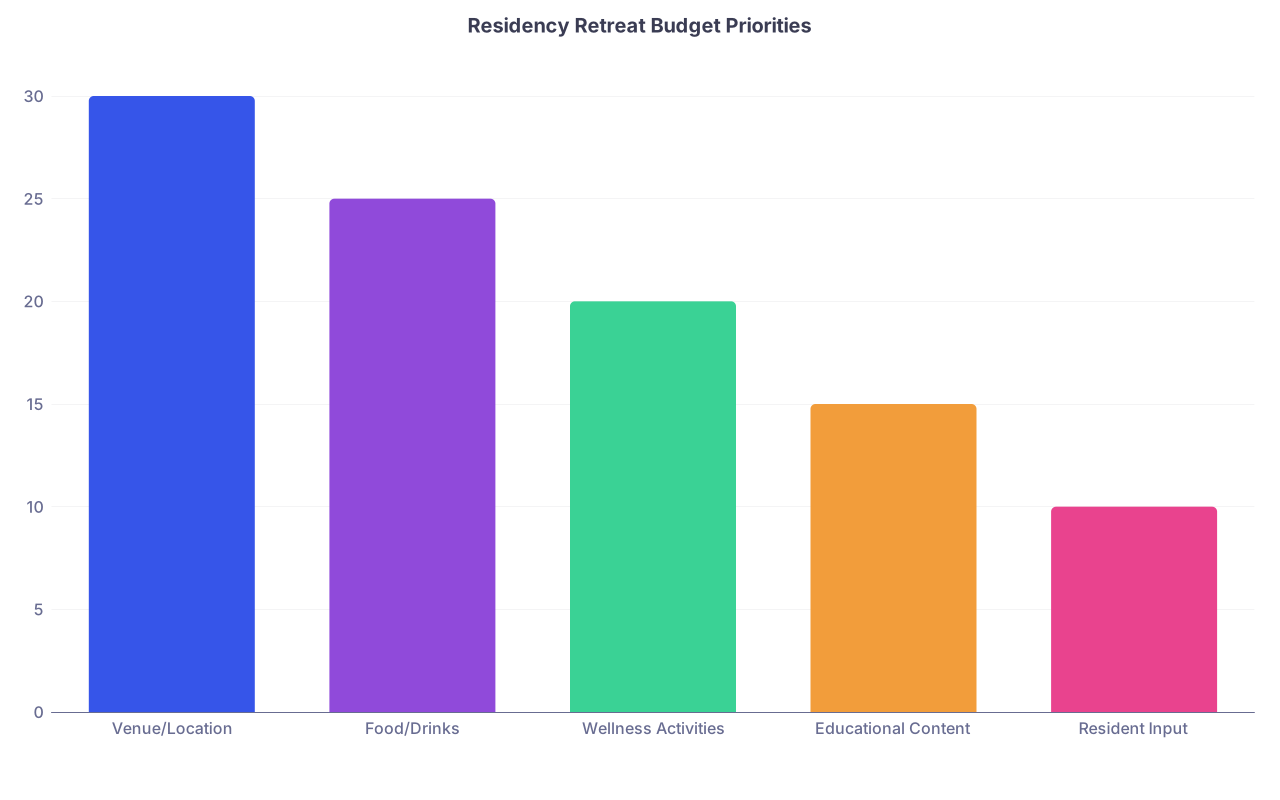
| Category | Value |
|---|---|
| Venue/Location | 30 |
| Food/Drinks | 25 |
| Wellness Activities | 20 |
| Educational Content | 15 |
| Resident Input | 10 |
A. Hotel Ballroom vs. Break Room Sandwiches
I’ve seen cushy retreats: nice hotel, decent catering, maybe even a lake or hiking. I’ve also seen programs throw “retreats” in a hospital conference room with Costco sandwiches and a sad fruit tray.
The variable that matters isn’t luxury. It’s intent.
If a program clearly has resources — big-name institution, new tower, tons of fellows, constant mentions of “growth” — and your “retreat” is a rushed afternoon in a windowless room with no protected time and no fun? That’s how they value you.
By contrast, I’ve seen smaller, resource-limited programs put legitimate effort into creating a real day away, even if it’s modest. Buses to a park. Actually protected time. PD and chair present and engaged. That tells you something different.
B. Alcohol as Currency
If the unspoken promise of the retreat is, “We’ll give you a nice open bar, please don’t bring up how miserable the ED rotation is,” that’s not wellness. That’s sedation.
Programs that lean heavily on “we treat you well, look at this resort, look at this dinner” usually do it to distract from structural issues they’re not willing to fix.
Enjoy the free drinks if you want. But don’t confuse them with respect.
C. Photos Everywhere, Follow-Through Nowhere
Retreats generate marketing material. PDs want smiling group shots for their website, their recruitment slide deck, and the GME newsletter.
So here’s the tell: after residents bring up issues at the retreat, does anything actually change in the following 6–12 months?
You won’t see that as a student. But you can ask residents: “Last year, did anything concrete change after retreat feedback?” If the answer is “No, but we talked about a lot,” that’s all you need.
5. The “Wellness” Content: Window Dressing or Real Work?
This is where programs love to pretend they’re progressive.
You’ll see yoga mats, mindfulness sessions, resilience talks, maybe a speaker on “physician wellness.” Nothing wrong with any of that. The problem is when it becomes a smokescreen.

| Step | Description |
|---|---|
| Step 1 | Wellness Session |
| Step 2 | Real culture work |
| Step 3 | Optics only |
| Step 4 | Burnout persists |
| Step 5 | Gradual improvement |
| Step 6 | Are structural issues addressed? |
A. Wellness Without Power is Theater
If your retreat spends an hour teaching you to do box breathing, but nobody is willing to talk about abusive attendings, unmanageable census caps, or chronically understaffed nights, the message is clear: fix yourself to tolerate a broken system.
I’ve sat in “wellness breakout” groups where residents start inching toward real complaints — like being constantly scheduled post-call clinic — and the facilitator gently nudges them back to “what are you grateful for?”
That’s not wellness. That’s containment.
B. Diversity, Equity, Inclusion… and Silence
Many programs now include DEI or “creating a respectful environment” sessions at retreats. Good. Needed.
But watch what happens when residents bring up actual incidents of bias, microaggressions, or differential treatment. Are those stories welcomed and engaged with? Or does the room get icy and leadership quickly change the subject to “awareness” and “shared values” without touching concrete events?
If DEI content at retreat is all slogans and no specifics, the program is more interested in looking woke than being accountable.
C. Real Wellness Feels Messy
In the rare programs that are actually doing the work, wellness conversations at retreat are uncomfortable. People talk about crying in the stairwell. About errors that still wake them up at night. About wanting to quit.
Faculty and PDs sit there and take it. They don’t rush to fix feelings. They say, “Yeah, this is hard. What can we change structurally? What can we realistically do this year?”
If you see that happening, you’ve found something rare. Hold on to it.
6. How Retreats Tie Into the Future of Training
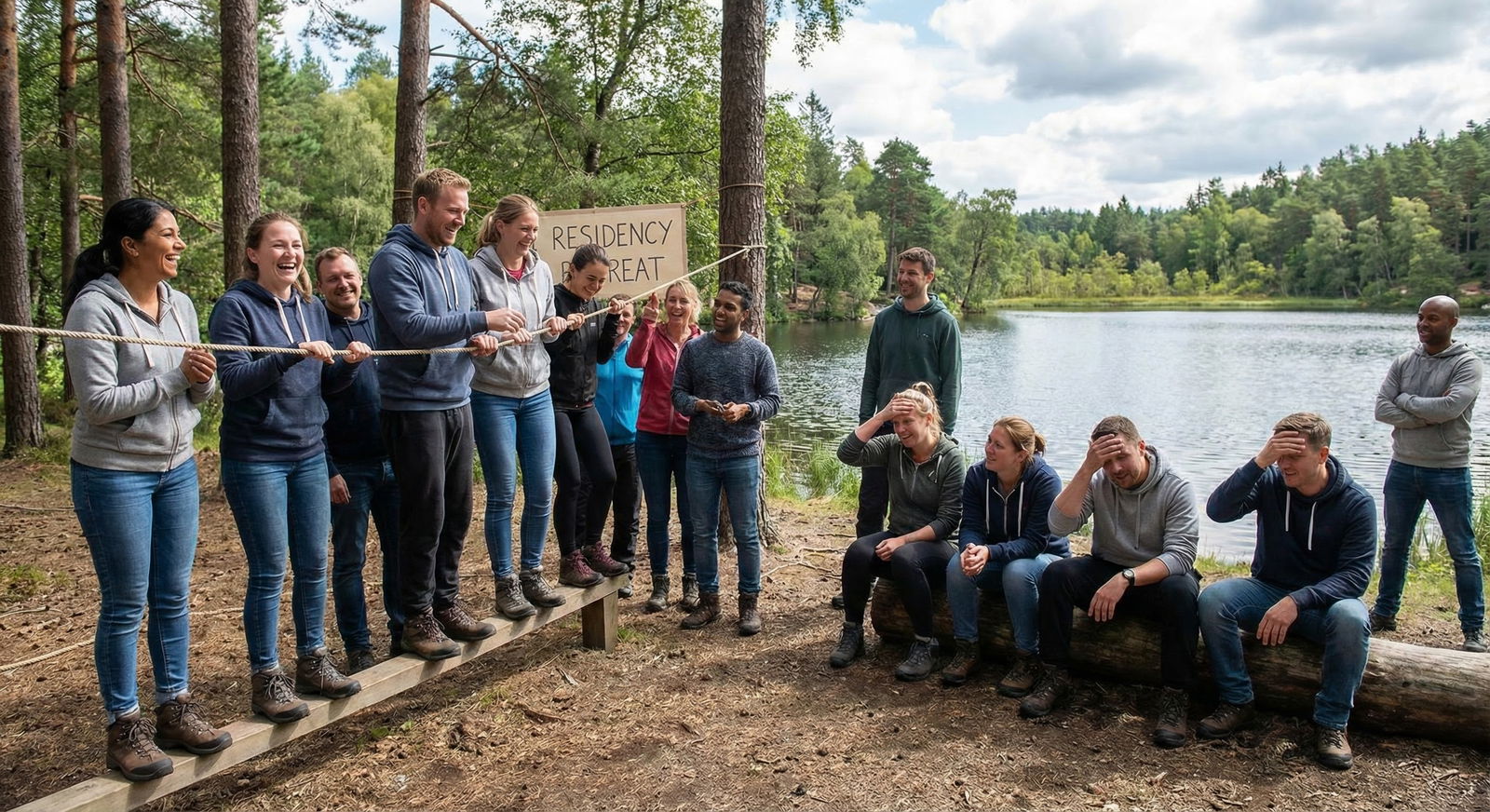
Here’s the meta-truth: retreats are becoming more choreographed because programs know residents talk, screenshots circulate, and ACGME surveys drive accreditation risk.
So they overcorrect. They build prettier sets.
Expect more:
- Polished PD speeches about “wellness” and “burnout.”
- Token resident “input” segments that don’t touch schedules or staffing.
- Professionally staged group photos, drone shots, maybe even retreat highlight videos.
At the same time, work compression is getting worse. Documentation, metrics, throughput — all up. Real staffing support? Usually not.
That tension is exactly why retreats can feel so surreal: you spend one day pretending the program is about yoga and teamwork, then go right back to drowning in cross-cover and inbox messages the next morning.
The future of medicine will not be decided at a retreat. It will be decided by how programs respond to the ugly truths residents keep trying to raise — and whether accreditation bodies start looking past the photos to the actual signal.
Retreats will stay. They look good on paper. They photograph well. But if you know what you’re looking at, you can read through the performance.
7. How You Should Use Retreats (As Student, Applicant, or Resident)
If you’re a student or applicant invited to a retreat or “resident day,” treat it as reconnaissance, not a perk.
| Role | Primary Goal |
|---|---|
| Visiting student | Read culture, watch resident dynamics |
| Interviewee/Second look | Validate or question what you heard on interview day |
| New intern | Learn who is safe to be honest with |
| Senior resident | Push for specific, trackable changes |
You’re not there to judge the catering or whether the icebreaker was awkward. You’re there to answer a few core questions:
- Do seniors look exhausted or engaged?
- Do residents joke about survival more than learning?
- Does leadership stay for the hard conversations or only the photo ops?
- Does anyone talk concretely about changes they made because of last year’s feedback?
If you’re a current resident, retreats are one of the few structured times leadership has to listen to you. Use that. Come in with 1–2 specific, realistic asks: “We need protected education on X” or “We need a second person on cross-cover after 10 PM on weekends.”
Programs can ignore vague complaints. It’s harder to ignore clear, concrete proposals residents bring up in front of an entire room.
The Bottom Line
Retreats are not the truth. They’re the costume.
If you pay attention, three things will tell you far more than any slideshow or speech:
- Who shows up and how they behave — especially seniors and leadership. Their body language is your real orientation.
- What the schedule avoids — if there’s no time or courage for real structural issues, the wellness talk is just wallpaper.
- Whether anything ever changes — programs that listen can point to concrete fixes born from past retreats; programs that pose cannot.
Watch quietly. Ask simple questions. Listen harder to the jokes and the silences than to the slogans.
That’s how you see the program they hope you don’t notice.