
The Situation: One Interview, SOAP on the Horizon, and a Tempting 'Clarifying Update'
You got one interview. Just one. Now SOAP is breathing down your neck, and you're staring at your keyboard at 2 AM, wondering if you should email the program to "clarify" something in your application.
I see this exact scenario every single year. The panic sets in. You think, If I just explain that gap year a little better, or elaborate on why my Step 2 score dipped, they'll realize I'm a star and give me a second look.
Stop. Take your hands off the keyboard.
Let's define what we're actually talking about here. A "clarifying update" isn't a second personal statement. It's not a plea for mercy. A true update is a new board score, a fresh publication, or a corrected ERAS typo. A clarifying update, specifically, is fixing a factual misunderstanding.
Your goal right now isn't to talk your way into a spot. You can't negotiate your way into a rank list. Your actual goal is to reduce confusion without creating noise. If you send a long, emotional email trying to recontextualize your entire life story, you aren't clarifying anything. You're just adding noise. And in the final weeks before SOAP, program directors and coordinators have zero tolerance for noise.
The decision to send an email right now comes down to a simple frame: Are you fixing a broken fact, or are you just trying to manage your own anxiety? If it's the latter, close the laptop. If it's the former, keep reading.
Decide Whether the Update Is Actually Worth Sending
Before you hit send, run your draft through a brutal filter. Ask yourself: will this message correct a hard error, add truly new material, or just restate things they already read in your ERAS? If it's just restating, delete the draft.
Let's look at when you actually should send an update. You transposed a month on your research timeline and it looks like you have a suspicious gap. You forgot to list a critical clinical rotation that just ended and the grades just posted. You finally passed Step 3 and the score is official. The program coordinator specifically asked you to send your updated CV after the interview. These are factual, material changes. They fix the record.
Now, let's look at when you absolutely should not send an update. You want to "stay on their radar." You're trying to force a post-interview connection because the Zoom call felt a little cold. You feel like the interviewers "didn't really get you" when you talked about your rural health experience.
I've watched applicants completely tank their chances by sending a three-paragraph email explaining why their low Step 2 score doesn't reflect their true clinical acumen. Here is the hard truth: the program director didn't misunderstand your score. They just didn't like it. You cannot email your way out of a metric they use as a hard filter.
Another classic mistake is the "passion" email. I just wanted to reiterate how much I love your program and how it remains my top choice. If you only have one interview, they already know you want to match there. You don't have options. Telling them they are your top choice when they are your only choice doesn't add value. It just highlights your lack of leverage.
If your email is essentially saying, "Please look at me again," it's not a clarifying update. It's a Hail Mary. And Hail Marys rarely work in the Match.
What a Clarifying Update Should Look Like if You Send One

If you actually have a valid, factual reason to hit send, keep it ruthlessly brief. I'm talking four sentences, max. One sentence for the purpose. One or two for the clarification. One for the thank-you. Done.
Here is what to include: the exact correction, with dates or labels if needed. "I am writing to correct a date on my ERAS application. My internal medicine sub-I was in October 2023, not October 2022, as previously listed." That's it. That is the entire email. It takes ten seconds to read, fixes the problem, and makes you look highly professional.
Here is what you must avoid. Do not include backstory. Do not include apologies. "I'm so sorry to bother you during this busy time" is weak. You aren't bothering them if you have a legitimate correction; you're doing your due diligence. Drop the pressure language. Never write, "I hope this changes how you view my application." Never, ever ask for feedback on your chances or where you stand on their rank list.
You are a professional communicating a logistical fact to another professional. Act like it. When you strip away the emotion and the fluff, you signal that you are a concise, effective communicator. Those are traits of a good resident. Rambling, anxious emails signal the exact opposite.
Timing, Tone, and Delivery: How to Avoid Making a Small Update Look Bigger Than It Is
<chart-data-api config='{"type":"hbar","title":"Email Trait Effectiveness: Do vs Dont","labels":["Subject Line Clarity","Brevity (Under 100 words)","Factual Tone","Multiple Follow-ups","Emotional Appeals"],"datasets":[{"label":"Do (Professionalism Score)","values":[9,10,9,1,1]},{"label":"Dont (Professionalism Score)","values":[3,2,3,8,7]}],"yAxisLabel":"Effectiveness Score (1-10)"}`>
Timing is everything. Send the update only if the information is ready and genuinely relevant before SOAP begins. Do not send a trickle of updates. I once had an applicant send four separate emails over two weeks, each with a minor tweak to their extracurriculars. By the third email, the coordinator flagged them as "high maintenance." You do not want that label. Send it once, send it right, and leave it alone.
Tone matters immensely. You want to sound like a calm, competent intern reporting a critical lab value to an attending. Factual, non-needy, respectful of their time. If you sound panicked, they will assume you'll panic on the wards.
Delivery details matter just as much as the words. Send it to the appropriate contact, usually the program coordinator or the specific email address they provided for post-interview communication. Use a clear, boring subject line: "Application Update - [Your Full Name] - [AAMC ID]". Do not CC the program director, the department chair, and three associate PDs. Do not email multiple people unless explicitly directed to do so. Respect the chain of command.
If You Decide Not to Send It: What to Do Instead Before SOAP
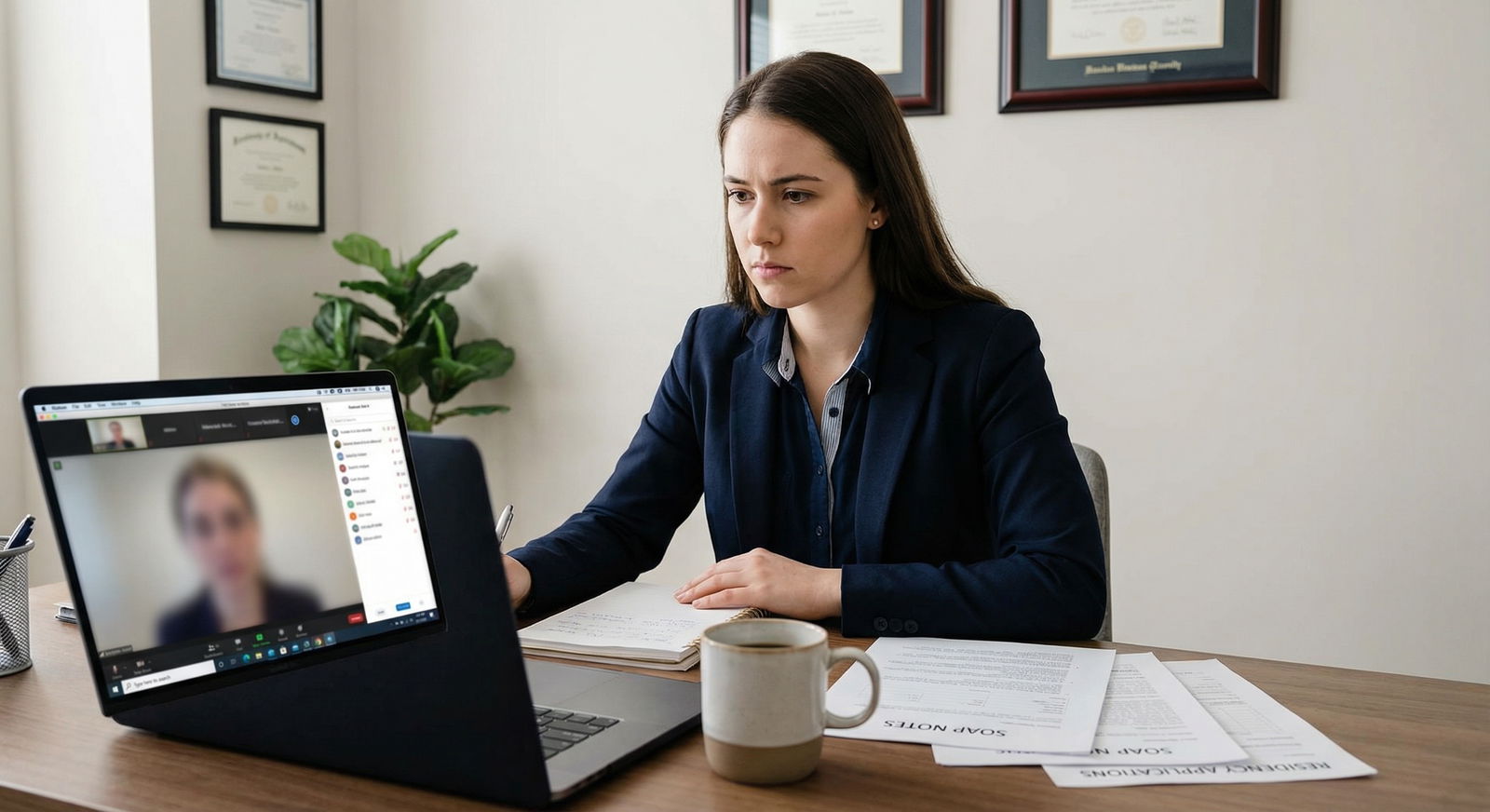
So you read the last section and realized your "update" is just anxiety in disguise. Good. That's a win. Close the email draft.
Now, shift your energy to what you can actually control. You have one interview, which means SOAP is a very real possibility. Polish your SOAP application materials. Make sure your personal statement is tight and your ERAS is flawless. Prepare your program-specific narratives. Why do you want to go to a specific community program in the Midwest? Have an answer ready.
Practice concise explanations of your application story out loud. If there is a red flag on your app, you need a 30-second, non-defensive explanation ready for a SOAP phone interview. Record yourself. Listen to it. If you sound defensive, try again.
Outline a plan for interview follow-up only if the program explicitly invites it, or if you have a genuine, material update later in the cycle. But for right now? Reassure yourself that silence is often the better move. When a message wouldn't add tangible value, not sending it shows restraint. It shows you respect their inbox and your own dignity.
Bottom Line: A Clarifying Update Is for Correction, Not Anxiety Relief
Let's summarize the decision rule. Send a clarifying update only if the information is meaningful, strictly factual, and likely to help the program understand your application better.
If you only have one interview, one thoughtful, highly specific update can be appropriate. But overexplaining, rambling, or trying to re-argue your case will backfire. Program directors are tired. Coordinators are overwhelmed. Give them facts, not feelings.
Open your draft right now. Run it through the "material change" test. If it doesn't pass, delete it. Take that nervous energy and go practice your SOAP interview answers instead.