

Panic-accepting a SOAP offer is not the end of your career, even if it feels like you just ruined everything in 2 minutes.
Let me just say the quiet part out loud: SOAP is designed to make you panic. Short windows. Exploding offers. Everyone around you refreshing, crying, whispering, “Just take something.” And you’re supposed to calmly make a life-defining decision?
Right.
So you’re here because you either:
- Already accepted a SOAP offer and now feel sick about it, or
- Are terrified you’ll panic-accept the “wrong” one and be stuck forever.
Let’s walk through what actually happens if you accept a SOAP offer you’re unsure about, what your options are, and how bad the consequences really are (spoiler: they’re not as permanently catastrophic as your brain is telling you).
First: What “Panic-Accepting the Wrong SOAP Offer” Really Means
I’m not talking about a mildly imperfect fit. I mean the stuff that keeps you up all night:
- “I accepted a prelim when I should have waited for a categorical.”
- “I took FM but I really want psych.”
- “I accepted a program in a city I hate and my partner/kids can’t move.”
- “I hit accept because I was scared of ending up with nothing, and now I feel trapped.”
SOAP rules are rigid during the process, but your life is not locked forever. This is where a lot of people misunderstand the stakes.
Here’s the cold, procedural truth:
During SOAP, once you accept an offer in ERAS, you’re done. You’re supposed to stop contacting other programs, you can’t accept another SOAP offer, and you’re contractually committed to that program for July 1.
But that doesn’t mean:
- You’re locked into that specialty forever
- You can’t change programs in the future
- You destroyed your chance at ever matching into your “dream” field
You might have made a rushed decision. That doesn’t equal permanent doom.
The Immediate Reality After You Accept: What You Can and Can’t Do
Let’s separate SOAP week rules from real-life post-SOAP options. They’re not the same.
During SOAP week:
- Once you click “Accept” → you’re off the board.
- You cannot keep entertaining other offers.
- You’re expected to honor that acceptance. That’s why programs send the offer list to NRMP.
After SOAP is over:
- You’re matched to that program for the upcoming year.
- You’re expected to show up July 1.
- The NRMP and the program treat this as binding.
So the big panicky questions:
“Can I back out right after I accept and go chase another SOAP offer?”
Not really. The system isn’t built for that. Once you accept, other programs are supposed to stop considering you. If you try to play games during SOAP, you risk violating NRMP rules and getting in serious trouble.
“What if I just don’t show up?”
Technically, you can not show up. You are a human, not a prisoner. But that comes with consequences. The program can report you as a contract violation to the NRMP, and that can mess with your ability to match again soon.
This is where it gets muddy and real. Let’s talk consequences.
Worst-Case Scenario Thinking: How Bad Is It Really If I Hate My SOAP Match?
Here’s what your brain is probably screaming:
- “If I start this prelim year and hate it, I’ll be stuck forever.”
- “If I back out, I’ll be blacklisted from every program in the country.”
- “If I do this wrong, I’ll never match again.”
I’ve watched people go through each of these scenarios. None of them ended in complete career death.
Scenario 1: You Start the SOAP Program, Hate It, and Want Out
This is more common than anyone admits publicly.
You start residency. Within weeks or months you’re thinking:
- “This specialty is not me at all.”
- “This program culture is bad, maybe toxic.”
- “I can’t do 3+ years of this.”
Options people actually use:
Finish the year, then reapply
This is the most “stable” option. You complete PGY-1, then:- Apply to a different specialty as a PGY-2 transfer or as a re-applicant
- Or aim for advanced positions (e.g., PGY-2 spots in neuro, rads, anesth)
Programs like seeing that you finished what you started, didn’t just bail mid-year, and you have strong clinical experience.
Look for an in-training transfer
Some people move mid-residency if:- Another program has an open position (from someone else leaving)
- Your PD supports the transfer
- The new program is willing to take you off-cycle
Is this easy? No. But it happens. I’ve seen IM residents slide into neuro, FM into psych, prelims into categorical, etc.
Change specialties after a prelim year
Classic route:- You SOAP into a prelim medicine or surgery year.
- During that year you reapply into your desired specialty.
- You match the next cycle into PGY-2 categorical.
This is built into how some people use prelims. It’s not some bizarre loophole.
Scenario 2: You Panic-Accept, Then Try to Back Out Before July 1
This is the scary one. Here’s what can happen if you break the contract:
- The program can report you to NRMP for violation.
- NRMP can investigate, and if they decide you violated rules:
- You can be barred from participating for a cycle (or more in severe cases).
- Your name may be on the list of match violations.
Does that mean you’re 100% dead as an applicant forever? No. But it makes reapplying harder, and some programs will steer clear of anyone with an NRMP violation.
This is why most advisors will tell you:
If you accepted a SOAP offer, assume you’re doing at least that first year unless something extreme happens (health, family crisis, major life change).
You’re not a prisoner. But there are real formal consequences for backing out.
How Bad Is Accepting a “Less-Than-Ideal” SOAP Offer Compared to Having No Match?
Here’s the awful choice a lot of us stare at:
- Option A: Take a SOAP spot in a specialty/program/city you’re lukewarm or even cold about.
- Option B: Walk away unmatched and try again next year.
Your brain says, “If I pick wrong now, I’ll ruin everything.”
Reality is more nuanced.
Let’s compare:
| Path | Pros | Cons |
|---|---|---|
| Take SOAP Offer | Income, training, keeps CV active | Might be wrong specialty/program |
| Remain Unmatched | Full control over reapplication plan | No income, visa issues, CV gap |
| Prelim Year (SOAP) | Flexible stepping stone | Extra year, may need to move twice |
Most program directors would rather see:
- You completed something clinical and didn’t sit at home for a year
than - You stayed completely outside clinical medicine with only vague “research” or nothing.
Is going unmatched and reapplying ever valid? Yes:
- If you are absolutely sure you’d be miserable in the available SOAP options
- If your application is fixable in a year (more research, Step 2, more letters)
- If you can handle a year without residency income, possible visa problems, and explaining that gap next time
But that’s a heavy lift. And a lot of “I’ll just reapply stronger next year” people… don’t actually end up stronger. They end up older, more anxious, with a gap and not much else changed.
Panic-accepting something during SOAP may actually be the safer “floor” option, even if it’s not your “ceiling” dream.
What If I Accepted the “Wrong” Specialty?
This is a special kind of dread.
You thought you’d match psych. You SOAP into FM. Or IM. Or prelim surgery. Now you’re imagining a whole life you never wanted.
Reality check: people change specialties all the time.
No one advertises this on Instagram, but residency programs are constantly dealing with:
- People who switch from surgery → anesthesia, rads, EM, IM
- People who switch from FM → psych
- People who do a prelim and then go into a categorical elsewhere
You’re not locked into this identity:
- “I SOAPed into FM, so I’ll always be an FM doc”
- “I only got a prelim, I’ll never match categorical”
Those are anxiety statements, not facts.
If you’re in the wrong specialty:
Do well where you are, even if you dislike it.
Bad performance will follow you into your next application.Start early conversations (quietly, professionally):
- With a trusted faculty member
- With your PD, when you’re sure and have a plan
- With programs in your target specialty that have had transfers
Use your SOAP program to build:
- Strong clinical letters
- A story that makes sense: “I realized I’m better suited to X, here’s what I did to explore it.”
How to Cope Right Now If You Already Panic-Accepted
If you’re sitting there with a knot in your stomach thinking, “I hit accept and I think I screwed up,” this part is for you.
Here’s what not to do:
- Don’t start emailing programs to ask if you can undo the acceptance. That’s how you slide into NRMP violation territory.
- Don’t spam other programs with “just checking if you still have openings.” Once you’ve accepted, you’re off-limits.
Instead:
Give yourself 24–48 hours to emotionally decompress
SOAP is traumatic. You probably slept badly, cried, doom-scrolled, and had 10 people whispering advice in your ear.Gather real information about the program
Not just your assumptions or what a Reddit comment said. Try to find:- Current residents (especially interns)
- What their graduates do
- Call schedule, support, culture
Ask: “Is this truly unlivable, or just not my dream?”
There’s a huge difference between:- “This is survivable but not what I pictured”
versus - “This would actively destroy my mental health / life situation”
- “This is survivable but not what I pictured”
Frame it as: “This is my first step, not my final form.”
You can absolutely use a less-than-perfect SOAP match as:- A stepping stone to a better specialty later
- A way not to fall completely out of the system
- A chance to build a strong clinical reputation
A Quick Visual: What People Do After a “Wrong” SOAP Match
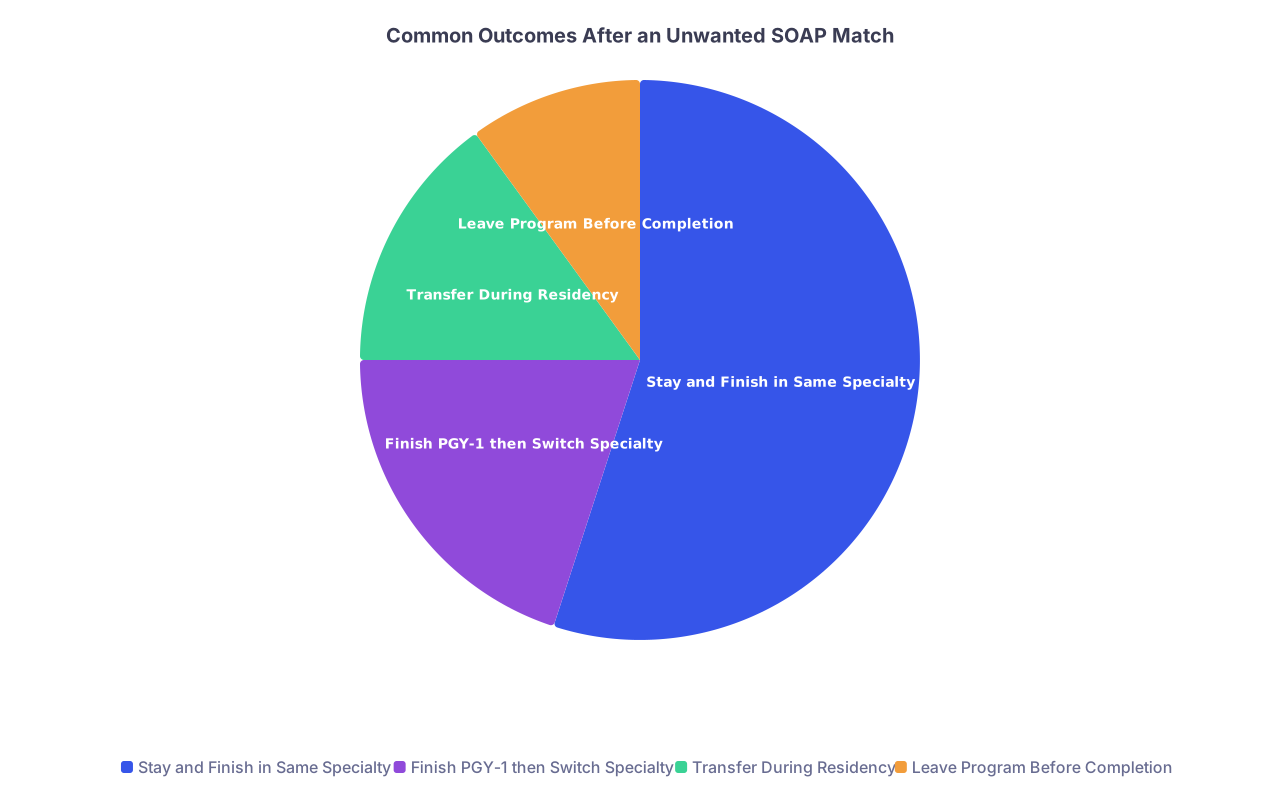
| Category | Value |
|---|---|
| Stay and Finish in Same Specialty | 55 |
| Finish PGY-1 then Switch Specialty | 20 |
| Transfer During Residency | 15 |
| Leave Program Before Completion | 10 |
No, these aren’t official NRMP numbers. This is more “I’ve watched this happen repeatedly” territory. But the pattern is real: the majority stay and make it work, a solid chunk use it as a stepping stone.
You have options.
Timeline of What Your Next 1–2 Years Could Look Like
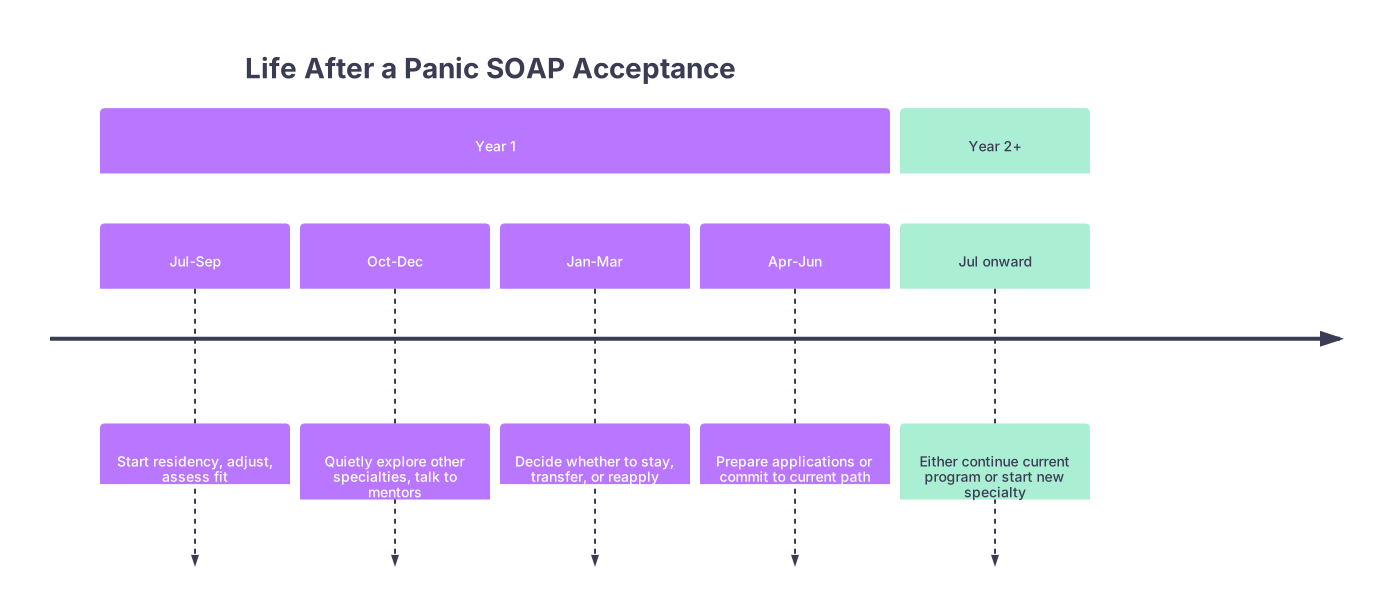
| Period | Event |
|---|---|
| Year 1 - Jul-Sep | Start residency, adjust, assess fit |
| Year 1 - Oct-Dec | Quietly explore other specialties, talk to mentors |
| Year 1 - Jan-Mar | Decide whether to stay, transfer, or reapply |
| Year 1 - Apr-Jun | Prepare applications or commit to current path |
| Year 2+ - Jul onward | Either continue current program or start new specialty |
The key thing here: you’re not deciding your entire future in that 2-minute SOAP window. You’re deciding your next step. There’s a huge difference.
If You Haven’t Accepted Yet and You’re Terrified of Choosing Wrong
Some rapid-fire advice for when the clock is ticking and your chest is tight:
Create a strict priority order before offers hit
Rank:- Categorical > Prelim (if you don’t already have a PGY-2 spot)
- Your truly acceptable specialties > things you’d be miserable in
- Locations you can realistically live in (family, finances, visa)
Decide what’s actually worse for you personally:
- One year in a less-than-ideal program/specialty
- Or going unmatched and risking never getting back in
Set a “hard no” line in advance
For example:- “I will not accept a surgical prelim because I know that environment will destroy me.”
- “I will accept any IM categorical, no matter where, because I want IM more than I care about location.”
When an offer appears, ask: “Is this above or below my hard line?”
If it’s above → strongly consider accepting.
If it’s below → don’t let sheer panic talk you into it.
Remember What Programs Actually Care About Long-Term
You’re imagining PDs years from now saying, “Wow, they SOAPed into X, they must be pathetic.” That’s not how they think.
Program directors care about:
- Your performance where you did go (did you show up, work hard, function)
- Your letters
- Your story making sense: “Here’s what happened, here’s what I learned, here’s why I’m changing direction”
What they don’t care about as much:
- That you didn’t get your dream specialty at 26
- That you made a panicked but understandable choice in a high-pressure process
Residency programs know SOAP is chaos. Everyone in that world has seen someone panic-accept, adapt, grow, and later shift into a better-fit path.
One More Thing: You Are Not a Failure for Needing SOAP
SOAP itself messes with your identity. You watch classmates post “I matched!” photos while you’re in a side room on Zoom with an advisor trying not to cry between offer rounds.
Needing SOAP doesn’t mean:
- You’re dumb
- You’re lazy
- You’re unfit to be a doctor
It means you applied in a brutally competitive system where a ton of good people get squeezed out each year. That’s it.
The only true career-ending move? Giving up completely and never trying to step forward from where you are now.

FAQs: “What If I Panic-Accept the Wrong SOAP Offer?”
1. Can I cancel a SOAP acceptance and take a different offer?
Short answer: during SOAP, no. Once you accept a SOAP offer in ERAS, you’re obligated to that program for July 1. Trying to swap, negotiate, or back out in the same week risks NRMP rule violations. Programs talk. ERAS tracks. This isn’t like backing out of a dinner plan.
2. Will backing out of a SOAP match ruin my chance of ever matching again?
It won’t automatically ruin your life, but it can seriously damage your record. If the program reports you to NRMP for a breach, you may be:
- Investigated
- Sanctioned (including being barred from the Match for a cycle)
Some people do re-match after a violation, but the bar is higher and you’ll have to explain it over and over. If you’re thinking of backing out, talk to a dean, GME office, or lawyer before you do anything.
3. Is it better to accept a bad SOAP offer or go unmatched and reapply?
It depends on your situation, but for most people, accepting a tolerable SOAP offer is safer than going unmatched. You:
- Get clinical experience
- Earn an income
- Avoid a big gap on your CV
Going unmatched can work if you have a very strong, realistic plan for fixing your application and you can sustain yourself financially and emotionally for a year. Many people say they’ll “reapply stronger” but don’t actually change enough to move the needle.
4. Can I switch specialties after starting a SOAP residency?
Yes. It’s hard, but not rare. Common paths:
- Complete PGY-1, then apply to another specialty
- Apply for open PGY-2 spots in your desired field
- Transfer between programs if both PDs agree
You’ll need:
- Good evaluations where you are
- Honest but professional explanation of why you’re switching
- Strong letters (ideally from your current program too)
5. What if I realize during intern year that I hate my specialty?
First, you’re not the only one. Quietly:
- Talk to a trusted attending or mentor
- Explore other specialties by talking to residents/faculty in them
- Once you’re sure, schedule a serious, honest meeting with your PD
Your job is to:
- Keep functioning well clinically
- Not burn bridges
- Build a coherent story of why switching specialties makes sense for you
6. Will programs judge me for having gotten my spot through SOAP?
Some might notice; most won’t care as much as you think. By the time you’re applying again (for fellowship, a new specialty, or a different program), they care more about:
- How you performed as a resident
- Your evaluations and letters
- Your consistency and professionalism
“Got in through SOAP” is not a permanent stain. “Disappeared, flaked, or violated contracts” is.
Key points to hold onto:
- A panic SOAP acceptance is almost never a permanent sentence. It’s a step, not a life sentence.
- Breaking a SOAP contract has real risks; using that year strategically has real opportunities.
- Your career is built over years, not in one horrifying 2-minute SOAP decision window.


