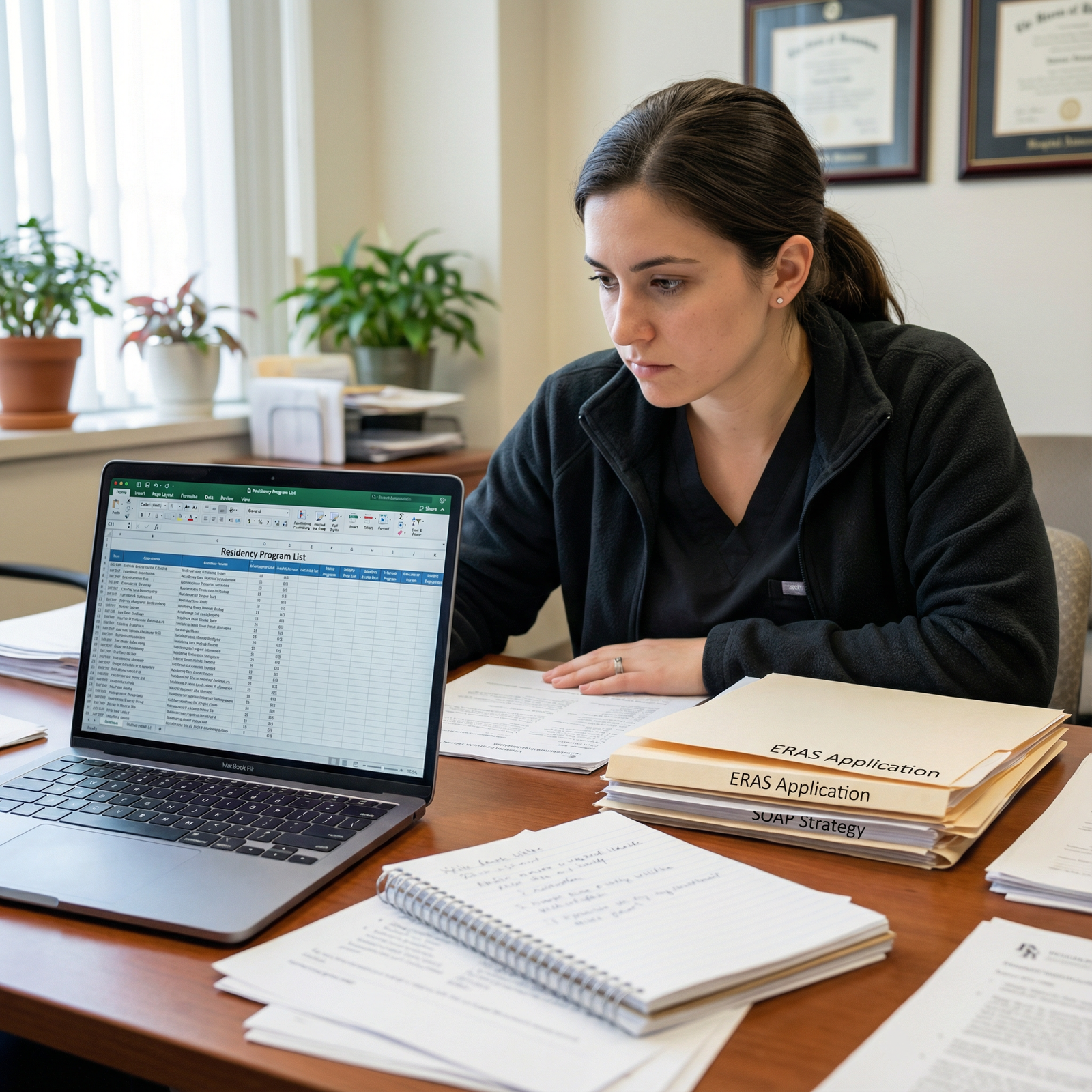
Navigating SOAP with Confidence: A Detailed Guide for Candidates Facing Limited Interviews
The Supplemental Offer and Acceptance Program (SOAP) is one of the most intense and emotionally charged weeks of the residency journey. For medical candidates who receive few or no residency interviews in the main Match, SOAP can feel like a last, high-pressure opportunity to secure a position.
Yet SOAP is not simply a consolation process—it is a structured, strategic second chance. Many strong residents enter training each year through SOAP. With preparation, clear priorities, and deliberate action, you can use SOAP to advance your residency and career development goals, even if your interview experience so far has been limited.
This guide walks through concrete strategies to help you:
- Understand how SOAP works and what to expect
- Optimize your application quickly and effectively
- Communicate strategically with programs
- Prepare for high-yield interviews during SOAP
- Stay resilient and plan for all possible outcomes
Understanding SOAP in the Context of Residency and Limited Interviews
What Is SOAP?
The Supplemental Offer and Acceptance Program (SOAP) is an NRMP-managed process that occurs during Match Week for unmatched or partially matched applicants. Once the main residency Match results are released (showing if you are fully matched, partially matched, or unmatched), eligible candidates can participate in SOAP to apply for unfilled residency positions.
Key features of SOAP:
- Timing: SOAP unfolds over several tightly scheduled rounds during Match Week.
- Eligibility: Only applicants who are unmatched or partially matched and registered for the NRMP Main Match are SOAP-eligible.
- Applications: You apply to unfilled programs using ERAS, with a limited number of applications (the cap can change by year, so confirm current rules).
- Offers: Programs review applications and conduct fast-tracked interviews, then submit lists to NRMP. Applicants receive offers in “rounds” and have short windows to accept or decline.
SOAP is not an informal scramble. It is a standardized, regulated process with strict rules on communication, offers, and acceptances. Understanding these rules is fundamental, especially if your interview exposure has been limited and you want to maximize every interaction.
Why Limited Interviews Before SOAP Matter—and What They Don’t Mean
Receiving few or no interviews before SOAP can feel discouraging, but it does not automatically mean you are a weak candidate. Limited interviews may stem from:
- Specialty competitiveness (e.g., derm, ortho, plastics, ENT)
- Late or incomplete application submission
- USMLE/COMLEX score patterns or test timing
- Lack of geographic ties to certain regions
- Visa or graduation year restrictions
- Overly narrow specialty or location preferences
SOAP gives you a chance to:
- Reassess your strategy (specialties, location, program types)
- Adjust your application narrative to address prior challenges
- Present a more targeted, realistic plan that aligns with available positions
What matters now is how efficiently and thoughtfully you respond during SOAP—not how many interviews you had before.
Mastering the SOAP Timeline and Logistics
Time Management: The Backbone of a Successful SOAP Strategy
During Match Week, everything moves quickly. Strong organization can set you apart from other medical candidates facing the same pressure.
Create a SOAP Week Action Plan that includes:
Key Dates and Times
- Date/time you learn if you matched
- Date/time the list of unfilled programs is released
- Deadline for certifying your final rank list (already past at this point, but important for context)
- SOAP application opening and closing times in ERAS
- Interview windows and offer rounds with response deadlines
Responsibility Breakdown
- Who helps review your personal statement (advisor, mentor, friend)?
- Who runs mock interviews with you?
- Who helps monitor email and messages (so you don’t miss interview requests)?
Communication Channels
- Ensure your email and phone are functional, voicemail is professional, and notifications are on.
- Check ERAS and NRMP frequently during SOAP hours.
Use a simple spreadsheet or task manager to track:
- Programs applied to
- Specialty, location, and program type (community vs university, prelim vs categorical)
- Contact attempts (if allowed)
- Interview requests and scheduling details
- Post-interview impressions

Building a High-Impact, Targeted SOAP Application
Crafting a Program-Specific Application Strategy
With a capped number of applications during SOAP, “shotgun” tactics are risky. You must be targeted and realistic.
1. Prioritize Programs Strategically
When the list of unfilled programs is released:
Sort by Specialty: Identify realistic specialties where your profile fits.
- If you previously applied to a highly competitive specialty only, consider related or less competitive fields such as internal medicine, family medicine, pediatrics, psychiatry, prelim years, or transitional years.
Assess Program Type:
- Community vs University: Community programs may be more open to non-traditional or international graduates, or those with academic gaps.
- Preliminary vs Categorical: A preliminary year may be a viable stepping stone if categorical positions are limited in your desired specialty.
Consider Eligibility Filters:
- Check for graduation year cutoffs, visa sponsorship policies, and minimum exam scores.
Create a rank-ordered priority list of programs based on:
- Your qualifications and realistic chances
- Your willingness to train in that specialty/location
- Long-term career development potential (academic vs community, fellowship access, etc.)
2. Tailoring Your Application Materials
Even under time pressure, you can make meaningful improvements:
Personal Statement (SOAP Version)
- Write or revise a concise, focused statement that:
- Clearly explains your interest in the specialty
- Addresses any obvious red flags (e.g., exam failures, gap years) briefly and constructively
- Emphasizes resilience, growth, and readiness to contribute immediately
- Consider creating specialty-specific versions (e.g., one for internal medicine, one for family medicine).
- Write or revise a concise, focused statement that:
Curriculum Vitae (CV)
- Ensure your CV is updated with:
- Recent rotations and clinical experiences
- Any ongoing research, quality improvement projects, or teaching roles
- Leadership roles, language skills, and community service
- Ensure your CV is updated with:
Letters of Recommendation (LoRs)
- Use your strongest LoRs that support the specialty you are applying to.
- If your prior letters are misaligned with your SOAP specialty (e.g., all surgery letters but now applying to internal medicine), consider asking a mentor for a brief updated letter, if time permits.
Highlighting Your Unique Selling Points Under Pressure
Programs reviewing SOAP candidates often must decide quickly. Make your strengths obvious:
- Clinical Strengths: High clerkship grades, strong sub-I performance, or excellent evaluations.
- Professionalism and Reliability: Examples of going above and beyond for patients or teams.
- Diversity of Experience: Community health work, global health, rural rotations, or underserved populations.
- Additional Skills: Extra languages, informatics, public health training, teaching experience, or leadership roles.
Phrase your application in terms of what you will bring to the residency team on Day 1—not just your long-term aspirations.
Strategic Communication and Networking During SOAP
Communicating with Programs: What Is Allowed?
NRMP has strict rules around SOAP communication. Always confirm the current year’s policies, but in general:
- Programs can contact you for interviews or information.
- Unsolicited calls/emails to programs can be restricted—check with your dean’s office and NRMP rules.
- Your medical school may advocate on your behalf (e.g., dean’s letters or phone calls), which can be powerful.
Work closely with your student affairs or dean’s office to:
- Identify programs that might be open to applicants with your profile.
- Coordinate appropriate, rule-compliant outreach to those programs.
Preparing a High-Yield “Elevator Pitch”
Whether in an email (if allowed), pre-interview conversation, or initial interview minutes, have a concise, practiced pitch:
- Who you are (medical school, graduation year, key strengths)
- What you are looking for (specialty, type of training environment)
- Why you are genuinely interested in this specific program
- What makes you stand out (one or two unique attributes, not a full CV recap)
Example:
“I am a 2024 graduate from [School] with strong clinical evaluations in internal medicine and a deep interest in serving underserved urban communities. I’m particularly interested in your program’s commitment to community-based continuity clinics and resident-led QI. I speak Spanish fluently and have led community health outreach projects, and I’m eager to bring these skills to your residency team.”
Leveraging Alumni, Faculty, and Residents
Even in a compressed timeframe, networking can influence which files get a closer look.
Alumni:
- Ask if they know faculty or program leadership at unfilled programs.
- Request insight into program culture and how best to align your messaging.
Current Residents (if known to you personally):
- Seek honest feedback on fit, workload, and expectations.
- Ask them what their program values most in residents (e.g., work ethic, research interest, language skills).
Faculty Mentors:
- Ask them to advocate with targeted programs (if appropriate under current rules).
- Request last-minute coaching, feedback on your personal statement, or mock interviews.
Performing Well in SOAP Residency Interviews
Understanding SOAP Interview Dynamics
SOAP interviews are:
- Often shorter and more focused than main-cycle interviews
- Frequently virtual, sometimes scheduled with minimal notice
- Conducted by program directors, APDs, chief residents, or faculty
Programs may be screening for:
- Professionalism and communication skills
- Your understanding of and commitment to their specialty
- Fit with their program’s mission and patient population
- Your ability to learn from past challenges (especially if you have exam or academic issues)
Preparing for Core Interview Question Types
Focus your preparation on three high-yield areas:
1. Behavioral and Situational Questions
Examples:
- “Tell me about a time you made a mistake in clinical care, and how you handled it.”
- “Describe a difficult interaction with a patient or team member.”
- “How do you handle stress or high clinical workload?”
Use the STAR framework (Situation, Task, Action, Result) to provide clear, concise stories that demonstrate growth and professionalism.
2. Red Flag and Resilience Questions
If you have:
- Exam failures or low scores
- Leaves of absence or delayed graduation
- Limited interviews in the main cycle
Programs may ask:
- “Can you walk me through what happened with your Step/Level exam?”
- “What did you learn from this experience and what changes did you make?”
Your answer should:
- Take responsibility without being overly defensive
- Highlight concrete steps you took to improve (study strategies, wellness changes, academic support)
- Emphasize successful subsequent performance or evidence of improvement
3. Program-Specific Fit Questions
Examples:
- “Why are you interested in our program specifically?”
- “How do you see your career evolving after residency?”
- “What do you think will be the biggest challenge in this program for you?”
Research the program’s:
- Patient population and community
- Educational offerings, tracks, or fellowships
- Mission statements and core values
- Distinctive features (global health track, hospitalist pathway, QI focus, etc.)
Connect your interests and experiences directly to these elements.
Practical Preparation Tips
- Conduct multiple mock interviews with advisors, friends, or resident mentors.
- Test your video setup: lighting, audio, internet connection, professional attire, and neutral background.
- Keep your schedule as flexible as possible during SOAP week so you can respond to last-minute interview requests.
Embracing Flexibility and Planning for Multiple Outcomes
Being Flexible Without Abandoning Your Career Goals
SOAP often requires you to weigh short-term reality against long-term career development.
Consider:
Specialty Flexibility
- Would you be satisfied and successful in a different primary specialty (e.g., internal medicine instead of radiology)?
- Could a prelim or transitional year help you reapply more competitively later?
Geographic Flexibility
- Are you willing to move to a less preferred region to start training and gain US clinical experience?
- Could this location still provide strong training and fellowship opportunities?
Flexibility can unlock excellent, overlooked programs that become launching pads for strong careers.
Backup Plans if SOAP Does Not Result in a Match
Despite best efforts, not all candidates secure a position through SOAP. Planning for this possibility is not pessimistic—it is professional.
Potential post-SOAP strategies:
Additional Clinical Experience
- US-based observerships, externships, or hospitalist scribe roles
- Gaining recent, relevant clinical exposure and fresh letters of recommendation
Research Positions or Fellowships
- Clinical or translational research roles at academic centers
- Opportunities to publish, present, and strengthen your academic profile
Graduate Education or Certification
- Public health (MPH), clinical research, or related degrees that align with your long-term goals
- Caution: avoid degrees that do not meaningfully support your desired career path.
Focused Application Improvement
- Structured exam preparation if you need to retake or improve scores
- Addressing gaps in your application (quality improvement, leadership, teaching experiences)
Create a 12-month improvement plan if you anticipate reapplying, with concrete milestones: new experiences, letters, publications, and exam timelines.

Protecting Your Well-Being and Mindset During SOAP
SOAP can be emotionally heavy, especially if you’ve already experienced a season of limited interviews.
Building a Support System
- Stay in close contact with friends, family, and classmates who understand the process.
- Use your school’s mental health or counseling services if stress, anxiety, or self-doubt feel overwhelming.
- Join online or peer support groups for unmatched or SOAP-participating applicants.
Practical Coping Techniques
- Set brief, regular breaks away from your computer and phone.
- Maintain basic routines: sleep, hydration, meals, and light physical activity.
- Use mindfulness apps, journaling, or breathing exercises to manage acute stress.
A stable mindset improves your ability to interview well, communicate clearly, and make thoughtful decisions under pressure.
FAQs: SOAP, Limited Interviews, and Next Steps
Q1: How can I find out which residency programs have openings during SOAP?
The NRMP releases a list of unfilled programs at the start of SOAP. You access this list through your NRMP account. Your medical school’s dean’s office can also help you interpret it and identify realistic options. Check frequently during the initial hours to understand which specialties and locations are available and align them to your goals.
Q2: What if I don’t receive any interview offers during SOAP?
Not receiving SOAP interviews is difficult, but it does not end your chances for a residency career. Steps to take include:
- Meeting promptly with your dean or advisor to analyze your application.
- Creating a structured plan for the next application cycle (exams, clinical experience, research).
- Seeking US clinical exposure, observerships, or research positions to remain engaged in medicine.
- Considering specialty flexibility for the next cycle if you previously aimed for a very competitive field.
Q3: How can I strengthen my candidacy if I had limited interviews before SOAP?
Focus on what you can change quickly and what you can improve over time:
During SOAP week:
- Sharpen your personal statement and CV.
- Prepare for interviews intensively with mock sessions.
- Work with mentors or your dean’s office to strategically target programs.
After SOAP (if needed):
- Build recent clinical experience and secure strong new letters.
- Improve exam performance if scores are limiting your options.
- Engage in research or QI to demonstrate ongoing professional growth.
Q4: Are there viable career paths if I do not match through SOAP?
Yes. Many physicians have non-linear paths and still achieve fulfilling careers. Options include:
- Reapplying to residency with a stronger application after 1–2 years of focused development.
- Pursuing research or academic roles, especially in clinical or translational science.
- Exploring related fields (public health, health policy, informatics) that align with your interests, while keeping open the possibility of future residency applications.
Careful planning, mentorship, and deliberate experience-building can keep your long-term goals attainable.
Q5: How should I think about my long-term career development when accepting a SOAP position?
When evaluating SOAP offers, consider:
- The strength and reputation of the training environment.
- Board pass rates and fellowship or job placement of graduates.
- Patient population and clinical exposure that match your interests.
- Support for career development: mentorship, research, leadership opportunities.
A SOAP-secured residency can still fully support your aspirations—whether that’s fellowship, academic medicine, or community practice—if you remain engaged, proactive, and intentional about growth.
Navigating SOAP with limited interviews is challenging, but it is also an opportunity to demonstrate resilience, maturity, and strategic thinking. By understanding the process, tailoring your application, communicating effectively, interviewing with confidence, and planning thoughtfully for multiple outcomes, you position yourself not just to secure a residency spot, but to build a meaningful and sustainable medical career.