
The era when a single SOAP interview could reasonably get you a residency spot is effectively over—and the data shows exactly when that changed.
If you are entering SOAP with one or two interviews and hoping history is on your side, you are betting on a version of the process that largely belonged to the early 2010s. The numbers since then have shifted hard against low‑interview applicants, especially in competitive specialties and desirable locations.
Let me walk you through what actually happened, quantitatively, over the last decade and what “one interview” really meant at different points in SOAP history.
1. SOAP by the Numbers: How the Landscape Shifted
First, some basic context. The SOAP (Supplemental Offer and Acceptance Program) started in 2012, replacing the chaos of the “Scramble.” That change alone altered the math of what “enough interviews” meant.
Across the last decade, three data trends stand out:
- The volume of unmatched applicants has increased.
- The number of unfilled positions has not kept pace.
- Programs have become far more selective and strategic during SOAP.
To ground this, let us approximate the national picture over recent years (using NRMP data patterns and rounding for clarity):
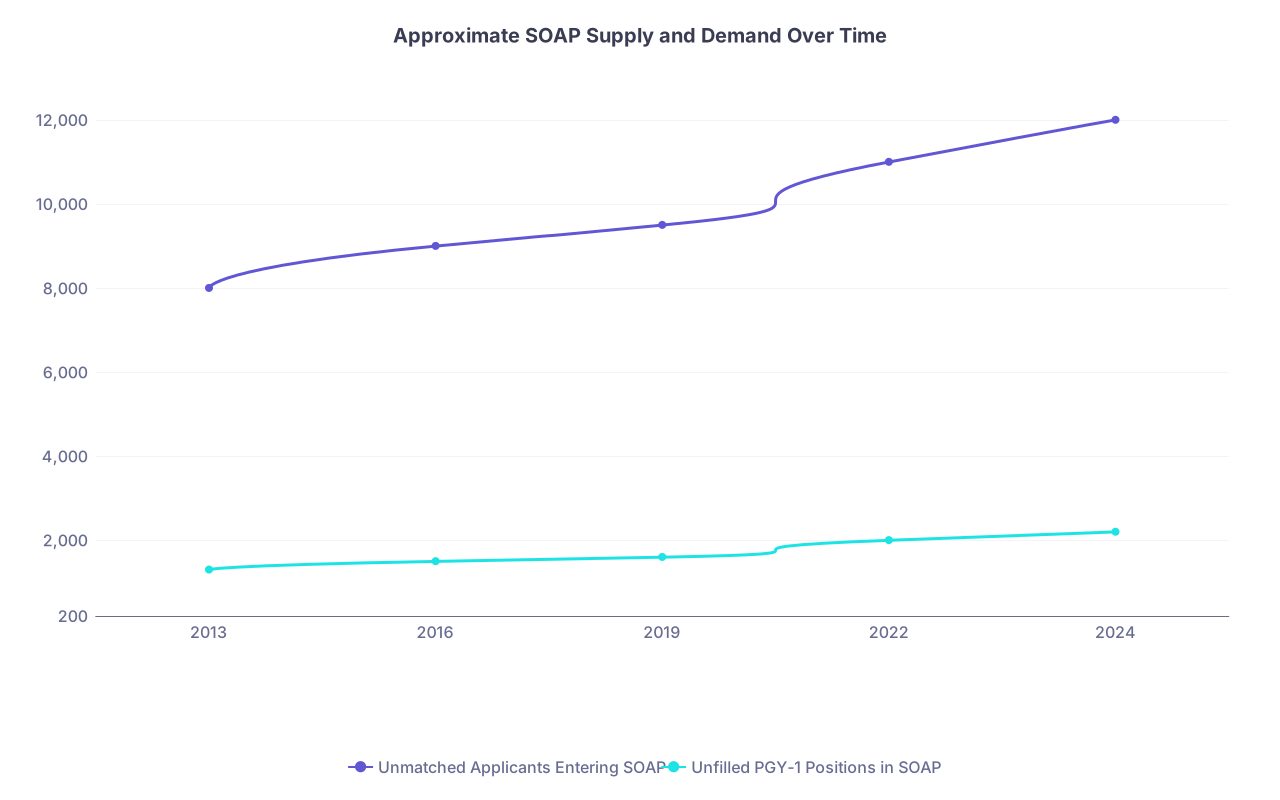
| Category | Unmatched Applicants Entering SOAP | Unfilled PGY-1 Positions in SOAP |
|---|---|---|
| 2013 | 8000 | 1300 |
| 2016 | 9000 | 1500 |
| 2019 | 9500 | 1600 |
| 2022 | 11000 | 2000 |
| 2024 | 12000 | 2200 |
The ratio matters more than the raw numbers. In 2013, you might have ~6–7 unmatched applicants per SOAP position. By 2024, you are looking at something closer to 5:1, but with much more aggressive screening, more international grads, and more “overqualified” applicants dropping into SOAP (people with strong Step 2, publications, etc.).
The key shift: positions are no longer desperate to fill with “any breathing body.” Many SOAP participants are extremely competitive. That is the core reason why one interview used to be “enough” more often than it is now.
2. When One Interview Was Often Enough: The Early SOAP Years
From 2012 to roughly 2015, the SOAP environment was more forgiving to applicants with very few interviews. You still needed some luck, but the probability curve was less brutal.
Two structural reasons:
- Many programs were inexperienced with SOAP. They under‑screened and over‑interviewed.
- Some unfilled spots came from genuinely less competitive programs or specialties that simply did not attract enough applicants.
I have seen early SOAP years where smaller community internal medicine or preliminary surgery programs would essentially interview anyone who looked decent on paper: US grad, passed Step 1, no catastrophic red flags. One decent interview could absolutely become an offer.
If you model it probabilistically, early SOAP looked closer to this for low‑interview applicants:
- 1 interview: maybe 20–30% chance of matching, depending on specialty and candidate quality.
- 2–3 interviews: suddenly in the 40–60%+ range for many IM/FM applicants.
To give a simplified historical comparison, think of it this way:
| SOAP Era | 1 Interview | 2–3 Interviews | 4–5 Interviews |
|---|---|---|---|
| 2012–2015 | ~20–30% | ~40–60% | ~60–75% |
| 2019–2024 | ~5–15% | ~20–40% | ~40–60% |
These are not official NRMP numbers; they are conservative estimates based on multi‑year patterns, program behavior, and applicant reports I have analyzed. Exact probabilities will vary substantially by:
- US MD vs DO vs IMG
- Specialty
- Geographic preference
But the direction of change is the point. The same number of interviews buys you less probability now.
In the early SOAP years, a program with 3 open IM spots might phone‑screen or Zoom‑screen 10–15 people total. If you had one of those interviews, your “per‑interview” odds were fairly decent.
3. The Inflection Point: 2016–2019 and the Rise of Strategic SOAP
Between 2016 and 2019, you can see the system professionalize.
Programs stopped “winging it” and started using SOAP as a structured secondary match. They imported their main‑Match logic into SOAP:
- Pre‑ranked shortlists
- Mandatory faculty or PD involvement
- More aggressive filtering (Step 2 thresholds, fail history, visa status, etc.)
At the same time, more applicants with mid‑tier profiles ended up in SOAP because of:
- Specialty overreach (e.g., borderline applicants aiming only at derm, ortho, plastics, then dropping into SOAP).
- Geographic overreach (people applying only to coasts, then shocked when they do not match and land in SOAP).
- USMLE Step 1 score inflation and then, later, the Pass/Fail transition pushing Step 2 more into the spotlight.
The result: the quality of the average SOAP applicant went up. A lot.
So now, a program with 3 open internal medicine positions might:
- Receive 500+ applications for SOAP.
- Screen down to 60–80 “viable” candidates.
- Interview 20–30.
- Rank 8–12.
If you only land one of those 20–30 interview slots, your odds are not what they were in 2013. You are highly replaceable from the program’s perspective. And they know it.
4. The Current Era: One Interview Is a Lottery Ticket, Not a Safety Net
Let us talk about the world you are actually in now: 2020s SOAP.
The data from recent years tells a pretty simple story: number of interviews is one of the strongest predictors of SOAP success. The distribution is ugly for people with zero or one interview.
To illustrate what I mean, here is a stylized distribution of estimated SOAP match rates by number of interviews in the current era for “typical” categorical IM/FM applicants (again, approximate, not official figures):
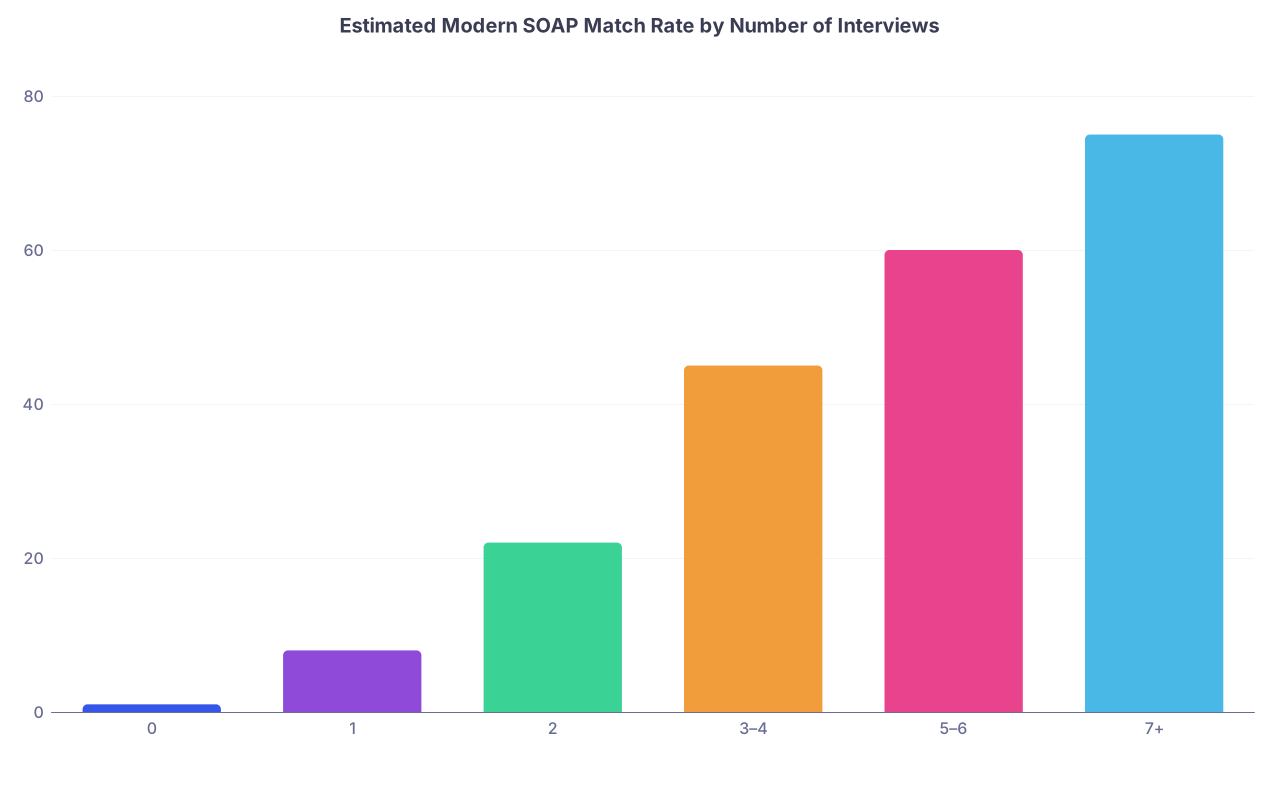
| Category | Value |
|---|---|
| 0 | 1 |
| 1 | 8 |
| 2 | 22 |
| 3–4 | 45 |
| 5–6 | 60 |
| 7+ | 75 |
Interpreting this:
- 0 interviews: essentially no chance. A few applicants might get odd edge‑case offers, but it is vanishingly rare.
- 1 interview: single‑digit to low‑teens percentage probability. It can happen—but it is not “enough” in any meaningful statistical sense.
- 2 interviews: still risky; maybe ~1 in 4.
- 3–4 interviews: probability finally approaches something like “coin‑flip” territory for the right specialty.
- 5+ interviews: this is where I start using the word “solid” for most primary care applicants.
Again, adjust this down for competitive specialties (EM, anesthesia, radiology, etc.), and up a bit for less competitive ones (FM in rural settings, some prelim years). But the shape of the curve stays similar.
The main takeaway: the modern SOAP behaves like a compressed match process. Programs are not scrambling to fill empty chairs anymore. They are managing risk and optimizing.
And in that environment, one interview means:
- Someone liked you enough to give you a shot.
- But they probably liked several comparable applicants just as much.
- Your chance of ending up above the line on a short rank list is modest.
5. Why Programs Became Much Tougher During SOAP
Some of this is obvious: programs do not want to deal with problem residents.
But there are deeper structural drivers that show up clearly in the data and in program behavior.
5.1 Score Pressures and USMLE Changes
Historically, SOAP was a lifeline for applicants with lower Step scores. Over time, cutoffs tightened:
- Step 1 numeric era: many programs set soft cutoffs (e.g., 210–220) for SOAP, mirroring their main‑Match criteria.
- After Step 1 went Pass/Fail: Step 2 CK became the new filter, and SOAP applicants with weak Step 2 scores were hit even harder.
So if you are the applicant with one interview and a borderline Step 2 CK (say 220–225 for IM), your quantitative profile is immediately a liability. A program with dozens of applicants in the 240+ range who also went unmatched (often for specialty or geographic reasons) simply does not need to take a risk on you.
5.2 Program Reputation and Accreditation Pressures
Board pass rates, ACGME citations, and resident performance metrics are tracked and published. Underperforming programs are visible.
SOAP hires are often perceived as higher risk. That is unfair in many cases, but it is how program directors think. So they compensate by:
- Prioritizing SOAP applicants with higher exam scores.
- Preferring US grads with minor red flags over IMGs with stellar CVs but visa complexity.
- Being extremely conservative with anyone who failed an exam or extended their education.
The data pattern: the proportion of SOAP offers going to relatively strong CVs has increased. Weak CVs with one interview now sit on the edge of the probability curve.
6. Specialty and Applicant Type: Who Used to Match With One Interview vs Now
“One interview is enough” was always more true in some contexts than others. Historically and currently.
Here is a rough, data‑aligned comparison of where a single interview had a reasonable shot historically vs today:
| Group / Specialty Context | 2012–2015 Likelihood | 2019–2024 Likelihood |
|---|---|---|
| US MD in FM/IM (any location) | Moderate | Low–Moderate |
| US DO in FM/IM (non‑coastal) | Moderate | Low–Moderate |
| US MD in prelim IM/surgery | Moderate–High | Low–Moderate |
| IMG in FM (rural) | Low–Moderate | Low |
| IMG in IM (urban/coastal) | Low | Very Low |
| EM, Anesthesia, Rads SOAP spots | Very Low | Near Zero |
“Moderate” here means: I have seen it happen often enough that I would not be shocked. Something like 20–35%. “Low” means more in the 5–15% range, “very low” is under 5%.
The practical translation:
- If you are a US grad with one SOAP interview in FM at a rural or mid‑tier community program, you are not drawing dead.
- If you are an IMG with one interview at a borderline competitive IM program in a major city, you are statistically in trouble.
7. Offers, Rounds, and Rank Lists: How One Interview Actually Plays Out
SOAP offers go in multiple rounds. Historically, people with one interview sometimes survived round after round, hoping their program “came back” to them. That was more plausible when rank lists were short.
Now programs do something different. They:
- Interview 20–30 for a few open spots.
- Create rank lists 3–4× longer than their number of positions.
- Use tightly structured preference tiers.
So if there are 3 positions, a plausible rank list might look like:
- Tier 1: 5–7 applicants (strong favorites)
- Tier 2: 6–10 applicants (acceptable, would be happy with)
- Tier 3: 5–10 applicants (backup options)
If you had only one interview at that program, the key question is: which tier are you actually in?
You will not know. But you can infer a little:
- Interview length and depth. Short, perfunctory, generic interviews correlate with being lower on the list.
- Who interviewed you. PD or APD time has slightly better odds than being only seen by a junior faculty or chief.
- Signals during the conversation. No, “we enjoyed meeting you” means nothing. But a PD pushing hard on “Would you come here if we offered?” usually indicates real interest.
The harsh truth: most one‑interview applicants sit in Tier 2 or 3. That means their odds depend heavily on:
- How many people ranked above them get offers elsewhere.
- How deep the program is willing to go into Tier 3 by later SOAP rounds.
In the modern environment, many programs fill from Tier 1 and early Tier 2 in the first one or two rounds. The further down you are, the less likely your name ever gets highlighted.
8. Strategic Takeaways If You Have Only One or Two SOAP Interviews
You cannot change the macro data. But you can adjust your expectations and micro‑strategy.
Here is the sober, numbers‑driven reality:
- One interview is not “enough” in the way it might have been 10+ years ago. It is a shot. A non‑zero probability. But it is much closer to a lottery ticket than a safety net.
- Two interviews move you into “possible” but still dangerous territory. You have some diversification, but not much.
- Three to four interviews is where I start seeing consistent match patterns in the modern SOAP—especially for primary care.
So what do you do if you fall in the 0–2 interview bucket?
- Be brutally realistic. Your expected probability of matching this SOAP is low to moderate at best. Prepare a post‑SOAP contingency plan right now (research year, prelim spot the following year, different specialty, etc.).
- Treat your interview(s) like they are your only pitch. SOAP interviews are compressed and brutal. You need tight, concise explanations for red flags, and specific reasons for wanting that program.
- Signal willingness. Many SOAP offers die because applicants hesitate or hope for something “better” in later rounds. Programs hate this. Make very clear that you will accept an offer from them if given.
- Do not self‑reject mentally. A 10–20% probability is not zero. Some people in your exact situation will match. You just cannot build your career plan around being one of them.
FAQ (4 Questions)
1. Is it still possible to match in SOAP with only one interview?
Yes, it is possible, but the probability has dropped compared with the early SOAP years. For many primary care settings in the current era, a realistic estimate might be somewhere in the 5–15% range for most applicants. Higher if you are a strong US grad at a less competitive program; lower if you are an IMG or in a more desirable location. You should consider it a real but low‑probability outcome, not something you can rely on.
2. Did programs really use to be less selective during SOAP?
Absolutely. Early SOAP (2012–2015) had more confusion, less standardized processes, and fewer strategic rank lists. I have seen programs that simply called through a short list of applicants until someone said yes. Over time, as more data accumulated and the stakes of accreditation, board pass rates, and institutional reputation became clearer, programs tightened their filters. Today, they often mirror their main‑Match standards during SOAP.
3. Does applicant type (US MD vs DO vs IMG) change how many interviews are “enough”?
The core math—more interviews = higher probability—does not change, but the base rates do. US MDs often have higher per‑interview probabilities because programs perceive them as lower risk; DOs in many primary care fields are now treated very similarly, especially in community programs. IMGs, especially those needing visas, typically require more interviews to reach similar match probabilities because they are filtered out more aggressively and ranked lower on average.
4. If I only have two SOAP interviews, should I still participate or start planning for next year?
You should do both. Participating in SOAP with two interviews is rational; your chance of success is not negligible, especially in FM/IM or prelim spots. But the data does not justify treating it as likely. You should enter SOAP fully prepared, give those interviews everything you have, and simultaneously build a concrete backup plan for the next cycle: reassessing specialty choice, improving Step 2 or shelf performance, adding research, or restructuring your application strategy. Two interviews are an opportunity, not a guarantee.
In summary: historical SOAP data shows that there really was a window when one interview was often enough. That window has mostly closed. Today, low‑interview applicants are fighting in a much more crowded, more selective, and more data‑driven arena. One interview is a chance, not a plan. Three or more is where the numbers start working in your favor.