
It’s Monday morning of Match Week. Your email just came in: “We are sorry to inform you…” You scroll. Your heart’s pounding so loud you almost can’t read the rest. You didn’t match.
Your hands are shaking. You know SOAP is coming, you’ve vaguely “heard about it,” but in your head it’s turned into this horror movie: thousands of desperate applicants clawing over a few leftover spots while you forget how to form sentences on the phone.
You’re refreshing NRMP, ERAS, your email, your group chat. You’re thinking:
“What if I freeze?”
“What if no one picks me?”
“What if SOAP ruins my entire career… in four days?”
You’re not alone. I’ve seen very, very good applicants completely unravel this week—not because they were doomed, but because the anxiety took over their brain and they couldn’t think straight. Let’s talk about how to not let that be you.
What SOAP Actually Is (And What It Isn’t)
First, some reality. Not the Twitter version. The actual version.
SOAP is a rapid‑fire, structured scramble to fill unfilled residency spots. It’s chaotic, but it’s also:
- Controlled. You can’t just start calling programs randomly. There are rules, time windows, and a clear structure.
- Common. Every year, a significant number of physicians start their careers via SOAP. They don’t walk around at graduation with a big asterisk on their diploma.
- Not a moral judgment. Not matching is a logistics/competitiveness/fit problem more often than it’s a “you’re trash” problem. Programs know that. Most attendings barely remember who in their class SOAPed.
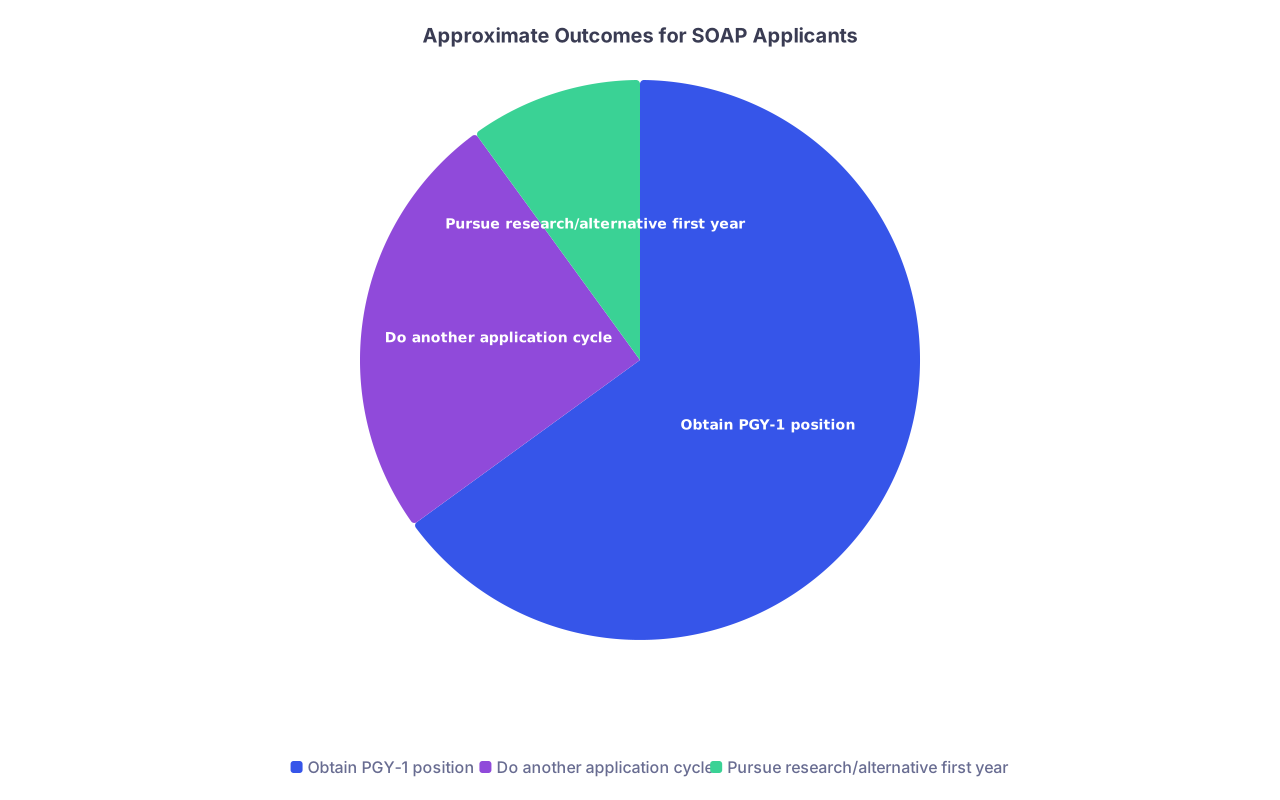
| Category | Value |
|---|---|
| Obtain PGY-1 position | 65 |
| Do another application cycle | 25 |
| Pursue research/alternative first year | 10 |
Are these exact numbers? No. But the vibe is correct: a lot of people do end up somewhere. And that’s what you need to keep in your head: you are fighting for “somewhere,” not “perfect dream program with rooftop garden and free DoorDash.” SOAP is about securing a foothold.
The terrifying part is the speed and the uncertainty. You have to make real decisions while your fight‑or‑flight system is in overdrive. That’s what we need to get under control.
Why SOAP Feels So Much Worse When You Already Had Limited Interviews
If you went into Match with only a few interviews, you probably already spent months thinking, “I might not match.” So Monday’s email doesn’t just sting. It confirms the worst story you’ve been telling yourself.
The internal monologue usually sounds something like:
“I only had 3 interviews. Of course I didn’t match. Programs already decided I was the bottom of the barrel. Why would SOAP be any different? All the ‘good’ leftovers will go to people who had 10 interviews and just got unlucky. I’m the unlucky‑and‑bad one.”
Let me be blunt: that story is garbage.
Limited interviews can happen because:
- Your school has weak connections in your specialty.
- You applied late or broadly but not strategically.
- You’re an IMG or DO in a competitive region.
- Your Step scores / class rank were borderline for your dream field but fine for others.
- Your personal statement or letters didn’t land.
None of that equals “untrainable” or “toxic.” But your anxious brain doesn’t care about nuance—it leaps from “fewer interviews” to “I’m fundamentally worse than everyone else.”
You can’t walk into SOAP with that tape playing on loop. You don’t need fake positivity. You need something quieter and more realistic:
“I didn’t match, yes. But programs still need functional interns. I have passed exams, taken care of patients, and someone out there needs what I can do. My job is to show them that as clearly as possible—fast.”
Ground Rules for Your Brain During SOAP Week
You’re not going to “cure” your anxiety this week. You’re just trying to keep it on a short leash so you can function.
1. Stop catastrophizing the timeline
Your brain is probably telling you: “If SOAP goes badly, my career is over.”
Reality? Messy, but not fatal.
| Path | What It Actually Looks Like |
|---|---|
| Research year | 1 year paid/unpaid research, reapply with stronger CV |
| Prelim/transitional | Get PGY-1, reapply or switch fields later |
| Another cycle | Reapply next year with updated strategy and support |
None of these are ideal. But they’re survivable. People do this. Every year. And go on to have normal, boring, successful careers.
Tell yourself: “This week is high stakes, but not all‑or‑nothing. It’s one chapter, not the epilogue.”
2. Put guardrails on your doom‑scrolling
Constantly checking Reddit/Discord/SDN during SOAP is like willingly injecting cortisol into your veins.
Give yourself rules. For example:
- Check social media 1–2 specific times a day, not continuously.
- Absolutely no “SOAP horror story” threads during active decision windows.
- If a group chat is spiraling, mute it. You’re not obligated to emotionally co‑regulate 10 classmates right now.
Your job is not to track the entire national SOAP narrative. Your job is to be functional when your phone rings.
3. Decide who your “command center” people are
You should not be doing this alone in your head while half‑crying in your car.
You need 1–3 people:
- An advisor who knows SOAP (student affairs dean, PD, trusted attending).
- A logistics person (friend/partner/sibling) who can help keep track of times, documents, and food.
- Optional: a blunt friend who will tell you, “Stop spiraling, answer the phone like a human.”
Tell them now: “I may be a disaster this week. I need you to help me stay on task, not sugarcoat, and remind me to eat.”
How to Prepare Before SOAP Opens (Even If You’re Shaking)
You do not have the luxury of a multi‑week game plan. But you do have a little time before and between windows. Use it ruthlessly.
1. Get brutally honest about what you’re willing to do
You can’t “SOAP like it’s still September.” This is where applicants crash: they cling to their original specialty like a life raft.
Ask yourself, and write it down:
- Am I willing to switch specialties for a categorical PGY‑1?
- If yes, which ones realistically? IM, FM, peds, psych, neuro, pathology, etc.
- Would I accept a prelim year in surgery/medicine in a less desirable location?
- Are there geographic deal‑breakers that are truly not safe or feasible for me?
This isn’t about what you want. It’s about what you can live with. And you need that answer before you’re staring at a list of 8 programs and a countdown clock.
2. Update your materials like your life depends on it
Because right now, it sort of does.
- Personal statement: You might need a version geared to another specialty. Keep it simple, forward‑focused, no dramatic explanations of not matching. Two pages max. Clear narrative: who you are, why you’ll be a solid intern, what you bring.
- CV: Make sure ERAS is clean, no weird gaps or typos. Programs in SOAP don’t have time to decode messy applications.
- Letters: You probably won’t get new ones in time, but if you have strong general IM/FM letters, make sure they’re uploaded and assigned.
Don’t try to write the “perfect” essay. You’re aiming for “coherent, professional, and not a red flag.”
3. Do a 30‑minute mini‑rehearsal for calls
This is where people panic the most: “What if they call and my brain goes blank?”
Grab a friend or advisor and practice:
- “Tell me about yourself.”
- “Why this specialty?”
- “Why this program/location?”
- “You didn’t match initially—what do you think happened, and what have you learned?”
Your answers do not need to be genius. They need to be:
- Honest without self‑immolation.
- Short. Two to three sentences, not a TED talk.
- Focused on what you offer them now.
Example for the dreaded “Why didn’t you match?”
“I had fewer interviews than I hoped, largely because I applied late and was geographically limited. I ranked every place I interviewed, but it didn’t work out. I’ve reflected a lot, gotten honest feedback from mentors, and I’m very motivated to prove I can be a reliable, hard‑working intern for your team.”
That’s it. No 10‑minute confessional. You’re not on trial.
Performing Under Terrifying Uncertainty: On the Day
This is the heart of it. How do you function when your whole body is screaming?
1. Script your day around when you need to be “on”
You can’t be at red‑alert for 10 hours straight. You’ll fry.
Before SOAP starts, map it out:
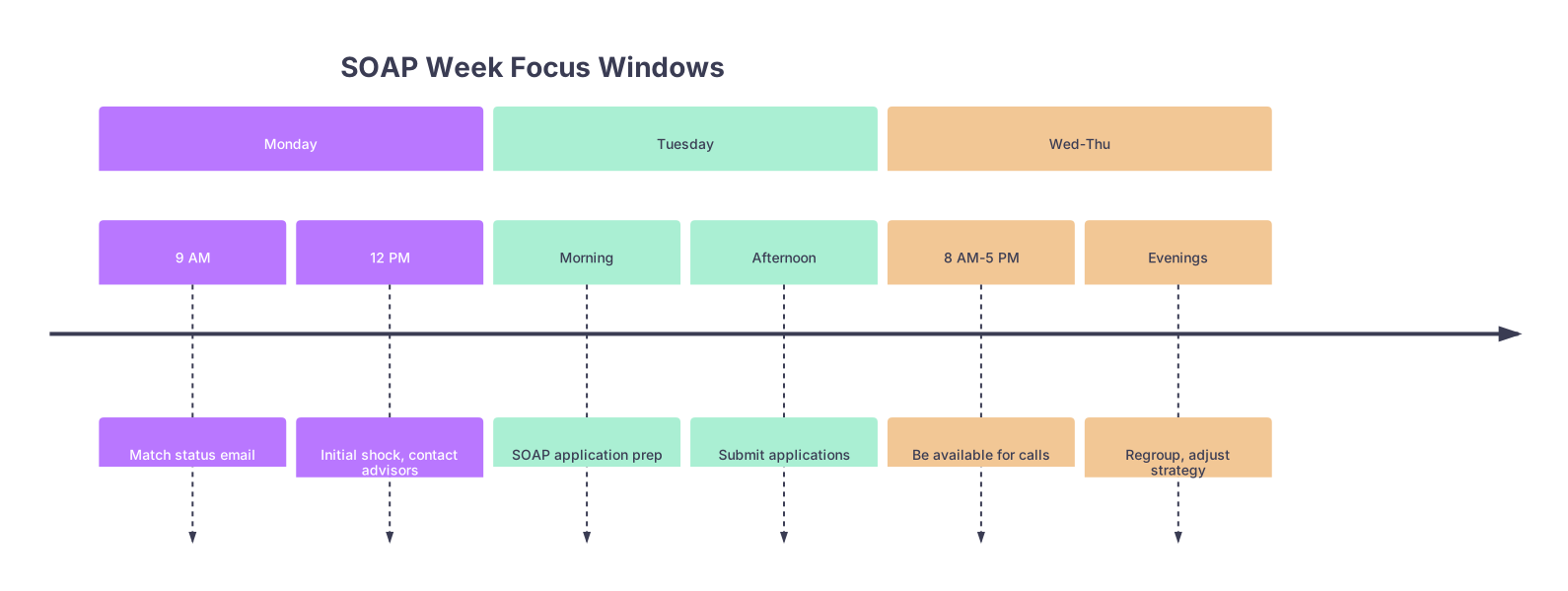
| Period | Event |
|---|---|
| Monday - 9 AM | Match status email |
| Monday - 12 PM | Initial shock, contact advisors |
| Tuesday - Morning | SOAP application prep |
| Tuesday - Afternoon | Submit applications |
| Wed-Thu - 8 AM-5 PM | Be available for calls |
| Wed-Thu - Evenings | Regroup, adjust strategy |
During the “on” windows (calls, interviews, decisions), your only job is to be reachable and presentable. During the “off” windows, you are allowed—actually required—to crash a bit, cry, vent, and then reset.
2. Use micro‑grounding before every call
You see an unknown number and feel like you’re about to faint. Do this first. Even if it takes 10 seconds.
- Put both feet flat on the floor.
- Inhale slowly for 4 seconds, hold 4, exhale 6–8.
- Drop your shoulders. Unclench your jaw.
- Smile—yes, fake it. You can hear a smile on the phone.
Then pick up.
You are not aiming for “calm.” Just “not actively spiraling while speaking.”
3. Don’t over‑explain, don’t oversell
SOAP calls are fast. Programs are triaging.
Your instinct might be to talk non‑stop to prove you’re grateful and enthusiastic and self‑aware and and and…
Resist.
Short, clear, direct answers. Leave space for them to talk. You’re trying to signal: “Low drama, high utility.”
If you’re tempted to launch into a 5‑minute explanation of your low Step score, stop. One sentence, tops. Pivot back to what you’ve done well and how you work on a team.
4. Remember: they called you
Everyone in SOAP feels like they’re begging. But any program that picks up the phone to talk to you has already filtered your application and decided you’re worth time.
They are not doing you a personal favor. They are solving their problem: they need safe, competent interns. View yourself as a potential solution, not a charity case.
That mindset shift alone will make you sound less panicked and more like a colleague.
After Each Wave: Dealing With Silence and Rejection
The worst part isn’t the calls. It’s the silence after. The “we went in a different direction” emails. The creeping thought: “Everyone else is getting offers. I’m not.”
Here’s how to not let that silence hollow you out.
1. Set very small, non‑SOAP tasks
Your nervous system needs micro‑wins that aren’t dependent on strangers.
Stuff like:
- Take a 10‑minute walk around the block.
- Make and finish a cup of tea.
- Put on clean clothes.
- Respond to exactly one text you’ve been ignoring.
You’re trying to send your brain the signal: “I can start and finish things. I’m not helpless.” It sounds trivial. It matters.
2. Have a script ready for the “any updates?” texts
You’ll get them. From your mom. From that classmate who matched at Mayo in November and “just wants to check in.”
Decide in advance what you’re going to say so you’re not re‑traumatized each time.
Something like:
“No news yet, still in SOAP and focusing hard on that. I’ll share once I know where things land, but for now I need to keep my head down.”
If they push, you can ignore them. Seriously. Protect your headspace.
3. Debrief with someone not as emotionally fried as you
At the end of each day, talk to a person who has not spent 10 hours in your skull.
Ask them:
- “Am I missing any obvious options?”
- “Do I sound like I’m giving up or over‑picky?”
- “What’s one concrete thing I should do tomorrow?”
You need perspective. Your brain is not a reliable narrator right now.
If SOAP Goes Well. And If It Doesn’t.
Best case: you get an offer. Maybe not in the specialty or city you dreamed about. Maybe it’s a prelim year when you wanted categorical. You might feel weirdly… disappointed and relieved at the same time.
That’s normal.
You’re allowed to grieve the plan you thought you were following, even while you’re grateful to have a spot. Just don’t do it in front of your new program. In front of them, you’re all in.
Worst case: you walk out of SOAP without a position.
That’s not a moral failing. It means the combination of your stats, specialty targets, geography, and the year’s weird supply‑demand curve didn’t line up.
If that happens, your job shifts:
- Get an honest post‑mortem from someone who actually knows what they’re doing (not just your panicked classmates).
- Decide: research year, prelim hunt outside the Match, non‑clinical year, reapply with a new specialty, etc.
- Set a recovery plan measured in months, not days.
You’ll feel humiliated and behind. I’ve seen those same people, two or three years out, blending right in with everyone else in conference. No one cares. No one remembers who SOAPed, who re‑applied, who took a research year except the person themselves.
You’re in the most zoomed‑in, distorted view of your career you’ll ever have. Don’t make permanent conclusions in that state.
FAQs
1. Should I tell programs directly that I didn’t match and am in SOAP?
They already know. If they’re calling you, they know you’re in SOAP. You don’t need to lead with it. If they ask what happened, give a short, honest explanation and pivot to what you’ve learned and how ready you are to work hard as an intern.
2. Am I “wasting” a year if I take a research or non‑clinical job after an unsuccessful SOAP?
No. It feels that way now because all your classmates are moving in a straight line. But a year of productive research, teaching, or clinical work can strengthen your application, give you adult life skills, and frankly give you time to breathe. A detour is not a dead end unless you decide to stop walking.
3. How many programs should I apply to in SOAP?
As many as makes sense within your real parameters. This is not the time to be ultra‑selective, but also not the time to spam specialties you’d never actually attend. Broaden more than feels comfortable, but not so much that you’re applying to programs you’d absolutely refuse if they called.
4. Do programs look down on SOAP applicants compared to main Match?
Programs want residents who show up, work hard, and don’t create chaos. They care far more about your performance once you arrive than the mechanism that got you there. Plenty of SOAPed residents become chiefs, fellows, and attendings at brand‑name places. The shame you feel is mostly internal, not institutional.
5. How honest should I be about why I didn’t match?
Honest but not self‑destructive. “I applied late and too narrowly” is acceptable. “I’m a terrible test taker but I swear I’ll try harder” is not helpful. Take ownership of fixable things—timing, strategy, geographic limits—and avoid turning your explanation into a self‑drag. They want insight, not a pity party.
6. How do I keep from breaking down emotionally during a SOAP phone interview?
Prepare small, not big. Have 2–3 bullet ideas for common questions, do a 10‑second breathing reset before you answer, and remember: they chose to call you. If you feel tears coming, pause, take a breath, and anchor yourself physically—feet on floor, hand on desk. You’re not trying to feel calm, just to sound coherent for a few minutes. After you hang up, you can fall apart if you need to.
Key things to remember:
- SOAP is brutal and fast, but it’s not a verdict on your worth or your future career ceiling.
- Your single most important job this week is not to be fearless—it’s to stay just regulated enough to answer the phone like a future colleague, not a panicked wreck.
- Whether SOAP lands you a position or not, this week is one chapter in a very long story. Don’t let your most anxious self be the one writing the ending.