
The brutal truth: in SOAP, most program directors are looking for reasons to say no, not excuses to say yes—especially to limited-interview candidates.
If you’re in SOAP with few or no interviews, you do not have the benefit of the doubt. You are not a “maybe.” You’re a quick decision. Keep reading if you do not want that decision to be “skip.”
Program directors are tired, overloaded, and under time pressure. They skim. They sort. They filter. And they ruthlessly discard anyone who triggers certain red flags—many of which are completely avoidable.
Let’s walk through the mistakes that quietly kill your chances in SOAP, even when you should be matchable.
The Reality PDs Won’t Say Out Loud
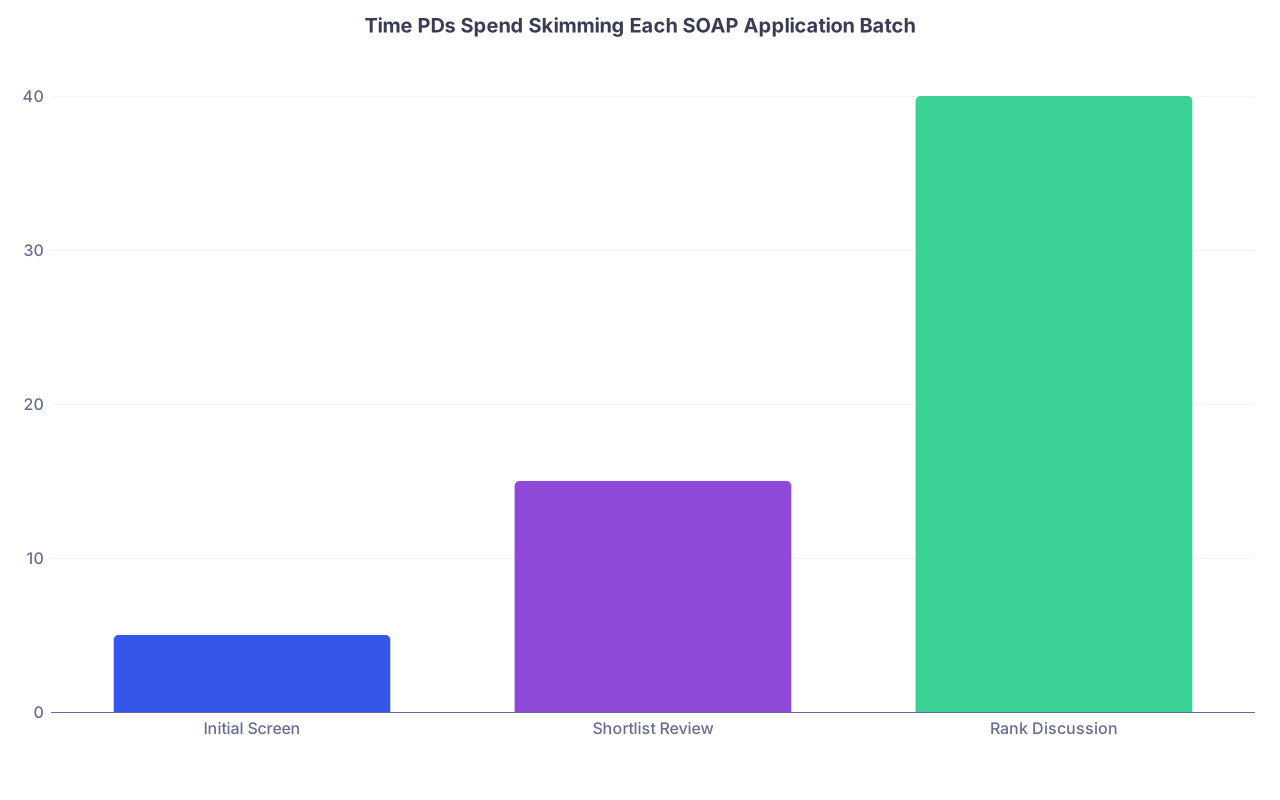
Here’s what’s really happening behind the scenes during SOAP week.
| Category | Value |
|---|---|
| Initial Screen | 5 |
| Shortlist Review | 15 |
| Rank Discussion | 40 |
First-pass screening might be minutes or even seconds per candidate. If you think your heartfelt paragraph on “lifelong commitment to medicine” will save you from a sloppy application, you’re kidding yourself.
When you have limited interviews, PDs assume one of three things:
- Grades or scores are below average for the specialty
- Something went wrong: professionalism, communication, fit, timeline
- Your application strategy was off (too few programs, wrong mix, late submission, etc.)
You can’t fix your Step score during SOAP. You can avoid avoidable red flags that automatically send you to the “no” pile.
Red Flag #1: Unexplained Gaps and Missing Context
Nothing makes a PD skip faster than confusion. If they have to work to figure out your story, they won’t.
- 6–12 month gaps with no explanation
- Failed Step/COMLEX with no context
- Leaves of absence hidden or vaguely mentioned
- Transfer between medical schools without a clear reason
- Late graduation date with no note about what happened
Here’s how PDs think: “If this is confusing on paper, it’ll be worse in real life. Pass.”
The Wrong Way To Handle It
What many SOAP applicants do:
- Hope no one notices the gap between 2021–2022
- Pretend the failed Step attempt doesn’t exist
- Bury a leave of absence under “personal reasons” with zero detail
- Assume “US-IMG” automatically explains a 7-year med school timeline
This is wishful thinking. PDs absolutely notice. They just don’t email you to ask about it. They just move on.
The Right Way (That Most People Are Too Scared To Use)
You have to preempt the concern. Briefly. Directly. Without drama.
You do not write a 600-word confessional. But you also don’t say nothing. That middle ground is where mature applicants live.
Examples of strong, non-needy explanations:
Failed Step: “I passed Step 1 and Step 2 on second attempt after addressing test-taking anxiety with formal coaching and structured question-based learning. Since then, I’ve consistently scored in the passing range on timed practice assessments and improved shelf exam performance.”
Gap after graduation: “After graduating in 2022, I spent one year in full-time clinical research in internal medicine while also preparing for and successfully completing Step 2. This time solidified my interest in inpatient medicine and improved my documentation and communication skills.”
Leave of absence: “I took a 6-month leave of absence during my third year due to a family health crisis, resolved in 2021. I returned to full-time rotations, completed all requirements on schedule thereafter, and have had no ongoing impact on my training or performance.”
You’re not apologizing. You’re showing that the instability is over and you’re functioning at a residency level now.
If you’re not sure whether something “needs” explanation, assume yes. Confusion is deadly in SOAP.
Red Flag #2: Sloppy, Generic, or Misaligned Personal Statements
In SOAP, PDs don’t expect literary genius. They expect basic competence and clear fit. If your personal statement makes them question either, you’re done.
The fastest ways to get skipped:
- Using the exact same specialty statement for multiple, very different specialties
- Leaving in specialty names from main Match (e.g., talking about ortho in a prelim medicine application)
- Using a long, philosophical essay with no concrete evidence you can function as an intern
- Obvious AI-generated or template-y writing with no specific detail
- Awkward English with no sign you had anyone proofread it
I’ve seen PDs forward screenshots like: “This person wrote ‘I cannot imagine doing anything but dermatology’… in a family medicine SOAP application. Hard pass.”
Misalignment: The Silent Killer
A common SOAP mistake: you keep your original aspirational specialty personal statement and just change “I want radiology” to “I want internal medicine.”
PDs are not stupid. They can tell.
You write three paragraphs about imaging, research, and pattern recognition, then awkwardly tack on: “I also enjoy patient care.” That screams “backup” and “disinterested intern.”
SOAP is not the time for your dream specialty essay. It’s the time to convince people you will show up, work hard, and not be miserable in their specialty.

How To Write a SOAP-Safe Statement Quickly
Focus on three things:
- Why you can commit to this specialty/position (even if it’s a pivot)
- Proof you can function clinically (stories of real responsibility)
- Evidence you’re reliable, coachable, and not toxic
Bad line:
“I have always dreamed of becoming a surgeon, but I am also open to internal medicine.”
Good line (for IM SOAP):
“During fourth-year sub-internships, I found I enjoyed managing complex inpatients, communicating with families, and coordinating care. Internal medicine offers the type of long-term intellectual and clinical growth I’m seeking.”
Do not signal that you’re disappointed to be there. Even if you are.
Red Flag #3: Letters and MSPE That Whisper “Problem”
In SOAP, PDs read between the lines of your letters and MSPE (Dean’s letter). And trust me, they notice code words and omissions.
Common landmines:
- MSPE with vague phrases about “professionalism issues were addressed”
- Letters that are weirdly short or generic for a core rotation
- Obvious “damning with faint praise”:
“She arrived on time” as the only concrete compliment
“He completed tasks assigned to him” with no mention of initiative - No letters from the specialty you’re applying to, even for broad fields like IM or FM
| Phrase | What PDs Often Hear |
|---|---|
| "Performed at expected level" | Average at best |
| "Completed assigned tasks" | Passive, not proactive |
| "Improved over time" | Started poorly, barely adequate |
| "Can succeed with support" | Needs hand-holding |
| "No major professionalism issues" | There *were* minor ones |
The Mistake: Hoping PDs Don’t Notice
Many SOAP applicants know they’ve got a lukewarm MSPE comment or a bland letter and just… ignore it. They rely on “maybe they won’t read it.” They will.
You can’t erase these documents in SOAP. But you can offset them.
Damage Control That Actually Helps
Your personal statement and experiences should quietly contradict any “concerning” implication:
- If a letter implies passivity, highlight times you took initiative
- If MSPE mentions professionalism, highlight specific improvements and stability since then
- If you lack specialty letters, emphasize rotations where you showed relevant skills (teamwork, inpatient care, communication)
You can also ask a trusted faculty mentor to be directly reachable and willing to vouch for you quickly during SOAP. PDs sometimes send a one-line email: “Any concerns about this applicant?” You want someone who says, “No, I’d happily have them in my program.”
Red Flag #4: Poor Communication and Unprofessional Contact
You can look great on paper and still get tossed for how you communicate during SOAP week.
The ugly truth: SOAP is chaos for programs too. They’re calling, emailing, and doing quick video screens at high speed. If you look flaky, disorganized, or immature in that 5-minute interaction, they move on.
Common self-sabotage moves:
- Not answering the phone from unknown numbers during SOAP
- Full voicemail box or unprofessional voicemail greeting
- Email address that looks like undergrad (“cutegirl92@…”, “dr.surgeon2020@…”)
- Slow responses to interview invites or questions
- Showing up late or technically unprepared for a virtual interview
- Casual tone in emails (“hey doc, thx for the invite”)

| Step | Description |
|---|---|
| Step 1 | Program sends invite |
| Step 2 | PD calls next candidate |
| Step 3 | Missed follow up |
| Step 4 | Interview scheduled |
| Step 5 | Red flag impression |
| Step 6 | Neutral to positive impression |
| Step 7 | Phone reachable |
| Step 8 | Email checked |
| Step 9 | On time and prepared |
The Fix: Act Like You’re Already a Resident
You need 72 hours of hyper-professionalism:
Keep your phone on loud, with voicemail set up and space available
Use a simple, clean email address: firstname.lastname@…
Check email obsessively during SOAP rounds
Respond to interview requests briefly, clearly, and promptly:
“Thank you for the opportunity to interview for your preliminary medicine position. I am available at the proposed time and look forward to speaking with you.”
Test your video setup, camera, audio, and background early
Dress like it’s a real interview, because it is
Don’t lose a spot because your voicemail says, “Yo, it’s Mike, you know what to do.” Yes, I’ve seen that cost someone a position.
Red Flag #5: Sloppy ERAS Details and Incoherent Story
SOAP exposes a lot of rushed editing. PDs can instantly tell who panicked and who stayed deliberate.
These details matter more when you’re already a borderline candidate:
- Inconsistent future plans (you say you want IM but keep research heavy on neurosurgery only)
- Outdated CV items that still say “current” for things that ended last year
- Empty “Meaningful Experiences” with vague, copy-pasted descriptions
- Typos in program-specific communication or supplemental info
- Applying to categorical positions with zero continuity clinic or outpatient experiences listed

SOAP PD logic: “If this person can’t submit a clean, coherent application under stress, what are they going to do with real patient charts at 2 a.m.?”
The Mistake: Quick Copy-Paste Chaos
Some applicants change their specialty choices but leave their whole ERAS activity section untouched. So now they’re applying to prelim medicine with:
- 12 “most meaningful” surgical research entries
- No mention of inpatient medicine, ward responsibilities, or cross-cover
- A personal statement about “my calling to plastic surgery”
That disconnect is a red flag in itself. It screams “I don’t actually care about this role, I just need some position.”
How To Rapidly Clean This Up
You don’t have days. But you don’t need them.
Prioritize:
- Top 3–5 experiences
Make sure they show teamwork, responsibility, communication, and clinical commitment. - Activity descriptions
Use concrete tasks, not fluff: “Pre-rounded on 4–6 patients, wrote notes, called consults, presented on rounds.” - Remove glaring specialty contradictions
Don’t leave “my only goal is dermatology fellowship” in a prelim medicine description.
You’re not rewriting your whole life story. You’re tightening the lens to show you’re ready for this job.
Red Flag #6: Applying Like It’s Still Main Match
The SOAP algorithm isn’t complicated: if you act like it’s still September, you’re going to get left behind.
Common strategic mistakes that scream “doesn’t get it”:
- Applying only to highly competitive specialties in SOAP (radiology, derm, ortho) with a weak profile and zero realistic backup
- Refusing to consider prelim or transitional spots when you absolutely need US training
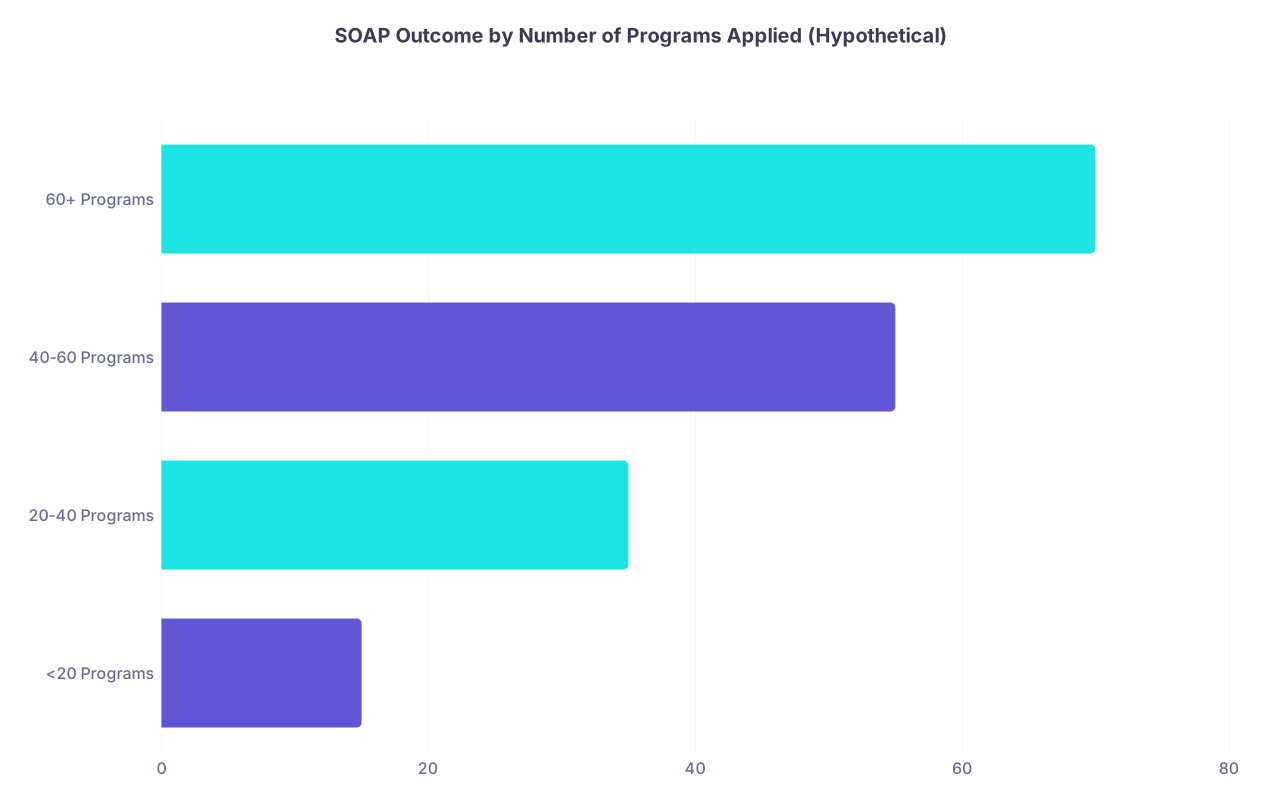
- Applying to only a small number of programs “because I want a good fit”
- Ignoring community or less-known programs in favor of big names that are already flooded
- Not tailoring your messaging at all for prelim vs categorical positions
| Category | Value |
|---|---|
| <20 Programs | 15 |
| 20-40 Programs | 35 |
| 40-60 Programs | 55 |
| 60+ Programs | 70 |
PDs can smell ego and poor strategy. If your application list doesn’t make sense for your situation (limited interviews, maybe lower scores), you look unrealistic. Unrealistic is not attractive in an intern.
The Mindset Shift You Must Make
SOAP is about getting a job, not the perfect job.
That doesn’t mean you should panic-apply to every specialty randomly. But it does mean you should:
- Be honest about your competitiveness for each specialty
- Include community and smaller programs in less-competitive regions
- Seriously consider prelim medicine, prelim surgery, or transitional year if you need U.S. training and are reapplying later
Don’t make the “I only want categorical in a big coastal city” mistake when you’re coming in with few interviews. That’s how you spend another year in limbo.
Red Flag #7: Desperation and Oversharing
SOAP is emotional. You’re frustrated, scared, maybe ashamed. But the worst thing you can do is let that spill into how you present yourself.
Red flags PDs notice:
- Personal statements that read like a plea for rescue
- Emails that overshare family tragedy, financial hardship, or health issues without tying them to current stability
- Talking more about how unfair the process is than about what you bring to a team
- Appearing bitter about not matching your original specialty
Desperation reads as risk. Programs want stable, resilient interns, not people on the edge.

What Controlled Vulnerability Looks Like
You can acknowledge challenges. But always land on capability.
Bad:
“Because of financial and personal hardships, I had difficulty focusing during medical school, which contributed to my failed Step 1. I am hoping for a residency that understands and will give me a chance.”
Better:
“During early medical school, I was balancing significant family responsibilities that impacted my performance and led to a failed Step 1 attempt. Those circumstances have been resolved, and since then I have passed Step 1 and Step 2, completed all rotations successfully, and demonstrated consistent reliability in clinical settings. I’m ready to fully commit to residency training.”
See the difference? One asks to be taken care of. The other shows they’re ready to pull their own weight.
Red Flag #8: Ignoring Fit Signals from the Program
Even in SOAP, fit matters. Programs still have preferences, even if they’re not flashy about it.
You raise red flags when you:
- Apply to community-heavy family medicine programs while emphasizing only tertiary-care research and zero outpatient interest
- Go after surgery prelim spots while stressing lifestyle and outpatient clinic in your statement
- List only academic, research-intense goals for programs clearly built around service and workforce needs
PDs know when you’re using them as a stepping stone. Some are fine with it. Many are not.
Quick Fit Checks Before You Hit Apply
Spend 3–5 minutes per program:
- Look at their website: do they emphasize research, service, fellowship placement, or community care?
- Check their resident bios: do many have “non-traditional” or “second-career” background? That might be good for you.
- Look at the call schedule: is this a high-intensity place where they need workhorses?
Then make sure your statement and experiences don’t completely contradict their vibe.
You don’t have to perfectly match every place. You just need to avoid screaming “wrong person for this job.”
Red Flag #9: No Evidence You Can Actually Do the Work
PDs aren’t hiring test scores. They’re hiring someone who can safely take call.
Major red flag: Your entire application reads like an academic CV with minimal real clinical responsibility.
Red flags they see:
- No sub-internships or acting internships listed, or described very weakly
- Only outpatient shadowing and observerships, with no inpatient or night experience
- Tons of research, almost no patient-facing roles
- Activities written in vague, passive language: “was exposed to,” “had the opportunity to observe,” “was involved in”
| Type | Weak Wording | Strong Wording |
|---|---|---|
| Rotation | "Participated in rounds" | "Pre-rounded, wrote notes, presented" |
| Call | "Observed management of patients" | "Cross-covered 20–30 inpatients nightly" |
| Clinic | "Exposed to outpatient medicine" | "Saw 6–8 patients per session, counseled on meds" |
How To Quickly Show You’re Work-Ready
You don’t need to invent experience. You need to describe what you actually did, concretely.
Instead of:
“I participated in inpatient medicine and learned about complex care.”
Write:
“On my sub-internship, I pre-rounded on 4–6 patients, wrote daily notes, followed up on labs and imaging, and called consults under attending supervision.”
If you did nights, say so. If you carried a pager, say so. If you covered cross-service patients, say so.
PDs are trying to answer one question in SOAP: “If I put this person on nights in July, will they crumble?” Make it easy for them to say no—to that fear.
What You Should Do Today
Open your ERAS application and your SOAP personal statement draft right now.
Then do this:
- Find every place your story is confusing or incomplete (gaps, fails, leaves). Add one clear, brief line of context.
- Scan for any mention of a specialty you are not applying to in SOAP. Delete or rewrite.
- Rewrite the top 2–3 experiences to show concrete responsibility, not vague “exposure.”
- Call your own phone from another number. If your voicemail greeting or full mailbox would embarrass you, fix it.
- Write a 4–6 sentence personal statement paragraph for each specialty you’re targeting that answers: “Why here, why now, why you’re stable.”
Do not assume “someone will see my potential.” In SOAP, they mostly see your mistakes.
Clean those up, and you stop giving PDs easy reasons to skip you—especially when you’re already coming in with limited interviews and limited margin for error.