You hit 'send' on the post-interview thank-you email and immediately feel a wave of relief. Then the panic sets in. Did I sound too eager? Was my subject line professional enough? Should I have mentioned the program director's dog?
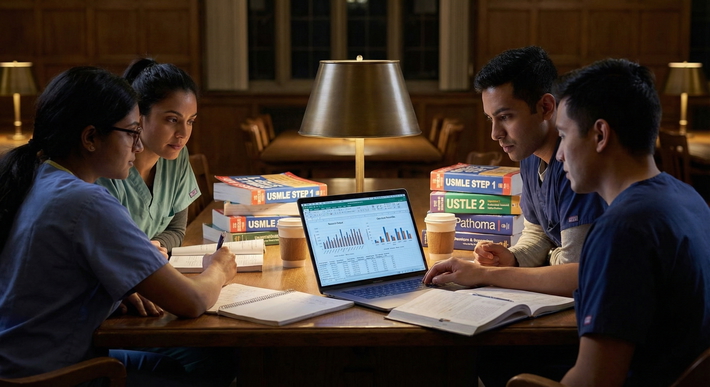
Conventional wisdom in medical school forums dictates that you absolutely MUST send follow-up emails after every single interview. It's treated as a mandatory ritual, a sacred cow of the residency application process. But let's look at the actual data. Survey data shows 72% of applicants send these thank-you emails. Yet, only 18% of program directors say these emails actually influence their ranking.
The truth? Most program directors don't track who sent emails and who didn't. They simply don't have the time, and they don't care. In the pass/fail era, the metrics that actually move the needle are your Step 2 CK scores, your clinical rotation evaluations, and your actual interview performance. The thank-you email is just a security blanket for your anxiety. It makes you feel like you're doing something productive when you're really just shouting into the void.
Let's pull back the curtain on what program directors actually think. They won't say this on a residency open house, and they certainly won't tell you to your face, but anonymous survey data reveals a stark reality. A massive 82% of PDs say thank-you emails "rarely" or "never" affect their rank list.
Some programs explicitly tell applicants NOT to send emails. They put it in bold on their website. They announce it during the interview day welcome session. And what do applicants do? They send them anyway. It's almost comical. Generic "thank you for your time" emails go straight to the trash or get buried in a spam filter.
Here is the uncomfortable truth: PDs are incredibly busy. They are drowning in clinical duties, administrative bloat, and reviewing hundreds of applications. They view these emails as performative busywork. You aren't standing out; you're just adding to their inbox fatigue. When a PD sits down to finalize their rank list, they are looking at their interview scoring rubrics, their faculty feedback forms, and their core institutional needs. They are not cross-referencing a spreadsheet of who sent a polite email on a Tuesday afternoon. When you look at the hard numbers, the correlation between sending a follow-up email and successfully matching is essentially zero. You are stressing over a variable that doesn't even exist in their algorithm.
When (If Ever) a Follow-Up Email Actually Helps
Is there ever a time when a follow-up email actually helps? Yes. But only in highly specific edge cases. I'm talking about clarifying a unique circumstance, adding genuinely missing information, or expressing concrete geographic ties that weren't covered in the interview.
If you must send an email, it needs to be short, highly specific, and add NEW information. Do not just regurgitate your personal statement. A bad email says, "I really loved the vibe of your program and the cafeteria was great." A good email says, "Since our interview, I was accepted to present my research on X at the national conference, and I wanted to update my application."
If you are a borderline candidate and the PD remembers you fondly, a great, concise email might give you a slight nudge. But let's be realistic. This represents maybe 2-3% of cases. It is simply not worth the agonizing anxiety for the other 97% of applicants. A much better strategy? Save your breath and send a thoughtful, well-crafted Letter of Intent (LOI) at the very end of the cycle when rank lists are actually being finalized.
The Pass/Fail Era: What Actually Matters Now
We are deep in the pass/fail era. Step 1 no longer differentiates you. A 260 and a 230 look exactly the same on paper now. Step 2 CK has become the new, unforgiving yardstick. Because of this shift, clinical rotations and letters of recommendation carry more weight than ever before.
Your interviews are your primary weapon. Emails are just noise. I've watched applicants spend 10+ hours collectively drafting, editing, and agonizing over follow-up emails for a single program. That is 10 hours stolen from Step 2 CK prep, UWorld blocks, or mock interview practice. The math doesn't lie. Data shows applicants who stress about emails waste time that could go to actual preparation.

Program directors are looking for competent, resilient, and collegial residents. They find those traits through your clinical grades, your LORs, and how you handle yourself in the interview room. They do not find those traits in a templated email sent 12 hours after the interview. The bottom line is simple: your interview performance is infinitely greater than your follow-up email. Stop treating the email like it's a lifeline. It's not.
The Reality Check
Let's look at the reality. Program directors overwhelmingly report that thank-you emails rarely or never influence their rank list. The data simply doesn't support the anxiety applicants feel. Generic follow-up emails are essentially ignored; only emails adding genuinely new, specific information might help in rare edge cases. In the pass/fail Step 1 era, your time is vastly better spent on Step 2 CK preparation and interview prep than crafting perfect thank-you notes. The myth of the mandatory thank-you email is perpetuated by well-meaning advisors and paranoid student forums with zero evidence. Challenge the conventional wisdom. Focus on what actually matters.