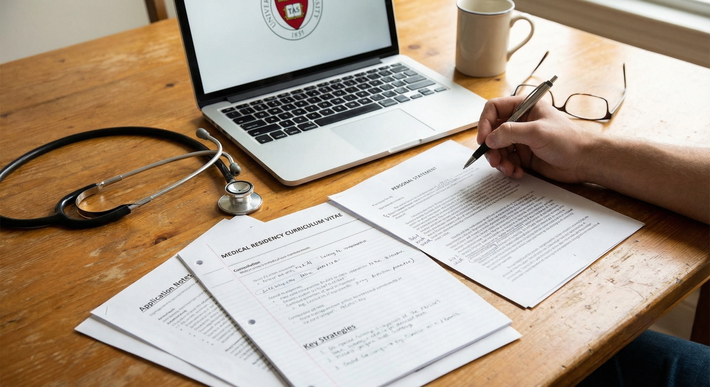
You finish your last interview of the season, close the Zoom window or walk out of the conference room, and then the weirdest part begins.
Silence.
No more polished answers. No more "tell me about yourself." No more trying to read whether the APD's smile meant anything. Now you're sitting there refreshing your inbox, replaying every conversation, and wondering the question almost everyone asks at this exact point:
What am I supposed to do now?
I've seen applicants make this part way too complicated. They either disappear completely, or they send a flurry of awkward emails that make them look needy, generic, or clueless. Neither helps. Post-interview communication is not mysterious, but it is easy to botch if you don't understand the timeline.
Here's the blunt version: program directors do notice what happens after the interview, but not in the dramatic way applicants imagine. They are not tallying up who wrote the longest thank-you note. They are noticing whether you act like a professional, whether your communication is timely, and whether you understand the difference between a polite thank-you and a true letter of intent.
That difference matters. A lot.
This guide gives you the actual timeline. Month-by-month logic. Week-by-week actions. Day-by-day priorities right after the interview. At this point you should be aiming for calm, strategic, and brief. Not theatrical. Not desperate. Not spammy.
(See also: what programs actually care about for more details on required vs optional communications.)
The Post-Interview Anxiety: A Common Scenario
Let's make this real.
If you're unsure whether thank-you notes are still expected in the current cycle, the evidence is clear: programs do notice these communications, and skipping them can inadvertently signal disinterest.
(See also: how committees discuss follow-up notes for insight into what happens after you send your messages.)
It's January. Or maybe late December. You've just finished your final residency interview. Your suit is half on the chair, your notes app is full of fragments like "great ICU exposure," "seemed happy," and "PD mentioned mentorship." You're exhausted, but your brain is still sprinting.
You start asking yourself:
- Should I send thank-you notes to everyone?
- Does email count, or does it need to be handwritten?
- If this program is my favorite, do I tell them now?
- If I say too much, will I look desperate?
- If I say nothing, will they forget me?
That mental spiral is normal. The stakes feel absurdly high because they are high. This is your training. Your city. Your next several years. And the silence after interviews can feel intimidating because so much of the process is hidden from applicants.
Here's the good news: the expected next steps are not actually vague. There is a timeline that makes sense, and most strong applicants follow it without drama.
At this point you should stop guessing and start organizing:
- Review each interview within 24 hours.
- Send thank-you notes within 24-48 hours.
- Track meaningful updates over the next few weeks.
- Decide whether one program is truly your #1.
- Send one letter of intent only if you mean it.
That's the roadmap. Simple. Professional. Effective.
Thank You Notes vs Letters of Intent: Knowing the Difference
Applicants confuse these two all the time. That's a mistake.
A thank-you note and a letter of intent are not interchangeable. They serve different purposes, happen at different points in the cycle, and carry very different weight.
Thank-you notes
A thank-you note is exactly what it sounds like:
- brief
- professional
- sent within 24-48 hours
- focused on gratitude and specific appreciation
This is not the place for a dramatic declaration of love for the program. It's not the place to say "you are my top choice" to five different institutions. It's not the place for your life story.
A good thank-you note does three things:
- thanks the interviewer for their time
- references one specific part of your conversation
- reinforces sincere interest in the program
That's it. Three or four sentences. Clean and human.
Letter of intent
A letter of intent is different. Much different.
This is a formal communication to one program, the one program, you intend to rank #1. It comes later, once you've finished enough interviews to actually know your top choice. Sending a letter of intent too early is sloppy. Sending more than one is dishonest. And yes, people do it. It's dumb, and it can absolutely burn you.
A proper letter of intent says, plainly, that:
- this program is your top choice
- you intend to rank it #1
- you can specifically articulate why
It should be about one page or less. Direct. Specific. Mature.
The timing difference
Here's the simplest way to remember it:
- Thank-you notes: 24-48 hours after each interview
- Letter of intent: usually 2-3 weeks before the rank list deadline, once your #1 is clear
Timing matters almost as much as content. A beautiful thank-you note sent 12 days late doesn't look thoughtful. It looks delayed. A letter of intent sent before you've even completed interviews doesn't look committed. It looks premature.
Why do PDs notice these communications at all? Not because they're romantic. Because they reveal whether you understand professional norms. Medicine is full of people who can talk. Far fewer know how to communicate with restraint.
The Complete Post-Interview Timeline You Need
This is the part most applicants actually need: what to do, when.
Day 0: Interview day
As soon as the interview ends, don't rely on memory.
At this point you should:
- write down the names of everyone you met
- note one memorable point from each conversation
- record your honest impressions of the program
- save any coordinator email addresses if faculty emails aren't obvious
Do this the same day if possible. By the next morning, details blur. Every program starts sounding like every other program. "Strong curriculum, supportive culture, diverse pathology." Sure. That describes half the country.
Days 1-2: Send thank-you notes
Within 24-48 hours, send thank-you emails to your interviewers. If you met the PD or APD directly, send one to them as well unless the program explicitly says not to send post-interview communication.
At this point you should keep each note:
- 3-4 sentences
- personalized
- easy to read on a phone
- free of gimmicks
A basic structure works well:
- Thank them for their time.
- Mention a specific conversation point.
- Reaffirm your interest.
Example:
Dear Dr. Patel, Thank you for taking the time to speak with me during my interview day. I especially enjoyed our conversation about the resident-led quality improvement curriculum and how interns are supported early in the year. The discussion reinforced my enthusiasm for your program, and I appreciate the opportunity to learn more about it.
That's enough. More than enough.
Week 1: Finish all thank-you notes and organize your impressions
By the end of the first week after each interview, you should have:
- sent all thank-you notes
- updated your rank list notes
- compared programs while details are still fresh
- flagged any missing contacts you still need
If you forgot one interviewer, this is the week to fix it. Not three weeks later with a "sorry for the delay." Late thank-yous rarely help.
Weeks 2-3: Follow up only if there's something real to say
This is where applicants often get weird. They feel inactive, so they invent reasons to email programs.
Don't.
At this point you should only follow up if:
- you missed an interviewer and now have their contact
- you have a meaningful update, like:
- accepted publication
- new award
- AOA/GHHS election
- major leadership role
- Step 3 result if relevant and strong
- the program invited additional communication
"Just checking in" is not a meaningful update. Neither is "I remain interested." They already know you're interested. You applied and interviewed.
Week 4: Decide if you truly have a #1
By about week 4 after your last interview, or once your interview season is complete, you should start forcing clarity.
At this point you should ask yourself:
- If Match Day were tomorrow, which program would I rank first?
- Is that choice stable, or am I still wavering?
- Do I have concrete reasons, not just vibes?
If you don't have a clear #1 yet, do not send a letter of intent. Wait. The worst letters are sent by applicants who are still emotionally outsourcing their decision.
Weeks 5-6: Send final meaningful updates if needed
This is your last reasonable window for substantive updates.
Appropriate updates might include:
- a newly indexed publication
- a major academic award
- a completed sub-internship with honors if newly available
- a significant change in your application status
At this point you should avoid repetitive touchpoints. One concise update is fine. Three emails in a month is not.
Two to three weeks before the rank list deadline: Send your letter of intent
Now, and only now, if one program is clearly your #1, send a letter of intent.
It should go to:
- the program director
- sometimes copied to the coordinator if appropriate
It should say clearly that you intend to rank the program first. No coy language. No "one of my top choices." That is not a letter of intent. That is mush.
Before rank list certification: Stop emailing and finalize strategy
Once your rank list is coming together, your job shifts.
At this point you should have:
- completed all thank-you notes
- sent any truly meaningful updates
- sent one letter of intent if applicable
- finalized your rank list based on fit, training, geography, support, and goals
What Program Directors Actually Notice
Let me save you from applicant folklore.
PDs are not sitting around deeply analyzing stationery choices or whether your sign-off said "warmly" versus "sincerely." What they notice is much more basic and much more telling.
1. Timeliness
A note sent within 48 hours signals organization and professionalism.
A note sent nine days later signals one of two things:
- you forgot
- you panicked after reading Reddit
Neither is flattering.
2. Personalization
Generic notes are painfully obvious. Everyone can spot them.
Bad example:
Thank you for speaking with me. I enjoyed learning about your excellent program and remain very interested.
This says nothing. It could've gone to dermatology, pediatrics, or a dental conference.
Good notes mention something real:
- the county hospital experience
- the night float redesign
- a conversation about mentorship after parental leave
- the program's ultrasound curriculum
- the interviewer's path from chief resident to faculty
Specificity feels human. Generic language feels mass-produced.
3. Brevity
Long thank-you notes are usually self-indulgent. Nobody needs a six-paragraph reflection on your growth as a future physician. Send the email. Be gracious. Move on.
Three to four sentences is the sweet spot.
4. Letter of intent discipline
A true letter of intent should go to one program only. Your genuine #1.
If you send multiple letters of intent, you're not being strategic. You're being dishonest. Word can travel. Faculty talk. Coordinators remember. The Match world is smaller than applicants think.
5. Appropriate frequency
One thank-you note? Good. One meaningful update later? Fine. One final letter of intent to your #1? Appropriate.
Repeated "checking in" emails? Bad. Pushy. Forgettable in the worst way.
At this point you should avoid the biggest red flags:
- copied-and-pasted notes
- telling several programs they are your top choice
- emailing too often
- trying to be overly charming
- sending updates that are not actually updates
Professional beats performative. Every time.
Your Post-Interview Action Checklist
Here's your practical checklist. Save it. Use it.

Today
- Write down names and details from the interview
- Draft thank-you notes while the conversations are fresh
- Send them within 24-48 hours
This week
- Confirm you didn't miss any key interviewer
- Update your rank list impressions
- Compare programs based on substance, not interview-day charm alone
By week 4
- Decide whether you have a real #1
- If not, keep evaluating and do not force a letter of intent
Weeks 5-6
- Send one concise update only if something significant changed
- Avoid filler emails
Two to three weeks before the rank list deadline
- Send one letter of intent to your genuine top choice
- Make it direct, specific, and honest
Before Match
- Finalize your rank list
- Stop over-communicating
- Let the process work
Quality over quantity. Always.
At this point you should be organized, strategic, and professional in every follow-up. That's what gets noticed. Not dramatic wording. Not volume. Not desperation dressed up as enthusiasm.
The reminder I want to leave you with is simple: post-interview communication should support your application, not become its own side quest. Send timely thank-you notes. Send one honest letter of intent if you truly have a #1. Then step back. You do not need to chase programs into liking you. You need to show them that you understand how professionals communicate when the stakes are high.