
The strongest ERAS applications don’t have the most experiences. They have the right number of meaningful ones—curated, deep, and clearly relevant to residency.
Let me answer the question you’re actually asking: “How many experiences should I list to look strong, not scattered or weak?”
The Short Answer: The Sweet Spot
Here’s the blunt version.
For a strong ERAS application, most competitive applicants typically end up with:
Total ERAS experiences (excluding publications):
8–15 solid entries is the usual strong range
Fewer than 6 starts to look sparse; 20+ often looks like fluff.Clearly “meaningful” experiences (depth + impact):
5–8 truly substantial experiences that:- span at least 6–12 months (or are very intense/impactful if shorter)
- show responsibility, leadership, or clear growth
- connect logically to your specialty or your core professional identity
Research entries (if your specialty cares about it):
- Community / less research-heavy fields: 1–3 research experiences
- Competitive / academic fields (Derm, Ortho, Rad Onc, ENT, Neurosurg): 3–6 research experiences, often overlapping over years
This is not about hitting exact numbers. It’s about avoiding two extremes:
- “I did almost nothing.”
- “I threw my entire CV into ERAS and made you find the story.”
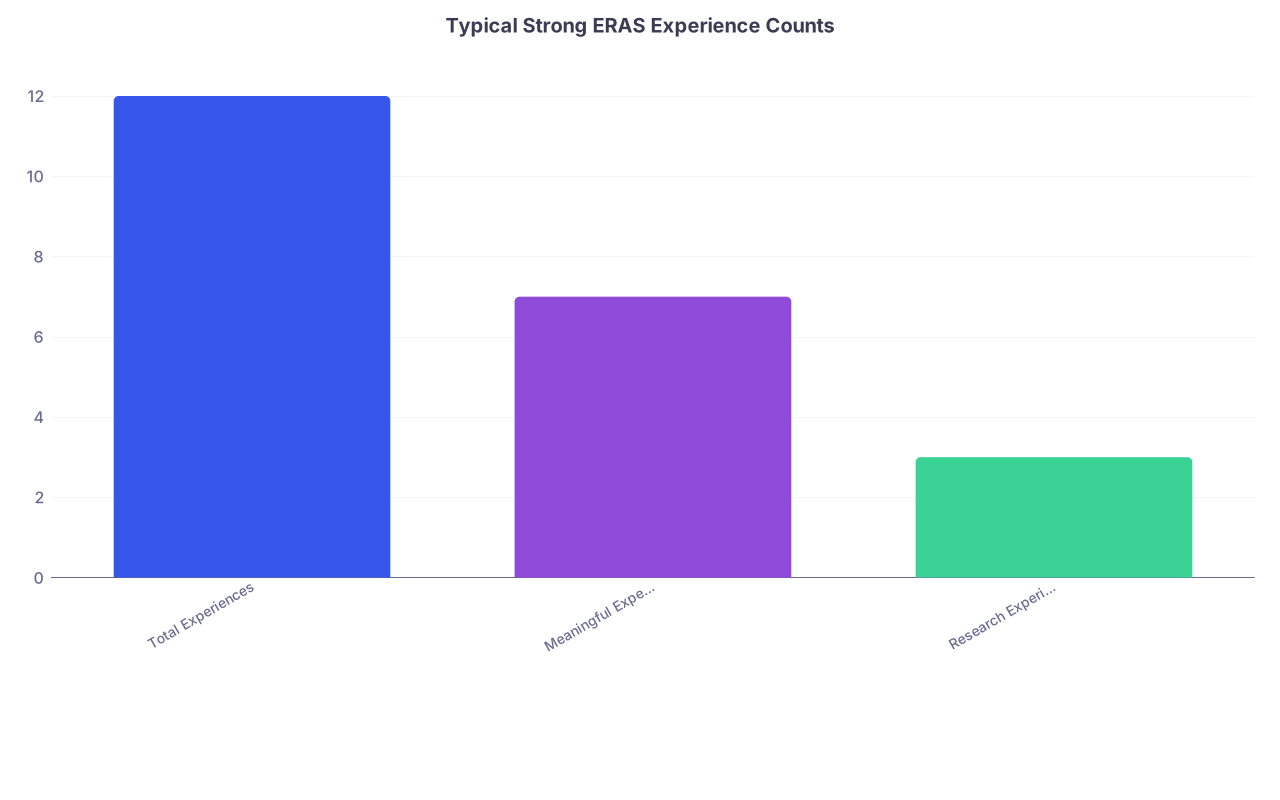
| Category | Value |
|---|---|
| Total Experiences | 12 |
| Meaningful Experiences | 7 |
| Research Experiences | 3 |
You win when program directors can scan your experiences and instantly see: “This person has been consistently engaged and has a clear trajectory.”
How Many Experiences Do Strong Applicants Actually List?
I’ll break it down by type of content and competitiveness of specialty.
1. Core Experiences (Work, Volunteering, Leadership, Major Roles)
For most strong applicants, I see:
Clinical / volunteer service: 2–4 entries
Example: free clinic, longitudinal community program, hospice volunteeringLeadership / longitudinal roles: 1–3 entries
Example: class officer, major student org role, clinic director, curriculum committee memberNon-clinical work / jobs: 1–3 entries
Especially for non-trads: EMT, scribe, MA, engineer, teacher, lab manager, etc.
So across these non-research buckets, strong applications usually have 5–10 total entries, but importantly, only 5–8 of them are truly “substantial”.
If your list looks like this:
- Volunteered at health fair (single day)
- Shadowed physician (20 hours)
- Helped with food drive (one afternoon)
- Attended conference (listed as “experience”)
You don’t have meaningful depth. You have filler.
2. Research Experiences
Research is where numbers vary a lot by specialty.
For less research-heavy specialties (FM, IM community-focused, Psych, Peds):
- 1–3 research experiences is usually enough if:
- at least one is 6+ months, and
- you can clearly describe your role and what you learned
For moderately competitive specialties (IM academic tracks, EM, OB/GYN, Anesthesia):
- 2–4 research experiences is common among strong applicants
At least one experience that lasted 1+ year or produced an abstract/poster/publication
For highly competitive specialties (Derm, Ortho, ENT, Neurosurg, PRS, Rad Onc):
- 3–6 research experiences is common:
- Typically spanning pre-med + med school or 2+ years during medical school
- Often includes at least one research year or tightly focused niche output
But again—more lines in ERAS is not always better. One 2-year, high-responsibility research position is more impressive than four 3-month “helped with data” entries.
3. Publications & Presentations (Separate Section)
These are separate from “Experiences” in ERAS, but they matter for the “how much is enough” question.
Strong applicants in research-focused fields often have:
- Publications: 1–5+ (mix of first-author, co-author, case reports, reviews)
- Presentations: 1–5+ (posters, oral presentations, regional/national meetings)
What matters more than raw count:
- Is there a coherent research theme?
- Are you clearly more than just a name on a long author list?
What Actually Makes an Experience “Meaningful”?
You’re not graded on word count. You’re graded on substance.
A “meaningful” experience usually has:
Duration or intensity
- Longitudinal: 6+ months, ideally 1–3 years
- Or short but intense: full-time summer, sub-internship-like responsibility
Ownership or responsibility
- You led a team
- You owned a project or clinic function
- You were the “go-to” person for something that mattered
Impact you can describe
- On patients, systems, learners, or yourself
- You can say more than “I gained communication skills” (everyone says that)
Connection to your specialty or core narrative
- Fits logically with: “This is who I am and why I’m going into X”
If you can’t write 3–5 strong sentences about an experience without repeating generic buzzwords, it’s probably not a top-tier “meaningful” one.

Sample Breakdown: What a Strong ERAS Experience List Looks Like
Here’s a sketch of what I routinely see in applicants who match well (numbers vary, but structure is similar).
Family Medicine Applicant (Strong, Community-Oriented)
3 clinical volunteering experiences
- 1 free clinic (2 years, increasing responsibility)
- 1 mobile health outreach (1 year)
- 1 short-term but immersive global health trip (clearly framed)
-
- Student-run clinic coordinator (1.5 years)
- FM interest group officer (1 year)
1–2 research entries
- Quality improvement project at continuity clinic (1 year)
- Possibly 1 med-ed project
1 paid job or “prior career” entry (if relevant)
- EMT, MA, scribe, or non-medical job that shows maturity / work ethic
Total: ~8–10 experiences, with 5–7 that are truly substantial.
Internal Medicine (Academic Track) or Transitional Year → Subspecialty
2–3 research experiences
- 1 major project (1–2+ years, maybe a gap year)
- 1–2 smaller or earlier projects
2–3 clinical volunteering / service experiences
- Free clinic, hospital volunteer, community education, etc.
1–2 leadership experiences
- IM interest group, committee, QI lead, etc.
1 meaningful employment or teaching experience
- Tutor, TA, standardized patient, etc.
Total: ~9–12 experiences, with 6–8 meaningful.
Derm / Ortho / ENT / Plastic Surgery / Neurosurgery
3–6 research experiences
- Often 1+ year of dedicated research time
- Several projects within one lab or specialty area
1–3 clinical volunteering experiences
- Often longitudinal, sometimes specialty-adjacent (wound care, surgical clinics)
1–3 leadership roles
- Student group founder/leader, national organization role, big initiative
0–2 jobs or unique background entries
- Military service, entrepreneurship, tech/engineering job, etc.
Total: ~10–15 experiences, with 7–9 meaningful.
Too many weak, short experiences in these competitive specialties makes you look like you’re trying to “collect lines” instead of commit deeply.
| Specialty Tier | Total Experiences | Meaningful Experiences | Research Experiences |
|---|---|---|---|
| Community-focused (FM, Peds, Psych) | 8–12 | 5–7 | 1–3 |
| Moderate (IM, EM, Anes, OB/GYN) | 9–13 | 6–8 | 2–4 |
| Highly competitive (Derm, Ortho, ENT, NSGY) | 10–15 | 7–9 | 3–6 |
How Programs Actually Read Your Experiences
Let me be honest about attention span.
Most program directors do not read all 20 experiences in detail. If you list that many, they skim.

| Step | Description |
|---|---|
| Step 1 | Open Application |
| Step 2 | Scan Experience Titles |
| Step 3 | Impression: Unfocused |
| Step 4 | Open 5-8 Key Entries |
| Step 5 | Look for Depth & Responsibility |
| Step 6 | Check for Specialty Fit |
| Step 7 | Decide: Interview or Not |
| Step 8 | Coherent Story? |
What they actually do:
-
- Consistency
- Gaps
- Progression (did responsibilities increase?)
Open only the obviously meaningful ones:
- Long duration
- Leadership words (“director,” “coordinator,” “leader,” “founder”)
- Specialty-related
Look for:
- Ownership and initiative
- Clear reflection (not fluff)
- Specialty fit and professionalism
If you want to help them, structure your experiences so your 5–8 key ones are obvious.
How to Decide What to Include vs Leave Out
Use this filter: “Would I be happy if they asked me about this in an interview?”
If the answer is “Not really, I don’t remember much” or “It was 4 hours, honestly,” that’s a bad sign.
Some practical rules:
Always include
- Longitudinal commitments (≥6–12 months)
- Leadership roles
- Major jobs (pre-med or during med school)
- Substantial research projects
- Experiences that define your story or specialty choice
Usually include
- Shorter but intense roles (e.g., full-time summer position)
- Unique experiences that differentiate you (military, startup, elite sports, etc.)
Strongly consider excluding or consolidating
- Single-day or weekend events
- Shadowing (unless unusually substantial or relevant)
- Very early minor activities that don’t fit your current narrative
- Generic club membership with no real role
If something was minor but technically relevant, consider bundling:
Instead of:
- “Health fair volunteer – 1 day”
- “Blood drive helper – 1 day”
Create:
- “Community health outreach events – Various roles (2021–2023)”
And describe 2–3 representative responsibilities in one consolidated entry.

How to Make Your 5–8 Key Experiences Stand Out
Assume you’ve got your core set of meaningful experiences. Now you need to write them in a way that actually lands.
For each key entry, you want:
Clear, specific title
- Bad: “Volunteer”
- Better: “Student Volunteer – Free Community Health Clinic”
- Best: “Clinic Coordinator – Student-Run Free Primary Care Clinic”
Concise, impact-focused description
- What you did (with numbers if possible)
- What changed because you were there
- What you learned that ties into how you practice medicine now
Alignment with your specialty
- For Psych: communication, longitudinal relationships, vulnerable populations
- For Surgery: procedural skills, teamwork under pressure, manual work, QI in OR
- For IM: complex patients, systems thinking, teaching, continuity
Don’t write like a brochure:
“Through this experience, I learned the true value of empathy in patient care…”
Everyone writes that.
Say something like:
“I was the person other volunteers called when a patient didn’t speak English or was upset about wait times. Eventually I built a workflow that cut average visit time by 30 minutes.”
One sounds like a platitude. The other sounds like a future resident.

Common Mistakes With Experience Counts
I see the same errors over and over.
The “Max Out All Boxes” Problem
Listing 20+ experiences where half are one-off events.
Signal: insecurity and lack of editorial judgment.The “Two Experiences Only But They’re ‘Meaningful’” Problem
Having just 2–3 big things and basically nothing else.
Signal: low engagement or limited exposure.Overweighting Early Undergrad Stuff
Filling ERAS with freshman-year club memberships and high school roles.
Keep early things only if they’re seriously impressive or clearly foundational.No Coherent Story Across Experiences
A bit of Derm interest, a bit of Ortho, some random Psych, and you’re applying to EM.
That doesn’t read as “open-minded.” It reads as “uncommitted.”Descriptions That All Sound the Same
“I improved my communication skills.” “I worked in a team.” “I learned empathy.”
If your 10 experiences all say this, you’ve wasted 10 opportunities.
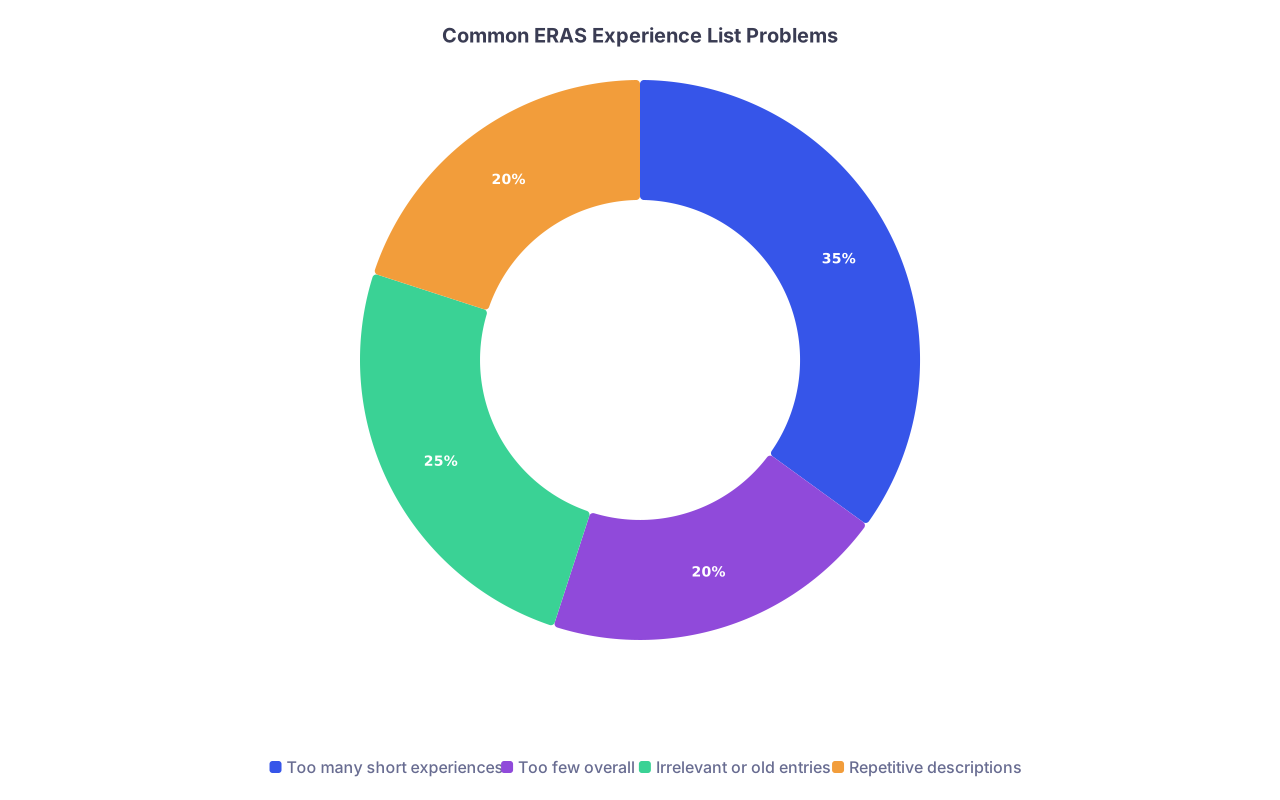
| Category | Value |
|---|---|
| Too many short experiences | 35 |
| Too few overall | 20 |
| Irrelevant or old entries | 25 |
| Repetitive descriptions | 20 |
Your Real Goal: Enough Experiences to Tell a Clear, Strong Story
Stop obsessing over the exact number. Instead, ask:
- Do I have 5–8 experiences I’m genuinely excited to talk about?
- Do my experiences show growth over time?
- Do they paint a consistent picture of why this specialty, why I’ll be good at it, and how I’ve already started becoming that physician?
If yes, whether the total is 9 or 14 doesn’t matter nearly as much as you think.
If no, the problem isn’t the count. It’s the content.
FAQ: ERAS Experiences
1. What’s the minimum number of experiences I need to not look weak?
If you have fewer than 6 total experiences, it usually starts to look thin unless they’re extremely substantial (think: multi-year military service, multi-career background, etc.). A safer floor is 8–10 total, with at least 5 that are clearly substantial and longitudinal.
2. Is there such a thing as too many experiences on ERAS?
Yes. Once you’re past about 15 experiences, most of the extra ones start to look like padding. Program directors won’t read them all in detail. If you’re at 18–20+, you should actively ask, “What can I consolidate or cut without hurting my story?”
3. Do I need research to have a strong ERAS application?
Not in every specialty. For FM, community IM, Psych, and Peds, you can absolutely be strong with little or no research if you have robust clinical and service experiences. For competitive and academic fields, 1–3 projects minimum is wise, and 3–6 is common for the most competitive.
4. Should I list short, one-day volunteer events?
Only if they’re part of a pattern you can combine into one entry (e.g., multiple outreach events over a year). Don’t list every single minor event separately. That screams “I’m trying to fill space.”
5. How do I handle high school or early undergrad experiences?
Include them only if they’re:
- Truly significant (national-level sports, major leadership, serious work) and
- Still relevant to your current narrative.
If you’re struggling for space or coherence, cut the ancient history first.
6. What if I spent most of my time on just one or two things?
That can be very strong—if those things are big. A 3-year commitment as free clinic director plus 2-year lab work can absolutely anchor a great app. Just make sure you also have a few other entries that show breadth: some teaching, some community service, etc. Aim to reach at least 7–9 total entries.
7. How do I know which experiences to highlight in my personal statement vs ERAS descriptions?
Use the personal statement for 2–3 experiences that shaped your identity and specialty choice—full narrative, emotional, reflective. Use ERAS descriptions to show responsibility, impact, and concrete contributions. If an experience is central to your story, it should appear clearly and strongly in both places, but with different angles.
Open your ERAS draft right now and do this: put a star next to the 5–8 experiences you’d actually want to be grilled on in an interview. If you can’t find that many—or if you’ve starred 15—you’ve just found your next editing job.