This article is for educational purposes only. It is not financial advice, not legal advice, and not tax advice. Figures vary by individual circumstances, so consult a qualified professional before acting.
The 2 AM Panic: Why I'm Staring at My Resume and Hating It
It's 2:17 a.m. My roommate is snoring. My laptop fan is screaming. And I'm staring at a resume that looks like it was generated by every other pre-med on the planet.
Pre-Medical Society. HOSA. AMSA. Maybe a volunteering line that says "hospital volunteer, 50 hours" like that means anything. I keep refreshing the page like the words will rearrange themselves into something that doesn't make me look like a factory-produced applicant. They don't.
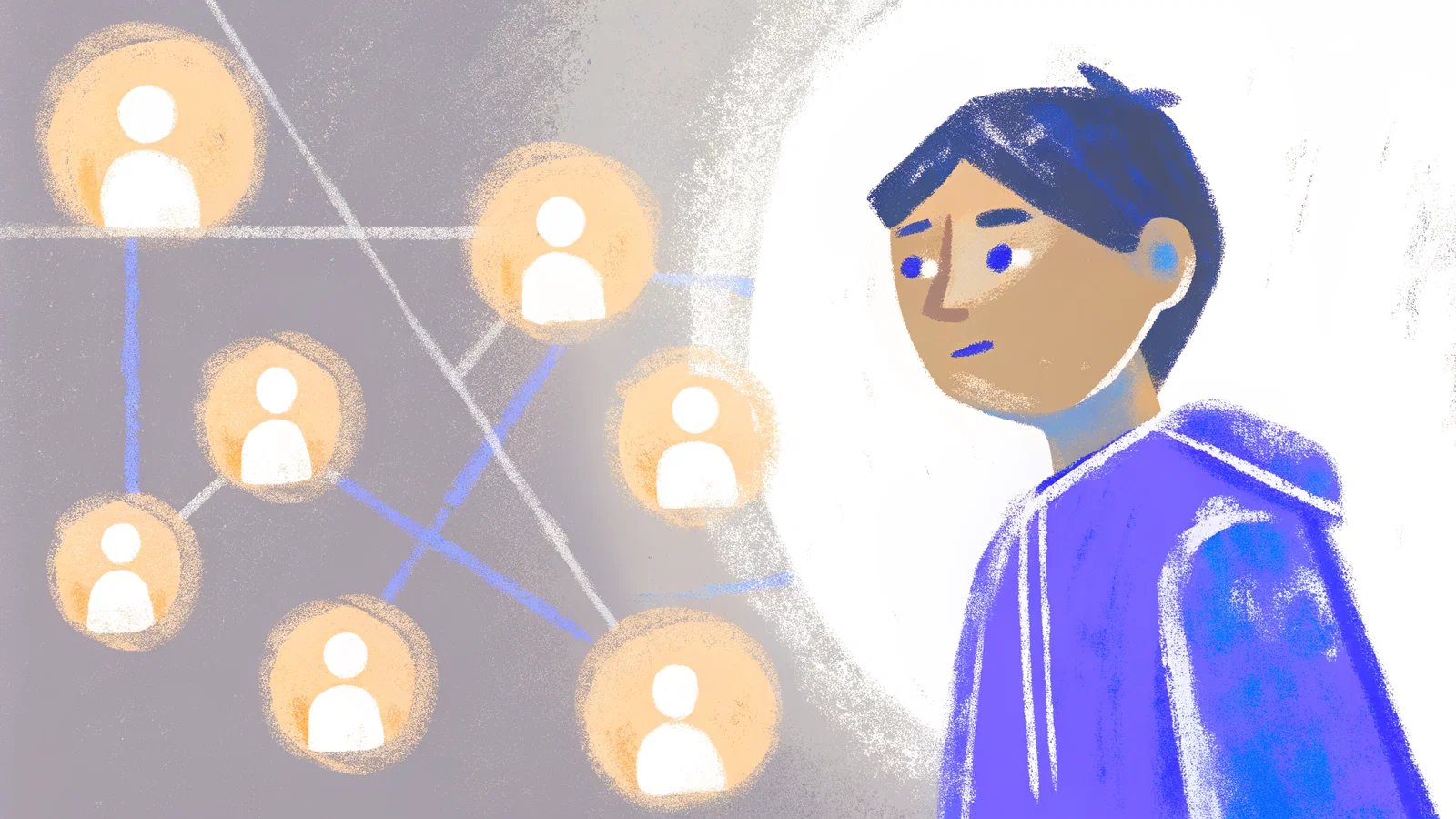
Here's the fear that won't shut up: Am I just a cookie-cutter? Will the admissions committee read this and think, "Cool, another one who joined the clubs because someone told them to"? I've seen classmates with cultural orgs, community projects, free clinics they actually built. Their stories sound real. Mine sound... assigned.
And then the comparison trap kicks in. You know the one. Your friend who founded a mentorship program for first-gen students. The guy who spent every Saturday at a food pantry and somehow turned it into a leadership role. Meanwhile you're sitting here with "member" under three traditional clubs and a gnawing sense that they're going to see right through you.
That anxiety? It's valid. I've lived it. The strategy of "just join the pre-med stuff and hope" is what's flawed. Not you. The approach.
Adcoms don't hate traditional clubs. They hate empty ones. They don't automatically love cultural groups. They love people who actually mean it. The rest of this is me talking myself, and you, off the ledge with what actually matters.
The 'Traditional' Trap: Are Pre-Med Clubs Just Resume Padding?
Let's be honest about Pre-Medical Society, Pre-Dental Society, HOSA, and the rest of the "safe" list. They're comfortable. Everyone's in them. Your advisor nods approvingly when you mention them. They feel like the right move.
But from the adcom side? They've seen hundreds of these. Your chapter of Pre-Med Society is not special just because you showed up to the pizza nights and put it on your activities list. If you're a passive member, you're wallpaper. And wallpaper doesn't get interviews.
I used to tell myself membership was enough. "I'm involved!" No. You're present. There's a difference, and it's brutal when you realize it too late.
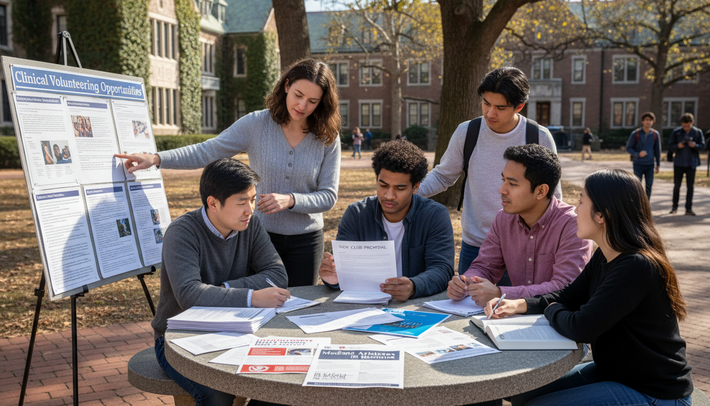
So does that mean traditional clubs are useless? No. It means the way most of us do them is useless. The fix is almost annoyingly simple and terrifyingly hard: stop being a member. Be the person who builds something inside it. Found a subcommittee. Run a mentoring pipeline for underclassmen. Turn the club's vague "community service" into a measurable project with actual outcomes. Leadership, or at least ownership of a real initiative, is what separates "I was there" from "I made this happen."
And please, for the love of your sanity, don't collect five generic memberships like Pokémon. That's how you burn out and still look average. One or two traditional clubs where you actually moved the needle beats a laundry list of "attended meetings."
Look at that gap. High time, low impact is the silent killer of applications. Leadership flips the return. I wish someone had slapped that chart in front of me sophomore year.
Cultural & Community Groups: Do I Belong? Or Is It Performative?
This is the one that keeps me up even more. Cultural orgs. Identity-based groups. Community service clubs that aren't stamped "pre-med approved."
If you're not a minority, the spiral starts immediately: Can I even join? Will it look like I'm faking it? Am I culturally appropriating by showing up? I've had that exact thought. Multiple times. The fear of being labeled a resume tourist is real.
Here's what I've landed on, after spiraling and then actually talking to people who do this work: allies who show up with humility are valued. Adcoms care about cultural competence and community commitment. A cultural club can demonstrate that you understand people who aren't you, if you're not just collecting a title. Same with Habitat for Humanity, local shelters, free clinics, tutoring programs in underserved neighborhoods. These show character. Traditional clubs show you know the pre-med script. Community work shows you might actually care about patients as humans.
But the tokenism fear? Legitimate. If you join three cultural groups junior year because a forum told you "diversity looks good," they will smell it. Adcoms are not stupid. Inauthenticity has a scent. It's the difference between "I served because it mattered to me" and "I served because it checked a box." One reads as passion. The other reads as strategy. Strategy without soul is a rejection letter waiting to happen.
The golden rule is ugly and simple: authenticity or don't bother. If your only reason is the application, stay out. If you have a real reason, family background, a community you care about, a cause that actually makes you angry or hopeful, then lean in hard and do the work.
That flowchart is the whole game. Pick the right branch or waste years.
What Adcoms Actually Want: The 'Why' Behind the 'What'
They don't want a perfect resume. They want a complete person. That's the myth that wrecks us, thinking there's a magic combination of clubs that unlocks acceptance. There isn't. There's a story.
Your traditional clubs and your cultural/community groups should talk to each other. They should say something coherent about your values. Maybe Pre-Med Society taught you clinical curiosity, and the cultural org taught you how to listen across difference, and the shelter work taught you what happens when systems fail people. That's a narrative. "Member of six things" is a grocery list.
Leadership beats participation every single time. Showing up to meetings is the floor, not the ceiling. If you can't point to a change you caused, members recruited, funds raised, a program launched, a barrier removed, you're not competitive. Harsh. True.
And for those of us panicking that it's "too late"? It's not. I've watched people start something meaningful in junior year and make it the centerpiece of their application. Starting late and building fast can actually look more impressive than coasting since freshman year. Initiative doesn't have an expiration date stamped on it.
Final verdict, from one worried applicant to another: quality over quantity. One impactful leadership role, traditional or cultural, beats five generic memberships into the ground. Always.
Stop staring at the resume like it's a verdict on your worth. Start treating every activity like it has to earn its place by proving who you are. If it doesn't advance the story, cut it or upgrade it.
You've got time. Not infinite time. But enough, if you stop padding and start building.
Now go pick one club you're half-in on and either own it or walk away. Then open your laptop tomorrow and write the version of your activities that doesn't make you hate yourself at 2 a.m. That's the real work. Do it.
Key Takeaways
Traditional clubs are safe but risky if you're just a passive member, you must take a leadership role or drive a real project to stand out. Cultural and community groups aren't fluff; they're how you prove cultural humility and actual community commitment. Adcoms prioritize authenticity and will spot resume-padding from a mile away. Your activities need to tell one cohesive story about who you are, not a checklist of what you joined.