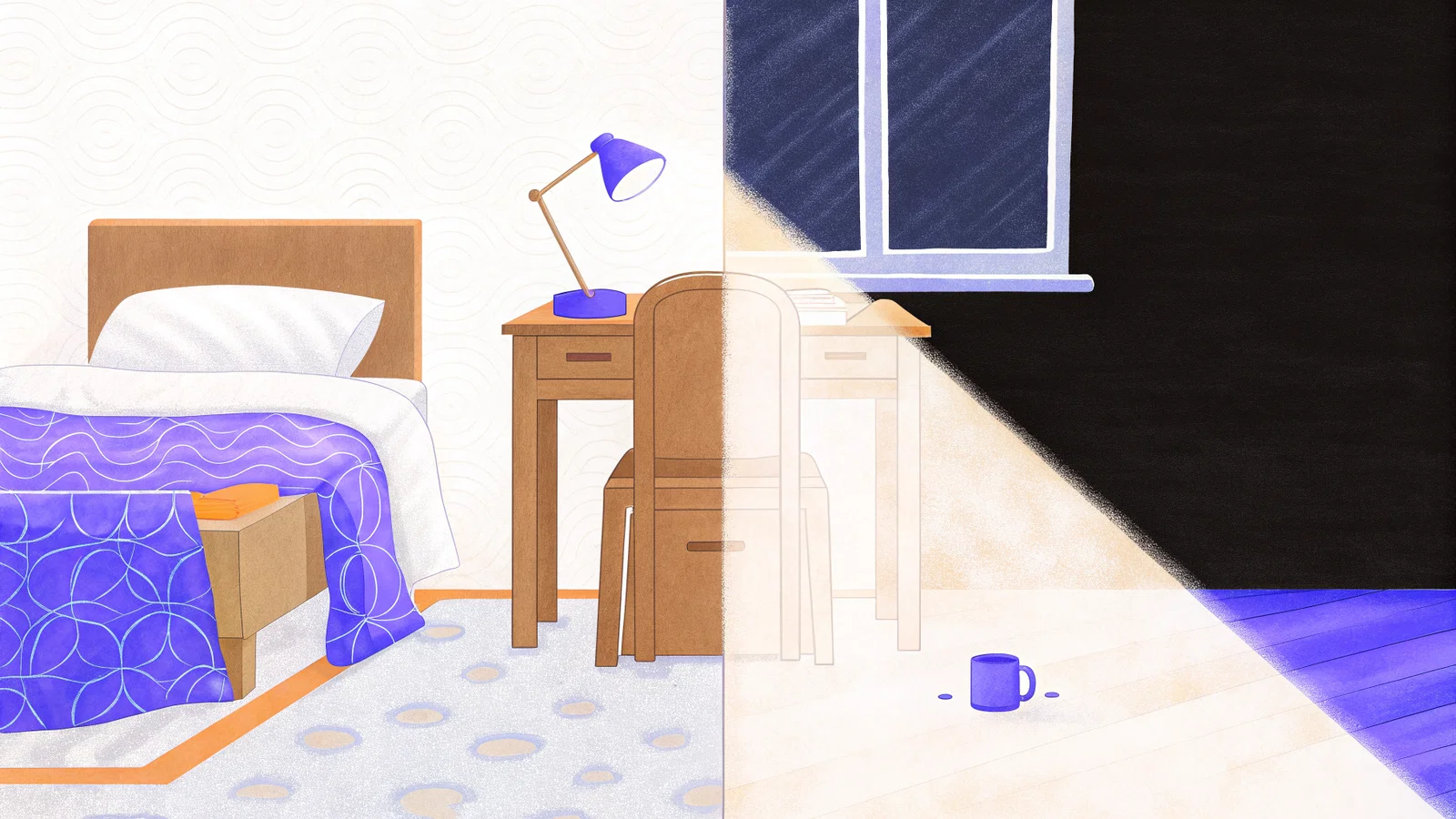
Nobody flames out of M1 because of biochemistry. They flame out because they haven't slept in six weeks thanks to the person living eight feet away.
Here's what nobody tells you at orientation: roommate conflict in medical school follows a predictable arc. I've watched the same sixteen-week timeline play out dozens of times, the polite first month, the cold war, the blowout, the decision. The students who survive it aren't luckier. They just intervene at the right weeks instead of the wrong ones.
This is your week-by-week playbook for when to talk, when to compromise, and when to pack your boxes.
The First 4 Weeks: Establishing the Foundation (Weeks 1-4)
Day 1-3: The Roommate Contract. At this point you should sit down within 48 hours of meeting and draft a basic agreement. Yes, it feels awkward. Do it anyway. Twenty minutes of awkward beats twenty weeks of misery. Cover four things and keep it to one page:
- Quiet hours, actual times, not "be reasonable."
- Cleaning rotation, who owns the trash, the dishes, the bathroom, and when.
- Guest policy, especially overnight guests. Define this now, not when someone's boyfriend has been on your couch for nine days.
- Shared expenses, toilet paper, dish soap, the Wi-Fi bill.
Sign it, both of you, and stick it somewhere findable.
Day 4-7: The Honeymoon Phase. At this point you should observe habits without judgment. Notice when they take out the trash, how long dishes sit, whether they shower at 6 AM or midnight. You're gathering data, not building a case file. Everyone's on their best behavior this week, don't mistake it for the truth.
Day 8-14: The First Test. At this point you should address minor annoyances immediately, before they calcify into resentment. A light left on. Hair in the drain. The script is ten seconds long: "Hey, quick thing, can we keep the bathroom light off at night? It shines straight into my room." Casual. Done. The mistake is waiting until you're angry enough to make it a speech.
Day 15-21: The Review. At this point you should schedule a fifteen-minute check-in. Coffee, couch, one question: "How's the arrangement working for you?" Then actually listen to the answer.
Day 22-28: Pre-Exam Stress. At this point you should acknowledge that your first real exam block, usually that anatomy practical, is about to change your personality. Agree on a study signal now: headphones on means unavailable, text instead of knocking. This tiny protocol prevents roughly half of all future conflicts.
The Friction Phase: Weeks 5-8 (The "Cold War")
Week 5: The Silent Treatment. At this point you should recognize that silence is a communication style, a bad one, but a message nonetheless. They're angry and won't say why. Your job is to not escalate. Don't slam doors back. Don't crank your music in retaliation. One of you has to be the adult, and it might as well be the person with the 4.0 ambitions.
Week 6: The Passive-Aggressive Note. At this point you should refuse to leave sticky notes on the dishes. Ever. Notes read ten times colder than you intend, I've never seen one de-escalate anything. If you need to coordinate, use a shared digital calendar or a group chat. If it's important, say it out loud, calmly, in person. Words on paper are for the Week 1 contract, not for warfare.
Week 7: The "I Thought You Were Awake" Incident. At this point you should address the specific behavior, not the person. It's 2 AM, they're on a call or gaming, and your anatomy exam is Thursday. The wrong move: "You're so inconsiderate." The right move: "I need quiet after midnight, I've got anatomy Thursday and I'm barely sleeping." Attack the decibel level, not their character. People will change a behavior. They will defend their character to the death.
Week 8: The First Formal Talk. At this point you should schedule a dedicated thirty-minute meeting, not an ambush in the kitchen. Bring the printed Week 1 agreement. This is the trick nobody uses: the document becomes the bad guy. "We agreed trash was Thursdays" lands completely differently than "you never take out the trash." You're not accusing them. You're just both looking at the same page.

The Crisis Phase: Weeks 9-12 (The Breakdown)
Week 9: The Blowout. At this point you should expect a major fight if the hygiene or noise issues have festered. Voices will rise. Yours shouldn't. The person who stays calm doesn't just win the argument, they keep their cortisol low enough to study the next morning. If it turns into a shouting match, say "I'm not doing this at this volume" and leave the room. That's not weakness. That's tactics.
Week 10: The Mediation. At this point you should bring in a neutral third party. An RA if you're in housing, a landlord if you're not, a mutual friend if you're desperate. Better yet: your school's student affairs office. Med schools have deans who quietly mediate exactly this situation all the time, and using them isn't dramatic, it's what they're paid for.
Week 11: The Ultimatum. At this point you should state consequences plainly: specific behavior, specific deadline, specific outcome. "If the trash isn't handled by Friday, I'm contacting housing." Delivered flat, no heat. Then, this is the part everyone fails, actually follow through. An ultimatum without follow-through is just noise, and it teaches your roommate that your boundaries are negotiable.
Week 12: The Decision Point. At this point you must run an honest audit. Is this annoying, or is it toxic? Annoying is a roommate who's loud on Saturdays. Toxic is you studying in your car, dreading your own front door, watching your practice scores slide. Annoying gets compromise. Toxic gets a moving truck. Your sleep and your mental health are not acceptable casualties of someone else's lease.
Look at that chart carefully. Moving out costs money once. Compromising with someone who won't change costs you stress every single day until the lease ends. Cheap isn't always cheaper.
The Resolution Phase: Weeks 13-16 (The Exit or the New Normal)
Week 13: Packing. At this point you should start packing only if the decision is final, and never mid-argument. Packing as theater, dragging suitcases out to punish someone, is a move you'll regret by Tuesday. Decide cold, give proper notice per your lease, then pack.
Week 14: The Move. At this point you should coordinate the logistics like a professional: move-out date with the landlord, key handover with your roommate, and timestamped photos of the room's condition. Your security deposit depends on those photos. Take fifty of them.
Week 15: The New Space. At this point you should build a sanctuary, not a shrine to the conflict. New lamp. Desk facing a window. No history in these walls. Sleep for about two days straight.
Week 16: Reflection. At this point you should realize the whole ordeal was high-yield training. The "I" statement you practiced over dirty dishes is the exact sentence you'll use as an intern when a co-resident dumps their admissions on you at 3 AM. Conflict resolution is a clinical skill. You just did your first rotation in it.
Key Takeaways
- Week 1 is for rules, Week 5 is for fixing, Week 9 is for mediation. Intervene on schedule, not on emotion.
- Kill passive aggression early. Notes and silence are gasoline. Calm "I" statements are the extinguisher.
- Toxic beats broke. If the environment is destroying your sleep and your scores, moving out isn't quitting, it's a legitimate survival strategy, and your future patients need you sane more than they need you frugal.
One last thing to remember: this entire timeline collapses if you skip the first week. Every crisis in Week 11 was a conversation avoided in Week 2. At this point you should close this tab, find your roommate, and draft that contract, tonight, while everything is still fixable with coffee and fifteen minutes.