
Developing Powerful Study Habits to Thrive in Your First Year of Medical School
Entering Medical School marks a major transition—from structured pre-med coursework to a fast-paced, high-volume environment where the expectations are higher than ever. The first year can feel like drinking from a firehose: dense lectures, labs, small groups, and the pressure of exams all arriving at once.
The good news: you don’t need to be the “smartest” person in the room to succeed. You do need effective study habits, strong Time Management, consistent Active Learning strategies, and intentional Self-Care. These skills are learned, not innate—and they will carry you through medical school, board exams, and residency.
This guide is designed to help you build a sustainable, evidence-informed study system for your first year and beyond.
Understanding How You Learn: The Foundation of Effective Study Habits
Before you decide what to study or how long to study, you need to understand how you learn best. Knowing your learning preferences helps you choose tools and strategies that give you the greatest return on your time.
Rethinking “Learning Styles”
You may have heard labels like “visual learner” or “auditory learner.” While the scientific evidence for rigid learning styles is limited, most people do have preferences that can guide their study habits. More important than the label is how actively you work with the material.
Instead of boxing yourself into a single style, think in terms of:
- Preferred input formats (diagrams, text, audio, videos)
- Preferred output formats (talking through concepts, drawing pathways, writing explanations, doing practice questions)
- Situations where you focus best (alone vs. group, quiet vs. background noise, morning vs. evening)
Common Learning Preferences and How to Use Them
Visual-Heavy Learner
You may prefer:
- Diagrams, flowcharts, pathways, and images
- Color-coded notes or digital highlighting
- Mind maps to connect concepts
Practical strategies:
- Turn text-based material (e.g., renal physiology) into flow diagrams.
- Use resources like Sketchy, Osmosis, or visual mnemonics to encode details.
- Redraw key figures from memory to test understanding.
Auditory-Heavy Learner
You may prefer:
- Listening to lectures or podcasts
- Talking through concepts out loud
- Explaining material to others
Practical strategies:
- Record yourself summarizing a lecture and replay it on walks or commutes.
- Use a “study buddy” to teach each other weekly topics.
- Pause videos or lectures and verbally predict the next step or key point.
Kinesthetic / Hands-On Learner
You may prefer:
- Learning by doing and moving
- Labs, simulations, and clinical skills
- Shorter, more frequent study blocks with movement breaks
Practical strategies:
- Use whiteboards to draw structures or processes standing up.
- Act out pathophysiology sequences or physical exam maneuvers.
- Combine flashcards with short movement breaks to reset focus.
Experiment, Reflect, Adjust
In the first month of medical school:
- Try multiple study approaches (flashcards, diagrams, group discussion, practice questions).
- After each exam or quiz, reflect:
- What helped me remember vs. just recognize?
- Where did I run out of time?
- What felt effective but didn’t translate to test performance?
- Adjust your strategy based on results, not comfort alone.
Your learning preferences will evolve as you progress through Medical School. Treat this as an ongoing experiment, not a one-time decision.
Building a Realistic and Sustainable Study Schedule
Time Management is one of the most powerful predictors of first-year success. You can’t control how much material is assigned, but you can control how you organize your time and energy.

Step 1: Map Your Non-Negotiables
Start by filling in:
- Required activities: lectures, labs, small groups, clinical skills sessions
- Personal priorities: sleep (7–9 hours), meals, commuting, childcare, religious observances
- Essential recovery time: at least some protected evenings or half-days off
This helps you see your true available study time instead of an unrealistic blank calendar.
Step 2: Use Time Blocking Instead of To-Do Lists Alone
Create time blocks for:
- Reviewing the same day’s lectures (ideally within 24 hours)
- Spaced repetition (flashcards, question banks)
- Deep work on challenging topics
- Practice questions and self-testing
- Weekly review and planning
Example weekday during a typical preclinical block:
- 7:00–8:00 – Morning routine, breakfast, light preview of the day’s topics
- 8:00–12:00 – Lectures / labs (active participation, not passive listening)
- 12:00–12:45 – Lunch and true break (no studying)
- 1:00–3:00 – Review & condense today’s lectures; create flashcards/diagrams
- 3:00–4:00 – Practice questions on today’s material
- 4:00–5:00 – Exercise / walk / gym
- 5:30–7:00 – Spaced repetition (Anki or similar) and quick review of prior week
- 7:00–8:00 – Dinner and time with friends/family
- 8:00–9:30 – Light study, summary notes, or board-style questions (if energy allows)
- 10:30 – Aim for sleep
Adjust the hours to fit your schedule, but keep the structure: input (lecture) → same-day review → practice/retrieval → rest.
Step 3: Plan Weekly and Daily
Weekly planning (30–45 minutes, e.g., Sunday night):
- Look at upcoming:
- Exams, quizzes, practicals
- Assignments, deadlines
- Personal commitments (birthdays, appointments, travel)
- Decide:
- What topics need heavy focus this week?
- Which days are best for long deep-work blocks?
- When will you take intentional rest?
Daily planning (5–10 minutes):
- List 2–3 must-do academic tasks (e.g., review 3 lectures, complete 40 practice questions).
- Identify 1–2 Self-Care non-negotiables (e.g., 30-min walk, call a friend, cook a real meal).
- Time-block your day realistically; overplanning leads to guilt and burnout.
Step 4: Protect Your Energy, Not Just Your Time
You will not be equally productive at all hours. Notice:
- When you focus best (morning vs evening)
- When you’re consistently drained (post-lab, late at night)
Schedule your most mentally demanding tasks (e.g., understanding biochemistry pathways) during your peak focus windows, and lighter tasks (flashcards, organizing notes) during low-energy periods.
Active Learning Techniques That Actually Work in Medical School
Reading and re-reading slides may feel productive, but it’s a poor strategy for long-term retention. Active Learning—where you retrieve, apply, and explain information—makes your study sessions far more efficient.
Core Evidence-Based Strategies
1. Active Recall: Pull Information Out of Your Brain
Instead of asking, “Do I recognize this?” ask, “Can I produce this from memory?”
Practical methods:
- Close your notes and write out everything you remember about a topic (e.g., heart failure pathophysiology), then check and fill gaps.
- Use flashcards (Anki, Quizlet) with short, precise prompts:
- Poor: “Renal physiology”
- Better: “What are the effects of aldosterone on the nephron?”
- After a lecture, write 5–10 potential exam questions and try to answer them from memory.
2. Spaced Repetition: Fight the Forgetting Curve
You will forget almost everything you don’t revisit. Spaced repetition tools help you review information at increasing intervals just before you would forget it.
How to implement:
- Create cards gradually as content is taught—don’t wait until a week before the exam.
- Schedule a daily review block (even 45–60 minutes) to clear that day’s and backlog cards.
- Focus on:
- High-yield facts (e.g., classic drug side effects, key lab values)
- Frequently tested associations (e.g., HLA types, pathogens and diseases)
3. Practice Questions: Train Like You Test
Doing practice questions from the start of a unit helps you:
- Identify what exam-style thinking looks like
- Discover weak spots early
- Learn how to distinguish similar conditions
Strategies:
- Begin with lower-stakes question banks or school-provided practice items.
- After each question:
- Understand why each wrong answer is wrong.
- Link the question to your notes or flashcards (add cards for missed concepts).
- Use practice questions as a learning tool, not just an assessment.
4. Teaching Others: The Feynman Technique
When you explain a concept simply, you reveal how well you understand it.
Ways to integrate teaching:
- Pair up with a classmate and alternate teaching short topics (e.g., “I’ll teach you the RAAS system; you teach me the cardiac cycle.”).
- Pretend you’re explaining to a future patient:
- “How would I explain diabetes to someone with no medical background?”
- Record a short audio or video of you explaining a mechanism or disease.
5. Dual Coding: Combine Words and Visuals
Connect verbal explanations with images to boost retention:
- For anatomy, draw structures while naming their functions and relationships.
- For pharmacology, link each drug to a specific visual mnemonic.
- For physiology, build flowcharts that connect cause → mechanism → effect → clinical sign.
Balancing Medical School, Health, and Life: Why Self-Care Is Not Optional
You cannot separate academic performance from your physical and mental health. The first year of Medical School is a marathon: sustainable Self-Care is part of your study plan, not a reward you “earn” afterward.
Sleep: Your Most Underestimated Study Tool
Chronic sleep restriction:
- Impairs memory consolidation
- Increases anxiety and irritability
- Slows information processing
Aim for 7–9 hours consistently by:
- Keeping a regular bedtime and wake time, even on weekends when possible
- Avoiding high-stimulation studying (e.g., intense practice questions) right before bed
- Using a wind-down routine: shower, light reading, stretching, or calm music
Think of sleep as “backing up” your brain’s daily learning.
Exercise: A Cognitive Performance Booster
You don’t need marathon workouts. Even 20–30 minutes of moderate activity most days:
- Improves mood and reduces stress
- Enhances concentration and executive function
- Helps counteract long hours of sitting
Examples:
- Brisk walk while listening to a short review podcast
- Quick bodyweight routine or yoga session between study blocks
- Joining intramural sports or fitness classes for social connection + movement
Nutrition and Hydration: Fuel for Long Study Days
Small changes matter:
- Prioritize balanced meals: protein, complex carbs, healthy fats
- Limit energy drinks and extreme caffeine spikes that lead to crashes
- Keep water nearby during study and classes
Meal prep on weekends or shared cooking with roommates can save time and keep you from defaulting to vending machines.
Mental Health and Stress Management
Medical School can amplify perfectionism, imposter syndrome, and anxiety. You are not alone if you struggle.
Practical stress management tools:
- Brief mindfulness or breathing exercises (3–5 minutes) during breaks
- Journaling to process difficult experiences or emotions
- Setting realistic goals—not expecting mastery of every detail immediately
Know when to seek help:
- Persistent low mood, loss of interest, or hopelessness
- Disruptive anxiety or panic
- Major sleep or appetite changes
Use campus counseling services, student health, or trusted mentors early. Addressing mental health is a sign of professionalism, not weakness.
Protecting Your Relationships and Identity
You are more than a medical student. Intentionally staying connected to your non-medical identity can prevent burnout.
Try to maintain:
- One weekly social activity (dinner with friends, phone call home, club meeting)
- One hobby or creative outlet (music, art, sports, reading for fun)
- Boundaries with school work (e.g., one half-day per week with no academic tasks)
These aren’t distractions—they’re part of staying healthy enough to learn and care for patients.
Making the Most of Medical School Resources and Support Systems
You don’t have to reinvent the wheel. Your Medical School offers a range of resources designed to help you succeed—use them early and regularly.
Academic Resources: Beyond Just Attending Lectures
Review sessions and office hours:
- Come with specific questions from practice questions or lectures.
- Ask professors to clarify mechanisms, not just fact lists.
Learning specialists or academic support services:
- Many schools have professionals who can help you optimize study strategies, Time Management, and test-taking skills.
- These are especially helpful if your usual methods from college aren’t working as well.
Library and electronic resources:
- Access to e-textbooks, clinical databases, and question banks.
- Quiet or group study spaces to match your needs.
Digital Tools to Streamline Your Study Habits
- Flashcard apps: Anki, Brainscape, or custom school decks
- Note systems: OneNote, Notion, or Google Docs for organized, searchable notes
- Calendar apps: Google Calendar, Outlook, or task managers like Todoist
- Supplemental resources:
- Khan Academy, Osmosis, Boards & Beyond, Sketchy, or other board-relevant platforms
- High-yield review books for quick overviews and integration
Use these as supplements, not substitutes, for your school’s curriculum. Always align external resources with your course learning objectives.
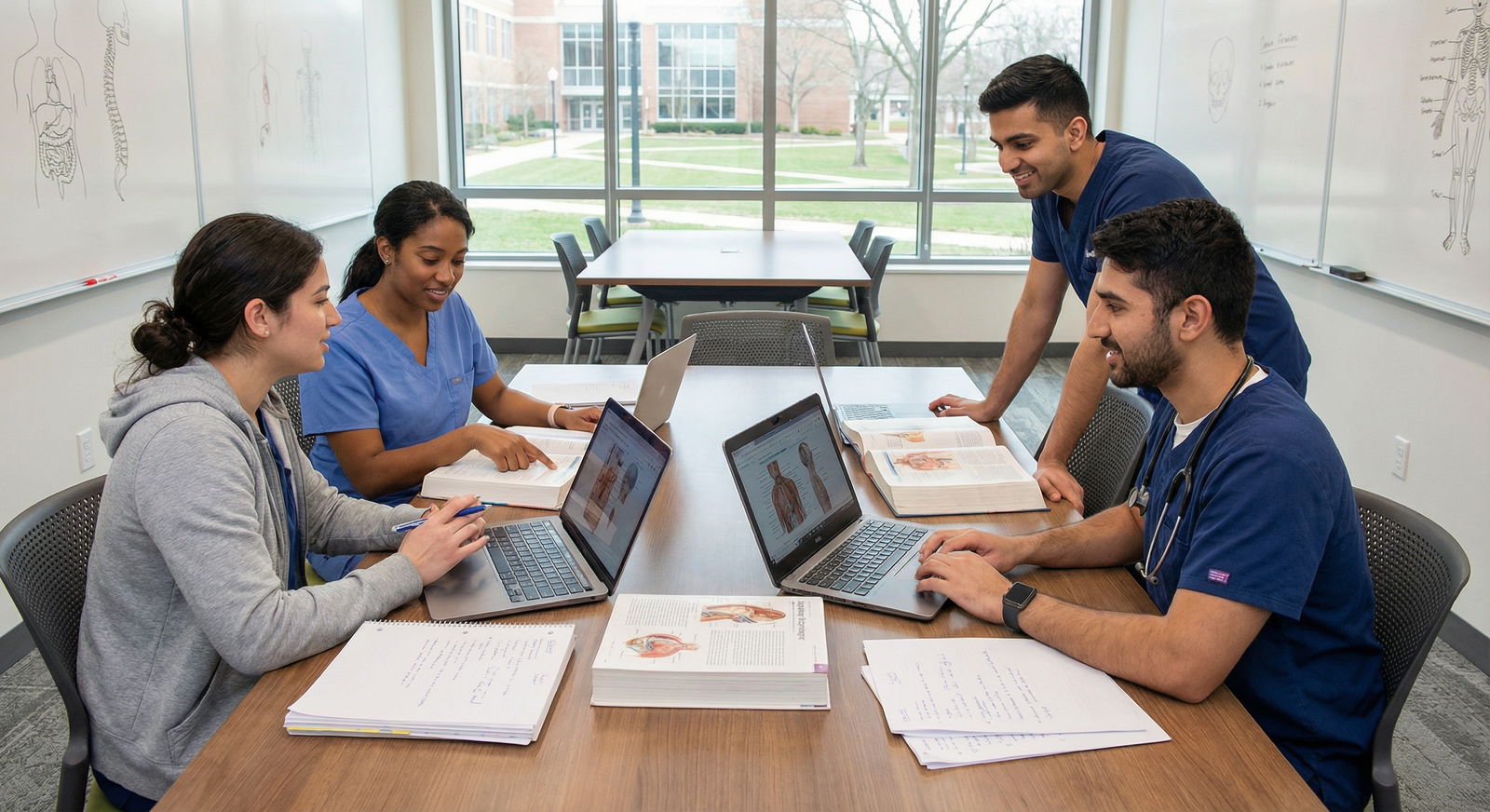
The Power of Peers, Mentors, and Study Groups
Peers and Study Groups
Study groups can be powerful—if used correctly.
Helpful group activities:
- Explaining and teaching difficult concepts to each other
- Working through practice questions and comparing reasoning
- Quizzing each other verbally on high-yield topics
To keep your group efficient:
- Limit group size (3–5 people is usually ideal)
- Set clear goals for each session
- Avoid turning sessions into social time—build in separate time for that
Mentors and Senior Students
A mentor who is 1–3 years ahead of you can offer:
- Insights about which resources and strategies worked at your specific school
- Advice on balancing Step/board prep with coursework
- Perspective when you feel overwhelmed or behind
Don’t be afraid to ask for:
- A 30-minute coffee chat about how they tackled first year
- Example study schedules or resource lists they used
- Honest feedback on your current approach
Knowing When and How to Ask for Help
Struggling at some point in first year is normal. What matters is how quickly and constructively you respond.
Early Warning Signs You May Need Support
- Consistently low or dropping exam scores despite “studying a lot”
- Spending very long hours studying with little retention
- Feeling constantly behind no matter what you do
- Losing interest in material you used to find engaging
- Persistent anxiety making it hard to focus or sleep
Who to Reach Out To
- Course directors or faculty: for content-related concerns and clarification
- Academic advisors or deans: for big-picture planning, remediation, and navigating policies
- Learning specialists: for test-taking strategies, learning differences, or Time Management
- Mental health professionals: for anxiety, depression, burnout, or trauma-related concerns
- Trusted peers or mentors: for lived experience, validation, and peer strategies
Reaching out early often turns a potentially severe problem into something manageable and temporary.
Frequently Asked Questions: Thriving in the First Year of Medical School
1. How many hours should I study per day in my first year?
There is no single “right” number, but many students find:
- On weekdays: 4–6 hours of focused, high-quality studying outside of class
- On weekends: 4–8 hours total, depending on exams and personal needs
Quality matters more than raw hours. A focused 3-hour block of Active Learning (questions, recall, diagrams) beats 7 hours of distracted rereading. Use your performance on quizzes and exams as feedback to adjust up or down.
2. What are the best study techniques specifically for medical school?
For most first-year students, the highest-yield combination is:
- Active Recall (flashcards, teaching others, free recall summaries)
- Spaced Repetition (using tools like Anki daily)
- Practice Questions (starting early in each block or unit)
- Concept Mapping / Visual Learning (especially for physiology, pathology, and pharmacology)
Passive reading and endless highlighting can be part of previewing material, but they should not be your main strategies.
3. Should I start studying for board exams (like USMLE Step 1) in my first year?
Yes—but indirectly and sustainably:
- Focus on truly understanding your first-year material; boards heavily test these foundations.
- When possible, use board-style resources (e.g., Anki decks, question banks) that align with your current courses.
- Avoid full-blown “board prep mode” in first year; that often leads to burnout. Integrate board-style learning into your regular coursework instead of adding a separate heavy workload.
4. What can I do if I feel overwhelmed or like I don’t belong in medical school?
Feeling overwhelmed or experiencing imposter syndrome is extremely common—especially early on. Steps you can take:
- Normalize it: Talk with trusted classmates or mentors; you’ll likely find they’ve felt the same.
- Simplify: Focus on the next week or even the next day rather than the entire year.
- Seek support: Reach out to academic advisors, counseling services, or learning specialists early.
- Reconnect with your “why”: Reflect on what drew you to medicine—patients, science, advocacy—and look for ways to stay connected to that motivation (e.g., shadowing or patient panels when available).
You were accepted because the admissions committee believes you can succeed. With the right strategies and support, you can.
5. Is it okay to take breaks and have a life outside of medical school?
Not only is it okay—it’s essential for long-term success. Sustainable performance requires:
- Regular sleep
- Social connection
- Physical activity
- Time for hobbies and identity outside medicine
Students who never take breaks usually burn out, lose efficiency, and often underperform in the long run. Intentional rest is part of a professional, disciplined approach to your training.
By intentionally developing efficient Study Habits, practicing thoughtful Time Management, using Active Learning strategies, and prioritizing Self-Care, you can not just survive but truly thrive in your first year of Medical School. Think of this year as the foundation of your career: the habits you build now will serve you through clinical rotations, residency, and the rest of your life as a physician.