Entering medical school is more than starting a new academic program—it’s a complete lifestyle shift. The routines, expectations, and pressures of medical school life are unlike anything most students have experienced before. To thrive, you’ll need to rethink how you manage your time, care for your mental health, maintain relationships, and define success.
This guide expands on the realities of student life in medical school and offers practical, evidence-informed strategies for adapting to the demands of this intense but rewarding journey.
Understanding the Lifestyle Shift in Medical School
From Flexible Schedules to Structured Demands
For many, college or pre-med life allowed at least some flexibility: sleeping in after late nights, spacing out assignments, and taking occasional lighter semesters. Medical school is different.
Academic intensity: You can expect:
- 20–30 hours per week in lectures, labs, small groups, or clinical skills
- An additional 30–40+ hours of independent study
- Regular exams—often every 2–4 weeks during pre-clinical years
Clinical responsibilities (later years):
- Early mornings on the wards (e.g., pre-rounds at 5–6 a.m.)
- Long days that may run 10–12 hours
- Evening and weekend call depending on rotation
This shift can feel like going from a “job” to a “lifestyle.” Medical school isn’t just something you do—it shapes how you spend nearly every hour of your day.
The Emotional and Identity Shift
Medical school also changes how you see yourself and how others see you.
- You transition from being “a student” to “a future doctor.”
- You may feel pressure to “perform” emotionally for patients, peers, and faculty—even when you’re exhausted.
- Imposter syndrome is common: many students feel like they don’t belong or aren’t smart enough, especially at the beginning.
Recognizing that these feelings are normal—and widely shared—can help you normalize the transition and avoid unnecessary self-criticism.
Time Commitment, Social Life, and Mental Health
The Reality of the Time Commitment
Time management isn’t just helpful in medical school; it’s foundational to survival.
Typical weekly time breakdown for many first-year students might look like:
- 25 hours: in-person commitments (lectures, labs, small groups)
- 30–40 hours: studying (lectures, notes, practice questions, group review)
- 10–15 hours: basic life tasks (meals, laundry, errands, commuting)
- Remaining time: sleep, exercise, social life, and rest
Without intentional planning, studying can expand to fill every available moment, pushing out essential self-care and rest.
Actionable tips:
- Treat medical school like a full-time job plus overtime. Assume 50–60 structured hours per week.
- Use time blocking: schedule specific, protected blocks for study, meals, exercise, and sleep.
- Build in buffer time for catching up or handling unexpected tasks.
Social Life Adjustments Without Losing Yourself
Many students worry: “Will I have any life outside medical school?” The answer is yes—but it won’t look like it did before.
Common changes include:
- Fewer spontaneous weekends away
- Less weeknight socializing
- More planning required to see friends and family
But this doesn’t have to mean isolation.
Strategies to maintain a healthy social life:
Combine social and academic time
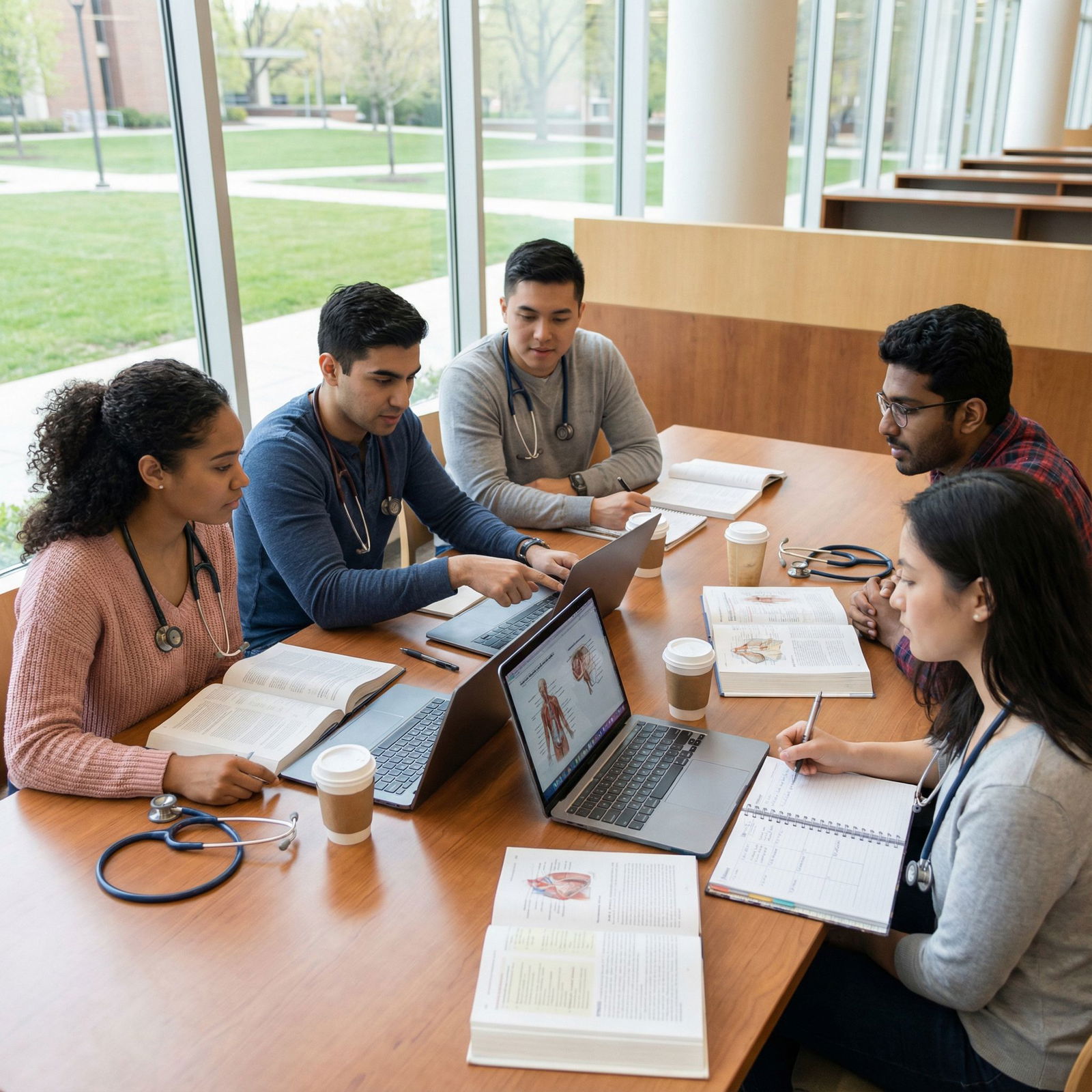
- Form small, focused study groups (3–5 people) for review sessions.
- Use group time to clarify concepts and build friendships.
Schedule relationships with intention
- Set recurring check-ins with family (e.g., Sunday evening phone call/video chat).
- Plan monthly or biweekly outings (coffee, dinner, a walk) with close friends or your partner.
Communicate expectations
- Be honest with non-medical friends and family about your new schedule.
- Explain exam-heavy weeks vs. lighter weeks so they understand fluctuations.
Mental Health and Emotional Well-Being
The demands of medical school life can challenge even the most resilient students. Stress, anxiety, and low mood are common—and they are not signs of weakness.
Typical emotional experiences include:
- Feeling overwhelmed by the volume of material
- Worry about grades, Step/board exams, and future competitiveness
- Guilt when taking breaks or saying no
- Exposure to patient suffering during clinical years
Protective mental health strategies:
Normalize help-seeking
Most medical schools offer:- Free or low-cost counseling
- Wellness workshops
- Peer support groups or mentors Use them early—don’t wait for a crisis.
Develop emotional coping skills
- Mindfulness apps or short guided meditations (5–10 minutes daily)
- Journaling after difficult days or exam periods
- Talking with a trusted peer, partner, or mentor
Know warning signs that you need more support:
- Persistent difficulty sleeping or sleeping too much
- Loss of interest in things you normally enjoy
- Thoughts like “I can’t handle this” or “Everyone else is doing fine except me”
- Thoughts of self-harm or that others would be better off without you
In these cases, contact your school’s counseling services, your physician, or an emergency service immediately.
Core Strategies for Adapting to Medical School Life
1. Time Management: Building a Sustainable Daily Rhythm
Efficient time management supports both academic success and mental health.
Create a Structured but Flexible Schedule
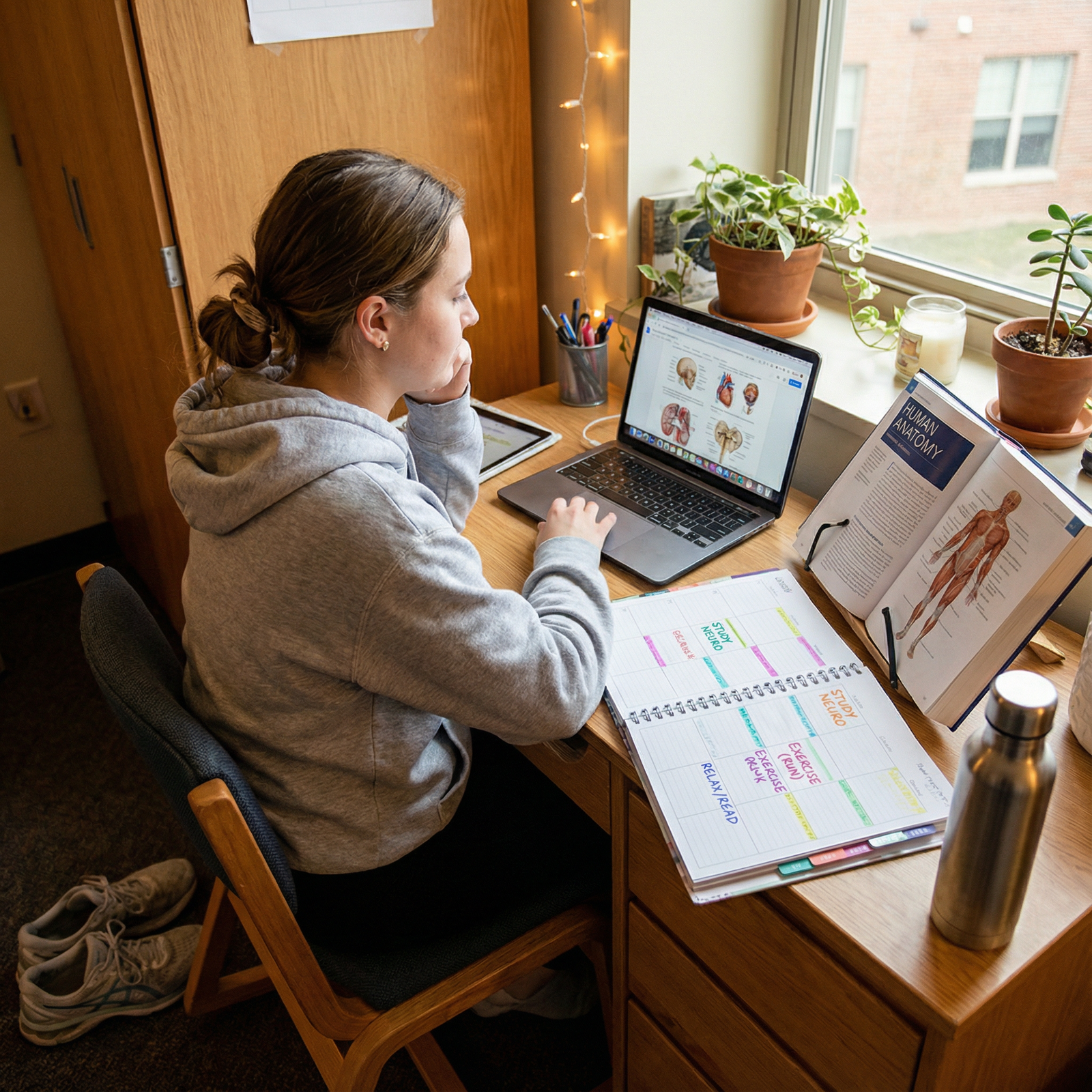
- Use a weekly planner or digital calendar (e.g., Google Calendar, Notion, Outlook).
- First block in:
- Classes and labs
- Sleep (aim for 7–8 hours)
- Meals
- Next, schedule:
- Daily study blocks (e.g., 2–3 hours in the morning, 2–3 in the afternoon/evening)
- Exercise (even 20–30 minutes counts)
- Transitions/travel time
Use Evidence-Based Study Rhythms
Pomodoro Technique:
- 25 minutes focused work + 5-minute break; after 3–4 cycles, take a 20–30 minute break.
- During breaks: stretch, walk, breathe—avoid falling into social media rabbit holes.
Task-batching:
- Group similar tasks (e.g., reviewing lectures, flashcards, questions) to minimize switching costs.
Set “win” goals for the day:
- 1–2 high-priority tasks (e.g., finish cardiology lectures, do 40 practice questions).
- 2–3 smaller tasks (e.g., respond to emails, organize notes, prepare meals).
2. Study Techniques for High-Volume Learning
Memorizing more isn’t enough—you must build durable understanding under time pressure.
Active Learning Over Passive Review
Replace passive strategies (re-reading, highlighting) with active ones:
Spaced repetition:
- Use Anki or similar tools to review flashcards over increasing intervals.
- Start early in the semester; short, daily sessions work best.
Practice questions:
- Integrate question banks (e.g., for class exams, Step-style) early.
- After each question, focus on:
- Why the right answer is correct
- Why the wrong options are wrong
- How to generalize the principle to other scenarios
Teach to learn:
- Explain a concept to a classmate or even to an empty room.
- If you can’t explain it simply, you don’t fully understand it.
Organize Content for Clinical Thinking
- Build concept maps or flowcharts—especially for complex systems like renal physiology or immunology.
- Link basic science to clinical practice:
- “What symptom would this mechanism cause?”
- “What lab findings match this pathophysiology?”
This not only helps for exams, but also makes the transition to clinical rotations smoother.
3. Maintaining Balance: Protecting Your Body and Identity
Physical Activity and Health Habits
Regular movement significantly improves concentration, mood, and long-term well-being.
- Aim for at least 150 minutes of moderate exercise per week:
- 30 minutes, 5 days a week: brisk walking, cycling, light jogging.
- On exam-heavy weeks:
- Use micro-workouts: 10 minutes of stretching, stairs, or bodyweight exercises between study blocks.
Other essential health habits:
Nutrition
- Batch-cook simple, balanced meals on weekends.
- Focus on:
- Protein (eggs, beans, chicken, tofu)
- Complex carbs (oats, brown rice, whole grain bread)
- Fruits and vegetables
- Keep healthy snacks on hand (nuts, yogurt, fruit) to avoid vending machine dependence.
Sleep hygiene
- Consistent sleep and wake times, even on weekends when possible.
- Limit caffeine after mid-afternoon.
- Keep your bed for sleep, not for studying, to strengthen the sleep association.
Preserving Hobbies and Personal Identity
Medicine can easily become your entire identity, but you’ll be a better physician if you remain a whole person.
- Keep at least one non-medical activity in your life:
- Music, sports, creative writing, art, faith community, volunteer work, gaming, or reading for pleasure.
- Schedule it like a class—don’t treat it as optional.
- Use hobbies as active recovery: they should restore you, not drain you.
4. Communication, Community, and Support Networks
Building Professional and Peer Relationships
Your classmates and faculty are not just colleagues—they’re your future professional network.
With peers:
- Join class group chats or online forums for sharing resources.
- Participate in a study or accountability group.
- Respect different working styles; not everyone studies best in groups.
With mentors and faculty:
- Attend office hours and ask questions—not just about content but about career paths and strategy.
- Seek out mentors through:
- Interest groups (e.g., internal medicine, surgery, pediatrics)
- Research projects
- Student–faculty mentorship programs
Expressing Needs and Setting Boundaries
You will need to say “no” sometimes—for your health and success.
When you’re stretched thin:
- “I’d like to help, but I’m at capacity right now with exams and commitments.”
- “Can we revisit this after boards/the block exam?”
Communicate with loved ones:
- “I might be slower to reply during exam weeks, but it doesn’t mean I don’t care.”
- “Let’s set a regular time each week to catch up.”
Boundary-setting is a professional skill that will serve you throughout residency and practice.
The Central Role of Self-Care and Mental Health in Medical School
Many students unconsciously adopt the belief that “if I’m not suffering, I’m not working hard enough.” In reality, chronic exhaustion and neglecting self-care decrease learning efficiency and increase risk of burnout.
Self-Care as a Core Professional Responsibility
You cannot care for others if you neglect yourself. Effective physicians:
- Recognize their own limits
- Seek help when needed
- Maintain sustainable habits
In medical school, self-care includes:
Mental health care:
- Regular check-ins with yourself:
- “How am I feeling today—physically, mentally, emotionally?”
- Early use of counseling or therapy—just as you’d recommend for future patients.
- Regular check-ins with yourself:
Emotional processing:
- After intense clinical encounters or difficult exams:
- Debrief with peers
- Reflect on what you learned about yourself and your values
- Reach out to mentors if something deeply affects you
- After intense clinical encounters or difficult exams:
Digital boundaries:
- Set limits for social media, especially during exam weeks.
- Avoid comparing your study habits or scores constantly with others.
When to Seek Additional Help
Reach out immediately if you notice:
- Persistent sadness, hopelessness, or anxiety
- Thoughts of self-harm or suicide
- Inability to function academically despite intense effort
- Significant changes in appetite, sleep, or energy
Use:
- Your school’s confidential mental health services
- National hotlines or local crisis resources
- Trusted faculty, advisors, or mentors who can guide you to appropriate help
Seeking help is a sign of strength and professional maturity—not failure.
Institutional Resources and How to Use Them Wisely
Most medical schools have invested significantly in student support. Knowing what exists—and using it early—can make your transition smoother.
Common Student Support Services
Academic support:
- Learning specialists
- Workshops on time management, test-taking, and USMLE/board prep
- Tutoring or peer-teaching programs
Wellness and counseling:
- Licensed counselors or psychologists
- Group therapy or support groups
- Stress-management or mindfulness sessions
Career and specialty advising:
- Dean’s office advisors
- Specialty-specific advisors
- Alumni networks
Financial counseling:
- Loan management and repayment planning
- Budgeting workshops
- Emergency funds or microgrants in some schools
Peer Mentorship and Near-Peer Guidance
Near-peer mentors (students 1–3 years ahead of you) are often your best “insider” resource.
They can provide:
- Course-specific tips (what to focus on, which resources work best)
- Insights into Step/board preparation
- Honest perspectives on rotations and specialty choices
- Emotional reassurance—“I was where you are, and it gets better.”
Consider:
- Joining formal mentorship programs
- Asking second-years how they handled specific courses
- Being open about struggles—you’re almost always not the only one
Real-World Application: A Case Study of Adaptation
Let’s revisit and expand Sarah’s story—a typical first-year medical student experience.
Situation: Overwhelmed and Isolated
Sarah entered medical school excited but quickly felt crushed by the pace and expectations:
- Studied long hours but felt little was sticking
- Avoided social events to “maximize” study time
- Felt guilty if she wasn’t studying
- Started sleeping less and felt constantly anxious
She began to wonder if she was cut out for medicine.
Actions: Strategic Changes and Seeking Support
Recognizing she couldn’t continue like this, Sarah made several intentional changes:
Structured her time
- Created a weekly calendar with:
- 8 hours of sleep
- 2–3 study blocks per day using Pomodoro sessions
- 30 minutes of walking or yoga most days
- One evening off per week for rest or socializing
- Created a weekly calendar with:
Shifted her study methods
- Switched from re-reading notes to:
- Anki for spaced repetition
- 20–30 practice questions per day
- Teaching key concepts to a classmate twice a week
- Switched from re-reading notes to:
Joined a small study group
- Met 2–3 times per week to:
- Review high-yield concepts
- Compare understanding
- Hold each other accountable
- Met 2–3 times per week to:
Accessed mental health support
- Used her school’s counseling services:
- Learned cognitive strategies to manage test anxiety
- Worked on more realistic self-expectations
- Gave herself permission to rest
- Used her school’s counseling services:
Results: Improved Performance and Well-Being
Over the next few months, Sarah noticed:
- Her exam scores steadily improved
- She felt less anxious going into tests
- She made friends in her study group and felt less alone
- She had more energy and was better able to enjoy brief breaks
Her medical school life was still demanding—but now it was challenging and meaningful, rather than overwhelming and unsustainable.

FAQ: Adapting to the Demands of Medical School Life
1. How can I manage my time effectively in medical school?
- Use time blocking to schedule classes, study, meals, exercise, and sleep.
- Break tasks into smaller, doable pieces (e.g., “review 2 lectures,” “20 Anki cards,” “20 practice questions”).
- Apply strategies like the Pomodoro Technique (25 minutes focused work, 5 minutes break).
- Review your plan weekly and adjust based on what worked and what didn’t.
2. What should I do if I feel overwhelmed or burned out?
- First, acknowledge the feeling—don’t ignore it.
- Reach out to:
- A trusted classmate, mentor, or advisor
- Your school’s counseling or wellness services
- Simplify your schedule temporarily:
- Prioritize sleep, essential studying, and basic self-care.
- Defer non-urgent commitments where possible.
- If you experience persistent low mood, anxiety, or thoughts of self-harm, seek professional help immediately.
3. How can I maintain relationships while in medical school?
- Set realistic expectations with friends, family, and partners.
- Use scheduled check-ins (e.g., weekly calls) rather than relying on spontaneous contact.
- Include loved ones in your journey:
- Share what you’re learning.
- Explain exam-heavy periods and lighter periods.
- Even brief, consistent connections (10–15 minutes) can maintain strong relationships.
4. What role does self-care and mental health play in academic success?
Self-care and mental health are central—not optional extras:
- Adequate sleep and exercise improve memory, focus, and test performance.
- Managing stress and anxiety reduces cognitive overload.
- Students who attend to their mental health early often:
- Perform better academically
- Have lower burnout rates
- Feel more satisfied and engaged with their training
5. What resources are usually available to help students in medical school?
Most medical schools offer:
- Academic support:
- Tutors, learning specialists, study-skills workshops
- Mental health and wellness services:
- Counseling, therapy, crisis support, wellness programs
- Peer and faculty mentorship:
- Formal mentor programs, specialty interest groups
- Career advising:
- Specialty selection guidance, residency application support
- Financial counseling:
- Loan repayment planning, budgeting resources
Ask during orientation, check your school’s student affairs or wellness office website, or talk to upperclassmen to identify what’s available to you.
Adapting to the demands of medical school life is a major lifestyle shift—but with intentional time management, realistic expectations, proactive self-care, and consistent support, you can do more than just endure it. You can grow, thrive, and begin building the habits and mindset that will sustain you throughout residency and your career in medicine.