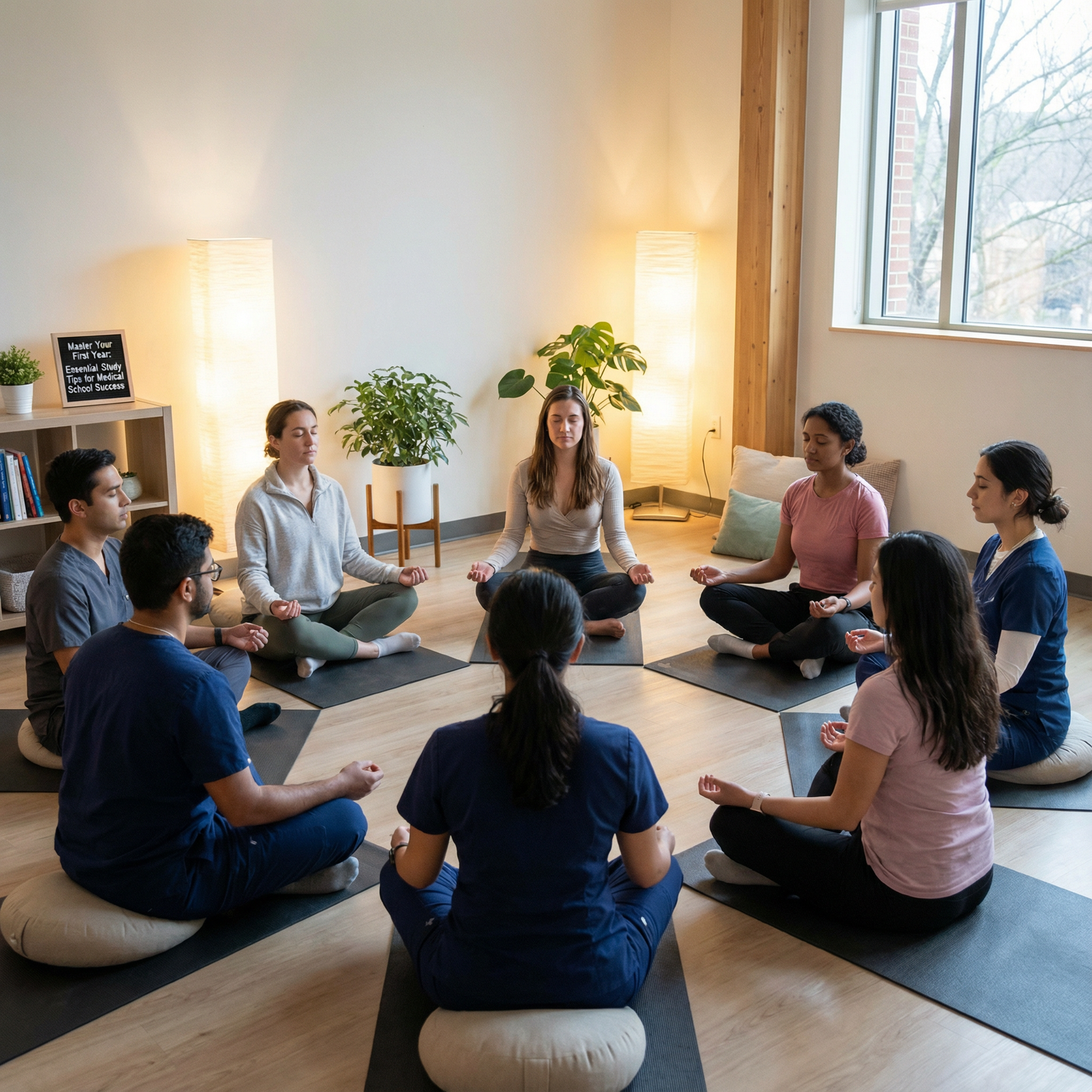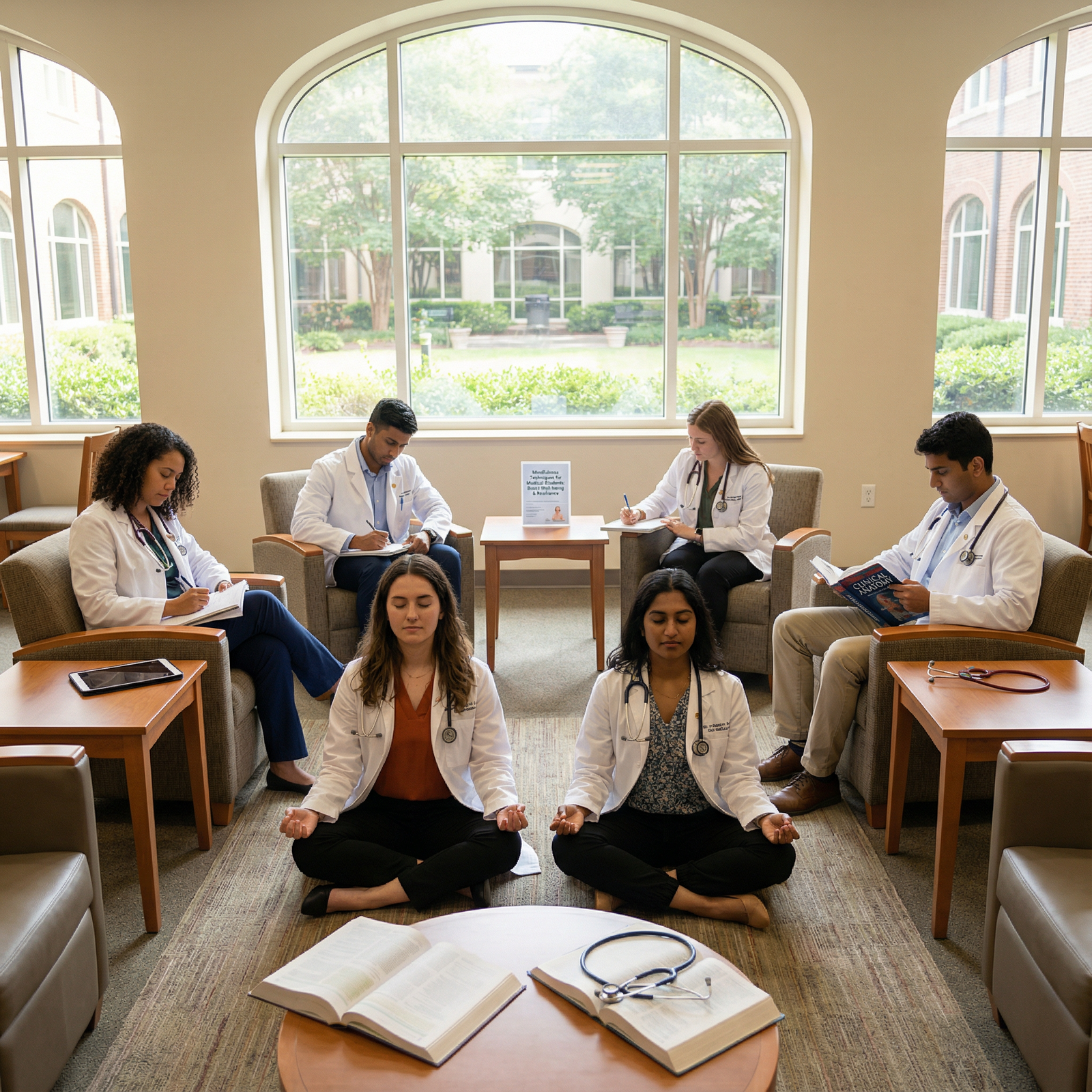
Introduction: Why Mindfulness Matters in Your First Year of Medical School
The first year of medical school is often described as “drinking from a firehose.” New students face a relentless flood of information, intense competition, high expectations, and a constant pressure to perform. You are expected to adapt quickly to new teaching styles, master complex scientific concepts, perform in exams and OSCEs, and begin developing your professional identity as a future physician—all while trying to maintain relationships, sleep, exercise, and some semblance of a life outside school.
In this environment, stress can feel like the default setting. Many students experience anxiety, imposter syndrome, fatigue, and early signs of burnout. This is where Mindfulness—the practice of bringing non-judgmental, focused awareness to the present moment—becomes more than a wellness buzzword. It becomes a practical, evidence-informed tool for Student Well-being, Stress Management, and Emotional Resilience throughout your Medical Education.
This guide expands on core mindfulness concepts and provides concrete, realistic techniques tailored specifically to first-year medical students. You’ll learn how to:
- Reduce stress and anxiety before and during exams
- Improve focus and retention while studying
- Build emotional resilience when you feel overwhelmed
- Communicate more effectively with peers, faculty, and patients
- Cultivate sustainable habits to support mental health and long-term professional growth
These practices are not about perfection or “staying calm all the time.” They’re about building skills you can rely on during the hardest parts of your training—and your career.
The Role of Mindfulness in Modern Medical Education
Mindfulness as a Core Professional Skill, Not a Luxury
Mindfulness is often viewed as an “optional extra” or something to try when everything else is under control. In reality, it directly supports competencies that modern medical schools and residency programs value:
- Professionalism and ethics: Mindfulness increases self-awareness and reduces impulsive reactions, supporting ethical decision-making.
- Communication and empathy: Being present with your own thoughts and emotions allows you to be more present with patients and colleagues.
- Lifelong learning: Focused attention and self-regulation help you learn more efficiently, recover from setbacks, and adapt to new information.
Many schools now integrate mindfulness and wellness curricula because research links these practices to better outcomes for students and physicians, including reduced burnout, improved empathy, and better patient care.
Key Benefits of Mindfulness for First-Year Medical Students
1. Stress Reduction and Burnout Prevention
First year often coincides with:
- High-stakes exams
- Frequent performance comparisons with classmates
- Long periods of sedentary study
- Little time to process emotional reactions to anatomy labs, clinical exposure, or patient stories
Mindfulness-based interventions have been shown to reduce symptoms of anxiety and stress in medical trainees. Even short daily practices can downshift your nervous system, lower heart rate, and decrease the intensity of stress responses.
2. Improved Focus and Cognitive Performance
When you’re trying to master hundreds of pages of content before an exam, the ability to sustain attention and block out distractions is one of your most valuable assets. Mindfulness trains:
- Selective attention: Staying with one task or concept longer
- Working memory: Holding more information in mind while processing it
- Metacognition: Noticing when your mind has wandered and bringing it back without self-criticism
This translates directly into more efficient studying, better recall, and fewer hours lost to distracted “studying” that doesn’t actually stick.
3. Emotional Resilience and Coping Skills
Emotional Resilience is not about never feeling stressed or discouraged. It’s about:
- Noticing your stress response earlier
- Naming your emotions instead of being overwhelmed by them
- Choosing a helpful response rather than reacting automatically
Mindfulness provides a framework to relate differently to difficult thoughts like “I’m not smart enough to be here” or “I’ll never catch up.” Instead of taking these thoughts as truth, you learn to observe them as mental events that come and go.
4. Enhanced Emotional Intelligence and Empathy
Good physicians need to accurately perceive and respond to the emotions of others—patients, families, colleagues, and team members. Mindfulness helps by:
- Increasing awareness of your own internal states (tension, frustration, fatigue)
- Helping you pause before reacting in a conversation
- Supporting genuine listening instead of thinking about what you will say next
This is crucial in small group learning, clinical skills sessions, and, later, in patient care.
5. Greater Balance and Well-Being
Mindfulness does not erase stressors, but it helps you:
- Set more realistic expectations for yourself
- Create clearer boundaries between school and personal time
- Appreciate positive moments, even on difficult days
Over time, it supports a more balanced approach to Medical School Life and Exams—one where success is measured not only in scores, but also in sustainability, health, and growth.
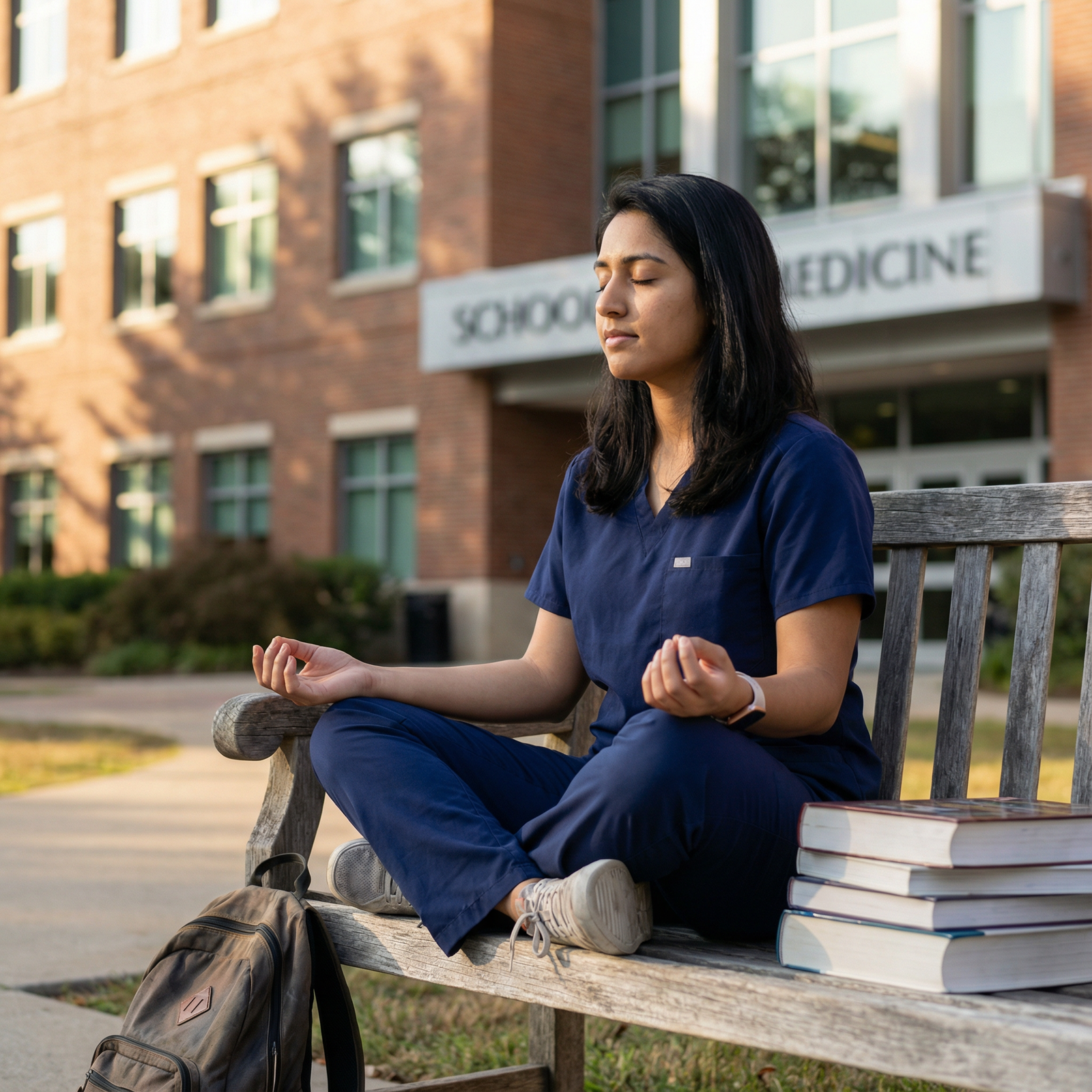
Foundational Mindfulness Techniques for First-Year Medical Students
Below are core techniques you can integrate into even the busiest schedule. You do not need to practice all of them at once. Start with one or two, and build gradually.
1. Mindful Breathing: A Portable Reset Button
What it is:
A brief, intentional focus on your breath that helps calm the nervous system and anchor your attention.
How to Practice (3–10 minutes):
- Posture: Sit upright in a chair or on the edge of your bed. Feet flat on the floor, back supported but not rigid.
- Attention: Close your eyes (or soften your gaze).
- Inhale slowly through your nose for a count of 4, feeling your abdomen expand.
- Pause gently for a count of 1–2.
- Exhale slowly through your mouth or nose for a count of 6–8, feeling your shoulders and jaw relax.
- When thoughts arise (and they will), notice them—“planning,” “worrying,” “remembering”—and gently bring your attention back to the sensation of breathing.
Practical Use Cases in Med School:
- Before opening your laptop to start a long study session
- In the hallway outside an exam room or OSCE station
- After reading a distressing clinical case or patient story
- Before bed when your mind is racing with to-do lists
Aim for 5 minutes once or twice daily. Over time, mindful breathing becomes a quick tool you can use anytime, anywhere.
2. Body Scan Meditation: Reconnecting with Your Body
Hours of lectures and studying can leave you feeling mentally overloaded and physically tense without even realizing it. A body scan helps you reinhabit your body and spot early signs of stress.
How to Practice (5–20 minutes):
- Position: Lie down on a mat/bed or sit comfortably in a chair.
- Start at the feet: Bring attention to your toes. Notice sensations—warmth, coolness, tingling, or nothing at all.
- Move upward: Slowly shift attention from feet → calves → knees → thighs → hips → abdomen → chest → back → shoulders → arms → hands → neck → face → scalp.
- At each region, notice areas of tension or ease without judging them.
- On each exhalation, invite the muscles in that area to soften, even a little.
When to Use It:
- After a full day of lectures
- During exam week to release accumulated tension
- After anatomy lab or emotionally intense experiences
Consistent practice increases bodily awareness, which can alert you to stress before it escalates into headaches, insomnia, or burnout.
3. Mindful Walking: Turning Transitions into Micro-Rest
As a first-year student, you may walk between lecture halls, labs, the library, and your apartment multiple times a day. Mindful walking transforms these transitions into brief, restorative practices.
How to Practice (2–10 minutes, no extra time required):
- As you walk, lower the speed just slightly so you can pay attention.
- Notice the sensation of your feet touching the ground, one step at a time.
- Feel the shift of weight from heel to toe, leg to leg.
- Become aware of your breathing as you move.
- Let your attention widen to include sounds, light, and colors around you—without labeling them as good or bad.
If your mind starts reviewing practice questions or replaying a conversation, gently bring it back to the physical experience of walking.
When to Use It:
- Walking from your seat to the restroom during a study break
- Between two back-to-back lectures
- On your way home after a long day to mark the transition from “student mode” to personal time
Mindful walking helps you reset your mental state without adding more to your schedule.
4. Gratitude Journaling: Training Your Mind to Notice the Good
The first year can easily become a highlight reel of what went wrong—missed questions, lower-than-expected grades, awkward group interactions. Gratitude journaling counters this natural negativity bias.
How to Practice (5–10 minutes, 3–5 days per week):
- Keep a small notebook or digital document by your bed.
- Each evening, list three specific things you’re grateful for that day. Examples:
- “A classmate shared their annotated lecture notes.”
- “I understood today’s cardiac physiology better than last week.”
- “I had a 10-minute phone call with my sibling that made me laugh.”
- Add why each item mattered to you (“made me feel supported,” “reminded me I’m improving”).
Over time, this practice supports Student Well-being by retraining your attention to notice positive moments you might otherwise dismiss.
5. Mindful Listening: Building Stronger Relationships and Clinical Skills
Whether in small-group sessions, PBL/TBL formats, or early patient encounters, listening is a central professional skill.
How to Practice in Conversations:
- When someone speaks, pause your internal commentary (“I should say…,” “I disagree,” “This reminds me of…”).
- Aim to be 100% present with their words, tone, and body language.
- Instead of planning your response, focus on understanding their perspective.
- When you reply, briefly reflect back what you heard:
- “It sounds like you’re feeling really overwhelmed with the anatomy workload.”
- “If I understood correctly, you’re worried about falling behind.”
Benefits in Medical Education:
- Builds trust and connection with classmates and mentors
- Reduces misunderstandings in group projects
- Prepares you for taking patient histories and delivering empathetic care
Mindful listening is mindfulness in action—applying present-moment awareness in real interactions, not just during solitary meditation.
6. Guided Meditation Apps: Structure and Support for Busy Students
If you’re new to meditation, guided apps provide structure, variety, and accountability. Many are designed with short sessions ideal for dense schedules.
Commonly Used Apps:
- Headspace – Offers structured beginner courses, exam-stress modules, and short “SOS” meditations.
- Calm – Includes guided meditations, sleep stories (helpful during stressful rotations), and breathing exercises.
- Insight Timer – Free with thousands of guided meditations, including series tailored to students and healthcare workers.
How to Use Them Strategically:
- Start with a 5–10-minute daily session (e.g., “Morning Focus,” “Study Break,” or “Pre-Sleep Wind Down”).
- Bookmark 2–3 favorites you can return to on high-stress days.
- Consider using a study break meditation after every 90 minutes of focused work to reset your attention.
Apps lower the barrier to entry for mindfulness, making it easier to stay consistent even when your motivation dips.
7. Mindfulness Breaks: Short, Scheduled Pauses to Prevent Overload
Long, uninterrupted study marathons are more likely to create fatigue and reduced retention than mastery. Short, intentional breaks help your brain consolidate information and manage stress.
How to Implement Mindfulness Breaks:
- Use a timer or app (e.g., Pomodoro technique: 25–45 minutes study, 5–10 minutes break).
- During breaks, avoid mindless scrolling. Instead, choose a mindful mini-practice, such as:
- 10 slow mindful breaths by a window
- A 3-minute body scan at your desk
- A brief walk to refill your water while paying attention to sensations
Even 2–3 mindful minutes can significantly shift your stress level and enhance subsequent focus.
8. Visualization Techniques: Preparing for High-Pressure Moments
Visualization harnesses the mind’s ability to mentally rehearse situations before they happen, making them feel more familiar and less threatening.
How to Practice (5–10 minutes):
- Sit comfortably and close your eyes.
- Bring to mind a specific upcoming challenge: an anatomy practical, OSCE, or major exam.
- Visualize the scene in detail:
- The room, sounds, and people present
- Yourself entering feeling grounded, breathing steadily
- Navigating the task with focus—recalling information, communicating clearly
- Include potential stress, but imagine yourself responding skillfully—taking a breath, refocusing attention, moving to the next question.
Why It Helps:
- Reduces anticipatory anxiety
- Builds confidence through mental rehearsal
- Strengthens the neural pathways associated with effective performance
Visualization is especially powerful when combined with mindful breathing right before the actual event.
Integrating Mindfulness into Daily Medical School Life
Knowing the techniques is one step; making them part of real life is another. Sustainability matters more than intensity.
Start Small and Be Specific
Instead of “I’ll be more mindful,” choose a concrete, realistic plan:
- “I’ll do 5 minutes of mindful breathing before I open my notes each morning.”
- “I’ll journal three gratitudes on Monday, Wednesday, and Friday nights.”
- “I’ll walk mindfully from the library to the cafeteria every day.”
Attach new habits to existing routines (waking up, brushing teeth, arriving at the library) to make them stick.
Track Your Experiments, Not Your Perfection
You will miss days. You will have sessions where your mind wanders non-stop. This does not mean you’re “bad” at mindfulness; it means you’re human.
Consider a simple habit tracker:
- Columns: Breathing, Body Scan, Gratitude, Mindful Walking
- Rows: Days of the week
- Goal: Show up consistently, not flawlessly
Every check mark is a small investment in long-term Emotional Resilience.
Leverage Your Community and Curriculum
If your school offers:
- Wellness workshops
- Peer support or mindfulness groups
- Counseling or mental health services
Consider these resources as extensions of your self-care toolkit. Practicing with others can deepen your understanding and keep you accountable.
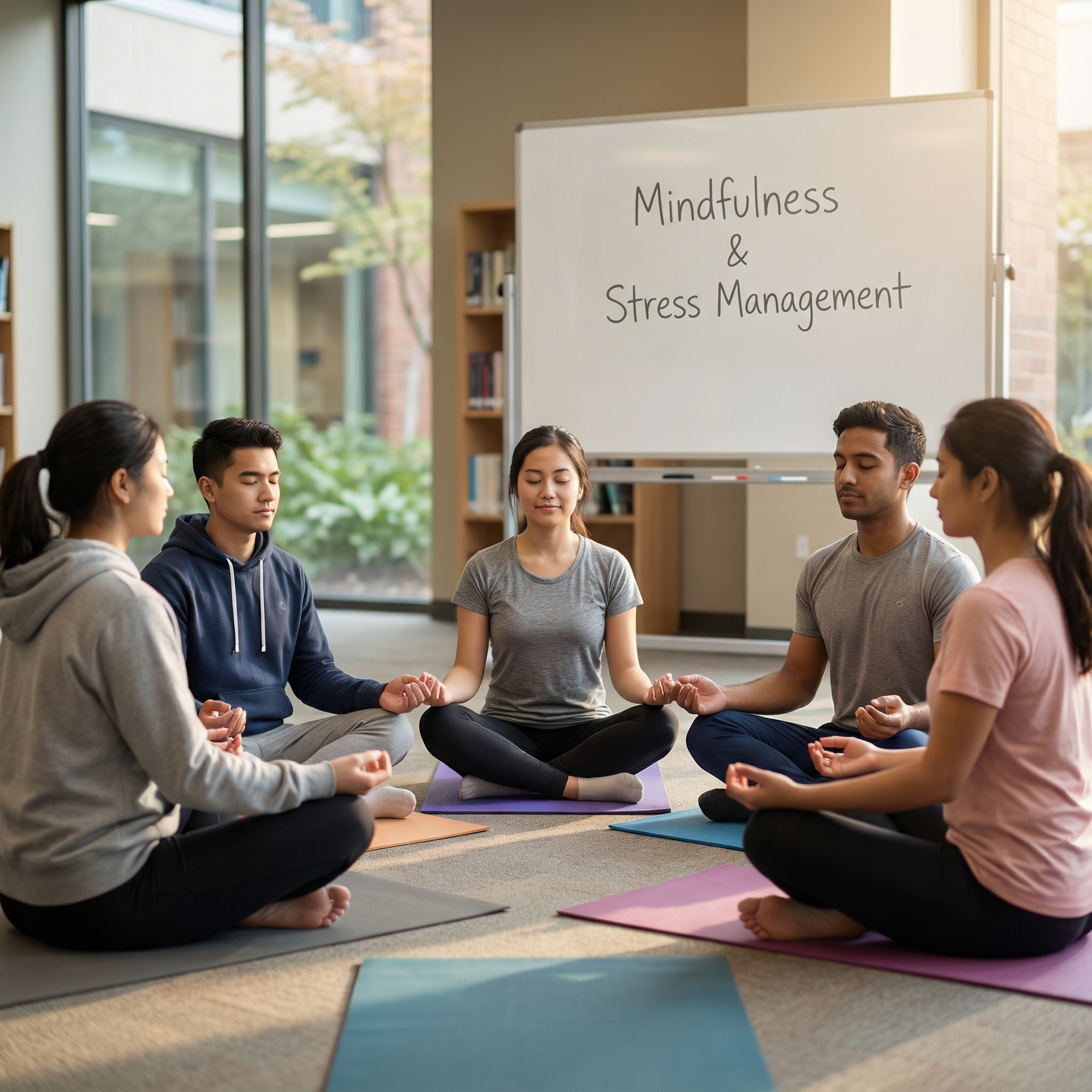
Frequently Asked Questions about Mindfulness in Medical School
Q1: How do I start incorporating mindfulness into my daily routine without feeling overwhelmed?
Begin with one tiny, consistent practice rather than trying to overhaul your life. For example:
- 3 minutes of mindful breathing when you wake up
- One mindful walking break between classes
- Writing down just one thing you’re grateful for each night
Once that feels natural, you can add or extend practices. The goal is to build a routine that supports you, not to create another source of pressure.
Q2: Can mindfulness really improve my academic performance, or is it mainly for relaxation?
Mindfulness can support performance in several evidence-backed ways:
- Improved concentration – Fewer distractions while studying
- Better working memory – Holding and integrating complex concepts
- Reduced exam anxiety – Less mental interference from worry
- Greater stamina – Sustainable focus over longer study periods
Many students report that after integrating mindfulness, they study more efficiently, retain more, and feel less drained by the same workload.
Q3: How can I maintain mindfulness practices with such a busy and unpredictable schedule?
Use a “no extra time” approach:
- Practice mindful breathing while waiting for lectures to start.
- Turn the walk from the library to the cafeteria into mindful walking.
- Pause for two deep breaths before answering an email or opening your study app.
You don’t have to carve out a 30-minute block every day. Thread small pockets of Mindfulness throughout what you are already doing.
Q4: Is there a “best” time of day to practice mindfulness as a medical student?
The best time is the one you can consistently protect. Common options:
- Morning: A brief practice sets your tone for the day and can reduce anticipatory stress.
- Pre-study: 3–5 minutes before you start studying can boost focus and signal your brain it’s time to work.
- Evening: Short practices before bed can help you unwind and improve sleep quality.
You can also add “event-based” practices—for example, always doing 5 mindful breaths before exams, OSCEs, or important meetings.
Q5: How will I know if mindfulness is actually making a difference for me?
Look for gradual shifts over weeks, not overnight transformations. Possible signs include:
- You notice stress earlier and can intervene before it escalates.
- You recover more quickly after setbacks (e.g., a tough exam).
- You feel slightly more focused during study sessions.
- You become less reactive in conversations with peers or family.
- You experience more moments of calm or appreciation in your day.
You can also periodically reflect in a journal: “What has my stress level, focus, and mood been like this week compared to last month?” Subtle improvements accumulate into meaningful Emotional Resilience over time.
By weaving these mindfulness strategies into your first year of medical school, you are not only managing stress—you are building foundational habits that will support you through clerkships, residency, and a lifelong career in medicine. Mindfulness is not about escaping the challenges of training; it is about meeting them with greater clarity, compassion, and stability.
If you’d like to explore the broader context of mental health during training, see our Ultimate Guide on Mental Health for Med Students (/resources/incrementId=987) for additional tools and support.
Embrace mindfulness now, and you’ll be investing in both your present well-being and your future as a resilient, attentive, and compassionate physician.