The Emotional Reality of Starting Medical School
Starting Medical School is one of the most significant transitions in your academic and personal life. You’ve worked for years to get here—MCAT, applications, interviews—and now you’re finally on the other side of the door. Yet once the excitement fades, many students are surprised by an undercurrent of anxiety, self-doubt, and stress.
The first year is more than a tougher version of undergrad. It’s a complete shift in identity, lifestyle, expectations, and pace. You’re not just learning facts; you’re beginning to think, act, and carry yourself as a future physician. That kind of transformation comes with emotional turbulence.
Emotional Resilience—the ability to cope with stress, adapt to change, and recover from setbacks—is one of the most important skills you can develop in this phase. It’s what allows you to stay grounded when exams pile up, when you feel behind, or when imposter syndrome whispers that you don’t belong.
This guide explores:
- What makes the first year of Medical School such a challenging transition
- The components of Emotional Resilience, especially in a medical training context
- Evidence-informed Stress Management and Self-Care strategies you can use immediately
- How to build a support system and when to seek professional Mental Health help
The goal is not just to “survive” your first year, but to establish healthy habits that will serve you throughout your career.
Understanding the Transition: Why First Year Feels So Hard
The transition into Medical School involves multiple, simultaneous changes. Recognizing these helps normalize what you’re feeling and gives you a starting point for building resilience.
Academic Demands and Cognitive Overload
The most obvious change is the workload.
- Volume and pace: You may see in one week what you used to cover in a full semester. Pre-clinical courses pack anatomy, physiology, biochemistry, and more into tight schedules.
- Depth of understanding: Memorization alone is no longer enough. You’re expected to apply concepts clinically and integrate material across systems.
- Different assessment style: Exams often shift to board-style multiple choice, case-based questions, and practical exams (e.g., anatomy lab, OSCEs), requiring new study strategies.
It’s common to feel like you’re constantly behind, even when you’re working hard. This disconnect between effort and perceived progress can become an emotional stressor if you interpret it as personal failure rather than a feature of the training environment.
Time Management and Loss of Flexibility
First year often means:
- Longer days filled with lectures, labs, small groups, and independent study
- Less control over your schedule compared to undergrad
- Limited mental bandwidth for hobbies, relationships, and downtime
Without intentional planning, your schedule may be completely consumed by school. This perceived loss of control can heighten stress and make it harder to maintain healthy habits.
Shifting Social Dynamics and Identity
Medical School reshapes your social world:
- New peer group: You’re suddenly surrounded by high-achieving classmates. Comparison becomes easy, and imposter syndrome (“Everyone else is smarter than me”) is common.
- Relationship changes: Distance—geographic or emotional—can strain relationships with partners, friends, and family who may not fully understand your new reality.
- Professional identity formation: You’re beginning to see yourself (and be seen) as a future physician, which can alter how you relate to others and how they relate to you.
All of this can generate a quiet sense of isolation or disconnection if you don’t intentionally build supportive relationships in your new environment.
Pressure, Expectations, and Fear of Failure
The stakes feel higher now:
- Grades may influence research opportunities, scholarships, and competitiveness for certain specialties
- You may feel a strong obligation to family, mentors, or your community to “succeed”
- You’re acutely aware that these years are shaping your future career
This combination of internal and external pressure can manifest as chronic anxiety, perfectionism, or a belief that you never get to rest.
Recognizing these factors doesn’t remove the stress—but it reframes it as a shared, predictable part of Medical School life, not as a personal deficiency.
What Is Emotional Resilience in Medical School?
Emotional Resilience in Medical School is not about being unbothered or “tough enough” to ignore stress. It’s your capacity to experience difficulty, adapt, and still move forward in a healthy way.
Key Components of Emotional Resilience
1. Realistic Optimism
Optimism in this context isn’t blind positivity. It’s the ability to:
- Acknowledge challenges honestly
- Believe that setbacks are temporary and manageable
- Maintain confidence that you can grow, learn, and adapt
For example, after a disappointing exam score, a resilient response is:
“I didn’t do as well as I hoped. This is feedback about my study method, not my potential. I can adjust and improve.”
2. Flexibility and Adaptability
Medical School will routinely disrupt your plans:
- A study strategy that worked in undergrad may fall flat
- A personal crisis might coincide with a major exam
- Clinical exposure or grades may shift your specialty interests
Resilience means adjusting to the reality in front of you—changing your schedule, seeking help, or redefining what “success” looks like in a given season.
3. Self-Awareness and Emotional Insight
You can’t manage what you don’t notice. Emotional Resilience requires:
- Noticing early signs of overwhelm (irritability, difficulty focusing, insomnia, loss of interest in socializing)
- Identifying patterns (“I always feel worse during exam weeks when I stop exercising”)
- Understanding your internal dialogue (“I’m telling myself I’m a failure because I needed help”)
This awareness lets you intervene earlier rather than waiting until you’re in crisis.
4. Intentional Self-Care
Self-Care in Medical School is not a luxury; it’s part of professional responsibility. Sustainable performance depends on:
- Adequate sleep
- Regular movement
- Nutritious eating habits
- Mental health practices (mindfulness, therapy, reflection, spiritual practices if relevant)
Without these, even the best study plans eventually break down.
5. Use of Support Systems
Emotionally resilient students do not go it alone. They:
- Lean on classmates for shared understanding
- Develop mentoring relationships with faculty or residents
- Stay in touch with trusted friends or family outside medicine
- Use counseling or Mental Health services when needed
Needing support is not evidence of weakness; it’s a sign you’re functioning like a human being under intense stress.
Practical Strategies to Build Emotional Resilience in First Year
Resilience is not a fixed trait. It’s a skill set you can develop through intentional habits. Below are evidence-informed strategies tailored for first-year Medical School life.
1. Adopt a Growth Mindset Toward Learning and Failure
A growth mindset is the belief that abilities can be developed through effort, feedback, and strategy—not just innate talent.
How to apply this in Medical School:
- Reframe mistakes: Treat every poor quiz or anatomy ID as data, not a verdict on your intelligence. Ask, “What exactly went wrong, and what can I change?”
- Normalize struggle: Remind yourself that few people talk openly about how hard they’re working or how much they’re struggling. You’re seeing the highlight reel, not the full story.
- Track progress: Keep a small notebook or digital note where you record “wins” (small or large) each week: finishing Anki reviews on time, clarifying a difficult concept, asking a question in small group.
This mindset directly supports Emotional Resilience by turning stressors into opportunities rather than threats.
2. Practice Self-Compassion, Not Self-Criticism
Harsh self-talk often increases anxiety and undermines performance. Self-compassion means treating yourself with the same kindness and understanding you would offer a close friend in the same situation.
Try this 3-step self-compassion check-in:
- Mindfulness – Name what you’re feeling without judgment:
“I’m really anxious and disappointed about that exam.” - Common humanity – Remind yourself you’re not alone:
“Many first-year students struggle with this. I’m not the only one.” - Self-kindness – Replace harsh criticism with supportive language:
“I’m doing my best. I can learn from this and make a realistic plan to improve.”
Writing these out in a journal a few times a week can gradually shift your internal dialogue.
3. Structure Your Time to Support Both Performance and Well-Being
A well-designed routine is one of the most powerful tools for Stress Management.
Essential elements of a first-year schedule:
- Protected study blocks (e.g., 2–3 focused sessions per day):
Use techniques like Pomodoro (25 minutes focus, 5 minutes break) or 50/10 minute cycles. - Daily recovery time:
At least 30–60 minutes of non-academic activity you genuinely enjoy: walking, cooking, calling a friend, playing music. - Sleep as a non-negotiable:
Aim for 7–9 hours. Protect a consistent bedtime and wake time as much as possible; this stabilizes mood and improves memory consolidation. - Buffer zones:
Don’t schedule every minute. Leave short buffers (10–15 minutes) between major tasks to account for transitions and mental reset.
Overly rigid schedules tend to break under pressure; build a structure that’s consistent but flexible enough to adapt when life happens.
4. Build and Maintain Supportive Relationships
Social connection is a powerful protective factor for Mental Health.
Ways to cultivate support in Medical School:
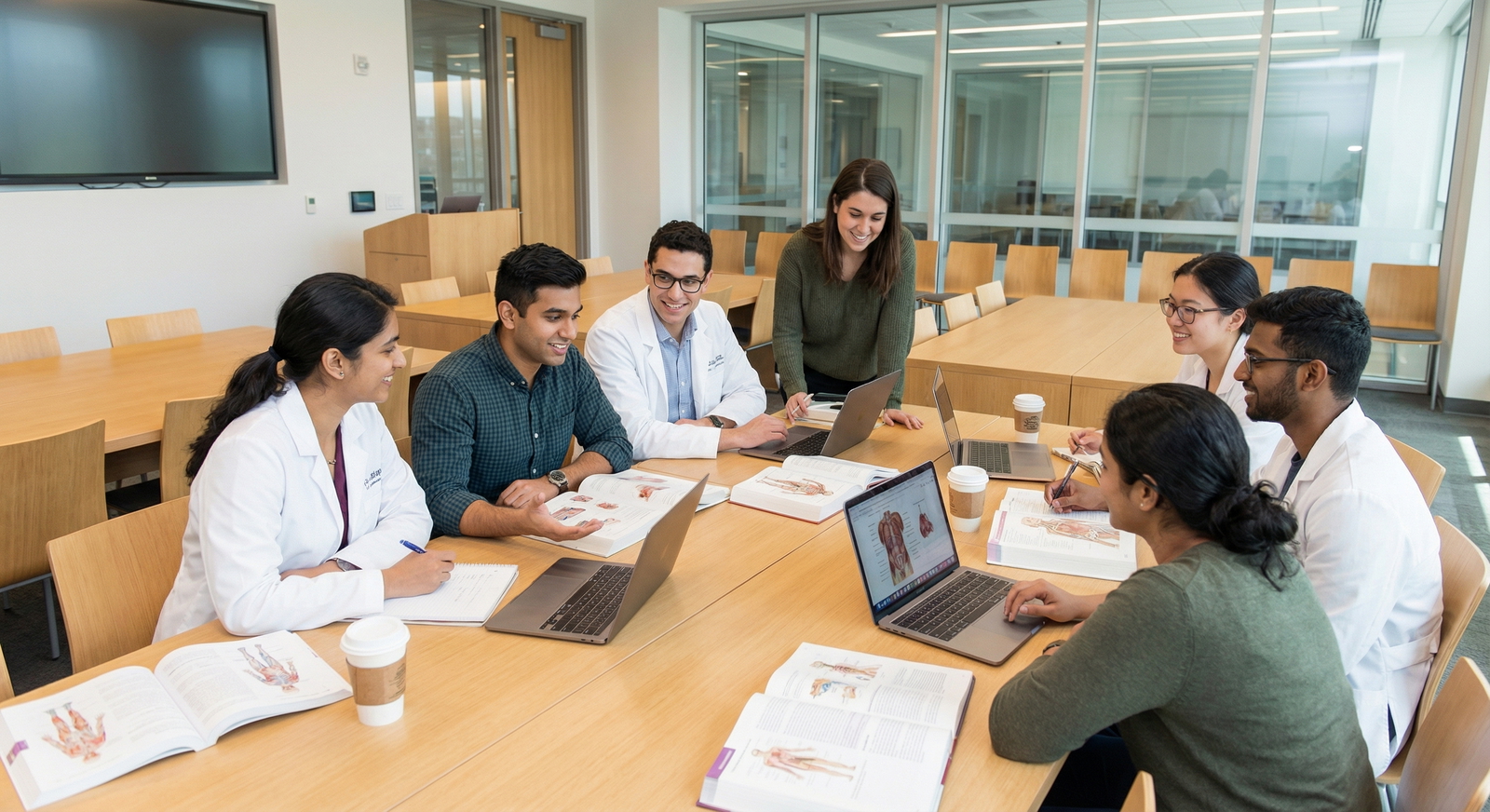
Intentional study groups
Form or join a small group with clear expectations: meeting frequency, goals, and boundaries (e.g., time-limited sessions, no comparison of grades). Use the group not just for academics but to normalize the emotional side of training.Peer mentors
Many schools have second- or third-year students willing to guide incoming students. They can share high-yield strategies, realistic expectations, and reassurance that what you’re feeling is normal.Faculty or resident mentors
Seek out a faculty member whose values or interests align with yours—someone in a specialty you’re curious about, or a physician who clearly prioritizes wellness. Periodic check-ins can give you perspective and career guidance.Non-medical relationships
Maintain at least one connection outside the medical bubble. Friends, partners, or family who know you as a whole person can help you remember that your worth is not defined by grades or test scores.
5. Prioritize Self-Care as Part of Your Professional Development
You cannot pour from an empty cup. Self-Care is a skill you are learning now that will influence how you practice medicine later.
Core Self-Care domains to prioritize:
Physical Health
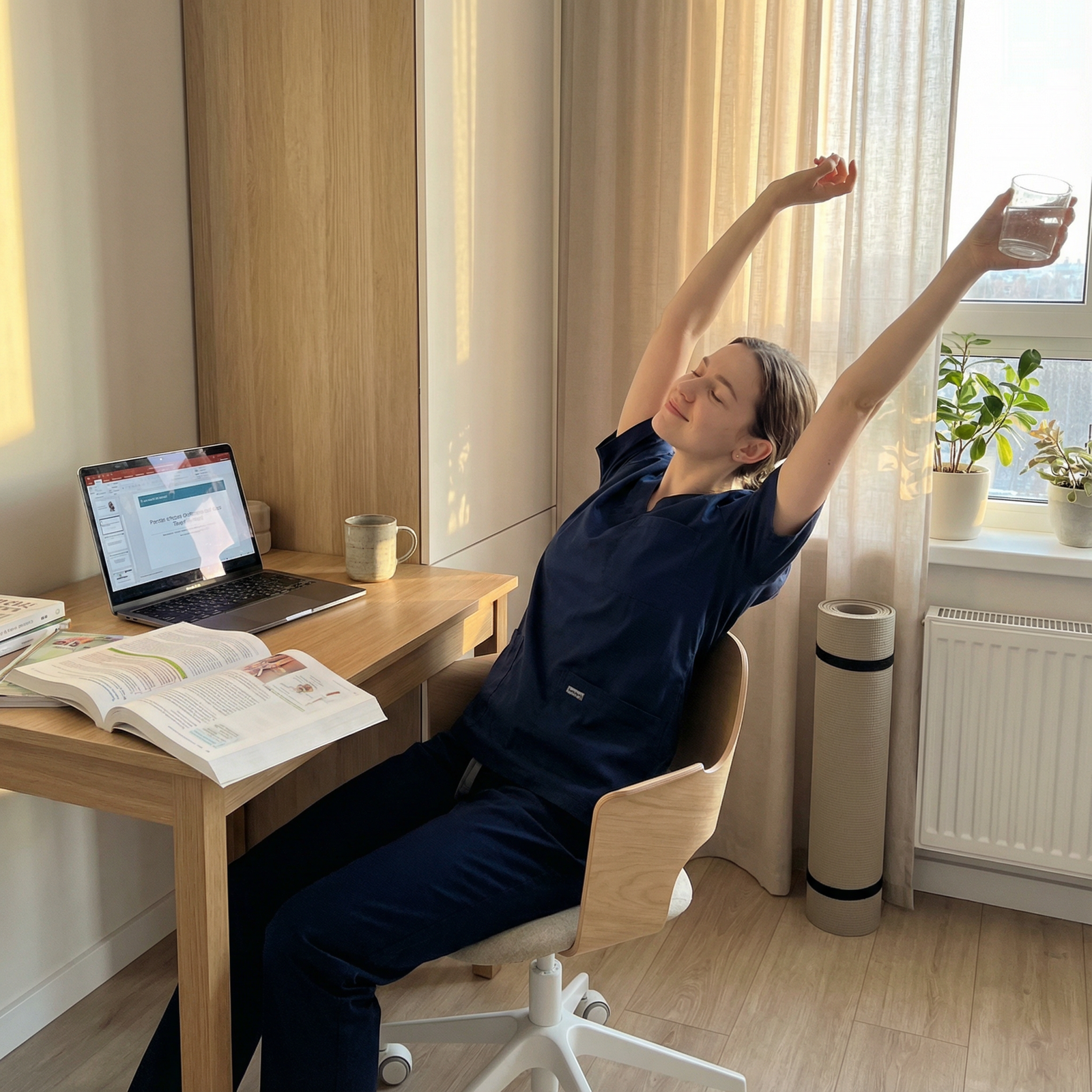
- Movement:
Even 15–20 minutes of walking, stretching, or light exercise most days of the week can reduce stress and improve concentration. - Nutrition:
Plan simple, balanced meals and snacks. Keep convenient but healthier options on hand (nuts, yogurt, fruit, pre-cut vegetables) to avoid relying solely on vending machines or fast food. - Sleep hygiene:
Reduce screens before bed, avoid heavy meals and caffeine late at night, and create a winding-down routine (reading, stretching, brief meditation).
Mental and Emotional Health
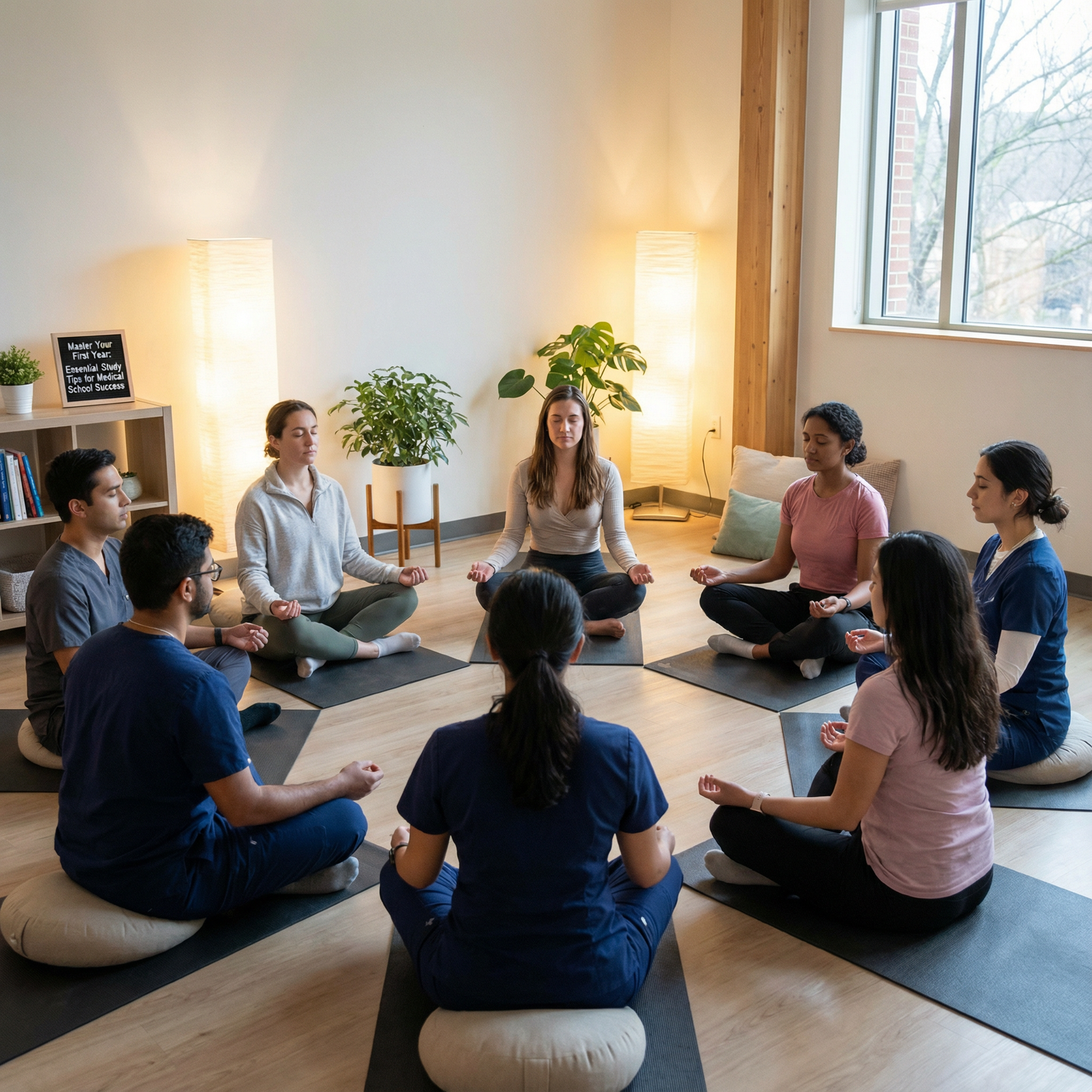
- Mindfulness practices:
Apps like Headspace, Calm, or free guided meditations can help you build a 5–10 minute daily practice to regulate stress. - Journaling:
Use a brief daily check-in:- One thing that was hard today
- One thing that went well
- One thing you’re grateful for
- Boundaries:
Decide in advance how many hours per day you’re willing to dedicate to studying most days—and when you will stop for the night. Boundaries protect against chronic overextension.
Social and Recreational Health
- Schedule joy:
Put at least one weekly activity on your calendar that is purely for enjoyment: a movie night, game night, hike, or hobby. - Micro-breaks:
Short interactions (5–10 minutes) with a roommate, partner, or friend can boost your mood and reset your focus.
6. Use Concrete Coping Tools for Academic Stress
In addition to big-picture Self-Care, specific, practical strategies can reduce academic stress.
Techniques you can start now:
- Task breakdown:
When you feel overwhelmed, list everything you need to do, then break it into smaller, specific tasks:
“Review cardiovascular physiology lecture 1” becomes- Watch 20 minutes of the lecture
- Make 10 Anki cards
- Do 5 practice questions
- Mind mapping and visual aids:
For complex topics (like metabolic pathways or neuroanatomy), create visual maps. This aids understanding and recall, and the act of organizing material can reduce anxiety. - Checklists for exam weeks:
Create a simple checklist for each exam: materials to review, practice questions, and rest periods. Checking off items reduces uncertainty and gives a sense of progress.
7. Stay Flexible: Adjust Strategies as You Learn
Resilient students regularly evaluate and update their approach.
Ask yourself every few weeks:
- What’s working well academically and emotionally?
- What consistently leads to stress, late nights, or poor retention?
- What is one small experiment I can try next week? (e.g., moving Anki to mornings, adding a study group, changing my exercise time)
Treat your first year as a series of experiments. You’re not just learning medicine—you’re learning how you learn and function best.
8. Know When and How to Seek Professional Mental Health Support
Despite strong coping skills, there may be times when your distress exceeds what self-management can handle. Seeking professional help is a wise and strong step, not a failure.
Consider reaching out for Mental Health support if you notice:
- Persistent sadness, hopelessness, or tearfulness
- Significant anxiety or panic attacks interfering with daily functioning
- Marked changes in sleep or appetite
- Loss of interest in activities you used to enjoy
- Thoughts of self-harm, or feeling that others would be “better off without you”
Most Medical Schools provide:
- Confidential counseling services
- Student wellness offices
- Access to psychiatrists or external therapists
You can usually self-refer; ask your student affairs office or check your school’s website. If you’re unsure where to start, a trusted faculty member, dean of students, or peer mentor can point you in the right direction.

Integrating Emotional Resilience Into Your Ongoing Medical School Life
Emotional Resilience is not a one-time project for first year; it’s an ongoing practice that will evolve as you progress through clinical rotations, residency, and beyond.
In your first year, start with:
- Noticing and naming your stressors rather than ignoring them
- Practicing small, consistent Self-Care habits
- Actively building your support network
- Treating setbacks as data, not definitions of who you are
You are not alone in finding this transition difficult. Nearly every student has moments of doubt, exhaustion, or fear. The difference is not who struggles and who doesn’t—it’s who learns to respond to those struggles with curiosity, courage, and compassion toward themselves.
The habits you build now will help you care not only for your patients, but also for the person who will be doing that caring: you.
FAQ: Emotional Resilience and Mental Health in Medical School
1. What exactly is Emotional Resilience in the context of Medical School?
Emotional Resilience in Medical School is your ability to handle intense academic pressure, rapid change, and emotional challenges while maintaining your Mental Health and continuing to function effectively. It includes recognizing stress early, using coping strategies, learning from setbacks, and seeking support when needed. It doesn’t mean you never feel overwhelmed—it means you have tools and resources to recover.
2. How can I start building Emotional Resilience before or early in my first year?
You can begin by:
- Setting realistic expectations about the workload and acknowledging that it will feel different from undergrad
- Practicing basic Stress Management skills now: consistent sleep, regular movement, brief mindfulness sessions
- Identifying 2–3 people you can talk to openly about your struggles (friends, mentors, family)
- Experimenting with active learning strategies (practice questions, teaching material to someone else, spaced repetition) so the transition to Medical School studying is smoother
- Exploring your school’s wellness and counseling resources early, so you know where to go if you need help
3. How do I know if my stress level is “normal” or if I should be worried about my Mental Health?
Some stress, fatigue, and self-doubt are extremely common in first year. You should consider seeking additional support if you notice:
- Your mood is low or anxious most days for more than two weeks
- You’re having trouble functioning (going to class, studying, caring for yourself)
- You withdraw from friends and activities you usually enjoy
- You’re using alcohol or substances more frequently to cope
- You have thoughts of self-harm or feel like giving up
In these cases, reaching out to a counselor, physician, or trusted faculty member is important. You don’t have to wait until things are “bad enough”—it’s okay to seek help early.
4. What are some practical Self-Care strategies that fit into a busy Medical School schedule?
Effective Self-Care doesn’t have to be elaborate or time-consuming. Examples include:
- 5–10 minutes of guided breathing or meditation before bed
- A 10–20 minute walk between study blocks or after class
- Preparing simple meals in bulk once or twice a week
- Setting a “no study” cut-off time each night to protect your sleep
- Brief phone calls or messages to stay connected with loved ones
- Scheduling one enjoyable, non-academic activity each week (sports, art, reading, gaming)
These small practices, done consistently, build Emotional Resilience and support your Mental Health over time.
5. Will prioritizing my Mental Health and Self-Care hurt my academic performance?
When done thoughtfully, the opposite is typically true. Chronic sleep deprivation, nonstop studying without breaks, and neglect of emotional needs often lead to burnout, memory problems, and reduced efficiency. Protecting your Mental Health and practicing Self-Care:
- Improves focus and concentration
- Enhances memory consolidation
- Reduces risk of burnout and emotional exhaustion
- Helps you remain engaged and compassionate in your training
Think of Self-Care and Stress Management as part of your academic strategy, not as something that competes with it.
By embracing Emotional Resilience, you are investing in your future as both a competent physician and a healthy, whole person. Your first year of Medical School is challenging—but with the right tools, support, and mindset, it can also be a powerful season of growth.