Effective Time Management for Night Shifters: Strategies for Balance, Health, and Productivity
Working nights—whether in residency, nursing, or any 24/7 clinical role—can feel like living in a parallel universe. When others are winding down, you’re just clocking in. Your circadian rhythm is flipped, social plans are hard to maintain, and basic tasks like grocery shopping or going to the bank suddenly require strategic planning.
Yet night shifts are a reality of modern healthcare and many other industries. The key is not just surviving them, but organizing your time so that you protect your Health and Wellbeing, perform at a high level, and still maintain some semblance of Work-Life Balance.
This guide takes the original ideas—structured scheduling, prioritization, transitions, and wellbeing—and expands them into a practical, evidence-informed roadmap. It’s tailored especially for trainees and residents, but applicable to any night shifter who wants better Time Management and Productivity.
Understanding the Night Shift: Why Time Management Matters So Much
Before you can manage your time effectively as a night worker, it helps to understand exactly what you’re working against.
Circadian Rhythms and Night Work
Your body is wired to be awake during the day and to sleep at night. This internal clock—your circadian rhythm—controls:
- Sleep–wake cycles
- Core body temperature
- Hormone secretion (like melatonin and cortisol)
- Cognitive performance and reaction time
Night shifts disrupt these natural patterns. This disruption can lead to:
- Difficulty falling or staying asleep during the day
- Decreased alertness and slower reaction time at night
- Memory lapses and impaired decision-making during long shifts
- A “jet lag” feeling even when you’re not traveling
Good Time Management for night shifters isn’t just about productivity; it’s about working with your altered biology as much as possible instead of constantly fighting it.
Social Isolation and Role Strain
Night workers often find themselves out of sync with the rest of the world:
- Family time happens when you’re either working or sleeping.
- Friends make evening plans you can’t attend.
- Daytime appointments clash with your sleep schedule.
Over time, this mismatch can lead to:
- Feelings of loneliness or being “out of the loop”
- Strain in relationships or missed milestones
- Less access to informal support networks when you need them
Proactive planning—both of your schedule and your communication—can soften this social isolation and help maintain healthy relationships.
Health Risks and Long-Term Considerations
Research links chronic night shift work to higher risks of:
- Fatigue and burnout
- Depression, anxiety, and mood disturbances
- Metabolic conditions (weight gain, insulin resistance)
- Cardiovascular issues
You can’t change the fundamental demands of the job, but you can:
- Structure your schedule more strategically
- Protect sleep as a non-negotiable
- Use your off-shift time deliberately to support your health
That’s where targeted Time Management, Work-Life Balance strategies, and focused Productivity Tips become essential.
Core Time Management Techniques for Night Shifters

1. Build a Structured Schedule That Protects Sleep
A predictable structure is powerful for anyone, but it’s absolutely critical when your sleep is misaligned with the sun.
Maintain Consistent Sleep and Wake Times (As Much as Possible)
- Anchor your schedule: Aim to sleep at roughly the same time each “day,” even on days off—especially during long stretches of nights.
- Choose a core sleep window: For example, if you work 7 p.m.–7 a.m., you might sleep from 9 a.m.–2 p.m. (core block), and then add a nap before your next shift.
- Avoid frequent “flipping”: Constantly switching between day and night schedules makes your circadian rhythm even more unstable and worsens fatigue.
If your schedule forces rotation between days and nights (as in many residencies), plan 2–3 “transition days” instead of flipping abruptly.
Create a Sleep-Conducive Environment
Use your time off shift to create a setting where sleep can actually happen:
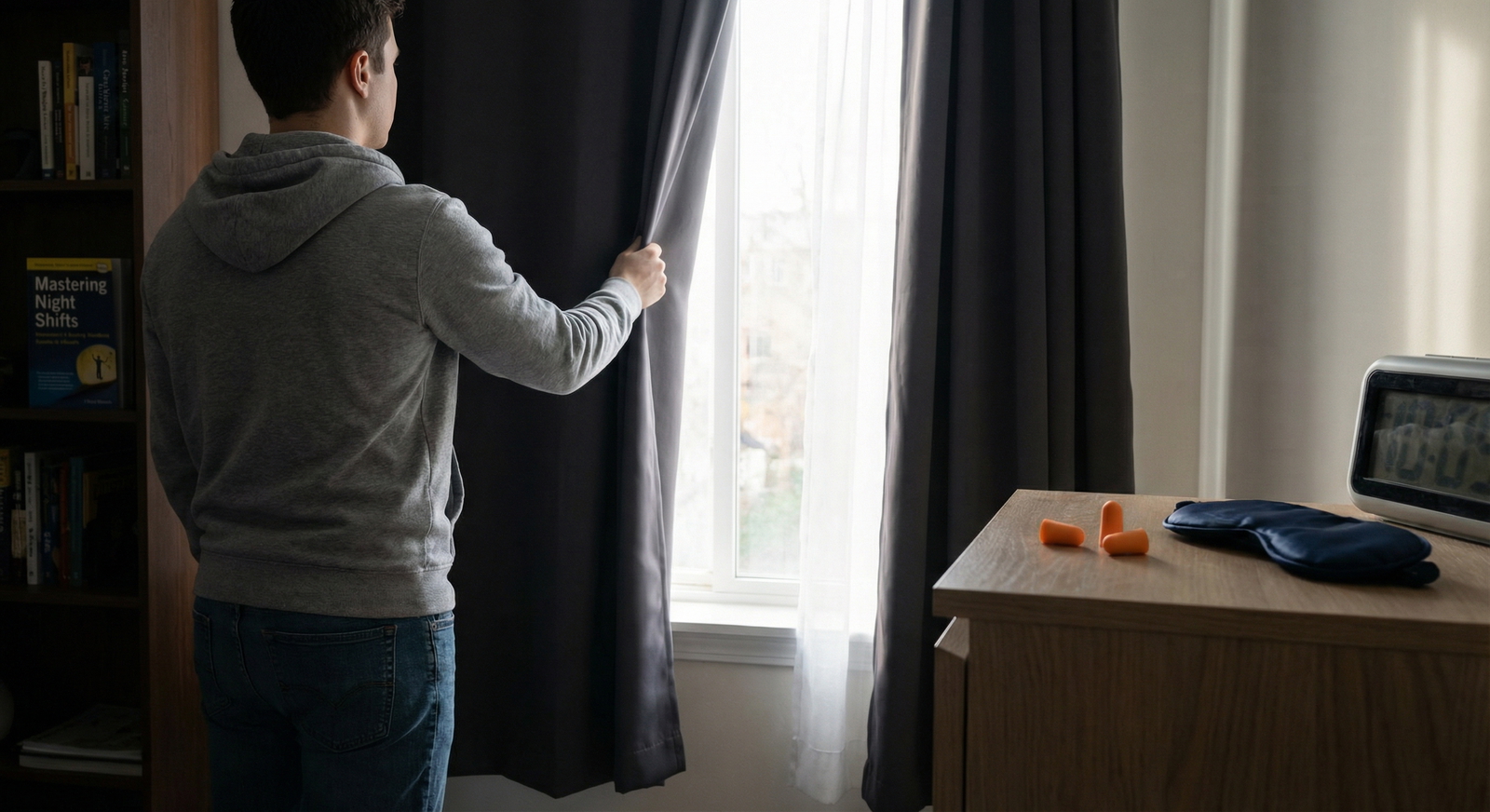
- Control light: Use blackout curtains, eye masks, and dim your phone/laptop brightness before bed.
- Reduce noise: Earplugs, white noise machines, or apps can help, especially if you live with others or in a noisy area.
- Cool, comfortable room: Aim for a slightly cool, quiet, clutter-free bedroom.
- Protect your sleep window socially: Tell roommates, partners, or family your set sleep hours and ask them to avoid interruptions.
Treat this setup like clinical equipment—essential infrastructure for safe, effective practice.
2. Prioritize Tasks Around Your Energy Peaks
Not all hours of a night shift feel the same. Most night workers notice patterns, for example:
- A relative “peak” in the early part of the shift
- A slump between 3–5 a.m.
- A second wind just before sign-out
Leverage these patterns with deliberate task planning.
Identify Your High- and Low-Energy Windows
Over 1–2 weeks of nights, track:
- When you feel sharpest
- When you feel most drowsy or unfocused
- How caffeine, naps, and meals affect that pattern
Use this self-observation to build a more efficient work rhythm.
Match Tasks to Energy Levels
- High-energy periods (early to mid-shift):
- Tackle cognitively demanding tasks (complex procedures, critical decision-making, detailed notes, in-depth family discussions).
- Moderate-energy periods:
- Routine tasks (charting, follow-up calls, labs review, updates to sign-out).
- Low-energy periods (often early morning):
- Safer, more automatic tasks, double-checking orders, organizing your list, preparing handover materials.
When possible, anticipate high-stakes tasks during your peak windows. You can’t fully control clinical flow, but you can control when you schedule things like detailed documentation, follow-up planning, or self-study.
3. Make Task Lists Work for You, Not Against You
Generic to-do lists can be overwhelming, especially at 2 a.m. when your brain is dulled by circadian dip. Use smarter structures such as:
Priority tiers:
- Must do tonight (urgent, safety-related, time-sensitive)
- Should do (important but not critical for this shift)
- Nice to do (if time/energy allow)
Time-blocking:
- Reserve specific parts of the shift for a cluster of similar tasks (e.g., 1–2 a.m. for charting and lab follow-ups).
Two lists: work and home:
- Have a short, realistic list for home responsibilities (bills, laundry, childcare tasks) so they don’t occupy mental space while you’re at work.
Short, clear, ranked lists decrease cognitive load and improve focus when you’re tired.
Optimizing Transitions: Before, During, and After Night Shifts
Poorly managed transition periods are where many night shifters lose time, sleep, and wellbeing. With some structure, these windows can actually become powerful tools for resilience.
1. The Pre-Shift Routine: How You Start Matters
Think of the 2–3 hours before your shift as a runway.
Build a Pre-Shift Ritual
- Wake up gradually: Allow at least 60–90 minutes between waking and leaving home so you’re not rushing.
- Hydrate and fuel up: Aim for a balanced meal with lean protein and complex carbs to provide steady energy.
- Use light strategically:
- Bright light after waking can help shift your circadian rhythm and enhance alertness.
- Avoid sedating activities: Heavy meals, alcohol, or long hot showers right before work can worsen drowsiness.
A consistent pre-shift routine signals your body and mind: “We’re transitioning into work mode now.”
2. Managing the Middle of the Night: Strategic Breaks and Micro-Rest
The hours between midnight and dawn are biologically the hardest. Time Management here is less about squeezing in more tasks and more about protecting safety, focus, and mood.
Use Short, Intentional Breaks
If your clinical workload and staffing allow, aim for:
- Micro-breaks (3–5 minutes):
- Stand, stretch, walk a hallway, drink water, do a few deep breaths.
- Longer breaks (10–20 minutes):
- Light snack, brief social check-in with colleagues, or a quick reset away from screens.
Even brief pauses can reduce error rates and mental fatigue, especially during the circadian low.
Consider Planned Naps (If Permitted)
Where policy and staffing allow:
- A 15–20 minute “power nap” can improve alertness and performance later in the shift.
- Avoid naps longer than ~30 minutes, which may lead to sleep inertia (grogginess).
Set an alarm, communicate with your team, and return from your break prepared to reorient.
3. The Post-Shift Wind-Down: Protecting Sleep and Home Life
The period immediately after work often determines whether you get restorative sleep—or spend hours “wired and tired.”
Develop a Wind-Down Buffer
Plan 20–45 minutes between leaving work and going to bed:
- Decompress mentally:
- Listen to calm music or a podcast, do a short mindfulness exercise, or write a quick “brain dump” list of lingering tasks for later.
- Avoid stimulation:
- Heavy exercise, intense screen time, and emotionally charged conversations can delay sleep onset.
- Use consistent cues:
- A specific tea, shower, or short stretching routine can act as a “sleep is coming” signal.
Plan Your Wake-Up Window Intentionally
When you wake up:
- Expose yourself to light: Open the curtains or use a bright light (unless you’re flipping back to a day schedule soon).
- Hydrate and eat: A light meal and water can help jump-start your alertness.
- Keep the first 30 minutes simple: Avoid immediately diving into emotionally charged tasks or decision-heavy planning.
These structured transitions make your off-shift time more restorative and intentional, not just “what’s left over” after work.
Using Technology and Systems to Support Night Shift Productivity
1. Digital Calendars as Your External Brain
Given rotating schedules, on-call nights, and clinics or conferences, relying solely on memory is risky.
Use calendar apps (Google Calendar, Outlook, iOS Calendar) to:
- Track shifts, call nights, and post-call days
- Block dedicated sleep times (treat them like formal appointments)
- Schedule key personal tasks: paying bills, workouts, family events
- Set reminders for medications, bedtime routines, and morning alarms
Color-coding (e.g., blue for work, green for sleep, yellow for social) gives a quick visual of your week’s Work-Life Balance.
2. Task and Project Management Tools
Apps like Todoist, Notion, Asana, or Trello can help you:
- Maintain separate boards for clinical tasks, academic projects, and personal life
- Break big goals (research projects, exam prep) into smaller steps, aligned with your shifts
- Offload mental clutter so you can focus on patient care during work hours
For residents and trainees, scheduling short, specific academic blocks (e.g., 20 minutes of reading or question practice before a nap on off days) is more sustainable than vague intentions.
3. Use (and Limit) Your Smartphone Wisely
Your phone can be both a lifeline and a distraction. Consider:
- Turning off non-essential notifications during your core sleep window
- Using focus modes or “do not disturb” with exceptions for critical contacts
- Installing apps for sleep tracking, meditation, or white noise—but avoiding doomscrolling before bed
The goal is to let technology support your Productivity and Health and Wellbeing—not constantly interrupt them.
Organizing Home Life and Relationships Around Night Shifts

Your performance and wellbeing at work are heavily influenced by how well your home life is structured around your schedule.
1. Streamline Home Tasks with Systems
Meal Prep and Nutrition
Time Management around food can be the difference between consistent energy and a cycle of sugar crashes.
- Batch cooking: Prepare 2–3 simple, balanced meals on a day off that can be frozen or refrigerated.
- Portable options: Pack healthy snacks like nuts, yogurt, cut fruits, hummus with vegetables, or whole-grain wraps.
- Timing:
- Eat a balanced meal before the shift.
- Use small, frequent snacks to maintain energy without heavy post-meal fatigue.
Avoid relying on vending machines or late-night fast food as your primary fuel source.
Simplify Chores
- Automate when possible: Use autopay for bills, grocery delivery or pickup services, and online prescription refills.
- Create a rotating micro-chore list:
- 10–15 minutes per “day” on specific tasks (laundry one day, bathroom wipe-down the next).
- Use visual cues: A small whiteboard or shared digital list with housemates/partners clarifies responsibilities and reduces conflict.
2. Protect and Nurture Social Connections
Night shifts make social life harder, not impossible. The key is deliberate planning.
Set Expectations with Loved Ones
- Explain your typical schedule and core sleep hours.
- Share which days are best for calls, visits, or outings.
- Ask for understanding that you may need to cancel or cut short sometimes due to fatigue.
This transparency prevents misinterpretation (“They’re avoiding me”) and replaces it with shared problem-solving.
Schedule “Anchor” Social Rituals
Even with a tough schedule, try to build:
- A standing weekly video call with family
- A regular brunch, late lunch, or post-shift breakfast with friends or your partner
- Short, meaningful check-ins (voice messages, notes, quick texts) on busy stretches
Quality matters more than quantity. A focused 20-minute conversation is often more nourishing than a distracted multi-hour attempt when you’re exhausted.
Prioritizing Health and Wellbeing on the Night Shift
Your time management plan is only effective if it protects your physical and mental health.
1. Movement and Exercise, Without Overdoing It
Exercise is a powerful tool for mood, energy, and long-term health—but timing matters.
- Post-shift: Light movement (walking, brief stretching, yoga) can help unwind, but intense workouts right after night shifts can make it harder to sleep.
- Pre-shift: Some people feel more alert with a short workout before work—experiment with 20–30 minutes of moderate activity.
- On days off: Use one of your better-rested days to fit in a more structured workout if that aligns with your goals.
The priority is consistency and enjoyment—not strict intensity.
2. Mindfulness, Stress Management, and Mental Health
Chronic night work plus the demands of clinical roles can accumulate stress.
- Short daily practices:
- 5–10 minutes of guided meditation, breathing exercises, or journaling
- Brief gratitude practice (3 things you’re thankful for)
- Know your warning signs:
- Persistent low mood, irritability, errors at work, or hopelessness signal the need for further support.
- Reach out early:
- Use employee assistance programs, counseling services, or peer support groups—especially important in residency training.
Time spent on mental health is not a “luxury extra”; it’s a safety and performance measure.
3. Smart Use of Caffeine and Sleep Aids
Caffeine can be a helpful tool—or a trap.
- Use caffeine earlier in the shift: Avoid caffeine in the final 4–6 hours before your planned sleep time.
- Spread intake out: Several smaller doses are often better than one huge bolus.
- Be cautious with sleep medications:
- Always discuss regular use of prescription or over-the-counter sleep aids with a healthcare professional.
- Consider non-pharmacologic options first (sleep hygiene, light control, CBT-I techniques).
4. Listening to Your Body and Recalibrating
Over months and years, your needs will change. Revisit your approach if you notice:
- Worsening fatigue despite adequate sleep windows
- Recurrent physical symptoms (e.g., headaches, GI issues)
- Emotional exhaustion or dread before shifts
This is a signal to adjust your routines, seek input from mentors or supervisors, or consult your own clinician.
FAQ: Night Shift Time Management, Work-Life Balance, and Wellbeing
Q1: How can I transition more smoothly between day shifts and night shifts?
A: Use a gradual approach when possible. On the day before your first night, sleep in a bit later, take a 1–2 hour nap in the late afternoon or early evening, and expose yourself to bright light at the start of your shift. After your last night, consider a partial sleep (e.g., 3–4 hours) so you can go to bed earlier that evening and reset to a day schedule without losing an entire day. Avoid abrupt flips with no planning—they worsen fatigue and make Work-Life Balance harder.
Q2: What are some quick Productivity Tips for staying focused during the hardest hours of the night?
A: Cluster high-focus tasks in your personal “peak” times, use short micro-breaks for stretching and hydration, avoid heavy meals in the early morning hours, and, if allowed, take a brief power nap. Keep a short checklist instead of relying on memory when you’re tired, and use soft, non-harsh lighting to reduce eye strain without fully signaling “bedtime” to your brain.
Q3: How do I maintain relationships when everyone else is awake during the day?
A: Start by mapping your predictable windows of availability and sharing them with loved ones. Schedule recurring touchpoints (like a weekly brunch or standing video call), use asynchronous communication (texts, voice notes) on heavy weeks, and be honest about fatigue levels. Involve partners or family in your planning—for example, arranging quiet time during your sleep hours and shared activities on your off days.
Q4: What should I eat during a typical 12-hour night shift to support my Health and Wellbeing?
A: Aim for a balanced pre-shift meal (lean protein, whole grains, vegetables) and then smaller, lighter snacks during the shift. Focus on foods that provide steady energy: nuts, yogurt, boiled eggs, whole-grain toast, fruit, cut vegetables with hummus. Limit sugary drinks and ultra-processed snacks that cause rapid spikes and crashes. Hydrate consistently with water rather than relying solely on caffeinated beverages.
Q5: How do I know if night shifts are harming my health, and what can I do about it?
A: Warning signs include chronic insomnia or fragmented sleep, persistent low mood or anxiety, frequent illnesses, weight changes without explanation, and significant difficulty concentrating or increased errors at work. If you notice these, speak with your primary care clinician or occupational health, consider a sleep evaluation, and discuss options with your program leadership or supervisor. Sometimes schedule adjustments, additional support, or temporary accommodations can make a significant difference.
Effective Time Management as a night shifter is less about “doing more” and more about doing the right things at the right times—protecting sleep, structuring transitions, prioritizing tasks, and deliberately supporting your Health and Wellbeing. With thoughtful planning, it is possible not only to function on nights, but to sustain your career, your relationships, and your own life outside of work.