
Fuel Your Night Shift: Nutritional Hacks to Stay Awake and Sharp
Working nights during residency or other clinical roles doesn’t just shift your schedule—it rewires your biology. Night shifts disrupt your circadian rhythm, strain your mood and cognition, and can undermine long‑term health if not managed intentionally. Among all the tools available for Night Shift Survival, Night Shift Nutrition is one of the most powerful and underused.
What and when you eat can either support alertness, decision‑making, and mood—or accelerate fatigue, brain fog, and cravings. With a bit of planning, Healthy Eating can become one of your most effective strategies for Energy Management, Fatigue Prevention, and overall Workplace Wellness.
This guide expands on practical, real‑world nutrition strategies specifically tailored for night shift workers, especially residents, nurses, and other healthcare professionals.
Understanding How Night Shifts Disrupt Your Body
To use nutrition effectively, it helps to understand what you’re working against.
Circadian Rhythm and Metabolism on Night Shift
Your body’s circadian rhythm is designed for wakefulness during the day and sleep at night. Hormones, digestion, and metabolism all follow this pattern:
- Cortisol naturally peaks in the early morning to help you wake up and declines throughout the day.
- Melatonin increases in the evening to promote sleep.
- Insulin sensitivity and glucose handling are better during daylight hours.
- Digestive motility slows at night, making heavy meals more taxing and more likely to cause reflux or discomfort.
When you work at night and sleep during the day, you’re asking your body to perform cognitively demanding tasks when it’s biologically primed for rest—and to digest meals at times it’s not prepared for. Over time, this misalignment can contribute to:
- Weight gain and central adiposity
- Insulin resistance and increased risk of type 2 diabetes
- Elevated blood pressure and higher cardiovascular risk
- Mood changes and burnout
- Fragmented sleep and persistent fatigue
Strategic Night Shift Nutrition won’t erase these risks entirely, but it can substantially blunt their impact and improve your day‑to‑day function.
Red Flags of Poor Night Shift Management
If your night shift routine is working against your biology instead of with it, you might notice:
- Extreme fatigue despite “enough” hours in bed
- Poor concentration and memory, more charting errors, or slower clinical reasoning
- Irritability or mood swings that affect teamwork and bedside manner
- Increased appetite, especially intense cravings for sugary or salty foods
- GI issues (bloating, reflux, constipation) after heavy overnight meals
- Frequent headaches, dehydration, or energy crashes
Nutrition is not the only lever (sleep hygiene, light exposure, and stress management matter too), but it’s one of the easiest to control during residency life and shift work.
Core Night Shift Nutrition Principles for Sustained Energy
Think of your night shift nutrition strategy as part of your professional toolkit—just as important as your stethoscope or drug reference app. These principles target Energy Management and Fatigue Prevention while supporting long‑term Workplace Wellness.
1. Rethink Meal Timing: Grazing Strategically vs. Big Meals
Your body doesn’t handle large, restaurant‑sized meals well at 2 a.m. when digestion is naturally slower. Instead of the standard three‑meal pattern, aim for one main pre‑shift meal plus smaller “fuel stops” during the night.
General Timing Framework:
1–2 hours before shift:
Eat your main “dinner” or “breakfast” (depending on your schedule) with balanced protein, complex carbs, and healthy fats. This should be your largest meal.2–3 hours into shift:
Small snack to maintain focus and prevent a late‑shift binge (e.g., Greek yogurt plus fruit, or nuts and an apple).4–6 hours into shift (mid‑shift):
Modest, balanced mini‑meal (e.g., half a whole‑grain wrap with chicken and veggies, or quinoa salad with beans).Last 2–3 hours before going home:
Very light snack only if hungry (e.g., banana, small handful of nuts). Avoid heavy meals that will interfere with post‑shift sleep.
This pattern stabilizes blood sugar, reduces post‑meal drowsiness, and prevents the “Starving at 4 a.m. → Overeat → Can’t Sleep at 9 a.m.” cycle.
Practical Example for a 7 p.m.–7 a.m. Shift:
- 5:30 p.m.: Main meal at home (brown rice, salmon, roasted vegetables, side salad)
- 9:30 p.m.: Snack (Greek yogurt + berries)
- 12:30 a.m.: Mini‑meal (whole‑grain wrap with turkey, hummus, spinach)
- 4:00 a.m.: Light snack (banana + 8–10 almonds)
- 8:30 a.m. (pre‑sleep, if hungry): Small bowl of oatmeal with cinnamon and a few walnuts
2. Prioritize Complex Carbohydrates for Stable Energy
Carbohydrates are not your enemy—poorly chosen, highly refined carbs are. For night shifts, you want slow‑burning complex carbs that provide sustained glucose without sharp spikes and crashes.
Better Carbs for Night Shift Performance:
- Whole grains:
Oats, quinoa, brown rice, barley, farro, whole‑grain bread/wraps, whole‑grain crackers - Starchy vegetables:
Sweet potatoes, squash, beets, carrots - Legumes:
Lentils, black beans, chickpeas, kidney beans
These foods:
- Provide steady energy over several hours
- Are rich in fiber, which helps satiety and GI function
- Support serotonin production, which can stabilize mood and later help with daytime sleep
Avoid relying on:
- Sugary pastries, donuts, white bread
- Candy, sugary cereals, sweetened drinks
- Large amounts of white rice or pasta in the middle of your shift
Those “quick energy” foods often cause an initial boost followed by a crash 60–90 minutes later, worsening fatigue and concentration.
3. Smart Protein Choices to Stay Awake and Satisfied
Protein supports alertness, satiety, and stable blood sugar. Combining protein with complex carbs blunts glucose spikes and keeps you feeling focused longer.
Great Protein Sources for Night Shift:
- Animal proteins:
Skinless chicken or turkey, fish (salmon, tuna, cod), eggs, low‑fat dairy (Greek yogurt, cottage cheese, string cheese) - Plant proteins:
Tofu, tempeh, edamame, lentils, beans, chickpeas, hummus, unsalted nuts and seeds
Practical Combos for Work:
- Whole‑grain crackers + hummus
- Cottage cheese + cherry tomatoes
- Apple slices + peanut or almond butter
- Boiled eggs + small piece of whole‑grain toast
- Lentil soup in a thermos
Aim to include a protein source in every meal and most snacks. This reduces mindless snacking and the urge for another vending‑machine run at 3 a.m.
4. Use Healthy Fats as a Slow, Steady Fuel
Healthy fats are calorie‑dense and help keep you full, making them ideal for long shifts when meal breaks are unpredictable.
Sources of Healthy Fats:
- Avocado
- Nuts (almonds, walnuts, pistachios)
- Seeds (chia, flax, pumpkin, sunflower)
- Olive oil, canola oil
- Fatty fish (salmon, mackerel, sardines)
Add small amounts to meals (e.g., sprinkle nuts on oatmeal, add avocado to a wrap, drizzle olive oil on roasted vegetables). Avoid huge portions of fried or greasy foods, which worsen sluggishness and reflux—especially dangerous when you still need to think clearly and move quickly.
Hydration, Caffeine, and Smart Snacking on the Night Shift
Beyond meal timing and macronutrients, how you drink and snack can make or break your shift performance.
5. Hydration as a Core Energy Strategy
Dehydration mimics or worsens fatigue: headaches, decreased concentration, dizziness, and irritability. Hospital environments are often dry and busy; you may go hours without drinking unless you plan for it.
Hydration Targets and Tips:
- Aim for about 2–3 liters (8–12 cups) of fluids over 24 hours, adjusted for body size, climate, and activity.
- Keep a reusable water bottle with you and refill at least once per shift.
- Set reminders on your watch/phone every 60–90 minutes to take a few sips.
- Use herbal teas (peppermint, rooibos) or infused water (lemon, cucumber, berries) for variety.
- Limit very salty foods, which can increase thirst and puffiness.
Balanced hydration improves alertness, mood, and even decision‑making—critical for residents responsible for rapid assessments and orders at 4 a.m.
6. Caffeine: Timing, Dose, and Sources
Caffeine is a valuable tool, but misused, it sabotages your post‑shift sleep and extends fatigue into your off time.
Evidence‑Based Caffeine Strategy:
Dose:
Most adults should stay under 400 mg/day (about 3–4 small cups of coffee). Many residents feel best around 100–200 mg per dose.Timing:
- First dose: Within the first 1–2 hours of your shift (once you’ve eaten something).
- Second (and often last) dose: Around mid‑shift (e.g., 11 p.m.–1 a.m. for a 7 p.m.–7 a.m. shift).
- Avoid caffeine in the last 4–6 hours of your shift to protect daytime sleep.
Good Sources:
- Black coffee (no sugar or minimal sugar)
- Green tea (gentler effect + antioxidants)
- Unsweetened iced tea
- Occasional unsweetened latte or cappuccino
Try to avoid:
- Large energy drinks, especially with high sugar content
- “Energy shots” late in the shift
- Sugary coffee drinks with syrups and whipped cream (heavy sugar + caffeine crash)
If you rely on caffeine heavily, consider gradual reduction rather than abrupt withdrawal, which can cause headaches and worsen performance.
7. Nutrient‑Dense Snacks vs. Mindless Munching
On busy nights, “meals” often become whatever you can grab and eat in 3 minutes. Planning ahead turns those moments into Energy Management tools instead of calorie traps.
Best Night Shift Snack Options:
Protein + fiber combos:
- Trail mix with nuts and a few dried fruits (pre‑portioned)
- Edamame (frozen, microwaveable)
- Greek yogurt with seeds or a drizzle of honey
Fresh produce:
- Apple, orange, or banana (quick, portable, no refrigeration)
- Pre‑cut veggies (carrots, bell peppers, cucumbers) + hummus
- Grapes or berries stored in small containers
Whole‑grain options:
- Small oatmeal packet (choose low‑sugar), prepared with hot water at work
- Whole‑grain crackers or rice cakes with cheese or nut butter
These snacks deliver vitamins, minerals, and healthy fats and prevent the spike‑and‑crash effect that comes from cookies, candy, and soda.
Tactics to Outsmart the Vending Machine:
- Pack at least two more snacks than you think you’ll need.
- Keep a “night shift emergency kit” in your locker: nut packs, low‑sugar granola bars, instant oatmeal, herbal tea bags.
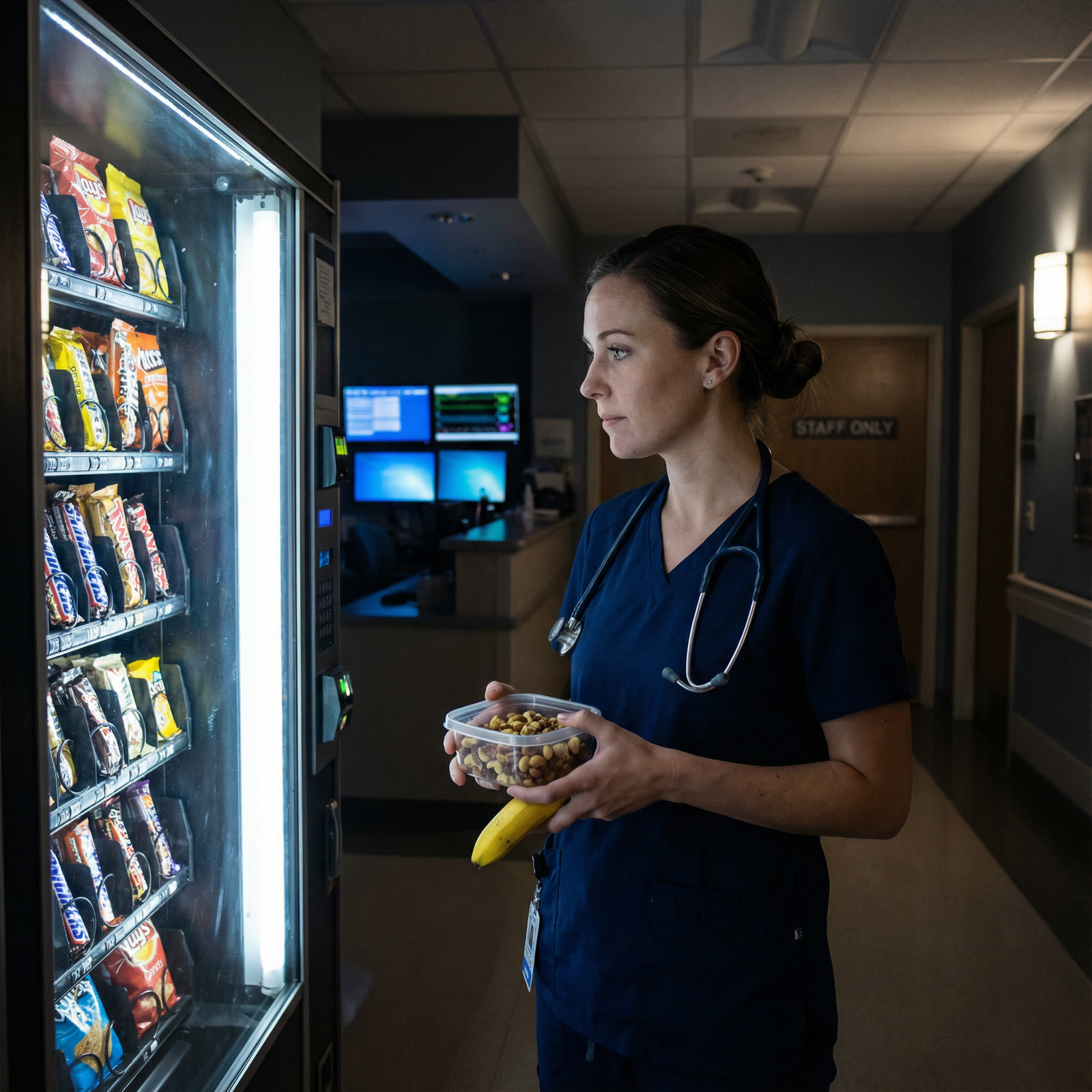
- If you do use the vending machine, aim for nuts, plain popcorn, or baked chips over candy and pastries.
Anti‑Inflammatory and Brain‑Supportive Foods for Night Shifts
Chronic night shift work is associated with low‑grade inflammation and oxidative stress. While you can’t change the hour you work, you can choose foods that support your brain and cardiovascular system.
8. Build an Anti‑Inflammatory Plate
Try to include these regularly in your overall diet, especially on days leading up to and during multiple consecutive night shifts:
Berries (blueberries, strawberries, raspberries):
Rich in antioxidants that may protect brain function and improve recovery after stressful shifts.Leafy greens (spinach, kale, Swiss chard, arugula):
High in vitamins A, C, and K, folate, and fiber—perfect in salads, omelets, or smoothies.Colorful vegetables (peppers, carrots, beets, red cabbage):
More color = more phytonutrients to combat oxidative stress.Omega‑3 rich foods (salmon, sardines, walnuts, chia seeds, flaxseeds):
Support brain health, mood, and cardiovascular wellness.Spices like turmeric and ginger:
Add to soups, stews, eggs, or tea. Curcumin (in turmeric) and gingerol (in ginger) have documented anti‑inflammatory properties.
These foods aren’t “quick fixes,” but over weeks to months, they contribute to better resilience, less brain fog, and improved long‑term health in the context of night work.
Pre‑Sleep Nutrition: Protecting Daytime Recovery
Your shift doesn’t end when you sign out; it ends when you’ve had restorative sleep. Night Shift Nutrition includes what you eat after your shift as well.
9. Eating to Support Daytime Sleep
Once you get home, your priority is to wind down and fall asleep, not to “catch up” on all the food you didn’t have time for.
Pre‑Sleep Eating Guidelines:
If you’re not hungry, don’t force a large meal. A small snack is fine.
If you are hungry, choose a light, balanced option:
- Small bowl of oatmeal with banana and a few nuts
- Whole‑grain toast with peanut butter and a drizzle of honey
- Yogurt with a small handful of granola
- Leftover portion of lean protein + vegetables (modest size)
Avoid:
- Heavy, high‑fat, large portions (pizza, burgers, large fast‑food meals)
- Spicy or greasy foods that trigger reflux
- Sugary desserts right before bed
- Any caffeine or energy drinks
Certain foods naturally support sleep by influencing serotonin and melatonin production:
- Tryptophan‑containing proteins: turkey, eggs, dairy
- Complex carbs: oats, brown rice, whole‑grain toast
- Magnesium‑rich foods: pumpkin seeds, almonds, spinach
10. Calming Beverages for Post‑Shift Wind‑Down
A warm, non‑caffeinated drink can signal to your body that it’s time to transition from “clinical mode” to “sleep mode.”
Consider:
- Chamomile tea (mild calming effect)
- Valerian root or passionflower teas (for some, promote relaxation)
- Warm low‑fat milk (try with a sprinkle of cinnamon)
Pair these with other wind‑down habits: dim lights, blackout curtains, earplugs or white noise, and a strict boundary on checking emails or charts from bed.

Real‑World Night Shift Nutrition Scenarios
Bringing it all together, here are expanded case examples that mirror common residency and healthcare situations.
Case Study 1: Emily, the Night Shift Nurse
Emily works 3 consecutive 7 p.m.–7 a.m. shifts in a busy ICU. She used to:
- Skip dinner due to rushing to work
- Drink multiple large coffees and energy drinks
- Graze on unit cookies, leftover pizza, and candy
- Go home starving and eat a huge meal before crashing into bed
She felt wired, irritable, and woke up feeling unrefreshed. After reframing her approach to Night Shift Nutrition, she implemented:
- 5:30 p.m.: Balanced pre‑shift meal at home (chicken, quinoa, mixed vegetables).
- 8:30 p.m.: First coffee + small snack (Greek yogurt + berries).
- 11:30 p.m.: Nuts + apple.
- 2:00 a.m.: Second coffee (smaller) + half a whole‑grain turkey wrap.
- 4:30 a.m.: Herbal tea + carrot sticks with hummus.
- 8:30 a.m.: Small bowl of oatmeal at home, then shower and bed.
After 2–3 weeks, Emily reported:
- More stable energy throughout the shift
- Fewer episodes of “I could fall asleep at the computer”
- Less reflux and bloating
- Improved ability to fall asleep within 30–45 minutes of getting home
Case Study 2: Mark, the Overnight Warehouse Worker
Mark worked in a large distribution center with inconsistent break times. He relied heavily on vending machines and fast food during his 10 p.m.–6 a.m. shift.
After meeting with a dietitian, he shifted to:
- Meal prepping whole‑grain sandwiches, individual bags of nuts, and pre‑cut fruit
- Bringing a 1‑liter water bottle and finishing at least 1–2 bottles per shift
- Cutting off caffeine by 2 a.m.
- Eating a light post‑shift snack instead of a large greasy breakfast
Over several months, he:
- Lost weight gradually
- Reported fewer energy crashes around 3–4 a.m.
- Noticed improved mood and fewer sick days
These stories highlight a key theme: consistency beats perfection. You don’t need flawless eating habits; you need a realistic, repeatable strategy that works in your specific environment.
Night Shift Nutrition FAQs
1. What are the best snacks for late‑night energy without a crash?
Look for snacks that combine protein, fiber, and complex carbs:
- Greek yogurt with berries
- Apple or pear with peanut/almond butter
- Handful of unsalted nuts + a piece of fruit
- Whole‑grain crackers with cheese or hummus
- Veggie sticks with guacamole
These provide sustained energy, help with Fatigue Prevention, and support overall Workplace Wellness far better than candy or pastries.
2. How can I improve my sleep after a night shift using nutrition?
- Avoid caffeine for at least 4–6 hours before bedtime.
- If hungry, choose a light, carb‑focused snack (oatmeal, whole‑grain toast with nut butter, banana with a few nuts).
- Skip large, heavy, high‑fat or spicy meals right before sleep.
- Consider a warm herbal tea like chamomile or passionflower as part of a calming routine.
- Maintain a consistent post‑shift eating pattern, so your body learns when to expect food and rest.
3. Can hydration really make a noticeable difference in how I feel overnight?
Yes. Even mild dehydration can cause headaches, fatigue, reduced concentration, and dizziness, all of which you might misinterpret as “just being tired.” Aim to:
- Drink small amounts regularly throughout the shift
- Use water, herbal tea, or unsweetened drinks
- Monitor urine color (pale yellow is ideal; very dark suggests dehydration)
Well‑managed hydration is a simple but powerful component of Night Shift Survival and Workplace Wellness.
4. Is it okay to eat during the night if my body is “programmed” not to?
For night shift workers, completely avoiding food overnight is usually unrealistic and counterproductive. The goal is to:
- Avoid very large, heavy meals in the middle of the night
- Choose lighter, balanced options in smaller portions
- Align your largest meal closer to your “biological day” (often the pre‑shift meal)
This approach respects your altered schedule while minimizing metabolic strain from heavy nocturnal eating.
5. I’m a resident with unpredictable breaks. How can I still eat well on nights?
Plan for flexibility and portability:
- Pack multiple small snacks you can eat in 5 minutes or less.
- Choose non‑perishable options (nut packs, low‑sugar granola bars, instant oatmeal, shelf‑stable milk boxes) plus one or two refrigerated items.
- Keep a water bottle with you at all times.
- If breaks are missed, use brief charting moments to grab a few bites of a pre‑portioned snack.
Think of your food as “fuel you carry with you,” not something that depends entirely on a dedicated 30‑minute break.
By understanding the physiology of night work and applying these tailored Night Shift Nutrition strategies, you can transform night shifts from purely survival mode into a more sustainable, high‑performance routine. With intentional Energy Management, Healthy Eating habits, and smart Fatigue Prevention, your nighttime hours can become productive, focused, and healthier over the long term.