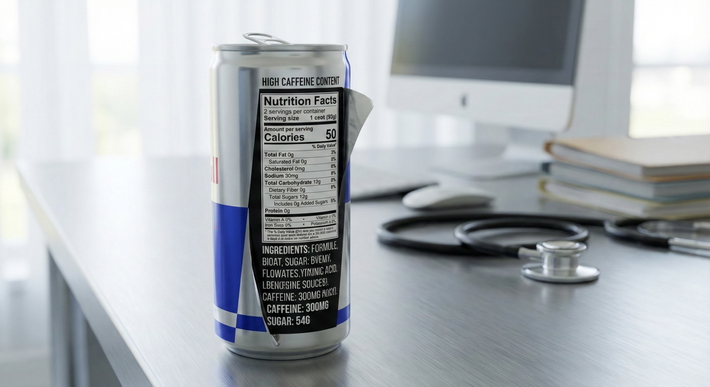
Navigating Night Shift work is one of the toughest adjustments in residency and other 24/7 professions. Whether you’re in emergency medicine, internal medicine, ICU, surgery, nursing, EMS, or hospitality, working when the rest of the world sleeps can quickly erode your Sleep Health, concentration, and mood.
For residents in particular, poor Fatigue Management isn’t just uncomfortable—it can affect clinical judgment, patient safety, and long-term health. The National Sleep Foundation and multiple occupational health studies consistently show that night shift workers are at higher risk of sleep disorders, burnout, depression, and work-related errors.
This guide walks you step-by-step through how to build a realistic, sustainable sleep schedule around Night Shifts. You’ll learn how to work with your Circadian Rhythm (as much as possible), protect your sleep window, and use practical tools—light, naps, nutrition, and boundaries—to stay functional and safe.
Understanding Circadian Rhythm and Night Shift Challenges
How Your Circadian Rhythm Really Works
Your Circadian Rhythm is your body’s 24-hour internal clock. It influences:
- Sleep–wake timing
- Hormone release (melatonin, cortisol)
- Body temperature
- Alertness and reaction time
- Appetite and digestion
Under normal conditions, light exposure in the morning signals your brain that it’s time to be awake and alert, and darkness in the evening triggers melatonin release to promote sleep.
Night Shift work flips that pattern:
- You’re under bright light and working when your body expects darkness and rest.
- You’re trying to sleep when your brain is wired to be awake, with environmental light and noise working against you.
Most people never fully adapt physiologically to permanent night work, especially when shifts rotate or you have days off. That makes an intentional, protective sleep schedule non-negotiable rather than optional.
Why Sleep Health Matters So Much for Night Shifters
For residents and healthcare professionals, the stakes are especially high. Chronic sleep deprivation is linked to:
- Slower reaction times and impaired decision-making
- Increased medical errors and needle-stick injuries
- Mood changes, irritability, and reduced empathy
- Higher risk of hypertension, obesity, diabetes, and cardiovascular disease
- Burnout and mental health concerns
The CDC recommends adults get 7–9 hours of sleep in every 24-hour period. Night Shifters rarely hit that by accident—you need deliberate planning, strong boundaries, and a clear system for Fatigue Management.
Step 1: Know Your Sleep Needs and Night Shift Realities
Determine Your Personal Sleep Requirement
Most adults need 7–9 hours of sleep, but there’s meaningful variation. To clarify your own needs:
- On a stretch of lighter days or vacation, allow yourself a regular sleep opportunity without an alarm.
- Track:
- When you naturally fall asleep
- When you naturally wake
- How rested and alert you feel across the day
If you consistently feel best with 8.5 hours, that’s your realistic target—plan around that, not an idealized 7 hours that leaves you foggy.
For residents: if your call or Night Shift schedule doesn’t realistically allow your ideal sleep duration in a single block, plan split sleep (e.g., one long block + one nap) to approximate your total need.
Map Your Typical Night Shift Pattern
Different programs and jobs use different schedules:
- 3–4 consecutive Night Shifts per week
- Rotating shifts (days → evenings → nights)
- 24-hour calls or night floats
- Short-block night rotations (e.g., 7 nights on, 7 nights off)
Your strategy should match your reality. Before your rotation or schedule block starts, answer:
- How many consecutive nights will I work?
- What are the exact start and end times of each shift?
- How long is my commute?
- Are there post-call requirements (sign-out rounds, notes, teaching)?
From there, you can reverse-engineer an achievable sleep schedule instead of improvising day by day.
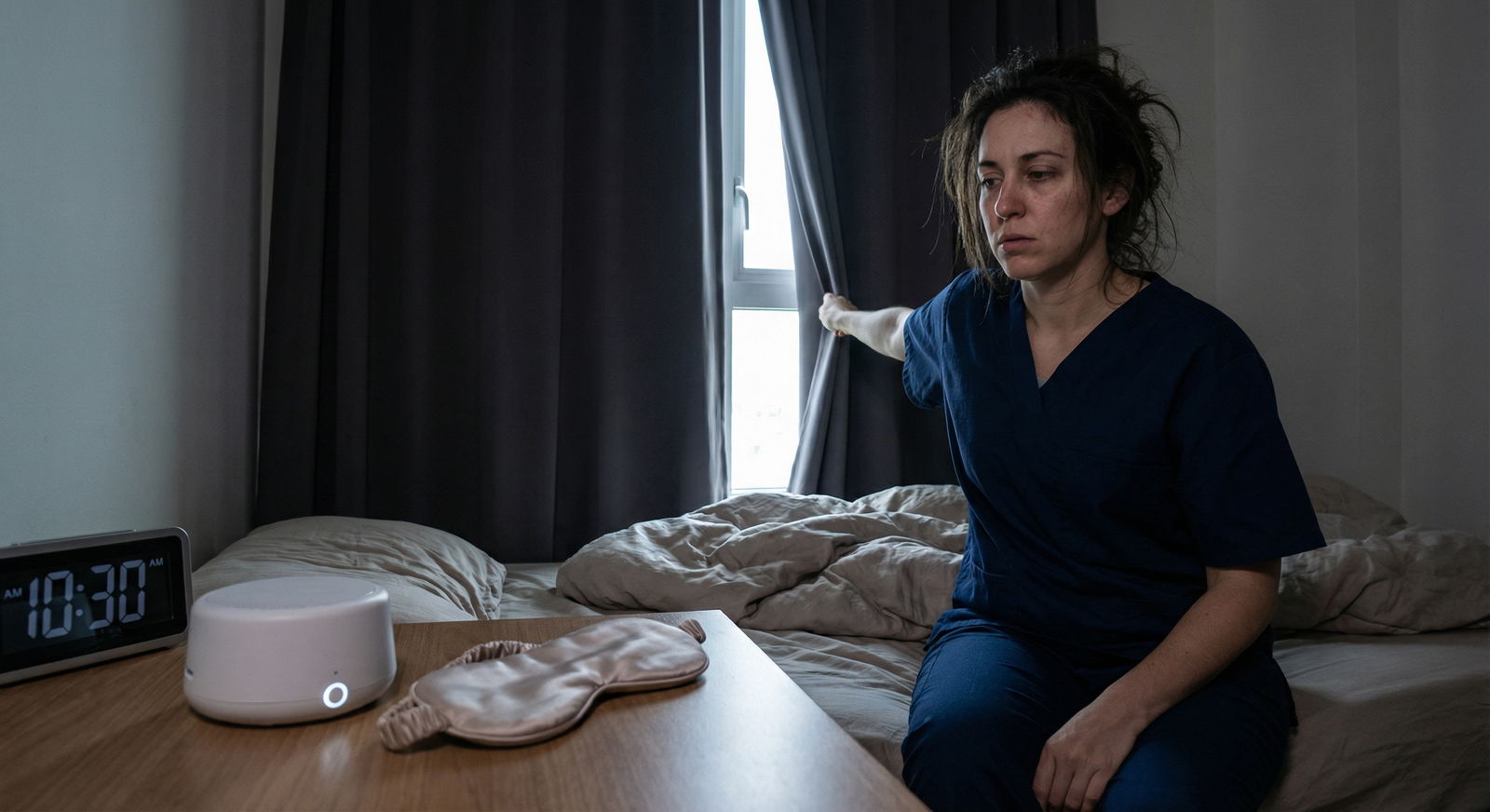
Step 2: Build a Sleep-Inducing Environment for Daytime Rest
Sleep Health during the day depends far more on your environment than most people realize. Your brain expects light = awake, dark = sleep. You must actively override that signal.
Make Your Room a Night Shift Sleep Sanctuary
Aim to transform your bedroom into a “time-neutral” cave that supports sleep regardless of the clock.
Key components:
Darkness
- Install blackout curtains or use blackout window film.
- Use a sleep mask if full room blackout isn’t possible (especially in dorms or shared housing).
- Dim or cover small light sources (clocks, chargers, electronics).
Sound Control
- Wear foam or silicone earplugs to dampen traffic and household noise.
- Use white noise (fan, white noise machine, or app) to mask unpredictable sounds like doors closing, kids, or neighbors.
- If you live with others, put a “Do Not Disturb – Sleeping Daytime Due to Night Shift” sign on your door.
Temperature
- Most adults sleep best at 60–67°F (15–19°C).
- Use a fan, AC, or lighter bedding if your room gets warm midday.
- Avoid heavy, heat-trapping blankets during the day.
Bed Association
- Reserve your bed for sleep and sex only—not charting, scrolling endlessly, or watching long shows.
- This trains your brain to associate bed with sleepiness, not stimulation.
Manage Light Exposure for Circadian Rhythm Support
You can use light as a powerful tool rather than just an enemy:
After night shift, before sleeping:
- Wear sunglasses on your commute home to reduce bright morning light exposure.
- Minimize screen brightness and blue light before bed—use night mode on devices.
Before and during the first half of your shift:
- Get bright light exposure (natural light or bright overhead lights) at the beginning of the shift to signal alertness.
- Some night workers use timed light therapy boxes early in the shift (discuss with an occupational health clinician if considering this).
This intentional light management helps nudge your Circadian Rhythm to support staying awake at night and sleeping during the day—without fully locking you into permanent “vampire mode.”
Step 3: Design a Consistent Night Shift Sleep Schedule
Consistency is your best ally for Fatigue Management. Even imperfect schedules work better when they’re predictable.
Example: Stable Fixed Night Shift Schedule
Shift: 7 PM–7 AM (12 hours)
Commute: 30 minutes each way
Work Days (3–4 nights in a row)
- 5:30 PM – Wake, light meal, caffeine if desired
- 6:30 PM – Arrive, sign in
- 7:00 PM–7:00 AM – Night Shift
- 7:30 AM – Light snack, sunglasses on commute, unwind routine at home
- 8:00 AM–2:00 PM – Main sleep block (6 hours)
- 2:00–3:00 PM – Wake, hydrate, brief walk or light exercise
- 3:00–5:00 PM – Personal tasks, social time, meal prep
- 5:30 PM – Pre-shift meal, low-dose caffeine if needed
If 6 hours isn’t enough for you, add:
- A 90-minute nap from 4:30–6:00 PM (before shift)
or - A 20–30 minute nap during your break around 2–3 AM (if allowed)
Your goal is to reach your personal 7–9 hours total across the 24 hours, even if it’s split.
Example: Transitioning to Days on Off Days
Some residents prefer to partially revert to a daytime schedule on days off to preserve social and family life.
Option: “Compromise Sleep Schedule” After Nights
- After last night shift:
- Sleep from 8:00 AM–12:00 PM (4 hours)
- Force yourself to wake up, get bright light, stay active
- Go to bed at 10–11 PM that night, wake up around 7–8 AM
- On days off:
- Aim for a consistent 11 PM–7 AM sleep schedule
- Before next block of nights:
- Gradually shift sleep later by 1–2 hours each day
- Example: Sleep 1 AM–9 AM → 3 AM–11 AM → 5 AM–1 PM → first night shift
This strategy protects your Circadian Rhythm from being pulled to extremes while still allowing reasonable daytime functioning between rotations.
Protect Your Sleep Window Relentlessly
Once you determine your schedule:
- Treat your main sleep block as non-negotiable clinical time with yourself.
- Do not schedule appointments, errands, or social events during those hours.
- Share your schedule with roommates, partners, family, and co-residents and ask them to support and respect it.
Step 4: Communication, Boundaries, and Social Life
Set Clear Expectations with Household Members
Night Shift Sleep Health often fails because of outside interruptions, not poor willpower.
Consider:
- Posting a visible sleep schedule on your door or fridge.
- Using shared calendars so partners/roommates know when not to vacuum, practice instruments, or invite guests.
- Explaining that your “daytime” is literally your “nighttime”—and waking you repeatedly is like you waking them at 3 AM.
Many residents find it helpful to say:
“I’m asleep from 8 AM to 2 PM. That’s my equivalent of 11 PM–5 AM. Please treat it that way.”
Protect Your Social Connections—Strategically
Total social isolation worsens mood and burnout. Instead of giving up your social life, plan it:
- Use your “evenings” before shift (e.g., 4–6 PM) for short gatherings or calls.
- Prioritize quality over quantity in social plans on post-call and off days.
- Be honest with friends:
“I can meet you for brunch after I wake up at 2 PM, but I need to be headed back by 5 to prep for work.”
Over time, your circle will usually adapt—if you clearly and consistently communicate your needs.
Step 5: Power Naps, Caffeine, and Strategic Alertness
Using Power Naps Wisely
Short, planned naps are one of the most effective tools for Night Shift Fatigue Management when used correctly.
Guidelines:
- Ideal length: 20–30 minutes
- Long enough to boost alertness
- Short enough to avoid deep sleep and severe sleep inertia
- Best timing:
- Before a Night Shift (e.g., 5:00–5:30 PM)
- During a scheduled break in the first half of your shift (around 1–3 AM) if allowed
- Avoid: Long naps (>60 minutes) too close to your main daytime sleep (e.g., 6–8 AM) as they can delay your ability to fall asleep when you get home.
For high-risk tasks (procedures, driving home, complex clinical decisions), a well-timed 20-minute nap can significantly improve reaction time and reduce errors.
Caffeine: Helpful Tool, Not a Crutch
Used thoughtfully, caffeine can support alertness; used poorly, it destroys your ability to sleep.
Best practices:
- Start low and early:
- Have caffeine in the first half of your shift only (e.g., before midnight for a 7 PM–7 AM schedule).
- Cut off caffeine 6–8 hours before planned sleep:
- If you’re going to bed at 8 AM, ideally no caffeine after 1–2 AM.
- Prefer smaller, more frequent doses (e.g., half a cup of coffee every 2–3 hours early in shift) rather than large, single doses or energy drinks.
Red flags:
- Needing heavy caffeine just to function every shift.
- Using caffeine so late that you can’t fall asleep during your scheduled sleep window.
If this is you, reassess your sleep duration and environment; you may be masking severe sleep debt.
Step 6: Pre-Shift and Post-Shift Routines That Support Sleep
Pre-Shift Routine: Stabilize Energy Before the Night
Wake-Up Anchors
- Bright light exposure (window, balcony, short outside walk).
- Hydrate with water or electrolytes.
Movement
- 10–20 minutes of light exercise or stretching to wake your body.
- Avoid heavy, intense workouts right before your shift—they can drain you.
Nutrition
- Have a balanced pre-shift meal:
- Lean protein (chicken, fish, tofu)
- Complex carbs (brown rice, whole grains, vegetables)
- Healthy fats (avocado, nuts, olive oil)
- Skip very heavy, greasy foods that cause sluggishness and reflux.
- Have a balanced pre-shift meal:
Mental Preparation
- Review your shift goals (e.g., tasks to complete, learning objectives).
- A consistent routine reduces stress and preserves mental bandwidth.
Post-Shift Routine: Downshift Before Daytime Sleep
Going straight from an adrenaline-fueled resuscitation to bed usually fails. Build a buffer.
After your shift:
Decompression
- Light snack or small meal—not huge, greasy, or heavy.
- Gentle stretching, a lukewarm shower, or a short calming routine.
Screen and Stimulation Control
- Avoid social media rabbit holes, intense conversations, or urgent emails.
- Keep lights dim and screens on night mode.
Wind-Down Ritual
- 5–10 minutes of:
- Deep breathing (e.g., 4-7-8 breathing)
- Brief journaling to offload intrusive thoughts about the shift
- Light reading (non-medical, non-stimulating content)
- 5–10 minutes of:
This “landing strip” signals to your brain: “The workday is over, you are safe, and it’s time to sleep.”
Step 7: Diet, Exercise, and Long-Term Health on Night Shift
Smart Eating for Night Shifters
Your Circadian Rhythm also affects digestion and metabolism. Eating large, heavy meals at 3 AM can worsen reflux, GI discomfort, and weight gain.
Consider this pattern:
Pre-shift (late afternoon/early evening):
- Largest meal of the 24 hours (balanced: protein + complex carbs + healthy fats).
Mid-shift (around midnight–2 AM):
- Moderate meal or substantial snack: yogurt, nuts, lean protein, vegetables, whole-grain crackers.
Late shift (4–6 AM):
- Light snacks if needed: fruit, small yogurt, handful of nuts—avoid sugar-heavy snacks that cause crashes.
Before bed (7–8 AM):
- Avoid large meals. If hungry, choose a small, easily digestible snack: banana, toast, or a small portion of oatmeal.
Stay consistently hydrated but taper fluid intake in the hour before sleep to reduce middle-of-sleep bathroom trips.
Exercise: Timing Matters
Physical activity supports Sleep Health, mood, and weight regulation, but timing is key:
Best times for most night workers:
- After your post-sleep “morning” (e.g., 3–5 PM before a shift)
- On off days during typical daytime hours
Avoid:
- Intense workouts right before your main sleep (e.g., at 9 AM after a shift). This can make falling asleep harder.
Even short, consistent routines (10–20 minutes of walking, yoga, or bodyweight exercises) improve energy and resilience.
Step 8: When to Seek Professional Help
Even with excellent habits, some Night Shifters develop more serious sleep problems, including:
- Inability to fall asleep during the day despite exhaustion
- Frequent early awakenings, with total sleep under 5–6 hours for weeks
- Severe excessive sleepiness at work despite adequate sleep time
- Loud snoring, choking gasps, or witnessed apneas
- Mood changes, anxiety, or depression related to chronic fatigue
In these situations, consider:
- Discussing with your primary care provider, program leadership, or occupational health
- Evaluation for:
- Circadian Rhythm Sleep–Wake Disorders (like Shift Work Disorder)
- Insomnia
- Obstructive Sleep Apnea
Some clinicians may recommend:
- Timed melatonin taken before daytime sleep (dosing and timing should be personalized).
- Short-term, carefully supervised sleep medications in select cases.
Do not self-prescribe heavy sedatives or off-label medications without professional guidance—they can worsen performance and safety, especially for residents providing patient care.

Frequently Asked Questions About Night Shift Sleep Schedules
1. How many hours of sleep should I realistically aim for as a night shift resident?
Aim for 7–9 total hours of sleep in each 24-hour period, just like day workers. It doesn’t have to be one continuous block—many residents do well with:
- One main block of 5–7 hours after their shift
- Plus a 20–90 minute nap before or during their next shift
If you consistently function well below 7 hours without feeling sleepy or irritable, you might be on the lower end of normal; otherwise, chronic short sleep is likely harming your performance and health.
2. Is it better to stay on a full “night schedule” even on my days off?
It depends on your schedule and life outside work:
- If you have long runs of consecutive Night Shifts and limited daytime obligations, staying mostly on a night schedule between shifts can maintain a stable Circadian Rhythm and reduce jet-lag-like symptoms.
- If you have few consecutive nights and important daytime responsibilities (family, clinics, conferences), a compromise schedule—partly shifting back toward daytime sleep–wake times—may work better.
Experiment with both approaches and track how you feel in a simple log over 2–3 rotations.
3. Are sleep supplements like melatonin safe and useful for Night Shift workers?
Melatonin can help some Night Shifters fall asleep, but:
- Optimal timing is typically 30–90 minutes before your intended sleep time.
- Doses are often lower than people expect (e.g., 0.5–3 mg rather than very high doses).
- Effects vary significantly between individuals.
You should discuss melatonin with your healthcare provider, especially if you have other medical conditions or take medications. Avoid adding multiple supplements at once; start with one and observe its effect.
4. How can I manage driving home safely after a long Night Shift?
Drowsy driving is a major safety risk after Night Shifts. To reduce danger:
- Take a 20-minute nap in a safe, quiet spot before driving if you feel very sleepy.
- Use sunglasses on the way home to minimize bright light stimulation that may confuse your Circadian Rhythm.
- Avoid heavy meals and additional sedating medications before the drive.
- If you feel like you are nodding off, pull over immediately—it’s safer to nap briefly than risk a crash.
- In some programs, consider carpooling with colleagues or using rideshare services after particularly intense nights.
5. What if my schedule rotates frequently and I can’t maintain a stable pattern?
Rotating shifts are the hardest on Sleep Health. In that case:
- Focus on core principles: consistent pre- and post-shift rituals, a dark, cool, quiet room, and prioritizing sleep as non-negotiable.
- Use gradual shift adjustments (1–2 hours per day) when moving from days → nights or nights → days.
- Consider strategic naps and light exposure to help your Circadian Rhythm adapt more quickly.
- Keep a simple sleep log across a few weeks to see what patterns help you feel best.
- Advocate, when possible, for schedules that rotate forward (days → evenings → nights) rather than backward, which is easier physiologically.
Mastering a Night Shift Sleep Schedule is an evolving process, not a one-time fix. As you move through residency or other night-based careers, revisit your routine regularly. Adjust based on your rotation, your body’s feedback, and your life outside the hospital.
With a protective sleep environment, structured routines, thoughtful use of naps and caffeine, and clear boundaries, you can significantly improve your Sleep Health, reduce fatigue, and protect both your patients and your long-term well-being—even when your workday starts at sunset.