
The Ultimate Night Shift Survival Kit for Healthcare Professionals
Night Shift work is a reality for most medical residents, nurses, and other healthcare professionals. It can be rewarding, but it also challenges every dimension of your life: sleep, mood, cognition, relationships, and long‑term health. A well-planned Night Shift survival kit won’t magically erase the circadian mismatch, but it can dramatically improve your Self-Care, Productivity, and overall Well-Being.
This enhanced guide goes beyond a simple packing list. You’ll learn what to include in your night shift survival kit, why each item matters physiologically and practically, and how to use it strategically to protect your health and sustain high-quality patient care.
Understanding Night Shift Realities in Healthcare
Before building your kit, it helps to understand what you’re actually up against. Night Shift challenges aren’t just about feeling tired; they’re about running a biological system backward.
How Night Shifts Disrupt Your Body and Brain
Disrupted Sleep-Wake Rhythms
- Your circadian clock is wired for sleep at night and wakefulness during the day.
- Night work forces you to override this rhythm, making daytime sleep light, fragmented, and shorter.
- Chronic circadian disruption is linked to increased risk of obesity, diabetes, cardiovascular disease, and mood disorders.
Cognitive Fatigue and Clinical Performance
- Reaction time, working memory, and decision-making decline in the early morning hours (around 3–5 a.m.).
- For healthcare professionals, this is precisely when critical decisions, rapid calculations, and fine motor tasks (like procedures) may still be required.
- Fatigue also impairs insight into your own level of impairment—dangerous in clinical contexts.
Diet and Metabolic Stress
- Cafeterias often close early; vending machines and fast food become the default.
- Late-night high-sugar, high-fat foods worsen postprandial fatigue and glycemic swings.
- Nighttime eating is metabolically “expensive”—your body processes nutrients differently at night, which can contribute to weight gain and insulin resistance.
Loneliness, Stress, and Emotional Load
- Fewer staff on-site can mean less support, more responsibility, and increased stress.
- Social isolation from friends and family on “normal” schedules can compound burnout.
- Night Shift work is often where you see higher acuity with fewer resources, amplifying emotional exhaustion.
Safety and Health Risks
- Driving home post-shift carries real risk when you’re severely sleep-deprived.
- Long-term Night Shift work has been associated in studies with higher risks of cardiovascular disease and certain cancers (likely related to melatonin suppression and circadian misalignment).
A thoughtful Night Shift Survival Kit is not just about comfort—it is a targeted Self-Care tool to protect your Well-Being and maintain safe Productivity in a high-stakes environment.
Building Your Night Shift Survival Kit: Core Essentials
Think of your kit as a modular system: nutrition, hydration, physical comfort, sleep optimization, and mental health. Packing it intentionally will make your nights more sustainable.
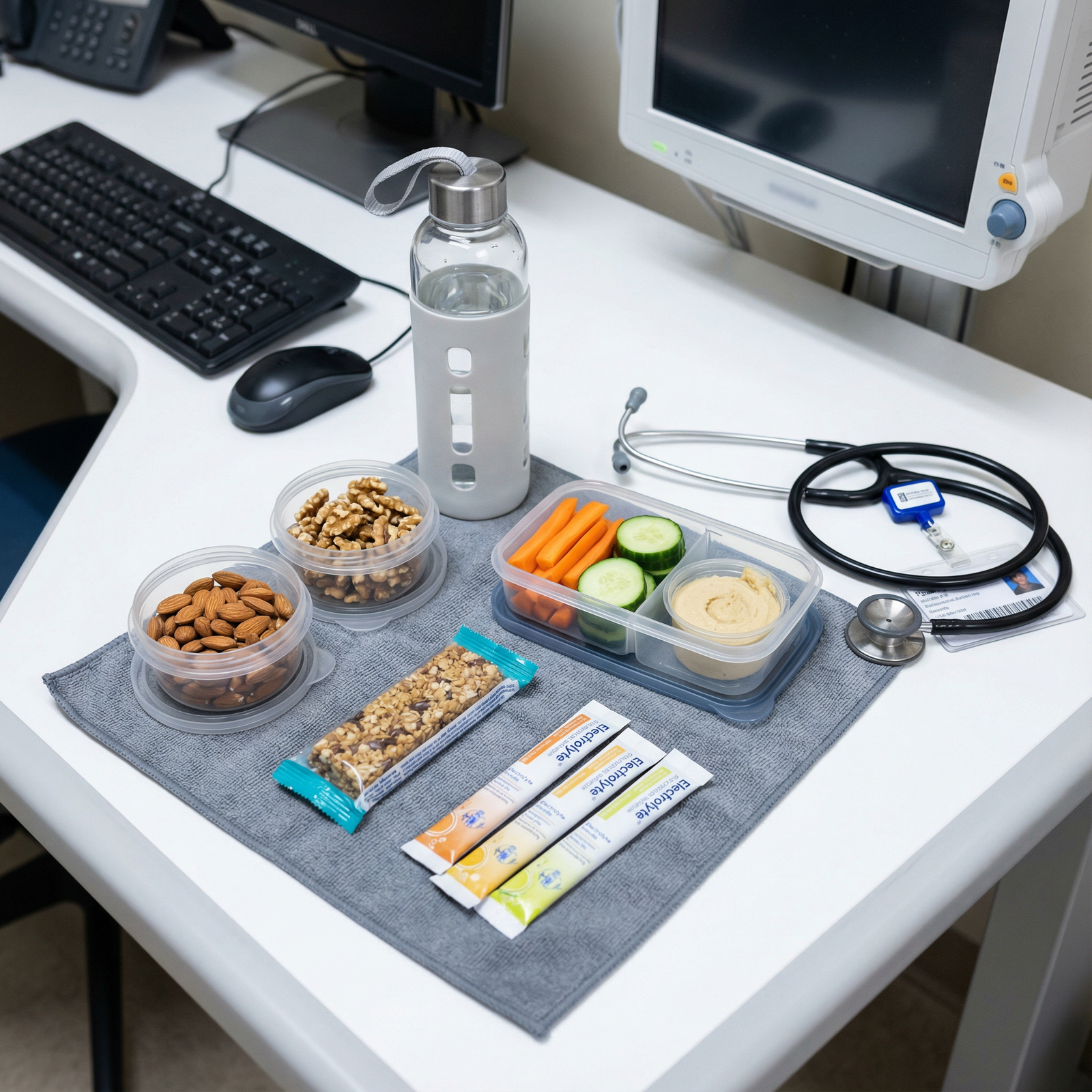
1. Smart Nutrition: Quality Snacks That Actually Help
What you eat overnight has a direct impact on how you feel and function. Your kit should prioritize stable energy, not short bursts followed by crashes.
Goals for night shift snacking:
- Stabilize blood glucose
- Avoid heavy post-meal sleepiness
- Support sustained focus
High-value snack ideas:
Protein-Rich Snacks
- Greek yogurt or skyr cups (watch added sugar)
- String cheese or cheese sticks
- Hard-boiled eggs (pre-peeled at home)
- Natural nut butters (single-serve packets)
Healthy Fats and Fiber
- Nuts and Seeds: almonds, walnuts, cashews, pumpkin or sunflower seeds
- Homemade trail mix: unsalted nuts + small portion of dried fruit + a few dark chocolate chips
Complex Carbohydrates
- Whole-grain crackers or rice cakes with hummus
- Overnight oats in a small jar
- Apple or banana with peanut butter
Fresh, Crunchy Options
- Pre-cut veggies (carrots, cucumber, bell peppers, snap peas)
- Hummus, guacamole, or tzatziki in individual cups
Practical tips:
- Pre-portion snacks into small containers to avoid mindless eating at 3 a.m.
- Avoid large, heavy meals between midnight and 5 a.m. when possible; aim for smaller, more frequent snacks.
- Keep one “emergency” non-perishable snack (like a low-sugar granola bar) in your locker or bag.
2. Hydration Strategy: More Than Just a Water Bottle
Dehydration worsens fatigue, headaches, and concentration problems—yet many clinicians unintentionally go hours without drinking.
Hydration essentials:
Reusable Water Bottle
- 16–32 oz insulated bottle you can refill throughout the shift.
- Keep it visible at your workstation or in your pocket area as a visual cue to drink.
Electrolyte Support
- Low-sugar electrolyte tablets or powders can help during long or particularly sweaty shifts.
- Use especially if you drink a lot of coffee (which can contribute to diuresis) or work in warm environments (e.g., OR with gowns and lead).
Caffeine: Use Strategically, Not Constantly
- Front-load caffeine early in your shift.
- Avoid caffeine in the last 4–6 hours before your planned sleep block to protect daytime sleep quality.
- Consider “caffeine naps”: a small coffee followed by a 15–20 minute nap early in the night, if your setting and duties allow.
Physical Comfort and Protection: Gear That Saves Your Body
You can’t perform well if you’re aching, blistered, or freezing. Your kit should include items that protect your musculoskeletal health and physical comfort.
3. Supportive Footwear and Leg Care
Long nights on hard floors compound over time, contributing to foot pain, knee issues, and back strain.
Night Shift footwear essentials:
Comfortable, Supportive Shoes
- Prioritize arch support, cushioning, and a wide enough toe box.
- Many clinicians favor brands like Dansko, Alegria, ASICS, Brooks, Hoka, or Skechers—but fit is more important than brand.
- Reserve one pair specifically for work to avoid tracking contaminants home.
Insoles and Compression
- Supportive insoles or orthotics for your arch type can reduce fatigue.
- Compression socks can help with venous return, leg swelling, and perceived fatigue, especially on successive Night Shifts.
Pro tip: Replace shoes regularly (often yearly or even sooner if heavily used). Worn-out soles contribute significantly to chronic pain.
4. Personal Care and Hygiene Boosters
Small Self-Care rituals during Night Shift can reset your mood and combat the feeling of being “run down.”
Pack a compact personal care pouch with:
- Dry Shampoo
- Useful during back-to-back shifts or post-call when there’s no time for a full shower.
- Face Wipes or Micellar Wipes
- Quickly remove sweat, oil, or mask irritation.
- Moisturizer and Lip Balm
- Air-conditioned units and frequent handwashing dry out skin.
- Consider a travel-sized hand cream with barrier repair ingredients.
- Spare Mask and Gloves (if not always available)
- Having your own stash can be a lifesaver on busy units.
Add optional “comfort” extras:
- Travel-sized toothpaste and toothbrush
- Deodorant
- Hair ties, headbands, or clips
- Small pack of tissues
These small items can make you feel human again halfway through a demanding Night Shift.
Protecting Your Sleep: Tools for Recovery and Circadian Health
Recovery time is when your body repairs, consolidates memory, and recalibrates. If your sleep is always poor, no Night Shift survival kit can truly compensate.
5. Sleep Aids That Actually Support Rest
Your post-shift environment matters as much as how tired you feel.
Environmental sleep tools:
Eye Mask
- Choose a comfortable, contoured mask that fully blocks light without pressing on your eyes.
- Especially helpful if you sleep after sunrise or in a bright neighborhood.
Earplugs or White Noise
- Foam or silicone earplugs can reduce daytime noise from traffic, construction, or roommates.
- Alternatively, use a white noise app or machine to mask erratic daytime sounds.
Blackout Curtains (Home Setup)
- Not in your bag, but critical for ongoing Night Shift rotations.
- Tape or well-fitted curtains that block side light leaks can significantly improve daytime sleep duration.
Optional relaxing aids:
- Essential Oils (Lavender, Chamomile)
- Use a drop on your pillow or a diffuser as part of a consistent bedtime routine.
- Weighted Blanket
- Some find it calming and helpful for anxiety and insomnia (consider heat and personal preference).
6. Light Management: Light Therapy and Light Avoidance
Light is the main cue for your circadian clock. Using it intentionally can help you feel more alert on shift and sleep better off-shift.
At the start of your shift:
- Use a Light Therapy Lamp (10,000 lux, UV-filtered) for 20–30 minutes near the beginning of your night if feasible.
- Helps signal “daytime” to your brain and can improve alertness and mood.
- Position the lamp at an angle in your peripheral vision—not directly staring at it.
At the end of your shift:
- Wear blue-light blocking glasses or dark sunglasses when leaving the hospital, especially in bright morning sun.
- This reduces early-morning light exposure that would otherwise tell your brain to “wake up” right before you try to sleep.
Important: If you’re pregnant, have bipolar disorder, or certain eye conditions, discuss light therapy with a clinician before starting.
Mental Focus, Productivity, and Emotional Well-Being
Night Shifts challenge not just your physical stamina but your executive function and emotional resilience. Your survival kit should include tools for organization, downtime, and mental health protection.
7. Productivity Tools for Night Shift Efficiency
Working when your brain wants to sleep means you need systems to catch what your tired mind might drop.
Planner and Task Management:
- Pocket Notebook or Planner
- Jot down tasks, handoff items, to-dos, and reminders in one place.
- Use a consistent format (e.g., checklist per patient) so you’re not relying on memory at 4 a.m.
- Digital Apps
- Secure note and task apps (within HIPAA compliance and local policies) to capture tasks, dictations, or follow-ups.
- Calendar reminders for time-sensitive interventions while on call.
Cognitive support strategies:
- Break large tasks into micro-tasks.
- Use timed “bursts” (e.g., 20–30 minutes of focused work, then a 2–3 minute stretch).
- When tired, double-check high-risk tasks (med dosing, orders, consents) and invite a second pair of eyes if possible.
8. Entertainment and Healthy Distraction for Down Times
Not every Night Shift is chaos. Some nights are long stretches of quiet punctuated by brief, intense events. Use downtimes intentionally.
Bring low-effort, low-stimulation entertainment:
- E-Reader or Tablet
- Pre-load with both light reading (fiction, non-medical content) and high-yield educational material for when you’re alert enough.
- Podcasts and Audiobooks
- Ideal for brief breaks or tasks that don’t need full cognitive engagement.
- Mix medical podcasts with non-medical topics you enjoy to preserve a sense of identity beyond work.
- Music Playlists
- One energizing playlist for early in the night.
- One calmer playlist for later hours when you need focus without overstimulation.
Important: Always prioritize patient care. Entertainment is for genuine downtime or breaks, and should be compliant with your institution’s policies.
9. Emotional Self-Care and Stress Management
Night Shift can magnify feelings of isolation and stress. Consider adding a few items specifically for emotional Well-Being:
- Small Journal
- Use a 3–5 minute “decompression” entry during or immediately after shift:
- One challenging moment
- One thing you learned
- One thing that went well or you’re grateful for
- Use a 3–5 minute “decompression” entry during or immediately after shift:
- Grounding Items
- A small token (bracelet, coin, or photo) that reminds you of your values or support system.
- Breathing or Meditation App
- Short guided exercises (2–5 minutes) you can do in a call room or break space to reset your nervous system.
Safety and Contingencies: Your Emergency Mini-Kit
Healthcare work is unpredictable; your Night Shift Survival Kit should anticipate minor emergencies—both medical and practical.
10. Medical and Comfort Emergencies
Include a small, clearly labeled pouch with:
Over-the-Counter Medications
- Pain relievers (ibuprofen, acetaminophen) for sudden headaches or cramps
- Antacids or chewable tablets for reflux after rushed meals
- Antihistamine if you have known allergies (as tolerated and safe for you)
Minor First Aid Supplies
- Adhesive bandages for nicks and blisters
- Antiseptic wipes
- A few alcohol swabs
11. Wardrobe Fixes and Practical Extras
Because Night Shift tends to be when everything randomly breaks:
- Safety Pins and Mini Sewing Kit
- Quick fixes for torn scrubs, loose buttons, or broken pockets.
- Medical Tape
- Doubles as a fix for name tags, badge holders, and minor gear issues.
- Extra Pen and Permanent Marker
- Pens vanish; bring a backup.
- Phone Charger / Power Bank
- A dead phone is a safety and communication issue on call.
These items are small, but they save time, stress, and professionalism when something goes wrong at 2 a.m.

Putting It All Together: How to Organize Your Night Shift Survival Kit
Choose the Right Bag or System
- Small Backpack or Tote
- Enough compartments for food, personal care, and electronics.
- Easy to wipe down and keep separate from patient care areas.
- Modular Pouches
- One for food and hydration
- One for personal care and sleep aids
- One for emergency supplies and chargers
Pre-Shift Routine: Prepare, Don’t Scramble
- Pack your bag the afternoon or evening before.
- Pre-portion snacks and refill your water bottle.
- Check that your ID, keys, and essentials are all in one go-to pocket.
Post-Shift Routine: Reset and Recover
- When you get home, do a quick 2-minute reset:
- Discard trash from your bag.
- Put food containers in the sink or dishwasher.
- Recharge devices.
- Set out items you’ll need next shift.
- This tiny system reduces cognitive load when you’re already exhausted.
Frequently Asked Questions About Night Shift Survival and Well-Being
1. How can I stay alert and productive during the most difficult hours of the night?
The toughest period is usually between 3–5 a.m. Strategies to maintain Productivity and safety include:
- Use short, active breaks: stand, stretch, walk a short loop around the unit every 1–2 hours if possible.
- Eat light, balanced snacks instead of large meals during this window.
- Stay hydrated, sipping water regularly.
- Use bright, indirect light in your workspace if allowed.
- When doing high-stakes tasks (med calculations, orders, consents), consciously slow down and double-check your work.
If you feel dangerously drowsy, speak up. Ask a colleague to cross-check key decisions, and if feasible, take a brief restorative break.
2. How should I adjust my sleep schedule on days off from Night Shift?
There are two common strategies, and the right one depends on how many consecutive Night Shifts you’re working:
For short Night Shift stretches (1–2 nights):
- Many prefer a “partial adjustment”: stay up later than usual and sleep later, but don’t flip fully.
- After the last Night Shift, take a short nap (1.5–3 hours), wake up in the afternoon, then go to bed closer to your normal nighttime schedule.
For longer stretches (3+ nights):
- Shift your sleep block closer to daytime (e.g., 8 a.m.–3 p.m.) consistently.
- Use blackout curtains, earplugs, and eye masks to protect that sleep.
- Keep a similar schedule on days off when possible, or adjust gradually by 1–2 hours per day.
Consistency and sleep quality matter more than forcing a perfect 8-hour chunk.
3. Are there specific snacks that are best for Night Shift Well-Being?
Yes. Aim for snacks that combine protein + fiber + healthy fats to support stable energy:
- Greek yogurt with seeds or nuts
- Apple slices with peanut or almond butter
- Carrot sticks and bell peppers with hummus
- Handful of mixed nuts and a small piece of dark chocolate
- Whole-grain crackers with cheese or tuna
Try to limit:
- Very sugary snacks (candy, soda, pastry) that cause spikes and crashes.
- Very heavy, greasy meals that increase sleepiness and reflux.
4. Is caffeine safe to rely on during Night Shifts?
Caffeine can be helpful, but the goal is targeted use, not continuous dependence:
- Limit total intake to moderate levels (commonly suggested maximum is around 400 mg/day for healthy adults, but individual tolerance varies).
- Use caffeine primarily in the first half of your shift.
- Avoid caffeine for at least 4–6 hours before your planned sleep time to prevent insomnia.
- Consider smaller, more frequent doses (e.g., half a cup of coffee) instead of large, infrequent jolts.
If you notice palpitations, anxiety, or very fragmented sleep, reassess your caffeine strategy or discuss it with a healthcare provider.
5. What are some signs that Night Shift work is harming my health, and what should I do?
Warning signs that your Night Shift schedule is eroding your Well-Being include:
- Persistent difficulty sleeping despite good sleep hygiene
- Mood changes (irritability, anxiety, low mood) that extend beyond shifts
- Frequent headaches, GI symptoms, or new/worsening chronic conditions
- Safety issues: near-miss car accidents after shifts, repeated serious errors at work
- Feeling emotionally numb, detached, or burned out
If you’re experiencing these:
- Talk with a trusted supervisor, chief resident, or mentor about modifying your schedule or workload.
- Consult your primary care clinician or a mental health professional familiar with shift work.
- Prioritize foundational Self-Care: sleep protection, physical activity on off days, and social connection.
By proactively building a Night Shift Survival Kit and using it intentionally, you’re not just making nights more bearable—you’re investing in sustainable, high-quality patient care and your own long-term health. Night Shift work will always be challenging, but with the right tools, routines, and boundaries, it doesn’t have to cost you your Well-Being.