
Why Night Shift Support Networks Matter for Residents and Night Staff
Working nights during residency or in any clinical role is more than just flipping your schedule. It affects your sleep, mood, relationships, and long-term health. While the night shift can offer quieter floors, more autonomy, and unique learning opportunities, it can also magnify fatigue, isolation, and stress.
For residents and other healthcare professionals, a strong workplace community on nights is not a luxury—it’s a core survival skill. Proactively building a Night Shift Support network buffers stress, protects your emotional well-being, and accelerates your professional growth.
This enhanced guide will walk you through:
- Why support networks are so important for night shift workers
- How to find and connect with fellow night shifters in and beyond your hospital
- Practical, evidence-informed coping strategies you can share as a group
- Ways to strengthen and sustain your night shift community over time
Whether you’re an intern just starting nights or a seasoned resident leading cross-cover, you can design a network that turns “surviving nights” into “growing through nights.”
Core Benefits of a Night Shift Support Network
Emotional Well-Being: Counteracting Isolation and Burnout
Night work often pulls you out of sync with family, friends, and daytime colleagues. You may:
- Miss social events and family dinners
- Sleep while your support system is awake
- Feel that no one truly understands what nights are like
A dedicated Night Shift Support network plugs this gap by giving you:
1. A shared language and lived experience
You’re surrounded by people who know what “post-call fog,” “3 a.m. admissions,” or “the witching hour” mean in practice. You don’t have to over-explain; you can just be honest.
2. A safe space to vent and debrief
After difficult codes, challenging cross-cover calls, or emotionally heavy cases, debriefing with peers reduces the risk of emotional overload and compassion fatigue. Even a 5-minute hallway conversation can be grounding.
3. Protection against burnout
Research on healthcare workers shows that strong peer support correlates with reduced burnout, higher job satisfaction, and better retention. Shared coping strategies, mutual validation, and encouragement make it easier to persevere on tough rotations.
4. Normalizing the struggle
Hearing others say, “Yes, I’m exhausted too” or “I also find these shifts emotionally draining” helps you realize that struggle is part of the role, not a personal failure.
Professional Growth: Learning Faster and Supporting Each Other’s Development
Your night shift peers are not just your emotional support—they’re also catalysts for your Professional Growth.
1. Real-time clinical learning
Nights often bring high-acuity cases and fewer layers of supervision. Peer support networks help you:
- Run quick case discussions between admissions
- Share diagnostic approaches (“How do you work up chest pain at 2 a.m. with limited consults?”)
- Exchange call scripts for communicating with attendings and consultants
2. Practical, shift-specific tips
Your network can crowdsource:
- Strategies to triage cross-cover pages efficiently
- Templates for handoffs and sign-outs
- Quick reference lists for common night emergencies (e.g., sepsis bundle, chest pain orders, stroke alerts)
3. Mentorship and role modeling
Senior night residents or nurses can informally mentor juniors, offering:
- Time-management hacks for managing multiple tasks overnight
- Guidance on when to escalate concerns
- Career advice and perspective on how nights fit into long-term training
4. Skill-building beyond clinical care
Working nights is also leadership training. In your Night Shift Support circle, you practice:
- Team communication under stress
- Conflict resolution around workload or responsibilities
- Boundary-setting around rest, breaks, and self-care
Over time, this peer network becomes a powerful environment for collaborative learning and professional identity formation.
Shared Resources: Pooling Tools to Make Nights Sustainable
When you connect with other night shift workers, you expand your toolkit for both personal and professional survival.
1. Sleep and circadian rhythm strategies
Your group can swap:
- Pre- and post-shift sleep routines that actually work
- Blackout curtain, eye mask, and white-noise device recommendations
- Caffeine timing strategies to avoid post-shift insomnia
2. Nutrition and hydration hacks
Instead of relying on vending machines and leftover pizza, your network can:
- Circulate a shared “Night Shift Survival Cookbook” with simple, reheatable recipes
- Plan group grocery runs or meal-prep parties on days off
- Share tips for staying hydrated and avoiding energy crashes at 4 a.m.
3. Wellness and mental health resources
Members can share:
- Apps for guided mindfulness or brief breathing exercises between pages
- Information about employee assistance programs (EAP), counseling, or peer support services
- Recommendations for short, realistic exercise routines that fit post-night-shift schedules
4. Policy and advocacy insights
Navigating overnight staffing policies, float systems, or scheduling practices is easier with collective knowledge:
- Learn which wellness or schedule accommodations exist at your institution
- Coordinate feedback to program leadership on night float or call structures
- Identify champions (chief residents, attendings, nursing leadership) who support night shift well-being
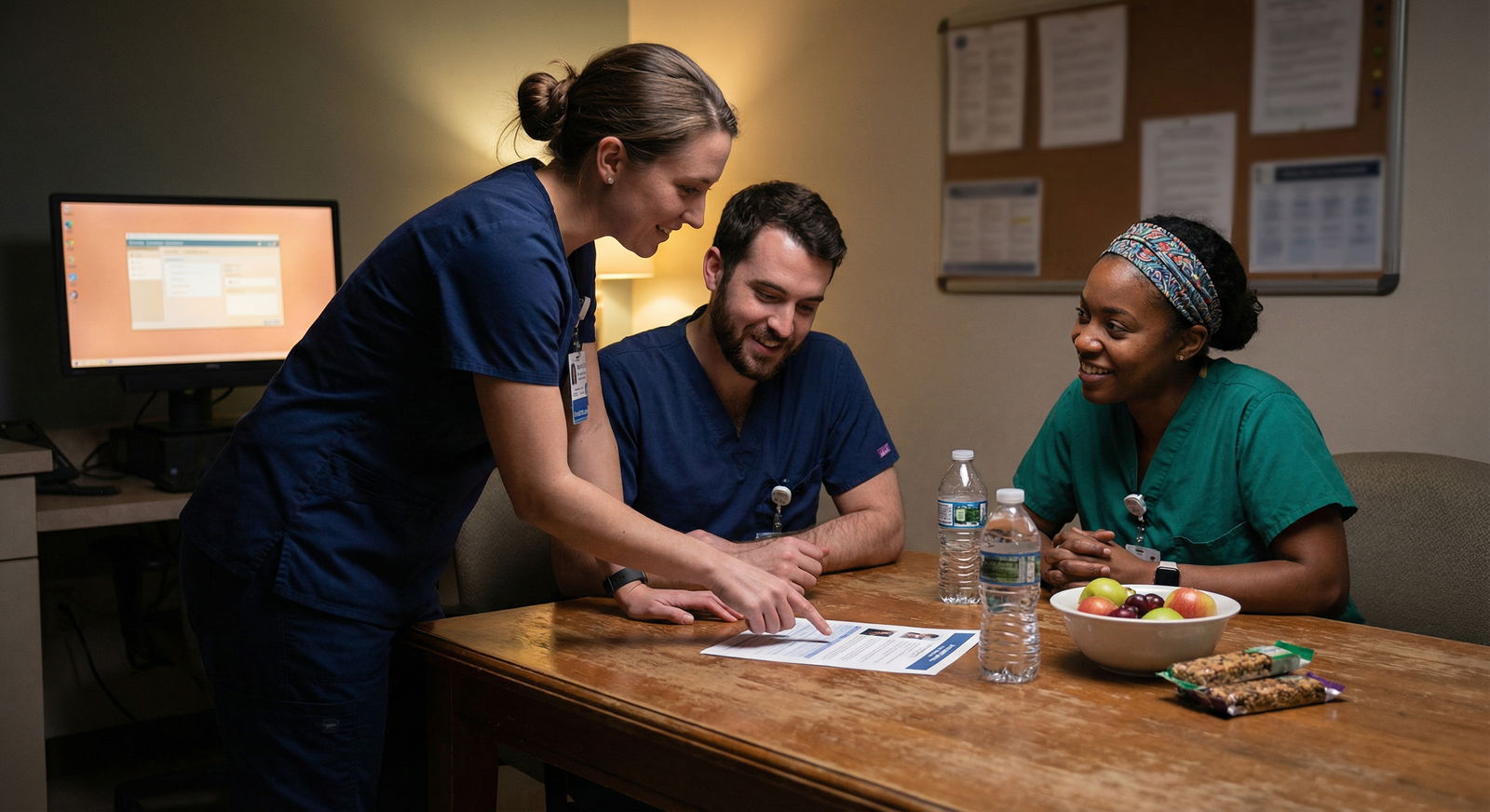
How to Find and Connect with Fellow Night Shift Workers
Using Social Media and Online Communities
Digital spaces can compensate for off-hour schedules and help you find a wider Workplace Community.
1. Specialty- or role-specific groups
Look for:
- Facebook groups for residents or nurses working nights in your specialty
- Reddit communities like r/NightShift, r/Residency, or specialty-specific subs
- Discord or Slack communities for healthcare professionals
Use search terms such as:
- “Night shift support nurses”
- “Resident night float survival”
- “Overnight healthcare workers community”
2. Ground rules for smarter, safer online engagement
- Avoid sharing protected health information (PHI) or identifiable case details
- Respect your institution’s social media policies
- Use these groups for general coping strategies, not case-specific decisions
3. Use online spaces to feel less alone, not more overwhelmed
Be selective: if a group feels constantly negative or derailing, mute or leave it. Prioritize communities that balance realism and practical support.
Leveraging Workplace Resources and Hospital Infrastructure
Your hospital or training program may already have underused structures that can become pillars of Night Shift Support.
1. HR, GME, and wellness offices
Ask about:
- Existing peer support or wellness programs for residents and night staff
- Debriefing programs after critical incidents (e.g., Code Lavender, Schwartz Rounds adapted for nights)
- Mental health and counseling services with flexible scheduling
2. Night shift–specific initiatives
Some institutions offer:
- “Night huddles” or check-ins at the start of shift
- On-call rooms with improved sleep environments for pre/post-shift rest
- Night-only educational sessions or mini case conferences
If these don’t exist, your group can propose small, low-cost innovations: a 10-minute check-in at the start of each night, or a monthly night-shift debrief led by a chief resident.
Attending (and Sometimes Creating) Social Connections
Even with an upside-down schedule, you can still build real relationships.
1. Show up when you can—even briefly
When your program or unit organizes events:
- Attend pre-shift or post-shift parts of daytime gatherings
- Coordinate with co-residents so someone from the night team is always represented
- Advocate for some events to be scheduled at times that night staff can attend (e.g., late afternoon rather than early morning)
2. Build micro-social rituals on shift
Small, predictable rituals create community:
- A shared “tea time” at 2 a.m.
- A weekly “10-minute wins” round where each person shares something that went well
- A group check-out ritual before sign-out
These don’t have to be elaborate. Consistency is more important than length.
Starting Your Own Group: Messaging Channels and Forums
If nothing exists yet, take the initiative—on a small, manageable scale.
1. Choose a platform that fits your team
Common options:
- WhatsApp or Signal group chat for your night team or cohort
- Slack channel (e.g., #night-shift-support) within your residency or department
- A private group on Instagram or Facebook for sharing resources and encouragement
2. Set a clear, simple purpose
Example group descriptions:
- “Night Float Peer Support – sharing tips, venting, and helping each other survive nights.”
- “ICU Night Crew – communication, coverage, and care for each other.”
3. Establish light boundaries
- No shaming or blaming
- Respect confidentiality and privacy
- Clinical questions welcome, but final decisions stay with responsible clinicians and supervisors
Over time, this digital hub becomes the backbone of your Workplace Community on nights.
Coping Strategies You Can Share Through Your Support Network
A strong night shift network doesn’t just talk about how hard nights are; it actively spreads effective Coping Strategies and “night hacks” that make the schedule more sustainable.
Managing Sleep and Fatigue Together
1. Collaborative sleep planning
Share and compare:
- Your pre-night routines (e.g., pre-shift nap, light-blocking techniques)
- Your off-day strategies (staying on a partial night schedule vs. flipping back)
- What helps with sleep inertia after waking for nights (cold shower, light exposure, caffeine timing)
2. Accountability for sleep hygiene
Use your group to:
- Remind each other to log off screens before planned sleep
- Celebrate when someone successfully protects their sleep window (“I finally got 7 hours!”)
- Normalize declining daytime social invitations on post-call days
Physical Health and Energy Maintenance
1. Movement and exercise
Working out as a night shifter is tough; use the network to:
- Share short, realistic workouts (10–20 minutes) that fit between shifts or before sleep
- Coordinate low-key group walks before or after nights
- Recommend home workout videos that don’t require a gym trip
2. Nutrition and hydration as a team sport
Examples:
- Rotate who brings a healthier snack for the group one night per week
- Share 5-minute meal prep ideas (e.g., overnight oats, pre-cut veggies with hummus, protein-rich freezer meals)
- Keep a communal water-tracking challenge for the week
These small initiatives combat the cycle of sugar, caffeine, and crash that often defines night shifts.
Emotional and Mental Health Coping Strategies
Your network can adopt group-level practices that support Emotional Well-Being:
1. Quick debriefs after critical events
Agree that after codes, deaths, or intense situations, you will:
- Spend 5–10 minutes together to process what happened
- Validate each others’ feelings (“That was a really hard case for all of us.”)
- Identify learning points gently, without self-criticism
2. Micro-rest and mindfulness
Share:
- Apps or short audio clips for 2–3 minute breathing exercises
- Simple grounding techniques (5-4-3-2-1 senses exercise) for when anxiety spikes
- Brief “pause moments” before entering a difficult room
3. Normalize asking for help
Make it explicit in your group culture that:
- Reaching out for mental health support is an act of strength
- Therapy, peer support lines, and EAP are tools for high-performing clinicians
- No one should navigate persistent distress, PTSD symptoms, or depression alone
Accountability Partners and Long-Term Resilience
Pairing up or forming small pods within your night shift network magnifies its impact.
1. Wellness buddies
Examples of buddy activities:
- Check in weekly about sleep, nutrition, and mood
- Commit to one shared wellness goal (“We’ll both walk 10 minutes after shift three days this week.”)
- Share progress and setbacks honestly without judgment
2. Career and Professional Growth buddies
Support each other in:
- Tracking procedures, key learning cases, and feedback from nights
- Preparing for in-training exams or board prep during lighter night rotations
- Reflecting on professional identity growth (“What leadership skills did I use this week?”)
These layers of accountability transform nights from a blur into a time of intentional growth.
Strengthening and Sustaining Your Night Shift Community
Building a network is step one; keeping it alive is equally important.
Regular Check-Ins and Group Traditions
1. Schedule predictable touchpoints
Options:
- Weekly 15–20 minute check-in on the final night of a block
- Monthly virtual coffee (or “virtual nightcap”) on a post-call afternoon
- Quarterly in-person meetups timed so nights can attend (e.g., late brunch)
Keep the structure simple: a quick go-around to share highs, lows, and one small win.
2. Create low-effort, meaningful traditions
Examples:
- “Night Shift Shoutout” where one person highlights a colleague’s kindness or clinical excellence
- A simple “gratitude round” at the end of shift where each person names one thing that helped them get through the night
- A shared playlist that everyone contributes songs to for early shift energy or post-shift decompression
Recognition, Appreciation, and Positive Reinforcement
Praise and recognition fuel morale when everyone is tired.
1. Informal recognition within the group
- Highlight small but important acts (covering a page so someone could eat, helping with a tough procedure)
- Share “win stories” on the messaging channel: a well-managed code, a meaningful patient interaction, a system fix someone initiated
2. Formal or semi-formal acknowledgement
Your network can:
- Nominate night colleagues for departmental or institutional awards
- Ask leadership to include night-specific shoutouts in newsletters or town halls
- Start a simple “Night Shift MVP” tradition—rotating recognition that focuses on teamwork and support, not just productivity
3. Focus on strengths, not just deficits
Maintain a strengths-based culture:
- Recognize adaptability, calm under pressure, compassion, and reliability
- Celebrate progress toward healthier habits, even if imperfect
These efforts reinforce a positive identity: you’re not just “the night crew”—you’re a resilient, skillful Workplace Community.
FAQs: Night Shift Support, Coping, and Professional Growth
1. How can I start building a Night Shift Support network if I’m new to nights or to the program?
Begin small and local:
- Introduce yourself to your co-residents and night nurses; learn names and roles
- Start a simple group chat for your night team for coordination and check-ins
- Attend any existing wellness or social events, even briefly, and mention your interest in night shift support
- Ask senior residents or nurses what helped them get through their own early night shifts
You don’t have to organize a big initiative; even two or three people intentionally supporting each other can form the foundation of a valuable network.
2. What if my colleagues seem too busy or uninterested in forming a support group?
Many night shift workers are interested but exhausted. Make engagement as easy as possible:
- Start with low-commitment steps: a single chat group, a weekly 5-minute huddle, or occasional shared snacks
- Model the behavior yourself—share a tip, a positive story, or a resource without expecting immediate reciprocation
- Avoid framing it as “one more obligation”; emphasize that it’s meant to make nights easier, not busier
Over time, as people feel the benefits (better communication, shared tips, a sense of community), participation often grows naturally.
3. How often should I check in with my night shift network?
Consistency matters more than frequency. Reasonable options:
- A brief check-in every shift (1–5 minutes at the beginning or end)
- A more structured check-in weekly or at the end of each call/night block
- A slightly longer debrief or social connection monthly
Adjust based on what your team can realistically sustain. If people are burning out on meetings, shorten them and keep the agenda light.
4. What are some concrete activities our group can do to support Emotional Well-Being on nights?
Consider:
- Short debriefs after codes or difficult patient encounters
- A “wins and gratitude” round at the end of shift
- Sharing sleep, nutrition, and exercise strategies that have helped you cope
- Organizing a small wellness challenge (e.g., 5 minutes of movement per shift, or drinking a certain amount of water)
Focus on small, implementable changes that fit into the reality of a busy night shift.
5. How does having a support network contribute to my long-term Professional Growth?
A strong night shift community:
- Exposes you to diverse problem-solving approaches and clinical perspectives
- Helps you develop leadership, communication, and team-management skills under pressure
- Encourages reflective practice and continuous improvement after hard cases
- Connects you with mentors and peers who can support your career decisions and future opportunities
Over time, your night shift network becomes not only a coping resource but a powerful foundation for your evolving clinical career.
Building and nurturing a Night Shift Support network is one of the most impactful investments you can make in your residency and beyond. By intentionally creating connections, sharing coping strategies, and sustaining a positive Workplace Community, you transform night shifts from an isolating grind into a space for meaningful Emotional Well-Being and Professional Growth. Your nights—and your colleagues’ nights—will be brighter because you chose to face them together.