
Anatomy Lab Stress: Targeted Coping Tools for Cadaver and OR Exposure
You are standing at the sink, double-gloving. The formalin smell is already seeping through the door. Somebody next to you is making nervous small talk about yesterday’s lecture. Across the room, the body bags are already unzipped. You are thinking two things at once:
- “Do not throw up.”
- “I am supposed to be okay with this. What if I am not?”
Welcome to anatomy lab stress. And later, the same flavor of stress shows up in the OR when the nurse pulls back the drape and the open abdomen looks nothing like Netter.
Let me be blunt: a lot of schools do a terrible job preparing you for the psychological side of cadaver and OR exposure. They say “this may be emotionally challenging,” then throw you into a room full of dead bodies and expect you to somehow “process” it in the 3 minutes between stations.
So I am going to do what they usually do not: break down specific stress patterns you will see in yourself and your classmates, and give you targeted tools matched to each pattern. Not “take deep breaths.” Tools.
This is about two related but distinct environments:
- The gross anatomy lab: prolonged, multi-sensory exposure to death, dissection, and smells.
- The operating room (OR): intense, high-stakes environment, live tissues, hierarchy, and performance pressure.
They overlap, but they are not the same. You will need different levers for each.
1. What Is Actually Stressing You Out? (It’s Not Just “The Body”)
Everyone says, “I am nervous about the cadaver.” That is surface-level. Underneath, there are several different stress drivers. If you do not know which one is hitting you, you will use the wrong tool.
Here are the four main buckets I see repeatedly.
| Stress Driver | Cadaver Lab Prominence | OR Prominence |
|---|---|---|
| Sensory Overload (smell, visuals) | High | Moderate |
| Death / Existential Thoughts | High | Low-Moderate |
| Performance / Judgment Anxiety | Moderate | Very High |
| Loss of Control / Fainting Fear | Moderate | High |
A. Sensory Overload
Cadaver lab:
- Formaldehyde or phenol smell that sticks in your hair and clothes.
- Visuals: dissected faces, hands, exposed organs.
- Tactile: the feel of tissue, fat, muscle, and bone under your instruments.
OR:
- Blood, cautery smoke, suction sounds.
- Live movement: beating heart, peristalsis, pulsing vessels.
- Overhead lights, beeping monitors, crowded room.
If your gut reaction is nausea, dizziness, or a rush of “I have to get out of here now,” this is probably your main driver.
B. Death and Existential Stuff
This is the “I am cutting into someone who had a life, a family, maybe died recently.” It tends to hit:
- Late at night after lab when you finally slow down.
- The first time you see the cadaver’s face.
- When you notice a tattoo, surgical scar, or wedding ring.
In the OR, it is subtler but still there:
- First time you see a patient under anesthesia and realize they are fully dependent on the team.
- The first death you witness in the hospital, or a code that fails.
C. Performance and Judgment Anxiety
Cadaver lab:
- Feeling stupid because everyone else seems to “get it” faster.
- Tension around “destroying” a structure your lab partner wants to keep pristine.
- Being cold-called by an attending or TA over the body.
OR:
- Fear of asking “stupid” questions.
- Worry about where to stand, what to touch, when to talk.
- Pressure to impress for letters or evaluations.
This is not primarily about death. It is about being watched.
D. Loss of Control / Fainting and Panic
Classic scenario: first time in lab or OR, someone goes pale, clammy, tunnels out, and hits the floor. This is not a moral failing. It is physiology plus anxiety.
Signs:
- Tunnel vision.
- Ringing in your ears.
- Sudden warmth, sweating, nausea.
- Feeling detached or unreal.
If this is your biggest fear, you are not alone. I have seen residents black out in the OR, not just students.
You need different tools for each of these. So let’s match them.
2. Cadaver Lab: Before, During, After – Concrete Tools
Before Lab: Controlled Exposure and “Anchors”
The worst thing you can do is pretend you are fine and walk in cold. Better strategy: dose the exposure and build control where you can.
Preview what you can control
- Go to the lab once before the bodies are uncovered. Learn:
- Where the exits are.
- Where you could sit down if needed.
- Where the sinks and trash are.
- This shrinks the unknown. Your brain is less likely to interpret lab as “ambush.”
- Go to the lab once before the bodies are uncovered. Learn:
Choose one physical “anchor”
An anchor is a small, neutral sensory cue you can focus on when your stress spikes. Examples:
- The feeling of your feet pressing into the floor inside your shoes.
- The sound/feeling of your breath moving under your mask.
- The texture of the hemostat or forceps in your hand.
Practice for 30 seconds at your desk: look at something mildly uncomfortable (anatomy atlas, photo), and then deliberately shift your attention to your anchor while breathing slowly. You are building a conditioned association: “when stressed, go here.”
Take care of the basics—but precisely
- Eat a light snack 60–90 minutes before lab. Not nothing. Not a massive meal.
- Hydrate, but do not crush a liter of water right before. Full bladder + anxiety + standing = not helpful.
- Caffeine: If you’re sensitive, dial it back that day. High caffeine + formalin + mask is a recipe for nausea.
Set a private boundary for “this is enough”
Decide in advance what your line is for leaving the room briefly (not quitting entirely). For example:
- “If I feel tunnel vision or nausea over 7/10, I step out for 5 minutes and sit.”
- “If I’m actively suppressing gagging, I step out.”
This is not weakness. It is a safety plan.
During Lab: How to Stay Functional in Real Time
This is where generic advice usually collapses into “take deep breaths.” We are not doing that. We are going to target the actual problem.
Toolset 1: For Sensory Overload
Smell management
- Double mask or use a surgical mask with a tiny smear of Vicks/peppermint oil inside the top edge. Not a glob—just enough for a competing smell.
- Keep a “clean air zone”: turn your head slightly down and away when someone is cutting through especially strong tissue (GI tract, for example).
Visual control – the “partial view” rule
You do not need to stare straight at the most disturbing area every second. Give yourself:
- Permission to look at:
- The instrument, not the tissue.
- The atlas or your lab manual.
- A less intense area of the cadaver (e.g., extremity instead of face) for 10–15 seconds when you feel an internal spike.
That tiny bit of control over what you are looking at matters.
- Permission to look at:
Micro-breaks without leaving the room
- Step back from the table, but stay in the lab.
- Do 5–6 slow breaths, paced:
- Inhale silently for 4 seconds
- Hold 1–2 seconds
- Exhale for 6 seconds
- Eyes on a neutral spot: floor, wall, your gloved hands.
You look like you are just reading the lab sheet. Nobody has to know.
Toolset 2: For Fainting / Panic
Here you are fighting two things: vasovagal physiology and catastrophic thoughts.
Counterpressure technique
When you feel the first signs—lightheaded, slightly “floaty,” clammy:
- Cross your legs tightly and squeeze your thigh muscles.
- Or grip your hands and tense arm muscles.
- Or, if able, do mini-calf raises while standing.
This increases venous return, raises blood pressure slightly, and counters the vasovagal drop. It is a standard technique in syncope prevention, and it works.
Script for your internal monologue
Panic feeds on “I am about to pass out and everyone will see.” Replace it with something very specific:
- “This is a vasovagal surge. My vision is weird, that is expected. I know what to do. Tense muscles. Breathe slow. If needed, step outside.”
Say it in your head like you are giving orders. You are not trying to “be calm.” You are giving your nervous system instructions.
Step-out protocol that preserves your dignity
Before lab, decide your wording. For example:
- To a lab partner: “I’m getting lightheaded. I’m going to sit out for a few minutes.”
- To a TA (if necessary): “I’m having a vasovagal episode. I’m going to step to the hall and sit.”
Sit with your head slightly lower than your heart, sip water slowly, and only come back when you feel baseline. Do not sprint back in because you feel guilty. That is how people fully pass out.
Toolset 3: For Emotional / Existential Overload
The dead body aspect does not always hit during lab. It hits:
- Alone in your room thinking about “your” cadaver.
- The first time you see the face, especially if the eyes are present.
- When you notice details (old scars, tattoos) that make them “real.”
Use a pre- and post-lab transition ritual
The goal: mark a boundary between “clinical/developmental role” and “regular self.” This prevents the experience from bleeding all over your day.
Pre-lab (2–3 minutes):
- Stand outside lab.
- Put on your gloves as you silently think:
- “This person gave us their body for me to learn. I will treat them as my first patient.”
- One slow breath at the door.
Post-lab (2–3 minutes):
- After hand-washing, pause away from the crowd.
- Silently: “Lab is over. I’m leaving this experience in the lab. I can think about it later if I choose, but I don’t have to carry all of it now.”
- One concrete physical action: change shoes, toss your disposable gown, or wash your face. Something that signals “reset.”
Contain the imagery
If you are getting intrusive images when you are trying to sleep:
- Do not fight them directly. Give them a “container.”
- Visualization exercise:
- Picture a heavy metal locker or box.
- When an image pops up (e.g., the cadaver’s face), imagine physically placing that image into the box and closing the door.
- You are not erasing the memory. You are postponing it. Tell yourself: “I can open this later if I need to, but not now.”
It sounds a bit hokey. It works for a lot of people, especially early.
Put the donor back into narrative context
Read or revisit any donor ceremony materials your school provided. If they did not, create your own context:
- Write two or three sentences in your notes app:
- “My donor was someone’s family member. They chose to contribute to my training. I honor them by learning anatomy thoroughly and using that skill for patients.”
You are not required to feel profound grief or even gratitude every second. You are just refusing to reduce the person to “the body.”
- Write two or three sentences in your notes app:
After Lab: What to Do With the Residue
Several hours later, you will notice the psychological “hangover” more than the smell.
Signs:
- You feel oddly flat or irritable.
- You keep replaying specific images.
- You want to avoid thinking about lab, but it keeps elbowing in.
Three things help.
Move your body in a different sensory environment
- 15–20 minutes outside. Walking, not scrolling.
- Notice three non-lab sensory inputs: a tree, traffic noise, cool air.
- The point is to give your nervous system new data: we are not in the lab anymore.
Do a 1-minute structured debrief with yourself
Not a diary entry. Just four quick lines, spoken into your phone or written:
- What did I see / do today?
- What emotion was strongest? (disgust, sadness, curiosity, numbness)
- What did I handle better than I expected?
- What do I want to try differently next lab?
This shifts you from “overwhelmed subject” to “observer and learner.” That alone lowers stress.
Watch your coping drift
Common drift patterns I have seen:
- Overusing dark humor to the point where you start feeling uneasy about yourself.
- Avoidant scrolling until 2 a.m. because you do not want to be alone with your thoughts.
- Drinking “just to take the edge off” after lab.
If you see that pattern three times, pause and reset. Talk to one person (classmate, mentor, counseling), not to “process your trauma,” but to say: “Hey, this is getting sticky. Help me recalibrate.”
3. OR Exposure: A Different Beast, Different Tools
Now shift scenes. It is your first OR day. Different tension level. The patient is alive. There is a clear social hierarchy. And unlike lab, you feel like the unnecessary one in the room.
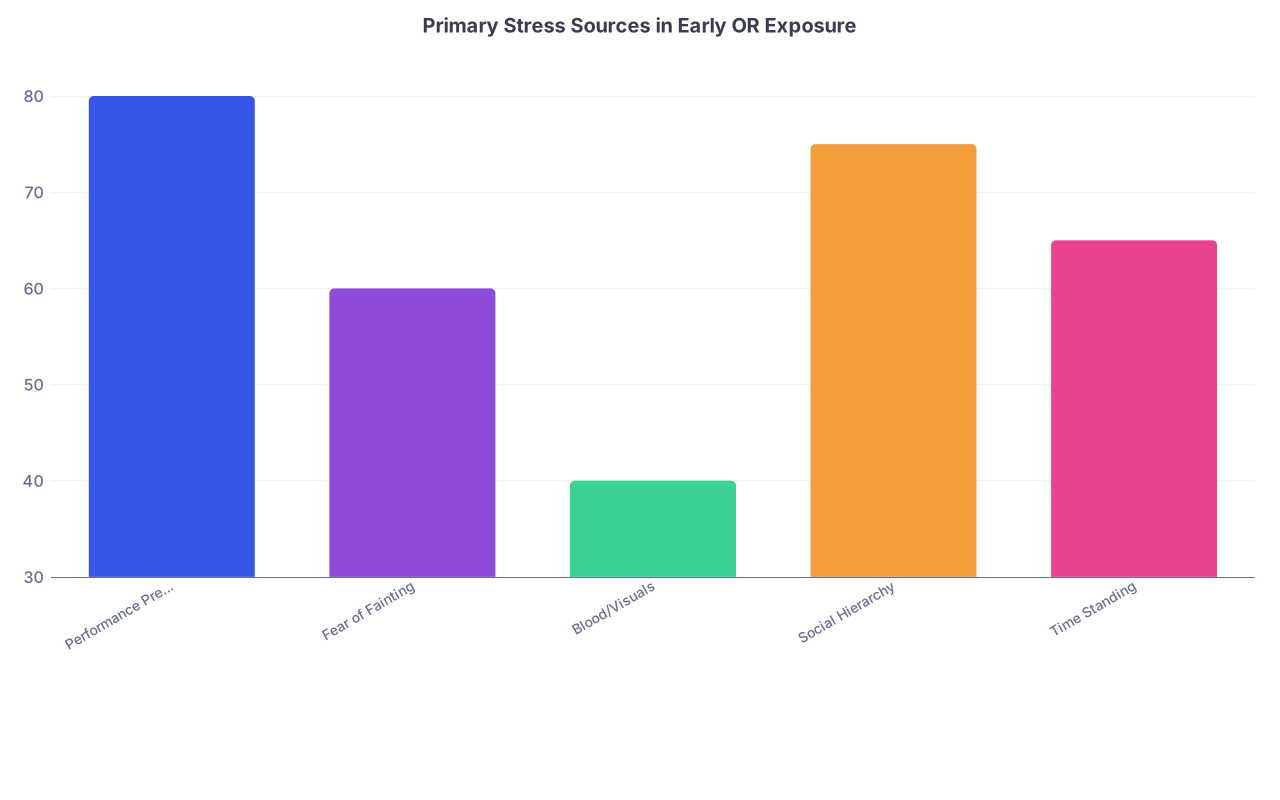
| Category | Value |
|---|---|
| Performance Pressure | 80 |
| Fear of Fainting | 60 |
| Blood/Visuals | 40 |
| Social Hierarchy | 75 |
| Time Standing | 65 |
The OR Stress Mix
- Performance / impression management.
- Fear of getting in the way or contaminating the field.
- Long periods of standing in one spot + warm room = presyncope risk.
- Real-time cutting, bleeding, organs moving.
You already have some tools from lab, but the OR adds social complexity. So let’s get tactical.
Before the OR: Information and Physiology
Ask one resident the “stupid” logistics questions in advance
Email or quick message (if culture allows):
- “Where do you recommend I stand for this case?”
- “Is there anything specific I can read so I can follow what is going on?”
- “Will I be scrubbed in or observing from the side?”
Knowing these three things drops your baseline anxiety by at least 20–30%.
Pre-hydration and salt
If you are prone to lightheadedness:
- Drink water with some electrolytes, or eat something salty 1–2 hours before.
- Avoid going in dehydrated from an overnight call or caffeine crash.
Pre-commit to honesty about presyncope
I have watched students try to “tough it out” and end up fainting into the sterile field. That is how you really derail a case.
Script (decide now):
- “I’m feeling lightheaded, I need to sit down for a moment.”
- You say this to the circulating nurse or a resident, not the attending scrubbed in.
Most reasonable surgeons would rather you sit before you drop.
In the OR: Staying Grounded While Not Messing Up
You are scrubbed, gowned, gloved. Already a success. Now:
Toolset 1: Managing Performance Anxiety
Control what you can: posture, hands, eyes
- Hands: Either on your chest with fingers interlaced or resting lightly where instructed. Not dangling, not fidgeting.
- Eyes: On the field when appropriate, on the monitor if laparoscopic, or on the surgeon’s hands. Do not stare into space; it reads as disengaged.
- Posture: Slight soft bend in the knees, weight distributed, feet about shoulder-width apart. Locking your knees is how you faint.
Ask questions strategically
Three rules:
- Do not ask during:
- Critical steps (e.g., vessel ligation, induction, emergence).
- Times when alarms are going off or voices are tense.
- Bundle questions:
- “Can I ask two quick anatomy questions while you are closing?”
- Keep it specific and anchored to what you see:
- “I am trying to orient myself: is that the cystic artery or the duct?” is far better than “What is that?”
- Do not ask during:
Accept that you are not there to be impressive
Especially early. Your job:
- Do not contaminate the field.
- Be alert, safe, and not a liability.
- Learn the flow: who does what, when, and how.
You will impress more by being reliable and low-maintenance than by naming every branch of the SMA from memory.
Toolset 2: Managing Visual and Physiologic Reactions
Many people who are fine with cadavers get woozy with live bleeding or diathermy smoke.
Use your line of sight wisely
If cautery smoke + smell hits you:
- Focus on the monitor (laparoscopic) instead of looking directly into the wound.
- Or briefly drop your gaze to the drape border, then back.
Just like in lab: partial view is allowed.
Presyncope checklist
If you feel off:
- Soft bend in knees, shift weight.
- Micro calf raises if you can do them without moving your upper body.
- One or two slower exhalations, but do not dramatically sigh.
- If it does not improve within 30–60 seconds: say your presyncope script and step out.
Use the environment
ORs are cold for a reason, but the lights above the field are not. If you are not scrubbed in:
- Step back from under the overhead lights.
- Stand where there is some airflow.
- Sit down on a stool in the corner if you are really fading.
4. When Stress Stops Being “Normal” and Starts Being a Problem
There is a range of normal stress reactions to cadavers and ORs. Tears, mild nausea, a fainting episode, weird dreams after the first few sessions—these are all common.
Red flags that need more than self-coping:
- You start dreading lab or OR for days beforehand to the point you cannot focus on anything else.
- You consistently cannot enter the lab, even with support.
- You are having frequent intrusive images or nightmares weeks after lab ends.
- You find yourself using alcohol, weed, or other substances specifically to dampen thoughts about lab or OR.
- Your personality changes—flat, irritable, disconnected—from how you usually are.
If you see those, that is not you “failing at being a doctor.” That is a signal. You talk to someone:
- A mental health professional (ideally one familiar with medical training).
- A trusted faculty member or advisor.
- A senior student who has been honest about struggling.
The line between “normal adaptation” and “early trauma response” is not always obvious from inside your own head. Err on the side of getting a second opinion if you are unsure.
5. Practical Pairings: Symptom → Tool
To make this less abstract, here is the matching game in one place.
| Symptom / Stress Pattern | Primary Tool(s) |
|---|---|
| Overwhelmed by smell in lab | Double mask + scent, micro-breaks |
| Can’t stop staring at disturbing area | Partial-view rule + visual anchors |
| Lightheaded, near-faint in lab/OR | Counterpressure + presyncope script |
| Intrusive images at night | Imagery container + short debrief |
| Feeling guilty about not being “okay” | Donor narrative + normalization talk |
| OR performance anxiety | Pre-questions + posture/hands rules |
Print that table in your head and you already have a working playbook.
6. One More Layer: Culture, Humor, and Boundaries
A word on dark humor and desensitization.
You will hear jokes in lab that make you wince. You might make one yourself and then feel awful later. The culture of “if you are not okay, you don’t belong here” is still alive in pockets of medicine. It is wrong.
Here is the line I suggest:
- Humor that protects patients/donors’ dignity and punches up or sideways: usually fine.
- Humor that dehumanizes the body or mocks other students’ distress: not fine.
If something feels off, trust that signal. You do not have to report everyone to the dean. You can simply choose your own behavior:
- Call it out gently once: “Hey, that’s someone’s family member we’re talking about.”
- Or at least do not join in, and find one or two classmates who share your threshold.
Desensitization will happen. That is part of being able to function. The key is what you get desensitized to:
- Being less fazed by the sight of organs = necessary.
- Being indifferent to the personhood behind the body = not.
You calibrate that, case by case.
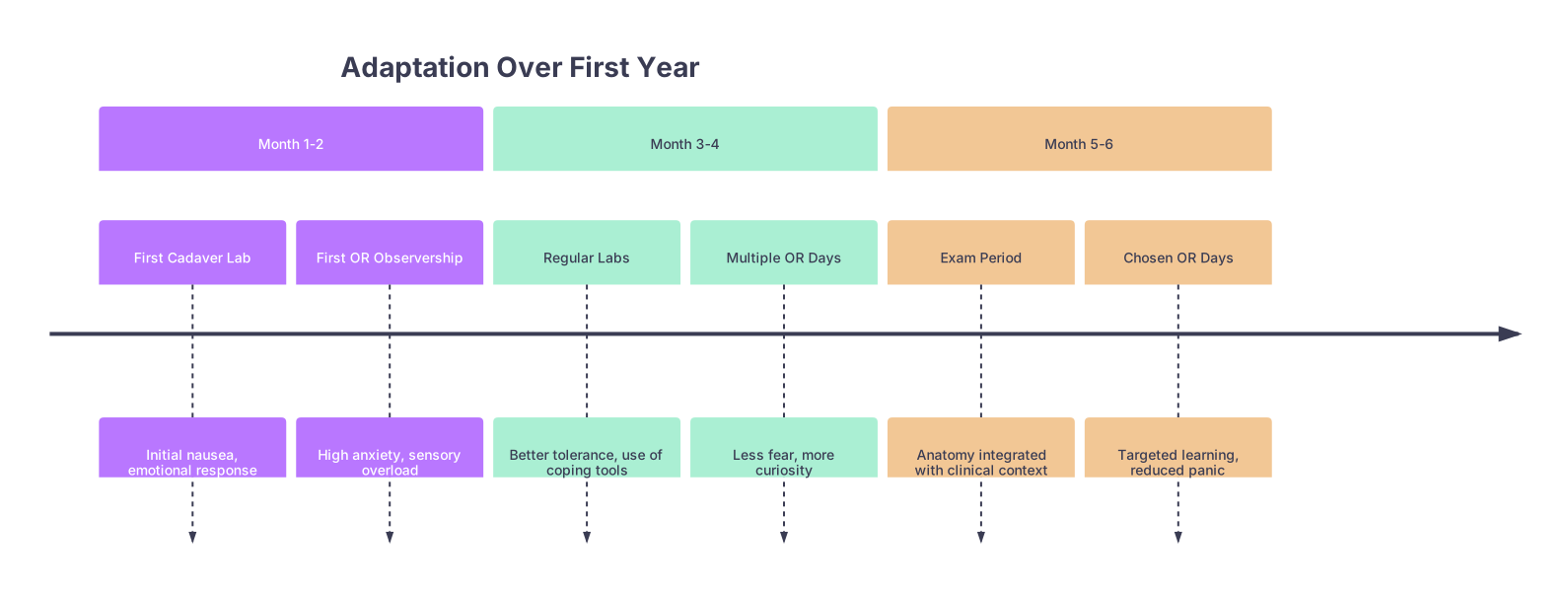
| Period | Event |
|---|---|
| Month 1-2 - First Cadaver Lab | Initial nausea, emotional response |
| Month 1-2 - First OR Observership | High anxiety, sensory overload |
| Month 3-4 - Regular Labs | Better tolerance, use of coping tools |
| Month 3-4 - Multiple OR Days | Less fear, more curiosity |
| Month 5-6 - Exam Period | Anatomy integrated with clinical context |
| Month 5-6 - Chosen OR Days | Targeted learning, reduced panic |
7. Putting It Together: A Realistic Mental Model
Here is the mindset I want you to walk in with:
You are not supposed to be “numb” on day one. If you feel nothing in lab forever, that is actually more concerning than feeling something.
Your stress responses are trainable. You are not at the mercy of fainting, nausea, or panic. With very specific techniques, you can change how your body reacts.
Mastery is not just knowing the anatomy. It is being able to function in these environments without burning out or disconnecting from yourself.
If you start lab or the OR already armed with concrete, matched tools rather than vague advice, you will adapt faster and with less collateral damage.
Key takeaways
- Anatomy and OR stress are not one thing; identify whether your primary driver is sensory overload, existential reaction, performance anxiety, or loss of control. Match your coping tools to that, not to some generic idea of “stress.”
- Use specific, practiced techniques: scent-masking and partial-view control in lab; counterpressure and presyncope scripts for fainting risk; posture and timing strategies for OR performance anxiety; and brief, structured debriefs plus imagery “containers” to handle lingering images.
- Watch for red flags where normal adaptation tips into significant distress, and involve others early. Handling cadaver and OR exposure well is a skill set, not a personality trait, and you are allowed to need help learning it.