The most dangerous burnout in medical school isn’t dramatic. It’s the quiet kind you tell yourself is “just being a hardworking M1.”
The Problem: You’re Calling Burnout “Normal”
Medical culture trains you early to minimize your own suffering. First year is where it starts.
You tell yourself:
- “Everyone’s tired.”
- “I’m just adjusting.”
- “I’m fine. I can push a little more.”
That voice will walk you straight into a wall.
Burnout doesn’t usually show up as a breakdown in the bathroom or a failed exam. Those are late-stage signs. By the time you’re crying in your car in the hospital parking lot, the problem started months earlier—quietly.
This is about the mistakes first‑year med students make when they ignore the early warning signs. The subtle ones that are easy to rationalize away.
Do not make that mistake.
1. The “New Normal” That Actually Isn’t
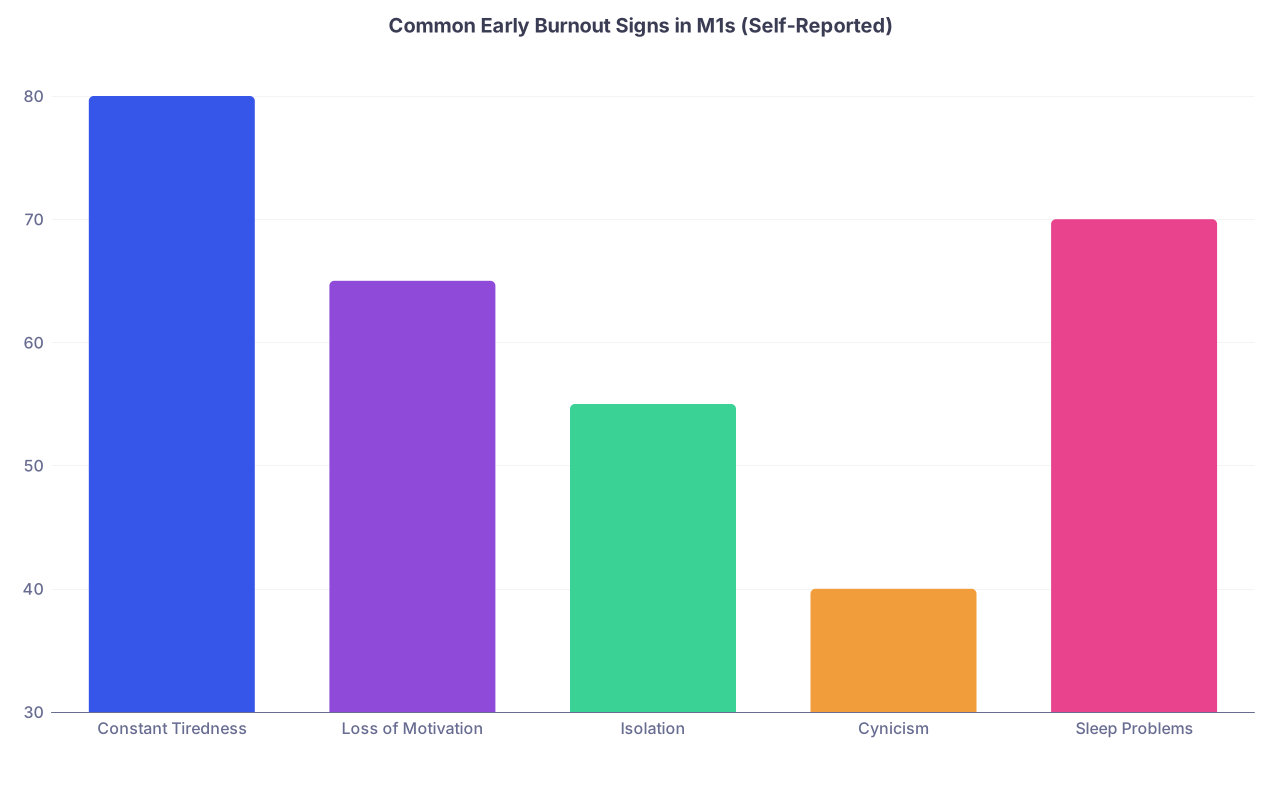
| Category | Value |
|---|---|
| Constant Tiredness | 80 |
| Loss of Motivation | 65 |
| Isolation | 55 |
| Cynicism | 40 |
| Sleep Problems | 70 |
The worst burnout red flags are the ones everyone jokes about. The stuff you start accepting as “just med school.”
Here’s what students normalize that they absolutely should not:
- Waking up tired every day for weeks
- Needing caffeine just to feel baseline human
- Feeling vaguely anxious from the moment you open your eyes
- Losing track of what day it is, often
- Dragging yourself to class while telling yourself “I just have to survive”
You’ll hear classmates say:
- “I only slept 4 hours last night.”
- “I haven’t had a real day off in weeks.”
- “I’m dead inside but it’s fine.”
You laugh. You repeat the same lines. You make it a personality.
That’s how early burnout gets camouflaged as culture.
The Mistake
You treat sustained physical and mental exhaustion as a badge of honor instead of a warning.
The key word is sustained. A bad week before an exam is one thing. A bad three months? That’s damage.
Ask yourself bluntly:
- Has my baseline energy been low for more than 2–3 weeks?
- Do I only feel relief when I imagine quitting or fast‑forwarding to vacation?
- Am I describing myself more in terms of how tired I am than anything else?
If yes, this isn’t just “busy season.” You’re burning through reserves.
2. Subtle Cognitive Slips You Brush Off
Burnout doesn’t just make you tired. It makes you… dull. Slower. Less you.
And you will be tempted to blame anything else:
- “I just didn’t study that part.”
- “The exam was tricky.”
- “I’m not a ‘fast test taker’.”
Sometimes that’s true. Often it’s not.
Early cognitive signs of burnout:
- You reread the same paragraph three times and retain nothing.
- You watch a video, feel like you understand, then can’t recall core points 20 minutes later.
- You miss obvious questions you know you should have gotten.
- You make basic mistakes in Anki cards because your brain is checked out.
- You stare at your study schedule and feel paralyzed instead of focused.
You don’t need to be failing for this to matter. Even students with 80s and 90s on exams burn out. They’re just burning their brain harder to keep up.
The Mistake
You focus only on outcomes (grades, percentiles) and ignore process (how your brain feels getting there).
That’s how high‑achieving students quietly shred their mental health. Because “it’s working” on paper.
Ask:
- Am I spending significantly more time to get the same results?
- Do I feel mentally “foggy” even when I’ve slept?
- Do I need constant stimulation (music, YouTube, changing locations) just to sit with the material?
That fog isn’t laziness. It’s early burnout.
3. The Social Disappearance You Call “Focus”

First‑year med students love to say, “I don’t have time to see people, I have to grind.”
Some isolation is necessary. Total isolation is dangerous.
Watch this pattern:
Month 1:
- You still go to dinner with friends occasionally.
- You attend at least some class social events.
- You text non‑med friends back within a day.
Month 4:
- You cancel most plans “because exam.”
- You haven’t seen non‑med school friends in weeks.
- You’re in group chats but rarely respond.
- You start telling yourself you’re “too busy” for relationships.
Month 7:
- You feel like no one really knows what’s going on with you.
- You start thinking: “Everyone else seems fine. What’s wrong with me?”
- You don’t reach out because it feels like work.
The Mistake
You confuse self‑neglect with dedication.
The shift from “I’m choosing to prioritize studying this week” to “I basically don’t exist outside school anymore” is subtle. And you’ll defend it when people worry about you.
Concrete early red flags:
- You always say no to plans, even low‑effort ones.
- You feel low‑key irritated when someone invites you to something (“Don’t they know how busy I am?”).
- You can’t remember the last time you laughed hard with someone not in your anatomy group.
- You’re physically present with others but mentally scrolling through to‑do items.
Human connection isn’t “nice to have.” It’s a stabilizer. When you strip that away, stress hits much harder.
4. Emotional Red Flags You Rationalize Away
Burnout often masquerades as “moodiness.” You’ll blame hormones, the weather, the block, anything.
Here’s what I’ve watched M1s ignore until it got ugly:
- You feel nothing about medicine. Not excitement. Not curiosity. Just… blank.
- You’re more irritable. Small things set you off—group emails, minor schedule changes, a slightly confusing lecture.
- You cry more easily. Sometimes at night, sometimes randomly after an exam, sometimes for “no reason.”
- You feel weirdly detached. You’re “watching” your life rather than living it.
- You start having intrusive thoughts like “What if I just disappeared?” even if you’d never act on them.
You’ll tell yourself:
- “It’s just PMS.”
- “It’s just this block.”
- “It’s seasonal.”
- “Everyone feels like this sometimes.”
Sure. Sometimes. But when the pattern sticks around for weeks or months, you’re not just “in a funk.” You’re burning out.
The Mistake
You treat persistent emotional changes as personality flaws or weakness instead of physiological stress responses.
Burnout rewires your reward system. Things that used to bring joy feel muted or pointless. That’s not you being dramatic. That’s your system screaming, “We’re at capacity.”
Ask:
- When did I last feel genuinely excited about anything, even something small?
- Have my close friends or family commented that I “don’t seem like myself”?
- Am I more cynical or negative than I was at the start of M1?
If your answer is “I can’t remember” or “Yes, but I ignore it,” that’s not nothing.
5. Sleep and “Recovery” That Doesn’t Work Anymore
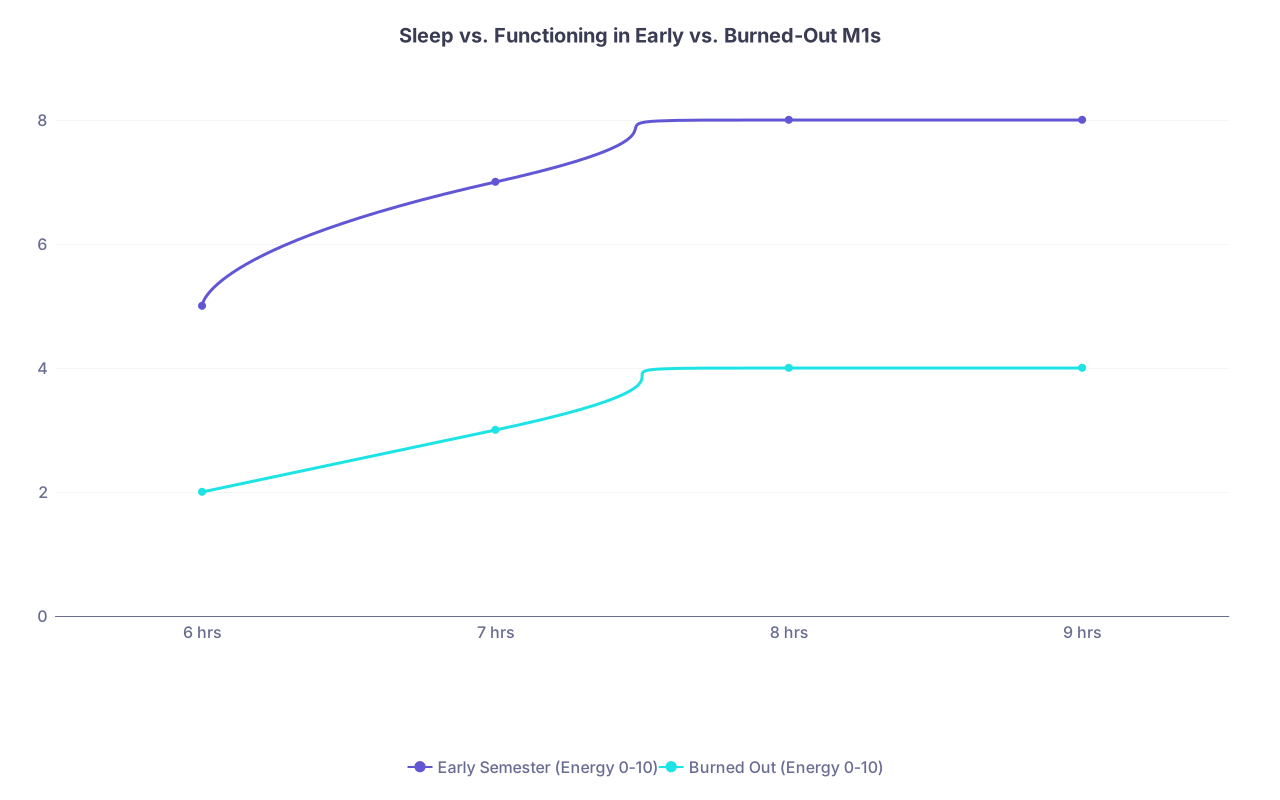
| Category | Early Semester (Energy 0-10) | Burned Out (Energy 0-10) |
|---|---|---|
| 6 hrs | 5 | 2 |
| 7 hrs | 7 | 3 |
| 8 hrs | 8 | 4 |
| 9 hrs | 8 | 4 |
There’s a specific moment I see again and again: a student “does everything right” for a weekend—sleeps, eats, sees friends—and still feels dead on Monday.
They panic:
- “Why don’t I feel better?”
- “Is something wrong with me?”
- “Maybe I just need to push harder.”
No. The tank isn’t low. It’s cracked.
Real early warning signs in your sleep pattern:
- Falling asleep is hard because your brain won’t shut up.
- You wake up multiple times thinking about exam questions or emails.
- You wake up already stressed, heart rate higher than it should be.
- You sleep longer on weekends but still feel like you got hit by a truck.
- You start needing naps just to function in the afternoon.
And then there’s this one:
You tell people you’re “so tired” but when you actually lie down, your body is wired.
The Mistake
You assume that because you’re technically getting 7–8 hours, sleep isn’t the problem. Or worse: you treat poor sleep as an unchangeable part of med school.
Sleep quality matters as much as quantity. Chronic stress destroys both.
If you:
- use your phone in bed scrolling through med Reddit,
- review Anki until the minute you try to sleep,
- check your calendar and to‑do list at midnight,
you’re training your body to associate bed with panic, not rest.
That’s how burnout sneaks in: not with all‑nighters, but with months of mediocre, unrestful sleep you dismiss as “fine.”
6. Study Behaviors That Signal You’re Slipping

Burnout often shows up first in how you approach studying, long before grades tank.
Patterns I see in burned‑out M1s:
- Endless resource switching. Boards and Beyond, Pathoma, Sketchy, YouTube, random PDFs. You can’t stick with one plan more than a week.
- Mindless grinding. Doing Anki cards half‑awake, watching lectures at double speed while not actually absorbing.
- Constant comparison. You keep asking classmates what they’re using, how many cards they do, how many hours they study.
- No real breaks. You “rest” by scrolling, but keep your books open “just in case.”
- Panic‑driven marathons. Big 12–14 hour “catch‑up” days that leave you wrecked for two days after.
Here’s the quiet trap:
When you’re burned out, everything feels like it takes longer and feels worse. So you add more hours, which burns you out further.
The Mistake
You treat study problems as purely a discipline issue, so you attack them with more discipline instead of more recovery and better strategy.
If you notice:
- You’re constantly re‑writing your study plan.
- You feel guilty anytime you’re not studying.
- You “rest” but feel wired with anxiety the whole time.
That’s not an efficiency problem. It’s a capacity problem.
7. The Culture Lie: “This Is Just Med School”

| Step | Description |
|---|---|
| Step 1 | Early Warning Signs |
| Step 2 | Normalize Exhaustion |
| Step 3 | Increase Workload |
| Step 4 | Worse Symptoms |
| Step 5 | Academic/Emotional Crisis |
| Step 6 | Ask for Help? |
| Step 7 | Still Coping? |
You will be surrounded by people downplaying how bad they feel.
They’ll say:
- “This is just the grind.”
- “You get used to it.”
- “Wait till clerkships, this is nothing.”
- “This is what we signed up for.”
If you internalize that, you’ll ignore all your warning signs until they slam you.
Here’s the ugly truth:
Med school can be demanding without being chronically soul‑crushing. A lot of the suffering is baked into the culture, not the curriculum.
The red‑flag narrative in your head:
- “If I can’t handle this, maybe I’m not cut out for medicine.”
- “Everyone else seems to be handling it. I should just push through.”
- “I’ll rest after Step. Or after this block. Or after this exam.”
That “I’ll rest after…” sentence is how early burnout becomes chronic burnout.
The Mistake
You use the worst parts of medical culture as your benchmark for what’s acceptable.
Stop comparing how you feel to the most overworked, overcaffeinated, cynically joking person in your class. That’s not the standard.
8. What To Do When You See These Signs (Without Blowing Up Your Life)

You don’t need to drop out, take a leave, or move to a monastery at the first sign of burnout. But you also can’t just “power through” and expect it to disappear.
Think in three levels: awareness, adjustment, and help.
1. Awareness: Actually Admit What’s Happening
First step: call it by its name.
Not:
- “I’m just tired.”
- “I’m just stressed.”
Instead:
- “I’m showing early signs of burnout and this is serious.”
- “My brain and body are telling me I’m at or over capacity.”
Then track:
- Sleep: hours + how rested you feel
- Mood: 1–10 once a day
- Energy: 1–10 once a day
- Social contact: Did I have one real conversation today?
Do this for a week. Patterns jump out fast.
2. Adjustment: Change the Load, Not Just the Schedule
You cannot “time‑manage” your way out of burnout if the actual load never changes.
Look at:
- Study hours: If you’re regularly over 10–11 focused hours/day, that’s not sustainable.
- Week structure: Does every day feel the same? No real off‑switch?
- Inputs: Caffeine late in the day, doom‑scrolling, med Twitter, constant comparison.
Make specific changes:
- Commit to a daily cutoff time when you’re done, even if unfinished.
- Protect at least one half‑day off per week where you do not touch school work.
- Reduce resource bloat: pick 1–2 core resources and stick to them.
- Put your phone in another room for the last 30–60 min before bed.
3. Help: Don’t Wait for a Full‑Blown Crisis
Here’s another mistake: students wait until they’re failing or deeply depressed before talking to anyone.
Better options, earlier:
- School counseling or student wellness. They don’t just deal with crises. They can help you prevent one.
- Trusted faculty advisor. Not the gunner resident who brags about never sleeping. Someone grounded.
- Upperclass mentors. M2s/M3s who’ve clearly set boundaries and are still standing.
You’re not “weak” for needing help. You’re smart for not letting a fixable problem become a scar.
9. Quick Reference: Early Warning Signs You Should Never Ignore
| Domain | Warning Sign |
|---|---|
| Energy | Tired 3+ weeks despite adequate sleep |
| Cognitive | Persistent fog, rereading, slow recall |
| Emotional | Irritable, numb, or tearful most days |
| Social | Withdrawing from friends consistently |
| Behavior | Constant guilt when not studying |
If you’re checking multiple boxes across different domains, stop telling yourself “it’s just a busy block.”
FAQ: Silent Burnout in First‑Year Med Students
1. How do I tell the difference between normal M1 stress and actual burnout?
Look at duration and spread. Normal stress spikes around exams and fades. Burnout lingers for weeks and shows up in multiple areas: sleep, mood, motivation, cognition, and relationships. If you’re exhausted, detached, and not bouncing back even after lighter periods or breaks, you’re past “normal stress.”
2. If I’m burned out, should I consider taking a leave of absence?
Not automatically. A leave is a serious tool, not the only one. Many students recover by making real changes in their workload, schedule, and support systems. But if symptoms are severe—major depression, serious anxiety, panic attacks, inability to function—or if academic performance is crashing, a leave is something to discuss with a counselor and your dean before everything falls apart.
3. Won’t setting boundaries and taking breaks put me behind my classmates?
No, what will really put you behind is getting so burned out you can’t study effectively or end up needing emergency time off. Students who protect their sleep, have some real downtime, and use a focused set of resources usually outperform the ones who “study” 14 hours a day in a constant state of half‑panic.
4. How do I talk to my family about this without freaking them out?
Be direct but specific. Instead of “Med school is killing me,” try: “I’m realizing I’ve been ignoring early signs of burnout—like constant fatigue and feeling detached—so I’m working with [counseling/mentor/advisor] to adjust things. I don’t need you to fix it, but I do need you to check in and remind me I’m more than my grades.” Give them a role, not a crisis.
5. What’s one concrete change I can make this week to reduce my burnout risk?
Pick this: set a firm daily cutoff time for school work (for example, 9 pm) and honor it for seven days. No “just one more video,” no “just a few more cards.” Use that time for real rest—shower, walk, call someone, read non‑med stuff. Most M1s I’ve seen do this are shocked that their efficiency improves and their anxiety starts to loosen its grip.
Remember:
- Burnout almost never starts loud. It starts silent and “normal.”
- Ignoring early signs because “everyone is suffering” is how good students end up wrecked.
- You’re not in med school to prove how much misery you can tolerate. You’re here to learn to care for humans. Start with yourself.