
The first six weeks of med school will decide your habits more than your GPA. Get this window wrong, and you’ll spend the rest of M1 unlearning shortcuts you did not even realize you built.
This is the adaptation phase. Your brain, your schedule, your sleep, your social life—everything is rewiring. At this point you need structure, not vibes. Let’s walk it week by week and day by day so you do not drift into the same mess I’ve watched dozens of first‑years repeat.
Overall Game Plan: Weeks 1–6 at a Glance
Here’s the rough arc you’re living through:
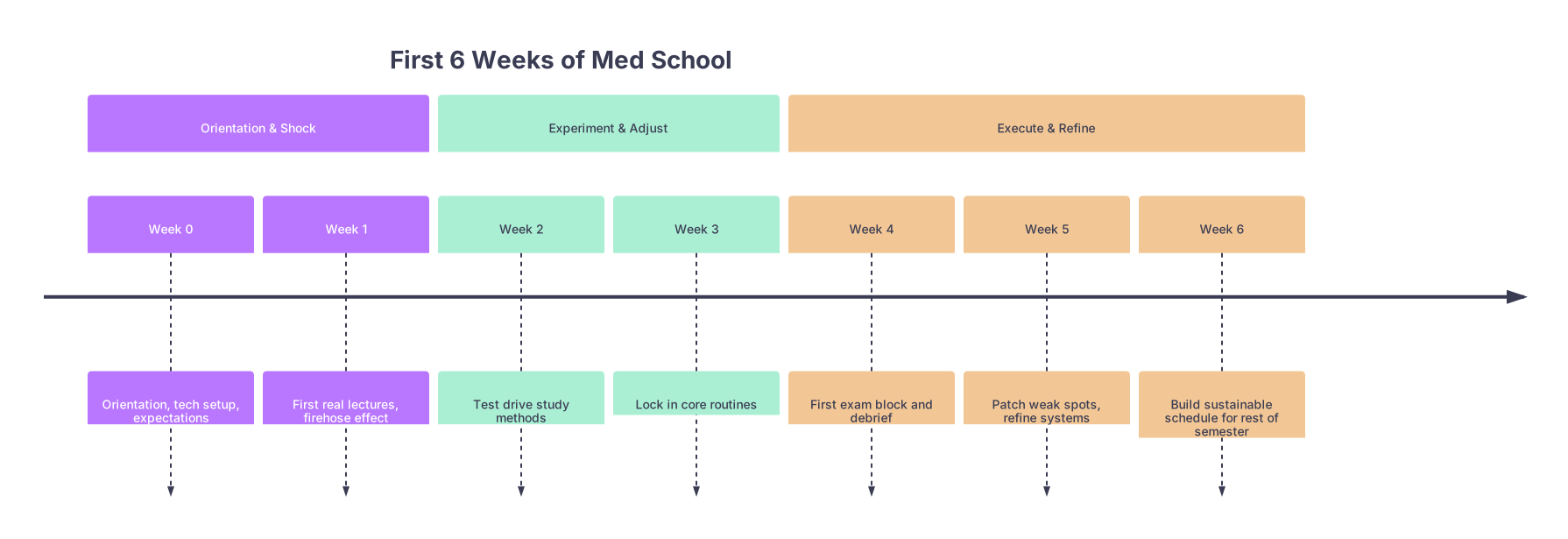
| Period | Event |
|---|---|
| Orientation & Shock - Week 0 | Orientation, tech setup, expectations |
| Orientation & Shock - Week 1 | First real lectures, firehose effect |
| Experiment & Adjust - Week 2 | Test drive study methods |
| Experiment & Adjust - Week 3 | Lock in core routines |
| Execute & Refine - Week 4 | First exam block and debrief |
| Execute & Refine - Week 5 | Patch weak spots, refine systems |
| Execute & Refine - Week 6 | Build sustainable schedule for rest of semester |
At each stage, you’ll either:
- Build a system that will carry you through step exams and clerkships
or - Collect little inefficiencies that snowball into burnout and mediocrity.
Let’s break it down.
Week 0: Orientation – Set the Rail Tracks, Not Just Shake Hands
At this point you should ignore the “this week doesn’t really count” mentality. It counts. A lot.
Your goals for Week 0
- Lock down your information ecosystem
- Build a skeleton weekly schedule
- Decide your default study tool stack
- Set realistic boundaries before the chaos starts
Day-by-day focus (Week 0)
Day 1–2: Tech and information setup
You should:
- Create a folder structure that matches your courses (Anatomy, Biochem, Physiology, etc.).
- Decide where each type of content lives:
- Lecture recordings → school LMS
- Notes/summary → OneNote / Notion / Word / physical binder (pick one)
- Flashcards → Anki (don’t “try it later”—start now or skip it entirely)
- Install what you’ll almost certainly need:
- Anki + add-ons for image occlusion and heatmaps
- A PDF annotator (GoodNotes, Notability, or a decent laptop option)
- Cloud backup (Google Drive, OneDrive, Dropbox—anything, just not “I’ll email myself later”)
Non‑negotiable: Pick one calendar (Google Calendar works well) and enter:
- Class/required sessions
- Labs
- Recurring review blocks (you’ll refine this later, but block placeholders now)
Day 3–4: Academic reconnaissance
You’re not “studying” hard yet. You’re mapping the terrain.
You should:
- Skim all syllabi and identify:
- Assessment style: NBME-style? Faculty-written? Short answer?
- Exam frequency and block structure
- Any mandatory assignments or pre-lab work that can blindside you
- Ask M2s (not just one, at least three):
“If you had to pass our first block with the least wasted time, what would you skip? What’s gold?”
Write their answers down. Patterns will appear: certain lecturers, certain question banks, certain third-party resources.
Day 5–7: Build your first draft weekly template
You’re not locking your life in stone. You’re giving your future self rails to run on.
Sketch a template that repeats weekly:
- Morning (7–12): class + 1 hour of same-day review
- Afternoon (1–6): new material learning + Anki
- Evening (7–10): light review, admin, sleep prep
Now map energy, not just time. If you’re useless after 8pm, stop lying to yourself and put heavy lifting earlier.
Here’s a sanity check on hours:
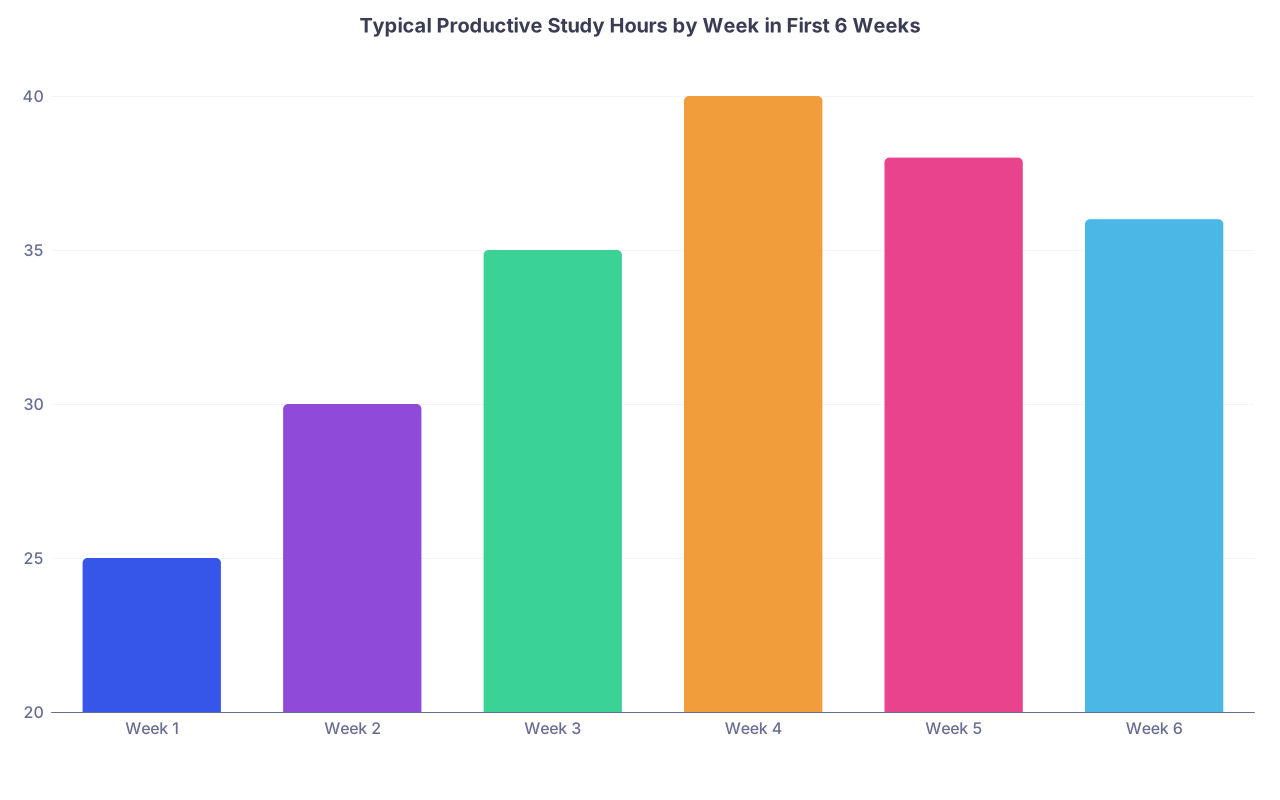
| Category | Value |
|---|---|
| Week 1 | 25 |
| Week 2 | 30 |
| Week 3 | 35 |
| Week 4 | 40 |
| Week 5 | 38 |
| Week 6 | 36 |
If you’re planning 60 “hard” hours per week in Week 1, you’re already setting up a crash.
Week 1: Shock Week – Control the Firehose, Don’t Drink from It
This is the week most people panic and start doing everything badly: half handwritten notes, half Anki, 10 different resources. Do not be that person.
At this point you should aim for good enough systems, not perfect.
Daily rhythm to aim for (Week 1)
Morning: Class + same-day touch
- Attend or watch at 1.5–2x (whatever your school culture and your brain allow).
- After each lecture, spend 15–20 minutes:
- Tagging the lecture slides (high‑yield vs “faculty likes this story”)
- Making 5–15 Anki cards or marking a premade deck section
If you fall behind on same-day review in Week 1, that’s a red flag. Fix it here, not in Week 4.
Afternoon: Deep learning block (2–3 hours)
This is where you:
- Rewrite in your own words the 2–3 concepts that felt fuzzy in the morning.
- Watch 1–2 short outside videos (Boards & Beyond, Sketchy, etc.) only if they clearly map to your current lectures.
Rule: No more than two main resources per subject right now:
- School materials
- One board-style supplement
More than that and you’re cosplaying productivity.
Evening: Light review + maintenance (1–2 hours)
- Anki reviews only (no major new card creation).
- Quick glance at tomorrow’s schedule.
- Shut down screens 30–60 minutes before bed. You can ignore this, but you’ll pay for it by Week 3.
End of Week 1 checklist
By Friday/Saturday, you should be able to answer yes to:
- Do I know exactly where each class’s materials live?
- Do I have a default daily schedule, even if it’s a little messy?
- Am I within 1 day of being “caught up” on lectures?
If not, fix that this weekend, not “after the first exam.”
Week 2: Experiment Phase – Test, Don’t Flail
Week 2 is where you test study methods deliberately instead of randomly changing things every 48 hours.
At this point you should run controlled experiments, not emotional ones.
3–4 day experiment cycles
Pick one variable to test at a time:
- Handwritten vs typed vs minimal note-taking
- Creating your own Anki vs curated decks
- Watching lectures live vs recorded
Example:
- Mon–Thu: Attend live lectures, do minimal annotation, rely on Anki and one-page summaries.
- Fri: Evaluate:
- Did I keep up?
- Did I retain key concepts without drowning in notes?
- How exhausted am I on a scale of 1–10?
Do not change 5 things at once. That’s how you learn nothing about what actually works for you.
Your schedule this week should start to look consistent
You’re trying to converge on something like:
- 3–4 hours of focused, high-quality studying per day (outside class) early in the week
- 5–6 hours closer to the end of the week as content accumulates
If you’re consistently above 8 “real” hours per day in Week 2, you’ve either overcommitted or you’re studying inefficiently.
Social life reality check (Week 2)
This is where FOMO starts.
At this point you should decide your default rule for social events:
- Example: “One weekday evening out + one weekend event, no questions asked. Anything extra only if my Anki and lectures are current.”
If you don’t set a rule, here’s what happens:
You go out “just this once” three times a week and then wonder why Sunday feels like a disaster.
Week 3: Lock-in Week – Cement the Good, Kill the Bad
By Week 3, the volume ramps up and the “I’ll figure it out as I go” fantasy dies. This is the week you either stabilize or start the slow slide into permanent catch-up mode.
At this point you should have:
- A preferred note style
- A settled role for Anki (core vs backup vs not at all)
- A fixed wake/sleep window on school days
Midday vs late‑night studying
Watch your energy curve. Your real life data might look something like this:
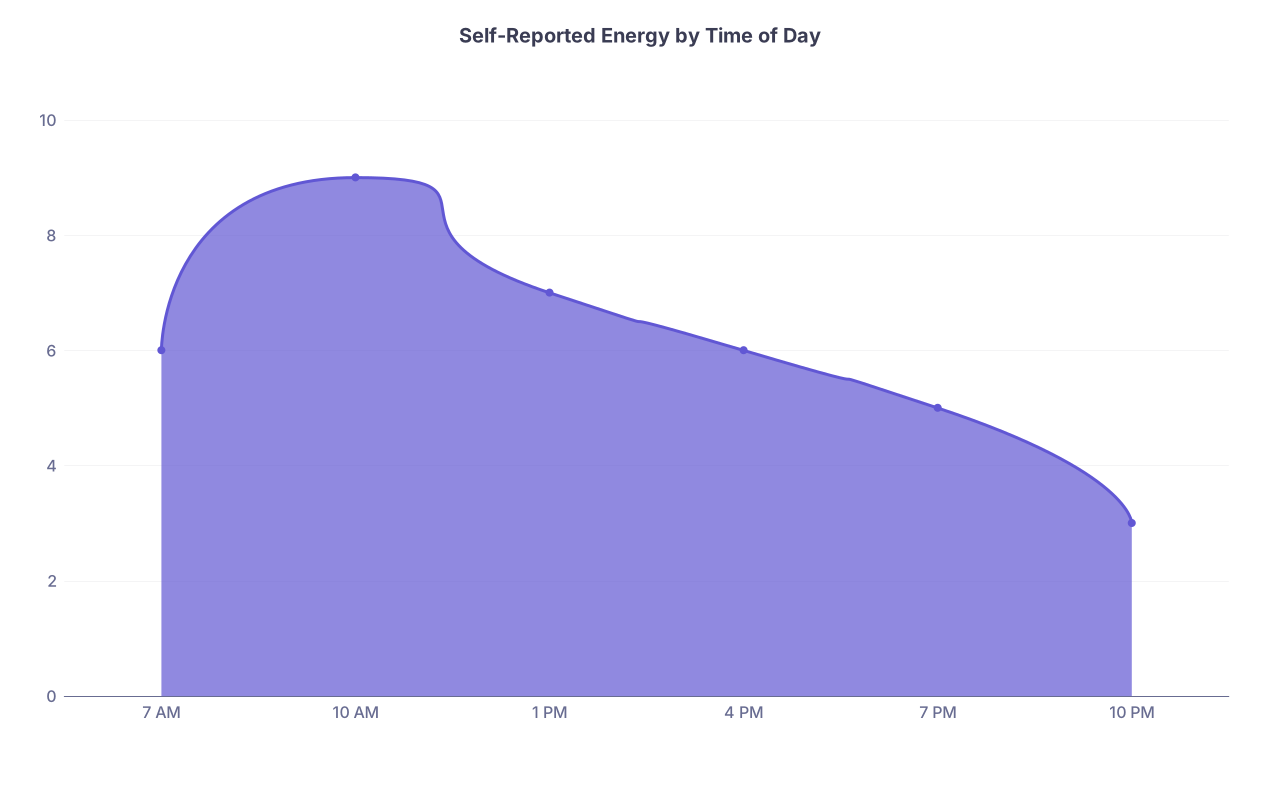
| Category | Value |
|---|---|
| 7 AM | 6 |
| 10 AM | 9 |
| 1 PM | 7 |
| 4 PM | 6 |
| 7 PM | 5 |
| 10 PM | 3 |
At this point, you should:
- Put conceptually hard tasks (pathways, mechanisms) in your 8–11am or peak window.
- Reserve 8–10pm for lighter tasks:
- Flashcards
- Reformatting notes
- Planning tomorrow
If you’re doing dense path phys at midnight, that’s not “grind culture,” it’s just poor scheduling.
End of Week 3: Mini self‑audit
Take one hour on Sunday and ask:
- Which parts of my week felt chaotic?
- Where did I consistently fall behind?
- What do I never actually use but keep telling myself I will? (extra resources, 1000-page textbook, etc.)
Then make one ruthless cut.
Maybe you:
- Stop going to a particularly unhelpful live lecture and watch it later at 1.75x.
- Drop a redundant resource that’s just giving you guilt, not points.
Week 4: First Major Exam Block – Prove the System
This is your first real stress test. How you handle this week will define your default “exam mode” moving forward.
At this point you should shift from input focus (“I studied 8 hours!”) to output focus (“I can answer these questions correctly.”)
Two weeks out from exam (which is roughly Week 4)
Your day should tilt toward questions and retrieval:
- 50–100 practice questions per day aligned with current content.
- Anki reviews before new learning whenever possible.
- One pass through your summaries or high‑yield sheets every 2–3 days.
5–7 days before the exam
Here’s a sample distribution of how your active study time should now look:
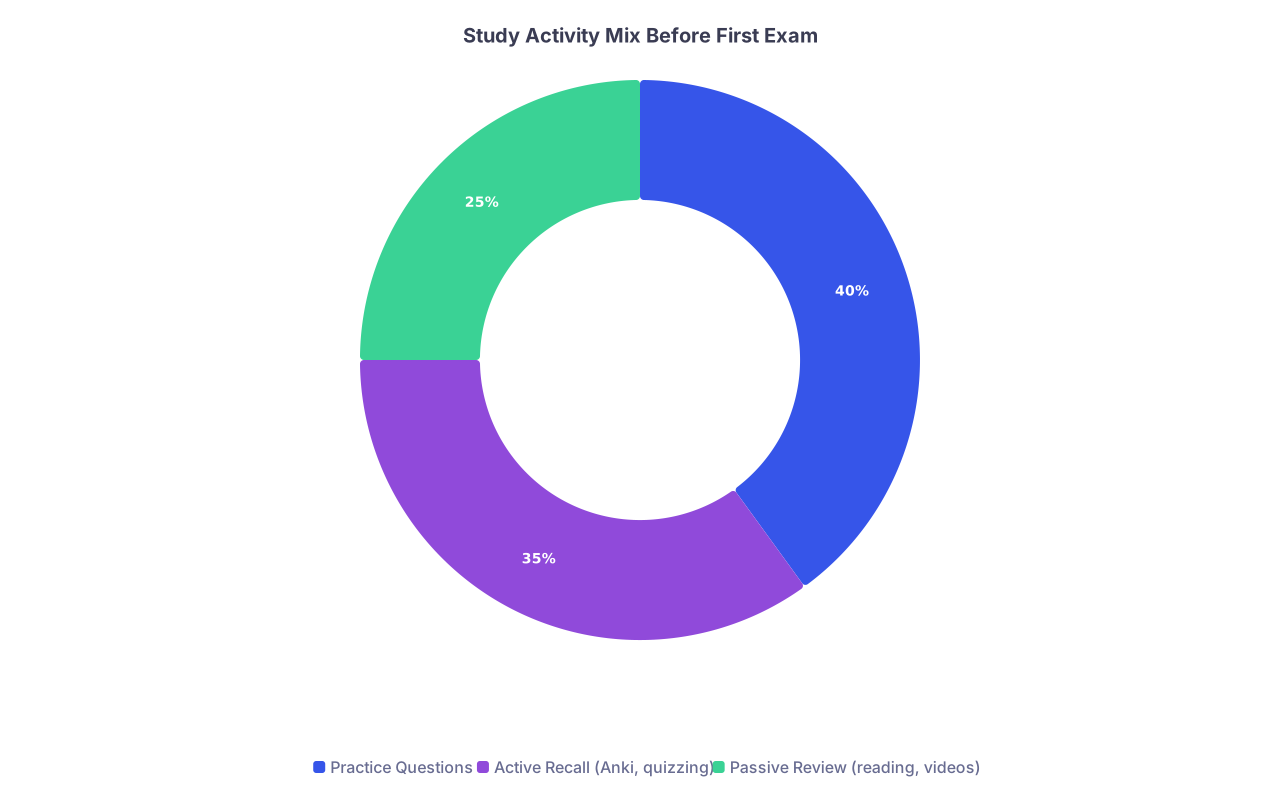
| Category | Value |
|---|---|
| Practice Questions | 40 |
| Active Recall (Anki, quizzing) | 35 |
| Passive Review (reading, videos) | 25 |
If passive review is still more than ~50–60% of your time in the final week, you’re prepping to feel prepared, not to perform.
Day before the exam
Bad habit people:
- Cram until 2–3am.
- Rewrite entire notes.
- Start new resources they “heard were high-yield.”
You, instead:
- Light review of your personal “must know” list.
- Stop heavy studying by early evening.
- Sleep like it’s your job. Because it is.
At this point your goal is steady output, not heroic last‑minute input.
Week 4 (Post‑Exam): The 24‑Hour Debrief That Most People Skip
Everyone wants to celebrate or collapse. You can still do that. After you run the debrief.
Within 24 hours of getting your score or walking out of the exam, you should:
Write down:
- What kinds of questions felt easy?
- What felt impossible?
- Were you rushed for time? Or just unsure of content?
Connect errors to habits:
- Missed basic anatomy? Maybe you rushed through lab and never tested yourself.
- Could not handle “integration” questions? You probably reviewed by reading, not retrieval.
Pick 2–3 system changes, max, for the next block:
- “I’m going to start questions earlier (2 weeks out instead of 4 days).”
- “I’m cutting my own 20-page notes per lecture down to one-page summaries.”
Lock these in before your brain convinces you “it wasn’t that bad.”
Week 5: Patch Week – Fix Leaks Before They Become Cracks
Week 5 is dangerous. You’re not brand new anymore, so you’ll be tempted to relax into whatever half‑functional system you’ve built. Resist that.
At this point you should be in refine mode, not reinvent mode.
What to adjust in Week 5
- Lecture attendance policy
Track two weeks of reality:
| Mode | How Often | Focus Level (1–10) | Would You Keep It? |
|---|---|---|---|
| Live in-person | 3x/week | 6–7 | Maybe |
| Live on Zoom | 1x/week | 4 | No |
| Recorded 1.5–2x | 5x/week | 8–9 | Yes |
Based on your data, not your guilt, adjust:
- You’re not obligated to keep doing what doesn’t work just because “everyone else is going.”
- Anki load sanity check
If your daily review count is >400 and you want to scream, that’s not “the grind,” that’s poor card hygiene.
You should:
- Suspend low‑yield or duplicate cards.
- Combine overly granular cards into more conceptual ones.
- Cap new cards per day at a sustainable number (e.g., 40–80, depending on your pace).
Protect your body before it mutinies
By now, the sleep debt and posture problems start to appear. At this point you should:
- Schedule (literally, on your calendar) 3 movement blocks per week, 20–30 minutes each.
- Commit to a bedtime range, not an exact time:
- e.g., “Lights out between 11–12, no matter what, unless it’s exam week.”
You won’t stick to this perfectly. But if you never even define it, you drift.
Week 6: Build the Long-Game Version of Your Schedule
By Week 6, the adrenaline of “new med student” is gone. This is actually good. It means you can design something sustainable.
At this point you should be able to:
- Predict your busy vs lighter days each week.
- Estimate how long each class’s content will take you to process.
- Say no to things without the guilt spiral.
Construct your “default week” for the rest of the semester
Literally draw it out: a blank weekly calendar with time blocks.
Aim for a template like this:
Mon–Fri
- 8–12: Class / lecture review
- 1–3: New content deep work (hard topics)
- 3–4: Admin + email + logistics
- 4–6: Question blocks or lab prep
- Evening: Anki + low-intensity review + life
Sat
- Morning: catch‑up and consolidation
- Afternoon/evening: social or rest
Sun
- Light review + planning + resetting your space
You’re not a robot, so this will flex. But now you have a home base to return to instead of starting from scratch every Sunday.
Social and mental health guardrails (Week 6 and beyond)
By now you’ve seen what happens when you ignore your brain for 6 weeks. Spoiler: it doesn’t go well.
Set three guardrails:
One non‑negotiable joy activity per week
- Pickup basketball
- Cooking with a friend
- Long walk with a podcast
One “honesty check-in” every two weeks
- With a classmate, mentor, or partner:
- “On a scale of 1–10, how close am I to burning out? What’s one thing I can cut this week?”
One realistic “I’m done for the day” time
- Example: “10:30pm is a hard stop for studying except night before exam.”
This is how you keep med school as a hard job, not a 4‑year slow‑motion breakdown.
Habits You Want Cemented by the End of Week 6
Let me be blunt. By the end of the first six weeks, you either have these habits in place or you’re going to spend a lot of time firefighting.
You want:
- Same‑day exposure to new content (even if it’s only a quick pass)
- Regular retrieval practice (questions, Anki, quizzing friends)
- A default weekly template that you mostly follow
- A resource diet: you can list your main tools on one hand
- Planned rest, not accidental collapse
What you do not want cemented:
- All‑nighters as your primary problem-solving tool
- “I’ll watch it later” as your lecture strategy
- 300+ daily Anki reviews with zero quality control
- Studying in your bed, in the dark, half‑doomscrolling
- Saying yes to everything because “it’s only M1”
A Quick Visual: First 6 Weeks Focus Shift
This is the arc you’re aiming for:
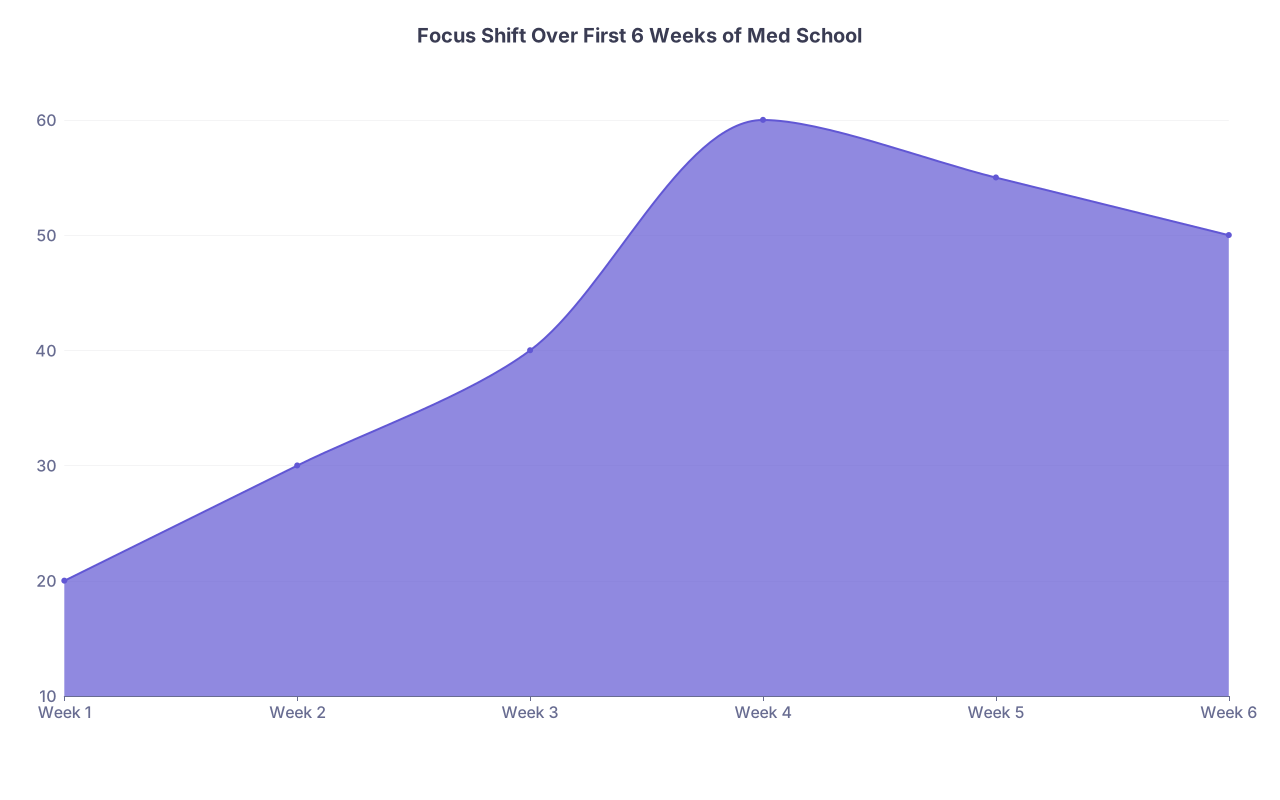
| Category | Value |
|---|---|
| Week 1 | 20 |
| Week 2 | 30 |
| Week 3 | 40 |
| Week 4 | 60 |
| Week 5 | 55 |
| Week 6 | 50 |
Think of that value as the percentage of your effort that’s deliberate and system-based rather than reactive and frantic. You want that trending up, not sideways.
What You Should Do Today
Do not “save this for later.” Later is when the bad habits have already hardened.
Today, before you do anything else:
Open your calendar and block out tomorrow hour by hour.
Include:
- Class
- A single 2–3 hour deep work block
- A 30–45 minute Anki/retrieval block
- A hard stop for the night
Then follow it for one day. Just one.
Tomorrow evening, ask yourself: “Where did this break, and why?”
That’s how you start adapting before bad habits cement. One deliberately planned day at a time.