How Do I Know If My Stress in Med School Needs Professional Help?
What if that “normal med school stress” you keep brushing off is actually something you shouldn’t be handling alone?
Let me be blunt: most first-year med students underestimate how bad they’re doing until something cracks—grades, sleep, relationships, or their health. You don’t want to wait for the crack.
This isn’t about “are you stressed?” You’re in med school. Of course you’re stressed. The real question is:
Has your stress crossed the line from expected pressure into something that deserves professional help?
Let’s draw that line clearly.
1. What “Normal” Med School Stress Looks Like
You can’t label all stress as pathology. Some of it is just the cost of admission.
“Normal” (but crappy-feeling) med school stress usually looks like this:
- You feel overwhelmed before big exams, but it eases afterward.
- Sleep is lighter or shorter during exam weeks, then mostly recovers.
- You worry about performance, but you can still study and function.
- You have occasional “I hate this” days, but also some decent or good days.
- You’re more irritable, but you don’t feel out of control.
Think of it as: you’re under strain, but the system still works. Your body and brain are stressed, but they bounce back between hits.
Here’s what I tell students:
If your bad days feel like a storm passing through rather than a permanent climate change, that’s usually within the “expected stress” zone.
2. The Red Flags: When Stress Is No Longer Just “Part of Med School”
Stress needs professional attention when it stops being temporary pressure and starts becoming your baseline.
Here are the big red flags. If you recognize yourself in several of these, stop convincing yourself you’re “fine.”
A. Your mood has changed—and stayed changed
Not “I had a rough week.” More like:
- You’ve felt down, numb, or hopeless most days for at least 2 weeks.
- Things that used to feel good (gym, friends, hobbies) now feel like work—or nothing at all.
- You catch yourself thinking, “What’s the point?” about school, relationships, or even life.
And no, you don’t have to be crying every day to be depressed. A lot of med students show it as flat, detached, and exhausted rather than dramatic sadness.
B. Your functioning is breaking down
This is the one students like to ignore because they’re “still passing.” Passing isn’t the bar here.
Watch for:
Academic breakdown
- You want to study but can’t focus longer than a few minutes.
- You stare at Anki/notes, reread the same line, retain nothing.
- You’re missing assignments, blowing past soft deadlines, or constantly cramming in panic.
- Big drop from your usual performance, not explained by harder material alone.
Daily-life breakdown
- Dishes pile up. Laundry piles up. Your room looks like a biohazard.
- You skip showers, meals, or basic hygiene because you “don’t have the energy.”
- You’re constantly late or start flaking on commitments you used to handle fine.
C. Sleep and appetite are wrecked long-term
One bad post-call night? Normal. Three weeks of chaos? Not normal.
Major concern if for more than 2 weeks:
- You can’t fall asleep because your brain won’t shut up, or
- You wake up multiple times, not just once, and feel exhausted no matter how long you’re in bed, or
- You’re sleeping too much and still exhausted.
Same with food:
- You’re barely hungry, skipping meals without noticing, or
- You’re using food (or caffeine/energy drinks) to just get through the day in a way that feels out of control.
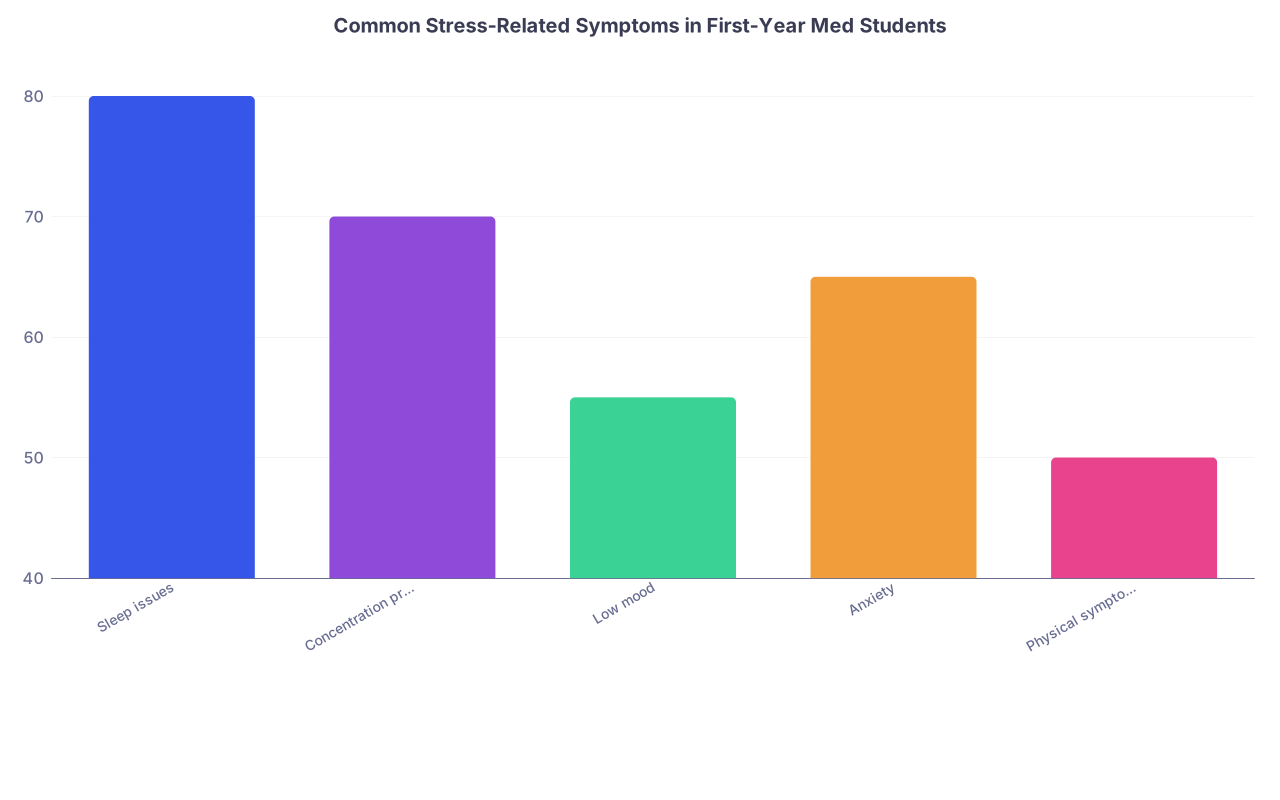
| Category | Value |
|---|---|
| Sleep issues | 80 |
| Concentration problems | 70 |
| Low mood | 55 |
| Anxiety | 65 |
| Physical symptoms | 50 |
(Values here as rough percentages: this is common. The severity and duration are what matter.)
D. Anxiety isn’t just “I care about doing well” anymore
Look for these shifts:
- You feel keyed up, on edge, or panicky most of the day.
- Physical stuff: racing heart, tight chest, nausea, shaking, sweating—for no obvious medical cause.
- You’re avoiding things you used to do (lectures, labs, group study, emails) because they trigger anxiety.
- You have panic attacks: sudden, intense fear + physical symptoms that peak within minutes.
“High-strung and hardworking” is one thing.
“I feel like I might die in the middle of a totally normal day” is another.
E. Thoughts about self-harm, death, or escape
This is the line where you stop debating and start acting.
Anything in this family needs professional help. Period.
- “If I got into a car accident and didn’t wake up… honestly that might be easier.”
- “If I failed out, maybe it wouldn’t be the worst thing. At least this would stop.”
- Thinking about disappearing, running away, or fantasizing about not being here.
- Any urge to hurt yourself, even if you swear you’d never do it.
If you’re here, I don’t care how “high functioning” you look from the outside.
You need help. Today, not “after this exam.”
3. A Simple Checklist: Do I Need Professional Help?
Run through this honestly. Don’t game it.
Answer yes/no for the last 2–4 weeks:
- I feel down, numb, or anxious more days than not.
- My sleep or appetite is significantly different from my normal.
- I’ve had clear trouble functioning—academically, socially, or with basic tasks.
- I’ve thought that life is pointless, or that things will never actually get better.
- I’ve thought about hurting myself, not wanting to wake up, or disappearing.
- I’m using alcohol, weed, or other substances more just to get through or shut my brain off.
- Friends or family have commented that I “don’t seem like myself lately.”
- I’ve canceled or avoided important things (class, exams, meetings) because I felt too overwhelmed.
- I feel like I’m constantly on the verge of breaking down, even if I’m keeping it together externally.
- I’ve tried my usual coping strategies (sleep, exercise, talking to friends) and they’re not working anymore.
Now the rule:
- 0–2 yes: Probably within the “rough but normal” range. Still worth making small adjustments and watching closely.
- 3–4 yes: You’re at yellow flag. I’d recommend at least talking to a counselor, student health, or a trusted mentor.
- 5+ yes or any yes to #5 → This is no longer optional. You should seek professional help.
Not “should think about it.” Should do it.
4. What “Professional Help” Actually Looks Like (And What It Doesn’t)
Most students imagine some caricature: lying on a couch, being judged, permanent record ruined. That’s not reality.
Here’s what “professional help” usually means in med school:
A. On-campus mental health services
Most schools have:
- Counseling/therapy services just for students.
- Short-term therapy (e.g., 6–12 sessions) with the option to refer you out for longer-term care.
- Options for crisis visits or faster appointments if you say certain key phrases:
“I’m having trouble functioning.” “I’m having thoughts about not wanting to be here.”
Use those phrases. Don’t water it down to “I’m kind of stressed.”
B. Off-campus therapists or psychiatrists
Good option if:
- You don’t want the school involved at all.
- You want continuity for years, not just a short-term campus service.
- You might need meds (depression, anxiety, ADHD, etc.).
Ask older students you trust if they know good off-campus providers used to working with med students or residents.
C. Your primary care provider
Underrated. Good first stop to:
- Rule out physical contributors (thyroid issues, anemia, sleep apnea, etc.).
- Start basic treatment for anxiety or depression if that’s appropriate.
- Coordinate referrals.

What it’s NOT
- It’s not automatically reported to the dean, your residency, or some secret blacklist.
- It doesn’t mean you’re “not cut out for medicine.”
- It doesn’t mean you’ll be forced to take a leave (that’s rare and usually a joint decision).
You’re seeing a doctor for your brain. The same way you’d see one for your lungs or your knee.
5. Common Fears That Keep Med Students From Getting Help (And Why They’re Wrong)
I’ve heard the same excuses again and again. Let’s kill a few.
“It’s just med school. Everyone’s stressed.”
Yes, everyone’s stressed.
No, not everyone:
- Thinks about not waking up.
- Can’t get out of bed.
- Fails multiple exams after being a strong student.
- Has panic attacks walking into lecture.
“Everyone is stressed” is not a defense against getting help. It’s a signal that many people should be getting help—and aren’t.
“I don’t have time.”
Translation: “I’m prioritizing grades over my ability to function as a human.”
You will lose far more time to unmanaged anxiety/depression than you will to a 50-minute therapy session once a week. I’ve watched students spend 20+ hours a week “studying” in an anxious fog instead of 8 focused hours with proper support.
“This will hurt my residency chances.”
Reality:
- Private mental health treatment generally doesn’t show up anywhere in your training file.
- Residency programs care way more about your performance and professionalism than whether you saw a therapist.
- What actually hurts you: failing step exams, failing classes, professionalism issues, leaves taken under duress after a crash.
Taking care of your mental health is protective, not risky.
“If I admit I need help, it means I’m weak / not cut out for this.”
No. It means you’re human.
The “never struggle, never break” doctor is a fantasy—and usually a dangerous one.
The doctors I’ve respected most are the ones who can say, “Yeah, I needed help at one point. I got it. I’m better for it.”
6. What You Can Try On Your Own—And When To Stop DIY-ing It
Yes, there are things you can try before or alongside professional help. But there’s a limit.
Reasonable self-management moves:
- Tighten your sleep schedule for 1–2 weeks: same wake/sleep times, no 2 am YouTube spirals.
- Exercise 3–4 times a week, even short sessions.
- Cut back on caffeine and alcohol a bit; both can wreck sleep and anxiety.
- Study with structure: fixed blocks, breaks, no endless half-studying while scrolling.
- Talk to someone you trust: a friend in your class, an upperclassman, a partner.
If after 2–3 weeks of seriously trying those, you’re still:
- Feeling miserable most days,
- Barely holding your life together, or
- Having dark or scary thoughts,
then you’re past the “DIY” stage. Keeping it DIY at that point is like managing chest pain with more cardio.

| Step | Description |
|---|---|
| Step 1 | Feeling very stressed |
| Step 2 | Use self-care & monitor |
| Step 3 | Talk to peer/mentor, consider counseling |
| Step 4 | Schedule counseling/therapy within a week |
| Step 5 | Seek urgent help today: crisis line, ER, or school crisis service |
| Step 6 | Lasts > 2 weeks? |
| Step 7 | Functioning affected? |
| Step 8 | Thoughts of self-harm or not wanting to live? |
7. Exactly What to Do Next (Step-by-Step)
If you’re reading this and thinking, “Yeah… this is me,” here’s your action plan.
Make it real.
Say this sentence out loud:
“I’m not doing okay, and I need help.”Choose one route today (not later):
- School counseling / wellness center
- Off-campus therapist/psychiatrist
- Primary care
- If you’re in immediate danger or scaring yourself: crisis line or ER
Send one message or make one call.
Examples you can literally copy:To campus counseling:
“Hi, I’m a first-year med student and I’ve been struggling with mood, anxiety, and sleep for a few weeks. It’s affecting my functioning. I’d like to schedule the soonest available appointment.”To your PCP:
“I’d like to set up an appointment to discuss stress, mood, and sleep. Things have been worse the last month and I’m concerned this is more than just normal school stress.”
Tell one person you trust.
“I reached out for help today because things have been rough for a while. Just wanted you to know.”
That’s it. Not “fix your whole life.” Just those steps.

| Feature | Normal Stress | Needs Professional Help |
|---|---|---|
| Duration | Days to a week around exams | 2+ weeks consistently |
| Mood | Ups and downs, but some good days | Mostly down, numb, or anxious |
| Functioning | Still getting work done | Grades, tasks, or attendance suffering |
| Sleep/Appetite | Briefly disrupted | Persistent change, worsening over time |
| Thoughts | “This is hard” | “What’s the point?” / self-harm thoughts |
FAQ: Stress in Med School and Getting Help
1. How much stress is “normal” in the first year of med school?
Normal: feeling overwhelmed before exams, occasional crying, frustration with workload, needing a weekend to reset, mild anxiety about performance.
Not normal: weeks of feeling hopeless, not enjoying anything, panic attacks, or being unable to function academically or personally. Frequency and duration matter more than intensity on a single day.
2. Will getting mental health help be reported to my medical school or show up on my record?
Campus counseling usually keeps your records separate and confidential, except in rare safety situations. Off-campus therapy or psychiatry is standard healthcare and doesn’t go to your dean or program. What schools typically see are academic results and professionalism issues, not “this person saw a therapist.”
3. What if I’m not sure if my thoughts are “serious enough” to get urgent help?
Err on the side of taking them seriously. If you’re thinking about death, not waking up, hurting yourself, or fantasizing about escape in a way that scares you—even if you think you wouldn’t act on it—treat that as a reason to reach out urgently. You don’t need a specific plan or intent for it to be serious.
4. Can I still be a good doctor if I struggle with anxiety or depression in med school?
Yes. Fully yes. Plenty of excellent physicians have had anxiety, depression, ADHD, or other mental health conditions. What actually matters is: did you recognize it, get appropriate help, and develop ways to function safely and effectively? Unmanaged problems are the risk—not the diagnosis itself.
5. What should I do today if I think my stress has crossed the line?
Pick one: email your school counseling service, call your primary care doctor, or look up an off-campus therapist and send a contact request. Then tell one trusted person, “I’m not doing great and I reached out for help.” Don’t design the perfect plan. Just take that one concrete step today.
Open your calendar or phone right now and block off 10 minutes to send that email or make that call. If your brain is already telling you “this might be too much,” that’s your signal: act on it. Not next month—today.