Should I See a Therapist During First Year or Wait Until It’s Bad?
What if you’re not “falling apart,” but you’re already waking up with dread before anatomy lab—does that justify seeing a therapist, or should you wait until you’re actually not functioning?
Let me be blunt: waiting until it’s “bad” is how students end up on leave, failing a course, or barely clinging to med school by their fingernails.
If you’re asking this question, you’re already close enough to the line that seeing someone is reasonable. You don’t need to be in crisis to justify therapy. In fact, that’s the worst time to start.
Let’s walk through this like an actual decision, not vague “prioritize your wellness” fluff.
The Real Question: What Are You Waiting For?
Most first-years who hesitate about therapy are thinking something like:
- “Everyone’s stressed. This is normal. I should just tough it out.”
- “I don’t want something in my record that could affect licensing.”
- “I don’t have time. I can barely keep up as it is.”
- “I’m not that bad. Other people have it worse.”
Here’s the reality I’ve seen over and over:
- The students who go early usually stabilize and perform better academically.
- The students who wait until it’s bad usually:
- Are already behind in studying
- Are already not sleeping
- Often need meds, leave, or remediation
- Licensing boards care if you’re impaired and untreated, not if you took care of your mental health.
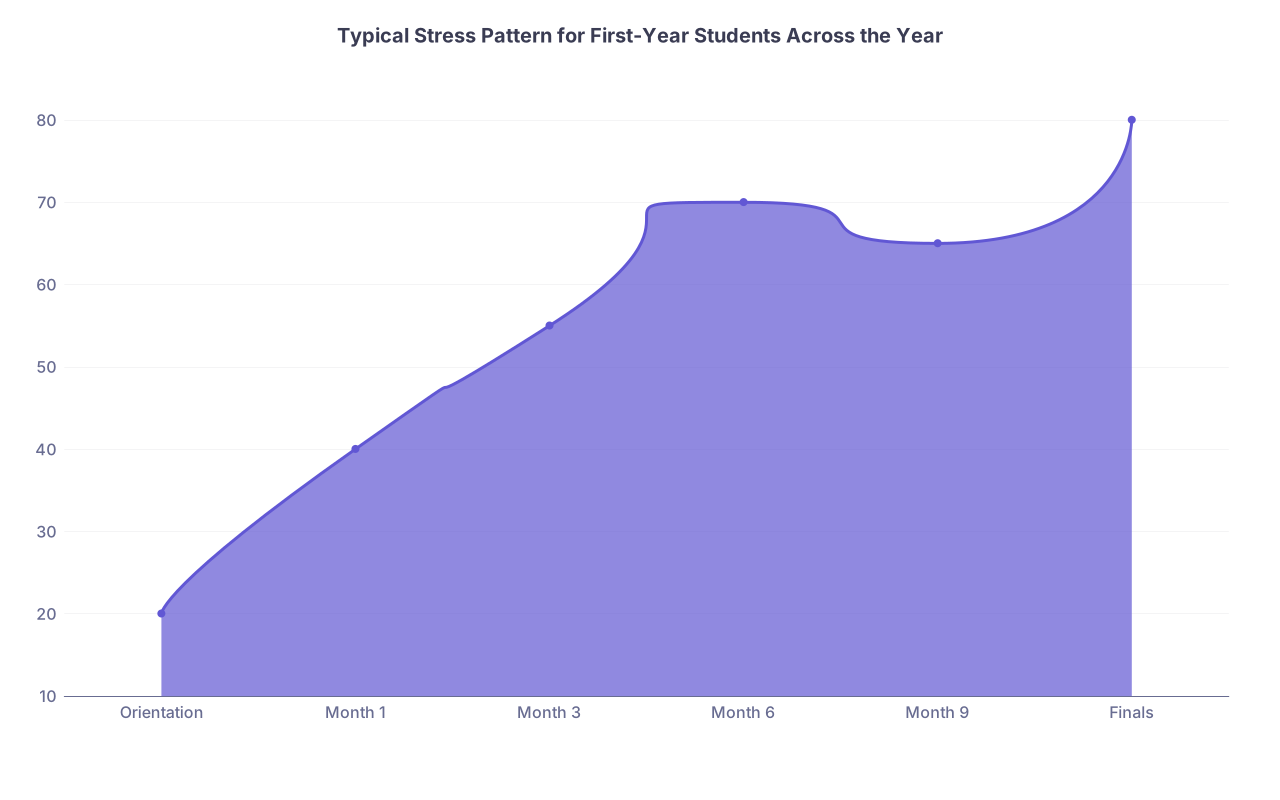
So, the better question is: Are your current symptoms trending up or down?
| Category | Value |
|---|---|
| Orientation | 20 |
| Month 1 | 40 |
| Month 3 | 55 |
| Month 6 | 70 |
| Month 9 | 65 |
| Finals | 80 |
That curve? That’s what I’ve watched play out. Stress rarely magically declines by itself first year. Workload ramps. Exams get bigger. Imposter syndrome gets louder.
If your mental health is already wobbling at Month 1–3, betting that it’ll fix itself by Month 9 is fantasy.
A Simple Framework: “Manageable, Slipping, or Red Flags?”
Here’s a blunt framework I’d use if you were in my office asking.
1. “Manageable but heavy” – You’d benefit from preventive therapy
This is where a lot of first-years sit:
- You’re anxious but still sleeping most nights.
- You’re on top of lectures with some late nights.
- You enjoy some things outside school, but not as much as before.
- You’re thinking: “This is a lot, but I’m holding it together… sort of.”
If that’s you, therapy now is like strength training before an injury. You’re building:
- Study routines that don’t destroy your brain.
- Ways to shut off at night so sleep isn’t a disaster.
- Tools for perfectionism, comparison, and imposter syndrome before they spike around exams.
You don’t need to be in crisis. Seeing someone now is like getting a coach while you’re still in the game, not when you’re benched and injured.
2. “Slipping” – You should book therapy soon
This is where it’s not yet catastrophic, but the screws are starting to come loose:
- Grades are dropping unexpectedly (e.g., you went from B+/A- to barely passing).
- You’re rereading the same paragraph and retaining nothing.
- You’re skipping small tasks (emails, assignments, small quizzes) because you’re overwhelmed.
- You cry more than usual, snap at people, or feel numb more days than not.
- You’re drifting from friends or hiding how you’re doing.
This is the zone where people like to say, “I’ll fix this over break.” They rarely do.
If you’re in this stage, you’re not “dramatic” for considering a therapist. You’re right on time.
3. “Red flags” – You should not wait. At all.
Concrete red flags that mean: you need to see someone now, not in three weeks:
- You’ve thought, “If I got in a car accident and didn’t wake up, that might be easier.”
- You’re using alcohol/weed/others to sleep or numb out most days.
- You’re not sleeping multiple nights a week from anxiety or thoughts racing.
- You’ve missed an exam, a required session, or clinical skills because you “couldn’t move.”
- Panic attacks, chest tightness, feeling like you can’t breathe or are dying.
If you’re here, this isn’t a “should I wait?” conversation anymore. This is: you already waited too long; now we need to catch up.
“But Everyone’s Struggling. Why Would I Need Therapy?”
Because med school is not normal stress. It’s a pressure cooker with a time limit.
You’re cramming years of material into your brain, being constantly evaluated, and living in a culture that quietly worships overwork and self-neglect.
Here’s what therapy can actually do during first year (beyond “talk about your feelings”):
- Help you design a realistic study structure that doesn’t lead to chronic burnout.
- Challenge brutal internal narratives like “If I’m not top 10%, I’m a failure.”
- Teach you what early burnout feels like in your body so you can catch it sooner.
- Help you manage conflict with roommates, partners, or family now that your life is insane.
- Build a plan for USMLE/COMLEX prep that doesn’t wreck your mental health.

It’s not indulgent. It’s tactical.
Every year, I watch students who never learn these skills crash around Step 1 / Step 2 time. You don’t want to build your entire medical career on frantic, last-minute coping.
“Will Therapy Hurt My Career or Licensing?”
This fear is loud, and honestly, a lot of schools and older physicians have done a poor job clarifying this.
Short version: Taking care of your mental health is less risky for your career than ignoring it.
Key points:
- Most state medical boards have moved toward questions about current impairment, not “Have you ever seen a therapist?”
- Seeing a therapist through your school’s counseling services or a private provider is routine. They’re not sending monthly updates to your dean.
- Serious issues show up in your record when:
- You’re failing multiple courses repeatedly with no intervention.
- You’re unprofessional or unsafe.
- You’re impaired at school (intoxicated, unstable, etc.).
Therapy often prevents those scenarios.
If you’re still anxious, ask your student health or counseling center:
“What’s your confidentiality policy? Under what circumstances would my school be notified?”
Make them answer that directly. Most of the time, the threshold is immediate risk to self/others, not “I’m anxious before exams.”
Common Excuses – And Honest Counters
Let’s hit the usual ones head-on.
“I don’t have time.”
You’re in class, labs, studying constantly. I know. But answer this:
How much time do you lose each week to:
- Scrolling mindlessly because you’re too anxious to study.
- Re-reading material because you retained nothing the first time.
- Lying awake at 2 a.m. stressing about how behind you are.
If therapy helps you get back even 2–3 of those hours and think more clearly, it’s a net win.
A 50-minute session once every 1–2 weeks is not your problem. The disorganized stress spiral is.
“I’m not that bad. Other people have it worse.”
This is the classic med student move: minimize your suffering because you know what “real” pathology looks like.
Two truths can coexist:
- Yes, someone else is worse off.
- Yes, you’re still struggling enough that help would be useful.
You don’t wait to treat hypertension until you’re in hypertensive crisis. Same logic.
“What if I don’t ‘click’ with the therapist?”
Then you try another one. This isn’t marriage.
Tell them straight: “I’m not sure this fit is right for me. Can you recommend someone with more experience in [performance anxiety / perfectionism / med students / trauma]?”
A decent therapist won’t be offended. If they are, that’s proof it’s not a good fit.
How to Decide: A Quick Self-Check
Ask yourself these questions and answer honestly:
In the last two weeks, how often have you felt:
- Overwhelmed to the point of shutting down?
- Like you’re constantly behind, no matter how much you study?
- Numb, disconnected, or like you’re just going through the motions?
How’s your sleep?
- Falling asleep within 20–30 minutes most nights?
- Waking up rested at least some days?
If the answer is no across the board, that’s a signal.
How’s your functioning?
- Keeping up with lectures and required activities?
- Turning in what you need to on time?
- Holding basic hygiene, food, and movement?
How’s your head?
- Any intrusive thoughts about wishing you didn’t exist?
- Any self-harm behaviors or urges?
- Any bursts of anger or crying that feel “out of nowhere”?
If you’re reading this and mentally checking several boxes, the decision is made: you’re not “fine.” You’re compensating.
How to Actually Start (Without Making It a Huge Thing)
Here’s a simple step-by-step you can follow this week.

| Step | Description |
|---|---|
| Step 1 | Noticing Stress/Struggle |
| Step 2 | Check School Counseling Website |
| Step 3 | Review Confidentiality & Services |
| Step 4 | Book Initial Appointment Online or by Phone |
| Step 5 | Attend First Session & Share Med School Context |
| Step 6 | Schedule Regular Sessions |
| Step 7 | Request Different Provider or External Referral |
| Step 8 | Good Fit? |
Go to your school’s counseling or student wellness website. Every med school has something. It might be:
- Student health counseling
- A wellness office
- Embedded mental health providers for the med school
Look for:
- How to book (online portal, phone, email).
- Number of sessions allowed (some schools cap it; others don’t).
- After-hours or crisis options.
Book one appointment. Don’t overthink it. You’re not signing up for life. You’re gathering data: “Does this help?”
In the first session, be direct:
- “I’m a first-year med student. My main issues are [anxiety / sleep / focus / burnout]. I want help before this gets worse.” That one sentence gives them a lot to work with.
After 2–3 sessions, evaluate:
- Do I leave feeling clearer, lighter, or more focused?
- Have I gotten at least one concrete strategy that helped? If yes, stay. If no, ask for a redirect.
So… See a Therapist Now or Wait?
Here’s my honest stance after watching a lot of first-years burn out:
If you’re asking, you should probably go.
Therapy in first year shouldn’t be a last resort. It should be standard equipment—like Anki or a decent stethoscope. You can always stop if you truly don’t need it. But clawing your way back from a full-on crash is much harder than preventing one.
So here’s your move for today:
Open your school’s counseling or wellness page, right now, and see exactly how to book a first appointment. Don’t commit yet—just look. If your stomach flips while you do it, that’s your sign you probably need to click “schedule.”
FAQ: Therapy in First Year of Medical School
| Situation | Recommendation |
|---|---|
| Mild stress, functioning OK | Consider preventive |
| Slipping grades / focus | Book within 1–2 weeks |
| Sleep + anxiety issues | Book soon |
| Suicidal thoughts / self-harm | Seek help immediately |
| Substance use to cope daily | Seek help immediately |
1. What kind of therapist should I look for as a first-year med student?
Look for someone who either:
- Works directly with medical students or residents,
- Has experience with “high-achieving professionals,” or
- Is embedded in your med school wellness or counseling service.
Degrees to look for (all can be excellent if trained well):
- Psychologist (PhD/PsyD)
- Licensed clinical social worker (LCSW)
- Licensed professional counselor (LPC/LMHC)
- Psychiatrist (MD/DO) – more for meds, sometimes therapy
The fit matters more than the letters. In session one, ask: “Have you worked with med students or similar populations before?” If the answer is confident and specific, you’re likely fine.
2. Should I tell my school or advisor I’m seeing a therapist?
Usually, no. You don’t need to tell anyone unless:
- You want accommodations (reduced course load, exam adjustments).
- You’re planning a leave of absence.
- Your therapist recommends involving the school due to safety or major changes.
Your therapist can help you script what to say if it ever makes sense to loop your school in. Random faculty and peers don’t need to know unless you want them to.
3. How often should I go to therapy during first year?
Common patterns that actually work:
- Weekly during intense periods (early adjustment, exam blocks, personal crises).
- Every 2 weeks for maintenance once you’re more stable.
- Monthly check-ins during lower-stress phases.
You don’t have to commit forever. A solid short-term burst (e.g., 6–10 sessions) can still give you tools you use the rest of med school.
4. What if I try therapy and feel worse at first?
That’s actually not uncommon. Once you slow down and talk, all the stuff you’ve shoved aside rushes back in. Sessions can leave you drained or emotional at first.
Two things to watch:
- Does the “worse” feeling gradually shift into relief, clarity, or feeling understood over a few sessions? That’s normal processing.
- Do you feel constantly destabilized, shamed, or invalidated? That’s not good—and you should explicitly say, “This is making me feel worse,” and consider switching.
Give it 2–3 sessions unless something feels truly off or unsafe. It takes time to warm up.
5. How do I afford therapy if school counseling is limited or full?
Options people overlook:
- Many schools contract with community therapists for a set number of covered sessions—ask if that exists.
- Sliding-scale clinics or training clinics at psychology programs often see students for reduced fees.
- Some student insurance plans cover teletherapy with low copays—call the number on the back of your card and ask for “in-network mental health providers near [your location].”
- If you’re open with a therapist about being a med student on a tight budget, some will negotiate rates or frequency.
Today’s action step: Check your student health insurance benefits page and search for “mental health” or “behavioral health.” See exactly what’s covered—don’t guess.