
Feeling behind in M1 is not just normal—it’s practically the default setting.
If you feel like everyone else is on top of things while you’re sprinting on a treadmill that never stops, you’re experiencing exactly what most first-year med students experience. The big problem isn’t the feeling. The problem is when you misinterpret that feeling as proof that you’re not cut out for this.
Let’s cleanly separate three things:
- What’s emotionally typical
- What’s academically dangerous
- What actually works to stay afloat
You don’t need motivational slogans. You need a calibrated expectation of what “normal” looks like and a practical way to measure whether you’re actually in trouble or just feeling the standard M1 panic.
What’s Actually “Normal” in M1
Let me be blunt: M1 is designed so that no one can do everything.
The volume of information is intentionally overwhelming. Not because faculty are cruel (usually), but because medicine is bigger than any one person’s brain. So the training teaches you to triage. That “I’m behind” feeling is your brain realizing you physically can’t master everything at once.
Here’s what’s genuinely typical among M1s at most schools:
- You’re never fully caught up on all lectures, readings, and recommended resources.
- There’s always some lecture you watched at 1.5–2x speed or just skimmed the slides.
- There’s at least one unit where you passed but felt like you understood maybe 60–70% at best.
- You have weeks where you’re functioning, but not thriving: more survival than mastery.
- You’re comparing your insides (stress, confusion) to everyone else’s outsides (calm faces, color-coded notes) and concluding you’re uniquely behind. You’re not.
Here’s the part most M1s don’t realize:
Even your visibly “together” classmates feel behind. The ones with Anki decks done at 6 a.m., the students who answer every question in small group. I’ve heard them in the hallway afterward say, “I’m so screwed for this exam” or “I haven’t started pathology yet.”
That low-grade panic? It’s typical.
But there’s a difference between normal discomfort and actual academic danger.
How to Tell If You’re “Normal Behind” or “Problem Behind”
You need a quick triage system. Feelings alone are a terrible metric in med school.
Here’s a simple framework. If you answer “yes” to the questions in the left column, you’re in “normal behind.” The right column is what you watch for.
| Question | Normal Behind | Problem Behind |
|---|---|---|
| Recent exam scores | Mostly passing, some solid | Repeatedly near/below cutoff |
| Lecture watching | A bit behind but catching up | Weeks of unviewed material |
| Anki/Practice | Miss days but restart | Entire topics untouched |
| Sleep | 6–7 hours most nights | Chronic <5 hours or constant all-nighters |
| Functioning | Tired but managing | Can’t focus, missing deadlines |
If this describes you:
- You pass most exams on first try
- You’re usually within a few days of being “caught up”
- You can outline a plan for the next exam that seems doable
Then you’re not actually in danger. You’re just experiencing M1 like almost everyone else.
If this describes you:
- You’re failing or barely scraping by multiple exams
- You don’t know where to even start studying because the backlog is huge
- You’re skipping basic functioning (sleep, food, hygiene) to just tread water
Then you’re not weak. You’re in a system designed to overload you, and you need a strategy shift and support, not more grit.
Why You Feel Behind All the Time (Even When You’re Not Failing)
This isn’t just “med school is hard.” The structure actively creates the feeling that you’re always late.
A few reasons:
Firehose learning model
New content keeps coming whether you mastered yesterday or not. There’s no “pause” button. That creates constant backlog anxiety.Comparison culture
Someone always:- Finished all Anki for the day
- Watched lectures at 2x and did questions
- Already bought a Step 1 prep book “just to skim”
You see that, ignore your own passing score, and decide you’re behind.
High-achiever whiplash
Most med students were near the top in undergrad. M1 often drops you into the middle of the curve. That crash in relative rank feels like failure even when you’re doing fine.Shifting goalposts
Undergrad: A– = “bad.”
Med school: Pass = fine. Honors maybe matters, maybe not, depending on your goals and your school’s system. But your brain’s still wired to treat anything less than perfection as unacceptable.
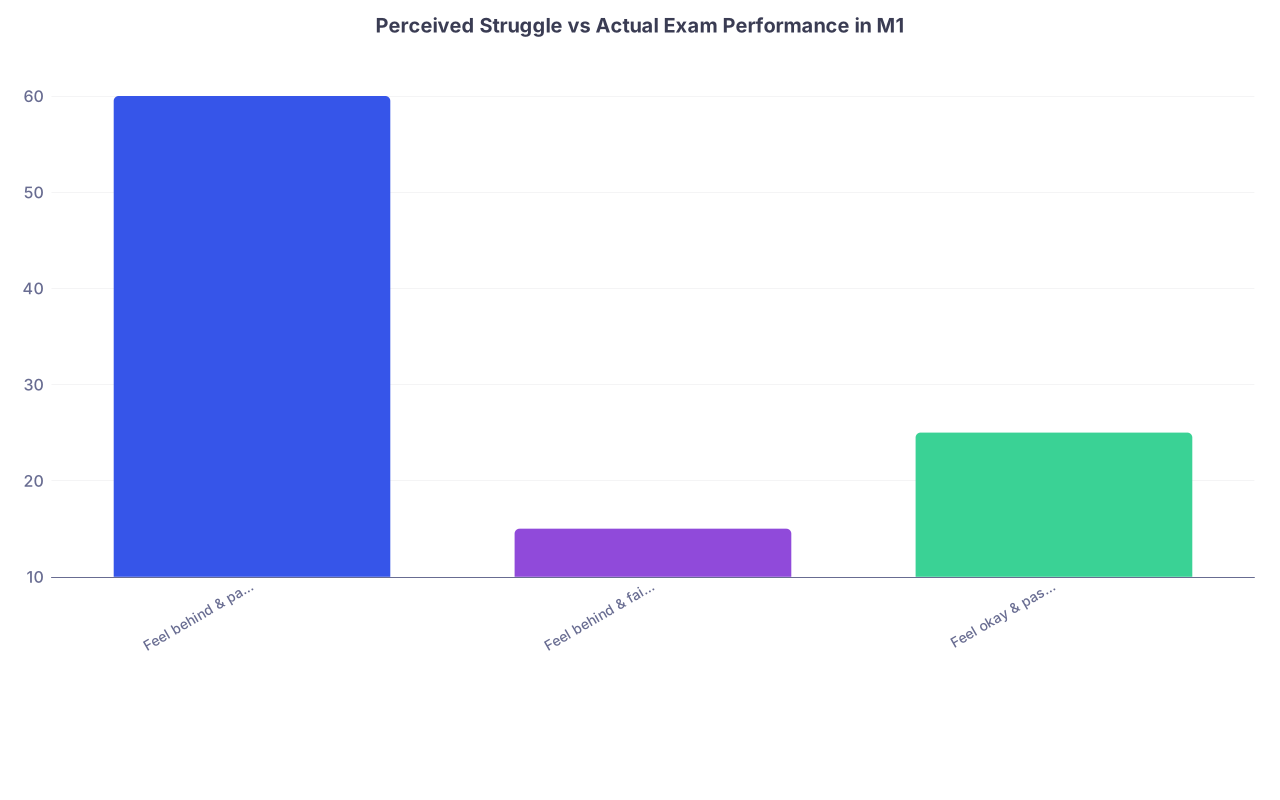
Take a look at this: how students feel they’re doing vs how they’re actually doing based on exams.
| Category | Value |
|---|---|
| Feel behind & passing | 60 |
| Feel behind & failing | 15 |
| Feel okay & passing | 25 |
A majority of students who say, “I’m constantly behind; I’m failing” are actually passing comfortably. The emotion doesn’t match the data.
Your job is to respect the emotion but act on the data.
What’s a Realistic “Normal” Study Pattern in M1?
Let’s crush the fantasy version first:
No, most people are not calmly:
- Watching every lecture at normal speed
- Doing all assigned reading
- Completing all practice questions on schedule
- Keeping up with perfect Anki streaks
A realistic pattern for a functioning M1 looks more like:
- You watch most lectures at 1.5–2x speed, some faster, some slower.
- You regularly skip optional readings completely.
- You fall 1–3 days behind on content, then sprint a bit to catch up around the weekend.
- You miss Anki or QBank days, then do “damage control” sessions.
- You focus way more on what’s tested than what’s “interesting.”
Here’s what a lot of my M1s ended up using as a baseline weekly pattern (for a systems block, for example):
| Time Block | Focus |
|---|---|
| 8a–12p | Lectures (live or recorded) |
| 1p–3p | Review lecture notes/Anki |
| 3p–5p | Practice questions or small group |
| 7p–9p | Catch-up / weak topics / Anki |
Is this perfect? No. Does it keep you from drowning? Usually, yes—if you stick close to it and protect your evenings from turning into a nightly 1 a.m. disaster.
How to Tell What You Can Safely Let Go
You feel behind largely because you’re trying to do 120% of what’s even remotely “recommended.”
You can’t. So you have to be ruthless about what’s optional.
Here’s a basic decision framework for each resource:

| Step | Description |
|---|---|
| Step 1 | New resource |
| Step 2 | Prioritize |
| Step 3 | Swap it in |
| Step 4 | Defer or skip |
| Step 5 | Is it directly tied to exams? |
| Step 6 | Replaces something worse? |
What’s usually high-yield / non-negotiable:
- Lecture objectives
- Practice questions written by your faculty or aligned with your school’s style
- Core Anki cards tied directly to lecture content (not giant decks you found on Reddit that cover everything from M0–M8)
What’s negotiable when you’re drowning:
- Full-length textbook chapters
- Every single recommended reading
- Extra external videos for topics you mostly already understand
- Perfect note formatting and aesthetic flashcards
If you’re falling behind, your first move is not “study longer.” It’s “cut low-yield stuff.”
When Feeling Behind Is a Red Flag
Constantly feeling behind is normal.
Ignoring concrete signs you’re academically in trouble is not.
Here are clear red flags where you need more than just “better time management”:
- You’ve failed 2 or more exams in a row.
- You’re chronically studying 10–12+ hours a day and still bombing tests.
- You don’t understand how your school tests you (patterns, style, level of detail).
- You’re so anxious you’re not retaining content: rereading, rewatching, and nothing sticks.
- You’ve stopped doing practice questions entirely because “I’ll do them once I’ve reviewed everything.” That day never comes.
That’s when you:
- Meet with academic support or the learning specialist at your school.
- Talk to an upperclassman who did well at your specific school and ask exactly what they did.
- Consider meeting with counseling if the anxiety or depression is taking over basic functioning.
This isn’t weakness. This is what functional med students do when the system is bigger than their current strategy.
Ground Rules to Stay Sane While Still Being “Behind”
Here’s the part everyone actually wants: how to live with the permanent “behind” feeling without burning out.
Define “bare minimum” and “ideal” for each week
Example:- Bare minimum: Watch core lectures, do associated Anki, and hit 50–75 practice questions by weekend.
- Ideal: Same + extra review video or topic deep dive if time.
You aim for ideal. You’re satisfied (not thrilled, but satisfied) with bare minimum.
Always know your next exam like a project manager
- Date, format, % of grade
- Content breakdown (systems, units, lectures)
- Your weakest topics from previous blocks
Your plan flows backward from the next exam, not from vague “I should keep up.”
You only get to panic if you’re doing questions and reviewing them
No questions = no reality check.
If you’re doing questions and your scores are moving up, you’re not lost. You’re building.Respect sleep as a performance tool, not a luxury
Chronic 4–5 hour nights will eventually torpedo:- Memory consolidation
- Exam performance
- Mood and relationships
Occasional late nights happen. Daily 2 a.m. is a choice that backfires.
Do one thing per day that’s not med school
Walk. Gym. 30 minutes of Netflix. Call a friend outside medicine.
If your entire identity becomes “struggling M1,” everything feels like a judgment on your worth.
The Short Answer: What’s Truly Typical?
Here’s the honest, unpolished reality:
Typical M1 experience:
- Feels 2–4 days behind at any given time
- Is passing most exams, sometimes by more than they emotionally believe
- Has at least one meltdown per block about “maybe I’m not cut out for this”
- Survives on a mix of caffeine, group chats, past exams, and brute adaptation
- Starts to learn, slowly, what they can safely ignore
Abnormal / needs attention:
- Repeated failures without improvement
- No clear idea what’s going wrong on exams
- Baseline anxiety or depression that’s swallowing your day
- Isolation: no peers, no mentors, not using school resources
If you’re functioning, passing, tired, and chronically feeling behind? You’re not broken. You’re M1.

Quick Calibration Checklist
Ask yourself these today:
- What’s my next exam and date?
- Am I passing most assessments so far?
- Do I know roughly what topics are weak for me?
- Do I have a weekly plan that includes lectures, review, and questions?
- Am I sleeping at least 6 hours most nights?
- Have I talked honestly with at least one upperclassman or mentor about how they studied?
If you can answer most of those with “yes” or “I’m working on it,” you’re on track—even if you feel like a mess.
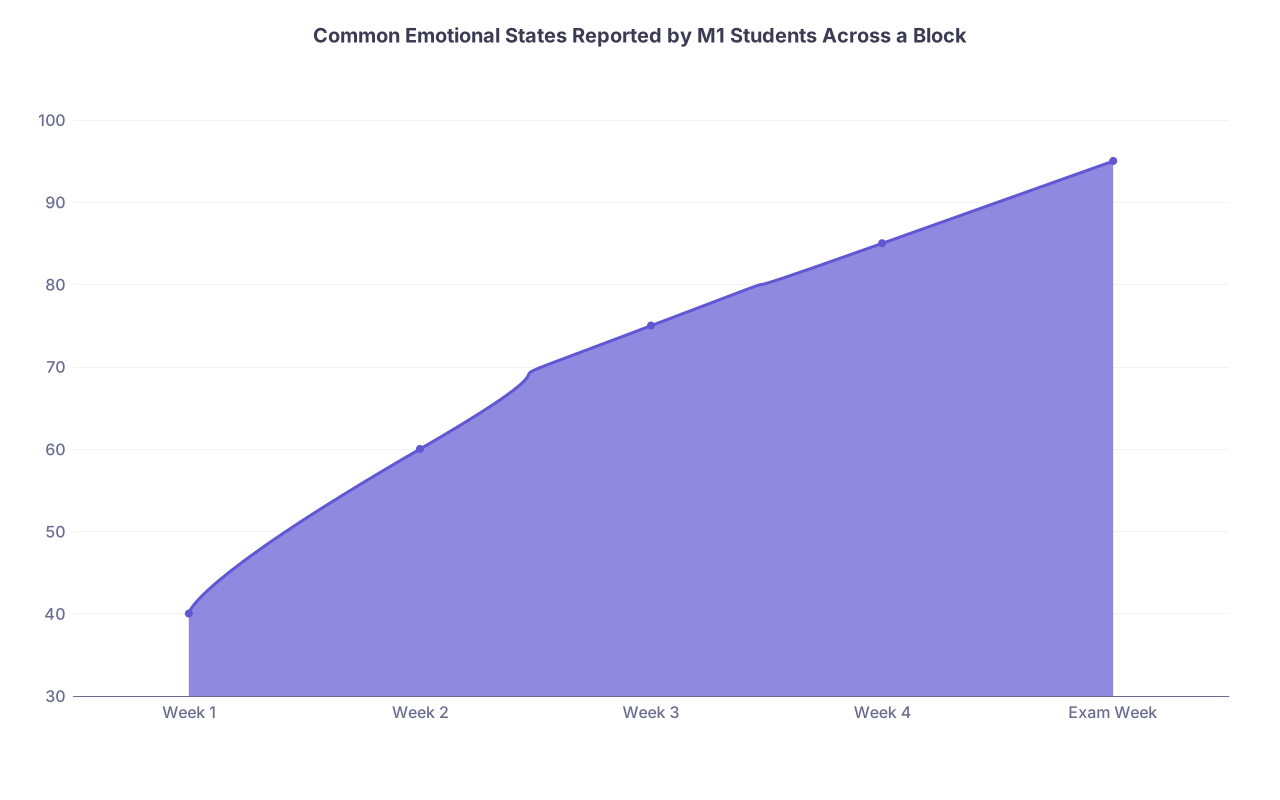
You’re not supposed to feel comfortable in M1. You’re supposed to adapt. Slowly. Clumsily. Then look back in M3 and think, “I can’t believe I thought that was a lot.”
| Category | Value |
|---|---|
| Week 1 | 40 |
| Week 2 | 60 |
| Week 3 | 75 |
| Week 4 | 85 |
| Exam Week | 95 |
The stress curve climbs. That doesn’t mean you’re failing. It means you’re in the game.

FAQ: Is It Normal to Feel Constantly Behind in M1?
If I’m always behind on lectures, can I still do well on exams?
Yes, if you’re behind in a strategic way. Most students don’t watch every second of every lecture. The key is prioritizing:- High-yield lectures
- Topics your faculty love to test
- Practice questions and review
It’s better to deeply understand 80% of tested material than to lightly touch 100% and remember none of it.
How many hours a day should I be studying in M1?
Most functional M1s land in the 6–9 hour/day range of real studying (not including lecture time if you attend live and zone out). Some do more, some do less. If you’re studying 12+ hours a day and still failing, it’s not an hours problem—it’s a strategy problem.Is it normal to think about quitting in M1?
Very normal. I’ve heard versions of “Did I make a mistake?” from people who went on to derm, ortho, and competitive fellowships. The thought alone doesn’t mean you don’t belong. If it’s constant and tied to hopelessness, talk to someone (counseling, trusted faculty, upperclassman).What if everyone else seems to be using resources I’m not using yet (Boards & Beyond, Pathoma, etc.)?
Classic trap. You don’t need every fancy resource in M1. If you’re passing using lectures + Anki + some questions, you’re fine. Add external resources only if:- They directly help with weak areas, and
- They replace something less effective, not just stack on more hours.
How do I stop comparing myself to classmates?
You probably won’t stop entirely, but you can mute the damage. Concrete moves:- Leave any group chat that’s devolved into flexing or panic
- Find one or two study partners you trust and stick with them
- Judge your progress by your own exam performance and understanding, not someone else’s color-coded Notion setup.
What should I do if I’ve already failed an exam in M1?
One failed exam in M1 is not the end. But don’t shrug it off either. Sit down and do a post-mortem:- Did you start studying too late?
- Did your practice questions match the exam style?
- Were you memorizing slides instead of understanding concepts?
Then meet with course faculty or academic support and get specific feedback. Adjust now, not after the third failure.
How do I know if I need professional help (mental health or academic support)?
You should seriously consider it if:- You’re having trouble sleeping, eating, or getting out of bed
- You cry frequently or feel numb and disconnected most days
- You’ve failed multiple assessments and don’t know why
- You’re thinking about self-harm or that people would be better off without you
This isn’t overreacting. A lot of med students quietly suffer for months. Getting help early is a strength move, not a weakness.
Bottom line:
Feeling constantly behind in M1 is normal. Passing while feeling behind is normal.
What’s not normal—and not okay to ignore—is repeated failure, total burnout, or silent misery.
Use your exams, not your feelings, as the main reality check. Cut low-yield work. Protect your sleep. And stop assuming you’re the only one scrambling. You’re not.