The lie you’re being sold is that “real” med students sacrifice sleep. That lie is chewing up first‑years and spitting them out.
You’re not weak if you protect your sleep. You’re smart. The weak ones are the people bragging about 3‑hour nights while quietly forgetting things on wards and bombing exams they should have passed.
Let me walk you through the sleep mistakes that quietly wreck first‑year performance, health, and sanity—then how to stop making them before they become your personality.
1. The “I’ll Just Sleep Less Before Exams” Trap
This is the classic first‑year error. You’re fine most of the block, then 7–10 days before the exam, you start chopping hours off sleep to cram “just a little more.”
It feels productive. It isn’t.
Here’s what actually happens when you do that:
- Your ability to form long‑term memories tanks
- Your recall speed drops (hello, running out of time on questions you knew)
- Your stress perception skyrockets—everything feels harder than it is
- You build an association: “Exams = misery + exhaustion” (that one comes back to haunt you)
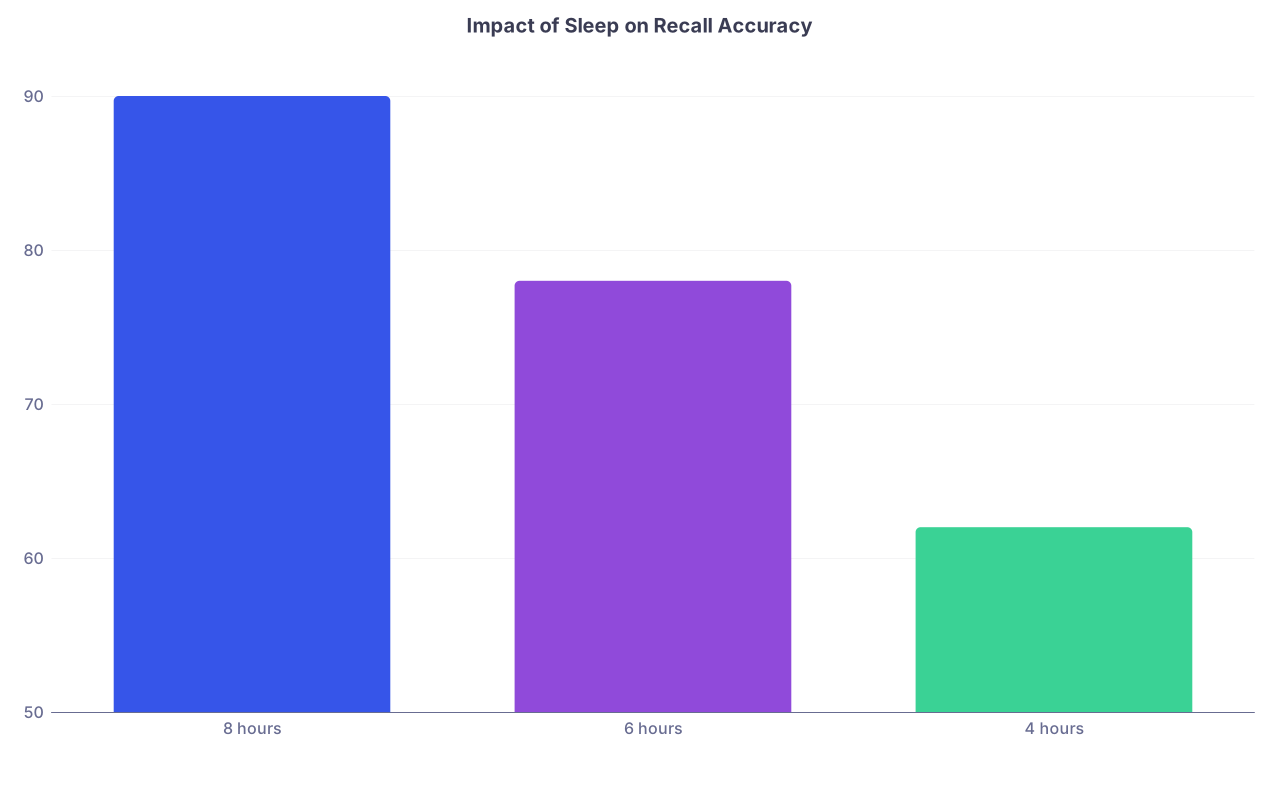
| Category | Value |
|---|---|
| 8 hours | 90 |
| 6 hours | 78 |
| 4 hours | 62 |
The mistake pattern
You’ll recognize this:
- Week 1–2: “I’ll just keep up.” You mostly do.
- Week 3: You fall behind a bit.
- Week 4: Panic → you cut sleep from 7–8 hours to 4–5.
- Exam week: You run on caffeine + cortisol + vibes.
Short term: maybe you scrape through.
Long term: your baseline gets worse:
- You remember less from each block
- You start the next block already tired
- You need more cramming next time, not less
That’s how people spiral from “responsible student” to “permanently sleep‑deprived zombie” by March.
What to do instead
Set a hard minimum sleep floor for exam week.
Non‑negotiable: 6.5–7 hours, every night, including night before exam. Not “ideal,” required.Move the suffering earlier.
If you’re going to push, push 10–14 days before the exam by:- Adding one focused 60–90 minute block earlier in the day
- Doing more questions, not more passive rereading
- Still going to bed on time
Last 2 nights: protect like a procedure.
- No new material after ~7–8 pm
- Only light review / flashcards
- Screens off 30–45 minutes before you want to be asleep
If your “plan” for passing relies on sacrificing sleep right before the exam, it’s not a plan. It’s gambling with your brain function.
2. Treating Weeknight Sleep as Optional and “Catching Up” on Weekends
Another common self‑sabotage move:
You tell yourself, “I’ll grind during the week and fix the damage on Saturday.”
You won’t. That’s not how bodies work.
Why this backfires
Chronic partial sleep deprivation stacks. Five nights of 5–6 hours isn’t “mildly rough.” It’s equivalent to pulling an all‑nighter in terms of functional decline.
I’ve watched students live this pattern:
- Monday–Thursday: in bed at 1–2 am, up at 7 for class
- Friday: brain fog, impulsive “screw this, I’m done” decision → Netflix until 3 am
- Saturday: sleep until 12, feel guilty, study badly all afternoon
- Sunday: panic, stay up too late again
You don’t actually get rested. You just oscillate between exhausted and slightly less exhausted.
The performance cost
Choppy, inconsistent sleep wrecks:
- Attention span – you reread the same paragraph 4–5 times
- Executive function – you can’t plan, prioritize, or follow your own schedule
- Emotional regulation – tiny setbacks feel catastrophic
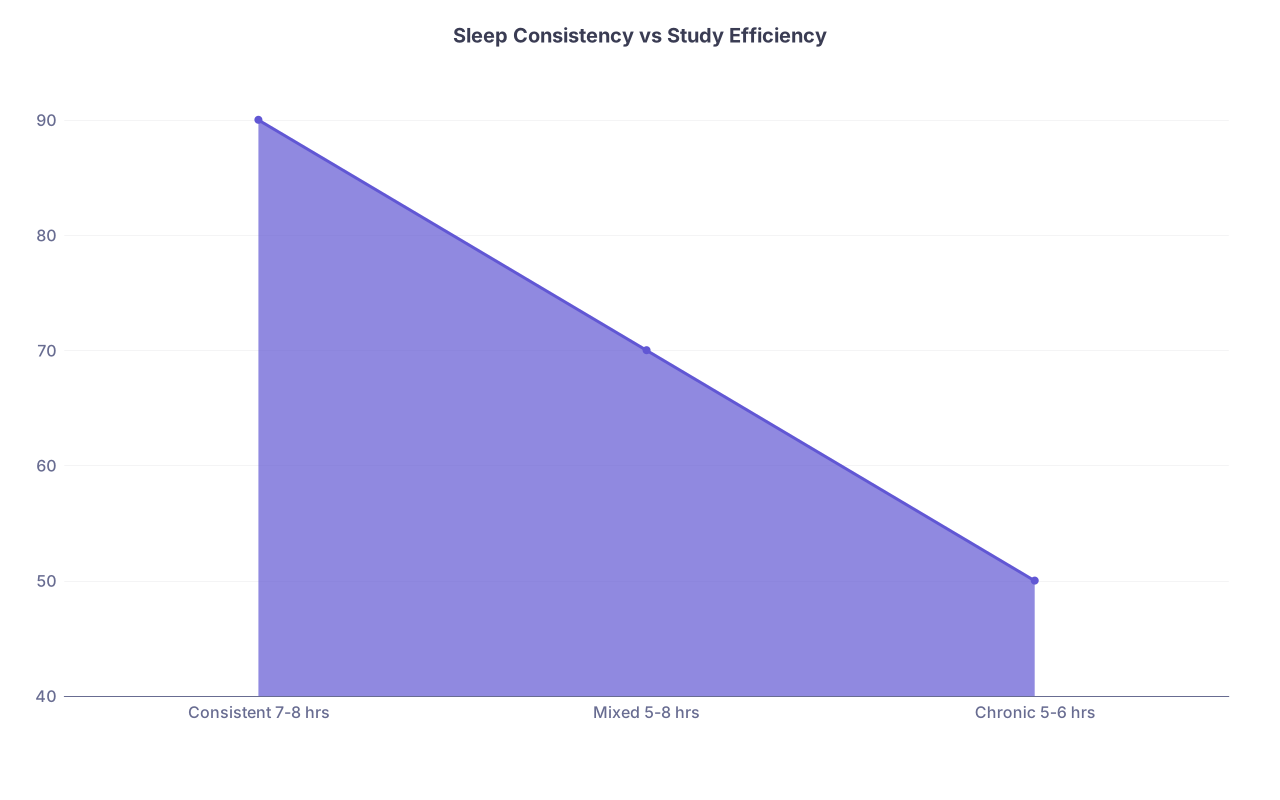
| Category | Value |
|---|---|
| Consistent 7-8 hrs | 90 |
| Mixed 5-8 hrs | 70 |
| Chronic 5-6 hrs | 50 |
Two students can spend the same 6 hours “studying.” The one with normal sleep may get 5 hours of real work. The one with fractured sleep gets maybe 2–3.
The tired student thinks they need more hours.
What they actually need is better brain.
Better approach: weekday baseline, gentle weekend bump
Pick a realistic weekday bedtime and stick to it.
If you have to get up at 7, aim for lights‑out by 11–11:30. Not perfect. Good enough.Weekends: add, don’t invert.
- Sleep 1–2 hours later, not 4–5
- Keep bedtime roughly the same → don’t push it to 3 am
- Use extra rest to make your daytime studying sharper
You’re trying to build a stable nervous system, not survive in 72‑hour bursts.
3. Confusing “Sleepiness” with “Deserving a Break”
Here’s a subtle one that hits high‑achievers hard.
You push all day, ignore your body’s signals, then as soon as you sit down at 10–11 pm, the exhaustion finally hits. But instead of going to bed, you tell yourself:
“I earned some time to relax. I’ll just scroll / watch / game for a bit.”
Two hours vanish. Now it’s 1 am, and you’re even more tired and wired.
This isn’t “self‑care.” It’s self‑sabotage disguised as reward.
The biological setup
Your body gives you signals all day:
- Afternoon dip where you could take a 15–20 minute rest
- Evening brain‑fog telling you you’ve hit your study ceiling
- Eye strain, irritability, micro‑mistakes in Anki or questions
You override every one of them. Then when the day’s “obligations” are done, there’s a backlog of fatigue your brain wants to cash in. So you feel this desperate need for escape.
If you consistently ignore tiredness during the day, it will show up at night as:
- Revenge bedtime procrastination
- “Just one more episode” loops
- Infinite scroll until your eyes hurt
How to stop making this particular mistake
Catch the early signals.
When you notice:- Reading the same sentence 3 times
- Missing easy questions you’d normally crush
- Getting irrationally annoyed at small things
That’s not “you being lazy.” That’s your brain saying, “We’re done for now.”
Take real breaks earlier.
Distributed, on‑purpose rest beats 2 am doomscrolling:- 5–10 minutes every 60–90 minutes of focused work
- One longer 30–45 minute break in the afternoon to eat and truly disconnect
At night, label what you’re doing.
When you reach for your phone at 11:15 pm, say (in your head),
“I’m choosing to trade tomorrow’s brain for this right now.”If you’re still okay with it after that sentence, fine. But 9 times out of 10, that sentence kills the impulse.
Reward yourself with sleep, not with numbness.
4. Misusing Naps: The 2‑Hour “Coma” That Destroys Your Night
Naps can be powerful. They can also wreck your circadian rhythm if you’re sloppy.
The common first‑year nap disaster looks like this:
- You’re wrecked after class or a long study block
- You lay down “just for 20 minutes” at 5 pm
- You wake up at 7:30 pm, groggy and annoyed
- Now you’re up until 2 am because you “aren’t sleepy”
- Next morning: even more exhausted
You think naps “don’t work for you.” The problem is not naps. It’s how you’re napping.
The nap rules people ignore
If you’re going to nap during M1:
Keep it short: 15–25 minutes.
This avoids deep sleep cycles. Anything 45–90 minutes can leave you in sleep inertia hell.Keep it early: before ~3 pm.
Late naps delay your sleep drive. You feel weirdly awake at midnight and pay for it the next day.Use alarms and bright light after.
Alarm to get up. Bright light, water, small movement (pushups, stretching) to kick your brain back on.

| Step | Description |
|---|---|
| Step 1 | Feel tired? |
| Step 2 | Skip nap, sleep earlier |
| Step 3 | 10-20 min power nap |
| Step 4 | Optional 20-30 min nap |
| Step 5 | Set alarm and get up |
| Step 6 | Time after 3 pm? |
| Step 7 | Need to study later? |
When naps are actually useful
- Post‑lunch slump before a heavy afternoon study block
- After a bad night, to survive the day without destroying the following night
- Before a long evening event (call, lab, mandatory lecture) when you know you’ll be up later
If every “nap” you take becomes a 90‑minute blackout, you’re not napping. You’re borrowing sleep from the wrong part of the 24‑hour cycle.
5. Thinking Sleep Problems Will “Just Fix Themselves”
A lot of first‑years slide into chronic insomnia without realizing it.
The recipe:
- A few late nights for exams or social stuff
- Anxiety about keeping up
- Using your bed for studying / Netflix / doomscrolling
- Caffeine creeping later and later into the day
- No wind‑down time
Suddenly:
- You’re exhausted but wired at 11 pm
- You lay in bed for 45–60 minutes unable to fall asleep
- You start catastrophizing: “If I don’t sleep, I’ll fail the exam.”
- Now your bed is associated with stress, not rest
This does not magically resolve when “things calm down.” M1 does not calm down. You either build a system, or the chaos becomes your system.
Basic sleep hygiene most med students ignore
No, you don’t need a 16‑step wellness routine. But if you’re doing the opposite of these, you’re sabotaging yourself:
Bed = sleep (plus maybe sex).
Not Anki. Not YouTube. Not lecture replays. Study somewhere else. Train your brain that bed = offline.Caffeine cutoff: 6–8 hours before bed.
If you want lights‑out at 11, last coffee around 3–5 pm. That 7 pm Red Bull before night studying? Yeah, that’s why you’re still jittery at 1.Wind‑down buffer: 30–60 minutes.
The time between “last serious studying” and “getting into bed” needs to exist.
Examples:- Hot shower
- Light stretching
- Very boring book (not medical)
- Low‑light, low‑stimulation routine
Consistent anchor: same wake‑up time.
Even if sleep was bad, get up close to usual time, get light exposure, and don’t try to “fix” it by sleeping in until noon.

If you’re lying awake more than 30 minutes most nights, that’s not “just how you are.” That’s a modifiable problem. Don’t wait until Step studying to care.
6. Using Coffee (and Energy Drinks) Like a Fire Extinguisher
Caffeine is not the villain. How you abuse it is.
The big mistake: trying to use caffeine to replace sleep instead of to enhance already decent sleep.
Signs your caffeine use is backfiring:
- You need it just to feel baseline human
- First cup before breakfast, second before 10 am, third at 3, fourth at 7
- Heart pounding during simple QBank sessions
- Anxiety that feels out of proportion to reality
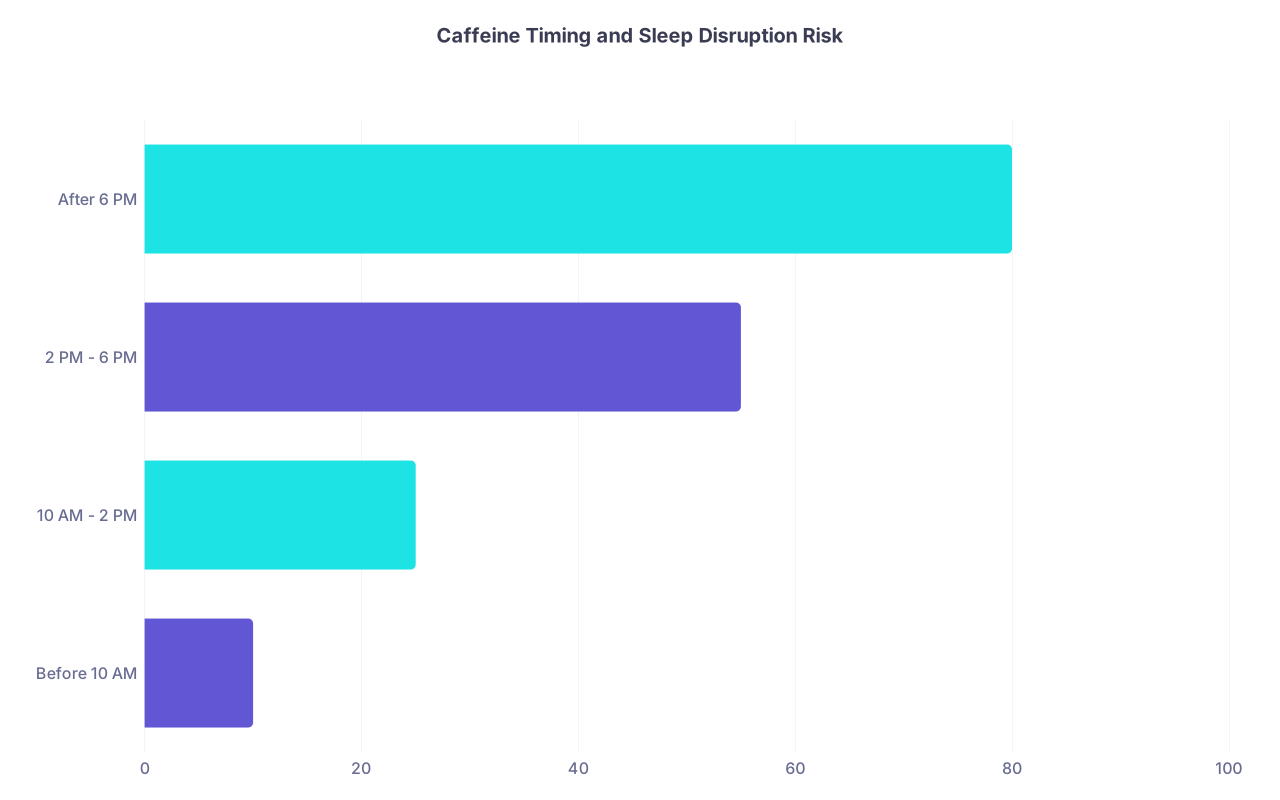
| Category | Value |
|---|---|
| Before 10 AM | 10 |
| 10 AM - 2 PM | 25 |
| 2 PM - 6 PM | 55 |
| After 6 PM | 80 |
Smarter caffeine rules for M1
First dose after real food.
Don’t slam coffee on an empty stomach at 6:30 am and wonder why you feel cracked out at 9.Cap total daily dose.
Most people do best staying under:- ~300 mg/day (about 3 small coffees or 1–2 energy drinks)
Going beyond that when you’re already sleep‑deprived = anxiety soup.
- ~300 mg/day (about 3 small coffees or 1–2 energy drinks)
Strict cut‑off time.
- Ideal: last caffeine before 2–3 pm
- Absolute latest in an emergency: 4 pm
That “one more” at 6–7 pm to get through Anki? It’s usually not worth the damage to that night’s sleep.
Don’t stack new bad habits.
Caffeine + no food + anxiety + chronic sleep debt = classic med‑student meltdown by mid‑semester.
Use caffeine to take your rested brain from 80% to 95%. Not to drag your exhausted brain from 40% to 50%.
7. Letting Culture Gaslight You: “Everyone Is Dying, So This Is Normal”
One of the most dangerous things I see: students normalize exhaustion because they assume med school is supposed to feel like constant burnout.
They hear:
- “If you’re sleeping 8 hours, you’re not studying enough.”
- “I only slept 3 hours before that exam and still passed.”
- “You can sleep when you’re a doctor.”
And quietly interpret that as:
“If I need sleep, I’m not cut out for this.”
That’s nonsense. Dangerous nonsense.

How to decode the culture correctly
The loudest sleep‑deniers are often:
- Underperforming but hiding it
- Propped up by prior background (e.g., ex‑biochem majors)
- In deep denial about their own mental health
“Everyone is tired” is not a reason to surrender your brain. It’s a reason to opt out of dumb group norms.
The people quietly getting top quartile scores?
Most of them guard their sleep ruthlessly. They may not brag about it, but ask them privately—you’ll hear “yeah, I’m pretty strict about bedtime.”
You’re not proving toughness by being wrecked all the time. You’re just proving you’re willing to function below your potential.
8. A Simpler, Non‑Perfect Sleep Framework That Actually Works
Let me pull this together into something you can actually run without turning your life into a rigid optimization project.
Forget “perfect.” Aim for “less stupid than average.”
Your baseline rules
Use this as your mental checklist:
| Area | Target Behavior |
|---|---|
| Weeknight sleep | 7 ± 0.5 hours most nights |
| Weekend shift | Wake within 1–2 hrs of weekday |
| Caffeine | Last dose by 2–3 PM |
| Naps | 10–25 min, before 3 PM |
| Wind-down | 30–60 min screen-light reduction |
If you’re hitting most of these most days, you’re doing better than 80% of your class. Seriously.
During crunch times (exams, big deadlines)
You don’t fix stress weeks by blowing up these rules. You tighten them:
- Sleep: never less than 6.5 hours, even pre‑exam
- No new material after 8 pm → only review
- Guard wake‑up time → no “just one extra hour” in the morning
- Very strict with caffeine timing
This is how you show up on test day with:
- A functioning prefrontal cortex
- Working memory that can hold all steps of a path question
- Emotional stability when you hit 3 questions in a row you’re unsure about
Because yes—that will happen. The question is whether your brain is rested enough to recover between punches.
FAQs
1. Is it ever worth pulling an all‑nighter in med school?
Almost never. For content‑heavy exams (which is basically all of M1/M2), all‑nighters trash recall, reasoning, and test‑taking stamina. The rare exceptions:
- A genuine life emergency destroyed your study time
- You’re failing a course and this is pure damage control
Even then, a partial late night (sleeping 3–4 hours) is usually better than a full all‑nighter.
2. How much sleep do top students actually get?
The ones consistently in the top 10–20% of a class? Most are in the 7–8 hour range regularly. I’ve seen some high performers average 6.5 hours, but they tend to be meticulous about:
- Sleep timing
- Caffeine
- Protecting their last hour of the day
The chronic 4–5 hour sleepers either burn out, slide down the curve, or pay for it later (often during dedicated Step studying).
3. What if I can’t fall asleep even when I try to go to bed on time?
Then you treat sleep like a clinical problem, not a character flaw. Start with:
- No screens 30–60 minutes pre‑bed
- Bed only for sleep (no studying or scrolling)
- Get out of bed if you’re still awake after 20–30 minutes—go sit in low light, read something boring, and only return to bed when you’re truly sleepy
If this goes on more than 3–4 weeks despite trying fixes, it’s time to talk to a physician or mental health professional. Anxiety and depression love to show up as sleep issues in med students.
4. Are there any sleep apps or trackers you recommend?
They’re fine as rough guides, terrible as absolute truth. Simple uses that help:
- Setting consistent bedtime reminders
- Tracking total time in bed
- Basic wind‑down cues
If you obsess over every “sleep score” or freak out because your watch says you got 12 minutes of deep sleep, ditch the data. If the tracker makes you more anxious, it’s doing the opposite of what you need.
5. How do I handle social life without wrecking my sleep?
You can have one late night a week without destroying everything. Key rules:
- Don’t let “one night” become Thursday–Saturday
- On late nights, still get up within 1–2 hours of your normal time
- Don’t pre‑game with caffeine late in the day
- Don’t “fix” the tiredness the next day with a 2‑hour evening nap
Protect your baseline. Choose your late nights, don’t drift into them.
Keep three things in your head:
- Chronic sleep sacrifice backfires—you pay in memory, speed, mood, and long‑term learning.
- You don’t need perfect sleep; you need fewer stupid patterns: no 2 am doomscrolling, no panic‑cramming that shreds your brain.
- The strongest first‑years are not the ones bragging about how little they sleep. They’re the ones quietly ruthless about protecting the one thing everything else depends on: a rested brain.