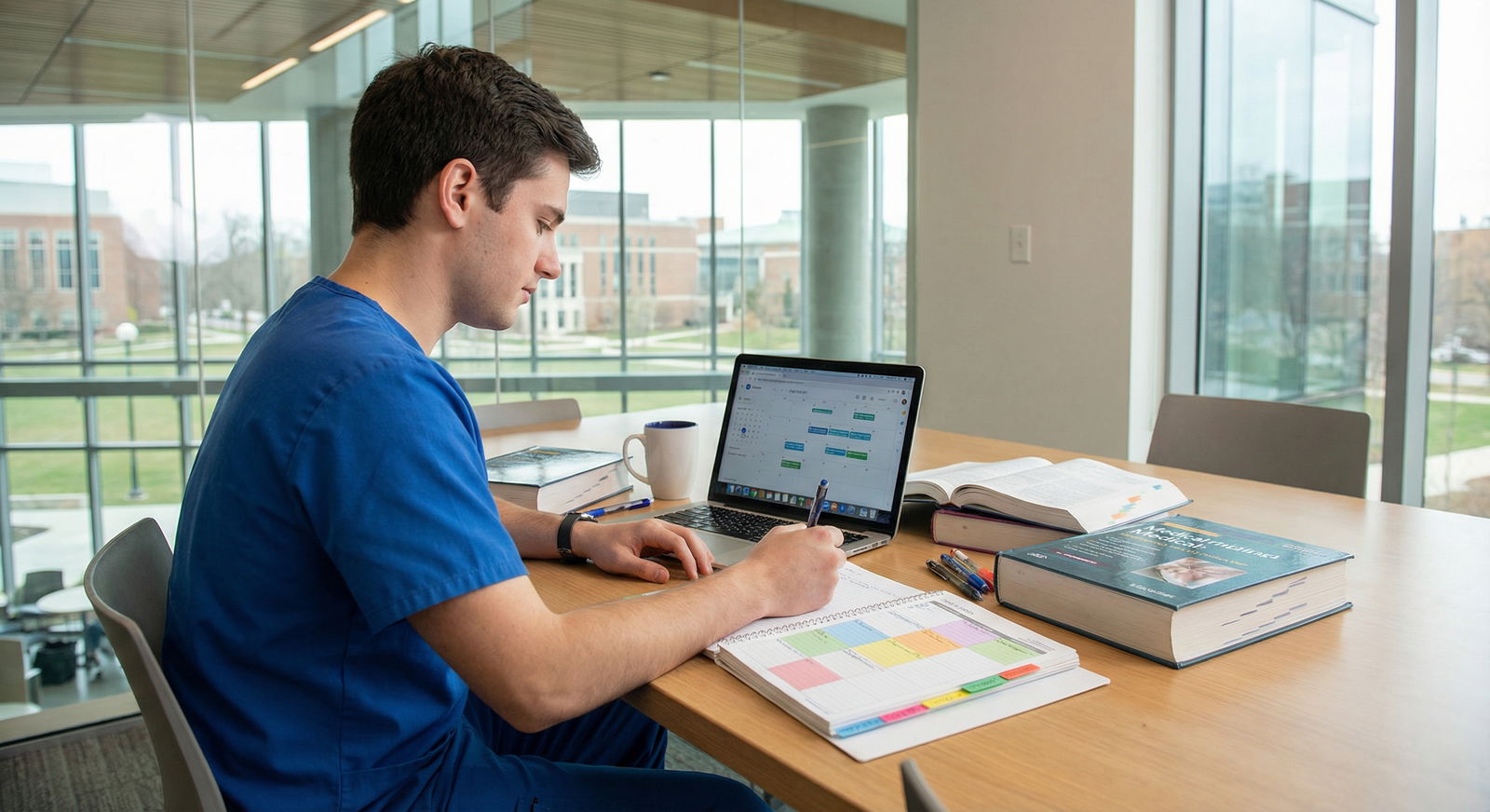
42% of first‑year med students believe their classmates are studying 10+ hours a day on average. Less than 15% actually are.
That gap between perception and reality is exactly why so many M1s burn out by Thanksgiving and start googling “did I make a mistake going to med school?”
Let me be blunt: the “12 hours a day or you’ll fail” narrative is garbage. It’s a mix of survivorship bias, humble‑bragging, and terrible time‑tracking. And the data—from board outcomes, wellness surveys, and time-use studies—doesn’t support it.
You do not have to live in the library to survive M1. You do have to stop believing myths about what everyone else is doing.
Myth #1: “Everyone Else Is Studying 12+ Hours a Day”
This one feeds on insecurity and bad math.
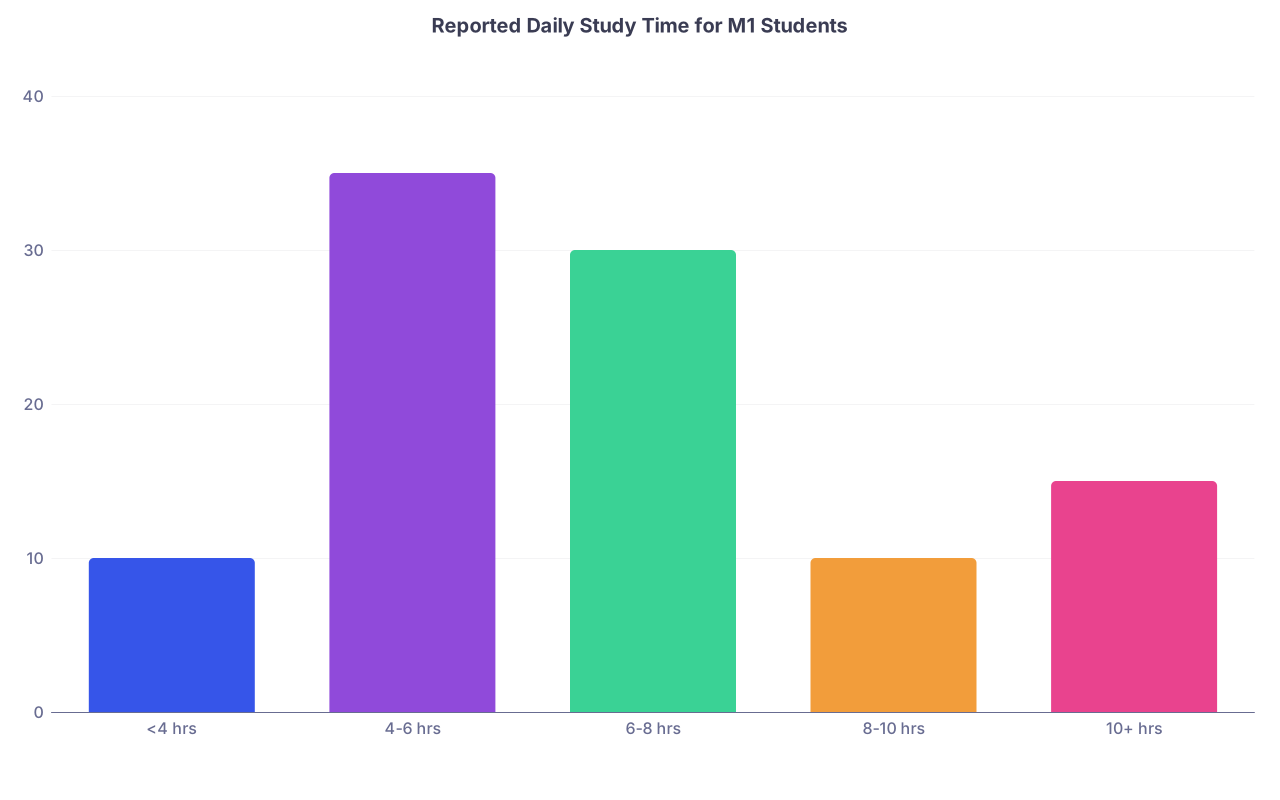
When schools survey students about time use, the numbers don’t match the horror stories you hear in group chats.
| Category | Value |
|---|---|
| <4 hrs | 10 |
| 4-6 hrs | 35 |
| 6-8 hrs | 30 |
| 8-10 hrs | 10 |
| 10+ hrs | 15 |
What you see here is pretty consistent with multiple schools’ internal wellness and curriculum reports:
- Most students cluster around 4–8 hours of focused work on school days
- A smaller fraction push into 8–10
- A minority live in the 10+ hour range
So where does the “everyone studies all the time” feeling come from?
Because you’re adding up moments, not patterns:
- You see one person in the library at 7 a.m.
- A different person still there at 11 p.m.
- Someone posts a screenshot of Anki stats showing “1,200 reviews today”
- A classmate casually says, “Yeah, I studied all weekend”
Your brain turns that into: “All of them are always working.”
In reality:
- The 7 a.m. person might leave at 10 a.m.
- The late‑night person might not start until 4 p.m.
- The “all weekend” person did laundry, doomscrolled, and watched Netflix in between “studying”
People are terrible at estimating time—especially study time. When schools actually track it (time‑tracking apps, structured surveys, learning analytics), daily focused work is much lower than the legends suggest.
The myth survives because:
- Over‑studying is socially rewarded (“Wow, you’re so dedicated”).
- Under‑studying is socially risky (“You’re brave… I could never do that”).
- Nobody wants to admit their 10‑hour ‘study day’ included 4 hours of YouTube and 12 trips to the fridge.
So your first task as an M1: stop managing against myths and start managing against real numbers.
Myth #2: “More Hours = Better Outcomes”
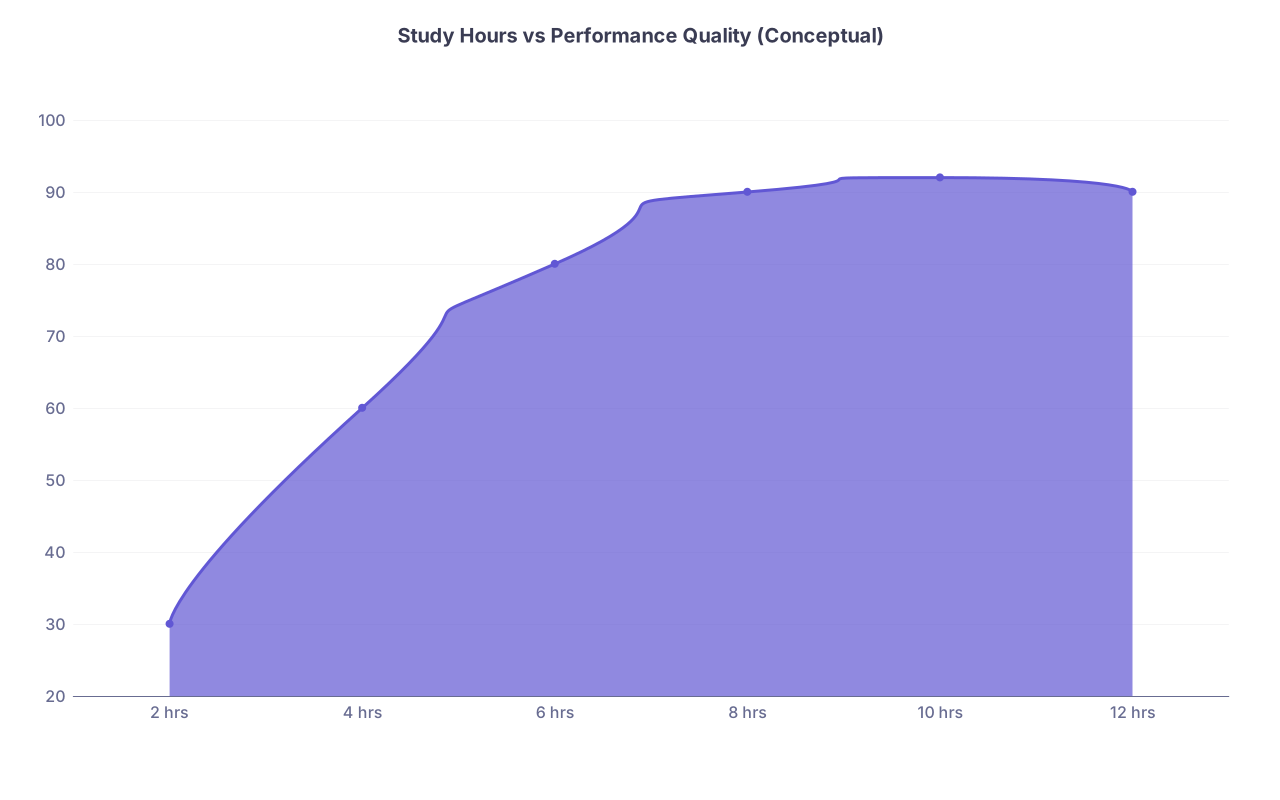
If 12 hours a day guaranteed A’s and 260+ Step scores, this would be simple. But the relationship between time and performance is not linear. It’s closer to this:
| Category | Value |
|---|---|
| 2 hrs | 30 |
| 4 hrs | 60 |
| 6 hrs | 80 |
| 8 hrs | 90 |
| 10 hrs | 92 |
| 12 hrs | 90 |
You hit diminishing returns fast. After a certain point, each added hour buys you almost nothing—or makes things worse.
Here’s what the research and real-world data actually show:
Sleep matters more than another 1–2 study hours.
Multiple studies link sleep quality and duration to exam performance, memory consolidation, and clinical reasoning. The student who studies 7 hours and sleeps 8 will outperform the one who studies 10 and sleeps 5. Consistently.Spacing and retrieval > raw time.
The cognitive science is clear: spaced repetition, active recall, and interleaving beat rereading and passive review. Two hours of high‑quality Anki plus question banks can outperform five hours of rewatching lectures.Burnout destroys efficiency.
Students who report high burnout scores often show worse knowledge retention, more careless errors, and more test‑taking anxiety—despite often “studying more.”
If I had to put a stake in the ground for effective weekday study time for most M1s actually trying (not coasting, not cramming), it would be:
- 4–6 hours of genuinely focused work on average weekdays
- 2–6 additional hours spread across the weekend, depending on exams, curriculum, and baseline
Some weeks will spike. Exam weeks, anatomy blocks, heavy pathology content—those may push you to 8–10 real hours on a few days. But if that’s your baseline, not your exception, you’re likely trading retention and sanity for the illusion of effort.
Myth #3: “If I’m Not Studying, I’m Falling Behind”
This one’s insidious because it feels true. Med school content is insane in volume. It never ends. There’s always more you could review.
But the belief that every non‑study minute is harm? That’s how you quietly slide into chronic anxiety, poor sleep, irritability, and the classic M1 combo: “I’m always working, and I’m never caught up.”
Here’s what I see over and over:
Student A:
- Studies 6 highly focused hours per day
- Works in clear blocks
- Sleeps 7–8 hours
- Exercises 3–4 times a week
- Takes real off‑time
- Uses spaced repetition consistently
Student B:
- “Studies” 10–12 hours per day
- Constant task‑switching
- Lives on late‑night rewatch marathons
- Lots of scrolling in between
- Sleep averages 5–6 hours
- Exercise and breaks are considered “guilt activities”
Guess who scores higher on exams at 3 months? On boards later? It’s not the martyr.
Medical knowledge is not a short‑term memorization contest. It’s a long game. You’re trying to build schemas you can still use on rounds three years from now at 3 a.m. on call. That demands:
- Sleep
- Space
- Repetition over time
- A brain that isn’t chronically inflamed with cortisol
Those “non‑study” blocks? They’re when consolidation happens. That’s when your randomly‑acquired lectures and flashcards start connecting into “Oh, that’s why hyperaldosteronism causes metabolic alkalosis” instead of just “lots of random facts about aldosterone.”
Reality: It’s Not About Hours—It’s About Structure
Let’s get more concrete. What does “not 12 hours” actually look like for a functioning M1?
Here’s an example of a sustainable weekday during a lecture-heavy block, for a student doing fine and not gunning for straight Honors:
| Time | Activity |
|---|---|
| 7:00–8:00 | Wake up, breakfast, brief review |
| 8:00–12:00 | Class/lectures (live or recorded) |
| 12:00–13:00 | Lunch, short walk, no studying |
| 13:00–15:00 | Focused Anki + concept review |
| 15:00–15:30 | Break, snack, messages |
| 15:30–17:00 | Question bank / practice |
| 17:00–19:00 | Gym, dinner, decompress |
| 19:00–20:30 | Light review / next-day prep |
| 22:30–23:00 | Wind down, sleep |
Focused academic time there: about 5–6 hours outside of lecture. Some days they may shorten the evening block. Before exams, they might add an extra 60–90 minutes. That’s still nowhere near 12.
Now compare that to the chaos schedule I’ve watched too many M1s live:
- Wake late, rush
- Half‑watch lectures while scrolling
- Study “all day” in the library with 30 micro‑breaks an hour
- Cram exhausted at night
- Sleep at 2 a.m.
- Repeat
Those are the students complaining “I studied 12 hours and remembered nothing.” They didn’t do 12 hours of learning. They did 4 hours of learning spread across 12 hours of self‑torture.
Myth #4: “If I’m Not a 12‑Hour Grinder, I’ll Never Be Competitive”
Now we hit the fear under all of this: “If I don’t martyr myself, I’ll be stuck in a non‑competitive specialty forever.”
Let’s be very clear. Competitiveness for residency is not a simple function of daily misery.
Residency programs look at a blend of:
- Board scores (now more Step 2, with Step 1 pass/fail)
- Clinical grades and comments
- Letters of recommendation
- Research / scholarly work (for certain fields)
- Professionalism, teamwork, basic functioning as a human
You can absolutely sabotage your own competitiveness by:
- Burning out so hard in M1–M2 that you’re a shell of a person on rotations
- Developing anxiety and sleep problems that trash your test performance
- Becoming that classmate who’s always on edge, rigid, and impossible to work with because you’re chronically overextended
The “grind 12 hours every day from Day 1” model is not what high‑performing, competitive‑match students look like in real life.
What they actually tend to share:
- They start building efficient systems early (Anki decks, question banks, consolidated notes)
- They show up consistently, rather than swinging between 0 and 14‑hour days
- They protect enough bandwidth to do research, leadership, or longitudinal projects later
- They don’t implode from overtraining
Do some gunners truly study 10+ hours a day for months at a time? Yes. A few. Many are also anxious wrecks who plateau or crash, or who match well despite their approach, not because of it.
If your goal is a competitive specialty, aim for this:
- High yield per hour, not maximum hours
- Consistency across months, not heroic sprints followed by breakdowns
- Sustainable baseline so you can actually push harder temporarily when boards or clerkships demand it
How to Audit Your Reality vs the Myth
If you want to stop playing the comparison game and actually see where you stand, run a 7‑day experiment.
Track your actual focused time.
Use a timer app. Every time you start real study (no phone, no chatting, no social media), hit start. Every time you drift, hit stop. At the end of the day, total it.Track your sleep.
Nothing fancy. Just note approximate sleep/wake times.Track your perceived effort.
At the end of each day, rate: “How hard did I feel I worked?” 1–10.
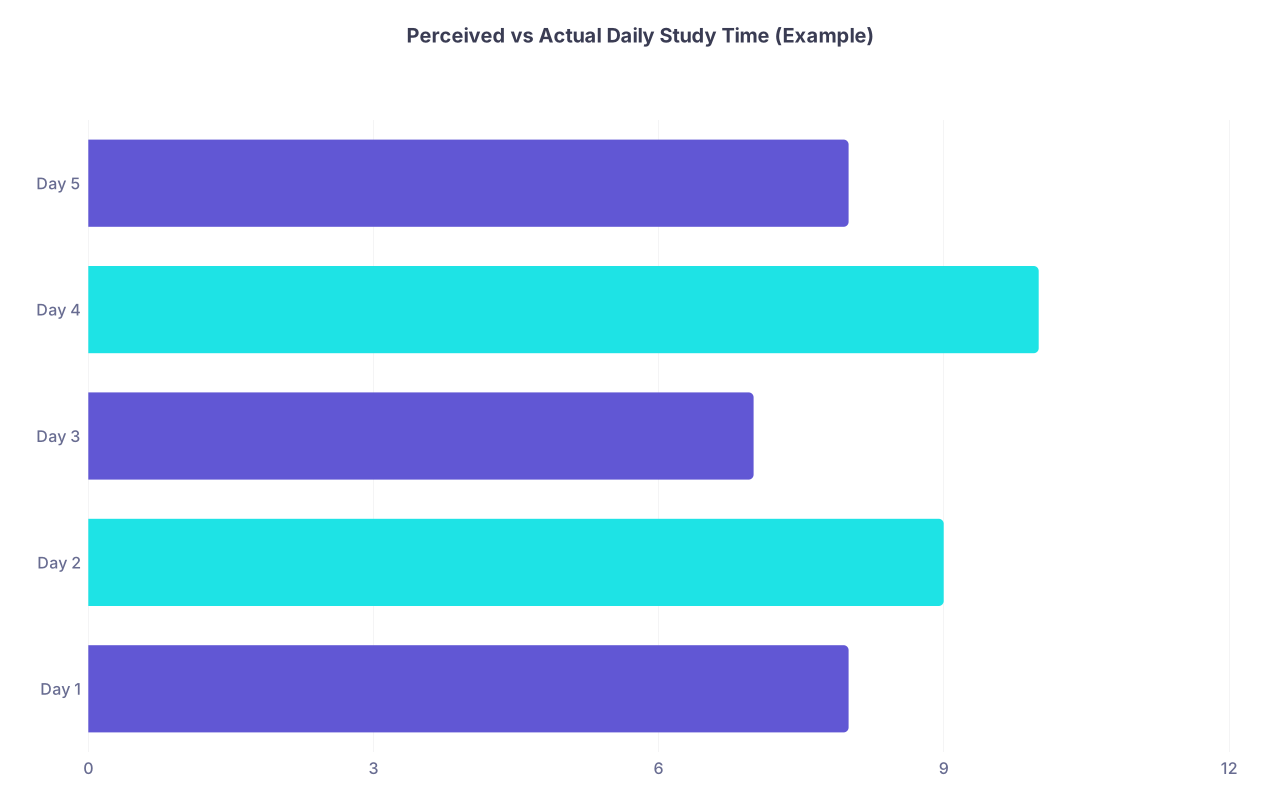
After a week, put your averages into something like this:
| Category | Value |
|---|---|
| Day 1 | 8 |
| Day 2 | 9 |
| Day 3 | 7 |
| Day 4 | 10 |
| Day 5 | 8 |
Now imagine the actual focused hours behind those days are 4, 5, 5, 6, and 4. That mismatch is common.
Most M1s who swear they “study 10 hours a day” are shocked when the timer busts them: they’re doing 4–7 hours of real work, stretched across a day that feels like nonstop effort.
That feeling—“I’m always studying”—comes from constantly being near work. Thinking about work. Feeling guilty about not working. Not from actual continuous productivity.
If you compress that same 4–7 hours into focused blocks and give yourself real, guilt‑free breaks? Your day feels shorter, your memory is better, and your anxiety drops.
When 10–12 Hour Days Do Happen (And How to Not Die During Them)
I’m not going to pretend you’ll never see a 10‑hour day. You will. Big exams, compressed blocks, anatomy practicals, pre‑Step dedicated. They happen.
Difference is: they should be exceptions with a plan, not your default self‑image.
When those days come:
- Cut the fluff. No “just in case” resources. Stick to your primary materials and question sources.
- Schedule breaks like medication—on the clock, not when you’ve already crashed.
- Protect sleep like it’s part of the exam. Because it is. That extra late‑night hour is almost always negative value.
- Drop the guilt about non‑study tasks. Eating, showering, walking, a 20‑minute reset—those are performance tools, not weaknesses.
And then? The week after the storm, downshift. Recovery is not optional if you want to keep functioning.
The Calendar Reality vs The Myth
Zoom out for a second. Look at your whole M1 year, not your worst exam week.
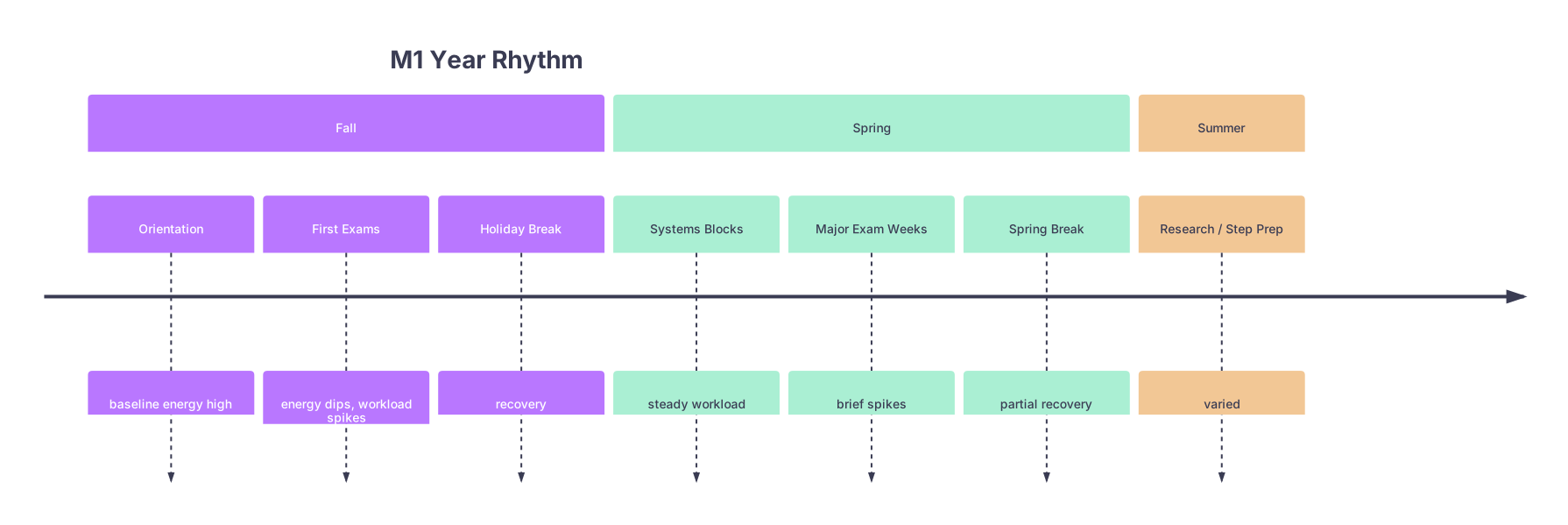
| Period | Event |
|---|---|
| Fall - Orientation | baseline energy high |
| Fall - First Exams | energy dips, workload spikes |
| Fall - Holiday Break | recovery |
| Spring - Systems Blocks | steady workload |
| Spring - Major Exam Weeks | brief spikes |
| Spring - Spring Break | partial recovery |
| Summer - Research / Step Prep | varied |
Your goal isn’t to survive a single hell week. It’s to still be functional, curious, and not utterly cynical by the time you hit clerkships. Martyring yourself with a 12‑hour identity from day one is the fastest way to turn the whole year into one long, blurry grind.
The students who “win” M1 aren’t the ones who brag the most about hours. They’re the ones who quietly:
- Show up
- Work smart
- Sleep
- Adjust
- Don’t panic every time someone else is in the library at a weird hour
Years from now, you will not remember how many hours you logged in week 3 of M1. You’ll remember whether you still felt like yourself—or whether you handed your whole life over to a myth about what survival was supposed to look like.