Failing your first med school exam is not a sign that you do not belong. It is a sign that your current system failed. So your system needs to change. Now.
I have seen excellent clinicians start exactly where you are: stunned by a 58% on an anatomy or biochem exam they thought they “probably passed.” What separates them from the people who quietly disappear between MS1 and MS2 is not IQ. It is what they did in the 7–10 days after that first failure.
This article is that playbook.
Not mindset fluff. Not “believe in yourself.” Concrete steps, in order, with numbers and scripts you can actually use.
Step 1: Contain the Emotional Bleed (First 24 Hours)
You cannot fix what you will not look at. And you will not look at it if you are emotionally flooded.
So the first step is not “study harder.” It is: stabilize.
1.1 Give yourself a hard 24‑hour window
You get 24 hours to be upset. Not more.
Use that time deliberately:
- Tell 1–2 trusted people what happened.
- Do something physical: long walk, gym, shower so hot it borders on unsafe.
- Sleep at least 7 hours that night. If you scroll until 2 a.m. reading Reddit disaster stories, you will make everything worse.
What you do not do:
- Do not email your dean in a panic.
- Do not rewrite your entire career plan at 2 a.m.
- Do not promise yourself you will start studying 10 hours a day “forever.” You will not. You are not a robot.
1.2 Kill the “I do not belong here” narrative quickly
The standard script I hear from students:
“Everyone else is fine. I am the admissions mistake.”
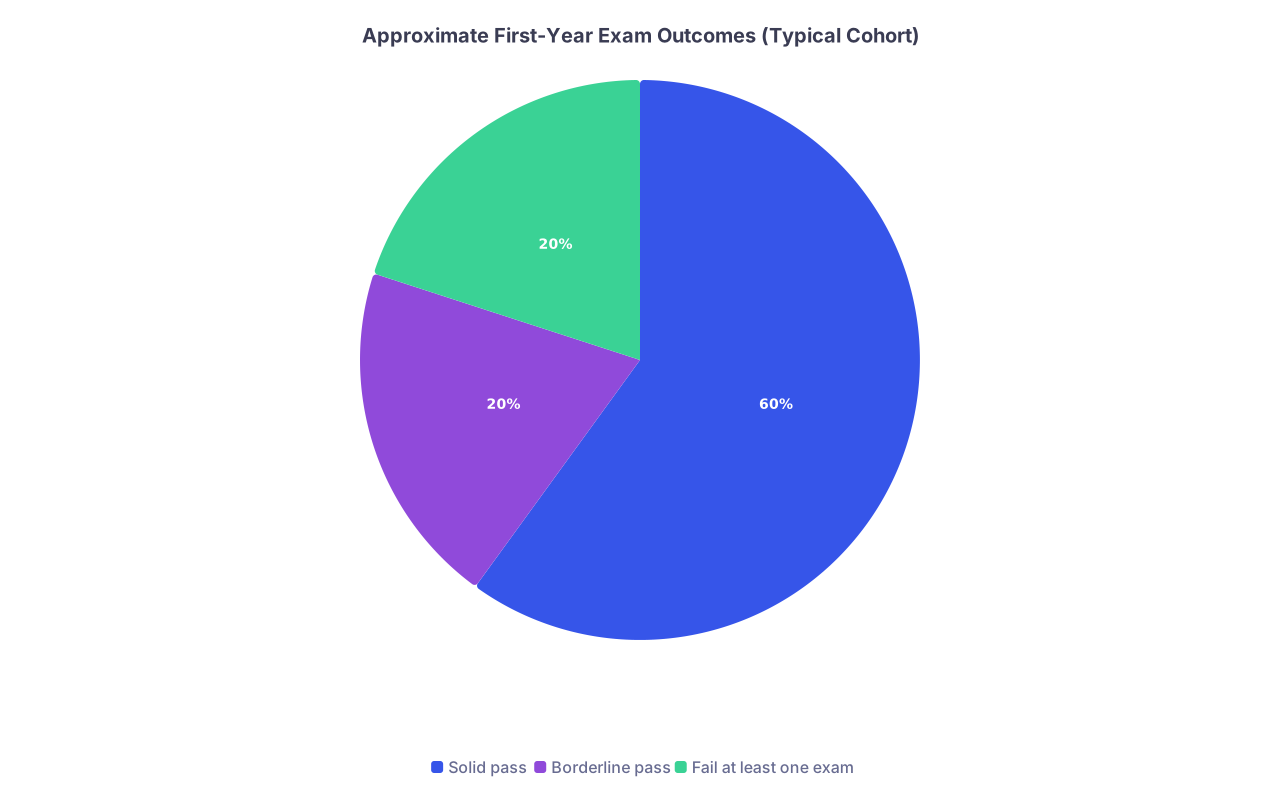
No. Here is the reality from behind the curtain: in almost every class, 20–30% of students either fail, barely pass, or are within a few points of failing at least one major exam in M1.
| Category | Value |
|---|---|
| Solid pass | 60 |
| Borderline pass | 20 |
| Fail at least one exam | 20 |
You are statistically normal. Your system is what is abnormal for this environment.
Write this on a sticky note and put it on your desk:
“My study system failed this exam. I am here to build a better one.”
Then we start building.
Step 2: Get the Autopsy, Not the Vibe (Days 1–2)
Most students fail the diagnosis of why they failed. They say vague things like “I did not study enough” or “I am bad at multiple choice.”
Too vague. Useless. You need an autopsy.
2.1 Collect every piece of exam data you can
Do this within 48 hours while the exam is still fresh in your memory.
Gather:
- Score breakdown if available (by subject, system, or block).
- Any “learning objectives” document tied to the exam.
- Your own memory of what felt hardest (write this down immediately).
- Past quiz results for the same content.
Then, if your school allows:
- Request to review your exam or meet with the course director.
- Ask if they can share general performance data (e.g., “most-missed questions were on X and Y”).
Walk into that meeting with 3 questions prepared:
- “If you had to summarize my main weakness from this exam, what would you say?”
- “Did you see any patterns, like missing questions that required integration vs recall?”
- “If I changed only 2–3 things about how I studied, what would you suggest?”
Then shut up and write down what they say. You are there to gather data, not defend your honor.
2.2 Categorize your failure
You need to know what type of failure this was. There are only a few main buckets.
| Failure Type | Primary Fix Focus |
|---|---|
| Not enough time / coverage | Scheduling & pacing |
| Knew facts, missed vignettes | Practice questions & reasoning |
| Conceptual gaps | Foundational resources & review |
| Panic / time mismanagement | Exam technique & timed practice |
| Burnout / exhaustion | Sleep, boundaries, energy system |
Now do a quick self-classification. Be brutally honest:
Not enough time / coverage
- You ran out of days. Skipped lectures. Did “high yield” only. Left entire topics untouched.
- Fix = better planning and earlier start, not “study harder the night before.”
Knew facts, missed vignettes
- You recognized terms but could not pick the right answer in 5‑line cases.
- Fix = more high-quality questions, less passive reading.
Conceptual gaps
- You memorized random details but could not answer “why” anything happens.
- Fix = go back to core resources (textbook section, B&B, Pathoma, etc) and actually understand.
Panic / time mismanagement
- You blanked. Rushed. Left 10 questions blank. Changed correct answers at the end.
- Fix = simulation and exam strategy, not more Anki cards.
Burnout / exhaustion
- You were literally falling asleep on questions. Chronic 4–5 hour nights.
- Fix = fix your physiology first. You cannot brute-force through this for two years.
You will probably see 2 of these, with one primary driver. Circle the main one. That is your target for the next block.
Step 3: Rebuild Your Study System From the Ground Up (Days 2–4)
You do not tweak a failing system. You replace it.
Let me lay out a base framework that works for most first-years. Then you will adapt based on your failure type.
3.1 The weekly structure that actually works
For a standard 4–6 week block, your default week should look something like this:
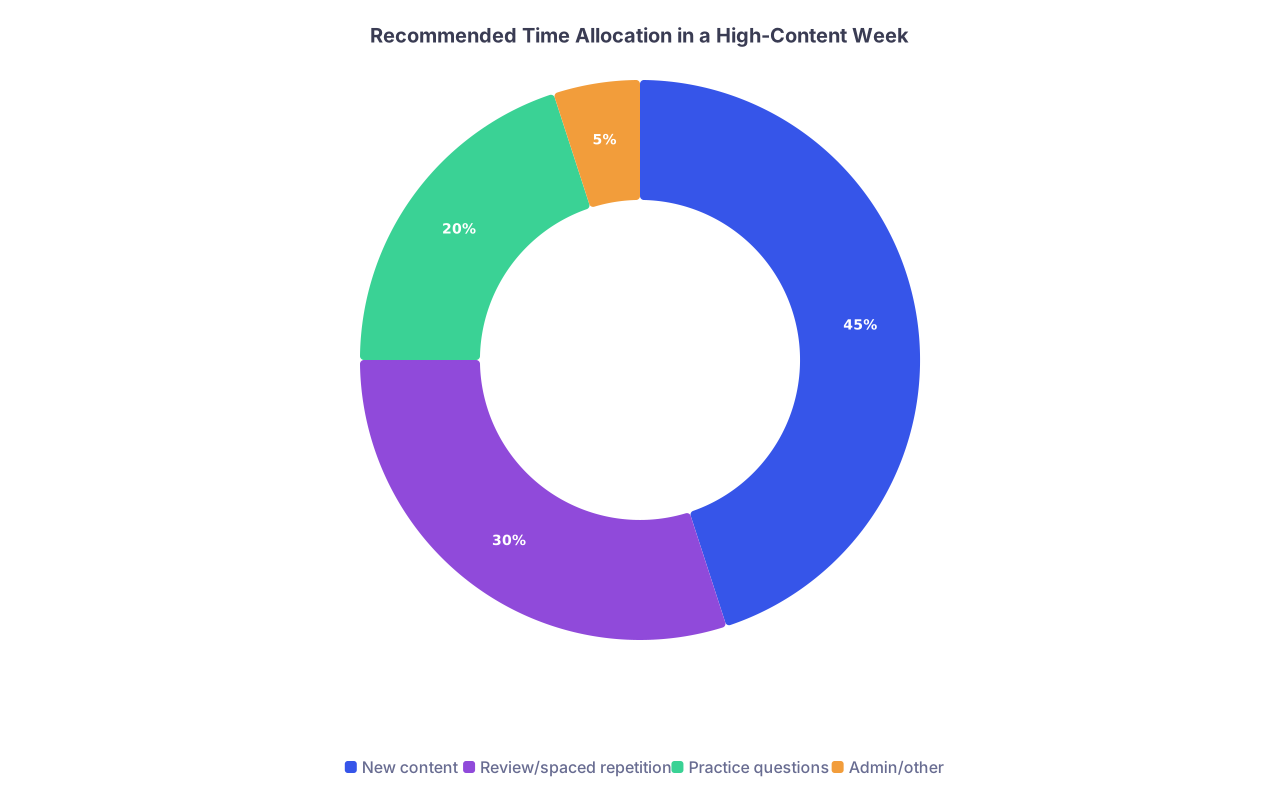
- New content (lectures / assigned material): ~3–4 hours per day
- Active review (Anki / concept maps / teaching): ~2–3 hours per day
- Practice questions (block-specific):
- Early block: 10–20 questions per day
- Late block: 30–40 questions per day
- Admin / logistics (email, scheduling, group stuff): 30–45 minutes per day
- Breaks, meals, and sleep are non-negotiable, not “if I have time.”
If that sounds like a lot, that is because med school is a lot. The solution is structure, not heroics.

| Step | Description |
|---|---|
| Step 1 | Start Day |
| Step 2 | 1-2 hrs: Review Anki/notes |
| Step 3 | 2-3 hrs: New lectures/content |
| Step 4 | 1 hr: Break / exercise / lunch |
| Step 5 | 1-2 hrs: Rewatch key parts / clarify concepts |
| Step 6 | 1-1.5 hrs: Practice questions + review |
| Step 7 | Plan tomorrow + stop |
If your current day looks like: mindless note-taking in lecture → 6 hours of “reviewing slides” → Netflix → panic → more slides, then of course you failed. That is not a system. That is chaos.
3.2 Non-negotiable rules for effective studying
If you want a different result, these rules become law:
No zero‑practice‑question days after week 1 of the block.
Even 10 questions are better than none. Question muscle atrophies fast.Active > passive.
If you are reading slides without writing, explaining, or being quizzed, you are wasting time.Daily review of old material.
If you wait until the last week to “review everything,” you will fail again. Use spaced repetition (Anki, or your own system) daily.Finish content 3 days before the exam.
Those last days are for consolidation and high-yield weaknesses. If you are still learning brand new content then, you are cooked.
Step 4: Design a 10‑Day “Recovery Block” Before Your Next Exam
Your next exam is your real test. Not because of the content, but because it will tell you whether your system has changed.
You need a short, intense recovery plan.
4.1 Map the runway to your next exam
Take out a calendar. Count how many days until the next exam.
Let us assume you have 14 days. Example split:
- Days 1–2: Autopsy + rebuild system (what we are doing now).
- Days 3–10: New system in action, with daily feedback.
- Days 11–12: Heavy practice questions + fix weak areas.
- Days 13–14: Light review, sleep, and exam prep.
4.2 Build a detailed 7‑day template
Here is a template schedule for one week under the new system. Customize the times, keep the structure.
| Time Block | Activity |
|---|---|
| 8:00–9:30 | Spaced repetition / Anki review |
| 9:30–9:45 | Short break |
| 9:45–12:00 | New lectures / core content |
| 12:00–13:00 | Lunch + walk |
| 13:00–14:30 | Rewatch key segments / clarify |
| 14:30–14:45 | Break |
| 14:45–16:00 | Practice questions + review |
| 16:00–17:00 | Admin / small tasks / tutor meet |
| Evening | Light review or rest |
You do not need to adhere to exact times. You do need consistent blocks of work.
4.3 Tighten feedback loops
Weekly “checking in with yourself” is too slow right now. You need daily feedback.
Every evening, answer three questions in a notebook:
- What did I actually finish today? (Concrete: “32 Anki cards, 1.5 lectures, 20 questions.”)
- Where did I get stuck? (Not “everything.” Be specific: “renal physiology vignettes.”)
- What is tomorrow’s most important 3 tasks? (MITs. Not longer than 3.)
This does two things:
- Makes your progress visible.
- Forces you to adjust quickly instead of drifting into the next exam.
Step 5: Fix the Specific Failure Type
Now we attack your main failure category head‑on.
5.1 If you ran out of time / never finished content
This is extremely common with anatomy, micro, and dense integrated blocks.
Your strategy:
Do a hard content audit.
Separate material into:- Must know (learning objectives, heavily emphasized content)
- Should know
- Nice to know (fine print, one‑sentence asides)
Overfocus on “must” and “should.” Stop pretending you will perfectly learn every tiny detail.
Pre‑read or pre‑watch whenever possible.
Go into lecture familiar, not blind. It cuts your later review time in half.Use timers for content blocks.
Example: 45 minutes per lecture, max, for first pass. When time is up, you move on.
Perfectionism is a luxury you cannot afford right now.Set a hard deadline for “content complete.”
3 days before the exam, all required material has been touched at least once. Period.
| Category | Value |
|---|---|
| New content | 45 |
| Review/spaced repetition | 30 |
| Practice questions | 20 |
| Admin/other | 5 |
If you are spending 80% of your time on new content and 0% on questions, this chart is your correction.
5.2 If you knew facts but missed vignettes
Classic pattern: decent recall on flashcards, but exam questions feel like they are in another language.
Solution framework:
Daily case-based questions, even early.
Use:- School-provided question banks
- Boards & Beyond questions
- Amboss / UWorld (sparingly, aligned with your curriculum)
Start with:
- 10–15 questions/day in weeks 1–2
- 20–30 questions/day in weeks 3–4
Review questions properly, not just score.
For each question:- Why was the correct answer correct?
- Why was your answer tempting but wrong?
- What is the one sentence takeaway?
Write the takeaway in a Google Doc or notebook. Keep it short.
Shift from term-based to mechanism-based thinking.
Example in pathophysiology:- Do not just memorize “ACE inhibitors lower blood pressure.”
- Understand: renin–angiotensin–aldosterone system, where ACE works, why cough happens.
Vignettes test links, not labels.
Simulate real exam conditions weekly.
Once a week, do:- 20–25 questions
- Timed (e.g., 1 minute 15 seconds per question)
- No notes, no pausing
This trains pacing and decision-making under pressure.
5.3 If you had conceptual gaps
You probably rushed through core material and tried to patch holes with last‑minute flashcards.
Your fix:
Identify 2–3 foundational resources.
Not ten.
Example:- Physiology: Costanzo’s BRS Physiology + Boards & Beyond
- Path: Pathoma + lecture slides
- Micro: sketchy + your school’s micro notes
Block time for “understanding sessions.”
At least 60–90 minutes, 3–4 times per week, where you:- Watch or read slowly.
- Pause to summarize out loud.
- Draw simple flowcharts or pathways from memory.
Teach concepts to someone or to a wall.
The Feynman technique is not magic; it is just ruthless.
If you cannot explain it in simple words without looking at notes, you do not understand it.Create “one page per big concept” sheets.
For tricky topics (e.g., nephron physiology, acid–base), limit yourself to one side of one page:- Main idea
- Key steps
- Classic examples or patterns
- 1–2 “gotchas”
These become your high-yield review tools before the exam.
5.4 If panic or poor exam technique crushed you
You walked into the exam reasonably prepared and walked out with a score that did not match your knowledge.
You are not “just anxious.” You are under‑trained for test conditions.
Your plan:
Weekly simulated blocks under strict conditions.
- Closed book
- Timed
- In one sitting
- No checking phone or pausing
Practice a disciplined question approach.
For each question:- Read the last sentence first (“What is the question actually asking?”)
- Then skim and mark key data (age, timing, lab values, risk factors).
- Eliminate obvious wrong answers quickly.
- If stuck after 60–75 seconds, pick best guess, mark it, move on.
You will often pick up clues for that question in later ones.
Have a pre‑exam routine.
Same every time:- Normal breakfast you have used before.
- 5–10 minutes of deep breathing / box breathing.
- No last‑minute panic cramming right outside the exam room. That is how you flood your working memory.
Use post‑exam anxiety boundaries.
- No rehashing every question in the hallway with classmates.
- No checking unofficial answer keys within the first 24 hours.
5.5 If burnout or exhaustion was the real problem
If you went into that exam already half-dead from sleep loss, nothing else I say matters unless you fix this.
Your minimum standards:
- Sleep: 6.5–8 hours/night. Non-negotiable. Chronic 4–5 hour nights will wreck memory.
- Movement: 20–30 minutes of walking or light exercise most days.
- Protected off-time: At least one half‑day per week with zero studying.
This is not self-care fluff. This is performance engineering. Your hippocampus does not care how “dedicated” you are if it is starved of sleep.
Step 6: Get Support Without Turning It Into Group Therapy
You do not need a support group to complain about how hard med school is. You do need a few strategic allies.
6.1 Use your institution’s resources like a professional
At minimum, you should strongly consider:
Academic support / learning specialist
- Bring: your exam breakdown, your current calendar, and your specific questions.
- Ask: “Here is how I studied. Where are the biggest inefficiencies?”
Course director / faculty
- Ask concrete questions:
- “What do high-performing students in this course do differently?”
- “Can you show me a sample question that reflects the depth you expect?”
- Ask concrete questions:
Upperclassmen
- Pick the ones who are stable and generous, not the ones who humble‑brag about 260+ scores.
- Ask them to walk you through exactly how they handled the same course or block.
6.2 Be careful with peer study groups
Some help. Many waste time.
Signs your group is useful:
- People come with questions already prepared.
- You quiz each other and explain, not just read slides together.
- Sessions have a hard stop time and a focus (e.g., “renal phys practice questions”).
If your current group is:
- Constantly complaining
- Comparing scores
- Half studying, half gossiping
You need a different group or you need to study alone.
Step 7: Plan for the Next 2–3 Blocks, Not Just the Next Exam
Failure on exam 1 is not a life sentence. Failing repeatedly is.
You need a medium‑range plan.
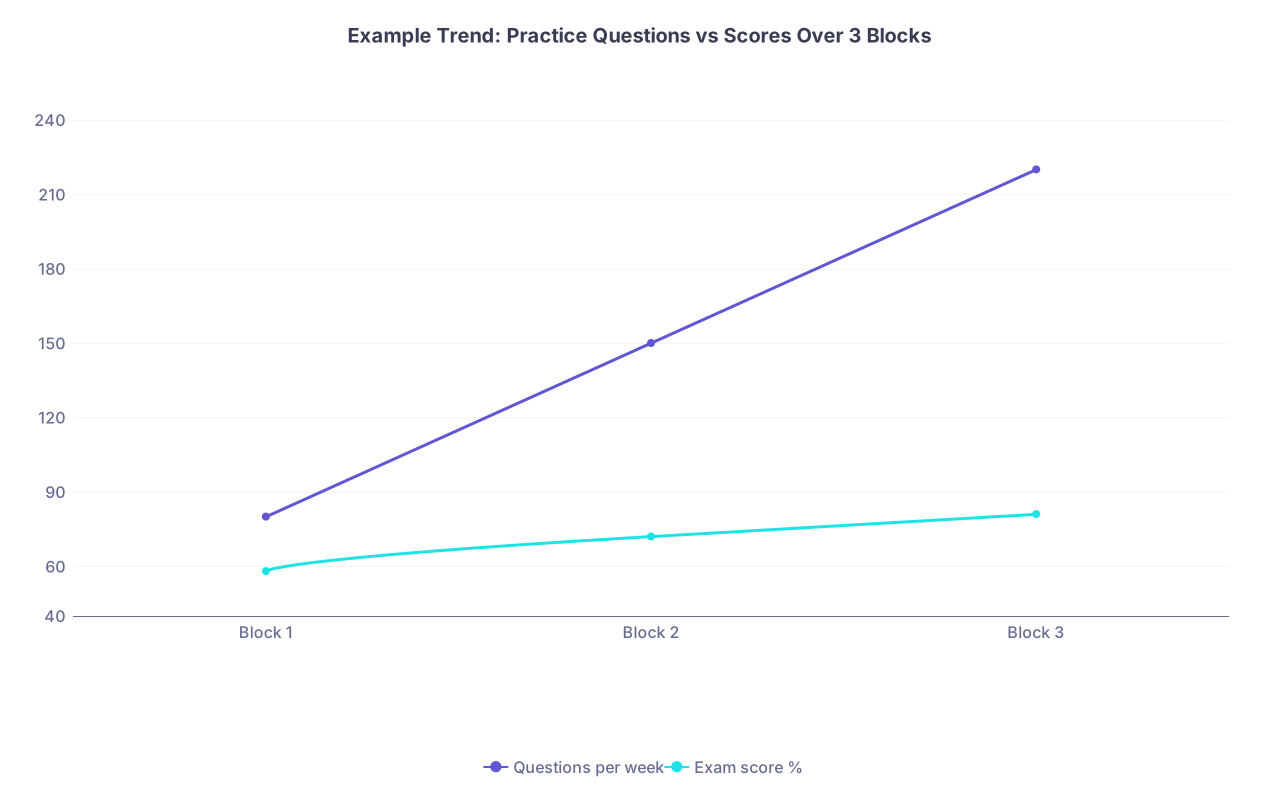
7.1 Track the right metrics
Stop obsessing about single exam points. Track:
- Number of practice questions per week
- Percentage correct over time (rolling average, not one test)
- Anki / spaced repetition completion rate
- Hours of sleep per night
| Category | Questions per week | Exam score % |
|---|---|---|
| Block 1 | 80 | 58 |
| Block 2 | 150 | 72 |
| Block 3 | 220 | 81 |
Your brain responds to reps and recovery. Shockingly, when students actually measure those, scores climb.
7.2 Decide now what you will not do again
Write a “Never Again” list. For real, on paper.
Examples:
- Never again will I go into an exam with <200 cumulative practice questions on that content.
- Never again will I stay up past midnight the night before an exam.
- Never again will I rely solely on lecture slides for complex physiology.
Put that list where you see it weekly.
7.3 Accept that improvement is lumpy
You will not go from failing to honors in one step. Expect something like:
- Exam 1: 58% (fail)
- Exam 2: 72% (solid pass)
- Exam 3: 78% (upper middle)
- Exam 4: 82–85% (honors range at many schools)
That trajectory is common. The line is rarely smooth. What matters is direction, not perfection.
Step 8: Rewrite Your Internal Story Before It Hardens
Last point, because it is the one that sticks long after M1.
If you keep secretly repeating “I am the one who failed the first exam,” you will sabotage yourself. You will avoid asking questions in class. You will stay quiet in small groups. You will start playing small.
You need a different story. Here is one that is actually true:
“I took a hit early, and I used it to build a system that most of my classmates never had to learn. I know exactly how I study, what works for me, and how to course-correct.”
The residents I respect the most are not the ones who coasted. They are the ones who got punched early and built resilience and systems that carried them through Step 1, Step 2, boards, and residency.
You are in that moment right now.
Three Things to Do Today
Strip this down to the bare minimum action:
Do the autopsy.
Get your exam breakdown, classify your failure type, and write down the top 2–3 causes.Build a 7‑day plan.
On a calendar, block out study time using the structure above: new content, review, questions. No more vague “study all day.”Commit to one non‑negotiable change.
Maybe it is “no zero‑question days” or “content done 3 days early.” Pick one and actually enforce it this block.
Failing your first med school exam is not the problem. Failing to respond intelligently is. You have the blueprint now. Use it.