
The way most first‑year medical students try to “push through” overwhelm is broken. You do not need another color‑coded Notion template. You need a hard reset and a clear 14‑day protocol.
This is that protocol.
You are not going to fix FOMO, burnout, and academic chaos with more willpower. You fix it with structure, aggressively simplified priorities, and a short, brutal reset where you stop playing catch‑up on everything and deliberately choose what matters.
Let me walk you through a 14‑day reset I have used—with real MS1s drowning in anatomy, biochem, and endless Anki—to pull them out of the spiral and get them back in control.
The Core Problem You Are Actually Facing
You think your problem is “not working hard enough” or “I am bad at time management.”
Wrong. Your real problems:
- Too many inputs (lectures, small groups, labs, Anki, group chats, extra resources)
- No clear decision rules for what to ignore
- Zero protected recovery time, so every day feels like a low‑battery sprint
- Studying reactively (“what is due tomorrow?”) instead of by system and exam
Overwhelm in first‑year medical school is not a character flaw. It is a systems failure.
The 14‑day reset plan does three things:
- Stops the bleeding – you cut nonessential commitments and drain the noise.
- Rebuilds a minimal, sustainable daily structure.
- Locks in a weekly review so you never drift this far off course again.
You will not “feel caught up” in 14 days. That is fantasy. But you will:
- Know exactly what to do each day
- Have a realistic plan to pass your next exam
- Sleep more and panic less
That is the win.
Before Day 1: The 60‑Minute Triage Session
Do not start the reset without this. It is the setup that makes the next 14 days actually work.
Block 60 minutes. No phone. No music. Just you, your syllabus, calendar, and current grades.
Step 1: Map the next 4 weeks
Open your course sites and list out the next month.
- All quizzes and exams (dates + weight)
- Required labs / small groups / mandatory sessions
- Practical exams (OSCE, anatomy practical, etc.)
Put them into a simple table or calendar. Do not beautify. Just raw data.
| Date | Event | Weight / Importance |
|---|---|---|
| Jan 18 | Anatomy Quiz 2 | Medium |
| Jan 22 | Biochem Midterm | High |
| Jan 25 | Clinical Skills OSCE | High |
| Jan 29 | Physiology Quiz 1 | Medium |
Staring at this hurts. Good. You need to see the battlefield.
Step 2: Ruthless priority call
For the next 14 days, your entire academic strategy is built around:
- The next high‑stakes exam(s) (written or practical)
- Whatever you MUST pass to stay in good standing (mandatory pass/fail pieces)
Everything else is scaled down. Not eliminated. De‑prioritized.
Put a star next to:
- Any exam ≥30% of a course grade
- Any practical (anatomy or OSCE) where failing is disastrous
- Any remediation‑risk areas if you are already struggling
Those stars define your reset.
Step 3: Decide what you are dropping or cutting back
You cannot reset while pretending you can still do everything. You must make cuts.
For the next 14 days, you will:
- Say no to:
- Extra shadowing
- Nonessential meetings, committees, interest groups
- Social events that run your night past 11 p.m. before a heavy day
- Scale down:
- Perfect lecture notes (switch to active recall instead)
- Over‑detailed Anki (keep, but trim)
- Optional pre‑reading that does not affect your exam
If it is not directly supporting sleep, mental stability, or your starred exams, it is negotiable.
Now we reset.
The 14‑Day Reset Plan: Overview
Here is the structure you will follow.
| Phase | Days | Focus |
|---|---|---|
| Phase 1 | 1–3 | Stabilize & clear chaos |
| Phase 2 | 4–7 | Build a simple study engine |
| Phase 3 | 8–11 | Deep exam prep & practice |
| Phase 4 | 12–14 | Consolidate & future-proof |
Think of it like this:
- Phase 1: Stop the academic bleeding
- Phase 2: Install a daily routine that actually fits in 24 hours
- Phase 3: Targeted, exam‑focused training
- Phase 4: Lock it in so you do not end up here again in 3 weeks
Phase 1 (Days 1–3): Stabilize and Clear the Chaos
Goal: Reduce anxiety, create basic order, and stop the feeling that everything is on fire.
Daily non‑negotiables (for all 14 days)
You will do these every day, no matter what:
- Sleep: 7 hours minimum in bed (yes, actually)
- Movement: 15–20 minutes (walk, light workout, stretching)
- Food: One decent meal not eaten in front of a screen
- Admin: 10 minutes nightly to plan the next day (no more, no less)
If this sounds unrealistic, that is exactly why you need the reset.
Day 1: Hard reset of your “system”
-
- Email, LMS notices, Slack/GroupMe, school portals.
- Archive or delete everything older than 7 days that is not:
- Graded work
- Upcoming exam info
- Critical admin
- Unsubscribe or mute nonessential announcement channels for 14 days.
Lecture triage
- Make a list of:
- Lectures you have fully completed
- Lectures partially done
- Lectures not started
- For anything >7 days old and not directly tied to the upcoming exam:
- Summarize in one or two bullet points using slides or objectives.
- Accept that “perfectly watching” is dead. You are buying time.
- Make a list of:
This is where most overwhelmed students get angry. “I cannot skip lectures!”
You are not skipping the content, you are skipping the illusion that watching every minute at 1x speed equals learning.
- Anki / flashcard reset
- Pause or suspend niche or hyper‑detailed cards not tied to:
- High‑yield exam topics
- Weak areas you already know you bomb
- Aim for a daily review cap (e.g., 250–300 reviews) during this reset.
- Pause or suspend niche or hyper‑detailed cards not tied to:
You will forget some low‑yield factoids. You will be fine.
Day 2: Build your minimalist schedule template
You will now design a simple weekday / weekend template that you will follow for the next 12 days.
Example weekday template:
- 7:00–7:30 – Wake, quick breakfast, basic stretch
- 7:30–9:30 – Deep study block 1 (highest‑priority exam topic)
- 9:30–10:00 – Break, walk, snack
- 10:00–12:00 – Deep study block 2 (lectures or Anki)
- 12:00–13:00 – Lunch, no screens
- 13:00–15:00 – Required classes / labs
- 15:00–16:00 – Admin + light tasks (email, quick reviews)
- 16:00–18:00 – Deep study block 3 (practice questions / weak topics)
- 18:00–19:00 – Dinner, decompress
- 19:00–21:00 – Light review / Anki / prep for tomorrow
- 22:30–23:00 – Wind down, no medical content, sleep
Adjust timing, but keep structure:
- 2–3 “deep” study blocks (no phone, no group chats)
- 1–2 light review blocks
- One admin slot
- Movement + real breaks
If your school schedule is heavy in the morning, shift deep work earlier or later. But protect at least two 90‑120 minute deep blocks daily like your life depends on them. Because your sanity does.
Day 3: Sync with reality and cut more
Now that you have a template, plug in the actual next 7 days:
- Place mandatory activities first (labs, small groups, required lectures)
- Then block your deep study sessions around them
- Then place:
- Anki
- Question banks
- Review sessions
Now look at what does not fit.
This is where you make more cuts:
- Limit live lectures to:
- Required sessions
- Topics you truly do not understand from slides or notes
- Everything else → watch sped‑up, skim slides, or use lecture summaries.
If you are in a PBL / small group heavy school, accept that some days will not be pretty. You will compensate on lighter days. That is normal.
Phase 2 (Days 4–7): Build a Simple, Aggressive Study Engine
Goal: Convert random, reactive studying into a repeatable routine that feeds your next exam.
Your study structure for these 4 days
Each main study block (90–120 minutes) should follow this pattern:
5 minutes – Micro‑plan
- Write: “In this block, I will…”
- Example: “Finish cardio physiology lectures 3–4 + 30 related Anki cards.”
70–90 minutes – Focused work
- One system, one task:
- Watch / skim lectures with notes
- Or do targeted question sets with immediate review
- Or Anki / active recall on one specific topic
- One system, one task:
10–15 minutes – Fast recap
- Write 5–10 key takeaways on paper or tablet
- Mark what confused you for later
You are training your brain to work in units, not infinite mush hours.
The 3‑tier priority rule
For each day, classify tasks into:
- Tier 1 – Directly affects your next high‑stakes exam or struggling course
- Tier 2 – Important but not urgent (future exam content)
- Tier 3 – Nice to have (extra videos, super detailed resources, notes beautifying)
In every deep block, you must do Tier 1 first. You do not touch Tier 3 until Tier 1 and critical Tier 2 are done.
If you still catch yourself “polishing” notes before you have done questions, you are self‑sabotaging.
Questions vs. content: Stop guessing
Overwhelmed MS1s consistently underuse practice questions. They feel safer “learning first” and then testing.
Bad idea.
Here is a simple ratio for your reset:
- For content you have never seen → 60% content, 40% questions/active recall
- For content you have seen at least once → 30–40% content, 60–70% questions/active recall
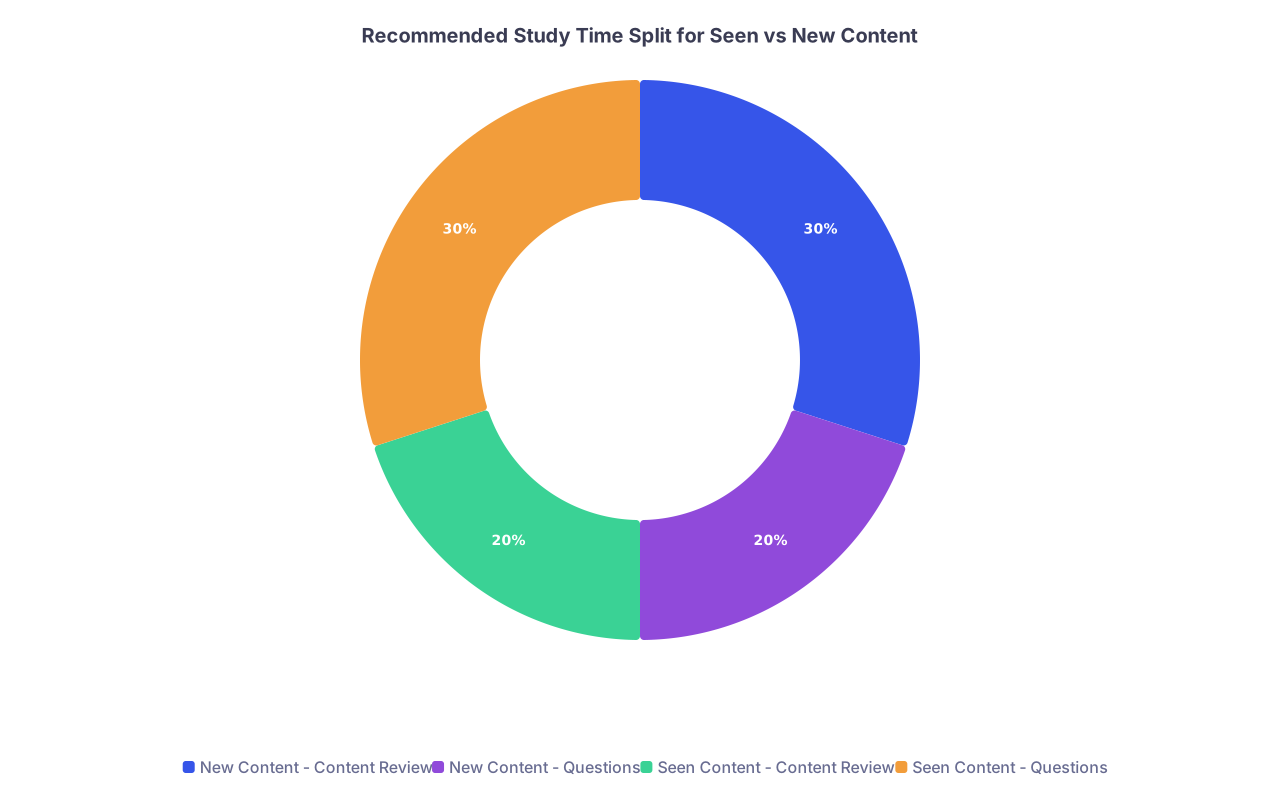
| Category | Value |
|---|---|
| New Content - Content Review | 30 |
| New Content - Questions | 20 |
| Seen Content - Content Review | 20 |
| Seen Content - Questions | 30 |
Write this at the top of your notebook or whiteboard if needed:
“Questions are studying.”
Phase 3 (Days 8–11): Deep Exam Prep and Performance Focus
Goal: Shift from “learning stuff” to “scoring points on an exam”.
By now, your schedule is more predictable. You are a bit less frantic. Good. Now we push.
Day 8: Mid‑reset reality check
Take 30 minutes and answer:
- What topics keep showing up as weak in questions?
- Which course or system is currently scaring you the most?
- How many days remain until your next big exam?
This is where you stop treating everything equally.
Create a “Top 5 Weak Topics” list for your next exam. Example:
- Cardio physiology – pressure‑volume loops
- Renal – acid‑base disorders
- Biochem – glycolysis & TCA regulation
- Anatomy – brachial plexus lesions
- Pharm – autonomic drugs
Now you structure at least one deep block per day around one or two of these targets.
Aggressive question‑based studying
For each weak topic:
- Do a small, focused question set (5–15 questions) on that topic.
- For each missed or guessed question, write:
- What you thought
- Why it was wrong
- The key concept that would have made it easy
- Turn that key concept into:
- One short card or;
- One concise note in your “high‑yield errors” doc
The mistake is not missing the question. The mistake is missing it twice.
Anatomy and practicals: Different game, different rules
If you have an anatomy practical or OSCE coming:
- Schedule specific blocks for:
- Lab time or 3D atlas (Complete Anatomy, etc.)
- Tag identification drills using previous practicals or school resources
- Verbalizing physical exam sequences out loud
Do not “sort of” practice OSCEs in your head. You will bomb the timing and flow.
Actual out‑loud run: timer, checklist, pretend patient. Yes, it feels dumb. Do it anyway.
Phase 4 (Days 12–14): Consolidate and Future‑Proof
Goal: You are not just trying to survive the next exam. You are installing habits so you do not collapse again three weeks from now.
Day 12: Mini‑mock + fix
If your exam is close enough, run a mini‑mock session:
- 20–40 mixed questions timed
- Simulate test conditions:
- No phone
- No pausing between every question
- Single pass, then review
Afterward, categorize every miss into:
- Did not know the content at all
- Recognized content but misread/misapplied
- Knew it but rushed / careless
Your action plan:
- “Did not know” → 1–2 targeted study blocks before the exam on those areas
- Misread/misapplied → Practice similar question types
- Rushed → Build in micro‑pauses and re‑reading of stems in your practice
This is how you stop repeating the same score range.
Day 13: Build your personal “survival protocol”
You need a playbook for the next time you feel the floor dropping out.
On Day 13, write a one‑page “If I feel overwhelmed, I will…” document. For example:
- Immediate actions (24 hours):
- Cut all nonessential events this week
- Message group leaders / friends with a simple: “I am buried in school for the next few days, will rejoin after exam.”
- Re‑do the 60‑minute triage session
- Daily structure I know works for me:
- My best deep work time
- My Anki capacity
- Ideal sleep window
- Warning signs I am sliding:
- Staying up past midnight “catching up”
- Skipping meals to study
- Opening 5 different resources for the same topic
Put this document somewhere you will actually see it.
Day 14: Weekly review ritual setup
The 14‑day reset is a jumpstart. Staying functional requires one habit: a weekly review.
You will now define your Weekly 45‑Minute Review, to be done at the same time every week (Sunday evening or Friday afternoon works well).
Your review template:
Look back (10–15 minutes)
- What did I actually do this week? (Be blunt.)
- Where did time go that gave me little or no return? (Endless group chats, doom‑scrolling “study tips,” rewatching lectures you already understood.)
Grades / performance check (5–10 minutes)
- New quiz/exam scores?
- What patterns are showing up? Same topics? Same error type?
Look ahead (15–20 minutes)
- What is happening in the next 2 weeks?
- Exams
- Labs
- Major deadlines
- Decide:
- Top 3 academic priorities this week
- One concrete personal priority (sleep, exercise, social)
- What is happening in the next 2 weeks?
Schedule reality
- Adjust next week’s template with actual events.
- Move or delete things until your week is not insane on paper.
You will fail to follow your plan perfectly. Every single MS1 does. That is fine. The win is catching yourself weekly and adjusting before the chaos is total.
Managing Energy and Stress Without the Fluff
I am not going to sell you yoga and herbal tea as the solution to structural overload. But if you do not manage your brain and body even a little, no system will save you.
Here is the minimum viable version that actually helps:
Sleep rules for the reset
Aim for:
- Consistent sleep window (even on weekends, within 1 hour)
- No high‑stimulus studying (new content, intense questions) in the last 30–45 minutes before bed
- Stop caffeine 8 hours before you plan to sleep
If you are regularly trading sleep for an extra hour of half‑effective studying, you are losing ground. Every time.
Micro‑recovery during the day
Instead of fake breaks (scrolling Instagram), try:
- 5–10 minute outdoor walk without headphones
- 5 slow breaths before starting a study block:
- Inhale 4 seconds, exhale 6 seconds
- One short “transition ritual” between school and sleep:
- Shower, change clothes, 5 minutes of stretching
Does that magically cure burnout? No. But it raises your floor.
Technology Discipline: Control the Inputs
Overwhelmed first‑years are drowning in “resources”:
- Boards & Beyond
- Sketchy
- Pathoma
- Osmosis
- Anki decks
- Discord and Reddit threads with “must‑use” lists
You cannot use everything. You will die trying.
During this 14‑day reset, commit to:
- Max 1–2 primary resources per course
- Example: School slides + Anki for physio
- Or Boards & Beyond + questions for biochem
- One Q‑bank for each domain (NBME‑style vs school‑style)
Everything else is backup, not baseline.
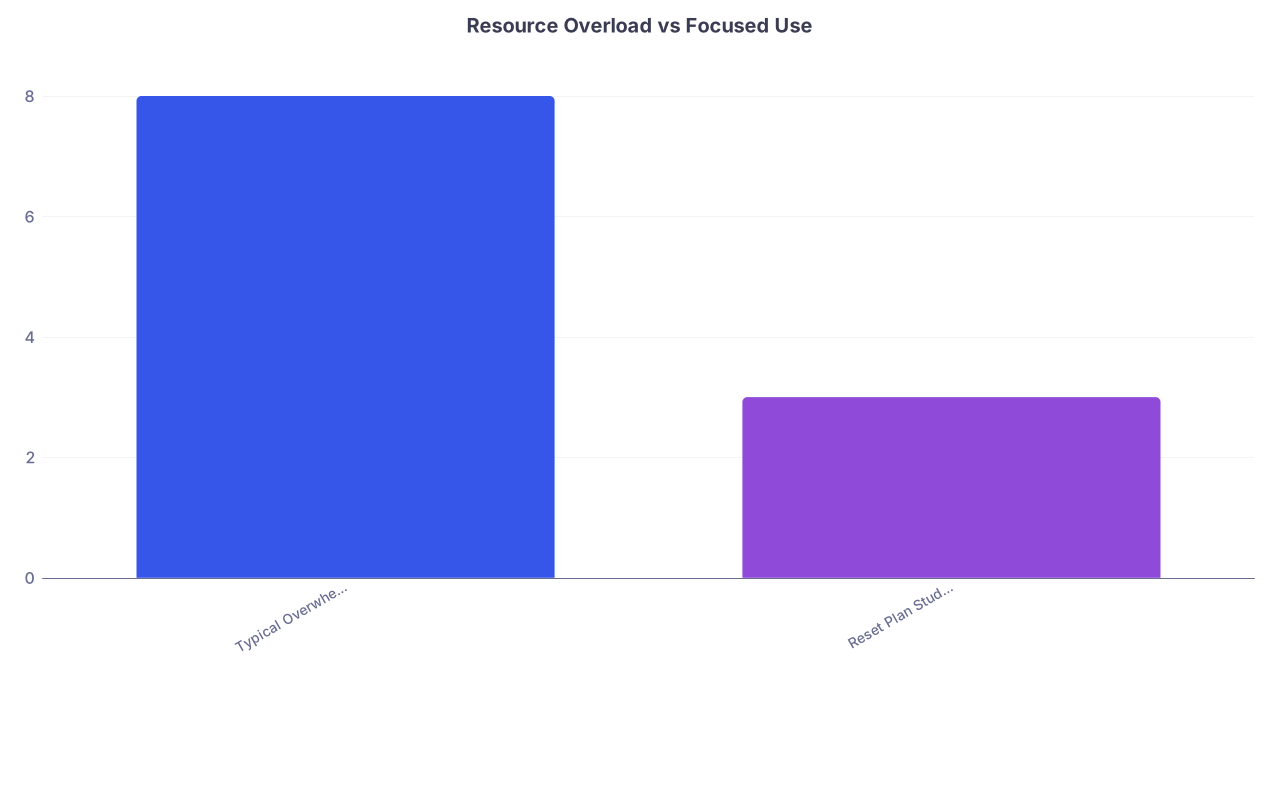
| Category | Value |
|---|---|
| Typical Overwhelmed MS1 | 8 |
| Reset Plan Student | 3 |
That bar on the left? I have seen that student a hundred times. They are exhausted and constantly behind. Do not be that student.
Social Pressure and Comparison: Turn Down the Volume
A lot of your overwhelm is not actually from content. It is from comparison:
- Classmates flexing 500‑card Anki days
- People saying “I already finished all the lectures for next week”
- Group chats buzzing 24/7 with anxious questions
For 14 days, you are allowed to protect your head.
Strategies:
- Mute large class chats except for:
- Official announcements
- Actual logistics
- Choose 1–2 people you actually trust to study or check in with
- Stop asking “How much did you get done today?”
Start asking: “What is your focus for tomorrow?”
If someone’s study habits stress you out more than they help you, you are allowed to step back.
What This 14‑Day Reset Will Not Do
Let me be very clear about limits.
This plan will not:
- Turn a failing 30% into a 90% overnight
- Make medical school “easy”
- Eliminate anxiety completely
What it will do:
- Stop the free‑fall
- Give you a working daily structure you can repeat
- Focus your limited energy onto the exams and tasks that matter most
- Replace vague guilt with concrete actions
That is how first‑years actually survive. Not with magic, but with fewer moving parts and better decision rules.
Putting It All Together: A Sample 3‑Day Slice
Here is what Days 5–7 might look like for a real overwhelmed MS1 with a cardio exam in 10 days.

| Step | Description |
|---|---|
| Step 1 | Day 5 Morning |
| Step 2 | Deep Block 1: Cardio Lectures 5-6 + Anki |
| Step 3 | Mandatory Lab |
| Step 4 | Deep Block 2: Cardio Questions 20q |
| Step 5 | Light Review: Anki + Summary |
| Step 6 | Sleep 7 hrs |
| Step 7 | Day 6 Morning |
| Step 8 | Deep Block 1: Weak Topics - Arrhythmias |
| Step 9 | Group Session / PBL |
| Step 10 | Deep Block 2: Practice Questions 25q |
| Step 11 | Walk + Decompress |
| Step 12 | Day 7 Weekly Review |
| Step 13 | Adjust Next Week Plan |
Nothing fancy. Just repeated, focused, realistic effort.
Do This Today
Do not “save” this for a better time. There is no better time. Here is your concrete next step:
Right now, set a 60‑minute timer and do the triage session:
- List your next 4 weeks of exams and mandatory sessions.
- Star the high‑stakes events.
- Decide what you are cutting for the next 14 days.
- Draft a simple weekday schedule template with:
- 2–3 deep study blocks
- One admin slot
- Sleep and movement built in
When the 60 minutes are up, you are no longer “overwhelmed first‑year who is behind on everything.” You are running a 14‑day reset plan.
Start the timer.