The weeks that break most med students are predictable—and you should be planning for them like a code blue.
You would never walk into a cardiac arrest without an algorithm, roles, and backup. Yet most students walk into exam blocks, OSCE week, or back‑to‑back call with nothing but “I’ll try my best” as a strategy. That is how people crash. Not because they are weak. Because they tried to freestyle a situation that demands a protocol.
What you need is a personal crisis plan: a simple, written, stepwise protocol you follow when your stress passes a certain line. Not vibes. Not “listen to your body”. A clear, pre‑decided playbook.
Here is how to build one that actually works under fire.
1. Know Your “High‑Stress Week” Profile
You cannot build a crisis plan in the abstract. You build it for specific, predictable weeks that routinely wreck students.
Typical high‑stress weeks in first‑year and early med school:
- Week before an anatomy or physiology block exam
- Final 7–10 days before NBME‑style cumulative exams
- OSCE / practical exam weeks
- Weeks with two exams plus mandatory labs / small groups
- Any week where exams collide with major life stuff (move, breakup, illness, family problems)
Start here: list the top 3 scenarios that scare you. Be uncomfortably specific.
Example:
- “Week before anatomy + histology final, with 2 required labs and 1 mandatory small‑group.”
- “Step‑style cumulative exam after I fell behind for 3 weeks.”
- “Exam week when I am already at 5/10 mood baseline or worse.”
Your crisis plan is not generic wellness fluff. It is tailored to the exact scenarios that knocked you flat before (or that you’ve watched classmates crumble under).
2. Set a Clear Trigger: When Do You Activate the Plan?
A crisis plan only works if you know exactly when to use it.
You need triggers. Objective and subjective.
A. Objective triggers (behavior and schedule)
Pick 2–4 “hard” triggers like:
- You are ≤ 7 days from a major exam and:
- You have not finished at least 60–70% of planned content
- You are sleeping < 5.5 hours for 2 nights in a row
- You have skipped 2 consecutive real meals (coffee is not a meal)
- You missed 2 days in a row of Anki / questions / content review
- You have cried more than once in 48 hours about school
B. Subjective triggers (how you feel)
Examples:
- You rate your stress ≥ 8/10 for > 24 hours
- You feel a strong urge to just “nuke it” (give up on the exam, skip everything)
- You notice “what is the point” thoughts popping in often
- You are fantasizing about getting mildly sick so exams get delayed
Write them down. Literally. This goes at the top of your crisis plan:
“I activate this plan when:
– It is ≤ 7 days before a block exam and I am < 70% through content,
– OR I have slept < 5.5 hrs for 2 nights in a row,
– OR my stress is ≥ 8/10 for > 24 hours.”
This removes debate. During a high‑stress week you do not waste energy arguing with yourself about whether you “deserve” help or structure. You just follow the trigger.
3. Build a One‑Page “Code Blue” Sheet
If your crisis plan lives in a 15‑page PDF, it is useless. You want a single physical page. On your wall, next to your desk. And a screenshot on your phone.
Structure it into five blocks:
- Trigger box – When to activate
- Immediate 24‑hour protocol – What to do today
- Daily structure for the rest of the crisis week
- Support + communication script
- Red‑flag / emergency pathway
I will walk through what goes in each, then you plug in your specifics.
4. Immediate 24‑Hour Protocol: Stabilize First, Then Study
When stress spikes, most students try to brute force more hours. That is why they spin out. Your 24‑hour protocol is about stabilizing the system quickly so your brain actually works again.
Step 1: Hard reset on basic physiology
Minimum standards for the next 24 hours:
- Sleep: Commit to one 7‑hour sleep window in the next 24 hours. Non‑negotiable.
- Example: In bed 11:30 pm, phone in another room, alarm at 6:30 am.
- Nutrition: Three actual meals with protein + carbs + fat.
- They can be simple: frozen meal + fruit, grocery store sandwich, eggs + toast.
- Rule: no more than 6 waking hours without a real meal.
- Fluids / caffeine:
- 2 full bottles of water (about 1.5–2 L total).
- Cap caffeine at whatever you normally drink by mid‑afternoon. No new “I’ll try 3 Monsters” experiments.
Write your choices into the plan, not just principles.
“Tonight I sleep 12–7 am.
I will eat:
– Breakfast: oatmeal + peanut butter + banana
– Lunch: grocery store sandwich + yogurt
– Dinner: microwave rice + frozen veggies + rotisserie chicken.”
You are not aiming for ideal. You are aiming for good enough and guaranteed.
Step 2: Control breathing + acute physical tension (10–15 minutes)
This sounds soft. It is not. If your sympathetic system is pegged, your working memory tanks.
Pick one of these and write it into the plan:
- Box breathing – 5 minutes
- In 4 seconds, hold 4, out 4, hold 4.
- 5‑minute brisk walk + 5‑minute stretch
- “Physiological sigh” set – 10–15 breaths
- Two quick inhales through the nose, one long exhale through mouth.
Do not improvise. Choose exactly what you will do and when.
“If I activate this plan, I do 5 minutes of box breathing + 10‑minute walk around the block before I open any notes.”
Step 3: Triage your academic mess
You feel overwhelmed because your entire to‑do list is blurring into a single monster. You need triage, not productivity hacks.
Take 30–45 minutes max and answer three questions:
- What is the exact exam format? (questions, timing, topics, weights)
- What content is already done? (even if not perfect)
- What content moves the needle most if I fix it in the next 5–7 days?
Now translate to a ruthless list:
- Must‑cover (if I skip this, I will get wrecked):
- Examples: cardio phys, renal phys, autonomics pharm, micro high‑yield organisms.
- Nice‑if‑time:
- Rare diseases, low‑yield minutiae, tiny side tables.
- Dead weight (drop it):
- Optional readings, overkill textbooks, 4th resource, perfection‑polishing flashcards.
You want this triage on paper. Not swirling in your head.
| Category | Examples (Phys Block) |
|---|---|
| Must-cover | Cardio, Renal, Pulm, Acid-Base |
| Nice-if-time | GI phys, Endocrine details |
| Dead weight | Extra textbook chapters, niche topics |
The goal of the first 24 hours: your body is less fried, and your study load is reduced to what actually counts.
5. Crisis‑Week Daily Structure: Default Schedule You Do Not Renegotiate
During high‑stress weeks, your brain is terrible at making decisions. So remove decisions.
You need a template day you follow with minimal variation. Think of it like orders written in advance.
Here is a sample crisis‑week schedule. You will adapt times, but keep the structure:
- 07:00–08:00 – Wake, breakfast, light movement, 5–10 minutes breathing
- 08:00–10:00 – Deep work block #1 (questions or highest‑yield new content)
- 10:00–10:15 – Break (walk, stretch, snack – not Instagram)
- 10:15–12:15 – Deep work block #2 (review + targeted Anki)
- 12:15–13:00 – Lunch + no‑screen decompression
- 13:00–15:00 – Deep work block #3 (questions, active recall)
- 15:00–15:20 – Break (phone allowed; set timer)
- 15:20–17:00 – Lighter work (sketchy videos, group review, low‑energy tasks)
- 17:00–19:00 – Dinner, short walk, shower, social contact
- 19:00–21:00 – Final study block (review only, no new topics if ≤ 48h to exam)
- 21:00–22:30 – Wind‑down routine, strictly no new content, prep for bed
- 23:00–06:00 / 07:00 – Sleep window (locked)
Do not try to be cute and optimize this every day. Commit to 80–90% adherence to the structure, not 100% content completion.
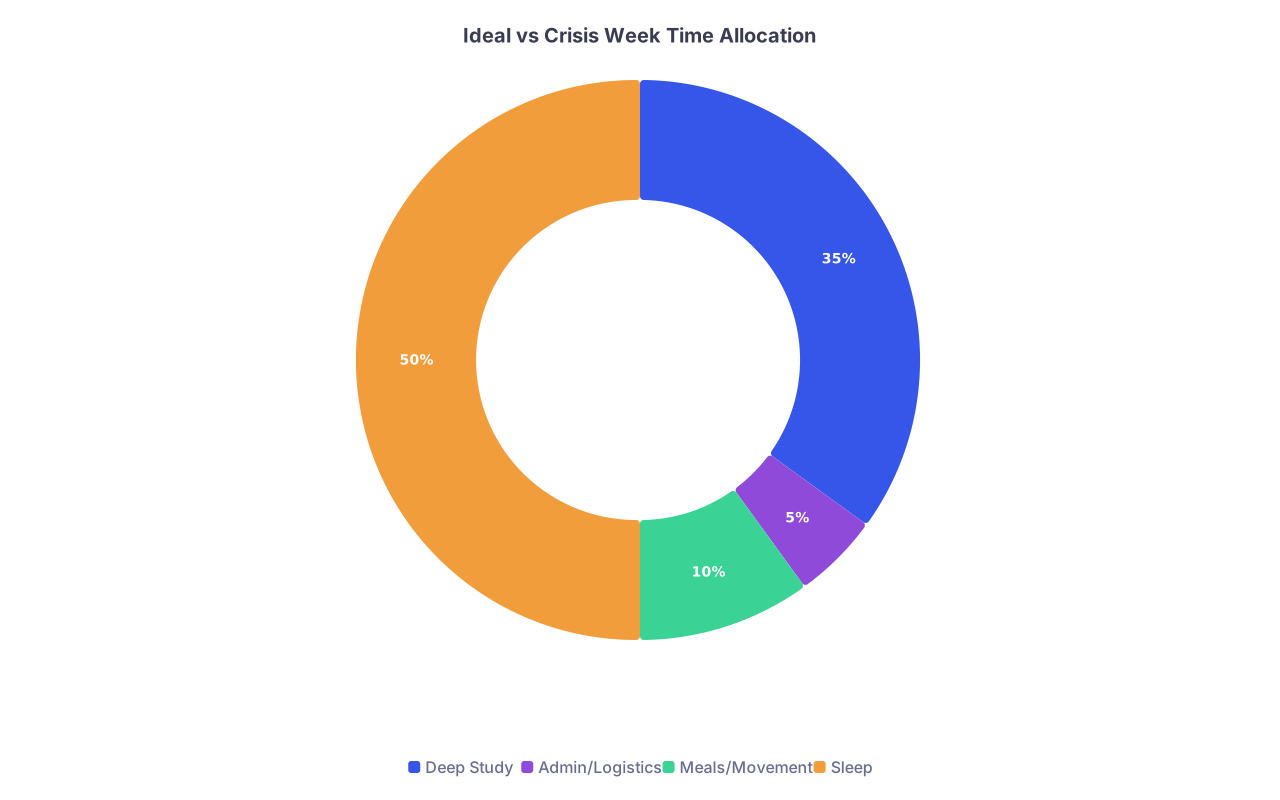
| Category | Value |
|---|---|
| Deep Study | 35 |
| Admin/Logistics | 5 |
| Meals/Movement | 10 |
| Sleep | 50 |
Crisis‑specific rules that go on your plan
Add a few hard rules for these weeks:
- No new resources. Whatever you have been using is what you stick with.
- No social media between 08:00–17:00. Full stop.
- No all‑nighters. You trade 10% extra content for 50% worse recall. Bad deal.
- Daily check‑in: rate stress 1–10, sleep hours, meals eaten. Takes 1 minute.
Write these as bullet points on your sheet under “Crisis‑Week Rules”.
6. Pre‑Decided Coping Tools: What You Do When You Start to Spiral
Stress spikes will still come. The plan is not to eliminate them. It is to script your response in advance so you do not escalate them.
Pick 3 categories:
- Fast 5‑minute resets (for between study blocks)
- Medium 15–30 minute resets (for when you are melting down)
- Daily anchors (preventive practices you keep even when busy)
Examples you might write into your plan:
Fast 5‑minute resets (choose 2–3):
- Box breathing
- 10 push‑ups + 10 air squats + 10 slow breaths
- “Name 5 things you see / 4 you feel / 3 you hear / 2 you smell / 1 you taste” grounding
- Walk to bathroom, splash cold water on face, slow walk back
Medium 15–30 minute resets:
- 20‑minute power nap (alarm set, eye mask, no scrolling before bed)
- 15‑minute brisk walk outside with one song on loop
- Quick call to one pre‑chosen friend or family member (they know exam week is happening)
Daily anchors (non‑negotiable during crisis week):
- 1 short connection with a non‑med person (text or call)
- 10 minutes of something that reminds you you are more than med school (guitar, drawing, a crappy sitcom episode, prayer, journaling)
Pick the ones you will actually do. Not what sounds virtuous. Then write them concretely:
“When I rate my stress ≥ 8/10, I must:
– Stop studying for 10–15 minutes,
– Do 5 minutes of box breathing,
– Take a 10‑minute walk,
– Only then decide what to do next.”
No debate in the moment. You already decided.
7. Communication Scripts: Tell People Early, Not When You Are Broken
One of the biggest failure points I see: students wait until they are at total collapse to mention anything to friends, faculty, or partners.
Your crisis plan should include scripts. Pre‑written, low‑friction messages or phrases you can fire off without thinking when things are going sideways.
A. Academic / faculty script
You are not asking for special treatment every time you are stressed. But if you are genuinely unwell, or something acute happens, you should not be drafting that email at 2 am, half‑crying.
Example template:
Subject: Urgent – [Your Name], [Course] Exam Week
Dear Dr. [Name],
I am in the week leading up to the [course] exam and have developed [brief: severe migraine / GI illness / significant anxiety symptoms]. I am following the school’s policy on health concerns during exams and wanted to inform you as early as possible.I am still preparing to sit for the exam if at all possible, but I would appreciate guidance on any documentation or steps I should take now in case my condition worsens.
Thank you for your time and understanding,
[Name], MS1
Stick this in a Google doc or notes app now. When needed, you customize 2–3 words and send.
B. Friends / significant other script
You need people around you to understand what “high‑stress week” means. Otherwise they keep texting, calling, inviting, and you either snap or ghost them.
Plan a standard message:
“Hey, I am in a high‑stress exam week from [date] to [date]. I am using a crisis plan to keep things together, so my responses will be slow and I may say no to most plans. It is not personal; I just literally do not have spare bandwidth. I will text you after [exam date] to reconnect.”
Send this before the week starts. Every time.
C. Study group / classmates script
Sometimes you need to pull back from group study or protect your day from “one quick question” interruptions.
Script:
“I am flipping to solo mode this week because my stress is high and I need tight structure. I am not ignoring anyone, I just cannot handle group chaos right now. Let’s catch up after the exam.”
This is not dramatic. It is boundaries. Pre‑write it so you send it rather than stewing.
8. Red‑Flag Pathway: When This Is Not “Just a Bad Week”
Some weeks are not just high stress. They are “you should not be white‑knuckling this alone” weeks.
If you are honest, you probably tell yourself “it is not that bad” until it is almost too late. So you need an algorithm for red flags. Just like ACLS.
Define your red flags explicitly
Examples (adapt to you):
- Thoughts like “I wish I would not wake up” / “Everyone would be better off if I disappeared”
- Any planning of self‑harm, even vague (thinking about methods, locations, notes)
- Panic attacks that impair breathing / function
- Unable to eat or sleep for > 24 hours despite trying
- Using alcohol, benzos, or other substances specifically to blunt stress every day
- Physical symptoms that seriously worry you (chest pain, severe migraine, etc.)
Write a bold section on your plan:
If ANY of the following occur, I STOP STUDYING and follow the Red‑Flag Plan:
Then list your personal red flags. Not theoretical.
Pre‑decide who you contact and how
You need names + numbers written down:
- School counseling / mental health service
- Local crisis line or national hotline
- A trusted friend in your city
- A family member who “gets it”
- Primary care physician, if relevant
And a simple flow:

| Step | Description |
|---|---|
| Step 1 | Notice red flag |
| Step 2 | Call emergency services or go to ER |
| Step 3 | Call school counseling or crisis line |
| Step 4 | Contact trusted person |
| Step 5 | Update faculty if exams affected |
| Step 6 | Is there active self-harm plan? |
You literally print the numbers:
– School counseling: 555‑123‑4567
– Crisis line: 988 (US)
– Friend: Jamie – 555‑222‑3333
– ER: 911 or nearest hospital address: [write it]
This way, in the worst moments you are not googling. You are executing.
And no, having this written does not “make it more real” or “jinx it.” It is the same as having epinephrine stocked before anaphylaxis. You hope to never touch it. You are still responsible for having it ready.
9. Plan the Week Before the Week: A 7‑Day Pre‑Crisis Checklist
Here is where most students mess up: they try to build a crisis plan on Day −1 of exam week. Useless. Your brain is already cooked.
You need a mini‑protocol for the week before a known high‑stress week.
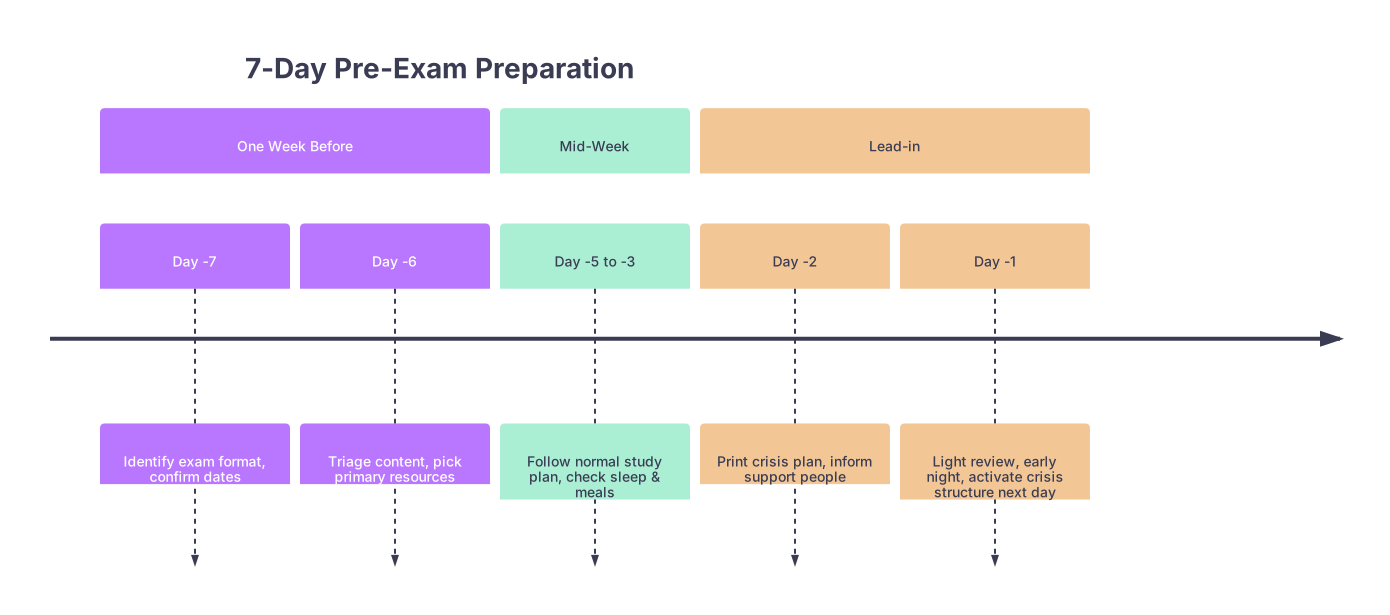
| Period | Event |
|---|---|
| One Week Before - Day -7 | Identify exam format, confirm dates |
| One Week Before - Day -6 | Triage content, pick primary resources |
| Mid-Week - Day -5 to -3 | Follow normal study plan, check sleep & meals |
| Lead-in - Day -2 | Print crisis plan, inform support people |
| Lead-in - Day -1 | Light review, early night, activate crisis structure next day |
Concrete steps:
Day −7 to −5 (week before exam week):
- Confirm exam logistics: time, location, topics, allowed materials
- Decide on primary resource(s) for each subject (no new ones next week)
- Rough plan: what content should be done by Day −3, Day −1
- Start nailing your sleep window (you do not “fix” sleep the night before)
Day −4 to −2:
- Adjust if you are behind: cut resources, not sleep
- Identify if you are trending toward your crisis triggers:
- Sleep falling
- Panic rising
- Falling behind your rough plan
- If you see the trend, you intentionally choose to activate the crisis plan on Day −2 or −1. Early, not late.
Day −1:
- Light review only; no new topics after a certain hour (e.g., 6 pm)
- Pack bag / clothes / snacks for exam day
- Review your crisis one‑pager. Put it out on your desk.
- Text your support people: “Exam tomorrow, I’ll be offline after 9 pm.”
10. Practice the Plan on a “Medium” Week
Do not wait for your worst week of the year to test this. That is how systems fail. Hospitals run mock codes for a reason.
Pick a medium‑stress week (regular quiz, normal labs) and run a lite version of your crisis plan for 2–3 days:
- Follow your template schedule at 80%
- Use your 5‑minute reset tools between blocks
- Try your sleep + meal structure
- Send one of your pre‑written texts to friends: “Heads up, busy 3 days, slower replies.”
You will quickly see:
- Which coping tools you actually use
- Where your schedule is unrealistic
- Which rules feel pointlessly strict and which are essential
Then you tweak the one‑page sheet. Think of it as version 1.1.

11. Example: A Realistic First‑Year Crisis Plan Snapshot
To make this concrete, here is a compressed sample of what a real MS1’s plan might look like for a brutal exam week.
Heading:
“Anatomy / Phys Block Exam – Crisis Plan – [Name] – MS1”
Triggers (any = activate):
- ≤ 7 days to exam and I am < 70% through lectures
- 2 nights in a row with < 5.5 hours of sleep
- Stress ≥ 8/10 for > 24 hours
- Skipped Anki for 2 consecutive days
24‑Hour Protocol (Day 1 of activation):
- Sleep: 11:30 pm–6:30 am (phone charges in kitchen)
- Meals:
- Breakfast: yogurt + granola + banana
- Lunch: campus salad bar with chicken + bread
- Dinner: frozen rice bowl + extra veggies
- Immediate: 5 min box breathing + 10 min walk
- Academic triage:
- Must: cardio phys, renal phys, pulm phys, heart anatomy, lung anatomy
- Nice: endocrine phys, GI details, limb anatomy
- Drop: extra textbook questions, optional recommended readings
Crisis‑Week Daily Structure:
- 07:00–08:00: wake, breakfast, 5‑minute breathing
- 08:00–10:00: UWorld‑style questions (cardio/renal)
- 10:15–12:15: review missed concepts + targeted Anki
- 13:00–15:00: anatomy lab review (dissector, images)
- 15:20–17:00: videos for weak topics (existing playlist only)
- 19:00–21:00: mixed review, no new topics if ≤ 48h to exam
- 23:00–06:30: sleep window, no negotiation
Crisis‑Week Rules:
- No TikTok / IG / YouTube shorts between 08:00–17:00.
- No new question bank or resource this week.
- No studying in bed. Desk only.
- If stress ≥ 8/10, do 10‑minute reset before continuing.
Coping Tools:
- Fast: 5‑minute box breathing; splash cold water on face; 10 push‑ups + 10 squats.
- Medium: 20‑minute nap; 15‑minute walk with music; call mom or partner.
- Daily anchor: 15 minutes of guitar after dinner, even if I feel behind.
Communication Scripts:
- Friends: “Exam week from [date]. I will be slow to respond, not mad at anyone.”
- Study group: “I am solo this week to keep my anxiety down. See you after exam.”
Red‑Flag Pathway:
- Red flags: self‑harm thoughts, cannot sleep or eat for > 24 hrs, panic attacks.
- If present:
- Stop studying.
- Call school counseling: 555‑123‑4567.
- If self‑harm plan: call 988 or 911 and go to nearest ER at [hospital address].
- After stable, email course director using saved template.
That is it. One page. Clear enough that you could hand it to someone and they would know how to help you.
12. Why This Works (And Why Most “Wellness” Advice Fails You)
Most wellness advice in med school is useless for crisis weeks because it is:
- Vague (“prioritize self‑care”)
- Optional (“try to sleep more if you can”)
- Detached from the actual exam pressure you feel
- Not written down anywhere
Your crisis plan is the opposite:
- Specific
- Pre‑decided
- On paper
- Tied to your real schedule and real exams
You are not promising yourself to “be better this block.” You are writing orders you will follow when certain conditions hit. Like a standing protocol.

13. Put It All Together This Week
Do not wait for the next meltdown. You can draft a solid version of your crisis plan in under 60 minutes.
Concrete steps for you, right now:
- Open a blank doc titled “Personal Crisis Plan – MS1”.
- Write your top 3 high‑stress scenarios.
- Define 3–5 triggers (objective + subjective).
- Block out your 24‑hour protocol and daily structure.
- Pick 3 fast tools, 3 medium resets, 1 daily anchor.
- Draft email / text scripts and paste them in.
- Add red‑flag criteria + phone numbers.
- Print it. Stick it where you can see it. Screenshot it to your phone.
If you do just that, you will be miles ahead of most of your class when the next brutal week hits. You might still feel stressed. Fine. But you will not be improvising under pressure.
You will have a plan. And in med school, that is often the difference between “barely surviving” and “taking a hit but staying in the game.”
Key points:
- High‑stress weeks in med school are predictable enough that you should treat them like a code situation and create a written crisis protocol in advance.
- Your crisis plan must be one page, specific, and pre‑decided: clear triggers, 24‑hour stabilization steps, a default crisis‑week schedule, coping tools, scripts, and an explicit red‑flag pathway.
- The value is not in perfection; it is in having a simple, executable playbook when your brain is flooded and you would otherwise make terrible decisions.