Is Suffering Actually Making You a Better Med Student?
Who told you that “if you’re not miserable, you’re not working hard enough” in med school? Because that line, more than anything else, is what’s quietly wrecking a lot of students.
Let me be very clear: the idea that you have to suffer to become a good doctor is not only wrong, it’s directly contradicted by a mountain of data. Not vague “wellness” posters. Actual research, with numbers, scales, and follow‑up.
You’re being sold a story: that first year is supposed to feel like constant drowning, that collapsing at 2 a.m. over Anki cards is a rite of passage, that saying “no” to anything non‑academic means you’re “serious.” And if you’re not suffering? Maybe you’re slacking. Maybe you “don’t get it.”
Let’s dismantle that.
What Actually Happens to Med Students: The Numbers
Forget the mythology. Here’s the reality of what med school does to people.
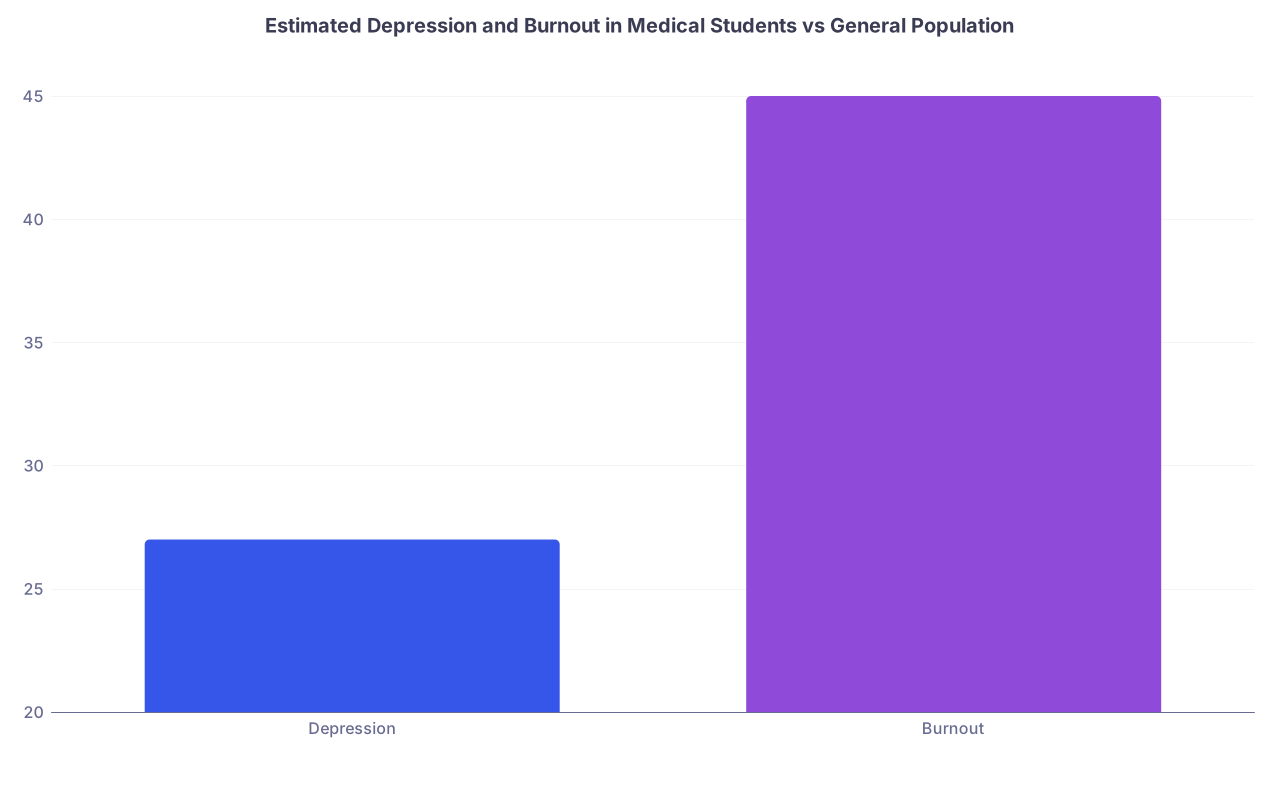
| Category | Value |
|---|---|
| Depression | 27 |
| Burnout | 45 |
Meta-analyses of medical students worldwide consistently show roughly:
- Around 25–30% meet criteria for depression or depressive symptoms.
- Around 40–50% report burnout (varies by study, but it’s not low).
- Suicide risk is elevated compared with age‑matched peers.
This isn’t “a tough grind builds character.” This is pathology.
And here’s the part people skip: worse mental health is associated with worse academic performance, worse clinical performance, and worse professionalism. In other words, the “suffer more, be stronger” logic doesn’t hold up when you measure outcomes.
Students with higher burnout scores tend to:
- Score lower on standardized exams.
- Report worse retention of material.
- Have more unprofessional incidents and worse empathy ratings from patients and faculty.
So no, suffering isn’t a badge of honor. It’s a performance drag. For you and for your future patients.
The Myth: “Pain Now, Great Doctor Later”
The story you’ve absorbed goes something like this:
You suffer now; that proves you’re committed. The emotional abuse from some residents, the 80‑hour weeks, the chronic sleep debt, the constant anxiety? That’s how you “toughen up” for residency and practice. You’re told the people who complain are weak, that medicine is “not for everyone,” that “if you can’t handle this, how will you handle real patients?”
I’ve heard attendings say this almost word for word in student conferences.
Here’s the problem: when researchers look at long‑term outcomes, the idea that suffering “trains resilience” does not pan out.
Most resilience research shows the opposite: chronic, unrelenting stress without control or support erodes resilience, it doesn’t build it. People get more avoidant, more cynical, less engaged. They don’t “toughen up;” they numb out.
And medicine already has a big enough problem with numb, detached, emotionally blunted physicians.
So if “trial by fire” worked, we’d expect:
- Experienced physicians to be more mentally healthy than students.
- Burnout to decrease by year of training.
- Empathy to improve as people “grow into” the identity of physician.
That’s not what we see. Burnout is high in both residency and attending‑level practice. Empathy often declines over training. This is not the trajectory of a system that’s “forging” people. It’s the trajectory of a system that’s grinding them down.
What the Evidence Actually Says About Stress, Learning, and Performance
There is a kernel of truth buried in the myth, and that’s why it survives.
There’s an old concept in psychology called the Yerkes–Dodson law. Basic idea: performance improves with arousal/stress up to a point, then drops off.
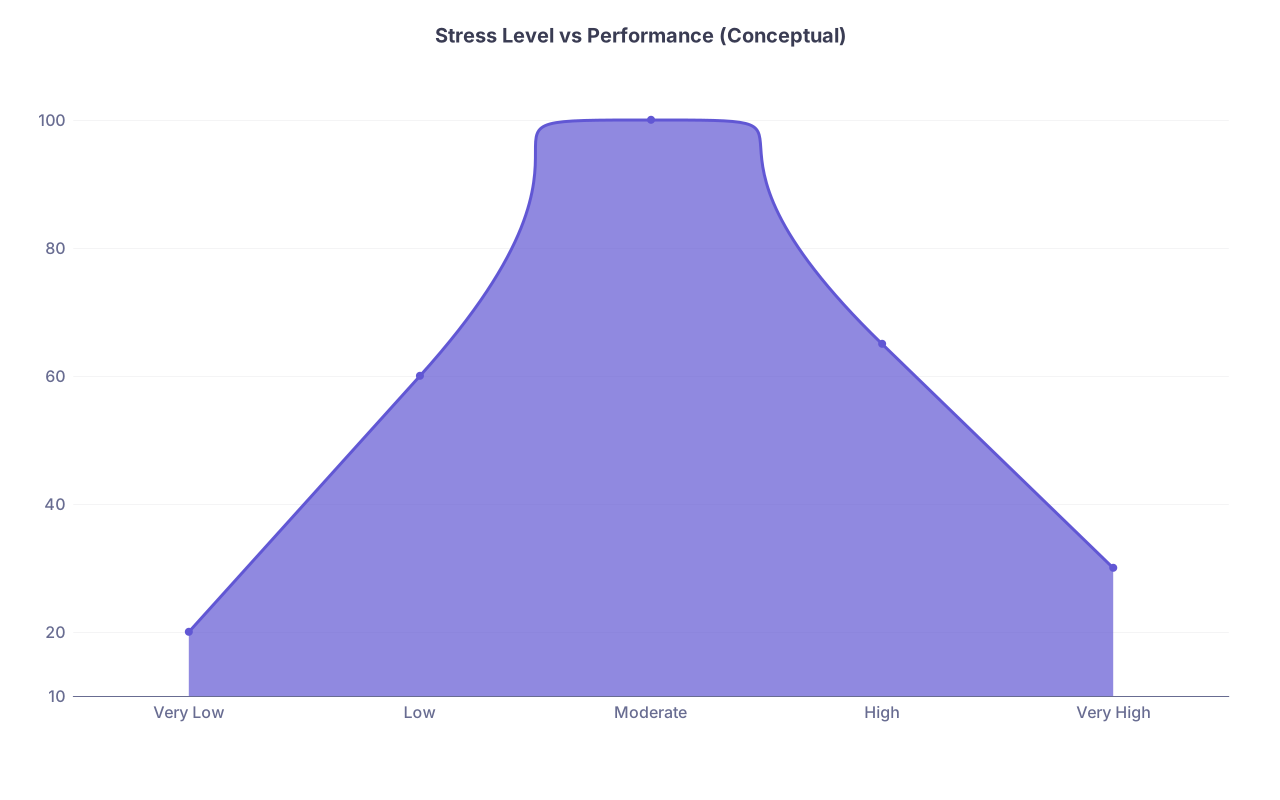
| Category | Value |
|---|---|
| Very Low | 20 |
| Low | 60 |
| Moderate | 100 |
| High | 65 |
| Very High | 30 |
At moderate levels of stress, you can focus better and push harder. But once you pass that peak, memory, decision‑making, and problem‑solving fall apart.
Medical education, especially pre‑clinical years, routinely shoves students way past that optimal zone. Chronic sleep deprivation, constant high‑stakes exams, hidden curricula about competition and perfection, plus financial anxiety. That’s not “beneficial stress.” That’s cognitive sabotage.
When researchers look specifically at med students:
- Sleep deprivation is linked to reduced exam performance, worse working memory, and more errors on clinical tasks.
- High burnout correlates with lower Step scores and course grades, not higher.
- Strong social support and psychological safety are associated with better performance and better retention of knowledge.
So the story that “if you’re not constantly stressed, you’re not pushing hard enough” is flat‑out wrong. The more accurate line is: if you’re constantly at your limit, you’re probably learning less per hour you study.
You’re not a hero. You’re just inefficient.
The Hidden Curriculum: Why Suffering Gets Glorified
If suffering is so clearly harmful, why is it still sold as a virtue?
Because of what’s called the “hidden curriculum” — the unwritten, unspoken rules students pick up by watching how seniors act, how faculty talk, and who gets praised.
The hidden curriculum says:
- The student bragging about doing 400 Anki cards at 3 a.m. is “dedicated.”
- The one who goes to therapy is “struggling.”
- The resident who “never takes sick days” is “a machine” (meant as a compliment).
- The intern who admits feeling overwhelmed is “not ready.”
Here’s the irony. A lot of those people who project invincibility are privately falling apart. I’ve seen the same resident who laughed about never sleeping later break down in a call room. The attending who tells students “I trained with 120‑hour weeks; you’ll be fine” often has an unspoken history of divorce, substance misuse, or depression.
They survived. But survival isn’t proof of a good system. It’s proof that humans can function under terrible conditions. For a while.
The glorification of suffering is also, frankly, a convenient way for institutions to avoid responsibility. If struggle is a noble tradition, they don’t need to fix the workload, the exam structure, the support systems, or the culture. It becomes your job to “adapt.”
That’s not character‑building. That’s gaslighting.
What Actually Predicts Doing Well in Med School
Let’s talk about what the data says does help you succeed.
No, not “hustle harder.” Not “want it more.”
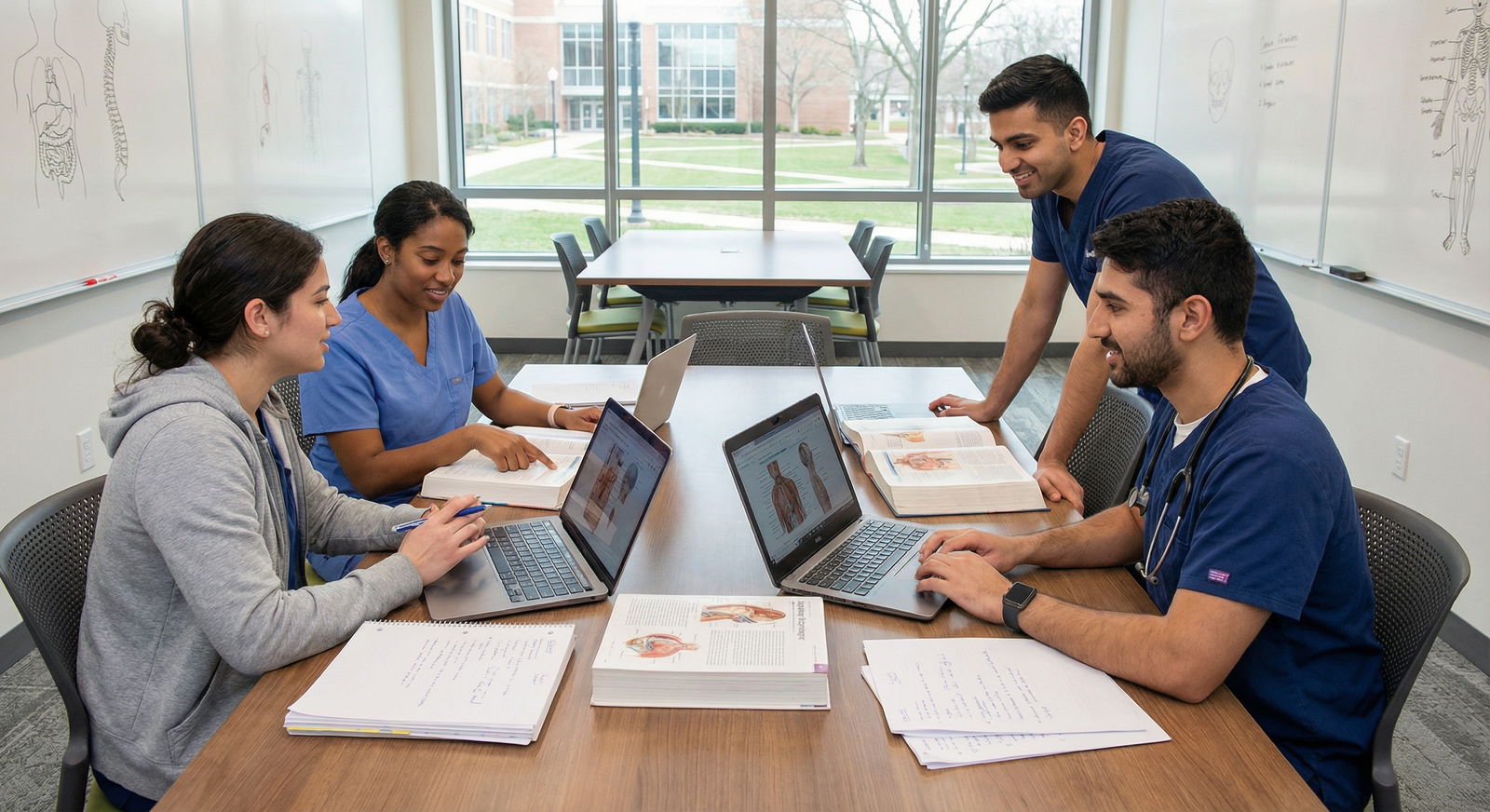
Repeatedly, across different schools and countries, you see patterns like this:
Students with:
- Adequate sleep (even if not perfect).
- Consistent, not frantic, study habits.
- Solid peer support and a sense of belonging.
- A life outside medicine that they don’t fully abandon.
- Realistic self‑compassion instead of self‑hatred after a bad exam.
…tend to perform better and burn out less.
Here’s the rough picture:
| Factor | Associated Outcome Trend |
|---|---|
| 7–8 hours sleep most nights | Higher exam scores, less burnout |
| Strong peer support | Lower depression, more engagement |
| Regular physical activity | Better mood, improved cognition |
| Lower self-stigma about help | Earlier intervention, less severe issues |
| Enduring non-med hobbies | Higher life satisfaction, lower burnout |
Is this “soft” stuff? No. These are the basic conditions under which your brain works properly. You’re trying to do complex learning and clinical reasoning on hardware that’s being starved and overheated.
Let me spell it out: you are not in some elite club because you never sleep and hate yourself after every quiz. You’re just handicapping your own brain.
The First-Year Trap: Where Suffering Becomes Identity
First year is especially dangerous because everything is new: new environment, new expectations, new comparison set. You go from being top of your undergrad to feeling average or worse overnight.
This is where a lot of students decide, consciously or not: “My value is how much I can endure.”
So they start collecting suffering:
- “I stayed in the library until it closed.”
- “I haven’t taken a full day off in three weeks.”
- “I forgot to eat today, that’s how in the zone I was.”
People actually brag like this out loud. Not because they’re proud of malnutrition. Because this is the currency. The culture has told them: if you’re drowning, you’re doing it right.
The danger is, once you fuse your identity with suffering, any attempt to create a healthier balance feels like weakness. Taking care of yourself doesn’t just feel like a choice; it feels like a moral failure. Like you’re abandoning the tribe.
That’s how people end up staying in misery for months or years despite every red flag in their face.
You need to separate two concepts now, before that wiring sets permanently:
- Commitment to medicine.
- Commitment to self‑destruction.
They are not the same thing. You can be absolutely committed to medicine while refusing to worship suffering.
“But Won’t Being Softer Make Me a Worse Doctor?”
This is the line that keeps students on the hamster wheel: “If I don’t grind now, I’ll be underprepared. Patients will suffer.”
Strong claim. Let’s hold it up to evidence.
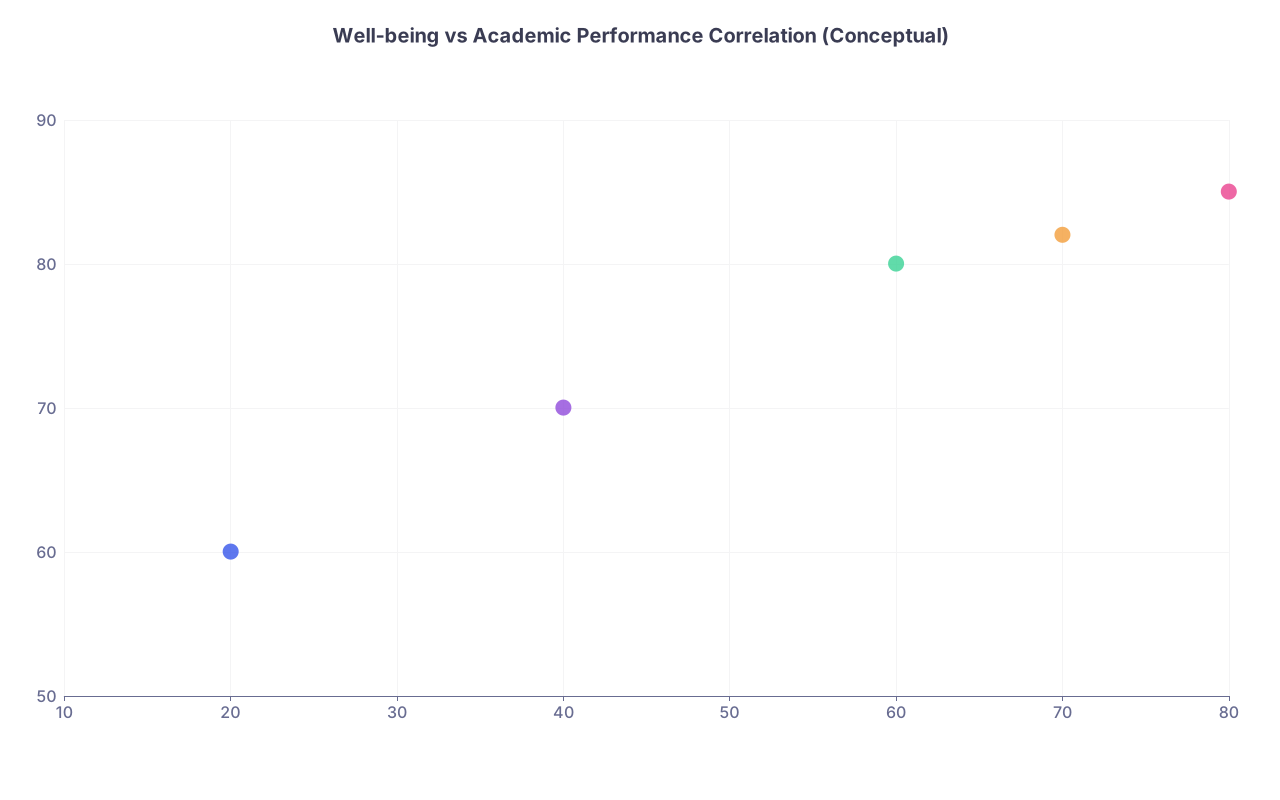
| Category | Value |
|---|---|
| Student 1 | 20,60 |
| Student 2 | 40,70 |
| Student 3 | 60,80 |
| Student 4 | 70,82 |
| Student 5 | 80,85 |
Studies consistently show:
- Better mental health and lower burnout correlate with better objective performance: OSCEs, Step/board scores, clinical evaluations.
- Higher empathy (which is generally higher when you’re not burnt out) correlates with better patient satisfaction and sometimes with better adherence and outcomes.
- Residents and physicians with untreated depression or high burnout are more likely to make medical errors.
The idea that misery now protects your future patients is backward. Being fried now just raises the odds you’ll be a depleted, error‑prone physician later.
You know what actually prepares you for real clinical work?
- Being able to think clearly when tired, not so exhausted you’re barely tracking.
- Having emotional bandwidth left to actually listen to patients.
- Knowing how to set boundaries so you do not implode in year three of residency.
- Having practiced asking for help before something catastrophic happens.
That’s not softness. That’s professionalism.
Shifting Your Own Metric of “Success” in First Year
You can’t fix the whole system by yourself. The call schedules, exam density, grading schemes — those are structural problems. But you can refuse to buy the moral story that suffering = virtue.
For first year especially, you need a different scoreboard.

Instead of asking, “How much did I suffer this week?” try questions like:
- Did I learn the core concepts I needed to?
- Did I sleep at least somewhat decently most nights?
- Did I have at least one real human interaction that wasn’t about school?
- Am I noticing early signs that I’m not okay, instead of waiting until I crash?
And here’s the contrarian part: if you’re getting through first year with solid grades, a somewhat stable mood, and at least a fragment of a life outside school, that’s not a sign you’re coasting.
That’s a sign you’re beating the system at its own game.
When Suffering Is a Signal, Not a Badge
Some students reading this are already in the red zone. You’re thinking, “Okay, fine, but I am suffering, and I don’t have time to fix it.”
You don’t have time not to. When suffering gets to a certain level, it stops being a “normal” part of med school and starts being a medical problem. Depression, anxiety, panic, burnout — these are not character flaws. They’re conditions. And they respond to treatment.

But the culture tells you to wear that pain like a badge. To prove you can endure. So instead of treating the problem, you frame it as “just how med school is.”
Here’s the reality: getting help early — counseling, peer support, sometimes medication — is associated with better academic continuity and performance, not worse. Students who use mental health services are more likely to stay enrolled and graduate than those who white‑knuckle it until they fall apart.
The system will not tap you on the shoulder and say, “This is too much for you; please step back.” You have to decide that suffering is a warning light, not proof of your dedication.
Breaking the Suffering Culture, One Conversation at a Time
You’re not going to rewrite policy in your first year. But you can quietly kill the “suffering = honor” myth in your own circles.

That looks like:
- Refusing to glorify all‑nighters as achievement.
- Being honest when something is too much, instead of pretending you’re fine.
- Saying out loud, in anatomy lab or group chat, “I’m going to sleep; nothing I do now will stick anyway.”
- Checking on the person who jokes constantly about dropping out.
You don’t have to be a martyr or a whistleblower. Just stop feeding the narrative that the most miserable person in the room is the most committed.
The people who make it long term in medicine — and stay halfway sane — are rarely the ones who fetishize their own suffering. They’re usually the ones who quietly build sustainable systems, invest in relationships, and refuse to treat self‑neglect as a virtue.
The Bottom Line
Three core points and then I’ll stop:
- Suffering is not a badge of honor; beyond mild stress, it reliably worsens learning, performance, and long‑term physician functioning.
- The culture that glorifies suffering is a mix of tradition, rationalization, and avoidance of institutional responsibility, not evidence‑based training.
- In first year, your real power move is not to out‑suffer your classmates, but to out‑sustain them: adequate sleep, decent mental health, real support, and refusal to confuse self‑destruction with professionalism.