It’s 11:47 p.m. on a Tuesday. First anatomy exam is in nine hours.
Your group chat is on fire, Anki is taunting you with 842 reviews, your eyes burn, and your heart is doing that faint flutter that you’re pretty sure is anxiety and not myocarditis.
You’re thinking about Pass/Fail, thinking nobody’s watching.
Let me disabuse you of that.
Your dean, your course director, the people who sit in those “Academic Progress” meetings? They’re not reading your lecture notes. They’re reading you under stress. And what you might not realize is this: first year is less about content and more about seeing what kind of doctor they’re going to be unleashing in 7–10 years.
Let me tell you what they actually notice.
The Hidden Surveillance System: How Much They See
First thing: you think you’re invisible because there are 120 of you and only a few of them.
You are not.
Deans and key faculty track you through three main channels, even in “low stakes” M1:
- Patterns in your performance – not just your scores, but how you miss things, and when.
- Signals from the system – professionalism reports, advisor notes, OME emails, preceptor feedback.
- Your behavior when the heat gets turned up – exams, practicals, early patient exposure, and when something in your life blows up mid-block.
Most schools have a standing committee or regular meeting where someone says:
“Let’s talk about students who are struggling.”
I’ve sat in those rooms. There’s a spreadsheet, names grouped by: borderline passes, exam failures, professionalism flags, wellness flags, LOA requests. They don’t talk about everyone in detail. But if your name comes up twice in different contexts? Now you’re on their mental radar.
So when you’re under stress, here’s what they’re actually noticing.
1. They Notice Who Disappears
Not “who sits in the back row” or “who watches lectures at 2x.” That’s noise.
They care about who vanishes when things get hard.
When stress spikes, they look for:
- Students who suddenly stop showing up to small groups, clinical skills, or required sessions.
- Cameras that go permanently off in mandatory Zoom sessions with zero participation.
- People who stop replying to official emails about “let’s check in” or “we should talk.”
There’s a difference between being a quiet introvert and going dark.
Deans get nervous when they see the “silent crash.”
They know the pattern: first missed quiz, then missed email, then “I’ve been really struggling for the last 6 weeks,” usually right after a failed exam and a meltdown in their office.
The reality: under stress, many M1s retreat. They convince themselves, “I’ll fix it alone, then I’ll reemerge.” Faculty see that as: “Is this person going to vanish on their patients when they get overwhelmed as an intern?”
What they quietly respect? The student who emails before things fall apart:
“Dr. X, I’ve noticed my performance dropping and I’m having trouble keeping up. I’d like to meet to talk about a plan before the next exam.”
That line alone changes the tone of an entire conversation about you in those behind-the-scenes meetings.
2. They Notice How You Ask for Help (Or Don’t)
Let’s be blunt. Deans expect you to struggle at some point. If you go through all four years without a major academic, personal, or emotional wobble, they assume you’re either lying or not paying attention to your own life.
The real signal isn’t whether you struggle. It’s how you handle it.
Here’s what lands badly when you’re under stress:
- Waiting until after a failed exam to admit you’ve been lost since Week 2.
- Showing up to a dean’s meeting with no insight, just “I don’t know what happened.”
- Blaming only external factors: “The question bank was bad, the lectures were confusing, the schedule is unfair.”
I’ve watched deans go from sympathetic to deeply concerned in under 30 seconds when a stressed-out student shows zero ownership.
The students who impress them under stress do three things:
Name the problem concretely.
“I switched to passive learning. I stopped doing practice questions. I underestimated anatomy lab.”Show some self-observation.
“When I’m stressed I procrastinate and pretend I’m ‘reviewing’ by re-reading slides instead of testing myself.”Propose at least one change.
“I’ve already scheduled with learning support and started structured practice. I’d like your input on prioritizing.”
You don’t need a perfect plan. You need to show you know you have a problem and are willing to attack it.
Faculty talk about “coachability” more than you think. Under stress, that’s exactly what they’re scoring.
3. They Notice Who Gets Sloppy With Professionalism
This is the one that blindsides a lot of first-years.
When you’re stressed, certain things start to slip: punctuality, responsiveness, tone. You tell yourself, “Everyone’s overwhelmed, they’ll understand.”
They do understand. And they still write it down.
Common professionalism red flags they quietly track when you’re under pressure:
- Repeated last-minute emails: “Sorry, something came up, can’t make small group today.”
- Chronic lateness to clinical skills or standardized patient sessions, especially without apology.
- Sending terse, unprofessional emails to staff or faculty when you’re frazzled.
- Complaints about faculty that cross the line from frustrated to disrespectful, especially in writing.
You don’t see the downstream part. The preceptor who emails the course director:
“Student was 20 minutes late again and seemed disengaged.”
The standardized patient who notes:
“Student appeared rushed and did not introduce themselves.”
One or two of those? They shrug and assume you had a bad day. A pattern under stress? Now they’re wondering: “What happens when this person is covering 18 patients on nights as a PGY-1?”
Deans pay close attention to students who stay polite and professional even when things are going very badly for them. They know those students will be safe with patients.
Under stress, your manners matter more, not less.
4. They Notice How You React to Feedback When You’re Raw
Most M1s can nod politely at feedback after a solid exam.
It’s when you’re stressed and vulnerable—after a low score, a tough OSCE, a rough anatomy lab eval—that they see the real you.
A few reactions that raise red flags behind closed doors:
- Defensiveness:
“I don’t agree with that comment,” as your first and only response to feedback. - Dismissal:
“Well that preceptor is just super picky; everyone says that.” - Victim narrative only:
“The exam was unfair, the grading is biased, nobody taught us this.”
You know what quietly impresses a dean, even when you’re upset?
Something like:
“I don’t fully agree with this comment, but I can see where it came from. Next time I’ll make sure I do X so it’s clearer.”
I was in a room once where a course director said:
“This student failed their first OSCE but the way they responded to the feedback makes me less worried. They really listened and they implemented changes by the next session.”
Deans aren’t rating you on “never messes up.”
They’re rating you on “does this person learn while under duress or do they just fight reality?”
Under stress, your feedback response tells them whether you’re trainable.
5. They Notice Who Starts Cutting Ethical Corners
This is where stress and ethics intersect, and it’s uglier than anyone puts in the brochure.
First-year is when they watch for the earliest signs of integrity problems. And those almost always show up under pressure, not during the easy weeks.
Here’s what quietly sets off alarms:
- Sharing old exam questions when that’s explicitly forbidden.
- “Accidentally” accessing restricted materials.
- Copying or heavily borrowing written assignments from classmates or online sources.
- Checking answers with classmates during a “closed book but unproctored” quiz.
- Signing into required sessions for friends or letting others sign in for you.
Most of these get discovered because someone notices a pattern, or a classmate gets uncomfortable and reports it. Deans are not naive about how often this happens, especially under exam stress.
And no, they do not see this as a minor academic issue. They see it as an early test of what you’ll do when charting, billing, documenting procedures, or handling an error that hurts someone.
I’ve heard a dean say, word for word:
“If they’ll cheat for an anatomy grade, what will they do when they’re alone in a room with a narcotics script pad?”
You want to know what actually impresses them? The student who comes forward and admits a smaller lapse before they get caught. It doesn’t erase the issue, but it radically recalibrates how they view your character.
Stress doesn’t cause dishonesty. It just reveals where the edge is. They’re watching who steps over it.
6. They Notice Your Coping Mechanisms, Not Just Your Distress
Everyone sees your tears outside the exam room. That’s not what gets discussed in the dean’s offices.
They talk more about what you do next.
There are roughly three visible patterns when first-years are overwhelmed:
- The Grinder – doubles down on brute force. Sleeps less, studies more, isolates harder.
- The Escapist – leans into avoidance: binge-watching, partying, gaming, doomscrolling.
- The Regulator – freaks out, yes, but then deliberately installs some kind of structure (office hours, study plan, therapy, peer support, wellness).
Do deans prefer that last group? Obviously. But not for the reason you think.
They don’t care whether you meditate or run or lift. They care whether you can self-regulate enough to function when medicine inevitably crushes you a little.
When a student is clearly drowning in stress and still refusing every lifeline—won’t meet with counseling, brushes off learning specialists, ignores advisor emails—that’s when I’ve heard variations of:
“I’m worried this person will burn out catastrophically as a resident.”
Contrast that with the student who says:
“I hit a wall, I’m now seeing our counseling service and I’ve changed my study schedule.”
Same distress. Very different risk profile in their eyes.
7. They Notice Your Impact on Other Students
Here’s the part people always underestimate: deans don’t just watch you. They watch your effect on the people around you.
When stress ramps up, some first-years become accelerants. And faculty absolutely notice who is constantly turning up the collective temperature.
Red flags they talk about:
- The student who lives in the group chat, constantly posting “I’m so screwed, there’s no way to pass this,” every night.
- The one starting rumors: “I heard the average was a 92 so we’re all below average.”
- The person who takes their own anxiety and weaponizes it on peers: “Wait, you didn’t study the extra 80 slides they posted at 10 p.m.?”
Most schools now take “learning environment” seriously. If your stress regularly spills over into agitation, hostility, or shaming others, you may end up on their radar not as “struggling student” but “source of toxicity.”
On the flip side, students who are under just as much pressure but still manage to be a calm presence? Those names get mentioned positively in surprised tones.
“She’s had a really hard semester but she still supports her group and never drags them down.”
They’re not asking you to be everyone’s therapist. They’re clocking whether you become dangerous to the atmosphere when you’re stressed.
8. They Notice Who Can Say “No” to Bad Culture
A lot of first‑year med culture is… unhealthy. You’ll meet the flex crews, the “I studied 14 hours straight” martyrs, and the Step‑prep‑in‑week‑two obsessives.
Deans know this. Some are frustrated by how little they can shift the culture directly. But they absolutely notice which students are swallowed whole by the worst parts of it when stressed.
Under pressure, scaling up your hours and panic feels productive. It’s not. It’s just expensive.
The students who stand out to faculty aren’t always the highest scorers. They’re the ones who can hold a line:
- “No, I’m not buying a second question bank this week because I haven’t exhausted the one I have.”
- “No, I’m not skipping sleep the night before the exam again; that backfired last time.”
- “No, I’m not going to leak old exam content; I’ll take the hit rather than cheat.”
I’ve watched deans absolutely fight for these students in promotions meetings, even when their grades were rocky:
“Yes, they struggled on the first two exams. But they’re honest, they use resources appropriately, and they show good judgment. I’m not worried about them long term.”
Under stress, judgment is what they care about most. Not raw horsepower.
9. They Notice Your Trajectory, Not Just Your Lowest Moment
This part should give you some relief.
You will have bad days. You might bomb your first anatomy exam. You might cry in a dean’s office. You might send an email you wish you’d written more calmly.
What they really watch over the year is arc.
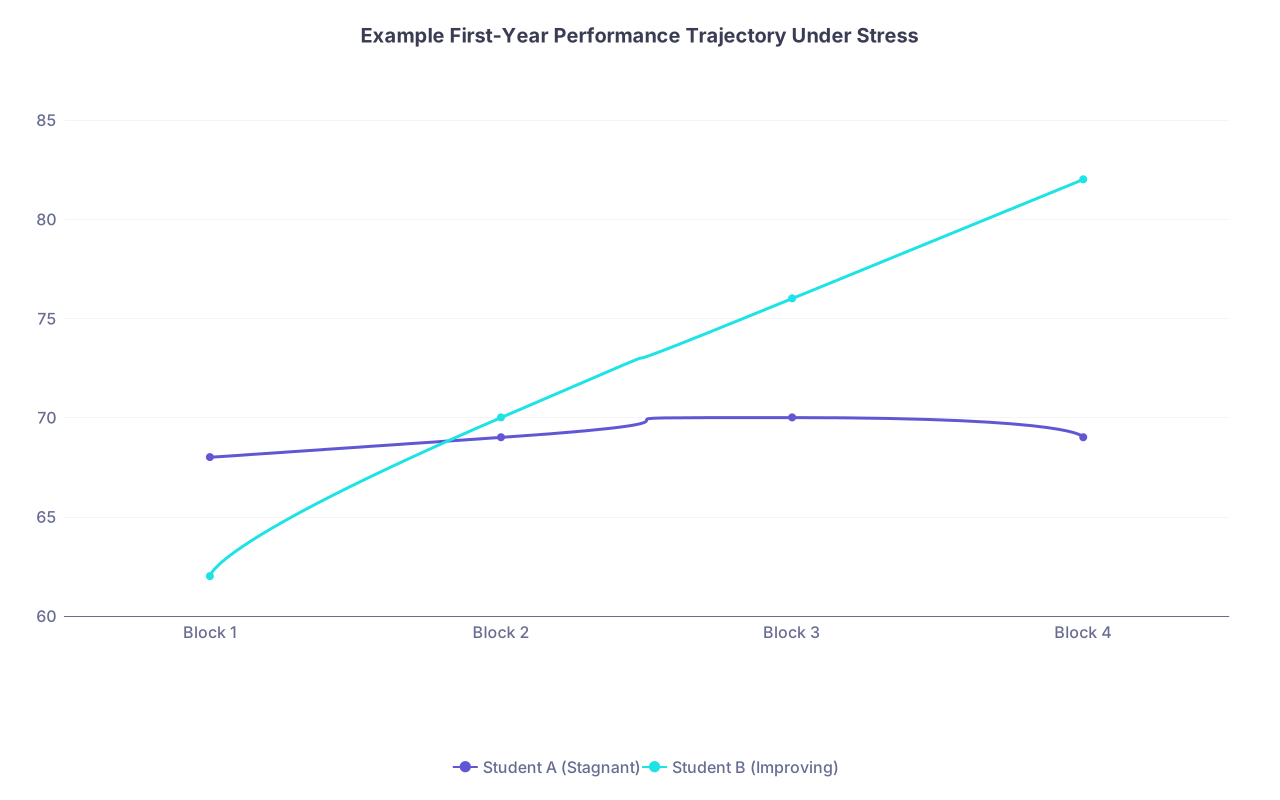
| Category | Student A (Stagnant) | Student B (Improving) |
|---|---|---|
| Block 1 | 68 | 62 |
| Block 2 | 69 | 70 |
| Block 3 | 70 | 76 |
| Block 4 | 69 | 82 |
Student A: always hovering just above the line, modest scores, no real change in habits.
Student B: early crash, visible course correction, steadily improving performance.
You know which one most deans worry about more? Student A.
Student B showed the critical thing: when stressed and failing, they adapted. They took feedback, changed their study strategy, often confronted mental health or life issues head‑on. That’s the resilience they’re selecting for.
In promotions or “should this person repeat the year?” conversations, I’ve heard:
- “They failed early but improved each block and engaged with support.” (Usually passes, maybe with conditions.)
- “They’ve scraped by each time with the same issues and won’t change anything.” (Much more concerning.)
Your worst exam isn’t the verdict. Your pattern afterward is.
10. They Notice Who Owns Their Story
By spring of MS1, deans already have quiet narratives in their heads about many of you.
“This one’s technically strong but brittle.”
“This one’s not a star academically but has excellent judgment and insight.”
“This one scares me; they don’t seem to understand their own limits.”
Those narratives are not based on your happiest, most composed moments. They’re built almost entirely from what you do under stress.
If you want to know how to land on the right side of that narrative, it boils down to a few simple—but not easy—moves when everything is on fire:
Show up instead of disappearing.
Ask for help before failure, not after the third one.
Stay professional when you’re exhausted.
Don’t cut corners when you’re scared.
Let yourself be coached instead of defended.
You don’t need to impress them with genius. You need to convince them you’ll be safe and functional at 3 a.m. as an intern.

| Step | Description |
|---|---|
| Step 1 | Early Stress Event |
| Step 2 | Increased Concern |
| Step 3 | Growing Confidence |
| Step 4 | Promotion Risk, Extra Oversight |
| Step 5 | Monitor, Offer Support |
| Step 6 | Positive Narrative Forms |
| Step 7 | Student Response |
| Step 8 | Pattern? |

| Student Behavior | Typical Dean Interpretation |
|---|---|
| Disappears from small groups | Risk of withdrawal / poor coping |
| Requests meeting before failing | Insightful, proactive, coachable |
| Blames exam, never self | Low insight, potential long-term issue |
| Polite even when upset | Professionalism under stress |
| Cheats or shares restricted material | Integrity concern, high-stakes red flag |
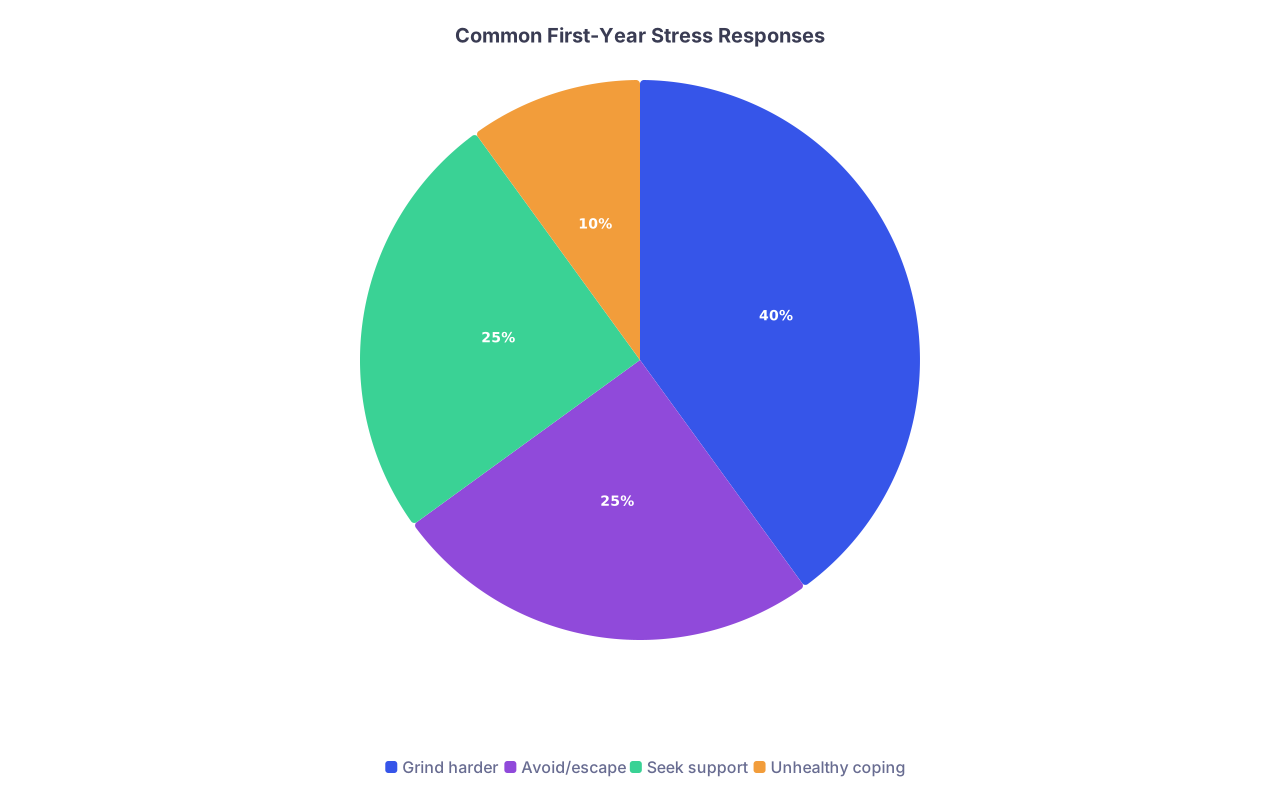
| Category | Value |
|---|---|
| Grind harder | 40 |
| Avoid/escape | 25 |
| Seek support | 25 |
| Unhealthy coping | 10 |
The Short Version: What Really Matters When You’re Cracking
Strip away the buzzwords and the wellness posters, and here’s what deans are actually watching when you’re under stress in first year:
Do you stay accountable, reachable, and honest when you’re overwhelmed?
Disappearing, denying, or cheating under pressure sends louder signals than any exam score.Can you absorb feedback and change course, even when it hurts your ego?
They care far more about your trajectory and adaptability than about a single bad exam.Does your stress make you dangerous—to patients, to peers, or just to yourself?
Professionalism, judgment, and how you treat others when you’re at your worst are what really shape the story they tell about you.
You don’t need to be unbreakable. You just need to show them you know how to rebuild yourself without burning everything around you.