
The way most first‑years structure their day is broken. You’re not “busy,” you’re badly scheduled.
Let me give you a blueprint that actually works—hour by hour, with realistic sample days you can copy, adjust, and run tomorrow.
We’ll walk through:
- A normal lecture day
- A heavy lab day
- An exam‑prep day
- A “recovery but still productive” day
All built around one goal: low‑stress, sustainable med school days that you can repeat for months without burning out.
Core Principles Before You Touch a Schedule
Before we go day‑by‑day, you need a few rules. Think of these as your operating system.
You plan the next day the night before
If you wake up and start “deciding” what to do, you’ve already lost an hour. At 9:30–10:00 p.m., your day should end with:- Tomorrow’s top 3 priorities
- Fixed events (lectures, labs, meetings) written down
- Study blocks filled in around them
You protect 3 types of time every single day
- Sleep: 7–8 hours. Non‑negotiable if you want memory to work.
- Focus blocks: 2–4 blocks of 60–90 minutes for deep study.
- Off switch time: 60–90 minutes in the evening when school is off limits.
You batch decisions
Decide once:- When you wake up on lecture days
- When you work out
- When you usually do Anki / flashcards
Then follow the pattern instead of renegotiating daily.
You build around your school’s schedule, not the other way around
Stop fantasizing about how you wish the curriculum worked. Look at:- Mandatory vs recorded lectures
- Small groups
- Lab days
Your schedule hangs off those pillars.
First‑Year Baseline: What Your Week Roughly Looks Like
Here’s the skeleton most M1s are dealing with (adjust for your school):
| Block Type | Days/Week | Hours/Day |
|---|---|---|
| Lectures | 4–5 | 3–5 |
| Anatomy Lab | 1–2 | 2–4 |
| Small Groups | 1–2 | 1–2 |
| Independent Study | 5–6 | 3–6 |
| Admin/Other | 1–2 | 0.5–1 |
You’re not trying to “find more time.” You’re trying to use the time you already have without chaos.
Let’s build four core day‑types you’ll cycle through.
Day Type 1: Standard Lecture Day (Low‑Stress, High Yield)
Assume:
- Lectures: 9:00 a.m. – 12:00 p.m. (recorded, but some sessions recommended live)
- No lab
- You’re 2–3 weeks out from an exam
Here’s the blueprint.
Night Before (9:30–10:00 p.m.)
At this point you should:
- Check tomorrow’s lecture topics
- Decide: Live vs watch at 1.25–1.5x later
- Choose exact tasks for each study block (not “study cardio,” but “finish UFAP questions 1–40 for heart failure”)
Morning: 6:45 a.m. – 12:30 p.m.
6:45–7:15 – Wake & reset
- Get up at the same time on all non‑exam days
- Quick routine:
- Water + light snack
- No email, no group chat yet
7:15–8:00 – Light Anki / review (~45 min)
At this point you should:
- Clear your due Anki cards only for today
- If new content is heavy, set a cap (e.g., max 80 new cards)
8:00–8:30 – Prep & commute / walk to campus
9:00–12:00 – Lecture block You have two sane options:
In‑person strategy
- Only attend lectures where:
- There’s active learning or clickers
- The lecturer is known to test straight from slides
- Take minimal notes:
- Mark “test‑smell” slides with a star
- Write down only what’s said that’s not on the slide
- Only attend lectures where:
Recorded strategy
- Watch at 1.5x speed
- Pause only to write short, direct notes or to tag content for Anki
- Hard cutoff: 3 hours max to get through a 3‑hour block. If you’re pausing so much it takes 5 hours, you’re doing it wrong.
Midday: 12:30–2:00 p.m.
12:30–1:00 – Lunch (no studying)
Eat like lunch is a break, not a punishment.
1:00–2:00 – Low‑intensity admin / catch‑up At this point you should:
- Check email / portal
- Download slides for tomorrow
- Skim tomorrow’s topics (5–10 minutes each) so they’re not “cold” later
Afternoon Focus: 2:00–6:00 p.m.
This is where most people blow the day. You won’t.
2:00–3:30 – Deep Study Block #1 (90 min)
Focus: today’s lectures only
- Turn passive content → active:
- Convert lecture key points into flashcards/questions
- Sketch basic diagrams (pathways, anatomy regions, algorithms)
- Goal: By 3:30 p.m., today’s content is “first‑pass solid”
3:30–3:45 – Break (15 min)
Phone away from desk. Walk, stretch, snack.
3:45–5:15 – Deep Study Block #2 (90 min)
Focus: older content closer to exam
- Practice questions:
- Earlier system in the block (e.g., cardio when you’re now in renal)
- Concept integration (link physiology + pharm)
- 60–75 min questions + review, last 15–30 min updating notes/Anki
5:15–6:00 – Workout / movement (45 min)
Does not have to be heroic. Walk, quick gym, short run. The stress drop from this is not optional if you want low‑stress days.
Evening: 6:00–10:30 p.m.
6:00–7:00 – Dinner + non‑med time
- Talk to actual humans
- TV, hobbies, whatever doesn’t involve lecture slides
7:00–8:00 – Light Study Block (60 min)
At this point you should:
- Clean up loose ends only:
- Remaining Anki due
- Quick re‑look at anything that felt shaky in today’s block
- No new content. If you’re behind, adjust tomorrow—don’t cram at night.
8:00–9:30 – Off‑switch zone
- Social time, show, reading, gaming
- Phone can exist again here
9:30–10:00 – Plan tomorrow + wind down
- Look at schedule
- Pick top 3 tasks
- In bed by ~10:30–11:00 for repeatability
Day Type 2: Heavy Anatomy / Lab Day
Lab days feel chaotic because people don’t schedule around the disruption. Do that, and they calm down fast.
Assume:
- Anatomy lab: 1:00–4:00 p.m.
- Brief morning lecture: 9:00–10:00 a.m.
Morning: 6:30 a.m. – 12:00 p.m.
6:30–7:00 – Wake / quick breakfast
7:00–7:45 – Targeted pre‑lab review
At this point you should:
- Review only structures/regions you’ll see today
- Use:
- Lab manual
- 3D app (Complete Anatomy, etc.)
- Previous lab’s tagged photos
7:45–8:30 – Commute / campus / arrive early
9:00–10:00 – Lecture (live or recorded at 1.5x)
10:00–11:30 – Deep Study Block (90 min)
Focus: short, high‑yield content:
- Rapid review of:
- Nerves + clinical correlations
- Vessels + territories
- Convert to:
- Condensed table
- A few intense diagrams
11:30–12:30 – Lunch & pre‑lab mental prep
- Eat
- Look once more at lab checklists / objectives
- Decide 1–2 structures you will teach to lab partners—teaching forces clarity
Afternoon: 12:30–5:30 p.m.
12:30–1:00 – Change / set up for lab
1:00–4:00 – Lab
At this point you should:
- Focus on:
- Identifying structures
- Saying them out loud
- Asking “what if this is injured?” repeatedly
- Do not:
- Hide in the corner reading Netter
- Spend 45 minutes on one obscure vessel no one tests
4:00–4:30 – Quick lab debrief
Before you leave:
- Take 5–10 photos (if allowed) of key regions
- Ask TA: “If you wrote tomorrow’s spot test, what 5 things would you pick from today?”
4:30–5:30 – Commute + mental break
Evening: 5:30–10:30 p.m.
5:30–6:15 – Dinner
6:15–7:00 – Post‑lab consolidation (45 min)
At this point you should:
- Label 5–10 images from today (self‑quiz style)
- Write down 5 “if X is cut, what happens?” style questions from lab content
7:00–8:00 – Anki + light review (60 min)
- Clear Anki for:
- Anatomy
- Any heavy lecture from the last 1–2 days
8:00–9:30 – Off‑switch
9:30–10:00 – Plan tomorrow and sleep
Lab days are more draining than you think. Don’t stack 3 extra study blocks on top and pretend you’re a hero. You’ll pay for it two days later.
Day Type 3: Exam‑Prep Day (1–5 Days Before an Exam)
This is where people either pull it together or fall apart. The trick is: you don’t change everything. You just tighten it.
Assume:
- No mandatory events
- Big exam in 3 days
- Content heavy (e.g., cardio block exam)
Here’s one tight but manageable day.
Morning: 7:00 a.m. – 12:30 p.m.
7:00–7:30 – Wake / breakfast
7:30–8:00 – Fast planning (30 min)
At this point you should:
- Break the day into 3 focus themes. Example:
- Morning: cardio physiology + pathology
- Early afternoon: pharm + integrated questions
- Late afternoon: weak systems/topics
8:00–9:30 – Deep Block #1: Core Concepts (90 min)
- No questions yet
- Goal: tighten framework
- Sketch flow charts: murmurs, heart failure, shock types
- Condense lecture notes into 1–2 reference pages
9:30–9:45 – Break
9:45–11:15 – Deep Block #2: Questions (90 min)
- Timed questions, exam‑style:
- 20–30 questions from your school’s bank / Boards‑style
- Full review:
- Classify misses: knowledge gap vs misread vs freak error
- Jot 1‑line correction per miss
11:15–11:30 – Walk / snack
11:30–12:30 – Light Anki (60 min)
Prioritize:
- High‑yield pharm
- Weak areas from the morning block
Afternoon: 1:15–6:00 p.m.
1:15–2:45 – Deep Block #3: Questions Round 2 (90 min)
At this point you should:
- Another question set:
- Different source or school’s old exams
- Focus on:
- Pacing
- Reading stems once, highlighting key clues
2:45–3:00 – Break
3:00–4:00 – Targeted Weak Area Session (60 min)
- Pick 1–2 topics you’ve consistently missed
- Example:
- Valvular disease murmur timing + location
- Cardiomyopathy types and differences
- Use:
- 20–30 minutes of video/reading
- 30–40 minutes building a “cheat sheet”
4:00–4:30 – Workout / movement
4:30–5:30 – Final Focus Block (60 min)
- Closed‑book recall:
- Write from memory: algorithms, tables, or summaries
- Check against your notes afterward
- Any gap that still looks scary? Flag for quick AM review next day.
Evening: 5:30–10:30 p.m.
5:30–6:30 – Dinner + relax
6:30–7:30 – Consolidation (60 min)
At this point you should:
- Run through:
- Key pharm side effects
- Named syndromes
- Obvious “must know” facts (cardio drugs, shock, MI management)
7:30–9:30 – Off‑switch
You’ll be tempted to “just do a few more things.” Past 9:30, your error rate skyrockets and retention tanks.
9:30–10:00 – Gentle wind down & exam‑week prep
- Decide tomorrow’s plan in 3 blocks
- Prep clothes, water bottle, snacks if exam is very soon
Day Type 4: Recovery‑But‑Productive Day (Post‑Exam or High‑Burnout)
Crashing after an exam is normal. Staying crashed for 5 days is how you fall behind fast.
You need a light but structured recovery day.
Morning: 8:00 a.m. – 12:00 p.m.
8:00–8:30 – Sleep in a bit, slow breakfast
8:30–9:00 – Reflect + reset (30 min)
At this point you should:
- List:
- 3 things that went well last block
- 3 things that broke (e.g., “started skipping Anki for 4 days straight”)
- Pick 1 scheduling change to test this new block (just one)
9:00–10:30 – Gentle Study Block (90 min)
- Skim new upcoming topics:
- Watch intro videos at 1.5x
- Open lecture outlines and just read headings + learning objectives
- Goal: zero pressure, just familiarity
10:30–10:45 – Break
10:45–12:00 – Admin + cleanup (75 min)
- Clear inbox
- Delete old files you don’t need
- Organize folders for new block
Afternoon: 12:00–6:00 p.m.
12:00–1:00 – Lunch with actual human interaction
1:00–2:00 – Light Anki restart (60 min)
If you neglected cards:
- Use a cap: maybe 100–150 max today
- Suspend outdated / irrelevant cards from previous exam
2:00–3:00 – Errands / life tasks
Groceries, laundry, anything that makes future weeks smoother.
3:00–4:00 – Optional low‑stakes study
- Watch one more lecture
- Casual read of a short review chapter
4:00–6:00 – Real break or social time
No guilt. This is fueling the next grind.
Evening: 6:00–10:30 p.m.
6:00–7:00 – Dinner
7:00–8:00 – Quick planning session (60 min)
At this point you should:
- Map next 7–10 days on a calendar:
- Lecture days
- Lab days
- Upcoming quizzes
- Decide:
- Standard wake time
- Standard workout slots
- Approx daily Anki window
8:00–10:30 – Hobbies / rest / early sleep
Visual: How These Day Types Fit Across a Week
Here’s one realistic M1 week using the four day types.
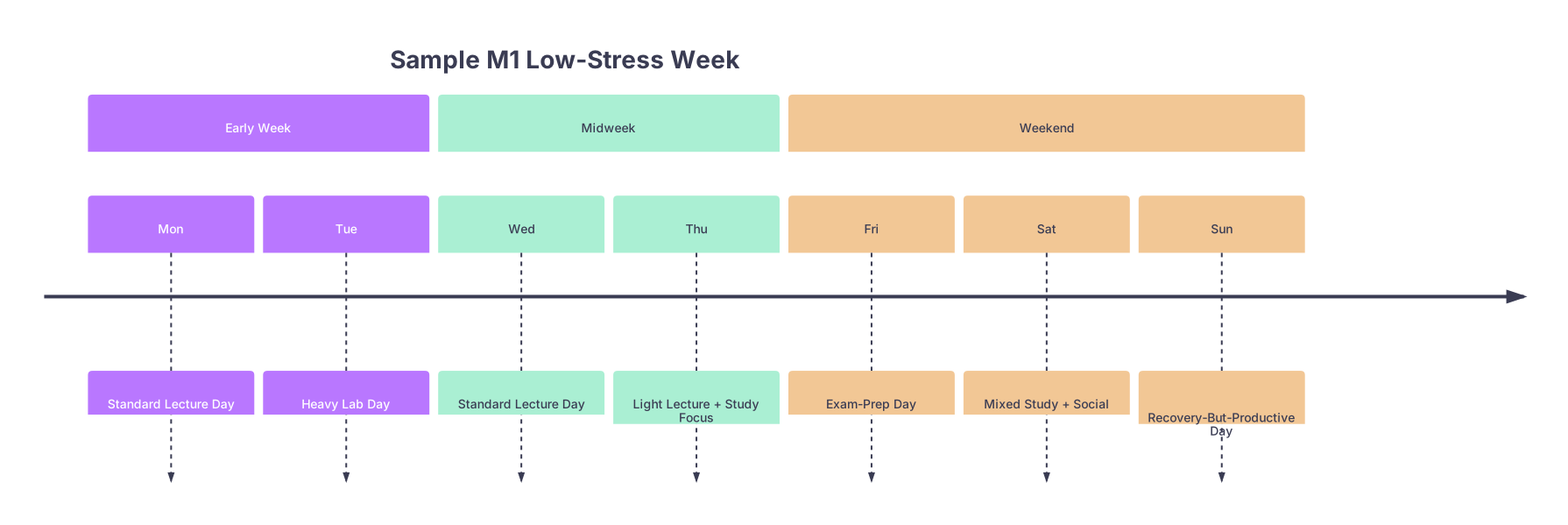
| Period | Event |
|---|---|
| Early Week - Mon | Standard Lecture Day |
| Early Week - Tue | Heavy Lab Day |
| Midweek - Wed | Standard Lecture Day |
| Midweek - Thu | Light Lecture + Study Focus |
| Weekend - Fri | Exam-Prep Day |
| Weekend - Sat | Mixed Study + Social |
| Weekend - Sun | Recovery-But-Productive Day |
Common Pitfalls These Schedules Avoid
You’ll recognize some of these. You might be doing all of them.
Random wake/sleep times
Solution: fixed wake window on all school days, slight shift on recovery days.Treating all study as equal
Solution: deliberate deep blocks vs light blocks vs admin time.Letting Anki explode into a monster
Solution: morning Anki + evening clean‑up, with hard caps.Trying to “redeem” a bad day at midnight
Solution: off‑switch by 9:30–10:00 p.m., re‑plan tomorrow instead of heroic late‑night nonsense.
Here’s a quick overview of how your time breaks down on a healthy lecture day.
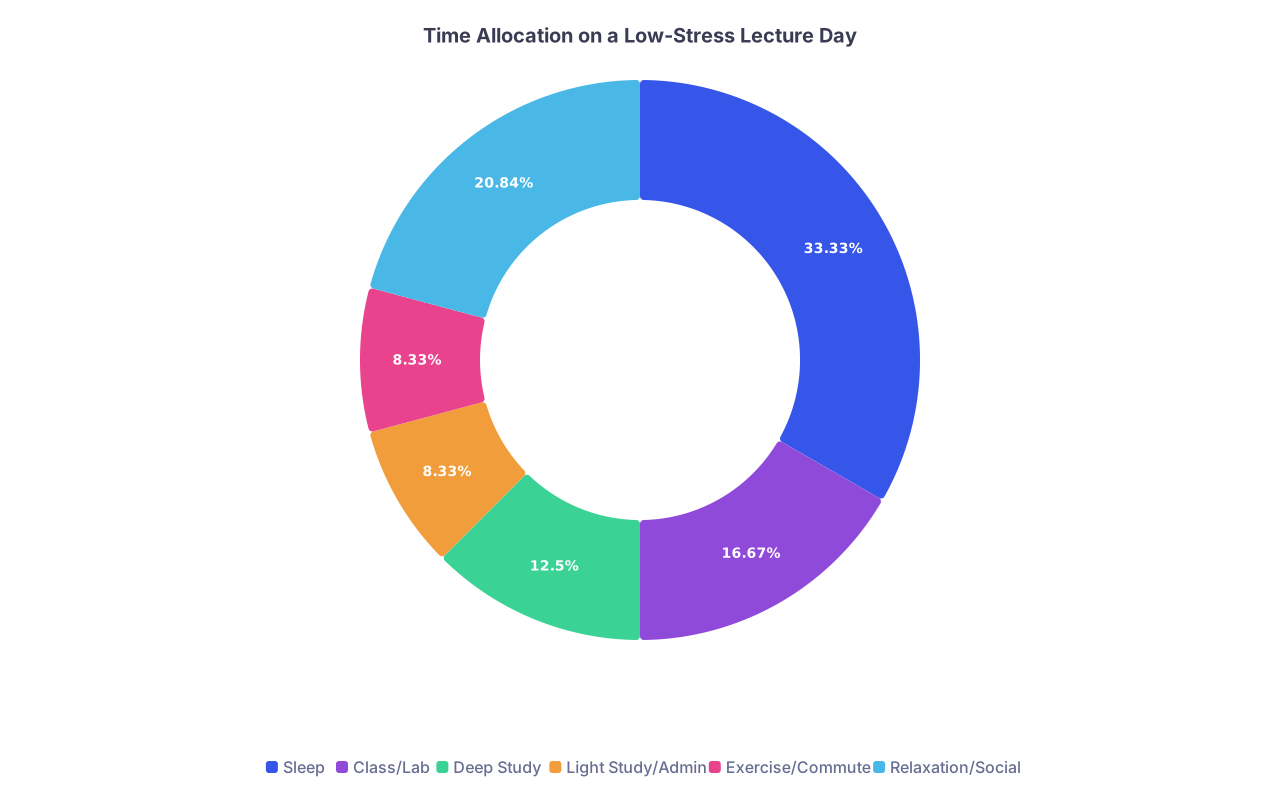
| Category | Value |
|---|---|
| Sleep | 8 |
| Class/Lab | 4 |
| Deep Study | 3 |
| Light Study/Admin | 2 |
| Exercise/Commute | 2 |
| Relaxation/Social | 5 |
How to Customize Without Breaking the Blueprint
You don’t need to copy this minute‑for‑minute. You do need to respect the structure.
At this point you should:
Pick your default wake time
- Early person: 6:00–6:30 a.m.
- Normal: 7:00 a.m.
Then stick to it 80–90% of days.
Decide your 2–3 fixed daily anchors
Examples:- Anki: 7:30–8:00 a.m.
- Deep Block #1: after lunch
- Workout: 4:30–5:15 p.m.
Assign each day a type every Sunday night
- Look at the week: label each day:
- SL (Standard Lecture)
- LAB
- EP (Exam‑Prep)
- REC (Recovery‑Productive)
- Adjust wake time and study intensity accordingly.
- Look at the week: label each day:
Here’s a simple comparison of how the day types differ.
| Day Type | Deep Study Blocks | Lab/Class Time | Off-Switch Time |
|---|---|---|---|
| Standard Lecture | 2–3 | 3–4 hours | 60–90 min |
| Heavy Lab | 1–2 | 4–5 hours | 60–90 min |
| Exam-Prep | 3–4 | 0–2 hours | ~2 hours |
| Recovery-Productive | 1–2 | Minimal | 2–3 hours |
Quick Visual: Your Ideal Daily Flow

| Step | Description |
|---|---|
| Step 1 | Wake + Morning Routine |
| Step 2 | Morning Anki/Review |
| Step 3 | Class/Lectures |
| Step 4 | Lunch + Admin |
| Step 5 | Deep Study Block 1 |
| Step 6 | Break |
| Step 7 | Deep Study Block 2 |
| Step 8 | Exercise/Movement |
| Step 9 | Light Study/Review |
| Step 10 | Off-Switch / Relax |
| Step 11 | Plan Tomorrow + Sleep |
What You Should Do Tonight
Not tomorrow. Tonight.
- Pick tomorrow’s day type (lecture, lab, exam‑prep, or recovery).
- Write an hour‑by‑hour plan from wake to sleep using the closest sample schedule above.
- Circle:
- Your two deep study blocks
- Your off‑switch time
- Your workout / movement slot
Then run it for one week before you judge it.
You do not need “more discipline.” You need fewer decisions and a repeatable, low‑stress structure.
Key points to carry out of this:
- Plan days by type (lecture, lab, exam‑prep, recovery), not vibes.
- Protect 3 anchors daily: sleep, 2–3 focus blocks, and a nightly off‑switch.
- Adjust details, but keep the skeleton: morning review, afternoon deep work, evening wind‑down.