
The way most first‑years handle finals season is broken. You cram, you panic, you sleep badly, and then you promise yourself you’ll “do better next block.” You rarely do.
Let’s fix that with a 4‑week, day‑by‑day stress‑control plan that tells you exactly what to do when—not vague “study more” nonsense.
Assume this: you’re 4 weeks out from your first big written finals + a practical (anatomy lab, OSCE, or similar). You’re tired, behind on some lectures, and your classmates are either pretending they’re fine or openly spiraling.
I’ll walk you through:
- Week‑by‑week priorities
- What each day should roughly look like
- When to push and when to stop
- Concrete stress‑control actions baked into your schedule
You’ll notice something: this isn’t just a study plan. It’s a nervous system management plan. Because if your brain is fried, those extra 3 hours of “grind” are usually worthless.
Overview: The 4‑Week Countdown Structure
At this point, you need a simple structure. Not perfection.
Here’s the shape of the next month:
| Week (Out from Finals) | Primary Focus | Secondary Focus |
|---|---|---|
| Week 4 | Map content & plug gaps | Build sustainable daily routine |
| Week 3 | Active recall & questions | Fix weak systems (sleep, schedule) |
| Week 2 | Exam‑style practice | Stress‑proofing & logistics |
| Week 1 | Refinement & rest | Mental rehearsal & calming the system |
And here’s how your effort should shift:
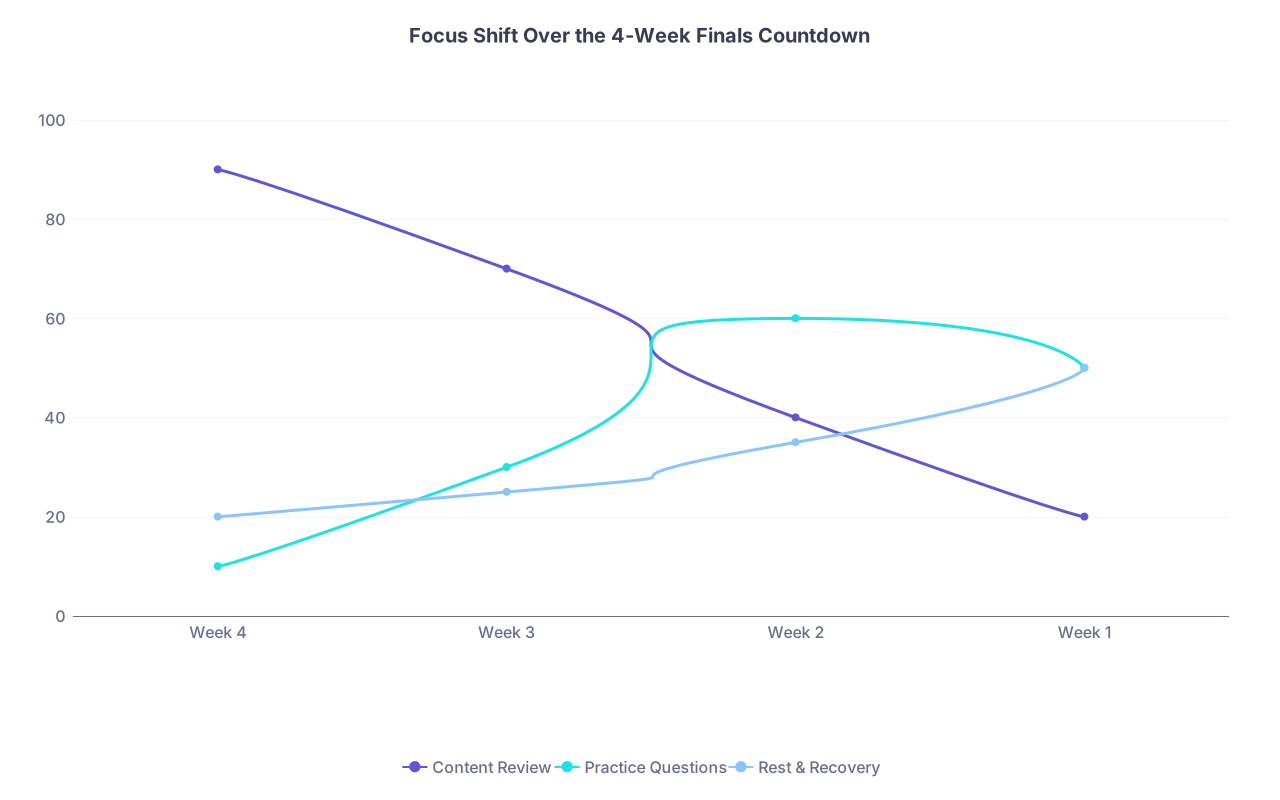
| Category | Content Review | Practice Questions | Rest & Recovery |
|---|---|---|---|
| Week 4 | 90 | 10 | 20 |
| Week 3 | 70 | 30 | 25 |
| Week 2 | 40 | 60 | 35 |
| Week 1 | 20 | 50 | 50 |
Content heavy early. Practice and stability later. Notice rest actually goes up as you get closer, not down.
Week 4: Audit, Organize, and Stop Lying to Yourself
This is the “rip the Band‑Aid off” week. At this point you should face the data: what’s actually on your exams, what you’ve truly covered, and what’s fantasy.
Day 1–2: Massive Reality Check + Master Plan
At this point you should:
List Every Exam and Format
- Written: multiple choice? short answer? NBME‑style?
- Practical: anatomy spot test? OSCE stations? Histology slides?
- Weight of each exam for your grade.
Gather Official Info
- Syllabi, exam blueprints, “learning objectives” PDFs, old practice exams.
- Write them down, don’t just glance and close.
Create a “Master Topic Map” For each course (e.g., Anatomy, Physiology, Biochem, Foundations):
- Columns:
- Topic
- On exam? (Y/N/Unknown)
- Status (Strong / Okay / Weak / Haven’t Touched)
- Be ruthless: “watched at 1.75x while texting” = Weak.
- Columns:
Design Your Weekly Skeleton Schedule Aim for:
- 2 main deep work blocks/day (60–90 min each)
- 1–2 shorter lighter blocks (30–45 min)
- Hard stop at a reasonable time (yes, really) most nights.
Example weekday:
- 8:30–10:00: Deep block – hardest subject
- 10:15–11:15: Questions / flashcards
- 14:00–15:30: Deep block – second priority subject
- 19:00–20:00: Light review / cards / summary
Lock in 3 Non‑Negotiables (Stress‑Control Core) You will keep these all 4 weeks:
- Minimum sleep window: e.g., 6.5–8 hours in bed, same wake‑up.
- Daily body reset: 10–20 minutes walk/stretch/yoga.
- Fixed “no‑study” blocks: e.g., meals, 1 hour off at night.
You’ll feel more anxious the day you map it out. That’s normal. You’ve just stopped lying about the work. The anxiety drops when you pair that with a plan.
Day 3–4: Fill the Biggest Holes (Not Every Hole)
Now that you see the mess, you triage.
At this point you should:
- Pick 1–2 courses that are:
- Heaviest on the exam and
- Where you’re weakest.
Then:
Do Fast Content Sweeps
- Use lecture objectives, not full recordings, as your guide.
- For each weak topic:
- 10–20 minutes: notes, Boards & Beyond/Pathoma‑style review, or faculty slides.
- Immediately 5–10 practice questions or flashcards on that topic.
- The point is coverage and tagging, not mastery.
Build or Clean Your Question/Flashcard System
- If you use Anki or a similar system:
- Suspend garbage cards.
- Tag decks by exam/course.
- If you don’t use spaced repetition:
- Make mini‑sets: 20–30 cards per major topic you’re weak on.
- Or create short written “one‑pager” summaries.
- If you use Anki or a similar system:
Checkpoint Each Night
- 5 minutes: What did I actually do?
- 5 minutes: Adjust tomorrow (add/remove one block if needed).
You are not going to perfectly relearn everything in one week. The win here is coverage and structure.
Day 5–7: Stabilize the Routine + Add Low‑Friction Stress Relief
The weekend of Week 4 should lock your habits that will carry you.
At this point you should:
Do a Half‑Day Simulation
- 2–3 hours of:
- 1 hour: mixed questions across courses
- Short break
- 1 hour: content review based on misses
- Use this to identify “oh wow I forgot all of renal” moments.
- 2–3 hours of:
Add Simple Stress‑Control Rituals I’m not talking about a 30‑minute meditation app. You won’t keep that.
Choose 1–2 of these:
- 3–5 slow breaths before each deep block: 4s inhale, 6s exhale.
- 10‑minute walk outside after lunch.
- 1 “device‑free” meal daily.
- 10 minutes of stretching before bed.
Protect One Social/Rest Block One evening or afternoon off. No “I’ll just do a few cards.”
Your brain needs the signal: rest is allowed and planned, not failure.
By the end of Week 4 you should:
- Know every exam format and major topic.
- Have a repeatable daily structure.
- Have identified your top 2–3 danger zones (e.g., cardiac phys, biochem pathways, brachial plexus).
Week 3: Active Recall or You’re Wasting Time
This week you stop “watching lectures” as your main study. That’s over. If you keep re‑watching full recordings now, you’re just self‑soothing.
Daily Structure This Week
At this point you should aim for:
- 50–70% of study time = questions / active recall
- 30–50% = targeted review based on those questions
A simple template:
- Block 1 (morning):
- 40–60 min questions on priority course
- 20–30 min reviewing incorrects + notes
- Block 2 (midday):
- 40–60 min content review (videos, notes) on weak topics from Block 1
- Block 3 (afternoon/evening):
- 40–60 min questions on second course
- 20–30 min review
Early Week 3 (Days 1–3): Build Question Momentum
At this point you should:
Set Daily Question Targets Make them realistic. Example:
- Written‑heavy block: 40–60 questions/day total
- More practical: 30 questions/day + 30–45 min lab/image review
Use the Misses as Your Study Guide For each missed question:
- One sentence: what concept did I miss? (e.g., “preload vs afterload effect on stroke volume”)
- Tag that in your notes or card system.
- If a topic recurs 3+ times → schedule a focused 30‑minute session that week.
Do Time‑Bound Blocks, Not Endless Sessions
- 25–30 minutes work → 5‑minute break. Or
- 50 minutes work → 10–15 minute break.
No 3‑hour zombie sit sessions.
Late Week 3 (Days 4–7): Integrate Practical / Lab Components
People ignore practicals until it’s too late, then panic‑cram images. Don’t.
At this point you should:
Schedule Dedicated Practical Blocks
- 3–4 times this week, 30–45 minutes:
- Anatomy: lab images, structures, clinical correlations.
- OSCE: run through checklists out loud, maybe with a partner.
- Histology: slide drilling, pattern recognition.
- 3–4 times this week, 30–45 minutes:
Combine Systems For example:
- Day theme = Cardiovascular:
- Questions: cardio phys, cardio path.
- Practical: heart anatomy structures.
- Quick written “big picture” summary: preload, afterload, contractility, major valve lesions.
- Day theme = Cardiovascular:
Tighten Your Stress‑Control Habits
- Keep sleep roughly stable; don’t suddenly start staying up 2 hours later.
- Reduce caffeine creep: last caffeine by mid‑afternoon.
- If anxiety spikes at night:
- 5 minutes: brain dump on paper → list everything you’re worried about → write 1 next step for each → close notebook.
By the end of Week 3 you should:
- Be doing questions daily without drama.
- Have touched both written and practical material multiple times.
- Feel tired but not toasted.
Week 2: Dress Rehearsal and Logistics
This is where most students either overdo it or underdo it. You’re close enough to panic, but far enough that you feel like you should still be grinding at 120%.
Wrong. Week 2 is controlled intensity plus logistics.
Early Week 2 (Days 1–3): First Real Mock Session
At this point you should:
Run at Least One “Mini‑Exam”
- 60–90 minutes of questions under timed conditions.
- Same format as your real exam if possible (NBME‑style, school‑specific bank, etc.).
- No looking at notes mid‑block.
Immediately After: Post‑Mortem
- Don’t just mark right/wrong.
- For each cluster of errors:
- Was it knowledge? Misreading stem? Fatigue?
- Turn this into a short “fix list”:
- e.g., “Misread long stems → practice under timer 3x/week”
- “Forgot glycogen storage diseases → 30‑minute targeted review.”
Adjust Question Volume
- If you’re getting crushed (<50%):
- Slightly reduce daily questions, increase focused content review.
- If you’re stable (60–75%):
- Maintain or slightly increase question count.
- If you’re amazing (>80%, honest, mixed topics):
- Maintain, don’t get cocky; pivot to weak areas.
- If you’re getting crushed (<50%):
Mid Week 2 (Days 4–5): Practical / OSCE Simulation
At this point you should:
Simulate the Practical Once
- Anatomy:
- Use old practicals, online atlases, or school slides.
- Time yourself on IDs: 20–30 seconds per structure.
- OSCE:
- With a partner if possible.
- Use a checklist: intro, wash hands, HPI framework, focused exam maneuvers.
- Anatomy:
Prep Practical “One‑Look” Sheets
- Anatomy:
- 1 page per region: must‑know nerves, vessels, spaces, clinical correlations.
- OSCE:
- 1 page per chief complaint style: chest pain, abdominal pain, shortness of breath, headache.
- Anatomy:
Check All Logistics
- Exact exam dates/times/locations.
- Allowed materials (calculator? earplugs? whiteboard?).
- Know your route and timing to campus or testing center.
This sounds trivial until you watch a classmate show up late or panicked because they misread the schedule.
Late Week 2 (Days 6–7): Trim, Don’t Add
The temptation here is to add new resources—new Qbank, new video series. Don’t.
At this point you should:
- Commit to no new major resources.
- Stay within:
- Your bank/cards
- Your class materials
- Maybe 1 trusted board‑style resource (e.g., B&B, Sketchy, etc.), if already using it.
Your stress‑control move this week:
- Tighten the day ends.
- Cut late‑night scrolling.
- Maintain a predictable pre‑sleep routine: same 2–3 steps nightly (shower → stretch → read 5 pages of something non‑med).
By the end of Week 2 you should:
- Have done at least one timed written session and one practical/OSCE run.
- Know your remaining weak zones.
- Trust your schedule more than your panic.
Week 1: The Final 7‑Day Runway
Now you’re close. This is where people either:
- Burn themselves into uselessness, or
- Back off too much and coast.
You’re going to do neither.
Here’s a high‑level look of the final week shape:
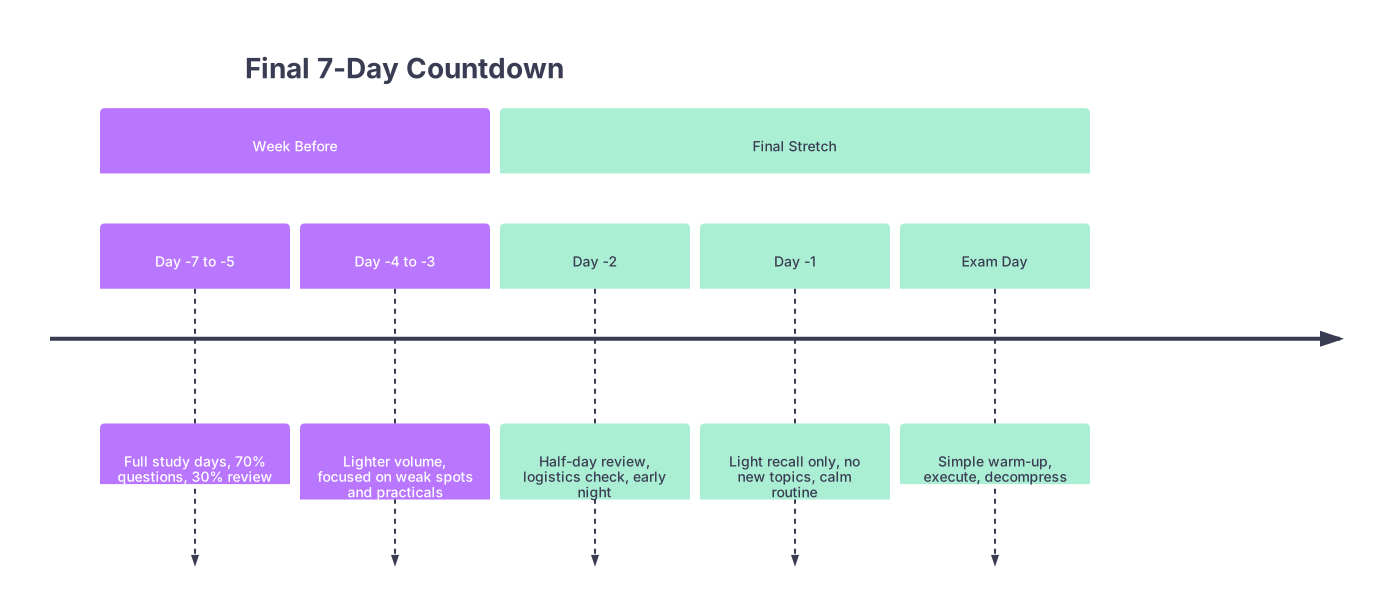
| Period | Event |
|---|---|
| Week Before - Day -7 to -5 | Full study days, 70% questions, 30% review |
| Week Before - Day -4 to -3 | Lighter volume, focused on weak spots and practicals |
| Final Stretch - Day -2 | Half-day review, logistics check, early night |
| Final Stretch - Day -1 | Light recall only, no new topics, calm routine |
| Final Stretch - Exam Day | Simple warm-up, execute, decompress |
Days -7 to -5: Last Heavy Push (But Not Max)
At this point you should:
-
- 60–120 minutes of mixed questions.
- Treat it as a rehearsal, not a judgment of your worth as a human being.
Focus on “High‑Yield Weak”
- Make a 2‑column list:
- High yield & weak
- Low yield & weak
- Your time goes mostly into column one. Low‑yield/weak topics may get:
- A quick skim
- Or nothing, if you’re truly pressed. Yes, you may consciously let some low‑yield stuff go.
- Make a 2‑column list:
Guard Sleep Like It’s an Exam
- No heroic all‑nighters.
- One late night here and there is survivable.
- Three in a row? Your recall will tank.
Days -4 to -3: Narrow and Stabilize
By now, you’re not trying to transform your knowledge base. You’re consolidating.
At this point you should:
Shift to Shorter Question Blocks
- 20–30 question sets.
- Immediate review after each.
- Aim: pattern recognition and confidence, not raw endurance.
Rehearse Trouble Topics Out Loud
- Explain cardiac cycle to your wall.
- Talk through how you’d work up chest pain in an OSCE.
- Label structures verbally as you go through anatomy images.
Dial Up Stress‑Control, Not Study Hours
- Same or slightly less total study time compared to Week 2.
- Add one more stress buffer:
- Short social call with someone outside med school.
- 20–30 minutes of something obviously non‑academic you enjoy.
Your goal: feel like you’re landing a plane, not trying to build it mid‑air.
Day -2: Half‑Day + Logistics + Calm
At this point you should:
Study Half Day, Not Full Tilt Sample:
- Morning: 2–3 focused blocks on remaining weak but important topics.
- Afternoon: practical/OSCE refresh, light cards.
- Evening: stop early. Wind down.
Do a Final Systems Check
- Pack bag: ID, snacks, water, allowed tools.
- Plan clothes (yes, really—decision fatigue is real that morning).
- Confirm alarm and backup alarm.
Pre‑Sleep “Future Self” Note
- 3–5 bullet points:
- What you do well.
- What you’ve actually done over the last weeks (evidence you’re not a fraud).
- One sentence you’ll tell yourself if you panic in the exam room.
- 3–5 bullet points:
Day -1: Light, Controlled, No New Stuff
This is where the insecure overachievers start “just checking” obscure stuff and accidentally trigger full existential crises.
Don’t do that.
At this point you should:
Limit to Light Active Recall Only
- Flashcards / one‑pagers / summary tables.
- No brand‑new videos or huge question blocks.
Keep the Day Structured but Short Example:
- 60–90 min review in morning.
- 60 min mid‑afternoon.
- Done by early evening.
Deliberate Pre‑Exam Wind‑Down
- Light physical activity: walk, easy yoga.
- Avoid: heavy workouts that leave you sore or wrecked.
- Eat actual food, not just energy drinks and vending machines.
Exam Day: Micro‑Stress Management
You’ve already done the work. Today is execution.
At this point you should:
Morning: Simple, Repeatable Routine
- Wake with enough buffer time.
- Light breakfast with protein + carbs.
- 5–10 minutes of looking over only your highest‑yield one‑pager(s) if you want.
- Stop all studying 20–30 minutes before you leave.
Right Before Exam
- 5 deep breaths.
- Read that “future self” note.
- Decide what you’ll do if you blank:
- Mark the question, move on, come back.
- Tell yourself: “Panic = body being loud, not a sign I failed.”
After Exam
- Do not autopsy every question with classmates. It’s a blood sport and no one wins.
- Do something concrete to signal “this is over” to your nervous system:
- Walk, shower, proper meal, short nap.
If you have multiple finals spaced over days: after a short decompression, do a quick, cold‑eyed review of what’s next and plug back into a lighter version of the plan.
Final Word: What Actually Matters in This 4‑Week Countdown
You don’t need the “perfect” study plan. You need a good‑enough one you’ll actually follow without breaking yourself.
The three things that matter most:
- Time‑based structure beats vibe‑based panic. Decide in advance what each week and each day is for, then execute.
- Active recall and questions are non‑negotiable. If you’re still mostly rewatching lectures in the last 2 weeks, you’re kidding yourself.
- Stress control isn’t extra—it’s performance maintenance. Sleep, short movement, and simple calming rituals will save more points than an extra bleary‑eyed hour of cramming.
Run this once, honestly, and finals season stops being this mythic monster and becomes what it actually is: a hard month with a clear plan.