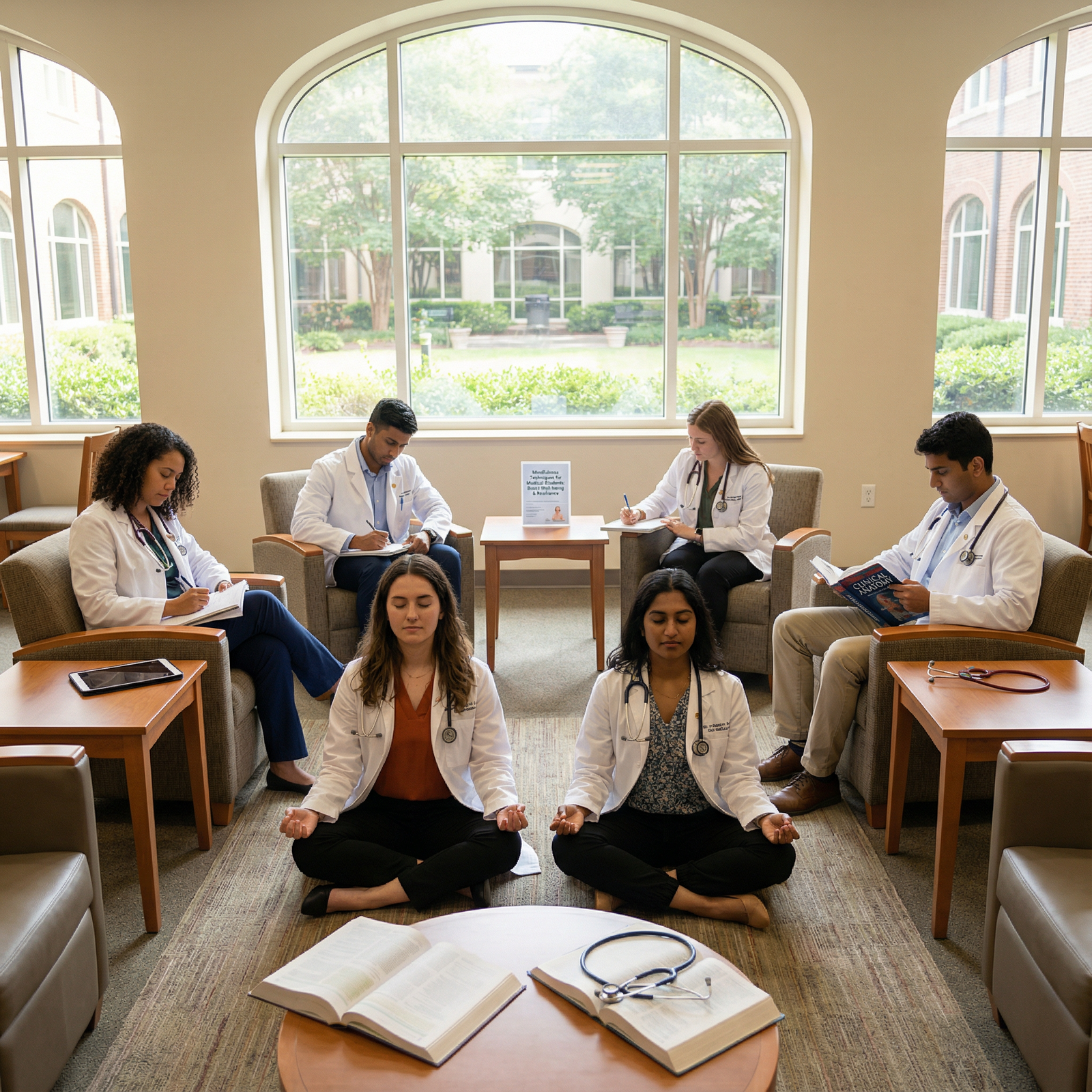
The myth that first year breaks you is wrong. What breaks most people is mid‑semester mismanagement.
You do not burn out in one bad week. You get there through a predictable slide: small delays, tired decisions, and vague “I’ll catch up later.” By week 7–9, that “later” no longer exists. That is the mid‑semester wall.
Here is the good news: you can recover. But recovery is not vibes and motivational quotes. It is a structured, week‑by‑week, then day‑by‑day rebuild.
You are in first year. You are tired. You probably feel behind in at least two courses. Let’s get specific.
Step 0: Identify Your Exact Phase (Today)
At this point, you should stop guessing how bad things are.
You need a snapshot:
List your courses and current status
- Anatomy
- Physiology
- Biochem
- Foundations / Doctoring / Clinical skills
- Any small‑group / PBL / labs
For each, write:
- Next major exam date
- Percent of grade that exam is worth
- Current average (if available)
- How many lectures you are behind
Mark your reality:
- 0–3 lectures behind → Yellow
- 4–10 lectures behind → Orange
10 lectures behind OR failed first exam → Red
| Course | Lectures Behind | Next Exam | Priority Level |
|---|---|---|---|
| Anatomy | 8 | Mar 14 | High (Red) |
| Physiology | 3 | Mar 10 | Medium (Orange) |
| Biochem | 0 | Mar 28 | Low (Yellow) |
| Doctoring | 1 | OSCE Apr 5 | Medium (Orange) |
If everything feels “urgent,” that means you have not prioritized. That is fixable. You are going to fix it in a four‑week recovery block.
Overview: The 4‑Week Recovery Block
At this point in the semester, you should think in 4‑week chunks, not the rest of the year. Here is the macro view:
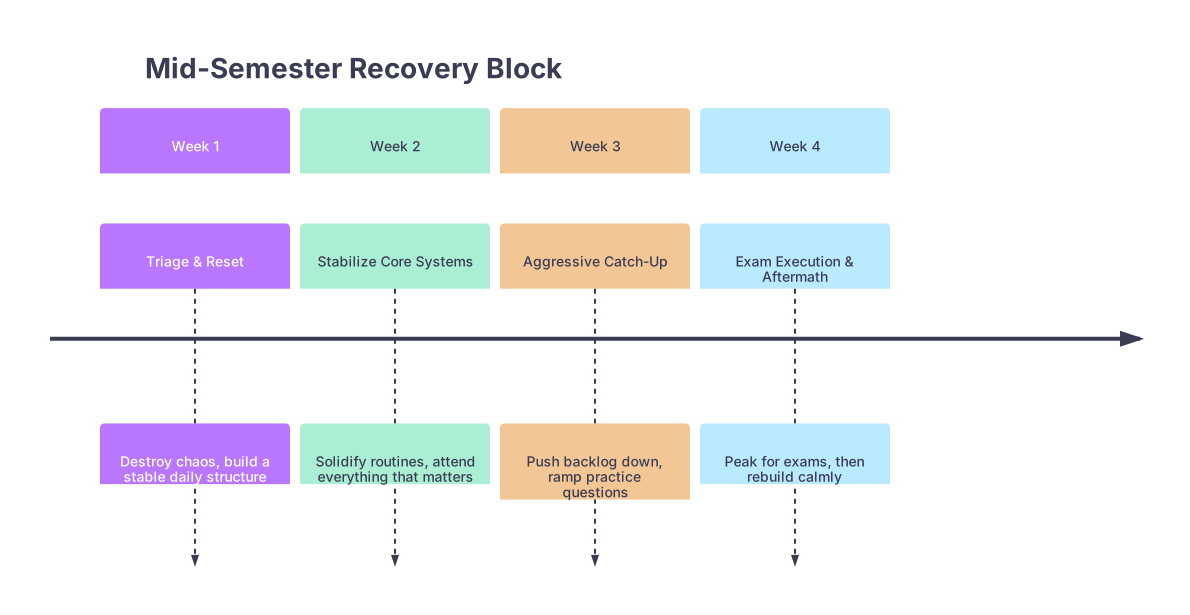
| Period | Event |
|---|---|
| Week 1 - Triage & Reset | Destroy chaos, build a stable daily structure |
| Week 2 - Stabilize Core Systems | Solidify routines, attend everything that matters |
| Week 3 - Aggressive Catch-Up | Push backlog down, ramp practice questions |
| Week 4 - Exam Execution & Aftermath | Peak for exams, then rebuild calmly |
You are going to move through:
- Week 1: Triage & Reset
- Week 2: Stabilization
- Week 3: Aggressive Catch‑Up
- Week 4: Exam Execution + Post‑Exam Reset
We will go week by week, then drill down into your typical day.
Week 1: Triage & Reset (Stop the Bleeding)
This week you are not “catching up.” You are stopping the damage.
Day 1–2: Full Academic Audit
At this point, you should clear half a day for pure planning. Laptop closed for everything except your LMS and calendar.
Pull every syllabus and exam schedule.
Build a simple master calendar (Google Calendar, Notion, or even paper):
- All exam dates
- All quiz / lab practical dates
- OSCE or clinical skills assessments
Rank courses by risk:
- High risk: low grades so far, near exam, lots of backlog
- Medium risk: stable but upcoming high‑weight exam
- Low risk: lighter content, later exams, or strong current grade
Once you have this, you stop saying “I’m just behind in general.” You say, “I have 8 anatomy lectures to catch before a high‑weight exam in 9 days.” That is a problem you can solve.
Day 3–7: The “No New Holes” Rule
Your only job in Week 1:
- Attend everything live that matters
- Start shrinking the backlog slowly
- Build a repeatable day structure
Your rule: you do not miss new lectures this week. You protect the present while nibbling at the past.
A realistic Week 1 structure:
Morning (8–12):
- Go to required sessions: anatomy lab, small groups, clinical skills
- If lectures are recorded and attendance optional, choose 1–2 that you will attend live (often your highest‑risk course). Commit.
Early afternoon (1–4):
- Same‑day processing of today’s lectures for one high‑yield course:
- 1 pass through slides
- Active notes or annotated slides
- 10–20 related practice questions if available
- Same‑day processing of today’s lectures for one high‑yield course:
Late afternoon (4–7):
- Backlog block:
- Choose one backlog course (the highest risk)
- 2–3 older lectures, max
- Quick and dirty: 1.25–1.5x speed, light notes, a few practice questions
- Backlog block:
Evening (7–10):
- Short review (30–45 minutes) of the hardest material of the day
- Stop serious studying 60 minutes before bed
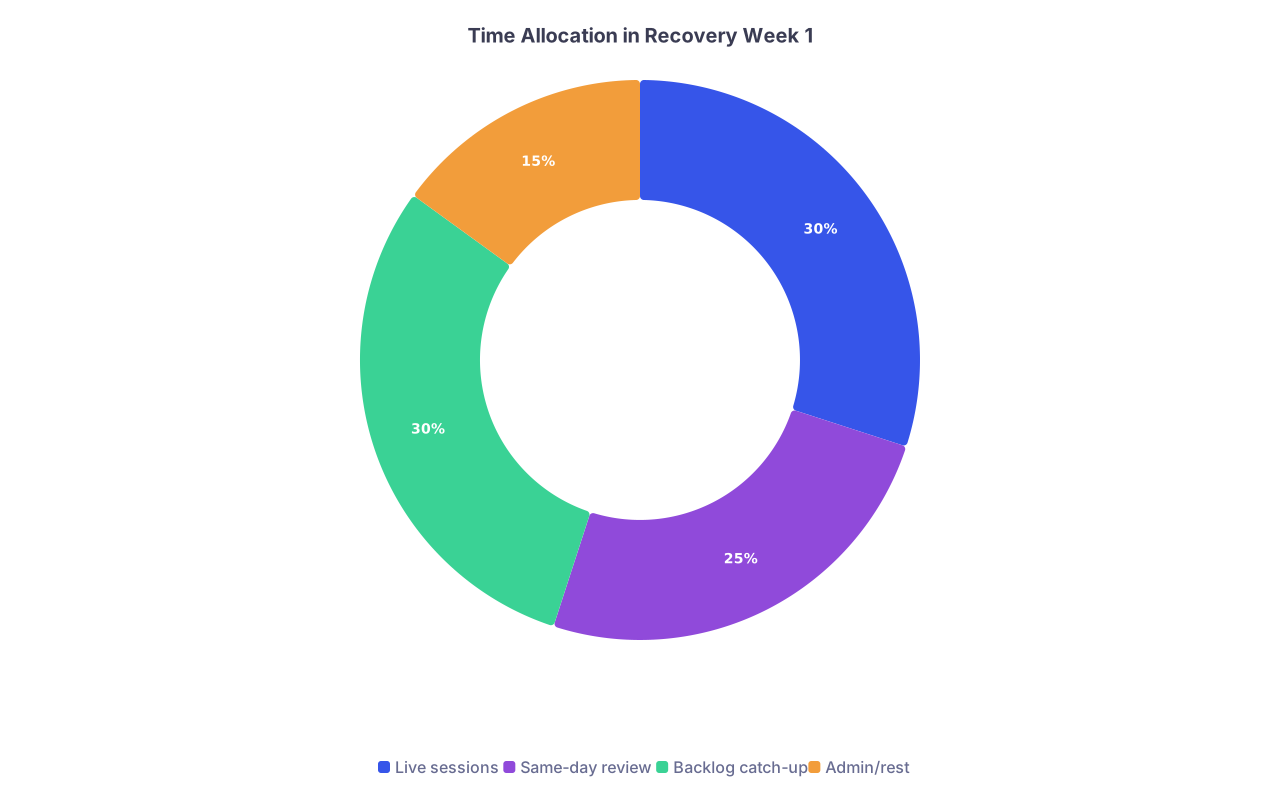
| Category | Value |
|---|---|
| Live sessions | 30 |
| Same-day review | 25 |
| Backlog catch-up | 30 |
| Admin/rest | 15 |
Notice what is missing: perfection. You are not “fully mastering” everything right now. You are building a rhythm and preventing further slide.
Week 2: Stabilization (Build Systems That Hold)
If Week 1 was about not drowning, Week 2 is about learning to swim in a straight line.
At this point, you should have:
- A master calendar
- A sense of which courses are red/orange/yellow
- A workable daily template
Now you tighten it.
Start of Week 2 (Day 8–9): Lock in the Weekly Template
You build a repeating weekly skeleton, then slot tasks into it.
Example template:
Mon/Wed/Fri
- AM: Live sessions + same‑day review for Course A
- PM: Backlog for Course B
Tue/Thu
- AM: Live sessions + same‑day review for Course B
- PM: Backlog for Course A / Doctoring prep / anatomy lab recap
Why this matters: you remove decision fatigue. “What should I study now?” is the question that kills 90 minutes at 3 p.m.
Mid‑Week 2 (Day 10–12): Tighten Daily Rules
At this point, you should implement some non‑negotiables:
- Sleep floor: minimum 6.5 hours. Under that, your retention tanks. I have watched too many students trade sleep for an extra hour of low‑quality highlight‑scrolling through lecture PDFs. Bad trade.
- 1 hour per day for food + short walk + shower with no phone. Yes, schedule it.
- Two 90–120 minute deep‑work blocks per day:
- Phone in another room
- LMS tabs only
- One course per block
What you aim for by the end of Week 2:
- New content: processed within 24 hours for at least your top 2 risk courses
- Backlog: reduced by ~30–40% in highest risk course
- Emotionally: less “constant panic,” more “this is brutal but structured”
Week 3: Aggressive Catch‑Up (Push Hard, But Smart)
Now you are stable enough to push. This is your grind week.
This is where most people either rescue their semester or lock in a mediocre outcome.
At this point, you should:
- Know your next 2–3 major exam dates
- Have a realistic count of remaining backlog lectures
- Have some sense of your weak areas from early quizzes
Early Week 3 (Day 15–17): Build Micro‑Study Sprints
You add intensity, not chaos.
Daily structure here:
- 2 x 90–120 minute deep‑work blocks (as in Week 2)
- 2–3 x 25–30 minute sprints sprinkled between sessions:
- Flashcards (Anki or similar)
- Key figures/tables review
- Short question sets (5–10 questions)
You shift from mostly content consumption to a content‑practice mix:
- 60%: Lectures / slides / textbooks
- 40%: Practice questions, flashcards, active recall
Mid–Late Week 3 (Day 18–21): Course‑By‑Course Mini‑Plans
At this point, you should make 7–10 day plans for each high‑risk course.
Example: Anatomy exam in 9 days, 12 lectures behind, plus lab content.
Mini‑plan might look like:
- Day 18–19: 4 backlog lectures + lab structure list for upper limb
- Day 20–21: 4 backlog lectures + 50 practice questions + self‑draw diagrams
- Day 22–23: Final 4 backlog lectures + group review session
- Day 24–25: Full question bank set + targeted review of missed questions
You do not keep everything in your head. You write it down.
Week 4: Exam Execution and Aftermath
By now, you are tired. That is expected. You are also more organized than 2–3 weeks ago. Use it.
At this point, you should:
- Shift from new content to consolidation in courses with imminent exams
- Protect sleep more aggressively before exam days
- Accept that not every detail will be perfect
5–7 Days Before an Exam
Your priority order:
- All high‑yield content seen at least once
- Weak areas identified and hit twice
- Practice questions and practice exams
Rough distribution:
- 40%: Targeted content review (weak systems/topics)
- 40%: Practice questions / blocks
- 20%: Debriefing questions and refining summary sheets
1–2 Days Before Exam
You are not learning from scratch. You are refining.
At this point, you should:
- Stop trying to “finish every single video” if you are still behind. Ruthlessly prioritize:
- Blue‑box style tables, key pathways, common question themes
- Course learning objectives, if your school posts them
- Do:
- 1–2 smaller question sets just to stay warm
- A structured brief review of summary sheets / flashcards
- Do not:
- Stay up until 3 a.m. starting a brand‑new lecture series
I have watched students lose 10–15 exam points because they cut sleep in half the night before. They remember the new fact about some obscure enzyme, but they blank on a dead‑simple physiology curve.
The Daily Recovery Blueprint (Template)
Now let’s get even more granular. You are in the middle of the block. What does one optimized day look like?
Morning (7–12)
At this point in the day, you should be doing:
7:00–7:30
- Wake, quick breakfast, 5–10 minutes of planning:
- List your 3 top academic tasks for the day
- Wake, quick breakfast, 5–10 minutes of planning:
8:00–12:00
- Required live activities: labs, mandatory sessions, small groups
- One 60–90 minute focused review of today’s most important lecture (ideally right after it)
Rule: do not let the morning vanish into passive sitting. If a lecture ends early, you use that gap for light review, not scrolling.
Afternoon (13–17)
This is your main heavy‑lift zone.
Block 1 (13:00–15:00):
- Deep work on high‑risk course (backlog or consolidation)
- No multitasking, no switching courses mid‑block
Short break (15:00–15:15):
- Water, snack, walk, phone okay but time‑bounded
Block 2 (15:15–17:00):
- Practice questions / flashcards aligned with Block 1 material
- Immediate review of missed questions
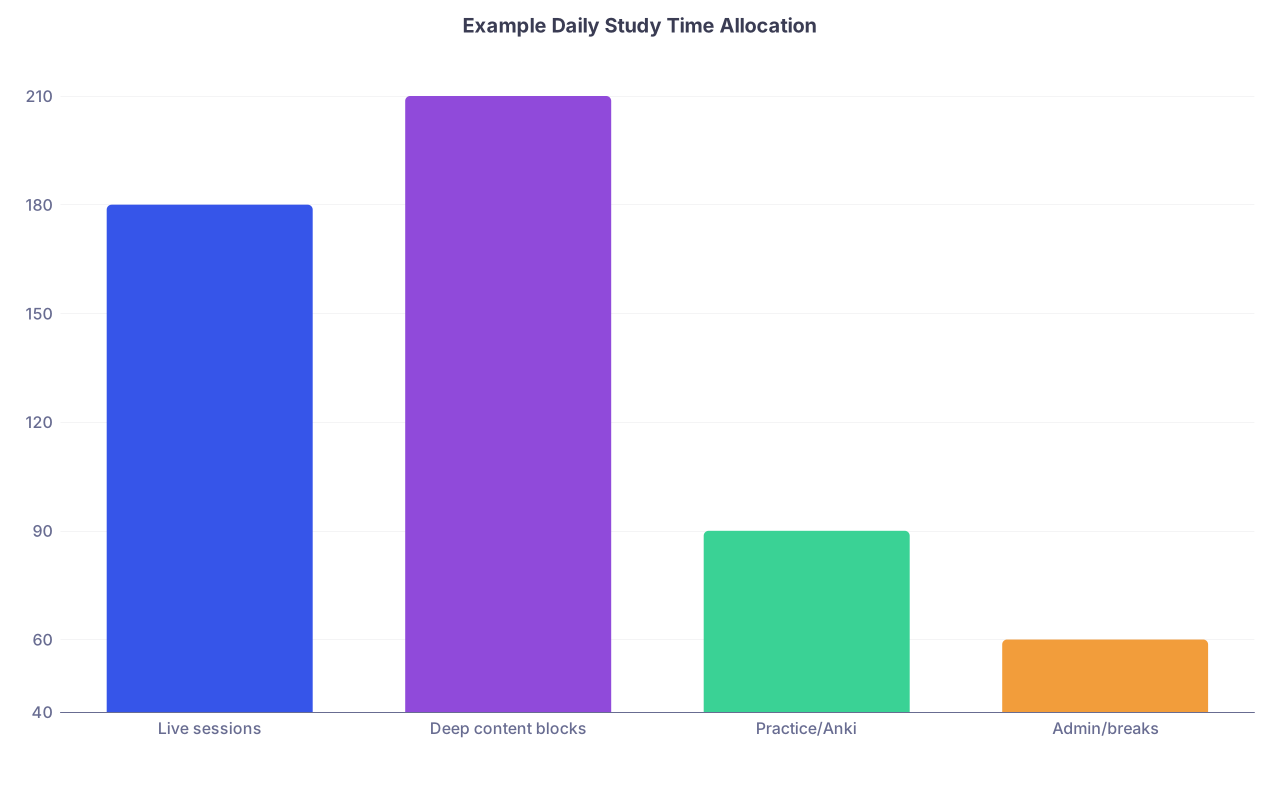
| Category | Value |
|---|---|
| Live sessions | 180 |
| Deep content blocks | 210 |
| Practice/Anki | 90 |
| Admin/breaks | 60 |
Evening (18–22)
Evenings should not be chaos.
18:00–19:00
- Dinner, decompress, talk to actual human beings if possible
19:00–21:00
- Lighter work:
- Flashcards
- Diagram redraws
- Group review (if your group is focused and not a social hour)
- Lighter work:
21:00–22:00
- Shutdown:
- Prep for next day (clothes, schedule, printouts if needed)
- Non‑academic reading, stretching, whatever calms your brain
- Screen dimmed or off at least 20–30 minutes before bed if you can tolerate that
- Shutdown:
You are not a monk. You are someone in a demanding professional program. You build a life that does not collapse every time exams stack.
Common Pitfalls During Mid‑Semester Recovery
You are not special; you will be tempted by the same bad strategies everyone falls into.
The “Total Life Reset” fantasy
- You decide to fix sleep, diet, exercise, study habits, and relationships all in one week. Result: nothing sticks.
- Recovery rule: change 1–2 behaviors per week, not 10.
Re‑copying notes as “studying”
- You spend hours making pretty outlines of material you cannot recall the next day. Useless.
- Active recall beats art project notes every time.
Running 12‑hour study days for 10 days straight
- You will do this once, then crash and burn.
- Better: 7–9 solid hours of real work, consistently, for 3–4 weeks.
Study groups that are really group therapy
- Emotional support is fine. But if your “study group” spends 70% of time complaining, you cannot afford it right now.
- Try: one focused 90–120 minute group block per week with a clear agenda.
Handling Clinical Skills, Labs, and “Side Quests”
First year is not just lectures and exams.
At this point in the semester, you probably also have:
- Clinical skills / doctoring course
- Anatomy lab practicals
- Small‑group cases or PBL
These can quietly wreck your schedule if you treat them as afterthoughts.
Clinical Skills / OSCE Prep
- Block 60–90 minutes once per week:
- Run 1–2 full H&P practice sessions with a classmate
- Quickly review checklists / rubrics
- A week before an OSCE:
- Increase to 3–4 sessions of focused practice
- Script your intros, transitions, and closings out loud
Anatomy Lab
- Do not rely on “I’ll learn in the last two days.” You will not.
- After each lab:
- 20–30 minutes same day:
- Label diagrams
- Use an atlas or app to reinforce what you saw
- 20–30 minutes same day:
When You Are Really, Really Behind
Let me be blunt: sometimes recovery is not about an A. It is about passing and living to fight another semester.
If you are:
- Failing multiple courses
20 lectures behind in more than one core subject
- Already failed one major exam
Your plan shifts.
At this point, you should:
- Identify must‑pass courses. Usually the big systems or blocks.
- Accept that some “nice to know” topics will be sacrificed.
- Talk to someone officially:
- Academic support office
- Learning specialist
- Course director if appropriate
You are not the first student in trouble. The ones I have seen fail completely waited too long to admit it.
Quick Reference: 4‑Week Recovery Snapshot
| Week | Primary Goal | Focus |
|---|---|---|
| 1 | Stop the bleeding | Triage + structure |
| 2 | Stabilize routines | Consistent days |
| 3 | Aggressive catch-up | Backlog + questions |
| 4 | Execute on exams | Consolidate + rest |