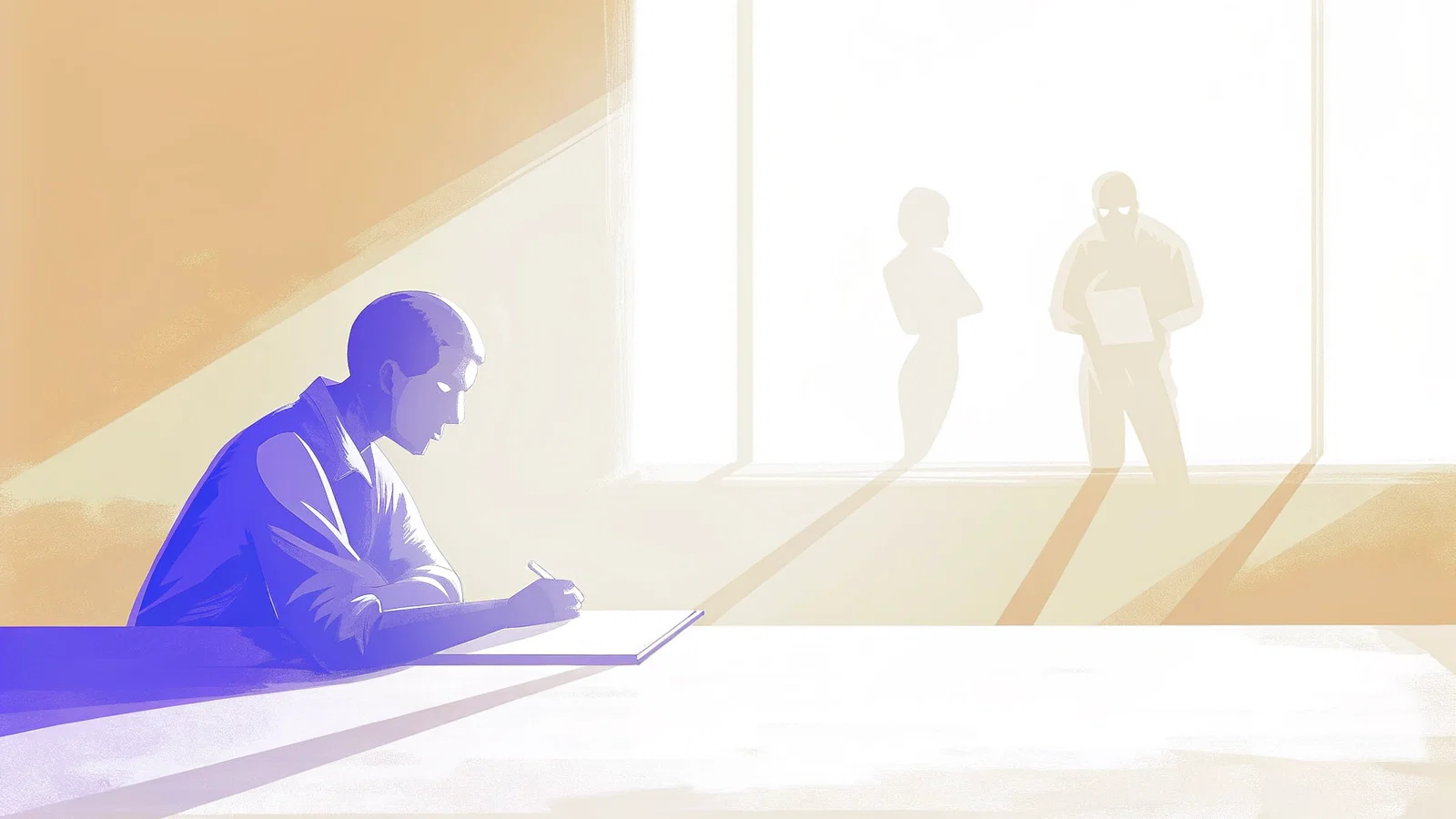
You're sitting in a windowless Problem-Based Learning room. It's week three of M1. You've spent four hours pre-reading about the brachial plexus, and you finally volunteer an answer. The small-group leader cuts you off mid-sentence, sighs loudly, and says, "That's not what we're looking for. Did anyone else actually read the material?"
Dead silence. Your face burns. You stare at your notebook, heart hammering, wondering if this is just how medical school is.
In that moment, the emotional response is overwhelming. Fear. Self-doubt. The immediate, sinking assumption that speaking up will make you the "problem student" and ruin your evaluations. You tell yourself to just keep your head down.
Here is the core myth we need to destroy right now: hostile small-group leadership does not automatically mean you have to tolerate it for the rest of the year. You are not trapped. Academic medicine has a long, ugly history of protecting "brilliant but abusive" faculty, but you have more leverage than you think. Let's break down exactly how to handle this without torching your M1 year.
Let's dismantle the lies you tell yourself when an authority figure acts like a jerk.
Myth: They're the authority figure, so their behavior is untouchable. Reality: Teachers and facilitators are still employees of the university. They have professional standards. Yes, some attendings act like they own the place, but facilitators are bound by the same professionalism rubrics you are. If they breach those standards, they can and should be addressed through the right channels.
Myth: If I report it, I'll become the problem. Reality: Good programs actually want to know when a facilitation style is harming psychological safety. If your school is toxic, sure, they might shoot the messenger. But most modern medical schools have learning environment offices specifically designed to handle this. They can often gather feedback anonymously or intervene without putting a target on your back.
Myth: It's probably just me being sensitive. Reality: Patterns matter. I've seen M1s cry in the bathroom convinced they were just "too soft" for medicine, only to find out their entire small group felt terrorized by the same facilitator. If multiple students notice the same dismissive behavior, it's a group issue. It's not your personal flaw. It's a bad teacher.
What to Do Right Now: In-the-Moment Tactics to Protect Yourself and Stay Functional
When you're in the room and the hostility flares up, your adrenaline spikes. Your instinct is either to fight back or shut down completely. Do neither.
Use low-conflict responses. Stay brief, calm, and fiercely professional. Do not match their hostility. If they snap at you, take a breath and say, "I understand. Could you clarify the specific mechanism you're looking for here?" Strip the emotion out of your voice. Be a gray rock. It is incredibly difficult for a hostile facilitator to keep attacking a student who remains perfectly, politely neutral.
Document specifics immediately. The second that session ends, open a private note on your phone. Write down the date, the exact time, what was said, who was present, and how it affected the room's participation. Memory is notoriously unreliable when you're stressed. "He was mean on Tuesday" won't get you anywhere. "On Tuesday at 10:15 AM, Dr. Smith interrupted me, called my reasoning 'lazy,' and told the group not to use my logic" is actionable data.
Try one direct clarification (if the behavior is mild). Sometimes, facilitators are just socially inept or stressed, not malicious. If it's a minor clash, try a respectful reset after class. "Dr. Jones, I want to make sure I'm meeting your expectations for these sessions. How do you prefer we handle incorrect answers during the discussion?" This forces them to articulate their standards and often resets the dynamic.

How to Escalate If the Behavior Continues: The Smart, Professional Route
If the direct approach fails, or if the behavior is too severe for a casual chat, you escalate. But you do it smartly. You don't storm into the Dean's office crying about unfairness. You build a case.
Start with the least risky path. Go to the course coordinator, the small-group director, or your academic advisor. Do not go straight to the Dean of Students unless the behavior is egregious or involves discrimination. The course director is the one who actually schedules the facilitators and has the power to swap you into a different group quietly.
Bring facts, not a rant. When you sit down with the course director, leave your emotions at the door. Summarize the behaviors, the frequency, the witnesses, and the direct impact on your learning. "I'm coming to you because the current facilitation style in Group B is preventing me from engaging with the material. Here are three specific instances from the last two weeks where the environment became hostile."
Know what outcome you're requesting. Don't just drop a problem in their lap. Tell them what you want. Do you want to be moved to a different small group? Do you want the course director to observe a session? Do you want formal mediation? Giving them a clear solution makes it much easier for them to help you.
When to Stop Tolerating It: Red Flags That Mean This Is More Than a Bad Personality Match
Some behaviors you do not wait out. You do not try to "manage up" or brush them off as a bad day.
Watch for these red flags:
- Public shaming or humiliation: Being belittled in front of your peers is never an acceptable teaching tool.
- Singling out: If they only roll their eyes and interrupt you, while praising everyone else.
- Retaliation: If you ask a question and they respond by giving you a harder pimping question designed to make you fail.
- Discriminatory remarks: Anything targeting your race, gender, background, or age.
- Threats to your evaluation: "If you keep arguing with me, I'm going to fail you on professionalism."
Timing matters here. I've watched students ignore repeated hostility for months, only to watch their confidence completely evaporate. They stop raising their hands. They stop studying as hard. Their actual academic performance tanks because their cognitive load is entirely consumed by dread.
Asking for help is not overreacting when the behavior becomes a learning environment issue. You are paying an exorbitant amount of money and sacrificing your twenties for this education. Do not let one bitter, poorly-trained facilitator rob you of it.
Closing Action Steps: Your Next 48 Hours
Here is your immediate homework.
- Write it down. While the memory is fresh, document the last three interactions that made you uncomfortable. Organize them by date and exact quotes.
- Decide your next move. Look at the flowchart above. Is it time for a direct clarification conversation? Do you need to text your small-group peers to see if they feel the same way? Or is it time to email the course coordinator to set up a meeting?
- Protect your performance. Keep attending. Keep studying. Do your Anki decks. Do not let one hostile leader define your M1 year or dictate your self-worth. You belong in that room. Act like it.