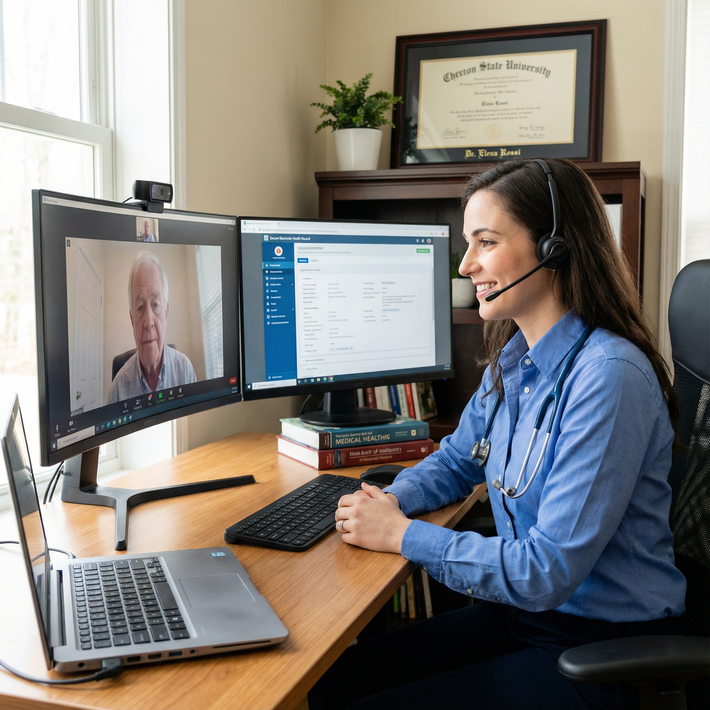
If you're losing sleep over whether your telemedicine hours “count,” I get it. This is exactly the kind of application detail that can spiral at 1:14 a.m. You start with a simple question — Will schools accept this? — and five minutes later you're catastrophizing about being silently screened out because half your patient-contact hours happened through a laptop.
That fear isn't irrational. Med school, PA, NP, residency, fellowship, and even some licensing pathways still ask for clinical experience in language that can feel annoyingly vague. “Patient-facing.” “Direct care.” “Clinical exposure.” Great. Super helpful. And because telemedicine exploded faster than admissions language could keep up, applicants are left trying to decode whether virtual clinical work is respected, discounted, or treated as some sad backup option.
Here’s the good news. Telemedicine is real clinical experience when it involves real patients, real supervision, and real responsibility. The bad news? It is not always interchangeable with in-person experience, and pretending otherwise is how people get burned.
So let’s be honest about it. Telemedicine offers access, flexibility, continuity, communication practice, and genuine clinical decision-making. It does not give you the same exposure to physical exams, procedures, bedside presence, or hands-on assessment. That tension is the whole story. And it matters because reviewers know the difference.
Opening Problem: Why Applicants Worry Telemedicine Hours Might “Not Count”
Applicants worry about telemedicine because applications are already full of hidden traps, and this feels like one more. You did the work. You showed up. You talked with patients, documented visits, watched supervisors make decisions, helped with triage, follow-up, education. But because it happened on a screen, you start wondering whether some committee member is going to look at your hours and think: Cute. But not real medicine.
I've seen applicants obsess over this for good reason. A premed with 250 telehealth volunteer hours worries they’ll lose out to someone with 80 hours in a hospital transport role. A PA applicant in a rural area panics because almost every local specialty clinic now uses hybrid visits. A working parent trying to pivot into healthcare takes evening telemedicine shifts because that’s the only way life actually functions. Then the guilt kicks in. Did I take the easy route? Am I behind?
Usually, no. But sometimes applicants do make one mistake: they assume all clinical hours are automatically interchangeable. They aren't. Programs are not just counting time. They’re judging whether your experience helped you understand patient care in a serious, supervised, credible way. That’s the standard. Not romance. Not nostalgia for exam rooms. Not “real medicine” gatekeeping for the sake of it.
What the Data Shows: Where Telemedicine Hours Help, and Where They Fall Short
The data on telemedicine is actually reassuring, if you read it without wishful thinking. Across healthcare settings, telemedicine has improved access to care, especially for rural patients, mobility-limited patients, working adults, behavioral health populations, and people who would otherwise skip follow-up altogether. It has also become a normal part of outpatient workflow. Not a gimmick. Not a pandemic relic. A real delivery model.
That matters for applicants because if you participated in supervised telehealth, you were not sitting on the sidelines. You were seeing healthcare adapt in real time. You were exposed to scheduling realities, documentation expectations, triage decisions, continuity problems, medication questions, and the constant balancing act between ideal care and practical care. That’s medicine. Messy, imperfect, real.
Where telemedicine clearly helps:
- Communication skills: You learn to ask sharper questions because you can't rely on as much physical context.
- Triage and clinical reasoning: You start noticing which complaints can stay virtual and which need escalation.
- Documentation: Telehealth often produces a lot of charting, follow-up messaging, and care coordination.
- Patient education: Explaining next steps, warning signs, medication use, and home monitoring becomes a huge part of the job.
- Access awareness: You see barriers patients face — transportation, work schedules, childcare, internet problems, language issues.
That is useful training. Honestly, a lot of applicants with only in-person shadowing never get that level of insight into continuity and access.
But let’s not get ridiculous. Telemedicine also has real limitations.
Where it falls short:
- Physical exam practice
- Hands-on assessment
- Procedural exposure
- Learning nonverbal bedside dynamics in the room
- Seeing how teams actually move around each other in a clinic, ED, ward, or OR
This is why applicants get into trouble when they oversell telehealth as equivalent to all forms of direct patient care. It isn’t. If a program wants evidence that you understand touch, physical presence, exam technique, procedural flow, or bedside urgency, virtual hours won’t fully cover that. No amount of polished writing changes reality.
The smartest reviewers know this and evaluate telemedicine in context. They care about your role. Were you observing passively, or were you engaged? Were you supervised? Did you work with actual patients? Did you contribute to documentation, education, intake, care coordination, or follow-up? Did you learn anything besides where the mute button is?
And yes, specialty matters. Reviewers in primary care, psychiatry, outpatient chronic disease management, and follow-up-heavy fields may view telemedicine experience as especially relevant. Reviewers focused on procedural or acute-care readiness may care more about in-person exposure. That isn't unfair. It's just aligned with competency.
Admissions and Credentialing Reality: What Usually Matters More Than the Setting
Here's the part I wish applicants understood earlier: admissions committees and training programs usually care more about meaningful clinical engagement than about the room it happened in. Not always. Usually.
If your telemedicine experience was supervised, patient-facing, and involved real clinical tasks, it has value. Full stop. If it was vague, loosely affiliated, unsupervised, or mostly administrative, then calling it “clinical experience” gets shaky fast. And reviewers can smell inflated descriptions from a mile away.
You cannot assume acceptance. That’s the trap. One program may explicitly count telehealth as patient contact. Another may separate “virtual clinical exposure” from “hands-on direct care.” A licensing board may require in-person precepted hours for certain pathways. A school may be flexible for admissions but strict for later clinical competencies. This is why online forums are terrible for certainty. You’ll get ten confident answers, six of them wrong, three outdated, one weirdly aggressive.
Do this instead:
- Read the official requirements carefully.
- Look for words like direct patient care, hands-on, supervised, telehealth, clinical contact, shadowing.
- If it’s unclear, email admissions or program staff.
- Save the reply. Seriously. Save it.
That anxiety you feel about wanting it in writing? Valid. Good, even. Policies vary a lot, and applicants who verify details early avoid ugly surprises later.
Also, raw hour counts are overrated. I've seen applications with giant stacks of hours that said almost nothing. Then I’ve seen applicants with fewer hours, but every experience was specific, supervised, reflective, and obviously real. Guess which one reads stronger.
If you’re worried you’re “behind” because your hours skew virtual, the answer usually isn’t to panic. It’s to balance. Add some in-person exposure if you can. Even modestly. A weekend clinic volunteer role. A few months of medical assistant work. In-person shadowing. Bedside volunteering. Enough to prove you understand that medicine is both relational and physical, not just digital.
How to Present Telemedicine Experience So It Strengthens Your Application
This is where people either help themselves or quietly sabotage their own application.
Don’t write:
- “Worked in telehealth.”
- “Assisted with virtual care.”
- “Observed patient encounters.”
That kind of language is weak and suspiciously empty. It sounds like you’re hiding the ball.
Write what you actually did. Be concrete.
- Conducted patient intake before supervised telemedicine visits
- Helped triage symptoms and flag urgent complaints for escalation
- Documented encounter details in the chart under supervision
- Provided patient education on medications, follow-up plans, and warning signs
- Coordinated with nurses, physicians, MAs, interpreters, or referral staff
- Followed up with patients about test scheduling, portal access, or care instructions
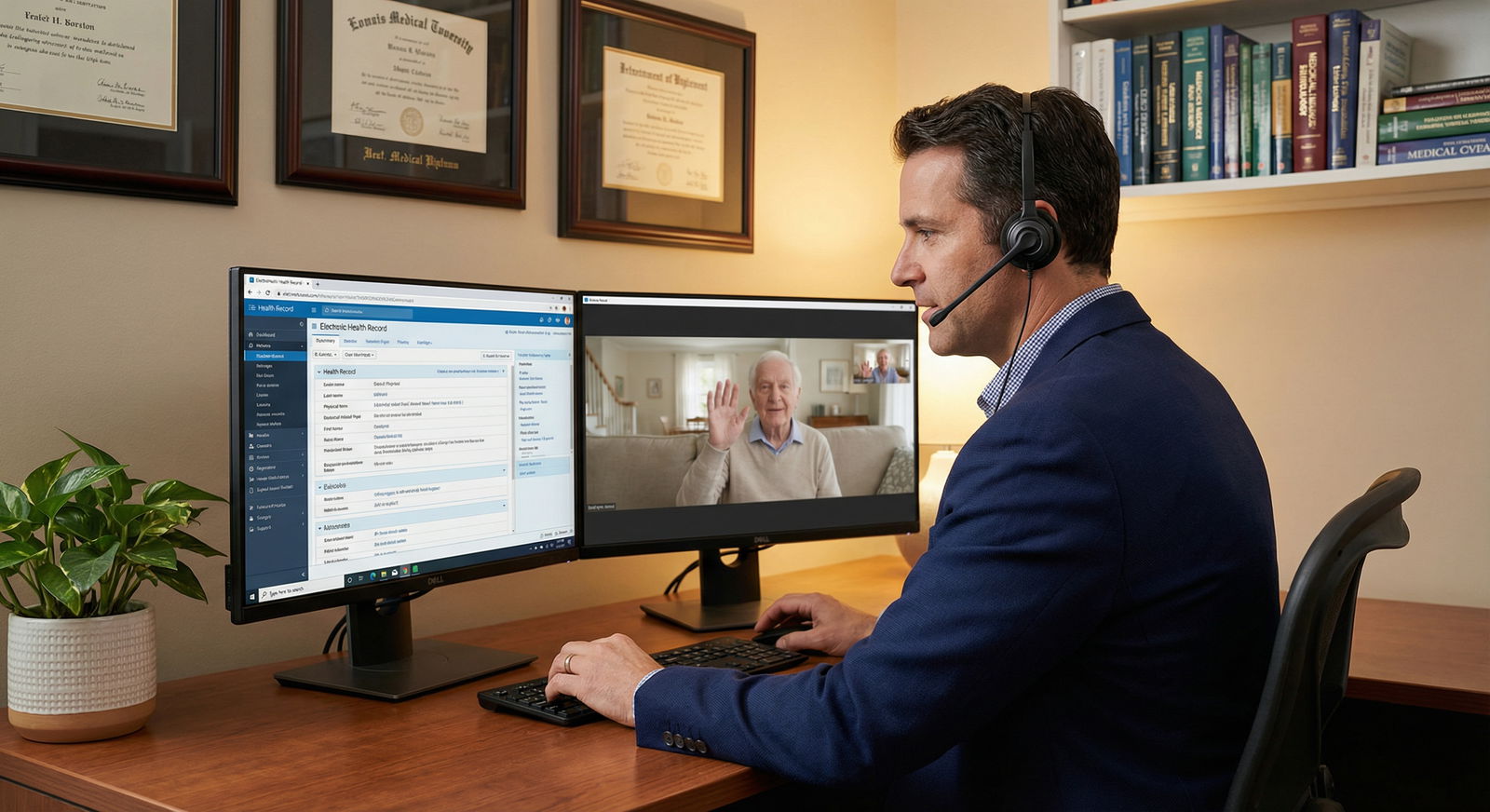
That sounds credible because it is credible. Specificity makes telemedicine stronger, not weaker.
A good description might sound like this:
“I supported supervised telemedicine follow-up visits for adult primary care patients, assisting with intake, medication reconciliation, documentation, patient education, and escalation of concerning symptoms to the clinical team. The experience taught me how much clinical judgment depends on careful listening, clear communication, and knowing when virtual care is not enough.”
That works because it doesn't pretend you performed a physical exam through Wi-Fi. It shows maturity. Reviewers trust that.
A few practical rules:
- Include supervision. Name the setting and who oversaw the work.
- Include patient population. Pediatrics? Geriatrics? Behavioral health? Chronic disease follow-up?
- Include volume if you know it. Approximate visits per shift or week helps.
- Include learning outcomes. What judgment did you develop?
- Don’t fake hands-on skills. Ever.
And yes, if you can pair telemedicine with in-person experience, do it. Not because telemedicine is inferior. Because breadth is harder to criticize.
Practical Balance: When to Prioritize In-Person Hours vs Telemedicine Hours
If a program requires hands-on assessment, bedside care, procedures, or direct physical patient interaction, in-person hours are non-negotiable. Don’t argue with the requirement. Don’t try to lawyer the wording. Just get the hours.
That said, telemedicine is incredibly valuable when it’s the realistic option. Rural applicants. Caregivers. Full-time workers. People with limited transportation. Applicants living in areas where hybrid care is now standard. Early-stage students trying to understand clinical workflow before they can take on more direct roles. All of that is legitimate.
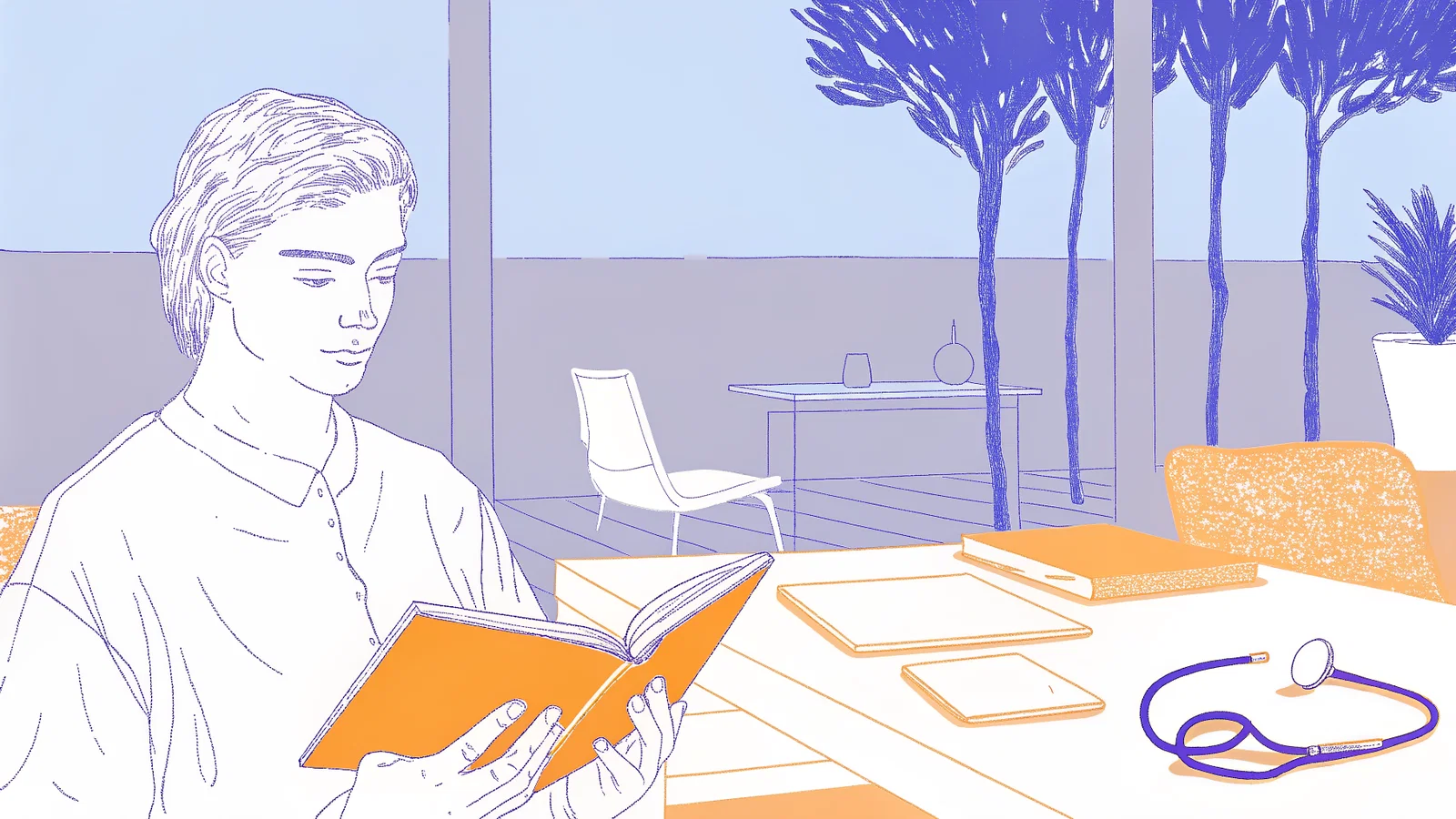
Prompt: Vintage sketch meets modern editorial collage, balanced split-screen composition with one side showing an in-person clinic room and the other a telemedicine workstation, anxious applicant in the center comparing notes in a notebook, warm sepia ink lines blended with selective color accents in teal and amber, thoughtful hopeful mood, magazine feature illustration style, no text overlays, no watermark
My advice is simple and blunt:
- Use telemedicine on purpose.
- Get in-person exposure when required or realistically possible.
- Keep records.
- Describe each experience for what it truly was.
The strongest applicants don’t waste energy apologizing for telehealth. They also don’t act like it replaces every other kind of clinical learning. They build a balanced story: virtual care taught me communication, continuity, access, and triage; in-person care taught me bedside presence, exam skills, and the physical reality of medicine.
That combination is hard to dismiss.
Closing Encouragement: The Goal Is Competence, Not Perfection
If telemedicine is part of your background, that does not make your application weaker by default. It just means your clinical story needs to be told honestly. And well.
The goal was never to create some perfect, old-school, neatly packaged premed fantasy where every hour happened in a spotless exam room under fluorescent lights. The goal is competence. Judgment. Reflection. Growth. If your telemedicine work was supervised, patient-facing, and meaningful, it counts for something real.
So no, you are not automatically behind. You do not need to panic because your hours happened on a screen. You do need to verify requirements, add in-person experience where necessary, and stop describing your work in vague, flimsy language. That's the fix. Not doomscrolling.