
Let's kill the lazy advice first: away rotations are not magic.
They are not a cheat code. They are not a guaranteed "in." And they are definitely not a simple numbers game where three aways beat one and five aways make you unstoppable. That story is popular because it feels actionable. It's also wrong.
Here's what the data actually shows: away rotations function mostly as a signaling tool and an audition. They can increase your visibility. They can help a program put a face to an application. They can sometimes generate an interview, a stronger letter, or a better sense of fit. But the leap from "I did an away" to "therefore my match odds improved" is a lot shakier than applicants want to believe.
That's because the effect isn't uniform. Specialty matters. Program culture matters. Your baseline competitiveness matters. Most of all, how you perform matters. I've seen students spend thousands to rotate at a "dream program" and leave with nothing but exhaustion and a lukewarm evaluation. I've also seen one well-chosen away change the trajectory of an application because the student showed up prepared, easy to work with, and genuinely a fit.
So no, the right question is not "How many aways should I do?" The right question is "In my specialty, with my application, at these target programs, does an away rotation create enough upside to justify the cost and risk?"
That's the frame. Data first. Myth second.
Data First: What Away Rotations Actually Can, and Can't, Tell You
Away rotations are best understood as strategic exposure. Not a trophy. Not a guaranteed match booster.
Applicants love to talk about aways as if they're a direct input with a clean output: do away rotation, get interview, match there. Real life is messier. Programs use aways for different reasons. In some specialties, they're close to an informal screening device. In others, they're nice but not central. In some places, an away lets faculty assess whether you're the kind of person they want at 2 a.m. on a rough call night. In others, you're one visiting student among many and barely move the needle.
The biggest myth is the dumbest one: more aways equals better match odds.
Nope. The relationship is not linear. There's no evidence that piling on more rotations automatically improves outcomes. In fact, there's a plausible downside curve. Every added away costs time, money, energy, and attention. Every added away also creates another chance to be average, awkward, tired, or forgettable. And average on an audition is not harmless. It can actively hurt.
What away rotations can tell a program:
- You're interested enough to show up
- You can function in their environment
- You may fit their culture, pace, and expectations
- Someone there may be willing to advocate for you
What they can't tell with certainty:
- That you'll rank the program highly
- That they should ignore the rest of your application
- That your performance over 2-4 weeks predicts residency success better than everything else
- That you're suddenly more competitive than you were before
That's why evidence-based advising has to stay conditional. The value of an away depends on specialty norms, whether the program actually cares about visiting students, how strong your home support already is, and whether you can perform well under scrutiny. Away rotations are leverage. Not alchemy.
What the Research Suggests About Match Odds After Away Rotations
The strongest signal from the literature and specialty-specific surveys is pretty consistent: away rotations may help most at the top of the application funnel, especially with visibility and interview access. The evidence gets weaker as you move toward the final outcome of matching.
That chart captures the basic truth. Not exact universal percentages. A hierarchy of confidence.
Programs often remember the student they worked with in person more than the one they only know as a PDF in ERAS. That matters. Especially in crowded specialties where many applicants look similar on paper. A solid away can turn you from "another high-achieving applicant" into "the student who worked hard, took feedback, and didn't make rounds miserable."
But this is where applicants fool themselves: visibility is not causality.
Stronger applicants are more likely to land desirable away rotations in the first place. They're often coming from supportive schools, have stronger Step performance or clerkship grades, better mentoring, better letters, and cleaner applications. Those applicants may have matched well even without the away. So when you see a relationship between aways and good outcomes, part of that may simply reflect who gets those opportunities to begin with.
That's not an academic technicality. It's the whole ballgame.
In competitive fields, the equation changes a bit. Specialties with a stronger audition culture, think fields where faculty value direct observation, team fit, procedural attitude, or where home programs are unevenly distributed, may put more weight on away performance. There, an away can function as both a screen and a relationship-building period. Not because the data proves it guarantees a match, but because the specialty ecosystem treats in-person familiarity as valuable currency.
Still, even in those fields, the simplistic takeaway is wrong. Doing aways helps only if they are:
- In the right specialty context
- At programs that actually use rotating students meaningfully
- Done well
- Timed so they feed into letters and interview season appropriately
I've watched applicants chase brand names instead of strategy. They book big-name programs because they think prestige itself will rub off. Usually it doesn't. If you're rotating somewhere that sees dozens of talented visitors, being merely competent is invisible. The away that helps is often not the fanciest one. It's the one where you can stand out for the right reasons.
When Away Rotations Help More, and When They Don't
Away rotations are most useful when they solve a specific problem.
Good reasons to do one:
- You're targeting a geographic region where you have no natural connection
- Your specialty cares about auditions
- You want to test culture and workload before ranking a program
- You need a strong specialty-specific letter
- You want to show real interest at a program you'd seriously rank highly
That's practical value. Not fantasy.
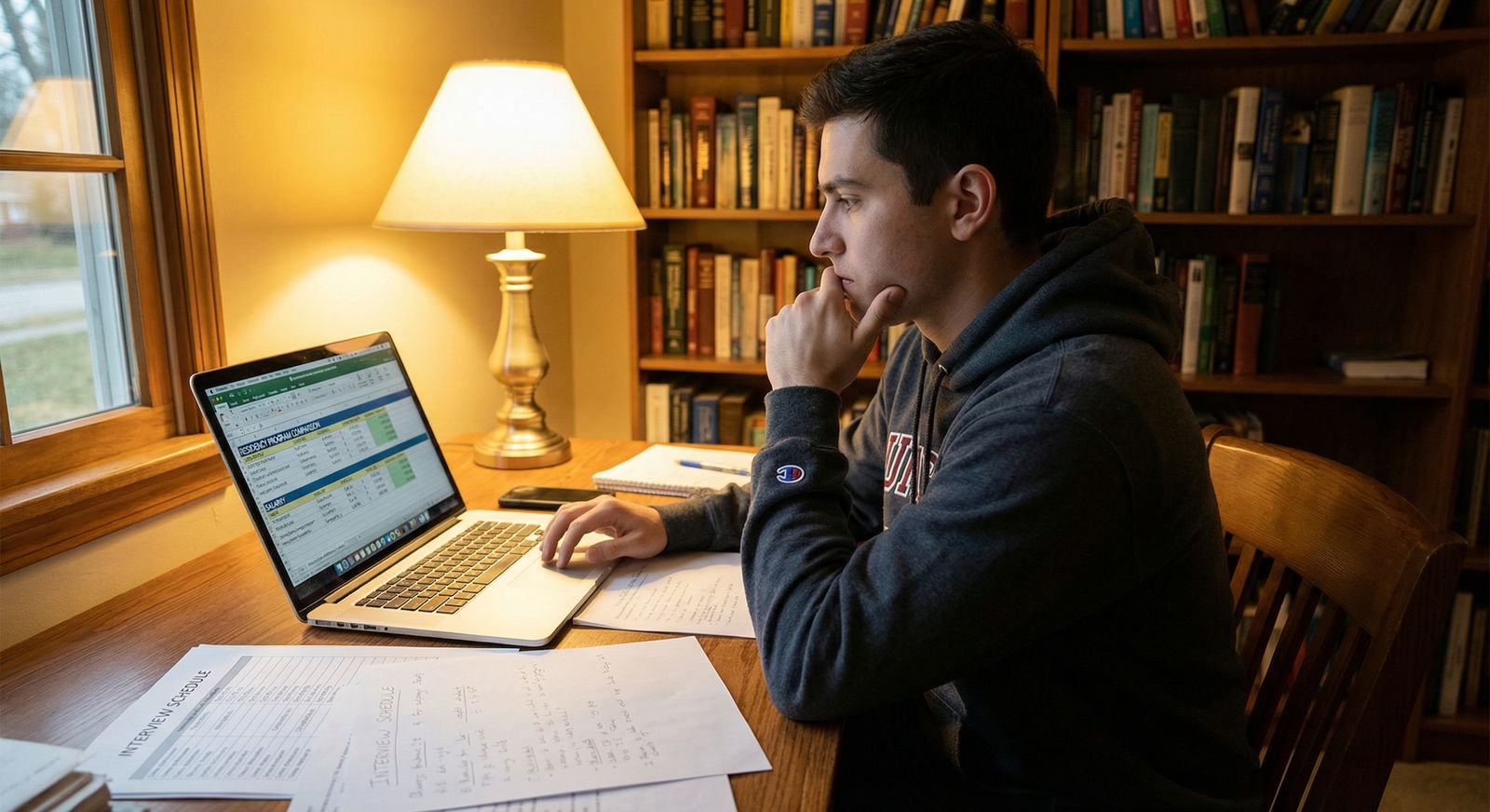
And here's the underappreciated point: sometimes the best outcome of an away rotation is negative information.
You realize the residents are miserable. The teaching is weak. The "family vibe" is fake. The city doesn't work for your life. That's useful. Very useful. I've seen students nearly rank a place in their top three based on reputation, then rotate there and discover they'd hate training in that environment. That away didn't produce a match. It prevented a bad one. That counts.
When aways don't add much:
- You already have a strong home department in the specialty
- Your field doesn't rely heavily on visiting student auditions
- You're doing them just because everyone around you is panicking
- The cost and stress are pulling down your sub-I, personal statement, research, or interview prep
- You're stretching yourself into too many rotations and becoming a weaker version of yourself
That last one matters more than people admit. By the second or third away, some students are fried. New EMR. New housing. New team. New expectations. Again. Their enthusiasm drops, their preparation slips, and their performance gets flatter each month. More exposure, less impact.
And no, an away is not only "worth it" if the program all but promises to rank you highly. That mindset is childish. The rotation can still be valuable if it gives you a letter, clarifies your preferences, builds a mentor relationship, or helps you avoid a mismatch. Admission is not the only metric.
How to Choose Away Rotations Strategically Using the Data
Here's the framework I use, and yes, it's blunt.
First: ask whether your specialty actually rewards aways. If the answer is mostly no, stop pretending this is mandatory. Build your application somewhere else, home rotation performance, letters, research, board scores, meaningful advising, interview prep.
Second: target programs you would genuinely rank highly. Not vanity rotations. Not "I guess it would look good." If you wouldn't realistically go there, don't spend your money auditioning.
Third: be honest about your competitiveness. If your application is strong and your home program offers excellent mentoring and letters, you may need fewer aways, not more. If you need regional visibility or a specialty-specific advocate, a well-chosen away may be high yield.
Fourth: count the opportunity cost like an adult.
- Travel and housing
- Application fees
- Lost time for other application work
- Emotional wear and tear
- The very real downside of a mediocre performance
Because yes, there is downside. Applicants talk about away rotations as if the floor is neutral. It isn't. A weak away can create doubts that didn't exist before. If your bandwidth is poor, your health is shaky, or your schedule is chaotic, forcing an away may be self-sabotage dressed up as ambition.
The practical rule is simple: do fewer, better-targeted aways.
One or two high-value rotations, chosen for specialty fit, geography, letters, or true program interest, usually beats a bloated schedule built around résumé inflation. Programs are not impressed that you collected airports and temporary housing receipts. They care whether you showed up, worked well, learned fast, and fit.
The bottom line? Away rotations are not match multipliers in the crude way people talk about them. They're targeted tools. Used well, they can improve visibility, strengthen letters, clarify fit, and help in specialties or programs that value direct observation. Used badly, they become expensive theater.
So stop asking whether you should do "more." Ask whether a specific away rotation creates real strategic value for you.
That's what the data supports. Selective. Purposeful. Performance-driven.
Not superstition.