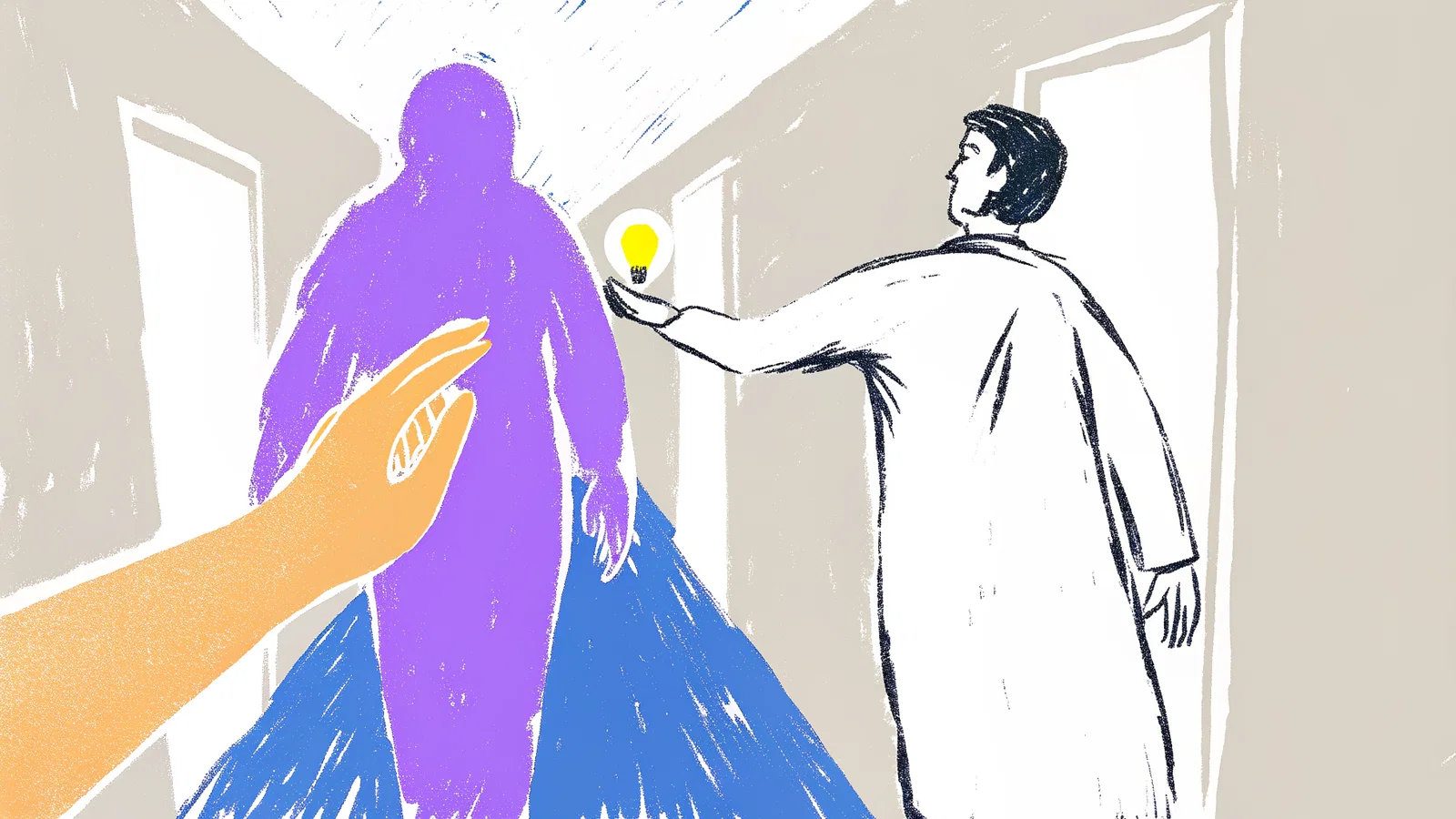
Ever spent two hours pre-rounding on a complex heart failure patient, perfected your assessment and plan, only to have your senior resident jump in on rounds and deliver your exact pitch three seconds before you open your mouth?
It is infuriating. I've watched this play out on surgical wards, internal medicine floors, and ICU rounds for years. You do the legwork, dig through three years of prior discharge summaries, find the subtle drug-drug interaction, and hand-deliver the insight on a silver platter. Then the resident steps up, rattles off your differential diagnosis to the attending, and accepts the nod of approval. You stand there looking like an unprepared shadow holding a clipboard.
Here's why this matters: your clinical evaluations depend almost entirely on subjective perception. Shelf exams test your book knowledge, but honors on rotations are handed out based on what the attending sees during those thirty seconds at the bedside. If the attending thinks the resident came up with the differential you stayed up late crafting, your evaluation takes a hit.
You can't let it slide. But you also can't throw a tantrum on rounds. Here is how you handle it.
The Core Challenge
The biggest mistake students make when a resident steals their thunder? Reactionary silence or overt pettiness.
I've seen students go down both paths, and both fail every time.
If you choose reactionary silence, you shrink into the background. You stop digging into charts. You present basic, safe plans because "what's the point if the intern is just going to take credit?" The attending notices your lack of enthusiasm and writes "lacks initiative" on your mid-rotation feedback. You lose.
If you choose overt pettiness, you roll your eyes, interrupt the resident, or say something snide like, "Well, as I told you twenty minutes ago..." Now you look toxic and uncoachable. The attending marks you down for "poor interpersonal skills." You lose again.
You need to understand why the resident is doing this before you fix it. Usually, it falls into one of two buckets:
- Unintentional Overeagerness: The PGY-1 is terrified, caffeine-fueled, and trying to survive. They aren't trying to sabotage you; they just panicked when the attending asked a tough question and blurted out what you discussed ten minutes prior.
- Calculated Credit-Snatching: The PGY-2 or chief resident wants to look flawless in front of an influential attending. They treat medical students as content generators for their own performance.
Regardless of their motivation, your response must be tactical, calm, and immediately effective.
Navigating the Presentation Live
When a resident jumps ahead of you during rounds and speaks your point, do not back down. Use The Pivot.
Instead of staying silent or getting angry, wait until they finish their sentence, look directly at the attending, and build on it instantly using secondary data only you know.
Resident: "For Mr. Davis, I think we should hold his Lisinopril and check a renal ultrasound given his acute creatinine spike."
You (The Pivot): "Exactly. And building on that renal concern Dr. Miller just highlighted, when I checked his baseline from six months ago at the outpatient clinic, his creatinine was actually 0.9, meaning this 2.1 jump is a true acute kidney injury rather than chronic baseline elevation."
Boom. You didn't argue. You validated their point, but you immediately proved that you hold the underlying data. The attending instantly recognizes who actually did the chart review.
Actionable Next Steps
To permanently put an end to credit-stealing on your clinical rotations, execute this four-step strategy.
Step 1: Pre-empt the Presentation with the Pre-Rounds Sync
Don't wait for formal rounds to share your plan with the resident. Talk to them 15 minutes before the attending arrives, but do it strategically.
Walk up to them with your written note or tablet and say: "Hey, I'm presenting Mrs. Gable today. I'm planning to suggest we start IV furosemide and pull her Foley catheter based on her urine output trends. Does that match what you were thinking, or should I tweak my presentation?"
You've done two things here:
- You established clear ownership of the plan.
- You gave them a chance to correct you privately if your plan is wrong.
If they try to steal that exact plan three minutes later in front of the attending, it becomes glaringly obvious to everyone on the team what just happened.
Step 2: Timestamp Your Work in the EHR
Attending physicians read notes. If you draft your student note or pending orders early in the morning before rounds, your name and timestamp are etched into the electronic health record forever.
When a resident presents your differential word-for-word, and the attending later opens the chart to sign off on notes, they will see your draft submitted at 06:45 AM containing those exact clinical insights. Word gets around fast when a student is out-charting the house staff.
Step 3: Call It Out Privately (The 1-on-1 Reset)
If a resident repeatedly steals your thunder across multiple days, address it face-to-face away from the team. Keep it professional, calm, and direct.
Do not say: "You keep taking my answers on rounds."
Say this instead: "Hey, I noticed on rounds today that you stepped in during my presentation for Mr. Khan to cover the antibiotics plan. I want to make sure I'm delivering what the attending expects from a sub-I. Should I be running those sections faster, or would you prefer I hand off specific parts of the assessment to you beforehand?"
This puts them on notice. It tells them you are fully aware of what they are doing, but it gives them a professional way to back off without losing face.
Step 4: Address It in Mid-Rotation Feedback
If the behavior persists and your grade is at risk, use your formal 1-on-1 feedback session with the attending.
Never frame it as a complaint about the resident. Frame it as a request for guidance on presentation ownership.
"I want to ensure my clinical reasoning is visible during rounds. Sometimes senior team members jump in to answer questions I've researched for my patients. What's the best way for me to demonstrate my depth of knowledge without disrupting team workflow?"
A good attending will immediately read between the lines. They will start asking you direct follow-up questions on rounds to give you the floor.
Key Takeaways
- Never freeze or fight on rounds. Stay composed, use "The Pivot," and add the next layer of clinical detail to show you own the chart.
- Timestamp your clinical work. Draft your presentation notes early in the EHR so your work has a digital paper trail.
- Sync before rounds. Pitch your assessment to the resident 15 minutes early so ownership is established before the attending walks in.
- Frame issues around your learning goals. When talking to residents or attendings, focus on how you can best demonstrate your clinical reasoning, not on assigning blame.