The first week of a new rotation is won or lost by Wednesday morning.
If you drift through those first five days, the team quietly decides: “Nice student, but not essential.” If you’re intentional—day by day, hour by hour—you become “the student we rely on.” That label sticks for the entire block.
You need a concrete playbook, not vague advice like “be proactive” and “read a lot.” So let’s walk through your first week on a new rotation, day by day, with exact actions and micro‑checklists.
Assume this is an inpatient rotation (medicine, surgery, OB, peds). I’ll note where to tweak for outpatient.
Before Day 1: The 30–60 Minute Prep That Changes Everything
At this point (the night before you start), you should set yourself up so you’re not scrambling at 5:30 a.m.
In the 30–60 minutes before bed:
Confirm logistics
- Start time & location (exact floor, clinic, or OR suite).
- Call schedule for the week.
- Dress code (scrubs vs. business casual + white coat).
- Who to page if you’re lost (chief resident number or clerkship admin).
Pack your “rotation kit”
- Small notebook or folded sheet + pen x2.
- Hospital badge, stethoscope, pocket sanitizer.
- Phone fully charged; install:
- UpToDate (or access bookmarked),
- MDCalc,
- Epocrates/Lexicomp or hospital formulary.
- If surgery/OB:
- Trauma shears, penlight, maybe a small suture kit if allowed.
Skim the common stuff for this specialty (30 minutes, max)
- Internal medicine: CHF, COPD, pneumonia, AKI.
- Surgery: post‑op fever, SBO, appendicitis, cholecystitis.
- OB: labor stages, preeclampsia, fetal heart rate basics.
- Peds: bronchiolitis, asthma, dehydration, sepsis.
- Outpatient: DM, HTN, hyperlipidemia, back pain, mood disorders.
Not perfection. Just enough so on Day 1 you recognize diagnoses instead of hearing static.
Day 1 (Monday): Learn the System, Not the Medicine
Your main job on Day 1 is not to impress with knowledge. It’s to map the system: people, workflow, expectations.
At this point you should treat yourself as an anthropologist more than a mini‑resident.
Morning: Introduce, Observe, Map
As soon as you arrive:
- Find the senior resident. Use this script:
- “Hi, I’m [Name], the MS3/MS4 starting with you. I’m really excited to be here. How do you like to structure the team, and what do you expect from students?”
- Ask 3 critical questions:
- “What time do you want me here in the morning?”
- “How many patients do you want me to follow?”
- “How do you like presentations—problem‑based or system‑based, concise or detailed?”
Write their answers. Treat them like orders.
On rounds, your job is:
- Watch how people present, not just what they say.
- Note:
- How long the senior talks vs. intern vs. attending.
- What data they emphasize (labs? imaging? overnight events?).
- Which questions the attending repeatedly asks.
You should start your personal “attending question bank” in your notebook.
Midday: Learn the Tools
Sometime between rounds and noon:
- Ask the intern: “Can you show me how you like notes structured here?”
- Get access to:
- EMR templates,
- Order sets (even if you can’t place them),
- Sign‑out and patient list formats.
If outpatient:
- Learn:
- How the schedule is organized (15 min vs. 30 min slots),
- How pre‑charting is done,
- How to pend orders or notes for the attending.
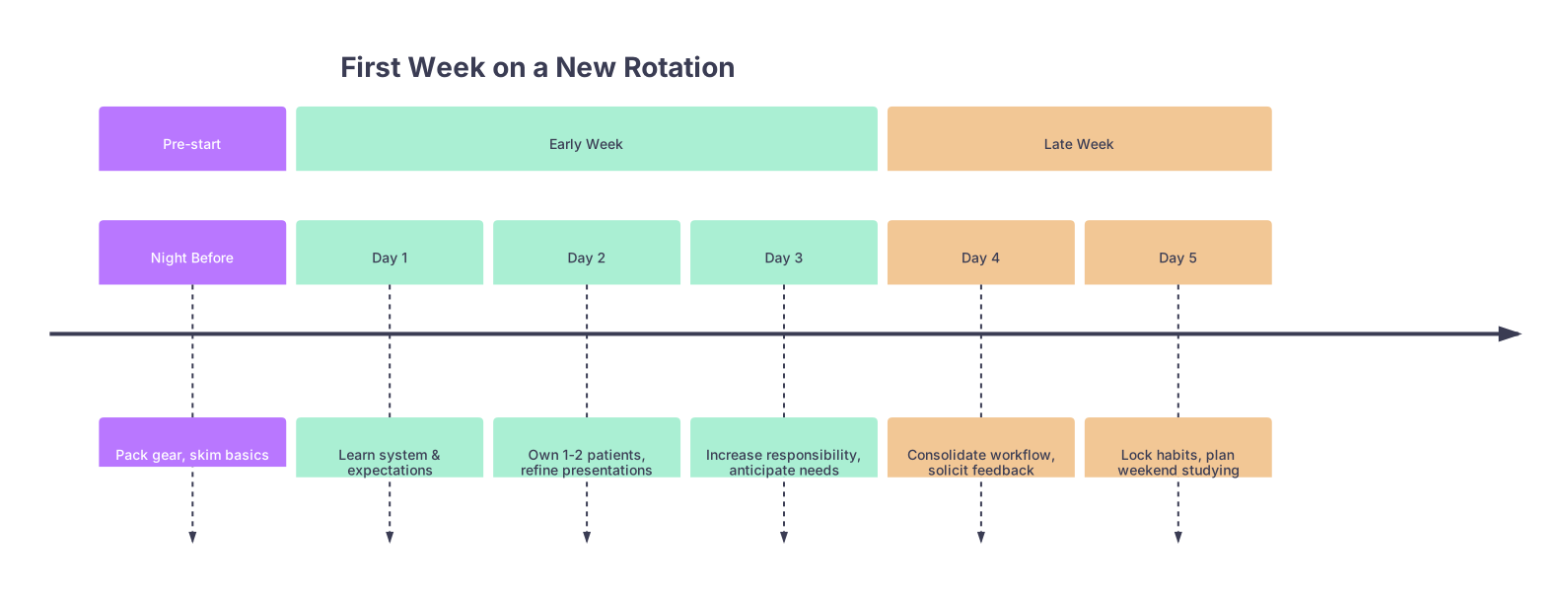
| Period | Event |
|---|---|
| Pre-start - Night Before | Pack gear, skim basics |
| Early Week - Day 1 | Learn system & expectations |
| Early Week - Day 2 | Own 1-2 patients, refine presentations |
| Early Week - Day 3 | Increase responsibility, anticipate needs |
| Late Week - Day 4 | Consolidate workflow, solicit feedback |
| Late Week - Day 5 | Lock habits, plan weekend studying |
Afternoon: Do One Thing That Helps the Team
By mid‑afternoon, actually move from observer to contributor.
Aim for one small, concrete task:
- Update one progress note.
- Call the lab for a missing result.
- Walk a patient and update the team.
- Help complete med rec.
- In clinic: pre‑chart 1–2 patients, or start HPI/ROS/PMH sections for the attending.
Keep it simple. No heroics. Just demonstrate that you’re not a shadow.
End of Day 1: 10‑Minute Debrief & 20‑Minute Reading
Before you leave:
- Ask the intern or senior:
- “Tomorrow, would you like me to start following one or two patients on my own?”
- “Anything specific I should tweak from today?”
At home (20–30 minutes only):
- Pick one patient from today.
- Read:
- Their main disease (e.g., CHF),
- Their key medication (e.g., furosemide),
- One guideline‑level pearl (e.g., when to use ACEi, target doses).
Then stop. This isn’t Step 1 cramming.
Day 2 (Tuesday): Own 1–2 Patients, Fix Your Presentations
Day 2 is where you shift from “extra body on rounds” to “mini‑intern in training.”
At this point you should be responsible for 1–2 patients (maybe 3 in surgery, fewer in busy ICU).
Early Morning: Pre‑Round Intentionally
Arrive when the team asked you to—usually 30–60 minutes before sign‑out.
For each of your patients:
- Check:
- Overnight events, vitals, new labs, new imaging, new notes.
- See the patient in person:
- “How are you feeling this morning compared to yesterday?”
- Focus on one organ system most relevant to their problem.
In your notebook, build a tight SOAP/illness script:
- S: 1–2 sentences max.
- O: key vitals, relevant labs only, results that change management.
- A: your understanding in 2–3 lines: “Acute decompensated heart failure, improving clinically, diuresis effective but borderline creatinine rise.”
- P: bullet management for each active problem. Even if it’s wrong, you need a structure.
On Rounds: Practice Concise Presentations
Your explicit goal today: get feedback on your oral presentations.
After your first 1–2 presentations, pull the resident aside:
- “I’m trying to tighten my presentations. Too long? Too short? Anything you want added or cut?”
Then actually implement what they say on the very next patient.
Common fixes I see:
- You bury the overnight events under a mountain of old history.
- You recite every lab, not the ones that matter.
- You end with “No other issues” instead of a clear plan.
Make your new ending line:
- “Today I’d like to: continue Lasix 40 IV bid, repeat BMP at noon, start low‑dose ACE inhibitor if creatinine stable, and engage PT for ambulation.”
You sound like part of the team, not a scribe.

Afternoon: Do One Level‑Up Task
On Day 2, add one slightly more advanced action:
- Draft an order set (let resident review before signing).
- Write a full progress note on one patient.
- Call a consultant after rehearsing what you’ll say.
- In clinic:
- See a patient first,
- Do focused H&P,
- Present a one‑liner + plan to the attending.
Before you leave:
- Ask: “Tomorrow, can I take on one more patient?” (if you’re comfortable) or
- “Can I try calling consults/write more notes if you supervise?”
At home (30 minutes):
- Pick a theme from your patients:
- Diuresis and AKI, insulin regimens, antibiotic choices, pre‑op clearance.
- Read 1–2 high‑yield pages and 1 UpToDate summary.
Day 3 (Wednesday): Anticipate, Don’t Just React
By Day 3, the team has an initial impression of you. Today you sharpen it.
At this point you should move from “doing what you’re told” to anticipating the next step.
Morning: Pre‑Round Like a Resident
For each patient:
- Before rounds, write:
- Today’s goals in your notebook:
- “Goal: transition to oral meds,”
- “Goal: downgrade from ICU,”
- “Goal: discharge planning—home vs. SNF?”
- Today’s goals in your notebook:
- Note pending items:
- “CT abdomen pending,”
- “Echo scheduled for 10 am,”
- “C. diff test in process.”
During rounds, when the attending asks:
- “What’s pending?”
- “What’s the barrier to discharge?” …you should answer without looking lost.
This is where most students separate themselves.
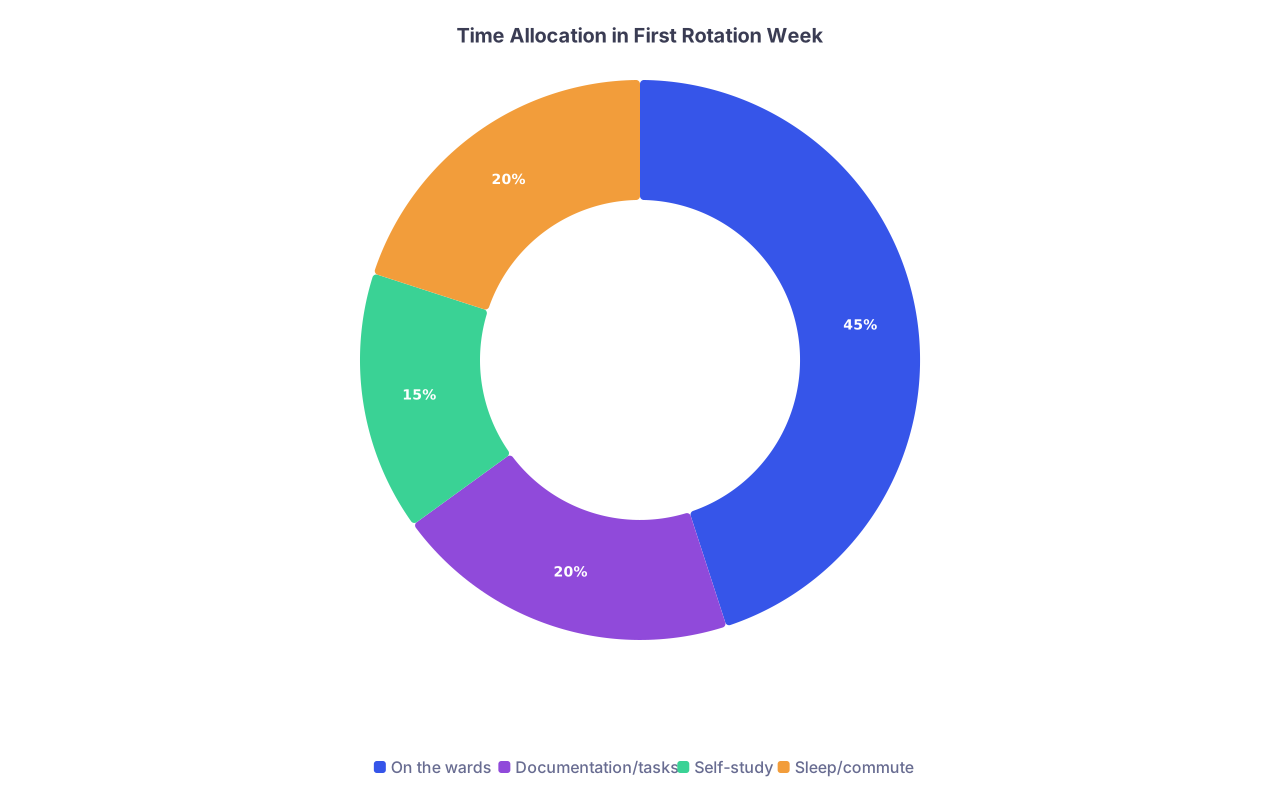
| Category | Value |
|---|---|
| On the wards | 45 |
| Documentation/tasks | 20 |
| Self-study | 15 |
| Sleep/commute | 20 |
Midday: Volunteer for Ownership Tasks
Choose one recurring job and quietly become the person who does it.
Examples:
- Updating the patient list before/after rounds.
- Printing lists each morning.
- Collecting vital sign trends for sick patients.
- In clinic: pre‑charting patients the afternoon before.
This doesn’t make you a secretary. It makes you reliable. Teams remember reliable.
Afternoon: Start Thinking Like an Exam
By midweek, you can start turning patient care into exam prep.
For one patient:
- Write down:
- The board‑style one‑liner: “65‑year‑old man with history of CAD and CKD admitted with acute decompensated HFrEF likely precipitated by medication nonadherence and dietary indiscretion.”
- 3 exam‑style questions:
- What’s the best initial test?
- What’s the next best step in management?
- What’s a major contraindication to their primary medication?
Use UWorld or question bank that night to do 5–10 questions related to that topic. Not 40. Ten well‑reviewed questions anchored in your real patient are more valuable.

End of Day 3: Midweek Feedback Check
Ask your senior or attending at a natural break:
- “We’re midway through my first week—could you give me one thing I’m doing well and one thing I should change?”
Do not argue. Do not explain. Write it down, and show the change on Thursday.
Day 4 (Thursday): Solidify Your Workflow
Day 4 is pattern day. The team expects you to function within the established rhythm.
At this point you should stop reinventing the wheel every morning.
Early Morning: Lock in a Repeatable System
Create your personal pre‑rounding template in your notebook or EMR:
For each patient, same order every day:
- ID + hospital day + primary problem.
- Overnight issues.
- Vitals trends (HR/BP/SpO2/Temp), I/Os.
- Key labs (draw a tiny table if it helps).
- New imaging/procedures.
- Brief focused exam.
- Assessment + bullet plan.
You want to walk into each room with 80% of your mental script ready.
| Section | Example Entry |
|---|---|
| ID/Hosp Day | 68M, HD#3, decompensated HFrEF |
| Overnight | No CP/SOB; net -1.2L, SBP low 90s |
| Vitals/IO | HR 88, BP 92/58, SpO2 95% RA, -1.2L |
| Labs | Cr 1.6→1.8, K 4.5, Na 136, BNP down |
| Exam Focus | JVD 8 cm, bibasilar crackles improved |
| Assessment | HF improving, mild AKI from diuresis |
| Plan Bullets | Reduce Lasix, hold ACEi, repeat BMP |
On Rounds: Refine Efficiency + Teaching Moments
By Thursday, your presentations should be:
- Under 3 minutes for stable patients.
- Problem‑based for complex ones.
Try this structure:
- One‑liner.
- Brief overnight/interval changes.
- Focused objective data.
- Problem‑based A/P.
When the attending discusses a topic from your patient:
- Actually write down the pearls.
- Later, plug those into a running “Rotation Pearls” page in your notebook.
This is gold for shelf exam review and for impressing on later rotations.
Afternoon: Practice “Next‑Step” Thinking Out Loud
Start venturing a plan before being asked:
- “Given his soft blood pressures and rising creatinine, I’d decrease the Lasix dose, hold the ACE inhibitor today, and recheck BMP this afternoon.”
If wrong, fine. Your reasoning is what gets graded.
For procedures (surgery, OB, ED):
- Ask: “Tomorrow, can I scrub/assist in [X case] and maybe close skin if you’re comfortable?”
- Review:
- Steps of the procedure on YouTube or a surgical atlas,
- Basic anatomy,
- Common complications.
At home:
- Skim your accumulated notes.
- Do 10–15 questions on the most common diagnosis you’ve seen this week.

| Step | Description |
|---|---|
| Step 1 | Arrive & Pre-round |
| Step 2 | Team Sign-out |
| Step 3 | Morning Rounds |
| Step 4 | Write Notes & Orders |
| Step 5 | Midday Conferences |
| Step 6 | Afternoon Tasks & Follow-up |
| Step 7 | Touch-base with Team |
| Step 8 | Evening Quick Study |
Day 5 (Friday): Lock the Impression and Plan the Weekend
Friday is not the end of the rotation; it’s the end of your first impression phase.
At this point you should look like:
- You know your patients cold,
- You understand the team’s rhythm,
- You’re improving every day.
Morning: Run Your System Smoothly
On Friday:
- Aim to pre‑round without frantic running around.
- Have your presentations pre‑structured.
- Anticipate “dispo” (disposition) for each patient:
- “Likely home tomorrow if tolerates PO and pain controlled.”
- “Needs SNF; PT/OT recs pending, case management involved.”
Attendings notice when students talk disposition. That’s real‑world thinking, not exam fantasy.
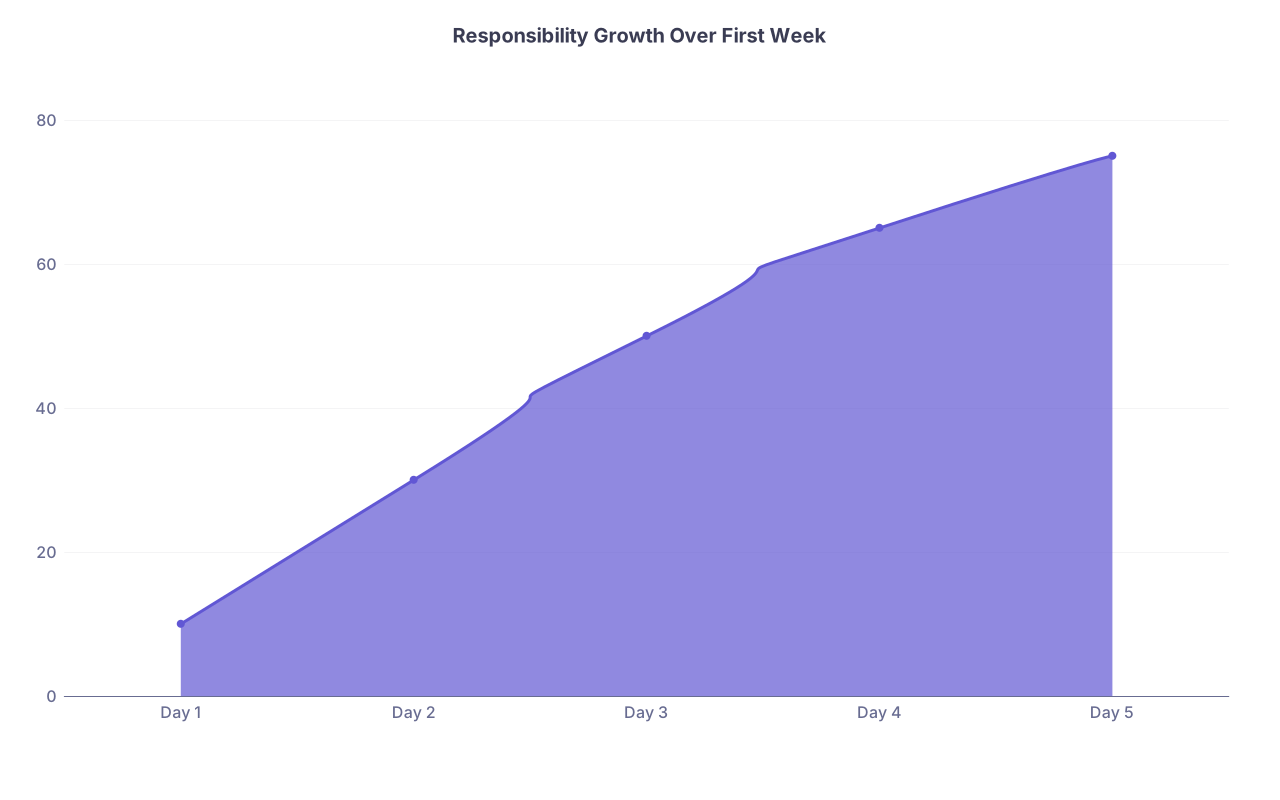
| Category | Value |
|---|---|
| Day 1 | 10 |
| Day 2 | 30 |
| Day 3 | 50 |
| Day 4 | 65 |
| Day 5 | 75 |
Midday: Ask for a Short Formal Check‑In
If your attending is approachable, catch them after rounds:
- “This was my first week with the team. Is there anything specific you’d like me to focus on improving next week to be a stronger student?”
This does three things:
- Signals humility.
- Signals growth mindset.
- Forces them to actually think about your performance (often positively).
Document what they say in your notebook and star it. These will be the exact behaviors they later comment on in your evaluation.
Afternoon: Close the Loop and Prep for Week 2
Before you leave on Friday:
With the resident/intern:
- “Next week, can I take on an extra patient or more notes?”
- “Is there a task you’d like me to own (lists, follow‑ups, consult calls)?”
With the team (informally):
- Thank the nurse(s) you’ve worked with most: “Thanks for walking me through things this week. I appreciate it.”
- Respect goes a long way. Nurses will absolutely tell attendings if you’re either great or terrible. There is no neutral.
At home Friday evening:
- Take 15 minutes and write:
- 3 things you did well this week.
- 3 things you’ll change starting Monday.
- Then build your weekend micro‑plan.
Weekend: Convert Experience into Exam Power (Without Burning Out)
Your weekend shouldn’t be 18 hours a day on Anki. That’s stupid and unsustainable.
At this point you should have:
- A short list of diagnoses you’ve actually seen,
- A handful of teaching pearls,
- A feel for what will keep appearing.
Saturday: 2–3 Focused Study Blocks
Create two or three 45–60 minute blocks, not an all‑day slog.
In each block:
- Choose one real patient from the week.
- For that patient’s main diagnosis:
- Read 1 concise resource (Pestana for surgery, Case Files, OnlineMedEd, or relevant UpToDate section).
- Do 10–15 related shelf questions.
- Write down 3–5 “if I see this again, I won’t miss it” bullets.
By end of Saturday, you should have turned 3–5 patients into 3–5 highly‑solid topics, not vague half‑knowledge on 30 diseases.
Sunday: Light Prep for Week 2
30–45 minutes is plenty.
- Review:
- Your “Rotation Pearls” notebook page.
- Your feedback notes from residents/attending.
- Set intentional goals:
- “By end of next week I will:”
- Present in under 3 minutes for routine patients.
- Independently draft notes for all my patients.
- Confidently propose a first‑pass plan on common cases.
- “By end of next week I will:”
Then stop. Sleep. Show up Monday looking human, not wrecked.
Quick First‑Week Daily Checklist
Use this as a simple mental script each day:
Every Morning
- Arrive when senior requested or 10–15 minutes before.
- Pre‑round on your patients: vitals, labs, exam, overnight events.
- Have a written plan for each active problem.
On Rounds
- Present clearly and concisely.
- Write down attendings’ questions and teaching points.
- Volunteer for at least one small task.
Afternoon
- Complete assigned notes/tasks early, not last minute.
- Ask 1–2 “next‑level” questions about your patients.
- Touch base with resident before leaving: “Anything else I can help with?”
Evening
- Spend 20–40 minutes max on targeted reading/questions.
- Tie your studying to patients you actually saw.
- Jot down 1 thing to improve tomorrow.
The first week of a rotation isn’t about showing how much you know. It’s about proving you can learn fast, show up consistently, and make the team’s day 5% easier.
Open your planner or notes app right now and block out your first five days on the new rotation—write exactly what you’ll do before rounds, on rounds, and after rounds for Monday through Friday.