

It’s 5:45 a.m. on Day 1 of your medicine rotation. You barely slept. Your short white coat feels too light for how heavy this month is supposed to be. You have no idea where the workroom is, who your patients are, or what “pre-round quickly” actually means in real minutes.
This guide is for the first 10 days. Hour by hour, day by day. By Day 10, you should feel like you’re actually part of the team, not a visitor on a hospital tour.
Big Picture: What the First 10 Days Are Really For
At this point you should understand the real goal of Days 1–10:
- Not to impress with brilliance.
- Not to know every obscure guideline.
- To become low-maintenance, predictable, and useful.
You’re building:
- A basic pre-rounding routine
- A system to track tasks
- A template for notes and presentations
- A relationship with your team (residents, nurses, attending)
Here’s how it breaks down.
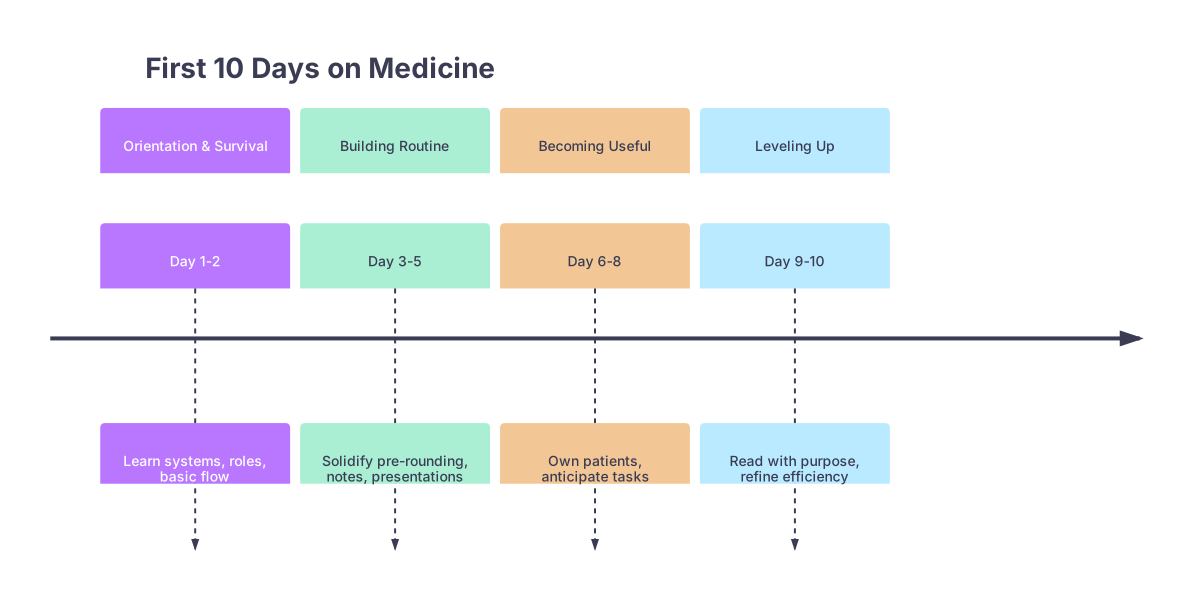
| Period | Event |
|---|---|
| Orientation & Survival - Day 1-2 | Learn systems, roles, basic flow |
| Building Routine - Day 3-5 | Solidify pre-rounding, notes, presentations |
| Becoming Useful - Day 6-8 | Own patients, anticipate tasks |
| Leveling Up - Day 9-10 | Read with purpose, refine efficiency |
Day 1: Orientation + Survival Mode
At this point you should focus on not getting lost—physically or logistically.
Before you leave home (Night before / 5:00–5:30 a.m.)
- Lay out:
- White coat, ID, stethoscope, penlight
- 2–3 pens, small notebook, highlighter
- Snack + water
- Save key numbers:
- Hospital operator
- Team pager or secure chat
- Pharmacy
- Skim:
- How to write a medicine SOAP note
- Normal vitals and lab ranges
6:30–8:00 a.m. – Find your people
At this point you should:
- Find the team workroom
- Learn:
- Resident names and roles (intern vs senior)
- Your team census (roughly how many patients)
- Where vitals, labs, and imaging live in the EHR
- Ask explicitly:
- “How many patients do you usually have students follow?”
- “When do you usually start rounds?”
- “What time should I be here tomorrow to pre-round?”
Don’t be shy here. Vague students get vague expectations and end up in trouble.
8:00–11:30 a.m. – Watch and absorb rounds
You’re not performing yet. You’re observing:
- Who talks when?
- How brief are the resident’s presentations?
- Does the attending care about:
- Problem-based presentations?
- Full system-based physicals?
- Discharge planning on every patient?
Jot down exact phrases the attending uses. You’ll reuse them.
Afternoon – Learn the system, not the medicine
Tasks:
- Practice:
- Pulling up vitals, overnight events, nursing notes
- Finding micro results and imaging reports
- Ask the intern:
- “What format do you like student notes in?”
- “Where in the note do you want the plan detail?”
- Take 1–2 low-stakes jobs:
- Call family for collateral history (with supervision)
- Track one consult
- Help with discharge paperwork (you draft; resident edits)
Your only academic reading for Day 1: one UpToDate/AMBOSS article on a common diagnosis you actually saw (CHF, COPD, pneumonia, UTI). That’s it.
Day 2: First Real Pre-Round + First Mini-Presentation
At this point you should have:
- 1–2 assigned patients
- Basic understanding of how to look up overnight data
5:30–6:00 a.m. – Quick chart review at home
For each patient:
- Re-read:
- HPI
- Last attending note
- Active problems list
- Write in your notebook:
- Diagnoses
- Code status
- Big-picture goal (e.g., “diuresis and optimize for home,” “rule out PE,” “treat sepsis, source unknown”)
6:00–7:15 a.m. – First real pre-round
In the hospital now. For each patient you “own,” you should:
Check vitals & overnight events
- BP, HR, RR, temp, O2 requirement trend
- I/Os (especially if CHF, AKI, sepsis)
Check new labs/imaging
- CBC, BMP, relevant others (LFTs, troponin, BNP, etc.)
See the patient in person
Your script:- “How are you feeling this morning compared to yesterday?”
- Focused review of systems based on their problems:
- SOB, chest pain, edema, cough, fever, pain
- Focused exam:
- Lungs, heart, edema, JVP if relevant, abdomen, mental status
This will feel slow. It should. Speed comes later.
7:15–8:00 a.m. – Craft your micro-presentation
You’re not delivering a masterpiece. You’re proving you know what’s happening.
Template (2–3 minutes max):
- One-liner: “Mr. X is a 68-year-old man with CHF and CKD admitted for acute decompensated heart failure.”
- Overnight: “No acute overnight events. No chest pain, no worsening SOB.”
- Vitals/trends: “AFebrile, BP stable, O2 down from 4L to 2L.”
- Labs: “Cr stable at 1.8, BNP pending, K normal.”
- Focused exam: “Crackles improved, less edema, comfortable on 2L.”
- Plan bullets:
- “Continue IV diuresis, consider transitioning to PO”
- “Daily weights, strict I/Os”
- “Repeat BMP this afternoon to monitor K and Cr”
Afternoon – Ask for target feedback
Task list:
- After rounds, ask your intern:
- “Give me one thing to fix about my pre-rounding.”
- “One thing to fix about my presentations.”
- Adjust immediately for Day 3. Not next week.
Days 3–4: Tighten the Routine, Stop Being Confused
By this point you should:
- Know where to click in the EHR without thinking
- Have a predictable order for pre-rounding
Your main job now: consistency.
Morning flow (every day from now on)
Aim for something like:
- 5:30–6:00 a.m. – Chart review for all your patients
- 6:00–7:15 a.m. – Pre-round in person on each patient
- 7:15–7:45 a.m. – Draft notes (or at least outline) + add updates
- 7:45–8:00 a.m. – Quick huddle with your intern:
- “Anything specific I should ask Mr. X about today?”
- “Any new patients you want me to help with?”
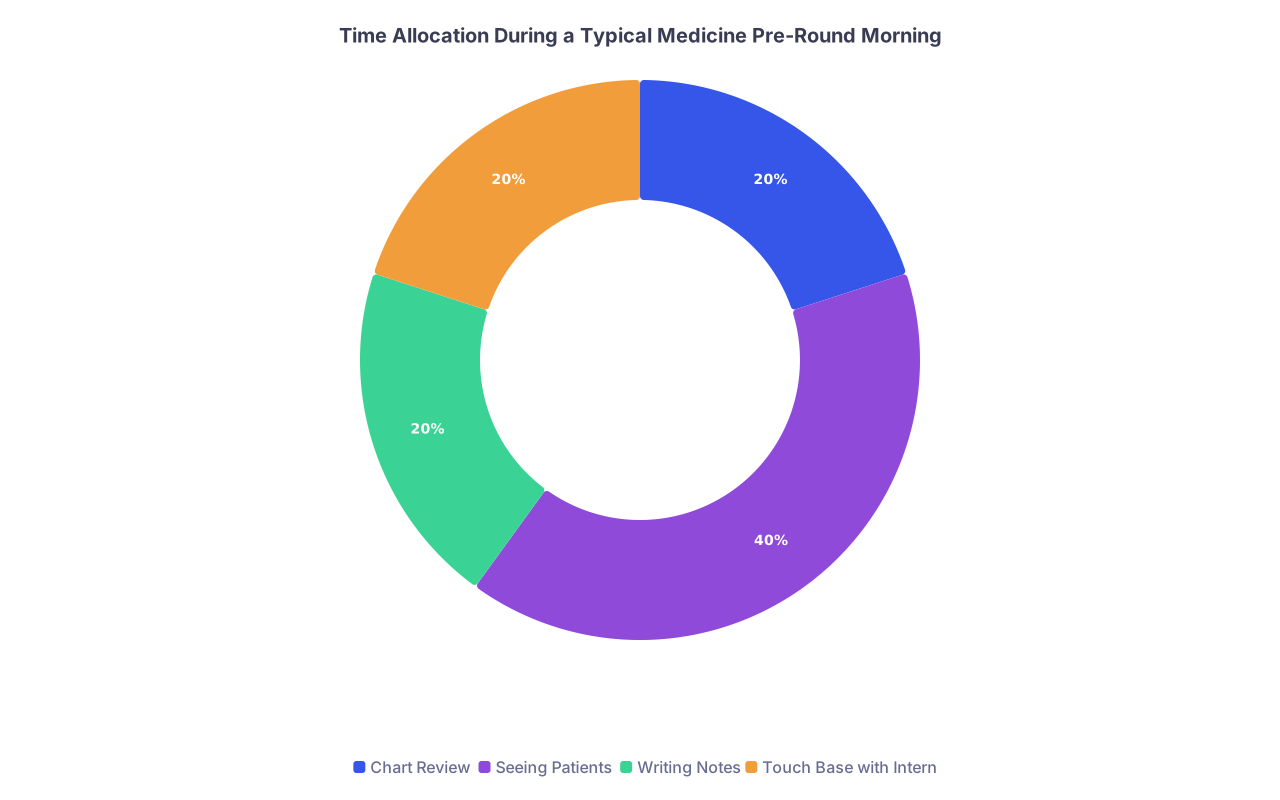
| Category | Value |
|---|---|
| Chart Review | 20 |
| Seeing Patients | 40 |
| Writing Notes | 20 |
| Touch Base with Intern | 20 |
What to fix on Days 3–4
At this point you should be cleaning up:
Presentations
- Stop reading directly from your note
- Start with one-liner + overnight events
- Put your assessment and plan in problem-based format
Notes
- Write one note, show it to your intern:
“Can you tell me exactly how to make my notes match what you and the attending want?” - Then copy THAT format for every patient.
- Write one note, show it to your intern:
Task tracking system
If you try to remember everything in your head, you’ll fail. Use:
- A folded index card
- Or a small notebook page per patient
On it:
- To-dos today (labs to follow, family to call, consult recommendations to check)
- Questions for your team
- Follow-up from yesterday
Day 5: First Mini “Ownership” Day
By Day 5 you should be:
- Pre-rounding on 2–3 patients reliably
- Writing at least 1–2 full notes
- Presenting at least 1 patient on rounds every day
Now you start acting like these are your patients.
Morning: Upgrade your mental model
For each patient, answer this in your head before rounds:
- Why is this patient still in the hospital today?
- What are the objective discharge barriers?
- Oxygen needs?
- IV meds not yet transitioned?
- Placement issues?
- Pending workup?
This is the kind of thinking attendings care about. Not that you remember the exact sensitivity/specificity of a test.
On rounds: Ask 1–2 smart, targeted questions
Not random trivia. Examples:
- “For her HFrEF, when should we think about adding an SGLT2 inhibitor?”
- “He’s on day 3 of ceftriaxone for CAP. When would we stop or narrow therapy?”
One or two solid questions beats five low-yield ones.
Afternoon: Do one deep dive
Pick ONE problem from one of your patients:
- CHF, COPD, DKA, GI bleed, cirrhosis, whatever is real on your team
- Read for 20–30 minutes:
- 1 UpToDate/AMBOSS review
- Skim key guidelines if mentioned
- Then write a 3–4 bullet summary + show your intern:
- “I read about CHF today, key points I found are…”
This signals effort without being annoying.
- “I read about CHF today, key points I found are…”
Days 6–7: Becoming Genuinely Useful
By this point you should:
- Not need help to find data in the chart
- Have at least one patient where you know the story better than anyone else on the team
Now you stop being “the student who’s following” and become “the student who’s helping.”
Morning: Increase responsibility slightly
Ask your intern:
- “Can I take on one more patient?” (if you’re keeping up)
- Or: “Can I help with new admissions this weekend?” (if on call/long day)
For each patient, you should now:
- Pre-round + exam
- Write the progress note (or at least draft)
- Have a clear plan for each active problem before rounds
Rounds: Present with a clear structure
By Day 7, aim for this style:
- One-liner
- Interval events
- Problem-based A/P:
- # Acute decompensated CHF – improving, continue IV diuresis, monitor I/Os, consider transition to PO tomorrow if stable.
- # CKD – Cr stable at 2.0, avoid nephrotoxins, renally dose meds.
- # Dispo – likely home with PT, pending eval.
The difference now: you’re not just reading data. You’re making a reasonable plan that the team can tweak.
Afternoon: Proactive help
At this point you should be doing things without being asked:
- Check that ordered labs are actually drawn
- Follow up on:
- Consult notes
- Imaging results
- Culture results and sensitivities
Then send your intern a quick, tight update:
- “FYI – CT chest resulted for Ms. X: no PE, shows moderate pleural effusion. Pulm note in, recommending thoracentesis tomorrow.”
Your goal by the end of Day 7: The intern trusts that if they ask you to follow something, it will get done and reported back correctly.

Days 8–9: Refining Speed, Clarity, and Reading Strategy
Now the basics are down. Time to clean up the rough edges.
Morning: Tighten timing
Target:
- 10–15 minutes per patient for pre-rounding (chart + bedside)
- 5–7 minutes per note draft
- <3 minutes per oral presentation
If you’re consistently late, something is broken:
- You’re over-examining (you don’t need a full neuro exam on every stable COPD patient daily)
- You’re writing notes from scratch instead of using smart phrases/templates
- You’re double-documenting nonsense like full ROS when “unchanged” is enough
Start anticipating questions
Before rounds:
- For each patient, ask yourself:
- “If I were the attending, what would I ask next?”
- “What’s the biggest risk today for this patient?”
Examples:
- “She’s on 4L NC at rest – how does she do walking to the bathroom? Has anyone checked?”
- “He’s on day 5 of Vanc/Zosyn – do we still need both? What do the cultures show?”
Then go get those answers before you’re asked. That’s the difference between a decent student and a strong one.
Reading: Stop random browsing
Your reading now should be:
- Driven by today’s patients
- Limited and focused
Use this 20–30 minute pattern:
- Pick one live problem (e.g., “AKI on CKD in a CHF patient on diuretics”)
- Read one high-yield resource
- Pull out:
- 2–3 key diagnostic pearls
- 2–3 key management steps
- The next morning, incorporate that into your plan:
- “Given his AKI, I read that we should reassess diuretic dosing and avoid nephrotoxins; I checked his meds and flagged the NSAID for discontinuation.”
Day 10: Reset, Reflect, and Level-Up Plan
At this point you should:
- Feel less terrified walking into the hospital
- Have a clear mental script for pre-rounding, presenting, and note-writing
- Have at least one attending/resident who knows your name and work ethic
Day 10 is partly normal work, partly course correction.
Morning: Work as usual, but observe yourself
Pay attention to:
- Where you still hesitate:
- Is it interpreting labs?
- Formulating a differential?
- Understanding vent settings?
- Where you’re wasting time:
- Extra chart scrolling?
- Overwriting details nobody cares about?
Write down your top 3 bottlenecks.
Midday: Ask for direct, specific feedback
Ask your resident or attending:
- “We’re about 2 weeks in. What are 1–2 things I could do in the next week to move from ‘average’ to ‘strong’ on this rotation?”
- “How are my presentations compared to other students at this stage?”
Yes, it’s uncomfortable. Do it anyway. The worst feedback is the feedback you get in your final evaluation when you can’t fix it.

Afternoon: Build your “Rest-of-Rotation Plan”
Based on what you’ve learned in 10 days, set very specific goals:
Examples:
- “By Day 20 I will comfortably present any of my patients in under 3 minutes with clear problem-based plans.”
- “I will read 1 focused article per weekday directly tied to a patient issue.”
- “I will volunteer to do at least 2 short teaching talks for the team on topics that came up (e.g., hyponatremia, COPD exacerbation).”
Write them down. Real goals, with time frames, not “be better at medicine.”
| Day | Micro-Goal | How to Measure |
|---|---|---|
| 11 | Finish all notes before noon | All notes signed pre-lunch |
| 12 | Ask 1 management question per day | Track in notebook |
| 13 | Lead family update (supervised) | Resident present and signs off |
| 14 | Independently suggest med changes | Attending acknowledges or corrects |
| 15 | Give 5-minute teaching on team topic | Brief talk during downtime |
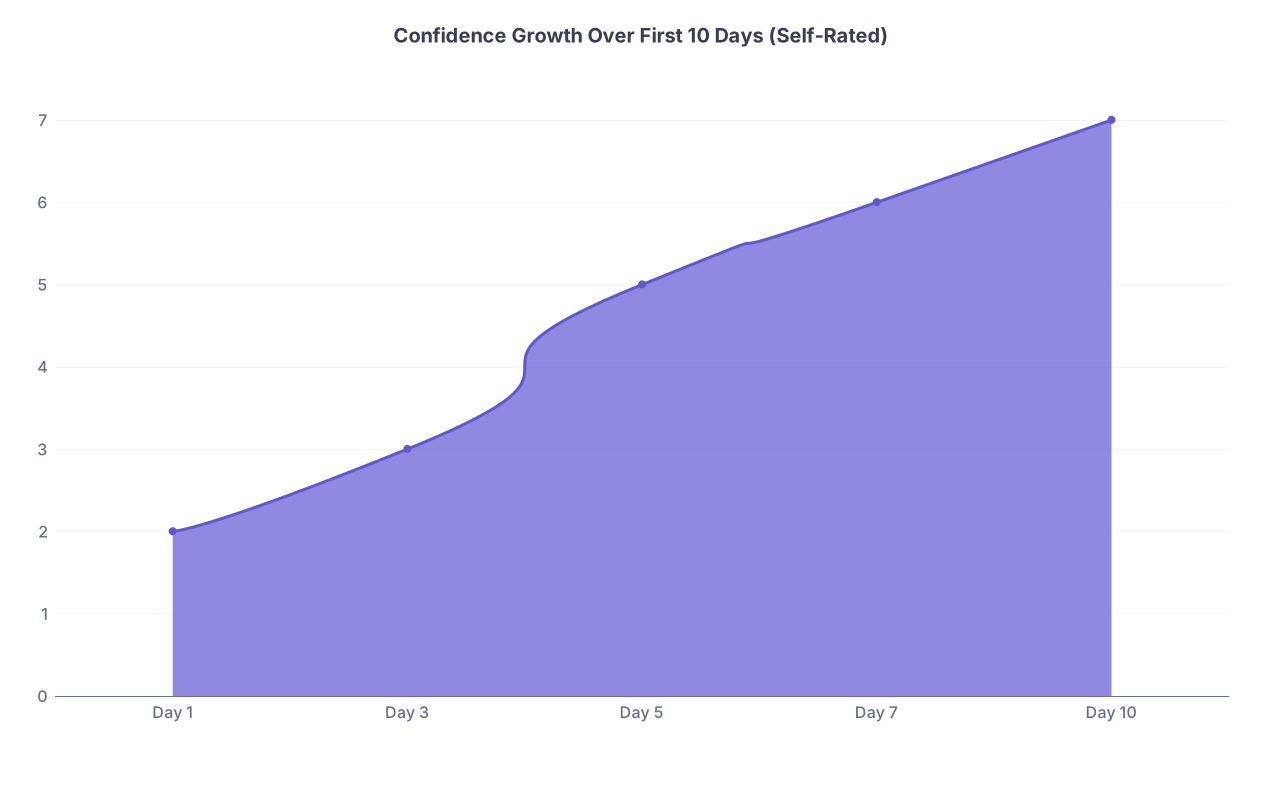
| Category | Value |
|---|---|
| Day 1 | 2 |
| Day 3 | 3 |
| Day 5 | 5 |
| Day 7 | 6 |
| Day 10 | 7 |
Quick Daily Checklist for the First 10 Days
At this point you should be able to run through this mentally:
Every morning:
- Know how many patients you’re following
- Check overnight events, vitals, new labs
- See each patient with a focused exam
- Have a one-liner + problem-based plan in your head
On rounds:
- Present clearly, under 3 minutes per patient
- State an actual plan (even if it’s wrong – they can fix it)
- Write down any changes to the plan immediately
Afternoon:
- Complete your notes
- Follow up on all tests/consults you were assigned
- Read 20–30 minutes on a real patient problem
By Day 10:
- You’ve asked for feedback at least once
- You know your team’s style and expectations
- You’re no longer just “the student” – you’re actually helping

FAQ (Exactly 3 Questions)
1. How many patients should I be following by Day 10 on a medicine rotation?
Most places: 3–5 patients is reasonable by Day 10. If you’re drowning with 3, fix your workflow before you ask for more. If you’re cruising with 3 and still have bandwidth, ask for 1–2 more, especially if your resident seems overloaded. The point isn’t a number; it’s that you know your patients well and can present and manage them without falling apart.
2. What if my team doesn’t give me clear feedback?
Then you ask for it in a way that makes it easy for them. Don’t say, “Any feedback?” Say, “Can you give me one thing to improve on my presentations?” or “Is there anything I’m doing that’s slowing the team down?” Concrete questions force concrete answers. If they still give nothing, watch what they compliment or criticize in others. That’s your roadmap.
3. How much should I really be reading during these first 10 days?
More than zero, less than you think. If you’re trying to read 2 hours a night, you’ll burn out and forget half of it. Aim for 20–30 focused minutes on weekdays, 45–60 on one weekend day. Always tied to active patients. “My patient has decompensated cirrhosis” → Read decompensated cirrhosis. That’s how the information sticks and actually shows up in your plans on rounds.
Key points:
- By Day 3–4 you should have a repeatable pre-rounding and presentation routine.
- By Day 7 you should be reliably useful: tracking tasks, following results, suggesting basic plans.
- By Day 10 you should be using targeted feedback and focused reading to level up, not just trying to “survive” the rotation.


