The 3:00 PM Panic: When My Resident Caught Me Looking at Flight Times
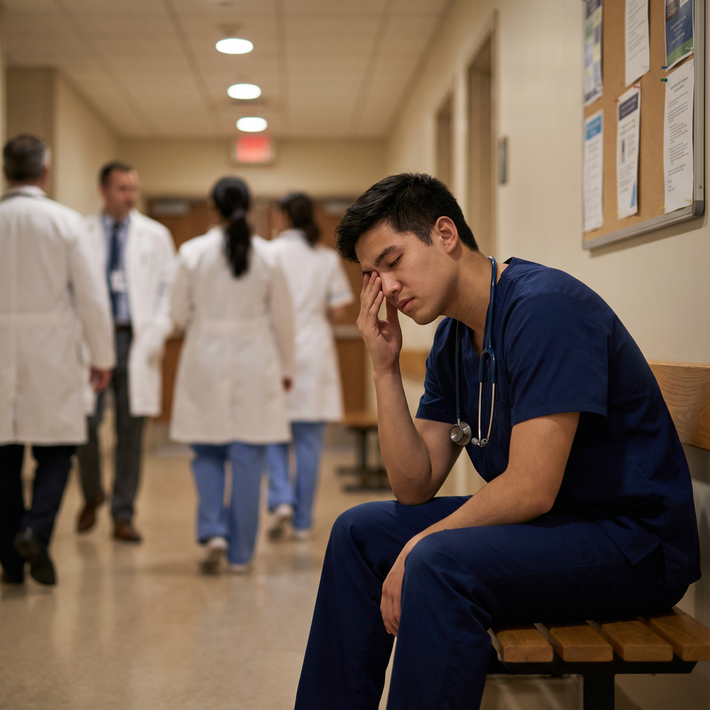
I still remember the exact moment my stomach dropped through the floor. It was 3:07 PM on a Tuesday. We were rounding on general surgery, standing outside a patient's room while the attending discussed the plan for a complicated bowel resection. Everyone was nodding. I was nodding too, but my thumb was secretly scrolling through flight times to Chicago on my phone, buried inside my white coat pocket.
The resident caught me. She didn't say anything. She just looked at me, then looked back at the attending, and I felt my soul leave my body.
That's the thing nobody prepares you for. The actual interviews? Fine. You prep for those. You practice your answers. You iron your shirt. What nobody tells you about is the pure, uncut anxiety of trying to exist in two realities at once, being a present, engaged clinical student on the wards while simultaneously managing a parallel universe of Zoom links, flight itineraries, and program coordinator emails that demand a response within four hours or you lose your slot.
The paranoia is constant. You're standing in the OR, holding a retractor for the forty-seventh minute, and your brain is whispering: They know. They all know you're mentally gone. The attending hasn't made eye contact with you in twenty minutes. That's because they've already decided to tank your evaluation.
And then comes the worst part. You finally work up the nerve to ask if you can leave early. You craft the sentence in your head seventeen times. You wait for what feels like a natural break in the conversation. You ask. And the attending just... pauses. That pause. That two-second silence where they look at you and say nothing. It feels like they're mentally composing the paragraph that will end your career. You can practically hear them typing: "Student seemed disinterested in patient care, frequently requested early departures, recommend Pass rather than Honors."
I've lived in that pause. I've aged years in that pause.
The Unspoken Code: What Attendings Actually Think When You Ask for Time Off
Here's the lie they tell you during your fourth-year orientation: "We want what's best for you. Go to your interviews. This is your future." Beautiful words. Really touching. And in my experience, it's about half true.
The other half? The half they don't say out loud? You're a body on a service. You're a warm set of hands that writes notes, pages consultants, and carries the pager so the resident can go eat lunch for the first time in nine hours. When you leave, someone else has to absorb your work. And that someone is usually already drowning.
The old-school attendings are the ones who scare me the most. These are the people who trained in the era when you didn't leave the hospital for thirty hours straight, when interviewing meant physically flying across the country and missing a full week of rotations with no excuse accepted. I had one attending who did his entire interview season in three weeks, drove to seven cities, and still worked overnight call the day he got back. He told me this story with pride. I smiled and nodded while internally calculating whether my Tuesday afternoon Zoom with a community program in Michigan was going to make him hate me.
And here's what really keeps me up at night: the gap between what they say and what they write. "Go! Good luck! Match somewhere great!", that's what they say to your face, with a warm smile, maybe even a pat on the shoulder. Then three weeks later, you're reading your evaluation comments: "Student was engaged when present but had multiple absences during the rotation block. Clinical dedication inconsistent."
Inconsistent. That word will haunt me. One attending's throwaway adjective becomes a permanent fixture on your MSPE, read by every program director who will ever consider you. And you'll never know which early departure triggered it. Was it the Tuesday you left at 2 PM for a preliminary program interview? Was it the Friday you skipped morning rounds to catch a 6 AM flight? You'll never know. You'll just lie awake running the tape back.
I'm not saying every attending is secretly plotting against you. Some genuinely are happy for you. But the institutional culture, the service-obligation mentality that quietly governs how grades are really assigned, that's what you're fighting against. And it's invisible until it shows up in writing.
The Evaluative Backstab: Will Leaving Early Ruin My Honors Grade?
This is the question that has lived rent-free in my skull since September. Will one excused absence, one afternoon where I slipped out of the hospital to sit in my car in the parking garage and do a Zoom interview, will that be the thing that drops me from Honors to Pass?
I've talked to students who swear it happened to them. One girl on my surgery rotation was one of two students. The other student never took a single day off. She took three afternoons for interviews. At the end of the rotation, the other student got Honors. She got High Pass. When she met with the clerkship director to ask why, she was told her "clinical engagement was strong but not exceptional." Three afternoons. That's what separated exceptional from strong.
Then there's the scut work punishment. This one is sneakier. You'd think that if you're leaving early for an interview, people would just... let you go. Instead, I've watched students get assigned the absolute worst call shifts in the rotation block right before their interview week. Thursday overnight call before a Friday afternoon Zoom. Saturday coverage before a Monday morning flight. It's not officially punitive, it's just "how the schedule worked out." But you know. And they know you know.
The resident retaliation angle is the one that terrifies me most because it's so hard to trace. When you leave early, your resident has to stay late. They have to finish your notes. They have to present your patients on rounds the next morning because you're not there. And residents are the ones who write the narrative comments that feed into your final evaluation. One resentful intern who got stuck doing your discharge summary at 7 PM can absolutely shape how the attending perceives your "work ethic" for the entire rotation.
I had a friend, a smart, capable, genuinely hardworking person, who got a comment on her Dean's Letter about "reliability concerns during high-demand clinical periods." She missed two half-days for interviews. Two. She had prior authorization from the clerkship office. It didn't matter. The resident complained to the attending, the attending absorbed that complaint into their subjective impression, and now "reliability concerns" follows her to every interview.
The system says interviews are excused. The system is lying about how excused absences are actually received by the humans running the system.
Damage Control: How to Disappear Without Totally Destroying Your Reputation
OK. So you have to leave early. You can't not go to your interviews, that's the whole point. Here's what I've learned, mostly through panic and trial and error.
The script matters. Don't apologize profusely, that makes it seem like you're doing something wrong, which primes them to think you are. Don't over-explain. Don't give them your entire flight itinerary. Say something like: "Dr. [Name], I have a residency interview scheduled for Thursday afternoon. I've coordinated with [resident name] to make sure my notes are finished and my patients are covered before I leave. Is there anything you need from me before Thursday?"
Short. Direct. Shows you've thought about the team's burden. Puts the ball in their court without forcing them into an awkward yes/no.
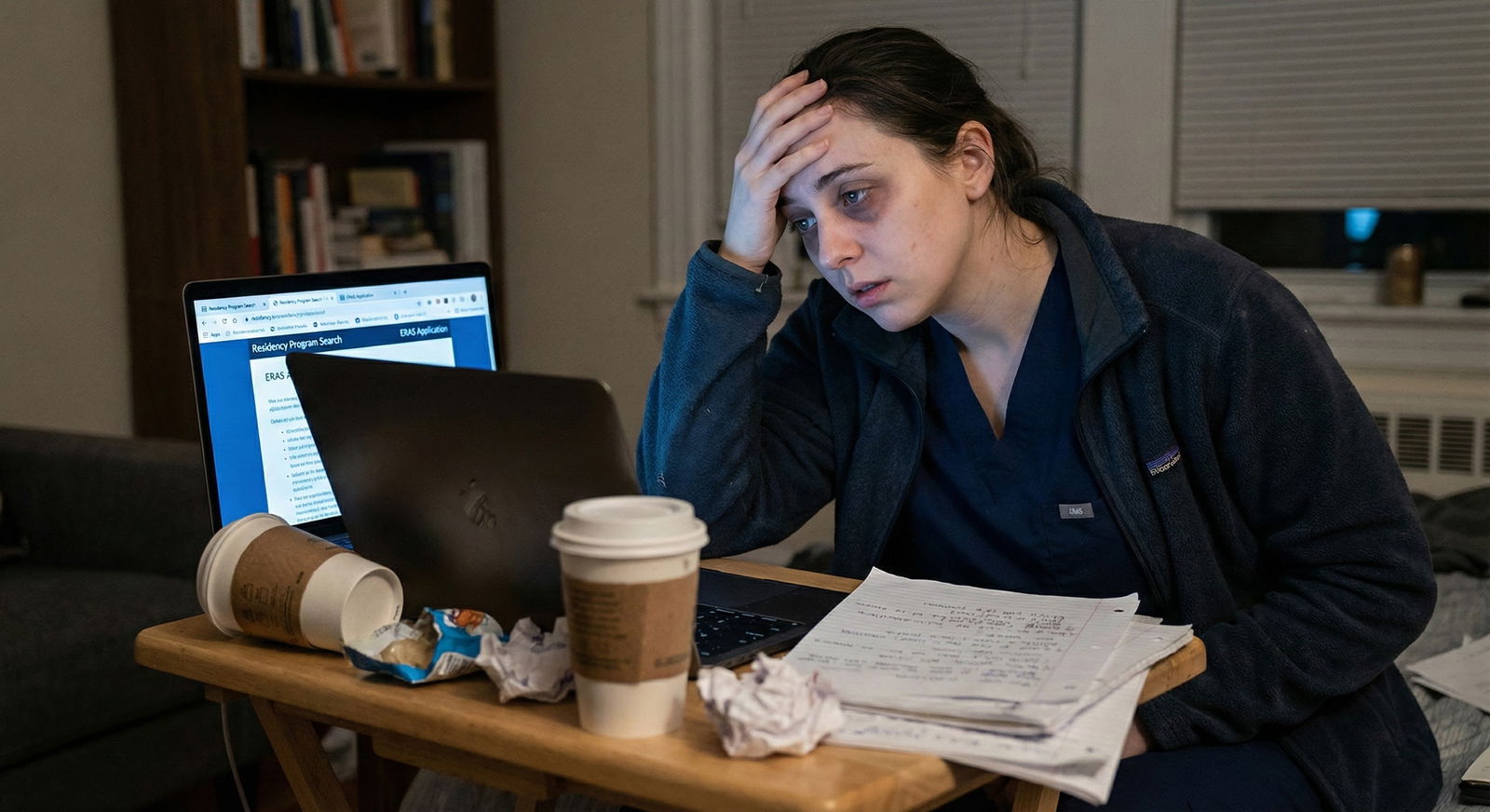
Over-compensate on the days you're there. This is the part that's exhausting but necessary. If you're leaving Thursday afternoon, then Monday through Wednesday you need to be the best medical student anyone has ever seen. Show up early. Pre-round on every patient. Write your notes before the resident even asks. Offer to do the scut nobody else wants. Be so visibly, aggressively helpful that when you leave Thursday, the resident thinks, "Damn, I miss having them around" instead of "Great, now I have to do this myself."
And the catastrophic scenario, the one I've genuinely had nightmares about, your flight gets canceled. You miss an entire rotation day. The program coordinator emails you at 6 AM saying your interview slot is moved to a different day. Now you're stuck in an airport, your resident is texting you asking where you are, and the attending is about to start rounds.
If this happens, communicate immediately. Don't wait. Don't hope it resolves. Email the clerkship coordinator, page the resident, and be transparent. "My flight was canceled due to weather. I'm working to rebook and will be back as soon as possible. I'm sorry for the disruption to the team." Then when you get back, bring coffee. Bring bagels. Grovel appropriately. It won't fully save you, but silence will absolutely destroy you.
Final Thoughts and Your Next Steps
Here's the thing I keep trying to remind myself at 2 AM when I'm staring at the ceiling running through every interaction I've had with every attending this month: you got the interviews. That means something. Your application is working. The research, the board scores, the personal statement, someone read all of it and decided they wanted to talk to you. That's not nothing.
The anxiety of interview season is real. The feeling that you're constantly disappointing someone, the attending who wants you at the bedside, the program coordinator who wants your response in two hours, the resident who wants their notes done, it's crushing. But you will survive this. People have survived this before. You will match. You will move forward.
What I want to know is: what's your worst interview leave story? Did an attending actually tank your grade? Did a resident say something that still keeps you up? Drop it in the comments. I need to know I'm not the only one lying awake convinced I've already ruined everything.