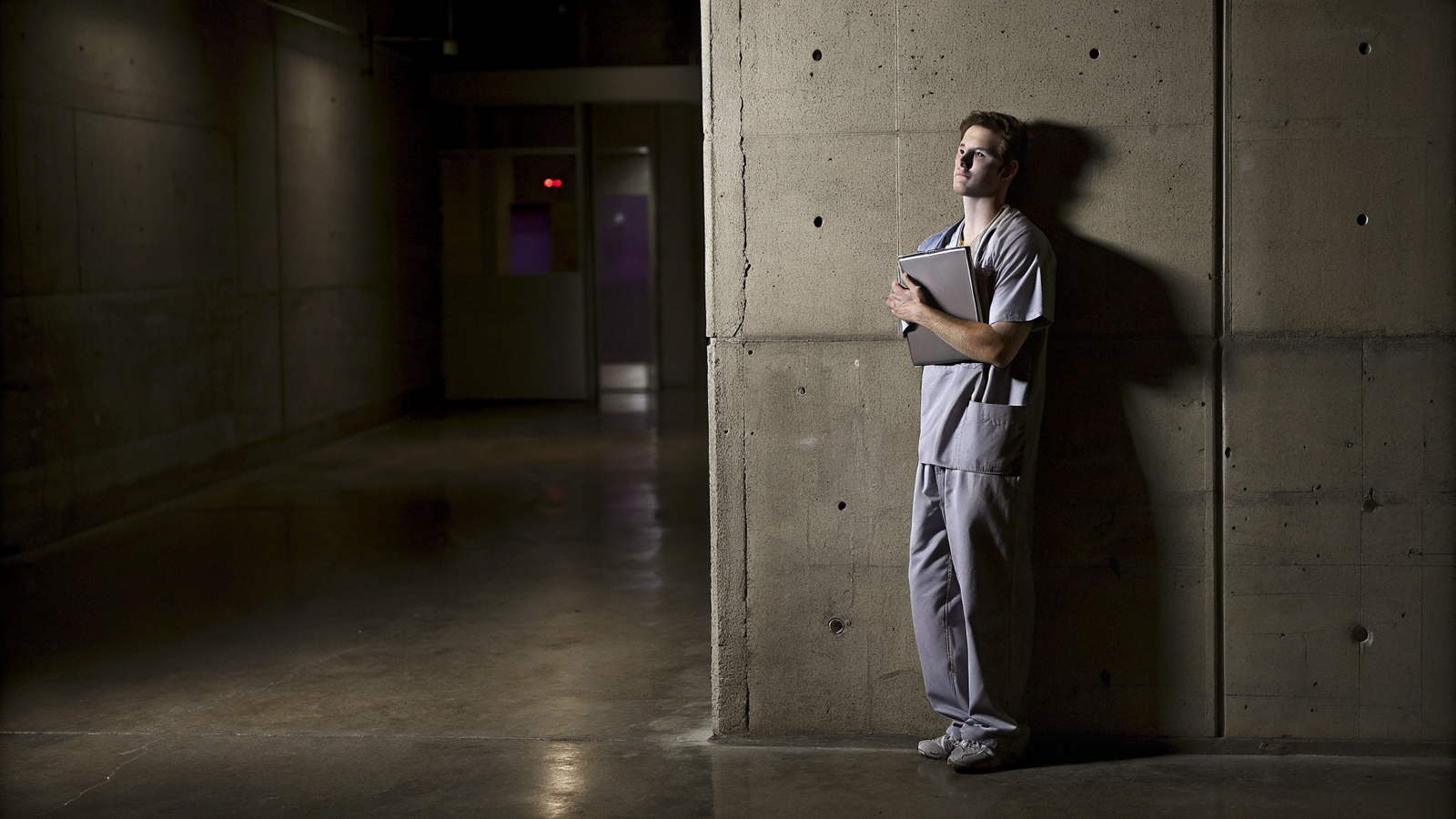
Here's a truth bomb that won't make you feel better: the attendings grading you aren't impressed by your sleep deprivation. They're not secretly rooting for you because you pulled a 28-hour shift. They're grading the wreckage you deliver at 7 AM, and your "I'm just tired" defense is the thinnest shield in medicine.
I know. You were told the exhaustion was a rite of passage. You were told the badge of "I survived call" meant something. You were told resilience is a virtue. What you weren't told is that post-call cognitive performance is functionally indistinguishable from intoxication, and your presentations are the evidence. The data on this is brutal, and it doesn't care about your work ethic.
This article is for educational purposes only. It is not financial advice, not legal advice, and not tax advice. Figures vary by individual circumstances, consult a qualified professional before acting.
The Myth of the 'Hard-Working' Exhausted Student
Let's retire the mythology. The cultural script in medical training treats sleep deprivation as a character test. You push through, you earn your stripes, you become a real doctor. Except that's not what the literature shows. What the literature shows is that 24 hours of sustained wakefulness produces cognitive impairment equivalent to a blood alcohol concentration of 0.10%, above the legal driving limit in every U.S. state. A meta-analysis in Sleep found that sleep-deprived residents made 36% more serious medical errors than their rested counterparts. That's not a badge of honor. That's a patient safety issue wearing scrubs.
The cognitive load theory explains why. Working memory, the mental scratchpad you use to organize a patient presentation, has finite capacity. When you're post-call, that capacity is shredded. Your brain is running on fumes, and every piece of new information competes with the residual noise of a 16-hour shift. The result? You can't distinguish the signal from the noise. You present the noise. The attending hears noise. You get a mediocre grade and chalk it up to "tough day."

Stop calling it resilience. It's professional self-regulation failure dressed up as dedication. Every attending who's graded you post-call knows the difference. They just won't say it to your face because the system still rewards martyrdom. The system is wrong, and your evaluations reflect that.
The Anatomy of a Failing Presentation
Here's what a failing presentation looks like, and I guarantee you've given one: you walk in, you start with the chief complaint, then you meander through a chronological history that includes the patient's vacation to Florida, the cousin's recent divorce mentioned in passing, and a lab value you saw once but can't quite remember. You bury the actual clinical concern at minute six. By minute eight, the attending has stopped listening. By minute nine, they've mentally written your evaluation.
The "stream of consciousness" trap is the calling card of the post-call presenter. It signals one thing: you don't know what's important. When you're cognitively intact, you naturally filter, you emphasize the chest pain, de-emphasize the constipation, because you understand hierarchy. When you're exhausted, that filter breaks. Everything feels equally important because your brain can't do the triage. You present a data dump instead of a clinical synthesis.
Attendings aren't grading your work ethic. They're grading clinical reasoning, and clinical reasoning requires synthesis. They want to know: can you take a chaotic patient presentation, identify the key features, and articulate a coherent plan? If you can't do that in five minutes, you can't do it. Period. The hours you worked don't change the output. If anything, the hours you worked are a variable that should have changed your approach, not your excuse for a poor one.
The research on this is straightforward. A study in Academic Medicine found that evaluators consistently rated concise, structured presentations higher than longer ones, even when the longer ones contained more information. Length was inversely correlated with perceived competence. That's not an opinion. That's a pattern across hundreds of evaluations.
Evidence-Based Strategies to Pivot
Alright, enough diagnosis. Here's the treatment, and it's not "drink more coffee."
Master the three-minute rule. Bottom Line Up Front (BLUF) is a military briefing technique that translates perfectly to medical presentations. Lead with the assessment and plan. State what you think is going on, what you're going to do, and what you're worried about. Then, and only then, back-fill the supporting data. The attending gets the point in 30 seconds. If they want details, they'll ask. This isn't cheating. This is communication.
Standardize your template before exhaustion hits. Build your presentation structure when you're rested. Memorize it. Drill it. Make it automatic so that when you're running on fumes at 6 AM, your mouth knows the sequence even if your brain is offline. "Patient is a 62-year-old male with a history of CHF presenting with three days of progressive dyspnea. Assessment: acute decompensated heart failure. Plan: lasix, BMP, chest X-ray, telemetry. Concern for cardiac ischemia given the troponin and EKG changes." That's 30 seconds. That's competence.
The two-minute prep ritual. Before you walk into the room, close your eyes. Take three breaths. Ask yourself: "What is the one thing this attending needs to know?" If you can't answer that, you don't understand the patient well enough to present. Go back. Read the chart one more time. The two minutes you spend clarifying your thinking will save you eight minutes of wandering presentation.
The data doesn't lie. Presentations that exceed five minutes see a steep drop in evaluation scores. By the time you're at eight or nine minutes, you're actively harming your grade. The volume of information isn't the asset, it's the liability. Every extraneous detail is a distraction from the clinical story you're trying to tell.
One more thing. Stop presenting the chart. Start presenting the patient. Attendings can read. What they can't do is read your mind, and that's what they're testing. If you can synthesize a complex case into a clear narrative, you demonstrate understanding. If you recite labs in order, you demonstrate data entry skills. Guess which one gets you honors.
Summary: Clinical Competence Is Not a Marathon
The transition from student to doctor isn't about surviving longer hours. It's about recognizing when your cognitive limits are compromising your output and adjusting accordingly. The attendings who give you the harshest grades aren't doing it because they're cruel. They're doing it because your post-call presentation told them you couldn't think clearly, and they need to know you can think clearly when it matters.
Your exhaustion is not a credential. It's a variable you mitigate through preparation, structure, and brutal honesty with yourself. If you can't present it concisely, you don't understand it well enough, regardless of how much coffee you drank. The patients you take care of deserve a doctor who knows the difference between dedication and delusion. So does your grade.
Key Takeaways:
- Your exhaustion is not an excuse for poor clinical judgment; it's a variable you must mitigate through structured preparation.
- Attendings value synthesis over volume. Stop reading the EMR and start telling a clinical story.
- Conciseness is a proxy for high-level understanding. If you can't summarize in three minutes, you're burying your own potential.