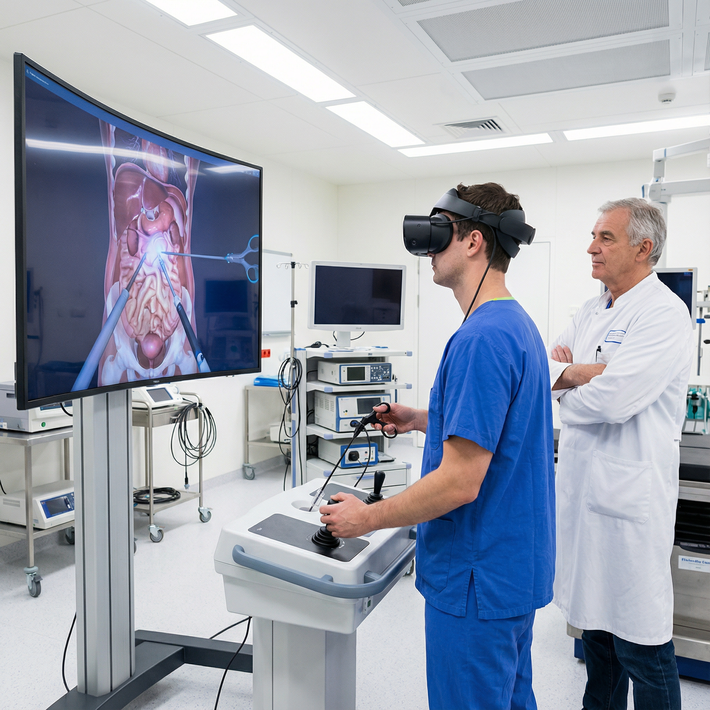
Picture this. You're a third-year resident. You've spent your weekends fine-tuning local LLMs to distill clinical trials. You know how to prompt-engineer a complex differential diagnosis. You are ready for the future. Then you start your first attending job at a massive, prestigious academic center. You log into the EMR. It looks like Windows 95. The "AI" integration is a clunky macro that auto-fills the patient's zip code.
You are a digital Ferrari driving on a dirt road.
This is the reality of clinical AI integration today. We are staring down a massive divergence between agile private practices and bureaucratic academic systems. Choosing a residency or first job based purely on brand prestige is a trap. You need to evaluate infrastructure. Here is how to fix your career trajectory before you get stuck clicking through endless EMR tabs.
This article is for educational purposes only. It is not financial advice, not legal advice, and not tax advice. Figures vary by individual circumstances, so consult a qualified professional before acting.
The AI Implementation Gap: A Tale of Two Practice Environments
Let's get straight to the problem. Academic hospitals are bogged down by legacy systems and committee approvals. Private clinics are buying ambient scribing tools off the shelf and deploying them by the end of the week. The gap is widening, and it's directly impacting physician burnout and clinical efficiency.
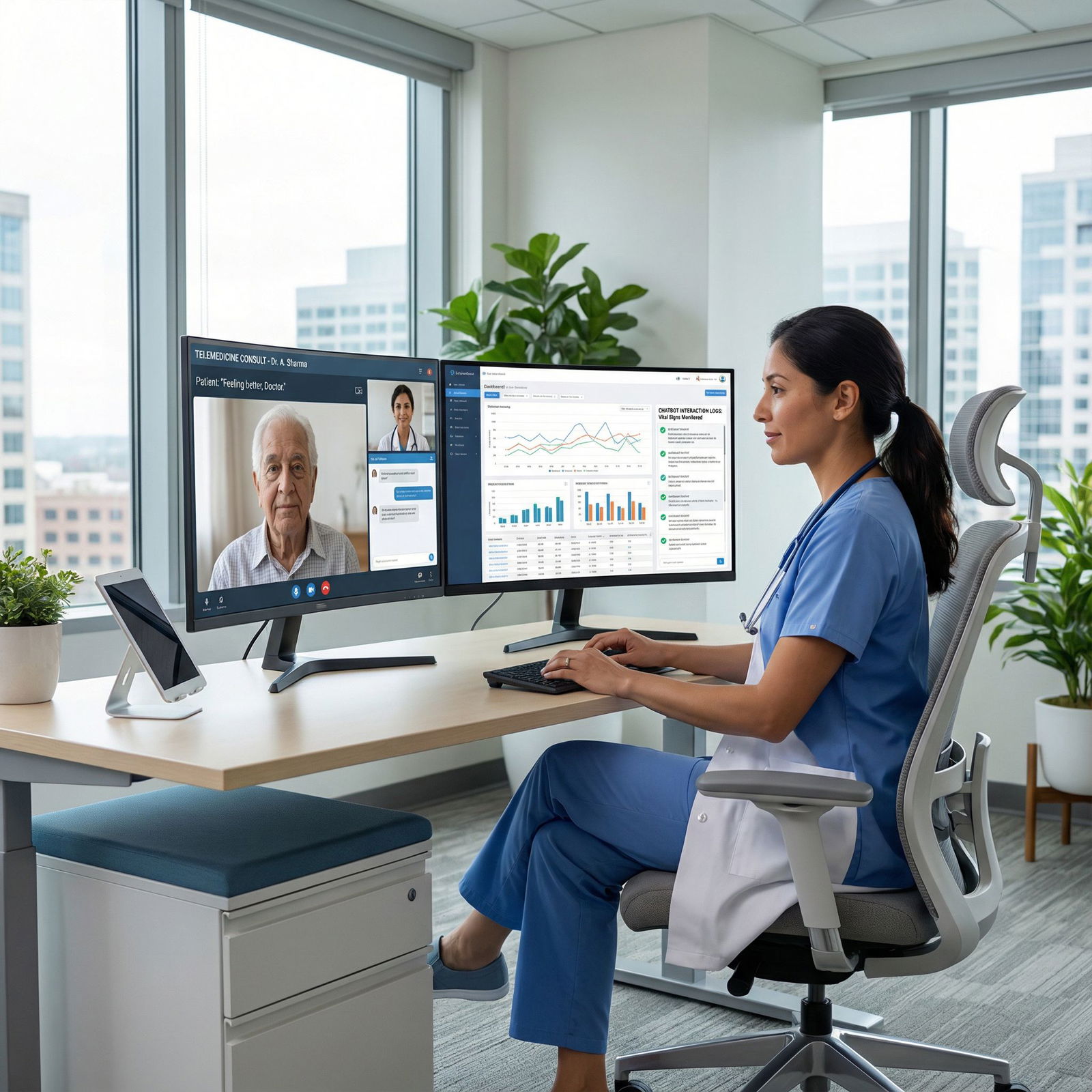
To survive this, you need to develop what I call the Adaptability Quotient (AQ). Your AQ is your ability to unlearn old, inefficient workflows and rapidly adopt new digital tools. It is the single most important metric for your professional longevity. If your AQ is low, you will burn out from clicking. If it's high, you will automate the administrative garbage and actually practice medicine.
When you look at training environments, you aren't just looking at patient volume or case mix. You are looking at how the institution handles technological friction. Private practice environments generally have high AQ because their survival depends on margins and efficiency. Academic environments often have low institutional AQ because their survival depends on grant funding and prestige, neither of which requires a fast EMR. Setting the stage for your career means choosing a site based on its digital plumbing, not just its U.S. News ranking.
Academic Medicine: The Slow-Burn Innovation Incubator
Why is academic medicine so slow to adopt AI? Simple. Institutional Review Boards (IRBs) and legal departments. In a university hospital, AI innovation moves at the speed of litigation. Every new tool, every API integration, and every predictive algorithm needs a 14-month review process to ensure it doesn't violate a dozen overlapping compliance frameworks.
But don't write off academic centers just yet. The benefit here isn't speed; it's depth. Academic programs offer structured AI curricula, protected time for research, and access to proprietary "sandbox" environments. You get to play with early-stage AI tools and massive, clean data lakes long before they hit the commercial market.
The fix for the slow adoption rate is to actively audit the program's digital infrastructure during your interview. Do not ask vague questions like, "Do you use AI?" Ask these specific, protocol-level questions:
- "What is the API access policy for resident research accounts?" If they don't have one, they don't have a sandbox.
- "Show me your de-identified data lake. How long does it take a resident to get a data pull approved?" If the answer is "six months," walk away.
- "Do residents have access to enterprise licenses for ambient scribing or LLM tools within the hospital firewall?"
Leverage the academic sandbox. Use your protected research time to build and test clinical decision support models. You won't get to deploy them to the wards immediately, but you will understand the underlying architecture better than anyone in private practice.
Private Practice: The Frontier of Clinical AI Agility
Private practice doesn't have a 40-person IT committee. The managing partner sees a demo for an AI billing coder on Tuesday, and the clinic is using it on Thursday. This is the frontier of clinical agility. Lower regulatory hurdles allow for the rapid adoption of ambient scribing, automated prior authorizations, and predictive scheduling.
Here, you adopt a "BYO-AI" (Bring Your Own AI) mindset. You manage your own stack of clinical decision support tools. You piece together a workflow that makes you 30% faster than the doctor in the next room.
But this agility comes with massive risks. Unregulated AI use is a liability minefield. If you use a commercial LLM to distill a patient's chart and it hallucinates a medication allergy, and you sign off on it, you own that error. Pasting Protected Health Information (PHI) into a public AI model is a fast track to a HIPAA violation.
Here is your practical checklist for evaluating a private group's digital transformation level before you sign a contract:
- BAA Verification: Do they have a signed Business Associate Agreement (BAA) with every AI vendor they use? If not, they are legally exposed.
- Cyber Liability Coverage: Does their malpractice and cyber insurance explicitly cover AI-generated errors and data breaches?
- Human-in-the-Loop Protocols: Do they have written standard operating procedures (SOPs) for how AI outputs are verified by a human clinician?
- Data Silos: Can the AI tools actually read from and write to the core EMR, or are you just copy-pasting between three different browser tabs?
Private practice gives you the tools to be highly efficient today. Academic medicine gives you the framework to understand what those tools will become tomorrow.
Strategic Decision Framework: Building Your Career Path
So, how do you actually choose? It comes down to a brutal self-assessment of your career goals.
Are you a tech developer and researcher? Do you want to build the algorithms that will define the next decade of medicine? Go academic. Accept the bureaucratic friction as the cost of doing high-level research.
Are you a high-efficiency clinician? Do you want to see 25 patients a day, automate your charting, and go home at 5 PM without thinking about p-values? Go private.
If you are stuck in an academic residency with a "tech-lag" environment, you need to execute a Hybrid Training approach. Do not wait for your program to provide AI training. They won't. Curate a personal digital stack to maintain your sanity and efficiency. Here are the actionable steps to build your own AI workflow outside the hospital firewall:
- De-identify Everything: Never put PHI into a public tool. Build a habit of stripping names, dates, and MRNs before querying an LLM.
- Run Local Models: Download open-source models (like Llama 3) and run them locally on a high-RAM laptop. This keeps your data entirely offline and bypasses hospital firewalls.
- Get External Certifications: Supplement your clinical training with self-directed certifications in digital health, clinical informatics, or AI ethics from external universities.
- Build Shadow Workflows: If the hospital EMR is terrible, build a parallel, secure, AI-driven note-taking system on your personal devices (ensuring strict HIPAA compliance) to draft your notes, then paste the finalized text into the EMR.
The final verdict on choosing a training site is this: prioritize programs with exposed, accessible digital infrastructure, even if the brand prestige is slightly lower. A mid-tier university with an open API and a progressive IT department will teach you more about the future of healthcare than an Ivy League hospital stuck in 2014.
Key Takeaways for Your Career:
- Prioritize programs with exposed digital infrastructure, even if the brand prestige is slightly lower.
- Academic centers provide better long-term framework understanding, while private practice offers immediate functional agility.
- Do not wait for your program to provide AI training; curate a personal digital 'stack' of tools to maintain clinical efficiency.
- Institutional 'Tech-Readiness' is now as critical as patient volume when evaluating your residency list.