Introduction: Medical Robotics at the Center of Healthcare Innovation
Medical robotics is rapidly moving from futuristic concept to everyday clinical reality. Over the next decade, Medical Robotics will fundamentally reshape how we diagnose disease, perform surgery, deliver rehabilitation, and monitor patients—both inside and outside the hospital.
For medical students, residents, and early-career clinicians, understanding this landscape is no longer optional. Robotic Surgery platforms, AI in Medicine, and Rehabilitation Technology are converging into an ecosystem that will influence your practice patterns, training requirements, and even career trajectories.
This expanded guide explores:
- What medical robotics encompasses today
- Key categories: Robotic Surgery, rehabilitation systems, telepresence, and navigation technologies
- How AI in Medicine is amplifying robotic capabilities
- Where Healthcare Innovation is heading in the next 10 years
- Barriers to adoption and practical steps for clinicians to prepare
By the end, you should have a clear, evidence-informed view of what to expect—and how to position yourself within the future of healthcare.
Understanding Medical Robotics: Beyond the Operating Room
Medical robotics refers to the use of robotic systems to augment, assist, or automate tasks across the continuum of care. These systems are designed to enhance precision, consistency, ergonomics, and safety in ways that can be beyond human capability alone.
Core Categories of Medical Robotics
1. Robotic Surgery Systems
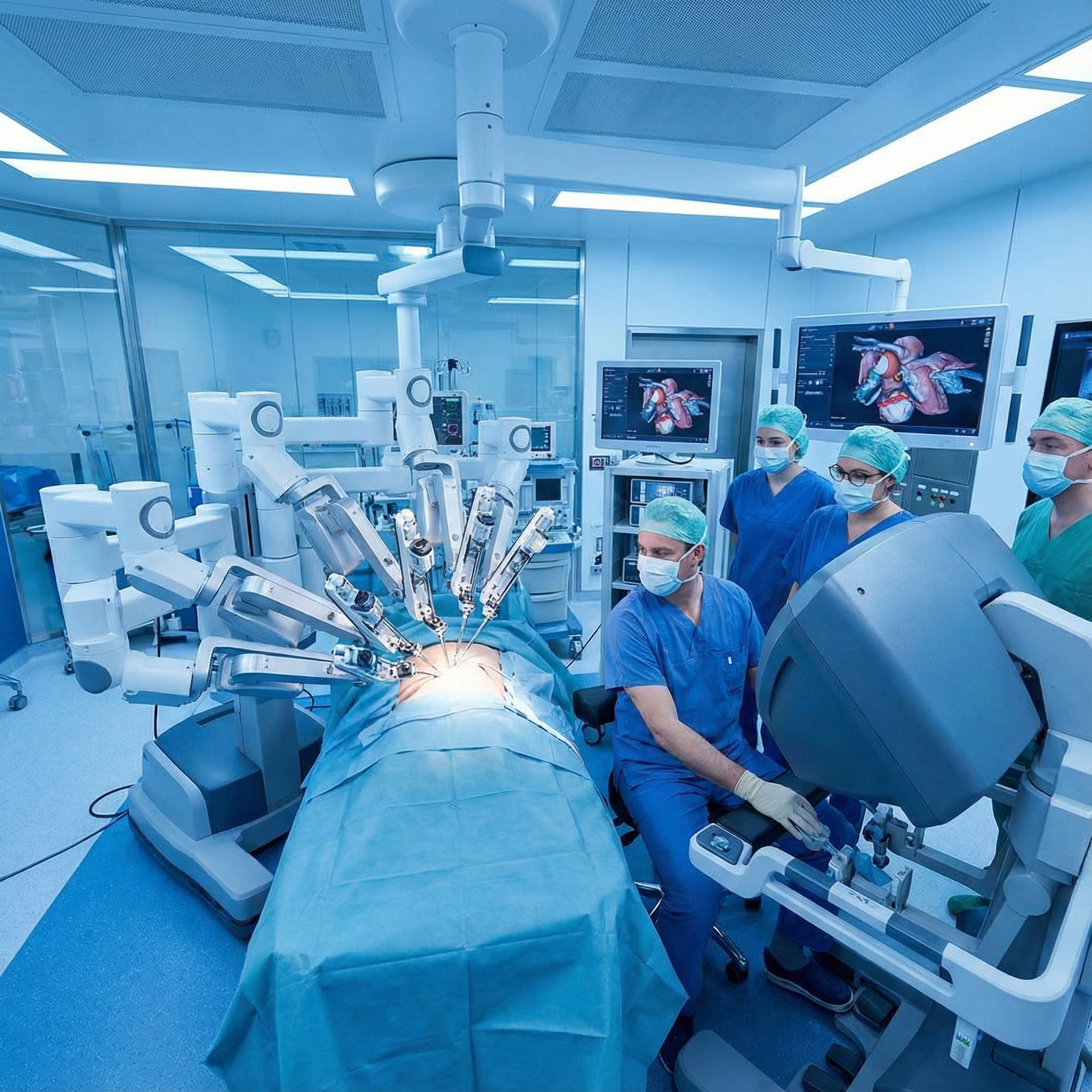
Robotic-assisted surgery remains the flagship application of Medical Robotics.
- Master–slave systems (e.g., da Vinci Surgical System): Surgeon sits at a console and controls robotic arms that hold instruments and a camera. The system filters tremor, scales movement, and provides 3D visualization.
- Orthopedic robots (e.g., Mako, ROSA): Help plan and execute joint replacement or spine procedures with sub-millimeter accuracy, often integrating preoperative CT or intraoperative imaging.
- Neurosurgical and ENT robots: Provide stable, precise access to confined spaces like the skull base or cochlea.
Clinical advantages generally include:
- Smaller incisions and less tissue trauma
- Reduced blood loss and postoperative pain
- Shorter hospital stays and faster return to baseline function
- More consistent technique across cases and surgeons
For trainees, this means learning not just open and laparoscopic approaches, but also how to operate consoles, understand robotic ergonomics, and interpret system feedback.
2. Rehabilitation Robotics and Assistive Exoskeletons
Rehabilitation Technology is evolving rapidly as robotics enter physical medicine and neurorehabilitation.
Key examples:
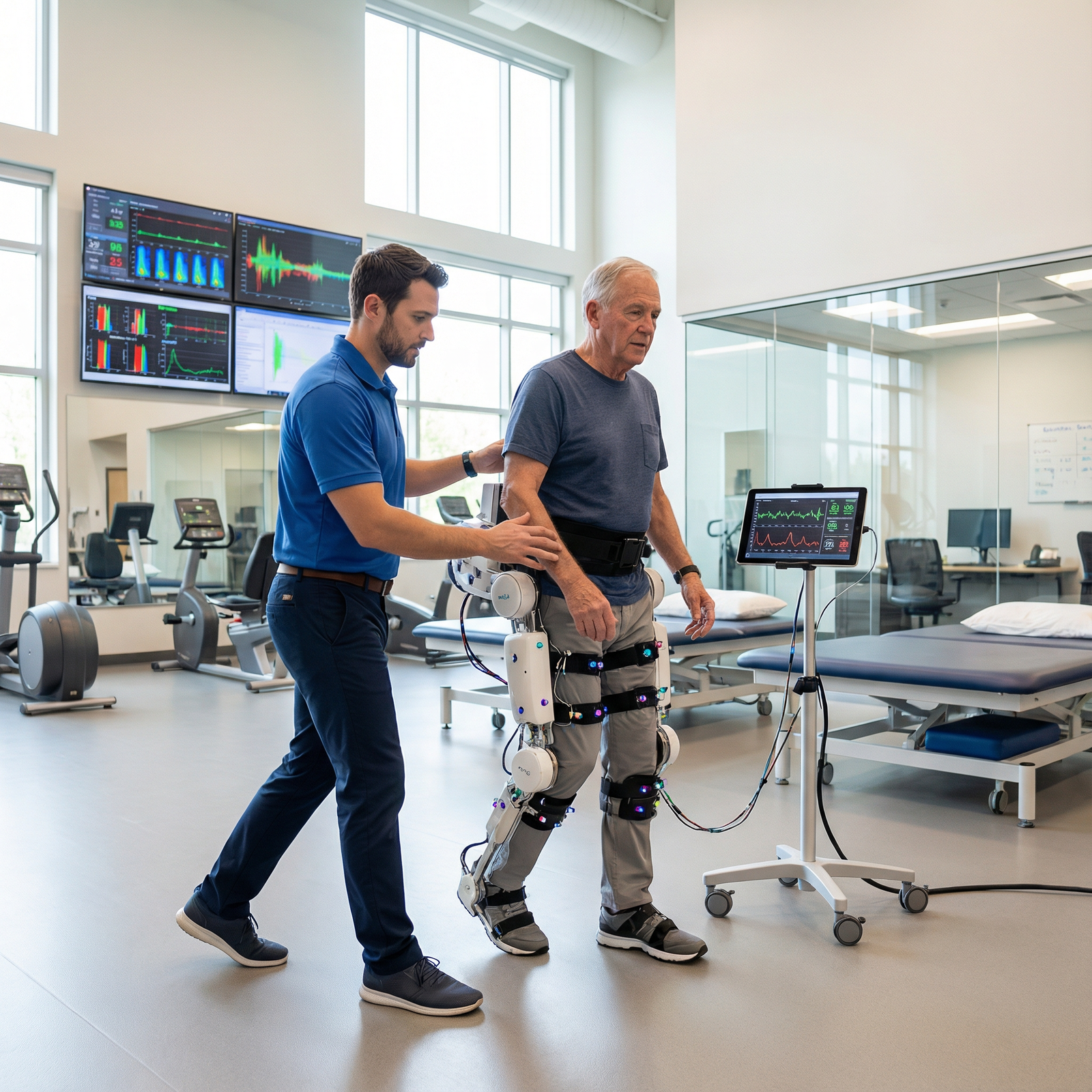
- Lower-limb exoskeletons (e.g., Ekso Bionics, ReWalk): Assist gait training in spinal cord injury, stroke, and other mobility-limiting conditions.
- Upper-limb robotic devices: Assist post-stroke patients in relearning fine motor control, using repetitive, goal-directed movements.
- Robot-assisted treadmills and balance platforms: Deliver high-intensity, task-specific training with precise control of speed, load, and support.
These systems enable:
- High-repetition, consistent therapy sessions
- Objective data collection on range of motion, force, and progress
- Personalized, adaptive therapy programs based on performance metrics
Future clinicians in neurology, physiatry, orthopedics, and geriatrics will increasingly work alongside these devices, using data to refine rehabilitation strategies.
3. Telepresence and Remote Care Robots
Telepresence is becoming central to Healthcare Innovation, especially in underserved and remote settings.
Telepresence robots typically combine:
- A mobile base that can navigate clinical spaces
- High-resolution video conferencing interfaces
- Remote control by physicians or specialists off-site
Common use cases:
- Remote ICU or “eICU” monitoring
- Specialist consults in rural EDs or small hospitals
- Infectious disease wards where exposure must be minimized (highlighted during COVID-19)
As 5G and ultra-low-latency networks mature, we may see early forms of remote tele-robotic surgery, particularly for standardized, well-defined procedures.
4. Robotic Navigation, Imaging, and Interventional Platforms
Robotics also plays a key role in guidance and imaging-driven interventions:
- Robotic catheter systems for cardiac ablation, endovascular procedures, and neurointerventions
- Image-guided robots integrated with MRI, CT, or intraoperative ultrasound to target lesions more accurately
- Biopsy and ablation robots for lung, liver, and prostate, reducing sampling error and improving lesion targeting
These systems extend human performance by:
- Maintaining stable, precise instrument positions
- Enabling complex trajectories and fine incremental adjustments
- Reducing radiation exposure (operating remotely from the fluoroscopy field)
The Current Landscape of Medical Robotics: Where We Stand Today
Established Technologies and Clinical Adoption
Several robotic platforms have moved well beyond the experimental phase.
Robotic Surgery: From Novelty to Standard of Care in Select Fields
- The da Vinci Surgical System has become standard or near-standard in procedures such as robotic prostatectomy, many gynecologic oncologic operations, and select colorectal and thoracic cases.
- Robotic platforms for total knee arthroplasty and partial knee replacements are now common in high-volume orthopedic centers.
- ENT and head & neck surgeons increasingly use transoral robotic surgery for selected oropharyngeal cancers.
Residency programs across urology, general surgery, gynecology, thoracic surgery, and orthopedics are integrating robotic cases into training logs, and some fellowships now explicitly emphasize robotic proficiency.
Rehabilitation Robotics in Clinical Practice
Systems like Ekso Bionics, Lokomat, and other robotic gait trainers are present in major rehabilitation hospitals. They are used to:
- Enhance intensity of stroke and spinal cord injury rehabilitation
- Provide early mobilization in critical care units
- Support research on neuroplasticity and motor recovery
While not uniformly available due to cost, their presence is growing, and clinical evidence is accumulating regarding their impact on functional outcomes.
Emerging Field: Soft Robotics
Traditional robots are rigid, which can be limiting in contact with soft biological tissues. Soft robotics uses compliant materials inspired by biological systems—think “robotic octopus arms” or “inflatable actuators” that can gently grasp organs without damage.
Promising applications include:
- Soft robotic endoscopic tools that conform to the GI tract
- Cardiac devices that wrap around the heart to assist pumping
- Gentle tissue retractors and manipulators in minimally invasive surgery
These technologies could lower complication rates and expand what is feasible with minimally invasive and robotic surgery.
Research Frontiers: AI in Medicine Meets Medical Robotics
The most transformative advances are coming from the fusion of robotics with AI in Medicine.
Key research areas:
Computer vision and real-time tissue recognition
- Systems that can identify anatomical structures, blood vessels, or tumors during surgery
- Real-time margin assessment in oncology procedures
Automation of subtasks
- Suturing, knot tying, cutting, and camera control
- Semi-autonomous execution of standardized steps in procedures like anastomoses or staple line reinforcement
Predictive analytics and intraoperative decision support
- AI models that analyze vital signs, imaging, and instrument motion to predict complications or identify high-risk steps
- Recommendation systems suggesting adjustments (e.g., tension on tissues, optimal entry points)
These developments do not replace surgeons but act as cognitive and technical force multipliers, potentially improving safety and standardizing high-quality care.
What to Expect in the Next Decade: Six Major Trends in Medical Robotics
The next 10 years will likely be defined by broader adoption, smarter systems, and deeper integration across specialties.
1. Deep Integration of AI in Robotic Surgery and Clinical Robotics
AI in Medicine will be embedded in almost every robotic platform.
Expect to see:
Smart surgical consoles
- Real-time alerts when instruments approach critical structures
- Automated camera positioning to optimize field of view
- Intelligent suggestions based on prior cases and outcomes data
Adaptive rehabilitation robots
- Devices that learn a patient’s unique recovery trajectory and continuously adapt difficulty, speed, and range based on performance and fatigue signals
- Integration of cognitive and physical rehabilitation in neurodegenerative conditions
Telepresence robots with triage capabilities
- Automated preliminary history gathering and symptom assessment
- Prioritization of patients based on severity cues for remote physicians
Clinically, this means more decision support at the point of care and a shift toward data-driven procedural medicine.
2. Expansion Across Specialties and Care Settings
Robotic systems will move well beyond high-end ORs:
Cardiology and electrophysiology
- More robotic catheter navigation for complex arrhythmia ablation
- Robotic coronary interventions in hybrid ORs
Gastroenterology and pulmonology
- Autonomous or semi-autonomous endoscopes navigating tortuous anatomy
- Robots performing targeted biopsies of small peripheral lung nodules guided by imaging and AI
Primary care and outpatient settings
- Robotic phlebotomy and sample processing
- Automated vitals stations and basic exam support systems
Home-based care
- Assistive robots for medication reminders, basic mobility, and remote monitoring of elders or chronic disease patients
For residents, this diversification means that nearly every specialty will interact with Medical Robotics in some capacity.
3. Hyper-Personalized, Data-Driven Care
Robotics will be a key enabler of personalized medicine, leveraging:
- Preoperative imaging plus 3D modeling to create patient-specific surgical plans
- Intraoperative data (force, kinematics, physiological response) to tailor surgical approaches and minimize trauma
- Rehabilitation performance metrics to design individualized therapy paths and predict time to functional milestones
Wearable devices will feed continuous data into robotic systems:
- Postoperative wearables tracking gait, range of motion, and pain can adjust rehab robots’ assistance levels.
- Cardiac or respiratory wearables may guide how aggressively robotic systems encourage mobilization or exercise.
Personalization will be most visible in orthopedics, oncology, and neurorehabilitation, but will extend across chronic disease management.
4. Maturation of Soft Robotics and “Human-Friendly” Devices
As soft robotics matures:
- Surgical tools will become more organ-conforming, reducing tissue ischemia and mechanical injury.
- Wearable exoskeletons will be lighter, quieter, and more comfortable for long-term use.
- Pediatric applications will benefit from gentler, size-adaptable devices.
This shift from rigid to compliant, bio-inspired robotics will improve safety, patient comfort, and expand the population who can benefit—especially frail elders and children.
5. Tight Integration with Wearables, Sensors, and Digital Health
Expect closer interaction between:
- Robotic systems in hospitals and clinics
- Wearable sensors that track movement, vitals, sleep, and adherence
- Cloud-based analytics that continuously learn from each patient
Example pathways:
- A patient undergoes robotic knee replacement → post-op wearable collects gait and activity data → rehab robot adapts therapy intensity → surgeon reviews progress via dashboard and adjusts follow-up intervals.
- A telepresence robot in a chronic disease clinic integrates data from home blood pressure monitors, glucometers, and wearables to prioritize high-risk patients for consult.
This convergence will require clinicians who are comfortable interpreting streaming, multimodal data and using it to drive care decisions.
6. Falling Costs and Expanding Global Access
Over the next decade:
- More manufacturers and competitive platforms will reduce acquisition and per-case costs.
- Modular, smaller-footprint robots will be designed for ambulatory surgery centers and regional hospitals.
- Leasing, per-procedure payment models, and robotics-as-a-service will improve affordability.
In low- and middle-income countries, we may see:
- Shared regional robotic centers offering specialized procedures
- Mobile tele-robotic vans for diagnostics and minor interventions
- Cloud-based AI support for local clinicians, even where robots are not yet present
This has the potential to reduce global disparities in access to high-quality, complex care.
Key Challenges and Barriers to Realizing the Vision
Despite the promise, several obstacles must be addressed for Medical Robotics and AI in Medicine to achieve their full potential.
1. High Capital Costs and Economic Uncertainty
- Robotic systems can cost millions of dollars upfront, with significant ongoing maintenance and consumable expenses.
- Hospitals must balance marketing appeal and potential clinical advantages against hard financial realities.
- Evidence for cost-effectiveness varies by specialty and procedure; not all robotic applications are clearly superior to existing techniques.
Clinicians need to understand value-based care arguments and participate in evidence generation—through registries, outcomes research, and cost analyses.
2. Regulatory and Ethical Complexity
Regulators (e.g., FDA, EMA, national agencies) face unique challenges:
- How to evaluate autonomous or semi-autonomous robotic functions?
- How to monitor systems that evolve via machine learning after deployment?
- How to manage accountability when decisions are informed by AI?
Ethical considerations include:
- Informed consent when AI is actively influencing intraoperative decisions
- Fair access to robotic care to avoid widening disparities
- Transparency of AI algorithms used for critical clinical choices
Future physicians will need fluency in these topics and may increasingly collaborate with regulatory experts and ethicists.
3. Training, Credentialing, and Workforce Implications
Robotics changes the skill set required:
- Residents must learn console skills, not just manual dexterity.
- Simulation and VR-based robotic trainers are becoming core to curricula.
- Credentialing bodies will set minimum case numbers and competency benchmarks.
Concerns about deskilling (loss of open or laparoscopic skills) must be balanced against the clear trend toward more robotic case volumes. Hybrid training models that preserve foundational surgical skills will be essential.
4. Cybersecurity and Data Privacy
Connected robots are potential targets for cyberattacks:
- Unauthorized access could lead to data breaches or, in extreme scenarios, manipulation of device behavior.
- Hospitals must implement strong network segmentation, encryption, and monitoring for robotic platforms.
Given the vast amounts of data collected (instrument kinematics, imaging, patient biometrics), robust approaches to:
- Anonymization and secure data storage
- Compliance with privacy regulations (HIPAA, GDPR, etc.)
- Transparent data governance and appropriate secondary use for research
will be crucial to maintaining public and professional trust.

How Medical Trainees and Clinicians Can Prepare
For medical students, residents, and fellows, the rise of Medical Robotics is an opportunity—not a threat—if approached proactively.
1. Seek Early Exposure and Hands-On Experience
- Elective rotations at centers with high robotic case volumes
- Participation in simulation labs and skills courses
- Observing both console and bedside roles during robotic procedures
Ask:
- What are the indications and contraindications for robotic approaches?
- How do perioperative outcomes compare to open and laparoscopic methods?
- What complications are unique to robotic procedures?
2. Build Literacy in AI in Medicine and Data Science
You do not need to be a programmer, but you should:
- Understand basic AI concepts (supervised vs. unsupervised learning, bias, overfitting)
- Recognize the limitations of AI models and the importance of high-quality input data
- Be able to critically appraise studies using AI-based tools in clinical robotics
Online courses, workshops, and interdisciplinary collaborations (with engineers, computer scientists) can be valuable.
3. Engage in Research and Quality Improvement
Robotics generates rich datasets:
- Instrument trajectories, force profiles, and video streams
- Longitudinal functional outcomes (especially in rehab)
Opportunities include:
- Studying learning curves and competency milestones
- Comparing outcomes across platforms or techniques
- Developing or validating AI tools for decision support
Even simple quality improvement projects (e.g., standardizing robotic setup or troubleshooting protocols) can have meaningful impact and be publishable.
4. Advocate for Patient-Centered and Equitable Implementation
Clinicians will be central voices in:
- Explaining realistic benefits and risks of robotic options to patients
- Ensuring consent processes reflect the use of robotic and AI technologies
- Advocating for access in public and safety-net systems, not only in high-income, private settings
A patient-centered approach will help ensure that the Future of Healthcare remains focused on outcomes and equity—not just technology for its own sake.
Conclusion: Medical Robotics in the Future of Healthcare
Medical Robotics sits at the intersection of surgery, rehabilitation, digital health, and AI in Medicine. Over the next decade, expect:
- More intelligent, autonomous support systems in the OR and rehab gym
- Wider specialty adoption—from cardiology to primary care and home-based support
- Greater personalization of care through integration with wearables and data platforms
- Falling costs that open doors to broader global access
Yet, the pace and direction of this transformation will depend heavily on how clinicians, educators, policymakers, and patients respond—through evidence-based adoption, thoughtful regulation, and a commitment to equitable implementation.
For emerging physicians and surgeons, now is the time to observe, question, learn, and participate. The residents who train with these tools today will be the leaders shaping how Medical Robotics and Healthcare Innovation are used for generations to come.
Frequently Asked Questions (FAQ)
1. What exactly is meant by “medical robotics”?
Medical robotics refers to robotic systems used in healthcare to assist or enhance clinical tasks. This includes:
- Robotic Surgery platforms (e.g., da Vinci, Mako)
- Rehabilitation robots and exoskeletons for motor recovery
- Telepresence robots for remote consultations and monitoring
- Robotic navigation and imaging-guided devices for interventional procedures
These systems aim to improve precision, safety, consistency, and access to care, not to replace clinicians.
2. How does robotic surgery differ from traditional minimally invasive surgery?
Traditional laparoscopy uses long, rigid instruments held directly by the surgeon, often with 2D visualization. In Robotic Surgery:
- The surgeon sits at a console, controlling robotic arms with wristed instruments that offer more degrees of freedom.
- Tremor filtration and motion scaling allow for very fine movements.
- 3D high-definition visualization improves depth perception and anatomical detail.
The core principles of surgery remain the same, but the robotic platform can make certain complex maneuvers easier or more precise.
3. Will AI and medical robotics replace surgeons or other clinicians?
In the foreseeable future, no. AI in Medicine and Medical Robotics are best viewed as augmented intelligence tools:
- Robots provide enhanced dexterity, stability, and access.
- AI offers decision support, pattern recognition, and automation of limited subtasks.
Human clinicians retain responsibility for diagnosis, judgment, communication, ethics, and overall management. Robots and AI expand what clinicians can safely and consistently do; they do not substitute for clinical expertise and accountability.
4. What are the main risks or downsides of increasing reliance on medical robotics?
Key concerns include:
- Cost and resource allocation: High capital and operating costs may divert resources from other essential services if not justified by outcomes.
- Equity: Advanced robotics may initially be concentrated in wealthy centers, risking widening disparities.
- Technical failure and cybersecurity: System malfunctions or cyberattacks, while rare, must be anticipated with robust safeguards and contingency plans.
- Training and deskilling: Overreliance on robotic techniques without maintaining foundational manual skills could be problematic in emergencies or resource-limited settings.
Balancing these risks requires robust evidence, careful planning, and ongoing evaluation.
5. How can medical students and residents best prepare for a future that includes medical robotics?
Practical steps include:
- Choosing rotations at centers using Robotic Surgery or rehabilitation robots
- Participating in simulation labs and seeking mentorship from robotics-experienced faculty
- Learning basic principles of AI in Medicine and keeping up with literature on Medical Robotics and Healthcare Innovation
- Getting involved in research, quality improvement, or data projects related to robotic systems
- Developing strong communication skills to explain robotic options and their implications to patients
By combining technological literacy with solid clinical foundations, trainees can position themselves to lead in the evolving Future of Healthcare.