
Educational disclaimer: This article is for general educational purposes only and is not legal, financial, tax, or professional application advice. Program policies change, and applicants should verify requirements directly with residency programs, ERAS resources, and qualified advisors or mentors.
If a program says it's IMG-friendly, does that actually protect you if you have no USCE? Or is that just marketing-sounding language, and the second they see "no U.S. clinical experience," your application gets quietly dumped into the rejection pile?
That fear is not irrational. I've heard versions of it from applicants every single cycle, and honestly, I get it. "IMG-friendly" sounds comforting until you remember that programs can be friendly and still picky. They can interview IMGs every year and still decide your file feels too risky if you've never worked in a U.S. clinical setting.
Let's strip this down clearly. USCE means U.S. clinical experience. Usually electives, externships, sub-internships, hands-on rotations, and sometimes observerships get dragged into the same conversation even though they are not equal. A program may say USCE is:
- Required — no USCE, no interview. Brutal but clear.
- Preferred — they'll consider you, but you'd better be strong elsewhere.
- Not mentioned — dangerous gray zone. Doesn't mean they don't care.
- Quietly valued — the classic hidden filter nobody admits out loud.
And here's the reality nobody likes but everyone needs: yes, even residency programs that are considered IMG-friendly can reject you for having no USCE. Not always because they officially require it. Sometimes because the pool is crowded and they need a quick way to sort applicants. USCE becomes a proxy for "Will this person function well in our system on day one?" Fair? Not always. Common? Absolutely.
But no, lack of USCE is not an automatic rejection everywhere. Some programs care more about your visa status, Step performance, letters, graduation year, communication, specialty commitment, and whether your application looks coherent instead of chaotic. I've seen applicants with zero formal hands-on USCE still get interviews because the rest of the profile was sharp and the program truly reviewed IMGs holistically.
So this article is not going to feed the panic or the fantasy. No fake reassurance. No doom either. Just the myth versus reality, so you can stop spiraling and start making decisions based on how programs actually behave.
Can an IMG-Friendly Program Really Reject You for No USCE?
Yes. They can. And that doesn't mean they lied about being IMG-friendly.
This is where applicants get trapped. They read "we welcome international medical graduates" and assume it means every traditional disadvantage gets softened. It doesn't. IMG-friendly does not mean standards disappear. It means the program is open to considering IMGs. That's it. Maybe they've matched many before. Maybe they sponsor visas. Maybe they understand non-U.S. schools and training pathways better than average. Good. Helpful. Still not a free pass.
The hardest part is that USCE often lives in the gray zone between policy and preference. A program might never write "USCE required" on the website, but during review they may still favor applicants who have worked in U.S. hospitals, understand documentation, know how rounds feel, and can produce U.S.-based letters from physicians people recognize. That's not always malicious. Sometimes it's just risk reduction.
And this is what keeps applicants up at night: "So if I don't have USCE, am I being filtered out before anyone really reads my story?" Sometimes, yes. But not everywhere, and not all the time.
Programs don't all value the same things in the same order. One internal medicine program may care heavily about recent U.S. hands-on experience. Another may care more about strong scores, clear communication, and a history of taking IMGs with unusual pathways. One family medicine program may be willing to train someone with limited U.S. exposure if the application screams reliability and commitment. Another may want proof you've already adapted to the system. Same IMG-friendly label. Very different behavior.
That's why catastrophic thinking gets people into trouble. "No USCE means no chance." False. "IMG-friendly means USCE doesn't matter." Also false.
The honest middle is this: no USCE raises your risk, but it does not erase your viability. That's a big difference. A risk factor is something you plan around. It is not a prophecy.
Myth vs Reality: What IMG-Friendly Actually Means
Here's the myth I hate most: IMG-friendly means they'll overlook everything.
No. That's fantasy thinking born from stress and bad forum advice.
What IMG-friendly usually means is much more practical: the program has historically interviewed, ranked, or matched more IMGs than average. Maybe they sponsor J-1 visas. Maybe they have residents from India, Pakistan, Egypt, Nigeria, the Philippines, or Latin America. Maybe their website doesn't include the usual nonsense barriers. That's good news. But there's still a bar.
Let's sort the language out, because programs are slippery with words:
- IMG-friendly: They tend to consider IMGs more often than many peers.
- IMG-accepting: They do accept IMG applications, but that says nothing about how competitive it is.
- Non-discriminatory: Basic professionalism. Not a promise of realistic access.
- Prefer applicants with U.S. experience: Not a hard no, but definitely not neutral.
- USCE required: Clear barrier. Don't talk yourself into loopholes.
USCE becomes a soft filter because it signals something programs care about deeply: readiness. Can you communicate the way teams expect? Do you understand how U.S. workflow feels at 6:15 a.m. sign-out? Can you write notes in an EMR without looking lost? Will a senior resident have to spend two extra months teaching you basic system behavior before teaching actual medicine? Programs worry about this. Sometimes too much, but they do.
So if your anxiety is saying, "If I have no USCE, am I disqualified before anyone reads me?" the answer is more nuanced than your brain wants. You are not automatically disqualified at every IMG-friendly program. But you may be less competitive at first-pass review, especially if many similar applicants have U.S. experience.
And this matters: when a program says USCE is preferred, that still leaves the door open. Preferred is not required. Applicants without it do get considered. Not universally. Not magically. But genuinely.
Why No USCE Can Hurt You Even at Friendly Programs
This part stings because it feels personal. Like they're not rejecting your application; they're rejecting your ability to belong. But usually the issue is more practical than insulting.
No USCE can hurt because U.S. medicine has its own rhythm. The medicine itself may not be shocking. The system is. EMR habits. Note structure. Paging etiquette. Team hierarchy. Multidisciplinary rounds. Patient counseling style. Handoffs. Discharge planning. The bizarre speed at which everyone is expected to function while smiling politely. If you haven't seen it up close, programs may worry you'll struggle early.
USCE also serves as proof. That's the ugly truth. It proves a few things all at once:
- someone in the U.S. has watched you work
- you can function in English in a clinical environment
- you understand professional expectations here
- you can get letters from U.S. physicians
- you won't arrive on day one completely shocked by the system
That last point matters more than applicants like to admit.
And yes, the worst-case-scenario thought is real: "What if the program thinks I'm risky because I've never worked in the U.S.?" Some reviewers absolutely think that way. I've seen enough applications discussed to know it happens. Nobody says, "Let's punish this person." They say, "Strong candidate, but no U.S. experience," and then move to the next file with similar scores plus two months of electives and three U.S. letters. That's how people get screened out. Quietly. Efficiently. Maddeningly.
Still, rejection in that situation often reflects competition, not a universal ban. If 300 IMG applicants apply and 180 of them have some U.S. exposure, the applicants without it start a step behind. Not because they are bad. Because programs compare side by side, and side by side can be ruthless.
Specialty matters too. A lot. Internal medicine and family medicine may be more forgiving than fields that are already brutal for IMGs. Pediatrics can vary. Pathology may care differently than psychiatry. Surgery and highly selective specialties are less likely to shrug off missing USCE because they already have too many strong applicants. The more competitive the field, the less tolerance there usually is for any missing signal of readiness.
I've seen applicants make one dangerous mistake here: they take one rejection or one forum post and turn it into a universal law. Bad idea. A New York community IM program, a Midwestern university-affiliated family medicine program, and a big-name academic specialty program do not read IMG files the same way. They just don't.
So yes, no USCE can hurt you even at friendly programs. It can make you look untested. It can weaken your letters. It can cost you in direct comparisons. But hurt is not the same thing as destroy. That's the distinction you have to hold onto when your brain wants to turn every weakness into a death sentence.
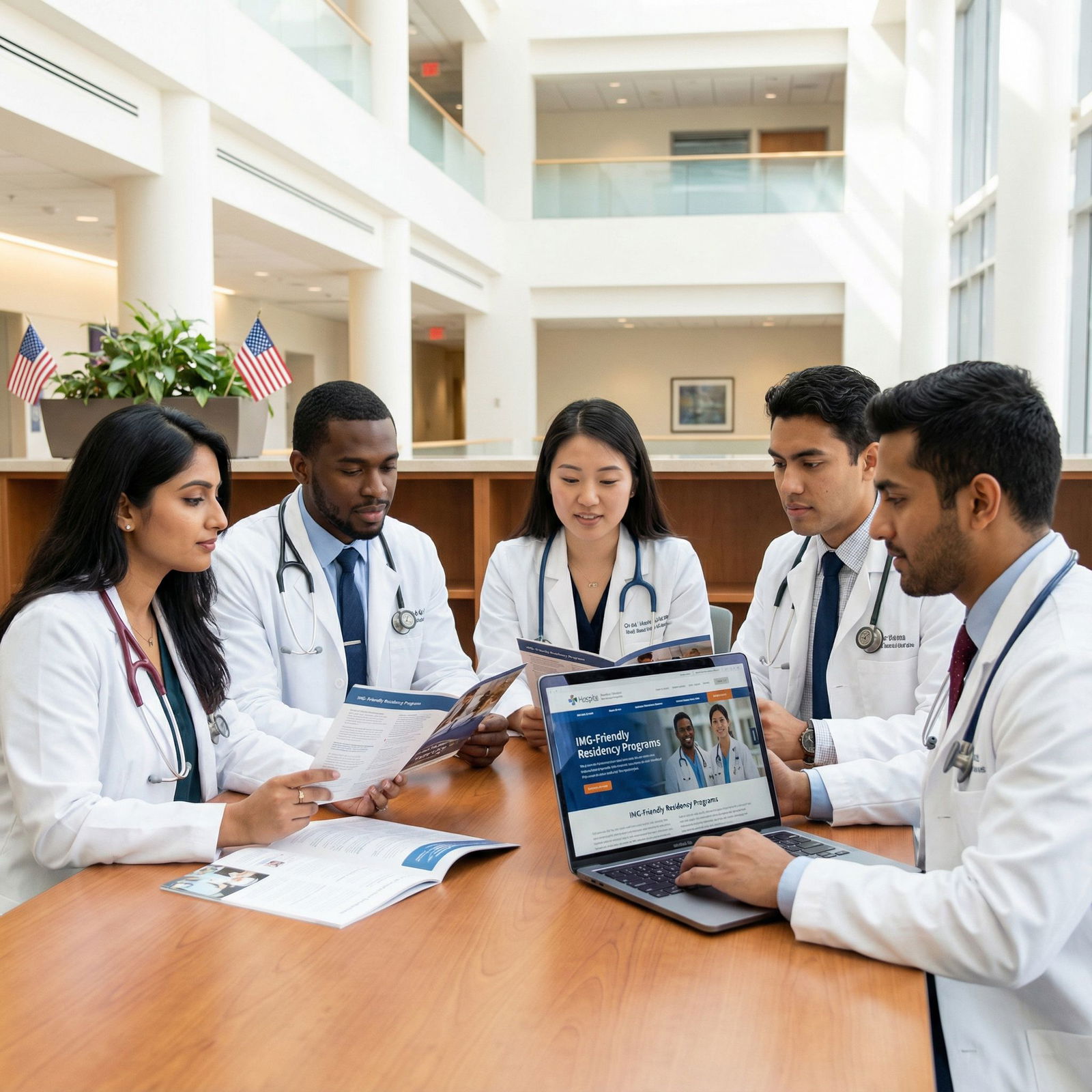
How Programs Screen Applications When USCE Is Missing
A lot of applicant anxiety comes from not knowing where the rejection happened. Was it the website requirement? A coordinator? A filter? The program director? You never get the postmortem, so your mind fills in the worst version. Understandable. Also miserable.
Here's the general workflow.
First, you submit through ERAS. Then programs may apply automated or semi-automated filters. Sometimes it's graduation year. Sometimes visa need. Sometimes failed attempts. Sometimes exam cutoffs. Sometimes U.S. experience. Not every program does all of this, but many do some version.
Then comes coordinator review. This can be more influential than applicants realize. Coordinators often help sort files for completeness and eligibility. If the website says "6 months USCE preferred" or "recent clinical activity required," your application may get tagged before a physician ever sees it.
After that, program leadership reviews a narrowed pool. Program director. Associate PD. Faculty reviewers. This is often where no USCE matters most when applicants have otherwise similar credentials. Imagine two applicants with decent scores, same visa status, similar graduation year. One has no USCE. The other has two U.S. electives and solid letters from attendings in Chicago. Guess who looks safer? Exactly.
Then interview offers go out. Later, after interviews, final ranking depends much more on fit, communication, attitude, and how believable you are as a future resident. By then, USCE may matter less than how you performed in person. But to get to that stage, you have to survive screening.
So what can compensate for missing USCE?
A lot, actually. Not always enough, but enough to matter.
- strong USMLE performance
- excellent communication in your writing and interviews
- persuasive letters, even if not all are from U.S. physicians
- observerships or volunteer work that show exposure to the U.S. system
- active recent clinical work in your home country
- research that is relevant and real, not just checkbox fluff
- a personal statement that sounds grounded, not desperate
- a specialty story that makes sense
The caution is this: programs usually won't tell you, "We rejected you because of no USCE." That's why applicants feel gaslit by the process. They read "preferred, not required," then hear nothing, and start wondering if the whole thing was fake. Sometimes the issue really was no USCE. Sometimes it was visa. Sometimes graduation year. Sometimes one weak letter. Sometimes all of the above. Residency selection is messy and not nearly as transparent as it should be.
But context matters. A strong overall profile can absolutely overcome the absence of USCE at some IMG-friendly programs. Not all. Some. Which is enough reason not to give up.
What To Do If You Don't Have USCE Yet
First: stop acting like the cycle is over before you've even built your strategy. Panic feels productive. It isn't.
If you can still get U.S. exposure, do it. Prioritize practical opportunities in this order if possible:
- hands-on electives or externships
- sub-internship style experiences where allowed
- observerships with meaningful physician contact
- clinic-based volunteering
- networking through faculty, alumni, and residents
No, observerships are not equal to hands-on USCE. Everyone knows that. But pretending they count for nothing is dumb. Good observerships can still help you understand workflow, build contacts, and sometimes earn useful letters if the physician actually got to know you.
If the cycle is close and you can't magically create months of USCE, strengthen what you can control.
Focus on:
- tighter, more convincing personal statement
- cleaner ERAS descriptions
- stronger letters from people who genuinely know your work
- a coherent specialty narrative
- evidence of recent clinical activity
- broad, realistic program targeting
This is where applicants often sabotage themselves. They become so ashamed of the missing USCE that they hide behind generic writing. Don't do that. If your path is unusual, own it directly. Explain how you've stayed clinically engaged, how you've adapted, and why you're ready now. Calmly. Clearly. No begging.
And yes, some applicants match without USCE. I've seen it happen. Usually not by accident. They applied strategically, broadly, and to programs that actually had a track record of taking IMGs with limited U.S. exposure. They didn't waste half their list on dream programs that wanted a polished U.S.-trained package without saying so.
A smart strategy looks like this:
- identify programs that do not explicitly require USCE
- prioritize programs with visible IMG residents
- look for transparent eligibility criteria
- pay attention to visa policy
- avoid building your entire list from rumor and Reddit panic
- apply broadly enough to absorb unpredictability
You don't need a perfect application. You need a plausible one sent to the right places.

How to Read Program Websites Without Spiraling
Program websites are a mess. Some are outdated. Some are vague on purpose. Some haven't been revised since residents were using pagers like it was 2006. So if you're doom-reading every line like sacred scripture, of course you're spiraling.
Read the wording like this:
- Required = believe it
- Preferred = not ideal, but still possible
- Recommended = similar to preferred, usually softer
- Encouraged = they like it, but it's not a wall
- Not mentioned = investigate further, don't assume safety
If a website says "U.S. clinical experience preferred," I would still apply if the rest of my profile fit and the program had a genuine IMG history. If it says "minimum 3 months hands-on U.S. clinical experience required," I would not waste energy trying to decode hidden kindness. That's not strategy. That's denial.
Also, websites lie by being old. Cross-check when you can. Look at current residents. Attend webinars. Reach out politely to coordinators for clarification if the criteria are unclear. Listen carefully to how programs talk about IMG support, orientation, and transition. You can learn a lot from tone. Real IMG-friendly programs usually sound specific. Fake-friendly ones sound vague and self-congratulatory.
And please, stop letting forums convince you every rejection confirms a universal law. One anonymous person saying "my friend had 260 and still got no interviews without USCE" is not data. It's anxiety fuel. That's all.
Here's the framework I trust:
- Is the program open to IMGs in practice, not just in theory?
- Do they sponsor the visa you need?
- Do they clearly require USCE, or just prefer it?
- Do current residents suggest a pathway for applicants like you?
- Does your profile make sense for that program?
That's how you apply without spiraling. Not by staring at one sentence on a website until it feels like a moral judgment.
And one more thing. A missing line on your CV is not your value. It's a vulnerability in an application strategy. That's fixable, or at least manageable. Different thing entirely.
If you're sitting there convinced that no USCE means every IMG-friendly label is fake, take a breath. The reality is harder than the myth, but it's also kinder than the nightmare. Yes, no USCE can get you rejected. Yes, it can weaken your file. But no, it does not mean the door is shut everywhere. Build the strongest version of your application, target programs with actual evidence of IMG openness, and stop treating one weakness like it's your whole identity. You're not finished because one box is empty.