You've done the content. You've drilled the passages. Your practice scores look solid. Then test day hits, you change three answers in CARS and two in Bio/Biochem... and those five changes cost you the difference between a 512 and a 517. I've watched this movie play out with hundreds of applicants. Program directors see the wreckage too. Let me tell you what really happens when smart people sabotage their own MCAT scores, and exactly how the top scorers stop doing it.
The Hidden Reason You're Losing Points on the MCAT
Nearly 1 in 4 MCAT test takers change a correct answer to a wrong one. The average damage? Three to five points. That's not a rounding error. That's the gap between "solid applicant" and "interview at your dream school." I've sat in enough admissions committee meetings to know this: when two files look identical on paper, the one with the cleaner, more decisive testing pattern often edges ahead. Confidence calibration beats raw content knowledge more often than anyone admits out loud.
The test is deliberately engineered to exploit your second-guessing instinct. AAMC doesn't publish the internal memos, but every veteran item-writer I've talked to describes the same mandate: build choices that feel almost right after the fact. Your brain is the weapon they use against you. You walk in prepared, then the clock, the stakes, and those seductive distractors start whispering that your first instinct was naïve. So you erase. And you lose.
Program directors have told me flat-out that they care less about whether you knew every amino acid side chain and more about whether you can make a clean decision under pressure and stick with it. Medicine rewards calibrated confidence. The MCAT is their first filter for it. If you're hemorrhaging points by flipping right answers to wrong ones, you're broadcasting the opposite signal, no matter how many Anki cards you crushed.
The Psychology of Second-Guessing: Why Your Brain Betrays You
Here's the dirty secret faculty discuss over coffee: most of you suffer from systematic calibration error. You feel less confident than your actual accuracy warrants. You answered correctly, your gut knew it, but some residual doubt creeps in because the question felt "tricky." That doubt is not data. It's noise. And you treat it like evidence.
Pattern recognition from practice tests makes it worse. Your brain starts seeing ghosts. "This passage reminds me of that AAMC FL where the answer was the exception..." So you overthink a perfectly straightforward biochemistry mechanism and talk yourself into the distractor. I've seen students do this on questions they answered correctly in under 40 seconds during untimed review. Timed, with adrenaline, they flip it.
Then there's the fight-or-flight tax. Test anxiety doesn't just make your hands shake, it literally impairs the prefrontal circuits you need for logical comparison. Cortisol spikes, working memory shrinks, and suddenly the "perfectly plausible wrong answer" looks safer than the one you chose first. You're not reasoning anymore. You're negotiating with your own panic.
Look at what actually happens when people change answers:
Sixty percent of changes turn a right answer into a wrong one. Fifteen percent go the other way. The math is brutal and consistent across the data I've seen from advising programs. Your "improvement" strategy is, on net, a score destroyer.
The MCAT's Secret Traps: How Answer Choices Are Designed to Lure You
Answer choices are not random. Item writers use what we call "distractor of the day" patterns, specific, recurring lures that exploit common student weaknesses. One classic: the answer that is factually true in the real world but doesn't answer this question. Another: the choice that matches a keyword from the passage but reverses the causal direction. They know you'll spot the keyword and feel clever. That's the trap.
The "perfectly plausible wrong answer" often looks more correct than the right one on a quick second glance. Subtle wording does the work. "Primary" versus "necessary." "Directly" versus "ultimately." "Most likely" versus "must." The wrong choice is engineered to survive a shallow re-read. The right choice frequently feels incomplete or too simple. That's intentional. The test rewards the student who trusts the first clean logic chain, not the one who keeps polishing until everything feels equally shiny.
Two answers that are nearly identical? Classic trap. The test maker wants you to freeze and overanalyze the microscopic difference while the clock burns. I've watched students spend two full minutes on a pair of options that differ by a single qualifier, only to pick the wrong one and leave two later questions unanswered. Don't take the bait. If you can't articulate a clear reason one is wrong in under twenty seconds, your original pick was probably fine.

Insider Strategies from Program Directors: What Top Scorers Do Differently
I've asked program directors and high-scoring advisees the same question for years: what do the 520+ kids do that everyone else doesn't? The answer is almost never "more content." It's decision hygiene.
First rule they all follow: trust your first instinct unless you identify a clear, objective error in your reasoning. Not a vibe. Not "this feels too easy." A concrete mistake, misread the word "except," inverted a pathway, ignored a graph axis. If you can't name the error, you don't change the answer. Period.
They use a ruthless "flag and move on" system. Flag only when truly uncertain, maybe 4-7 questions per section max. Everything else is locked. No lingering. No mental revisiting while you work the next passage. That mental bandwidth is sacred.
When they do review, it's with a checklist, not free-form anxiety:
- Did I misread the actual question stem?
- Did I miss a key word ("not," "except," "primary," "least")?
- Is my original logic still sound when I restate it in one sentence?
If the answer to all three is no clear error, they keep the original. This is the exact flow the top scorers run:
I've seen students raise their scores 4-6 points in a single retake just by installing this filter. No new books. No extra content hours. Just stopping the self-inflicted wounds.
Actionable Techniques to Stop Changing Correct Answers
Implement the "One and Done" rule starting tomorrow. Never change an answer without a specific, documented reason written in the margin or typed in your notes. "Felt wrong" doesn't count. "Missed the word 'inhibits'" does. Force yourself to externalize the justification. Most of the time you'll realize you don't have one, and you'll leave it alone.
Practice with timed sections specifically to build decision-making stamina. Not just content endurance, decision endurance. The last 15 minutes of a section is when panic changes explode. Train yourself to make the call and walk away. Full-lengths are mandatory, but add 10-question timed drills where you forbid any changes after the initial answer. Review only after the timer. You'll hate it at first. Then you'll see the data: your first instincts were right far more often than your "improvements."
Develop a short positive self-talk script and actually use it on test day. Something concrete: "I trust my preparation. My first clean read is valid. Doubt is not evidence." Say it when the urge to erase hits. Sounds soft. Works. The students who treat confidence as a trainable skill instead of a personality trait stop leaking points.
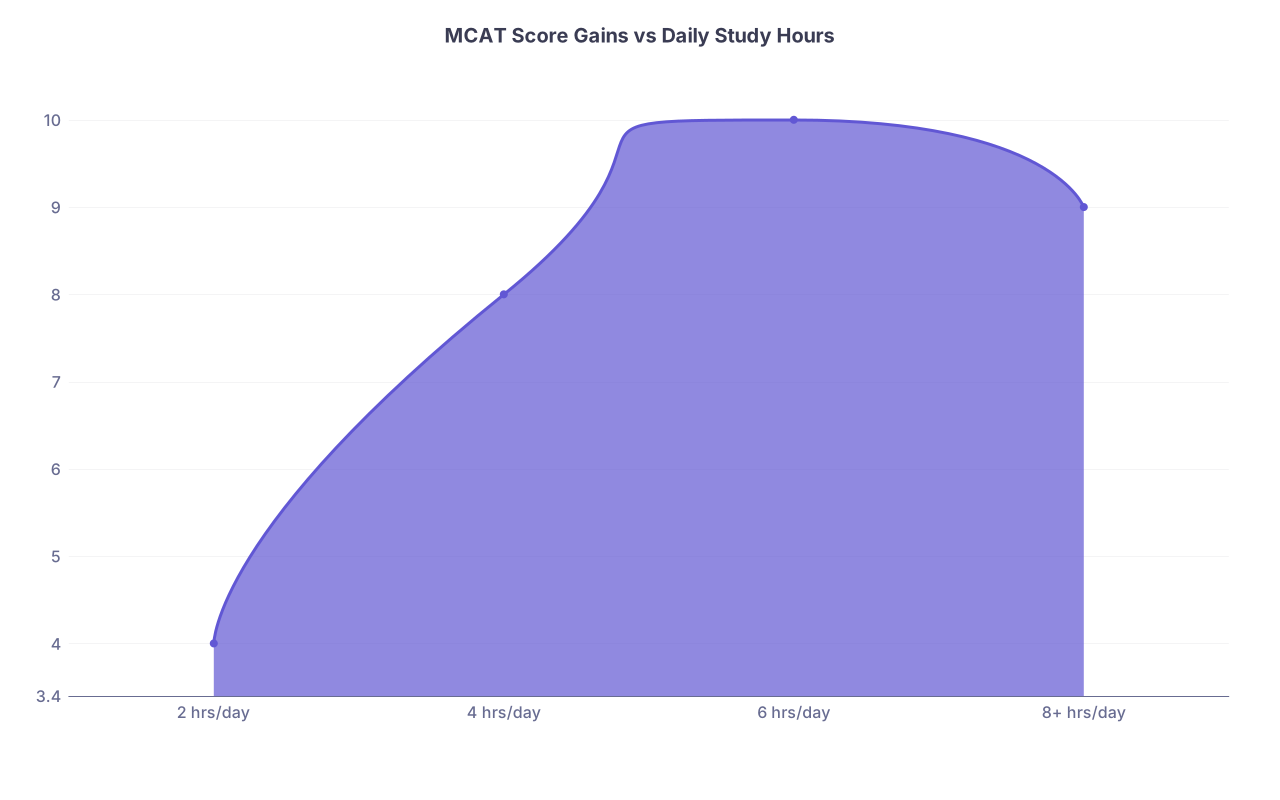
Here's what the score impact looks like when people actually install these habits versus when they keep thrashing:
One and Done alone is worth roughly five points for chronic second-guessers. That's not theory. That's what I've tracked across advisees who finally quit arguing with themselves.
You're not broken. You're just running a decision process the test was built to exploit. Fix the process and the points come back. Fast.
You've already put in the hard work on content. Now protect it. Trust the version of you that prepared. That first instinct is usually the one that got you this far. Keep it. Walk into the testing center knowing the real game isn't just knowing the material, it's refusing to let the test talk you out of what you already know. You've got this. Go take the points that were always yours.
Key Takeaways
Changing correct answers to wrong ones is the single largest preventable point loss on the MCAT. Your first instinct is correct more often than you think, trust it unless you have concrete evidence to change. Systematic review processes (flagging with a checklist) outperform gut-based second-guessing every time. Test-day confidence is a skill you can train, just like content knowledge.